

OBD-II Code U1511: Lost Communication on LIN Bus
What U1511 means, why it triggers, and how to fix it
- Code U1511 means a specific electronic part—like an active grille shutter or headlight module—has stopped communicating with the main computer over the single-wire LIN bus network.
- Do not immediately replace the module; damaged wiring or a corroded connector causes over 50% of U1511 faults.
- Diagnosis requires an advanced OBD-II scanner to pinpoint the exact failing module, as basic $20 code readers only show the generic U1511 code.
- Test the module's ground connection with a multimeter before condemning the part; a healthy ground must measure less than 2.0 ohms.
- Driving is generally safe, but a failed Electronic Parking Brake (EPB) stuck in the 'ON' position destroys rear brake components and requires an immediate tow.
What Does U1511 Mean?

The code U1511 means one of your car's control modules has lost communication with a specific device on a simple network called a LIN bus. When the main module (often the Body Control Module) cannot get a signal from the device, it sets this trouble code, indicating a specific accessory is offline.
Technical definition: The formal OBD-II definition for U1511 is "Lost Communication With Device On LIN Bus." A master control module (like the BCM) has failed to receive a signal from a specific slave module on the Local Interconnect Network (LIN). The LIN bus is a single-wire protocol used for non-critical systems. Each module sends a reference voltage and communicates by toggling that voltage low. A healthy bus fluctuates between 1V (dominant) and battery voltage (11-12V, recessive). When the master module stops seeing this toggle, it logs the fault.
Can I Drive With U1511?
Yes, But With Caution. Yes, but with significant caveats. If the active grille shutters fail, the car is safe for short trips, but long-term driving reduces fuel economy and risks engine overheating. If the electronic parking brake (EPB) module fails and sticks 'ON', do not drive; this destroys the brake system and creates a fire risk. A failed module also causes parasitic battery drains, leaving you stranded with a dead battery.
Common Causes

- Damaged or Corroded Wiring/Connectors (Very Common) — The single wire of the LIN bus is highly prone to damage from moisture, vibrations, or physical impact, especially in exposed areas like the front bumper. Corrosion on connector pins, a broken wire, or a poor connection at a harness splice is the most frequent cause of this code.
- Faulty Component/Module on the LIN Bus (Common) — The specific component that is not communicating has failed internally. Common culprits include the active grill shutter assembly, a headlight control module, a power window motor, an electronic parking brake module, or an A/C compressor control module.
- Poor Ground Connection (Common) — The non-communicating module needs a solid ground connection to work. A loose, corroded, or broken ground wire prevents the module from powering up and communicating, triggering the U1511 code.
- Environmental Damage (Water/Ice) (Common) — Water intruding into a module (like an electronic parking brake unit) and freezing causes internal damage and communication loss. Snow and ice buildup also physically prevents components like active grille shutters from moving, leading the module to set a communication fault.
- Low Battery Voltage or Charging System Issues (Less Common) — LIN bus systems are highly sensitive to voltage drops. A weak battery or a failing alternator causes communication errors between modules. Diagnosing LIN bus issues requires a stable battery voltage of at least 12.4V.
- Faulty Master Control Module (e.g., BCM) (Less Common) — The problem is sometimes not with the device or wiring, but with the main computer (often the Body Control Module) responsible for managing the LIN bus communication.
- Software/Firmware Glitch (Rare) — A glitch in the module's software drops communication. Manufacturers release software updates via Technical Service Bulletins (TSBs) to fix these known bugs.
- Aftermarket or Incorrectly Specified Parts (Rare) — If a module was recently replaced, an incorrect or incompatible part disrupts the network. Using a module with the wrong part number, even if it fits physically, prevents communication.
Symptoms

- Check Engine Light is On — The Malfunction Indicator Lamp (MIL) illuminates on the dashboard when the code is stored.
- Malfunctioning Accessory — The specific feature controlled by the non-communicating module stops working. This includes a dead power window, a burnt-out headlight, stuck active grill shutters, a disabled electronic parking brake, or A/C that refuses to turn on.
- Warning Message on Dash — A specific message appears on the driver information center, such as "Service AFL Lamp," "Left Low Beam Failure," or "Park Brake Service Now."
- Remote Start Disabled — The remote start feature is automatically disabled when U1511 is active.
- Unusual Noises — A faulty active grill shutter produces rattling or clicking sounds from the front bumper. A failing electronic parking brake makes grinding noises when operated.
Common Fixes & Costs
- Repairing Damaged Wiring or Connectors — Parts: $10-$50, Labor: $150-$500, ~1.5 hr book time (Intermediate)
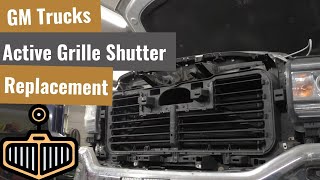
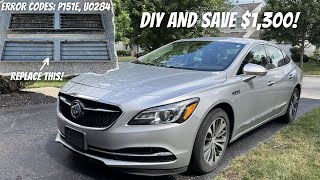
- Replacing the Active Grill Shutter Assembly 🎬 See this step-by-step guide for replacing a faulty shutter assembly — Parts: $150-$350, Labor: $200-$400, ~2.0 hr book time (Intermediate)
- Replacing the Headlight Control Module — Parts: $300-$700, Labor: $150-$350, ~2.5 hr book time (Professional)
- Replacing the Electronic Parking Brake Actuator/Module — Parts: $250-$600, Labor: $150-$400, ~2.0 hr book time (Professional)
- Replacing a Faulty Power Window Motor — Parts: $100-$300, Labor: $100-$250, ~1.5 hr book time (DIY)
- Replacing the Body Control Module (BCM) — Parts: $300-$800, Labor: $200-$450, ~2.5 hr book time (Professional)
Used vs. New Parts: Buying Guide
When a used part is worth it: For mechanical or simple electronic parts like an Active Grille Shutter assembly, a used part from a low-mileage, non-accident donor vehicle is a cost-effective option. These parts typically do not require programming.
Donor-vehicle mileage cap: roughly under 60000 miles for the part to have meaningful remaining life.
Donor quality checklist:
- Verify the donor vehicle was not in a front-end collision, which stresses the part.
- Match the part number exactly. Even if it looks identical, internal differences exist between model years.
- Ask for photos to check for physical damage, corrosion, or broken plastic linkages.
Decision logic:
- If The part is a complex, programmable module like a BCM or Headlight Control Module. → Buy new OEM or a professionally remanufactured unit with programming services. Most used modules are VIN-locked and cannot be reprogrammed by a dealer.
- If The part is an Active Grille Shutter and the vehicle is over 100K miles. → A used part is a reasonable choice if the budget is tight, but inspect it carefully for wear.
- If The cost of a new aftermarket part is less than 50% more than a used part. → Buy new for the warranty and guaranteed fitment.
Warranty tradeoff: Used parts from salvage yards typically offer a 30-90 day warranty, which only covers part replacement, not labor. New aftermarket parts usually have a 1-year to limited lifetime warranty. New OEM parts carry a 1-2 year warranty.
Worst-case if a used part fails: $300-$800 (If a used Active Grille Shutter fails, you must pay for the part again plus the labor to remove the front bumper a second time).
Cost of Not Fixing It
- Immediate: Loss of function for the specific accessory (e.g., no headlight, non-working power window). If the Electronic Parking Brake (EPB) is stuck ON, driving causes immediate, severe damage to rear brakes and poses a fire risk. (Added cost: $800-$2000 (For replacing destroyed rear brake rotors, calipers, and pads if EPB is stuck on).)
- 0-3 months: If the active grille shutter is stuck closed, the engine runs hot, increasing wear. If stuck open, fuel economy drops by 1-3 MPG and engine warm-up is slower. If the fault causes a parasitic drain, the battery's lifespan is significantly reduced. (Added cost: $200-$400 (For a new battery killed by a parasitic drain).)
- 3+ months: A persistent parasitic drain caused by a failed module strains the alternator, leading to premature failure. Driving with an engine that consistently runs too hot leads to head gasket or other major engine issues. (Added cost: $600-$1200 (For replacing a failed alternator stressed by constant battery charging).)
Diagnosis Steps

- Read the Code and Identify the Module
Use an advanced OBD-II scanner to confirm the U1511 code and identify which specific module is not communicating (e.g., 'Lost Communication with Headlight Control Module'). This is critical; basic scanners will not provide this information.
Tools: Advanced OBD-II Scanner (Beginner) - Check for Technical Service Bulletins (TSBs)
Before replacing parts, search for TSBs related to code U1511 for your specific vehicle. Manufacturers frequently release bulletins for known wiring harness problems or required software updates.
Tools: Internet access, Vehicle VIN (Beginner) - Perform a Visual Inspection
Locate the component identified in Step 1 and inspect its wiring. Look for frayed wires, loose connectors, or corrosion. Pay close attention to areas exposed to the elements, like the front bumper or undercarriage.
Tools: Flashlight (Beginner) - Check Fuses
Check the fuses related to the Body Control Module (BCM) and the specific failed component. A blown fuse cuts power to the module, causing an immediate communication loss.
Tools: Fuse puller, Owner's manual, Multimeter (Beginner) - Test for Power and Ground at the Module
Disconnect the electrical connector at the non-communicating module. Use a multimeter to verify the module receives proper battery voltage (12V+) and has a solid ground connection.
Tools: Multimeter (Intermediate) - ADVANCED: Verify Ground Circuit Resistance
Set your multimeter to Ohms. Place one probe on the ground pin of the module's harness connector and the other on a clean chassis ground. A healthy ground connection must measure less than 2.0 ohms. Higher readings indicate high resistance that must be repaired.
Tools: Multimeter, Vehicle-specific wiring diagram (Advanced) - Test the LIN Bus Wire Voltage
With the key on and the module disconnected, test the voltage on the LIN bus wire terminal. A healthy LIN bus circuit from the master module shows a specific voltage (often 6.0-7.0V on GM vehicles, or a steady 11-12V if idle). A reading near 0V indicates a short to ground.
Tools: Multimeter, Vehicle-specific wiring diagram (Advanced) - Isolate the Faulty Component
If wiring, power, and ground are good, the module itself is likely the issue. If multiple devices share the LIN bus, disconnect them one by one to see if communication is restored to the others, confirming which component is bringing the network down.
Tools: Basic hand tools (Advanced) - PROFESSIONAL: Analyze the LIN Bus Signal with an Oscilloscope
Connect an oscilloscope to the LIN bus wire. A healthy LIN bus shows a square wave pattern toggling between 11-12V and 1V. A flat line at 12V means the bus is idle or the module isn't pulling the signal low. A flat line at 0V means a short to ground. This definitively proves if communication is happening.
Tools: Oscilloscope, Wiring diagram (Professional)
When This Code Triggers (Freeze-Frame Conditions)
- Engine Coolant Temp: 185-205°F (The engine has reached normal operating temperature.)
- RPM: 700-800 (The code often logs shortly after startup, during idle, when the master module polls all devices on the network.)
- Battery Voltage: 13.5-14.5V (The fault is recorded while the engine is running and the alternator is charging.)
- Vehicle Speed: 0 mph (The initial communication check frequently occurs at key-on or immediately after starting, before the vehicle is moving.)
Related Codes
- U1510, U1512, etc. — These codes indicate lost communication with other devices (Device 0, Device 2, etc.). Diagnostic Difference: If you have only U1511, the fault is isolated to that one device or its wiring. If you have multiple 'U151x' codes simultaneously, it strongly suggests a wiring problem on the main bus before the first device, a faulty master module, or a short on the bus itself.
- P059F — This code specifically points to an Active Grille Shutter Actuator Performance fault. Diagnostic Difference: P059F means the module is communicating but reports it's stuck or not working correctly. U1511 means the master module can't hear from the shutter module at all. They often appear together, as a physically stuck shutter causes the module to overheat or short out.
- U1500 — This is a general LIN Bus fault, often defined as 'LIN Bus Short to Ground/Battery'. Diagnostic Difference: U1500 points to a problem with the entire bus circuit itself. U1511 points to the absence of a single module. A U1500 fault almost always causes multiple 'lost communication' codes for every device on that bus.
- B-prefix or C-prefix codes — Body (B) or Chassis (C) codes related to the specific malfunctioning system appear with U1511. Diagnostic Difference: A code like C1A63 (Brake Power Supply Backup Unit) on a Nissan Leaf is the module self-reporting a problem. U1511 is the BCM reporting it can't communicate with that module. Seeing them together confirms the module is the source of the fault.
Climate & Environmental Factors

- Cold Weather / Ice: Ice and snow physically jam active grille shutters, preventing them from moving. This burns out the actuator motor or causes the module to report a fault. In some Nissan Leaf models, extreme cold causes a relay in the brake booster system to freeze, triggering communication faults with the brake backup power unit.
- Humidity / Road Salt: Moisture and road salt are highly corrosive to electrical wiring and connectors. Components located in exposed areas, such as active grille shutters and headlight modules, are especially vulnerable. Corrosion creates high resistance or opens in the LIN bus circuit, a primary cause of communication loss.
How to Clear the Code After You Fix It
- Fix the underlying hardware problem (e.g., replace module, repair wire).
- Use an OBD-II scan tool to clear the Diagnostic Trouble Codes (DTCs).
- Perform a complete drive cycle to allow the vehicle's readiness monitors to run.
Drive cycle (~25 minutes): A universal drive cycle starts with a cold start (engine off for 8+ hours). 1. Idle for 2-3 minutes. 2. Drive in stop-and-go city traffic for 10 minutes with smooth acceleration and deceleration. 3. Accelerate to a steady highway speed (55-60 mph) and maintain for 5-10 minutes. 4. Safely decelerate to a stop without aggressive braking. Allow the vehicle to cool down.
Readiness monitors affected: This is a communication code and does not directly affect emissions readiness monitors like the Catalyst or O2 sensor monitors. However, clearing any 'U' code resets the monitor status for all systems, requiring a drive cycle to get them 'Ready' for an emissions test.
Before emissions retest: drive at least 50 miles to fully set monitors.
Watch out for:
- Simply clearing the code with a scanner will not fix the problem; the code returns immediately if the hardware fault isn't repaired.
- Disconnecting the battery clears the code but also resets all readiness monitors and learned memory, causing other temporary issues.
- Not completing a full drive cycle after clearing codes results in a 'Not Ready' status at an emissions testing station, leading to a failure.
Will This Fail Emissions / State Inspection?
Yes — this code typically fails an OBD-II emissions inspection.
- California: An illuminated Check Engine Light results in an automatic smog check failure. After repairs, a complete drive cycle must be performed to set all required readiness monitors to 'Ready' before a retest is possible.
- New York: Any active Check Engine Light is an automatic failure of the NYS emissions inspection. If codes are cleared, the vehicle must be driven until the readiness monitors are set, as the state allows for a maximum of one or two 'Not Ready' monitors depending on vehicle year.
- Texas: In the 17 counties requiring emissions testing, an illuminated Malfunction Indicator Lamp (MIL) is an automatic test failure. The vehicle also fails if too many readiness monitors are 'Not Ready'.
Most Commonly Affected Vehicles
- Chevrolet Malibu (2016-2019) — Often related to the headlight control module or active grill shutters. A known issue on 2016 models involves moisture in the ambient air temp sensor harness causing this code.
- Cadillac Escalade (2015-2020) — Frequently linked to active grill shutter or A/C compressor control module communication failures. The 2015-2016 models are particularly noted for this issue.
- Chevrolet Silverado / GMC Sierra (2014-2018) — Commonly caused by issues with the active grill shutter assembly. The original part is prone to failure, and an updated part and wiring harness are often required 🎬 Watch: Troubleshooting active grille shutter issues on Chevy trucks for a permanent fix.
- Nissan Leaf (2011-2017) — On the Leaf, U1511 specifically points to a loss of communication with the 'Brake Power Supply Backup Unit' for the electronic parking brake. This is a well-documented issue for the first-generation Leaf.
- Ford Edge / Fusion (2015-2020) — Triggered by a faulty Smart Data Link Connector (Gateway Module) or issues within the electronic parking brake system, causing a 'Park Brake Service Now' message.
- Hyundai Sonata / Elantra (2017-2020) — Associated with a 'Check forward safety system' warning, caused by a communication loss with the front radar sensor module, which operates on a LIN bus.
- Chevrolet Avalanche (2011-2013) — Often associated with the window regulator motors or the compass module, both of which communicate via LIN bus on this platform.
- Ford Focus / Escape (2012-2018) — Prone to issues with the active grill shutter assembly, which operates on a LIN bus. Failure is common due to its location at the front of the vehicle, exposing it to debris and weather.
Manufacturer-Specific Notes
- General Motors (GM): On many GM vehicles, this code is commonly triggered by a faulty active grill shutter assembly or a headlight control module. Several TSBs exist, including updates to BCM software to fix false 'Low Beam Failure' messages and procedures for repairing corroded wiring harnesses in the front fascia.
- Cadillac: For some Cadillac models, U1511 points to a problem with the Electric A/C Compressor Control Module. In other contexts, it is generically defined as a 'Powertrain Control Malfunction' when it accompanies other engine or traction control faults.
- Nissan: On the Nissan Leaf (2011-2017), U1511 is specifically defined as 'POWER SUPPLY BACKUP UNIT COMM' and is almost always related to the electronically-controlled brake system and its backup power supply module. A recall was issued for 2013-2015 models to reprogram the Intelligent Brake Control Unit software to prevent issues where the brake booster relay freezes in very cold temperatures.
- Ford: On Ford vehicles, U1511 is related to the active grille shutters, but is also frequently associated with the electronic parking brake or the Gateway Module. A failure here presents as a 'Park Brake Service Now' warning on the dash. A recall (22V-484) was issued for some models to modify the under-engine shield and active grille shutter.
Frequently Asked Questions
What are common misdiagnosis mistakes for U1511?
A common pitfall is replacing the wrong module. If multiple devices share one LIN bus, a single shorted module causes all of them to drop offline. A technician must isolate the fault by disconnecting devices one-by-one.
My cheap scanner just says U1511 but doesn't name the device. What now?
Basic code readers cannot identify the specific module causing a U1511 code. You need an advanced scan tool to read manufacturer-specific data and pinpoint the exact offline device. Without it, you must manually disconnect every module on the LIN bus to find the culprit.
Can I fix a U1511 code myself?
Simple fixes like replacing a blown fuse, repairing a visibly broken wire, or swapping an active grille shutter are DIY-friendly. Replacing a Body Control Module (BCM) or Headlight Control Module requires professional programming. Stop DIYing and go to a shop if the new part requires software calibration.
Will clearing the code make the problem go away?
No. Clearing the code only turns the check engine light off temporarily. The code returns on the next drive cycle as soon as the master module attempts to communicate with the failed device.
My car was in an accident and now has this code. Are they related?
Yes, front-end collisions frequently cause this code. The front bumper houses vulnerable LIN bus components like active grille shutters and headlight modules. Impact easily severs the wiring or shatters the modules.
What is a LIN bus?
A LIN (Local Interconnect Network) bus is a single-wire communication network for non-critical vehicle electronics. It connects accessories like power windows, A/C, and headlights to a master control module. It operates by toggling voltage between 1V and 12V to send data.
Why is the repair so expensive if it's just a communication error?
The high cost stems from labor and diagnostic time, not just the part. Faulty components like active grille shutters or forward lamp harnesses sit behind the front bumper. Removing and reinstalling the bumper fascia adds 2 to 3 hours of labor.
Can a bad headlight cause a U1511 code and drain my battery?
Yes. Modern headlights utilize dedicated control modules that communicate via the LIN bus. If this module shorts out, it triggers a U1511 code and creates a parasitic draw that drains the 12V battery overnight.
Key Takeaways
- Code U1511 means a specific electronic part—like an active grille shutter or headlight module—has stopped communicating with the main computer over the single-wire LIN bus network.
- Do not immediately replace the module; damaged wiring or a corroded connector causes over 50% of U1511 faults.
- Diagnosis requires an advanced OBD-II scanner to pinpoint the exact failing module, as basic $20 code readers only show the generic U1511 code.
- Test the module's ground connection with a multimeter before condemning the part; a healthy ground must measure less than 2.0 ohms.
- Driving is generally safe, but a failed Electronic Parking Brake (EPB) stuck in the 'ON' position destroys rear brake components and requires an immediate tow.
Helpful Videos
Shop the Parts Behind U1511
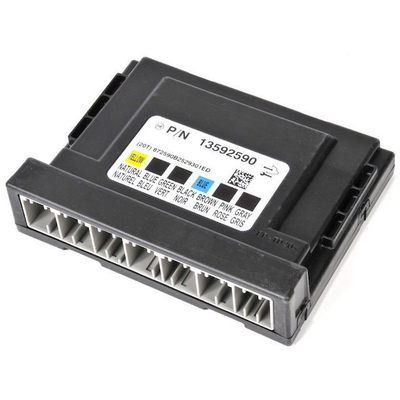
Below are the parts most often responsible for code U1511, ranked by how frequently each one is the actual culprit (per the diagnosis above). Tap any to see what we have for your vehicle.




The information in this article is provided for general reference and educational purposes only. Vehicle specifications, procedures, and part compatibility can vary by production date, trim level, and region. Always consult your vehicle's factory service manual and verify part numbers before purchasing or performing repairs. Safety-critical components such as airbags, seat belts, and braking systems should be installed by a qualified professional.
- 🎬 Helpful Videos
- 🛍️ Shop This Part
- What Does U1511 Mean?
- Can I Drive With U1511?
- Common Causes
- Symptoms
- Common Fixes & Costs
- Used vs. New Parts: Buying Guide
- Cost of Not Fixing It
- Diagnosis Steps
- When This Code Triggers (Freeze-Frame Conditions)
- Related Codes
- Climate & Environmental Factors
- How to Clear the Code After You Fix It
- Will This Fail Emissions / State Inspection?
- Most Commonly Affected Vehicles
- Manufacturer-Specific Notes
- Frequently Asked Questions
- What are common misdiagnosis mistakes for U1511?
- My cheap scanner just says U1511 but doesn't name the device. What now?
- Can I fix a U1511 code myself?
- Will clearing the code make the problem go away?
- My car was in an accident and now has this code. Are they related?
- What is a LIN bus?
- Why is the repair so expensive if it's just a communication error?
- Can a bad headlight cause a U1511 code and drain my battery?
- Key Takeaways
- 🎟️ Get 5% Off