

OBD-II Code U1517: LIN Bus Communication Failure
What U1517 means, why it triggers, and how to fix it
- U1517 indicates a lost connection on a single-wire LIN bus, pointing to a failed component, broken wire, or software glitch.
- Test your battery and charging system first; voltage drops below 12.4V during startup cause over 30% of U1517 codes.
- Identify your manufacturer's specific LIN bus weakness: GM vehicles typically fail at the active grille shutter, while Jeep Wranglers suffer from locked steering columns.
- Search for Technical Service Bulletins (TSBs) before replacing parts, as a 1-hour dealer software update resolves many U1517 errors on 2018+ vehicles.
- Expect to visit a dealer or specialized locksmith if replacing a security module (ESCL, BCM, ECM), as these require proprietary tools for proxy alignment.
What Does U1517 Mean?
U1517 is a network error code indicating a specific component or computer has stopped communicating. Vehicles use small, efficient networks called LIN (Local Interconnect Network) buses to control groups of related parts, like active grille shutters or steering column locks. This code means one device on that single-wire network has gone silent, or the master computer cannot hear it.
Technical definition: The general definition is 'Lost Communication on LIN Bus'. However, its meaning is highly manufacturer-specific. On Stellantis products, it is often 'Body Controller Secret Code - Missing Message', indicating a security handshake failure. On Mahindra, it is 'Immo Variant Code Error'. Suffix '-87' means 'Missing Message', while '-62' indicates a 'Signal Compare Failure' where received data was incorrect.
Can I Drive With U1517?
Yes, But With Caution. Driving is possible on some vehicles, but you risk sudden stalling in traffic, a no-start condition, or unpredictable electrical problems. Ignoring the code leaves you vulnerable to being stranded, requiring a tow and adding significant cost to the eventual repair.
Common Causes
- Weak or Failing Battery (Very Common) — Modern vehicle computers are extremely sensitive to voltage drops. A weak battery, especially in dual-battery systems like Jeep Wranglers, causes communication errors during startup, triggering U1517 before any obvious starting issues appear.
- Failed Component on the LIN Bus (Common) — The specific component on the network has failed internally. Common culprits include the Active Grille Shutter assembly (GM/Ford), 🎬 See this step-by-step active grille shutter replacement walkthrough. the Electric Steering Column Lock (Jeep), or the Radio Frequency Hub.
- Module Software Glitch (Common) — A software bug in one of the vehicle's computers disrupts communication. Manufacturers frequently release Technical Service Bulletins (TSBs) with software updates that a dealer must install to resolve the error.
- Damaged Wiring or Ground Connections (Common) — The single wire of the LIN bus is vulnerable to chafing, and module grounds are susceptible to corrosion. A broken wire, loose pin, or corroded ground interrupts the signal and drops the network.
- Improperly Installed Aftermarket Accessories (Less Common) — Aftermarket remote starters, alarms, or LED lighting interfere with communication networks if installed incorrectly. Tapping into the wrong wire disrupts LIN bus signals.
- Failed Programming After Module Replacement (Rare) — If a major module like the ECM or BCM is replaced with a used unit and not correctly programmed to the vehicle's VIN via a proxy alignment, the security handshake fails.
- Failed Body Control Module (BCM) (Rare) — The BCM is the master computer for this network, but it rarely fails. Suspect the BCM only after ruling out the battery, wiring, software, and connected components.
Symptoms
- Engine Will Not Start or Stalls — If the code relates to a security component like the steering column lock or an ECM/BCM handshake failure, the vehicle immobilizes and will not crank, or starts and stalls immediately.
- Specific Features Stop Working — Features tied to the LIN bus, such as remote start, active grille shutters, or keyless entry, cease functioning.
- Warning Message on Dashboard — Messages like "Service Vehicle Protection System" or "Move Steering Wheel to Release Steering Lock" 🎬 Watch: How to troubleshoot and reset steering wheel lock warnings. appear on the instrument cluster.
- Erratic Electrical Behavior — Intermittent flickering of interior lights, gauges sweeping unexpectedly, or random electronic issues occur when network communication is unstable.
- Check Engine Light On — The primary indicator that a communication fault has been stored in the system.
Diagnostic Flowchart
Tap your situation to follow the diagnostic path that matches what you're seeing on this code.
Common Fixes & Costs
- Replace Weak or Failing Battery — Parts: $200-$350, Labor: $50-$100, ~0.5 hr book time (DIY)
- Perform Module Software Update — Parts: $0, Labor: $150-$250, ~1.0 hr book time (Professional)
- Replace Active Grille Shutter Assembly
— Parts: $150-$400, Labor: $200-$400, ~2.0 hr book time
(Intermediate)
Chevrolet/GMC (Cruze, Sierra): OEM 84363184 (Alt: Dorman 601-319, Dorman 601-332)
Ford (Focus, Escape): OEM Varies by model (Alt: Dorman 601-386) - Replace Electric Steering Column Lock (ESCL) Module
— Parts: $250-$400, Labor: $300-$500, ~2.5 hr book time
(Professional)
Jeep Wrangler (JL): OEM 68292350AC - Repair Damaged Wiring or Ground Connection — Parts: $10-$50, Labor: $150-$450, ~2.0 hr book time (Intermediate)
- Replace/Reprogram Instrument Panel Cluster (IPC) — Parts: $400-$1000, Labor: $200-$400, ~2.0 hr book time (Professional)
Used vs. New Parts: Buying Guide
When a used part is worth it: For non-security electronic parts like an Active Grille Shutter assembly, a used part from a low-mileage vehicle is a cost-effective alternative.
Donor-vehicle mileage cap: roughly under 60000 miles for the part to have meaningful remaining life.
Donor quality checklist:
- Verify the exact OEM part number matches; superseded numbers may not be compatible.
- Avoid parts from flood-damaged or high-corrosion vehicles.
- NEVER purchase used security-related modules like an ESCL, BCM, or IPC, as they are VIN-locked and cannot be reprogrammed.
Decision logic:
- If The failed part is a security module (ESCL, IPC, BCM, RFH) → Always buy new OEM. A used part will not work and prevents the car from starting.
- If The failed part is non-security (Active Grille Shutter) and the vehicle is over 100K miles → A used part is an acceptable budget choice, but carries a higher risk of premature failure.
- If The vehicle is still under warranty or an extended service plan → Use the warranty to get a new OEM part installed at no cost.
Warranty tradeoff: Used parts typically offer a 30-90 day warranty excluding labor. New aftermarket parts offer 1-year warranties. New OEM parts carry a 1-2 year warranty when installed by a dealer.
Worst-case if a used part fails: $600-$1200 if a used security module is purchased and fails to program, requiring a new part plus repeated labor.
What Happens If You Wait — Timeline
- 0-1 month: Check Engine Light illuminates. A single feature like remote start or active grille shutters stops working. No drivability symptoms. (MPG impact: 0-3%% · Added cost: $0-$25 in wasted fuel)
- 1-3 months: Fault becomes persistent. Random electrical glitches appear (flickering lights). Risk of a no-start condition increases. (MPG impact: 0-3%% · Added cost: $150-$300 (Potential towing cost))
- 3-6 months: If related to a security module, the vehicle fails the security handshake, resulting in a permanent no-start or stall condition. (MPG impact: 0%% · Added cost: $300-$600 (Guaranteed towing and emergency diagnostics))
- 6+ months: Unstable voltage or data signals corrupt software in other modules, making diagnosis complex and expensive. (MPG impact: N/A% · Added cost: $500-$1500 (Complex multi-module diagnosis and replacement))
Cost of Not Fixing It
- Immediate: If caused by a failed security module (e.g., ESCL), the vehicle will not start, requiring a tow and emergency repair. (Added cost: $150-$300 (Towing and diagnostic fees))
- 0-3 months: If caused by a failed active grille shutter, fuel economy decreases by 3-5% due to poor aerodynamics. Remote start is disabled. (Added cost: $20-$50 per month in extra fuel costs)
- 3+ months: Ignoring an intermittent network fault leads to unpredictable stalling in traffic or cascading electrical issues that make diagnosis more complex. (Added cost: $500-$1500 (Complex diagnosis and potential damage to other modules))
Diagnosis Steps
- Test the Battery and Charging System
Verify the battery is fully charged (above 12.4 volts) and perform a professional load test. Low voltage is the leading cause of communication codes. On Jeep JL/JT models, test the auxiliary battery as well.
Tools: Multimeter, Battery Load Tester (Beginner) - Read All Trouble Codes from All Modules
Use an advanced OBD-II scanner to access all vehicle modules (BCM, RFH, ECM). Note any other communication (U-codes) or voltage (B-codes) present, as they pinpoint the root cause.
Tools: Advanced OBD-II Scanner (Beginner) - Check for Technical Service Bulletins (TSBs)
Search online for TSBs related to code U1517 for your specific make, model, and year. The fix is often a known software update that only a dealer can perform.
Tools: Internet Access (Beginner) - Isolate the Faulty Module
If multiple devices share the LIN bus, unplug them one at a time and attempt to clear the code. If the code disappears after unplugging a specific component, that component has an internal short.
Tools: Scan Tool, Basic Hand Tools (Intermediate) - Inspect the Wiring Harness and Grounds
Visually inspect the wiring going to the component identified by the code. Look for chafing, melting, or loose connectors. Ensure module ground connections are clean, tight, and free of corrosion.
Tools: Flashlight, Basic Hand Tools (Intermediate) - Inspect for Aftermarket Accessories
Visually inspect the vehicle for non-factory electronics like remote starters or alarms. Disconnect them to see if the fault clears, as poorly installed devices interfere with network communication.
Tools: Basic Hand Tools (Beginner) - Test the Suspect Component
Use an advanced scan tool with bidirectional controls to command the suspect component (e.g., active grille shutters) to open and close, verifying if it responds to network commands.
Tools: Advanced Scan Tool (Advanced) - Test the LIN Bus Circuit with a Multimeter
Backprobe the LIN bus wire at the suspect module's connector. With the key on, voltage should fluctuate between 7V and 11V. A steady 12V indicates a short to power; a steady 0V indicates a short to ground.
Tools: Multimeter, Vehicle-Specific Wiring Diagram, T-pins (Advanced) - Pro Tip: Test the LIN Bus Circuit with an Oscilloscope
An oscilloscope provides the definitive test. A healthy bus shows a clean square wave pattern (high state ~12V, low state ~1V). A distorted waveform indicates high resistance or a failing module pulling the bus down.
Tools: Oscilloscope, Vehicle-Specific Wiring Diagram (Professional) - Pro Tip: Perform a Component Resistance Test
Check the resistance between LIN bus circuit pins on the component itself, following the manufacturer's service manual. Readings outside the specified range confirm an internal hardware failure.
Tools: Multimeter, Service Manual (Advanced)
When This Code Triggers (Freeze-Frame Conditions)
- DTC Set Time: < 1 second (after Key-On or during startup network initialization)
- Battery Voltage: 9.5V - 11.5V (during engine crank (if fault is voltage-related))
- Module Status: No Communication (when master module polls the specific LIN bus device)
- Ignition Status: RUN (fault can be detected any time the network is active)
Related Codes
- U1517-62 — A specific variant meaning 'Signal Compare Failure'. A message was received, but the security data was incorrect. Points to a module programming issue after a replacement.
- P059F — Indicates a mechanical performance problem with the Active Grille Air Shutter. If present with U1517 on GM vehicles, the shutter assembly is almost certainly the fault.
- U0140 — Means 'Lost Communication With Body Control Module'. If present with U1517, the BCM or its primary power/ground circuits are the prime suspect.
- B2199 / B21DD — Battery Voltage Low/High codes. Seeing these alongside U1517 confirms the root cause is an unstable electrical system, not a failed module.
Climate & Environmental Factors
- Cold Weather: Low temperatures reduce battery cranking power. During a cold start, voltage drops low enough to disrupt module communication, triggering U1517 before no-start symptoms appear.
- High Humidity / Moisture Intrusion: Moisture and road salt cause corrosion in connectors and ground points. Components mounted in vulnerable areas, like active grille shutters, are highly susceptible to shorted LIN circuits.
How to Talk to a Mechanic About This Code
Say this: "I have a U1517 communication code on my [Make/Model] and I'm experiencing [symptom]. Before starting a broad electrical diagnosis, please load-test the battery and check for Technical Service Bulletins for my VIN. I know this code is often caused by a known software issue or a specific part like the steering lock."
This signals you are an informed consumer and directs the technician to the most common, cheapest fixes first, preventing unnecessary module replacements.
Avoid saying:
- 'My check engine light is on, can you look at it?'
- 'My car is acting weird, just fix whatever is wrong.'
- 'I think I need a new computer.'
Questions to ask before authorizing the repair:
- Did you load-test the battery and check for TSBs first?
- Which specific module is failing to communicate?
- Does the replacement module require programming, and is that included in the labor estimate?
- If it's a Stellantis vehicle, will a 'Proxy Alignment' be required, and is that part of the quote?
- Can you show me the damaged wiring or the failed part?
Where to Take It: Dealer vs Independent vs Chain
- Dealer:
Best for: Vehicles under warranty., Repairs requiring software updates., Replacement of security-related modules (ESCL, BCM, IPC) requiring proprietary programming tools.
Downsides: Highest labor rates, typically $150-$250/hour., May prefer replacing entire harnesses over diagnosing component-level wiring issues. (Typical cost: +50% vs. baseline) - Independent Shop:
Conditional. The dealer is the safest choice for software or security fixes on Jeep, Ram, and Ford. A specialized independent shop is great for hardware failures or wiring repairs.
Best for: Out-of-warranty vehicles with non-security faults (e.g., GM Active Grille Shutter)., Diagnosing and repairing wiring or connector issues., Battery replacement and testing.
Downsides: May lack expensive, manufacturer-specific tools for programming and proxy alignments., Quality varies; ensure they have advanced diagnostic capabilities for network issues. (Typical cost: +0% vs. baseline) - Chain Shop:
AVOID. This code requires diagnostic expertise beyond the scope of chain repair shops.
Best for: Simple services like oil changes, tires, and brake pads.
Downsides: Technicians lack specialized training and tools for complex network diagnostics., High likelihood of misdiagnosis or referring you to the dealer after charging a fee. (Typical cost: -10% vs. baseline)
When to Walk Away From the Repair
If the total estimated repair cost exceeds 40-50% of your car's current private-party value, consider selling or trading it in rather than repairing it.
- Car worth $3500, fix is $1400: Walk away. The repair cost is 40% of the car's value. It's not economically sensible to proceed.
- Car worth $18000, fix is $950: Fix it. The repair cost is 5% of the vehicle's value and resolves a critical issue.
- Car worth $8000, fix is $250: Fix it. A software update at this price is a minor cost relative to the car's value.
What Scan Tool You Need for This Code
Minimum: A scanner that performs a full system scan, reading codes from ALL modules (BCM, ABS, SRS), not just the engine computer.
A basic $20 code reader cannot see codes stored in the Body Control Module where the U1517 fault originates, making diagnosis impossible.
Budget: Autel Diaglink (~$99) — Performs a full-system scan to read codes from the BCM, identifying which specific component is reporting the communication loss.
Mid-range: Foxwell NT510 Elite (~$150) — Includes full system diagnostics plus bidirectional controls to actively command components like active grille shutters.
Professional: Autel MaxiCOM MK808S (~$450) — Provides OEM-level diagnostics, bidirectional control, and advanced programming functions required for proxy alignments.
Rent vs buy: Rentals from auto parts stores are basic code readers and insufficient for this code. You must buy a scanner with full-system diagnostic capabilities.
How to Clear the Code After You Fix It
- Reconnect battery if disconnected for repair
- Use an OBD-II scan tool to perform a 'Clear All Codes' command from the BCM or relevant master module
- Perform a complete drive cycle to allow readiness monitors to run
Drive cycle (~30 minutes): Start with a 'cold start' after the vehicle has sat for 8+ hours. Idle for 2-3 minutes. Drive for 15 minutes with mixed stop-and-go city conditions. Drive for 10 minutes at a steady highway speed (55-60 mph). Allow the vehicle to cool down completely.
Readiness monitors affected: Comprehensive Component Monitor, Misfire Monitor
Before emissions retest: drive at least 100 miles to fully set monitors.
Watch out for:
- Simply disconnecting the battery clears the code but resets all readiness monitors to 'Not Ready', causing an automatic emissions test failure.
- The code returns immediately if the root electrical or component fault has not been properly repaired.
Will This Fail Emissions / State Inspection?
Yes — this code typically fails an OBD-II emissions inspection.
- California: An illuminated Check Engine Light is an automatic failure. For vehicles 2000 and newer, one readiness monitor can be 'incomplete' (excluding catalyst) to pass.
- New York: Any vehicle with an illuminated Check Engine Light fails automatically. Clearing the code right before the test results in failure due to incomplete readiness monitors.
- Texas: In emissions-testing counties, an illuminated Check Engine Light is an automatic failure. You are allowed only one 'Not Ready' monitor on vehicles 2001 and newer.
Most Commonly Affected Vehicles
- Jeep Wrangler (JL) / Gladiator (JT) (2022-2025) — Caused by a failed Electric Steering Column Lock (ESCL) module, resulting in a no-start condition and locked steering wheel. TSB S2408000110 provides guidance. Fix requires part #68292350AC and dealer programming.
- Jeep Grand Cherokee (WL) (2021-2023) — Caused by a software glitch in the Radio Frequency Hub (RFH) preventing remote start. Requires a dealer software update per TSB 08-021-23 (RSU 23-139).
- Chevrolet / GMC Cruze, Bolt, Acadia, Sierra (2016-2022) — Triggered by a failed active grille shutter assembly. The shutter motor fails internally or wiring degrades. GM has issued special coverage programs for this part on select models.
- Ford F-150, Focus, Escape (2015-2020) — Associated with a faulty Instrument Panel Cluster (IPC). The IPC acts as a gateway; its failure causes U1517, erratic gauges, or a blank display. Replacement requires programming.
- Hyundai / Kia Tucson, Sorento, Elantra (2016-2022) — Linked to a faulty instrument cluster, bad immobilizer antenna coil, or broken wires within the main harness causing intermittent communication failures.
- Jeep Cherokee (KL) (2014-2018) — Highly sensitive to battery voltage. TSB 08-013-15 addresses this code alongside voltage-related DTCs, recommending a BCM software update for models built before mid-July 2014.
- Ram 2500/3500 (Cummins) (2020-2024) — Appears as a security handshake failure between the BCM and ECM after improper programming (e.g., using a used ECM). Leads to a stall/no-start condition requiring advanced tools like wiTECH.
- Chrysler Pacifica / Voyager (2022-2025) — Triggered by software issues within various modules. TSB 18-082-24 highlights network sensitivity to software states, leading to communication faults.
Manufacturer-Specific Notes
- General Motors (Chevrolet, GMC, Buick, Cadillac): U1517 is almost exclusively linked to the active grille shutter system. Internal motor failure or damaged wiring logs this fault. GM extends warranty coverage for this specific component on many models.
- Stellantis (Chrysler, Jeep, Dodge, Ram): Defined as 'Body Controller Secret Code - Missing Message,' indicating a security handshake failure. Causes range from a bad steering column lock (Wrangler) to a radio software bug (Grand Cherokee).
- Ford: The Instrument Panel Cluster (IPC) acts as a critical network gateway. An internal IPC fault disrupts the LIN bus, causing U1517 alongside erratic gauges. Replacement requires dealer programming.
- Hyundai / Kia: U1517 is elusive, often linked to the immobilizer system or physical breakage of the LIN bus wire within a larger wiring harness due to long-term vibration.
Real Owner Stories
2022 Jeep Wrangler JL No-Start
Vehicle would not crank, steering wheel locked. Dash displayed "MOVE STEERING WHEEL TO RELEASE STEERING LOCK".
What they tried:
- Jump-started the vehicle.
- Replaced key fob battery.
- Tested main and auxiliary batteries (both healthy).
Outcome: Dealer diagnosed a failed Electric Steering Column Lock (ESCL) module. Replaced with updated part (#68292350AC) and performed proxy alignment under warranty.
Lesson: On late-model Wranglers with a locked steering wheel, U1517 points directly to the ESCL module. Skip battery fixes if they test good; this requires dealer programming.
2018 Chevy Malibu Grille Shutter Failure
Check engine light on, remote start disabled. Light frequently appeared after snowstorms.
What they tried:
- Dealer cleared ice from shutter and reset code.
- Code returned repeatedly, incurring $117 diagnostic fees.
- Owner replaced the active grille shutter assembly themselves.
Outcome: Replacing the assembly resolved the issue. The internal motor had failed, causing the communication code and disabling remote start.
Lesson: On GM vehicles, U1517 is commonly caused by a failed active grille shutter. Replacing the assembly is a permanent fix compared to repeatedly clearing codes.
2020 Ram 2500 Cummins Stall After ECM Replacement
Shop replaced a failed ECM with a used unit. Truck started but stalled after a few seconds.
What they tried:
- Shop programmed the used ECM with the correct VIN.
- Codes U1517 and U1514-64 remained, indicating a security handshake failure.
Outcome: Vehicle required a specialist with advanced tools to transfer security keys from the BCM to the replacement ECM. VIN programming alone was insufficient.
Lesson: Never use a used security module on modern Stellantis vehicles. They contain VIN-locked data requiring specialized tools to resolve, costing more in the long run.
2015 Ford F-150 Intermittent Electrical Chaos
Instrument cluster went black, gauges dropped to zero, warning lights flashed randomly. Radio and climate control stopped working.
What they tried:
- Checked fuses.
- Mechanic replaced instrument cluster, but problem persisted.
Outcome: Root cause was a faulty Instrument Panel Cluster (IPC) acting as a network gateway. A properly diagnosed and programmed new IPC from the dealer resolved the failures.
Lesson: On Fords, the instrument cluster is a critical network module. Widespread electrical issues paired with U1517 point to a failing IPC requiring dealer programming.
How to Prevent This Code From Triggering
- Maintain Battery Health and Clean Terminals (Every 6 months) — Low voltage causes communication codes. Clean terminals and apply anti-corrosion gel to ensure a stable voltage supply for all modules.
- Apply Dielectric Grease to Exposed Connectors (When performing under-hood service) — For vulnerable components like active grille shutters, dielectric grease blocks moisture and road salt, preventing corrosion that shorts the LIN bus wire.
- Inspect and Secure Wiring Harnesses (Annually) — The single LIN wire is susceptible to chafing. Secure loose wiring away from moving parts or sharp metal brackets using zip ties or protective loom.
- Ask Dealer to Check for Software Updates (During routine dealer visits) — Many U1517 issues are caused by software bugs. Updating the BCM, RFH, or PCM prevents future communication faults.
Frequently Asked Questions
Can a weak battery really cause code U1517?
Yes. Vehicle computers are highly sensitive to low voltage during startup. A weak battery causes communication to fail, logging a U1517 code before any obvious starting issues occur.
What is a LIN Bus?
A LIN (Local Interconnect Network) bus is a simple, single-wire network connecting a master computer to smart devices like window switches or grille shutters. It acts as a slower, cost-effective sub-network to the main CAN bus.
Why did my remote start stop working with this code?
On many vehicles, the remote start and security systems are linked. U1517 often indicates a failed security handshake, prompting the vehicle to disable remote start as a precaution. A dealer software update frequently fixes this.
What is a common misdiagnosis when dealing with U1517?
The most common misdiagnosis is replacing an expensive module when the actual cause is a weak battery, poor ground, or a software glitch. Always rule out these simple, inexpensive causes first.
Can I just clear the U1517 code and see if it comes back?
You can, but it rarely provides a permanent fix. U1517 is typically a 'hard' fault, meaning the communication failure is actively detected. The code returns immediately or during the next drive cycle.
Do I have to go to the dealer to fix U1517?
Not always, but it is required for specific repairs. If the fix involves a software update or replacing a security-linked module (BCM, RFH, ECM), you need a dealer or specialized shop with proprietary programming tools.
What's the difference between U1517-87 and U1517-62?
U1517-87 means the expected security message was not received at all. U1517-62 means a message was received, but the data inside it was incorrect. The -62 variant usually points to a programming mismatch between modules.
What is a 'proxy alignment' and why is it mentioned with this code?
A Proxy Configuration Alignment synchronizes all electronic modules on a Stellantis vehicle's network. After replacing a module, this procedure teaches the new module about the rest of the car. Failing to perform it results in communication codes.
Key Takeaways
- U1517 indicates a lost connection on a single-wire LIN bus, pointing to a failed component, broken wire, or software glitch.
- Test your battery and charging system first; voltage drops below 12.4V during startup cause over 30% of U1517 codes.
- Identify your manufacturer's specific LIN bus weakness: GM vehicles typically fail at the active grille shutter, while Jeep Wranglers suffer from locked steering columns.
- Search for Technical Service Bulletins (TSBs) before replacing parts, as a 1-hour dealer software update resolves many U1517 errors on 2018+ vehicles.
- Expect to visit a dealer or specialized locksmith if replacing a security module (ESCL, BCM, ECM), as these require proprietary tools for proxy alignment.
Helpful Videos
Shop the Parts Behind U1517
Below are the parts most often responsible for code U1517, ranked by how frequently each one is the actual culprit (per the diagnosis above). Tap any to see what we have for your vehicle.
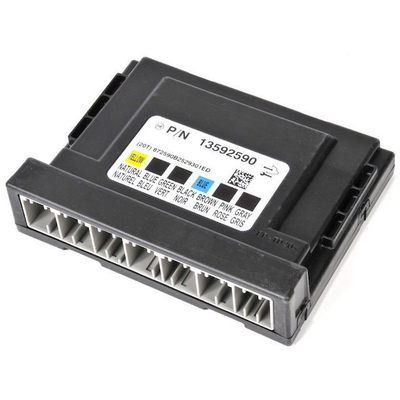



The information in this article is provided for general reference and educational purposes only. Vehicle specifications, procedures, and part compatibility can vary by production date, trim level, and region. Always consult your vehicle's factory service manual and verify part numbers before purchasing or performing repairs. Safety-critical components such as airbags, seat belts, and braking systems should be installed by a qualified professional.
- 🧭 Diagnostic Flowchart
- 🎬 Helpful Videos
- 🛍️ Shop This Part
- What Does U1517 Mean?
- Can I Drive With U1517?
- Common Causes
- Symptoms
- Common Fixes & Costs
- Used vs. New Parts: Buying Guide
- What Happens If You Wait — Timeline
- Cost of Not Fixing It
- Diagnosis Steps
- When This Code Triggers (Freeze-Frame Conditions)
- Related Codes
- Climate & Environmental Factors
- How to Talk to a Mechanic About This Code
- Where to Take It: Dealer vs Independent vs Chain
- When to Walk Away From the Repair
- What Scan Tool You Need for This Code
- How to Clear the Code After You Fix It
- Will This Fail Emissions / State Inspection?
- Most Commonly Affected Vehicles
- Manufacturer-Specific Notes
- Real Owner Stories
- 2022 Jeep Wrangler JL No-Start
- 2018 Chevy Malibu Grille Shutter Failure
- 2020 Ram 2500 Cummins Stall After ECM Replacement
- 2015 Ford F-150 Intermittent Electrical Chaos
- How to Prevent This Code From Triggering
- Frequently Asked Questions
- Can a weak battery really cause code U1517?
- What is a LIN Bus?
- Why did my remote start stop working with this code?
- What is a common misdiagnosis when dealing with U1517?
- Can I just clear the U1517 code and see if it comes back?
- Do I have to go to the dealer to fix U1517?
- What's the difference between U1517-87 and U1517-62?
- What is a 'proxy alignment' and why is it mentioned with this code?
- Key Takeaways
- 🎟️ Get 5% Off