

U1517 on 2014 Jeep Cherokee: Body Controller Secret Code Missing Fixes
This code indicates a communication failure with the Body Control Module (BCM). The most common cause on a 2014 Cherokee is a software glitch requiring a dealer-performed BCM update, as outlined in TSB 08-111-14. Always check for battery issues first, as low voltage can also trigger this code.
- U1517 is a network communication error, not a mechanical part failure.
- The most probable fix for a 2014 Cherokee is a software update at a dealership, as per TSB 08-111-14.
- Before any complex diagnostics, ensure the vehicle's battery is fully charged and healthy.
- This code is often accompanied by other communication codes (U-codes) and battery voltage codes (B-codes).
- DIY repair is not recommended due to the need for specialized programming tools like wiTECH.
What's Unique About the 2014-2014 Jeep CHEROKEE
The 2014 Jeep Cherokee (KL generation) introduced a highly complex and integrated electronic architecture. Unlike older vehicles where a code might point to a single bad part, U1517 on this platform is frequently part of a pattern of software-related communication faults. Manufacturer service bulletins specifically address this code in conjunction with others, pointing towards a need for software updates to the BCM rather than immediate hardware replacement. The issue is so prevalent on early-build 2014 models that TSB 08-111-14 was issued to correct it.
Diagnostic Flowchart
Tap your situation to follow the diagnostic path that matches what you're seeing on this vehicle.
Symptoms You May Notice
- Intermittent no-start condition.
- "Start/Stop Not Available" message in the instrument cluster.
- Malfunction Indicator Lamp (MIL) or other warning lights on.
- Daytime Running Lamps (DRL) not functioning correctly (on manual transmission models).
- Puddle lamps staying on after the engine is started (on manual transmission models).
- Multiple warning lights on the dash and vehicle dying in intersections, as reported by an owner on CarComplaints.com.
- Replacing other modules like the Radio Frequency Hub (RFHM) or Powertrain Control Module (PCM) without first verifying BCM software and battery health.
- Replacing the BCM hardware when only a software flash was needed.
Most Likely Causes
- Body Control Module (BCM) Software Glitch 🔴 High Probability → Shop Body Control Module Jeep issued Technical Service Bulletin (TSB) 08-111-14, later superseded by 08-013-15, specifically to address this code and related symptoms with a software update for vehicles built on or before July 11, 2014.
How to confirm: A Jeep dealership or a qualified shop with a wiTECH scan tool can check the current BCM software version against the latest available version specified in the TSB. The wiTECH software level must be 15.02 or higher to perform the procedure.
Typical fix: Reprogramming (flashing) the BCM with the updated software. The TSB notes the flash process takes approximately 2 minutes once initiated.
Est. part cost: $0 - Low or Unstable Battery Voltage 🟡 Medium Probability → Shop Vehicle Battery Modern vehicles with complex electronics are very sensitive to voltage fluctuations. The TSBs for U1517 also list a battery voltage code (B2199-17) as a related fault, indicating low voltage can disrupt module communication. The TSB procedure explicitly requires connecting a battery charger to maintain stable voltage (between 13.2 and 13.5 volts) during the flash.
How to confirm: Test the battery's state of charge and health with a multimeter or a professional battery tester. Check the alternator output to ensure it's charging correctly. Owners on forums often report that seemingly random electrical issues are the first sign of a failing battery.
Typical fix: Recharge or replace the vehicle's 12V battery.
Est. part cost: $150-$350 - Faulty Body Control Module (BCM) ⚪ Low Probability → Shop Body Control Module While less common than a software issue, the BCM can fail internally due to hardware problems. This is often a diagnosis of last resort.
How to confirm: This is a diagnosis of exclusion. If the BCM software is up-to-date, the battery is healthy, all related TSBs have been performed, and wiring is intact, the BCM itself is the likely culprit. A dealership may be required to make this final determination.
Typical fix: Replace the BCM and have it programmed to the vehicle's VIN and configuration using a wiTECH tool. This process includes a 'Proxy Configuration Alignment 🎬 See how a proxy alignment is performed with a scan tool.'.
Est. part cost: $300-$500
Rare But Worth Checking
- Wiring Harness or Connector Issue: A damaged wire or a corroded connector on the CAN bus can interrupt communication between modules. This could be caused by previous repairs, rodent damage, or water intrusion. A user on CarComplaints.com reported a no-start issue that was traced to a short-to-ground in the ignition run/start circuit.
- Radio Frequency Hub Module (RFHM) Software Issue: Another FCA TSB mentions that U1517-87 can be set due to a software issue in the Radio Frequency Hub Module (RFHM), which is involved in the vehicle's security and keyless entry system. This TSB also prescribes a software flash for the RFHM as the fix.
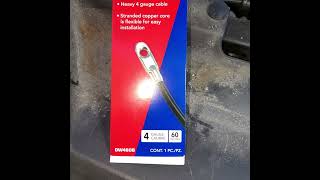
- High-Resistance Main Ground Connection: A corroded or failed engine-to-transmission or battery-to-chassis ground strap can cause floating voltages and disrupt module communication across the entire vehicle, triggering codes like U1517. One owner reported that the final fix for persistent electrical issues was adding a supplementary ground cable from the battery to the engine body. 🎬 Watch: How one owner fixed a no-start with a ground cable.
Diagnosis Steps
- Verify the battery's health. Test its voltage (should be ~12.6V with engine off) and load test it. Address any low voltage issues first. This is the most common and easiest first step.
- Scan the vehicle with a professional-grade tool capable of reading manufacturer-specific codes from all modules (not just the engine). Record all present codes, including any suffixes like '-87'.
- Check for applicable TSBs, specifically 08-111-14 (or its successor 08-013-15) for 2014 Cherokees. If the vehicle's build date (on or before July 11, 2014) and symptoms match, a BCM software update is the most likely fix.
- Also check for TSBs related to the Radio Frequency Hub Module (RFHM), as some also list U1517 as a symptom fixed by a software update.
- If software is up to date, inspect the main vehicle ground connections, particularly the battery negative cable to the chassis and any engine-to-chassis or engine-to-transmission ground straps.
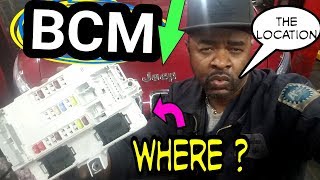
- Inspect the wiring and connectors for the BCM, which is located behind the passenger side kick panel. 🎬 Watch: How to locate and access the BCM in your Jeep. Look for any signs of damage, corrosion, or loose connections.
- Using an advanced scan tool, perform a network test to see which modules are online and communicating. A 'Proxy Configuration Alignment' may be necessary if modules are out of sync.
- If all other steps fail to identify the issue, the BCM itself may be faulty and require testing or replacement.
Parts You'll Likely Need
- Body Control Module (BCM)
(OEM #68141879AD)— This is the module that sets the code. While a software flash is the most common fix, hardware failure requires replacement of the module itself. The part number has been superseded by 68141879AC, AE, AF, AG, AH, and AI, which are generally interchangeable.
Trusted brands: Mopar
OEM price range: $300-$500
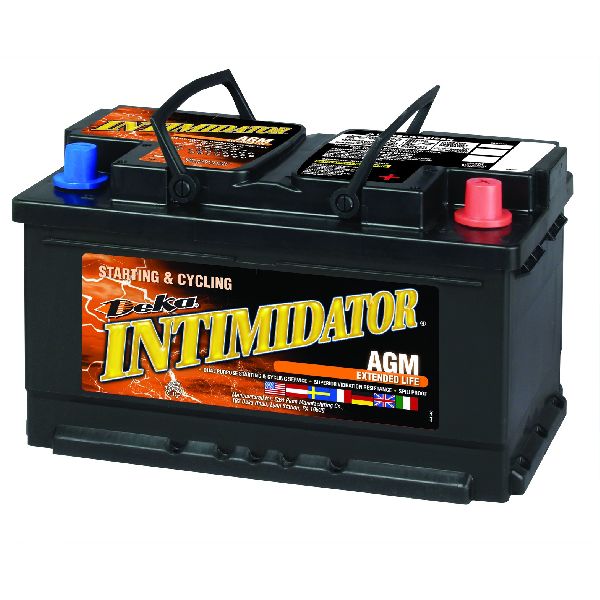
Aftermarket price range: $250-$400 - Automotive Battery — Low or unstable system voltage is a frequent trigger for communication codes like U1517.
Trusted brands: Mopar, Interstate, DieHard
OEM price range: $200-$350
Aftermarket price range: $150-$250
Related Codes That Often Appear With This One
- U1220-87 — Lost Steering Lock Request Message - This code is listed in the same TSBs as U1517 and points to a broader communication issue on the same network.
- B2199-17 — Battery Voltage - Circuit Voltage Above Threshold - This code is also mentioned in the TSBs and strongly suggests that power supply issues are a related factor.
- U0216 — Lost Communication With Driver Door Switch - Another communication code mentioned in TSB 08-111-14, indicating a network-wide problem.
Technical Service Bulletins (TSBs) & Recalls
- 08-013-15: Supersedes TSB 08-111-14, elevating the BCM software update to an RRT (Rapid Response Transmittal) for a list of codes including U1517-87.
- 08-111-14: The original TSB providing the specific repair procedure (BCM software update) for a list of symptoms and codes including U1517-87 on 2014 Jeep Cherokees built on or before July 11, 2014.
- Unnamed RFHM TSB: A separate TSB also identifies U1517-87 as a code that can be resolved by updating the software on the Radio Frequency Hub Module (RFHM).
Platform-Specific Known Issues
- For 2014 Jeep Cherokees built on or before July 11, 2014, TSB 08-111-14 was released to fix a software bug that could cause U1517 and a host of other electrical symptoms. The prescribed repair is a BCM software update.
- TSB 08-013-15 superseded 08-111-14, elevating it to a Rapid Response Transmittal (RRT), indicating a higher priority for dealers to perform the update.
Mechanic-Grade Diagnostic Values
- System Voltage During Module Flashing — expected: Stable voltage between 13.2 and 13.5 volts.. Failure: Voltage dropping below 13.2V or exceeding 13.5V can interrupt the procedure and corrupt the module.
- LIN Bus Reference Voltage (DVOM) — expected: 7 to 12 volts from the master module to the slave module on the LIN wire.. Failure: A constant 0V may indicate a short to ground, while a constant 12V may indicate an open circuit or inactive master module.
Hidden / Shadow Codes Worth Checking
- U1517-87: The '-87' suffix is a manufacturer-specific identifier meaning 'Missing Message'. This confirms the BCM is not receiving an expected security communication from another module. (see via A professional scan tool like FCA's wiTECH or an advanced aftermarket scanner capable of reading manufacturer-specific codes.)
Scan Tool Commands That Help
- wiTECH: Proxy Configuration Alignment — This function must be performed after replacing a network module (like the BCM or RFHM) or sometimes after a battery disconnect or software flash. It synchronizes all modules on the CAN bus, resolves configuration mismatches, and can fix issues like a flashing odometer or non-functional features.
- wiTECH: Restore Vehicle Configuration — This is sometimes performed before a Proxy Alignment. It forces the BCM to reload the vehicle's factory configuration data, which can be necessary if the current configuration has become corrupt.
- wiTECH: Clear All DTCs — This is a mandatory final step after any reprogramming or proxy alignment procedure to clear out temporary faults set during the process.
Wiring & Ground Locations
- BCM Location — Behind the passenger side kick panel, to the right of the glove box.. This is the physical location of the module setting the code. Physical inspection for water intrusion, connector damage, or loose connections should start here.
- G905A — On the left side of the engine compartment.. This is a primary ground point for the Body Control Module. A poor connection at this location can cause unstable voltage and communication errors for the BCM, leading to codes like U1517.
Real Owner Repair Stories
- Go-Parts forum analysis (2014 Jeep Cherokee) — Multiple, persistent electrical issues and communication codes.
❌ Tried (didn't work) Replacing modules, clearing codes.
✅ What actually fixed it The final fix was installing a new, supplementary ground cable from the battery negative terminal to a solid point on the engine body. The original engine-to-transmission ground strap had developed high resistance, causing widespread communication faults. - MHH Auto forum user (2020 Ram 6.7 (similar FCA architecture)) — No-start condition, engine runs for a few seconds then shuts off, code U1517 present after replacing ECM with a used unit.
❌ Tried (didn't work) Programming the used ECM with the correct VIN.
✅ What actually fixed it The 'secret code' (immobilizer security keys, called Minikrypt keys) had to be transferred from the original ECM to the replacement ECM using specialized software (Calterm). A simple VIN write was not sufficient to satisfy the security handshake with the BCM.
"I Checked Everything" — The Actual Cause
- In cases of intermittent communication codes like U1517, standard diagnostic tests on the BCM and its immediate wiring may show no faults. The root cause can be a high-resistance ground elsewhere in the system, such as a corroded main engine or battery ground strap, which will not be found with module-specific tests but can be identified by performing voltage drop tests on the main ground cables.
OEM Part Supersession History
68141879AD→68141879AC, 68141879AE, 68141879AF, 68141879AG, 68141879AH, 68141879AI— Standard part revisions for bug fixes and hardware improvements.
Heads up: A replacement BCM is NEVER plug-and-play. It must be programmed with the vehicle's VIN and configuration data. Many dealers will not program a used BCM, forcing the use of a third-party module cloning service or advanced tools like AlfaOBD. Failure to program will result in a no-start condition and multiple system malfunctions.
Model Year Variations Within This Range
- 2014 (early builds): Vehicles built on or before July 11, 2014, are subject to TSB 08-111-14, which specifically calls for a BCM software update to fix the bug causing U1517. Vehicles built after this date should have the updated software from the factory, making a software glitch a less likely cause.
Helpful Videos

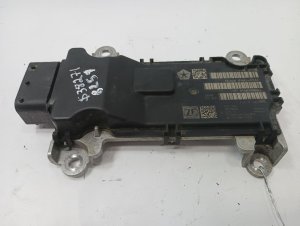
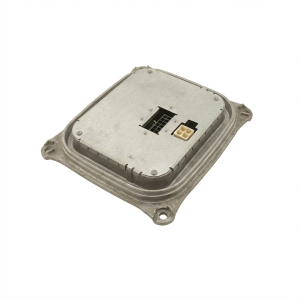
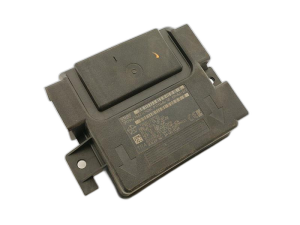
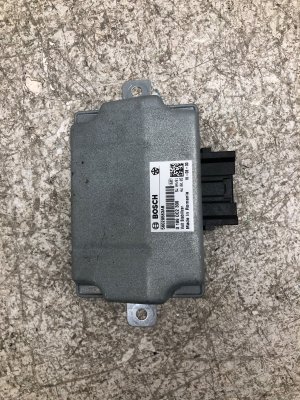
Used OEM Parts in Stock
New Aftermarket Parts Available


The information in this article is provided for general reference and educational purposes only. Vehicle specifications, procedures, and part compatibility can vary by production date, trim level, and region. Always consult your vehicle's factory service manual and verify part numbers before purchasing or performing repairs. Safety-critical components such as airbags, seat belts, and braking systems should be installed by a qualified professional.
- Jeep CHEROKEE:
- 🧭 Diagnostic Flowchart
- 🎬 Helpful Videos
- 🛍️ Shop This Part
- What's Unique About the 2014-2014 Jeep CHEROKEE
- Symptoms You May Notice
- Most Likely Causes
- Rare But Worth Checking
- Diagnosis Steps
- Parts You'll Likely Need
- Related Codes That Often Appear With This One
- Technical Service Bulletins (TSBs) & Recalls
- Platform-Specific Known Issues
- Mechanic-Grade Diagnostic Values
- Hidden / Shadow Codes Worth Checking
- Scan Tool Commands That Help
- Wiring & Ground Locations
- Real Owner Repair Stories
- "I Checked Everything" — The Actual Cause
- OEM Part Supersession History
- Model Year Variations Within This Range
- 🎟️ Get 5% Off