

OBD-II Code U1521: Lost Communication With a LIN Bus Device
What U1521 means, why it triggers, and how to fix it
- U1521 indicates the Body Control Module lost communication with a specific LIN bus device, most commonly a headlight ballast or blind spot sensor.
- On GM vehicles, replacing a headlight assembly without transferring the original adaptive control module guarantees a U1521 code.
- Installing cheap aftermarket electronic modules often fails to clear the code because they lack the correct communication circuitry.
- Replacing Ford blind spot sensors or Toyota headlight components requires professional scan tool calibration costing $100 to $250 to clear the U1521 code.
What Does U1521 Mean?
U1521 means your car's main computer (the Body Control Module) lost connection to a smaller electronic part, such as a headlight module, power window motor, or blind spot sensor. This connection occurs on the Local Interconnect Network (LIN) bus, a single-wire communication line for electronic components.
Technical definition: Lost Communication with Device on LIN Bus. The Body Control Module (BCM) or another primary control unit stopped receiving data from a specific subordinate module on the Local Interconnect Network (LIN) bus.
Can I Drive With U1521?
Yes, But With Caution. You can drive, but a key feature like headlights, power windows, or blind spot monitors will not work. Driving with an inoperative headlight is illegal at night and poses a significant safety risk. A non-functional blind spot monitor increases collision risk. Seek repairs promptly to restore these safety features.
Common Causes
- Control Module Not Transferred to New Assembly (GM Specific) (Very Common) — On GM vehicles with adaptive headlights, new replacement headlamp assemblies do not include the small, separate adaptive control module. Technicians must transfer this module from the old headlamp to the new one. Forgetting this step immediately triggers a U1521 code.
- Faulty Control Module (Water Intrusion) (Very Common) — The electronic module itself (like a headlight ballast or blind spot sensor) is the most frequent point of failure. Water intrusion from a cracked headlight or tail light housing destroys the internal circuitry.
- Use of Incompatible Aftermarket Part (Very Common) — Installing a cheap aftermarket module is a major cause. These parts perform their basic function (like turning on a light) but lack the correct internal circuits to communicate on the LIN bus, preventing the U1521 code from clearing.
- Wiring or Connector Damage (Common) — The single wire for the LIN bus circuit is damaged, cut, or shorted. Connectors become loose, corroded (appearing as green or white powder), or lose their ground connection to the vehicle frame, interrupting the signal.
- Faulty Vehicle Level Sensor (Toyota/Lexus specific) (Less Common) — On Toyota and Lexus vehicles with auto-leveling headlights, a faulty rear suspension height sensor causes this code. The headlight control module relies on data from this sensor; if lost, the module stops communicating correctly with the BCM.
- Software or Calibration Glitch (Less Common) — The communication loss is sometimes a software bug rather than a hardware failure. Manufacturers release Technical Service Bulletins (TSBs) requiring a reprogramming of the Headlamp Control Module or BCM to fix these glitches.
- Low Battery Voltage (Rare) — An unstable power supply from a weak battery or failing alternator causes unpredictable behavior in electronic modules, leading to communication dropouts.
- Faulty Body Control Module (BCM) (Rare) — The main computer itself fails to communicate with one or more modules on the LIN bus, setting this code.
Symptoms
- Malfunctioning Feature (Lights, Windows, Sensors) — The part that lost communication stops working correctly. A headlight fails to turn on, flickers, or loses its adaptive swiveling function. A power window stops moving, or a blind spot warning light stays illuminated.
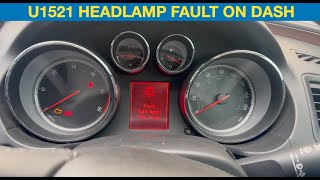
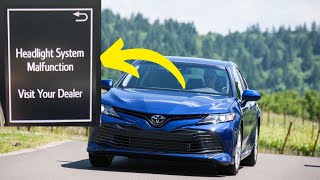
- Warning Message on Dashboard — You see a specific message like "Service Adaptive Headlamps," "Headlight System Malfunction," or "Blind Spot System Fault," accompanied by a check engine light.
- Stabilitrak or Traction Control Light On — On GM models, a communication fault on the LIN bus disables other systems, like Stabilitrak or traction control, triggering their respective warning lights.
- Code Cannot Be Cleared (also visible on scanner) — After a part replacement, the U1521 code immediately returns after being cleared with a scan tool. This confirms an incompatible part, an unresolved wiring issue, or a missing post-replacement calibration.
Diagnostic Flowchart
Tap your situation to follow the diagnostic path that matches what you're seeing on this code.
Common Fixes & Costs
- Transfer Original Module to New Headlight Assembly (GM) — Parts: $0, Labor: $75-$150, ~1.0 hr book time (DIY)
- Replace Faulty Control Module (e.g., Headlight Ballast)
— Parts: $150-$300, Labor: $100-$200, ~1.0 hr book time
(Intermediate)
Buick Enclave (2008-2012): OEM 15906514 - Replace Faulty Blind Spot Sensor (SODL/SODR)
— Parts: $350-$450, Labor: $200-$400, ~2.0 hr book time
(Professional)
Ford F-150 (2018-2020): OEM JC3Z-14C689-C - Replace Faulty Rear Height Control Sensor (Toyota)
— Parts: $350, Labor: $150-$250, ~1.5 hr book time
(Intermediate)
Toyota Highlander (2020-2024): OEM 89408-0E010 - Repair Damaged Wiring or Connector — Parts: $10-$50, Labor: $150-$700, ~3.5 hr book time (Professional)
- Reprogram Control Module(s) — Parts: $0, Labor: $100-$250, ~1.5 hr book time (Professional)
DIY vs Professional
- Transfer Original Module to New Headlight Assembly 🟢 Beginner
Tools: Screwdriver or small socket set. - Replace Faulty Control Module (e.g., Headlight Ballast) 🟢 Beginner
Tools: Socket set, screwdrivers, trim removal tools. - Replace Faulty Blind Spot Sensor (SODL/SODR) 🟢 Beginner
Tools: Socket set, trim removal tools, professional scan tool (e.g., FORScan, IDS). - Replace Faulty Rear Height Control Sensor (Toyota) 🟢 Beginner
Tools: Socket set, professional scan tool. - Repair Damaged Wiring or Connector 🟢 Beginner
Tools: Soldering iron, heat shrink tubing, wire strippers, multimeter, wiring diagrams.
Used vs. New Parts: Buying Guide
When a used part is worth it: Buying a used OEM part from a reputable salvage yard is a cost-effective alternative to new OEM, and is superior to a new, non-communicating aftermarket part.
Donor-vehicle mileage cap: roughly under 100000 miles for the part to have meaningful remaining life.
Donor quality checklist:
- Match the OEM part number EXACTLY. Superseded parts fail to communicate correctly.
- Inspect the part for signs of water damage, corrosion on pins, or cracked housings.
- Obtain the donor vehicle's VIN to verify compatibility.
- Prefer sellers that offer a short-term functional warranty (30-90 days).
Decision logic:
- If The fix is transferring the original module to a new assembly (common on GM) → Cost is $0, this is the first and best option.
- If A cheap aftermarket part is available → Avoid. High risk of the part functioning but not communicating, failing to clear the U1521 code.
- If A used OEM part is available and significantly cheaper than new OEM → Acceptable risk if the part number is an exact match and you verify it is from a non-flooded vehicle.
- If The repair requires post-installation calibration (e.g., Ford blind spot sensor) → Factor the cost of professional calibration ($100-$250) into your budget. Buying new OEM avoids paying for labor twice if the used part is faulty.
Warranty tradeoff: Used parts have a 30-90 day warranty. New aftermarket parts offer longer warranties but fail to solve the communication code. New OEM parts carry a 12-month warranty and guarantee compatibility.
Worst-case if a used part fails: $300-$800 if a used or cheap aftermarket part fails to communicate, requiring repeat labor.
What Happens If You Wait — Timeline
- 0-1 month: Code is set, a warning light is on, and a specific feature (e.g., one headlight, blind spot monitor) is inoperative. The vehicle fails OBD-II inspections. (MPG impact: 0%% · Added cost: $100-$300 (Potential traffic ticket for inoperative safety equipment))
- 1-6 months: If the cause is water intrusion, the initial module failure occurs. Continued moisture exposure corrodes the connector pins, turning them green or white. (MPG impact: 0%% · Added cost: $50-$150 (The repair now requires a new connector/pigtail in addition to the module).)
- 6-12 months: Corrosion spreads from the connector into the copper wiring of the harness, causing high resistance. The faulty module causes a parasitic battery drain, leading to a dead battery. (MPG impact: 0%% · Added cost: $300-$900 (Requires complex harness section repair and potentially a new battery).)
- 12+ months: Catastrophic failure. The corroded wiring harness shorts the LIN bus to power or ground. This short feeds voltage back into the Body Control Module (BCM), damaging the master computer. (MPG impact: 0%% · Added cost: $1,500-$3,000+ (Repair includes a new BCM, programming, and full wiring harness replacement.))
Cost of Not Fixing It
- Immediate (0-1 month): Loss of a key vehicle function (e.g., no headlight, inoperative blind spot monitor). This poses a significant safety risk and leads to traffic citations. (Added cost: $100-$300 (Potential traffic ticket))
- Medium-Term (1-6 months): Guaranteed failure of any state vehicle inspection that includes an OBD-II scan, preventing registration renewal. (Added cost: $50-$100 (Failed inspection fees and re-test costs))
- Long-Term (6+ months): Continued moisture exposure leads to corrosion of the wiring harness. This turns a simple module replacement into a complex wiring repair and causes parasitic battery drains. (Added cost: $500-$2000+ (Potential wiring harness repair or replacement))
Diagnosis Steps
- Identify the Faulty Device with a Scan Tool
Use a professional-grade scan tool to read codes from the Body Control Module (BCM). The code description specifies which module is not communicating (e.g., 'Right Headlamp Control Module').
Tools: Professional OBD-II Scan Tool (Beginner) - Check for Technical Service Bulletins (TSBs)
Search for TSBs related to code U1521 for your vehicle. Manufacturers release bulletins for known issues, like GM bulletin PIT6002A about transferring headlight modules.
Tools: Internet access (Beginner) - Inspect the Wiring and Connectors
Visually inspect the wiring harness and connector going to the identified module. Look for corrosion (green or white powder), moisture, backed-out pins, or physical damage.
Tools: Flashlight, inspection mirror (Intermediate) - Swap Components (If Applicable)
If your vehicle has identical modules on the left and right sides, swap them. Clear the codes. If the fault code moves to the other side, the module is faulty. If the code stays, the problem is in the wiring.
Tools: Basic hand tools (sockets, screwdrivers) (Intermediate) - Test for Power and Ground
Using a multimeter, check for proper voltage and a good ground at the module's connector. A module cannot communicate without correct power.
Tools: Multimeter, vehicle-specific wiring diagram (Intermediate) - Pro Tip: Check LIN Bus Voltage with a Multimeter
Set your multimeter to DC volts. Connect the red probe to the LIN bus wire. A healthy LIN bus shows a rapidly toggling voltage. A voltage stuck at 0V indicates an open circuit or short to ground. A voltage stuck at 12V indicates a short to power.
Tools: Multimeter with MIN/MAX function, vehicle-specific wiring diagram (Advanced) - Pro Tip: Analyze LIN Bus Signal with an Oscilloscope
Use an oscilloscope for a definitive test. A healthy LIN bus signal is a clean square wave. A flat line at 0V or 12V confirms a broken wire, a short, or a faulty module pulling the network down.
Tools: Oscilloscope, wiring diagram (Professional)
When This Code Triggers (Freeze-Frame Conditions)
- Ignition Status: ON (The fault is detected during the initial power-on sequence when the master module (BCM) polls all subordinate LIN devices.)
- System Voltage: 11.8V - 14.5V (Code sets with the engine running or during a key-on-engine-off (KOEO) state. Low battery voltage triggers communication faults.)
- Odometer: N/A (The mileage at which the fault first occurred is recorded, which is crucial for tracking intermittent issues.)
- Fault Frequency Counter: 1-254 (This counter increments each time the fault condition is detected during a drive cycle, distinguishing between a single event and a recurring problem.)
Related Codes
- U1511 — The direct equivalent of U1521, but for the left side of the vehicle. If both codes are present, it points to a common cause like installing two incompatible aftermarket modules.
- U1531 / U1532 — LIN bus communication codes specifically for the headlamp leveling system. If seen with U1521, a software update is likely the required fix.
- B257C / B257D — Relates to the headlamp position sensor. This is a secondary effect of U1521. Fix the U1521 communication issue first, and the B-code resolves.
- U0073 — Control Module Communication Bus A Off. If present with U1521, it indicates a broader problem affecting the entire communication bus, such as a BCM fault.
Climate & Environmental Factors
- High Humidity and Heavy Rain: Moisture penetrates aging headlight and tail light seals. This causes corrosion and shorts out electronics, primarily affecting Ford blind spot sensors and Vauxhall headlight ballasts.
- Car Washes: High-pressure water jets aimed directly at light assemblies force water past seals, leading to condensation and module failure.
- Cold Weather: On GM vehicles, a 'Service Adaptive Headlamps' message appears in cold temperatures due to a software glitch requiring a module reprogramming.
- Road Salt (Salt Belt Regions): Salt spray accelerates the corrosion of wiring harnesses and connector pins. A corroded LIN bus wire causes an immediate communication failure.
How to Talk to a Mechanic About This Code
Say this: "I have a U1521 code, which my scan tool says is a 'Lost Communication with a LIN Bus Device'. The symptom is [mention your specific symptom, e.g., 'the right headlight is out' or 'I have a blind spot system fault']. I'd like to book a diagnostic appointment to confirm the cause. I suspect it is the module, the wiring, or an incompatible aftermarket part."
This signals you understand the code is for a communication network fault, not just a bad bulb. Mentioning the specific symptom directs the technician to perform a proper electrical diagnosis rather than just swapping the most obvious part.
Avoid saying:
- 'My check engine light is on, can you look at it?' (This is too vague and invites a broad, expensive diagnostic process.)
- 'Just fix whatever is wrong.' (This gives the shop a blank check and leads to unnecessary repairs.)
- 'My headlight is out, I probably just need a new one.' (This invites them to replace an expensive assembly without diagnosing the underlying electrical fault.)
Questions to ask before authorizing the repair:
- What specific module is not communicating according to your scan tool?
- Have you tested the LIN bus wiring for power, ground, and data signal at the module connector?
- If a new module is needed, are you using an OEM or OEM-equivalent part?
- Does this repair require any post-installation programming or calibration to make it work?
- Will you provide a detailed breakdown of parts and labor on the final invoice?
Where to Take It: Dealer vs Independent vs Chain
- Dealer:
A strong, safe choice, especially if programming is required. They have the exact tools and information, but at the highest cost.
Best for: Vehicles still under warranty., Repairs that require manufacturer-specific software for programming or calibration., Complex, model-specific known issues documented in TSBs.
Downsides: Highest labor rates., Defaults to replacing an entire expensive assembly or wiring harness when a smaller component repair suffices. (Typical cost: +50% vs. baseline) - Independent Shop:
The best fit if you find a reputable independent shop with strong electrical diagnostic skills. Ask if they have the tools to program/calibrate modules for your specific vehicle brand.
Best for: Out-of-warranty vehicles where cost is a major factor., Shops that specialize in vehicle electronics or diagnostics., Common U1521 causes like a failed module or known wiring issue.
Downsides: Shop quality and diagnostic capabilities vary widely., Lacks the latest manufacturer-specific programming tools. (Typical cost: +0% vs. baseline) - Chain Shop:
AVOID. This complex electrical fault is beyond the scope of most chain repair shops and results in misdiagnosis.
Best for: Simple, unrelated maintenance like oil changes or tires.
Downsides: Technician skill for complex electrical diagnosis is limited., High pressure to sell parts leads to replacing components without proper diagnosis., Lacks the specialized tools for LIN bus diagnostics or module programming. (Typical cost: -10% vs. baseline)
When to Walk Away From the Repair
If the estimated repair cost for the U1521 fault exceeds 40-50% of your car's private-party value, seriously consider whether to repair, sell, or trade in the vehicle.
- Car worth $5000, fix is $2500: Walk away. The repair cost is 50% of the car's value. This level of investment in an older vehicle is risky.
- Car worth $15000, fix is $1200: Fix it. The repair cost is well below the 50% threshold. Fixing the issue preserves the vehicle's value and safety features.
- Car worth $3000, fix is $700: Borderline, but likely worth fixing. The cost is a significant percentage of the value, but less than a down payment on a replacement vehicle.
What Scan Tool You Need for This Code
Minimum: A scan tool that reads codes beyond the standard engine module, specifically accessing the Body Control Module (BCM) and manufacturer-specific 'U' codes.
A basic $20 code reader will not see the U1521 code, as it is stored in the BCM, not the Engine Control Module (ECM). Diagnosing this issue requires seeing which specific module is offline.
Budget: BlueDriver Pro (~$100) — Reads manufacturer-specific codes from modules like the BCM. It identifies the U1521 code and provides freeze-frame data, which is essential for initial diagnosis.
Mid-range: Autel MaxiLink ML629 / Foxwell NT604 Elite (~$150) — Offers full system scanning, including the BCM, and clears codes from all modules. Helps differentiate between a simple fault and a complex network-wide problem.
Professional: Autel MaxiCOM MK808 / MK906BT (~$500-1200) — Professional-grade, bidirectional scan tools. Essential for a complete U1521 diagnosis. Performs active tests, views live LIN bus data streams, and performs the required calibration after a new module is installed.
Rent vs buy: For a one-time diagnosis, a budget pick like BlueDriver is a worthwhile investment. However, since many U1521 fixes require professional-level calibration after the part is replaced, you still need a shop. Do not invest in a pro-level tool for a single use.
How to Clear the Code After You Fix It
- Ensure the root cause of the fault (e.g., faulty module, broken wire) has been repaired.
- With the ignition off, reconnect any disconnected components and the vehicle battery.
- Use a professional OBD-II scan tool to clear the U1521 code from the Body Control Module (BCM).
- Cycle the ignition on and off, then restart the vehicle and activate the repaired component to confirm communication is restored.
Drive cycle (~5 minutes): A specific drive cycle is not required for a LIN bus fault. The BCM re-polls the module at the next key-on event. If the repair was successful, the code stays clear.
Readiness monitors affected: No emissions-related readiness monitors are directly affected by U1521.
Before emissions retest: drive at least 50 miles to fully set monitors.
Watch out for:
- The code returns instantly if the root cause (e.g., incompatible aftermarket part, wiring issue) is not fixed.
- Disconnecting the battery does not clear a hard fault and erases unrelated emissions readiness monitor data.
- Forgetting that post-replacement calibration is required for certain parts (e.g., Ford blind spot sensors) prevents the code from clearing.
Will This Fail Emissions / State Inspection?
Yes — this code typically fails an OBD-II emissions inspection.
- California: An active U-code that illuminates a dashboard warning light causes an automatic smog check failure. The presence of a Permanent Diagnostic Trouble Code (PDTC) also causes a failure.
- New York: Any active Diagnostic Trouble Code (DTC) that commands a warning light results in an inspection failure.
- Texas: An active U1521 code illuminates the check engine light, which fails the emissions test in the 17 counties that still require it.
Most Commonly Affected Vehicles
- Buick Enclave (2008-2017) — Extremely common for adaptive forward lighting. TSB PIT6002A notes failure is due to not transferring the module to a new headlamp.
- GMC Acadia (2007-2017) — Shares the same adaptive headlight system and module-transfer issue with the Buick Enclave.
- Chevrolet Traverse (2009-2017) — Prone to the U1521 code when replacing adaptive headlight assemblies without swapping the control module.
- Chevrolet Malibu (2016-Present) — Code U1521 appears for headlamp communication, which also triggers a 'Service Stabilitrak' message.
- Vauxhall / Opel Insignia (2009-2017) — Prone to U1521 due to water ingress into the headlight assembly, destroying the ballast. Cheap aftermarket ballasts fail to resolve the code.
- Ford F-150, Edge, Explorer (2015-Present) — Points to a faulty Side Obstacle Detection (SODL/SODR) module inside the tail light assembly. Replacement requires calibration with a dealer-level scan tool.
- Toyota Highlander, Camry (2015-Present) — A 'Headlight System Malfunction' warning is caused by a faulty rear suspension height sensor (part #89408-0E010). The system requires initialization after replacement.
- Hyundai Tucson (2016-Present) — LIN bus codes appear for various components. Dealerships often require full harness replacement rather than splicing individual wires.
Manufacturer-Specific Notes
- General Motors (Buick, GMC, Chevrolet): Per TSB PIT6002A, a U1521 code after replacing an adaptive headlight is caused by failure to swap the original control module to the new assembly.
- General Motors (Buick, GMC, Chevrolet): A 'Service Adaptive Headlamps' message appearing in cold weather without any actual malfunction is a software glitch requiring a Headlamp Control Module reprogramming.
- Ford: U1521 is commonly triggered by a faulty blind spot sensor (SODL/SODR module) located in the tail light assembly. The module must be calibrated with a proper scan tool after replacement.
- Toyota / Lexus: A 'Headlight System Malfunction' warning is caused by a failed rear suspension height sensor that provides data for the adaptive headlight system. The system must be re-initialized after repair.
- Vauxhall / Opel: Water leaking into the headlight housing destroys the externally mounted ballast. Using cheap aftermarket ballasts allows the light to work but fails to fix the U1521 communication code.
Real Owner Stories
2009 Vauxhall Insignia - Headlight Works but Code Won't Clear
Owner experienced a 'Check Right Headlamp' fault on the dash. The headlight assembly cracked, letting water in, which destroyed the original ballast. A new headlight and a cheap aftermarket ballast were installed.
Outcome: The cheap aftermarket ballast was the problem. It powered the bulb but could not communicate with the car's computer. Replacing it with a genuine Hella OEM unit allowed the U1521 code to clear successfully.
Lesson: Using a cheap aftermarket electronic module is a major risk for communication codes. It performs the basic function but lacks the correct circuitry to 'talk' to the car.
2015 Buick Enclave - 'Service Adaptive Headlamps' After Professional Repair
A collision shop replaced the right headlamp with a new OEM part. After installation, the adaptive headlamp feature was inoperable and a U1521 code was present.
Outcome: An update to the TSB noted that even with a correct module swap on the passenger side, the adaptive feature sometimes fails, requiring further GM engineering investigation.
Lesson: Even when following the correct procedure, manufacturer-level software issues exist. Always check for the absolute latest TSBs.
2020 Toyota Highlander - 'Headlight System Malfunction' Misdiagnosis
Owner saw a 'Headlight System Malfunction' warning and a U1521 code. The headlights worked, but the auto-leveling feature was disabled.
Outcome: Forum research revealed the malfunction is caused by a failed rear suspension height sensor. Replacing the rear height sensor (Part #89408-0E010) and performing a system initialization fixed the problem.
Lesson: The component that sets the code is not always the root cause. On interconnected systems, the failure of one sensor causes a communication fault in another.
How to Prevent This Code From Triggering
- Apply Dielectric Grease to Connectors (When replacing a bulb or performing any service that exposes a connector.) — Dielectric grease is a non-conductive, waterproof sealant. Applying it to rubber seals prevents moisture and road salt from causing corrosion on the pins.
- Inspect Headlight and Tail Light Seals (Annually, or after any minor collision.) — Cracks in light assembly seals allow water to enter, which is the primary killer of modules located inside (like Ford blind spot sensors or Vauxhall ballasts).
- Ensure Headlight Vents and Dust Covers are Secure (After every bulb change.) — If a vent is clogged or a dust cover is loose, moisture gets trapped inside, leading to condensation and module failure.
- Avoid High-Pressure Car Washes Aimed at Lights (Every car wash.) — Directing high-pressure water jets at the seams of headlights or tail lights forces water past healthy seals, increasing the risk of electronic failure.
Frequently Asked Questions
Why did my mechanic quote thousands of dollars to fix a single broken wire?
Dealership policies often forbid splicing data wires due to liability concerns. Their only authorized repair is replacing the entire wiring harness, costing thousands. An independent auto electric shop can perform a safe, reliable splice for a fraction of the cost.
My headlight works, but the U1521 code won't clear. Why?
This happens when using a cheap or incompatible aftermarket control module. The part powers the light bulb but lacks the proper circuitry to communicate with the car's computer. Replace it with an OEM or OEM-equivalent part.
I just replaced my headlight on my Buick/GMC and now I have this code. What did I do wrong?
You likely forgot to move the small, silver adaptive control module from your old headlight to the new one. New headlight assemblies do not include this module. Transferring the original module resolves the code.
Why does my Ford show a 'Blind Spot System Fault' with this U-code?
Ford blind spot monitoring modules (SODL/SODR) are located inside the tail light assemblies and communicate on the LIN bus. Code U1521 points directly to a failure of one of these modules. Water getting inside the tail light is the most common cause.
My new blind spot sensor/headlight was installed, but the code is still there. What's next?
Many modern components require a calibration or initialization procedure after installation. A blind spot sensor needs programming to the vehicle, and an adaptive headlight system needs to learn its position. Take the vehicle to a professional shop equipped with OEM programming tools.
Can a bad battery cause a U1521 code?
Yes. Electronic control modules are highly sensitive to voltage drops. A weak battery provides unstable power, causing modules to drop off the network and trigger communication codes. Test and replace a failing battery before diagnosing complex network issues.
What is a LIN bus and how does it work?
The Local Interconnect Network (LIN) bus is a low-cost communication network in vehicles. It uses a single wire to allow components like window switches or headlight motors to send data to a primary control module. It handles non-time-critical functions, unlike the faster CAN bus.
Could something else besides the headlight be causing this code?
Yes. On Toyota vehicles, a faulty rear suspension level sensor triggers a headlight communication code because the headlight module depends on its data. On GM vehicles, a software glitch causes the code and requires a module reprogramming.
My mechanic says my headlight has water in it and needs to be replaced. Is that right?
Minor condensation in vented headlights is normal and usually burns off. However, large water droplets, pooling water, or corroded electronics indicate failed seals. This water ingress destroys control modules and requires replacing the assembly.
Will U1521 cause my car to fail an inspection?
Yes. Modern vehicle inspections include an OBD-II scan. An active 'U' code that illuminates a dashboard warning light or disables a safety feature like headlights guarantees an inspection failure.
Key Takeaways
- U1521 indicates the Body Control Module lost communication with a specific LIN bus device, most commonly a headlight ballast or blind spot sensor.
- On GM vehicles, replacing a headlight assembly without transferring the original adaptive control module guarantees a U1521 code.
- Installing cheap aftermarket electronic modules often fails to clear the code because they lack the correct communication circuitry.
- Replacing Ford blind spot sensors or Toyota headlight components requires professional scan tool calibration costing $100 to $250 to clear the U1521 code.
Helpful Videos
Shop the Parts Behind U1521
Below are the parts most often responsible for code U1521, ranked by how frequently each one is the actual culprit (per the diagnosis above). Tap any to see what we have for your vehicle.



The information in this article is provided for general reference and educational purposes only. Vehicle specifications, procedures, and part compatibility can vary by production date, trim level, and region. Always consult your vehicle's factory service manual and verify part numbers before purchasing or performing repairs. Safety-critical components such as airbags, seat belts, and braking systems should be installed by a qualified professional.
- 🧭 Diagnostic Flowchart
- 🎬 Helpful Videos
- 🛍️ Shop This Part
- What Does U1521 Mean?
- Can I Drive With U1521?
- Common Causes
- Symptoms
- Common Fixes & Costs
- DIY vs Professional
- Used vs. New Parts: Buying Guide
- What Happens If You Wait — Timeline
- Cost of Not Fixing It
- Diagnosis Steps
- When This Code Triggers (Freeze-Frame Conditions)
- Related Codes
- Climate & Environmental Factors
- How to Talk to a Mechanic About This Code
- Where to Take It: Dealer vs Independent vs Chain
- When to Walk Away From the Repair
- What Scan Tool You Need for This Code
- How to Clear the Code After You Fix It
- Will This Fail Emissions / State Inspection?
- Most Commonly Affected Vehicles
- Manufacturer-Specific Notes
- Real Owner Stories
- 2009 Vauxhall Insignia - Headlight Works but Code Won't Clear
- 2015 Buick Enclave - 'Service Adaptive Headlamps' After Professional Repair
- 2020 Toyota Highlander - 'Headlight System Malfunction' Misdiagnosis
- How to Prevent This Code From Triggering
- Frequently Asked Questions
- Why did my mechanic quote thousands of dollars to fix a single broken wire?
- My headlight works, but the U1521 code won't clear. Why?
- I just replaced my headlight on my Buick/GMC and now I have this code. What did I do wrong?
- Why does my Ford show a 'Blind Spot System Fault' with this U-code?
- My new blind spot sensor/headlight was installed, but the code is still there. What's next?
- Can a bad battery cause a U1521 code?
- What is a LIN bus and how does it work?
- Could something else besides the headlight be causing this code?
- My mechanic says my headlight has water in it and needs to be replaced. Is that right?
- Will U1521 cause my car to fail an inspection?
- Key Takeaways
- 🎟️ Get 5% Off