

OBD-II Code U1522: Lost Communication With a Body System Device
The Ultimate 2026 Guide to Diagnosing and Fixing U1522
- U1522 indicates a specific electronic accessory—like an Intelligent Battery Sensor or active grille shutter—has stopped communicating with the main computer over the single-wire LIN bus.
- Test your battery and charging system first; a voltage drop below 12.4V is the most common hidden cause of LIN bus communication failures.
- Diagnosing U1522 requires a bi-directional scan tool capable of reading Body Control Module (BCM) codes to pinpoint the exact failed component.
- Avoid cheap aftermarket electronic modules, especially headlight ballasts, as they frequently lack the correct firmware to communicate on the network.
What Does U1522 Mean?
U1522 means your car's main computer, typically the Body Control Module (BCM), lost contact with a specific electronic accessory. Modern cars use a single-wire network called a LIN bus to connect components like battery sensors, headlight motors, or grille shutters. This code indicates one of those parts on a specific LIN bus (often labeled 'bus 2') stopped responding.
Technical definition: The official SAE/ISO definition is "LIN Bus 2 Lost Communication With Device 2." This indicates a master control module (like the BCM) failed to receive a signal from a specific slave device on the Local Interconnect Network (LIN) bus within a set timeframe. The exact device depends on the manufacturer's specific assignment for 'Bus 2' and 'Device 2'.
Can I Drive With U1522?
Yes, But With Caution. Yes, but with significant caveats. The risk depends entirely on the failed part. A failed headlight ballast dangerously reduces visibility. A failed Intelligent Battery Sensor (IBS) ruins a new $250 AGM battery within months. A stuck active grille shutter drops fuel economy by 1-2 MPG. Diagnose the specific module within a week to prevent secondary damage.
Common Causes
- Low or Unstable Battery Voltage (Very Common) — LIN bus communication requires stable system voltage. A weak battery, failing alternator, or corroded battery cable drops voltage below the communication threshold, triggering the code. Always test the battery first. 🎬 See how a weak battery causes multiple electrical system errors
- Wiring or Connector Problems (Very Common) — The single LIN bus wire is highly vulnerable to physical damage. Broken wires, chafed insulation, or green corrosion in connectors (especially near headlights or the battery) sever the communication link.
- Faulty Slave Module (Sensor/Motor/Switch) (Common) — The electronic module itself fails internally. Frequent culprits include a dead Intelligent Battery Sensor (IBS) on the negative battery terminal, a water-damaged headlight ballast, or a burned-out active grille shutter actuator.
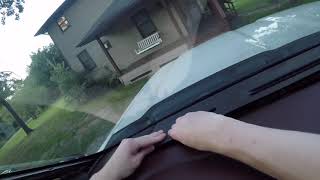
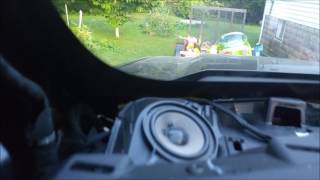
- Poor Master Module Ground (Common) — A loose or corroded main ground connection for the master module (e.g., the BCM ground G218 on GM vehicles 🎬 Watch: How to clean and tighten the G218 ground point) causes intermittent voltage drops, disrupting network communication.
- Blown Fuses (Uncommon) — The non-communicating module requires dedicated power. A blown fuse for that specific circuit prevents the module from powering on, resulting in a total loss of communication.
- Incorrect or Incompatible Part Installed (Uncommon) — Using cheap aftermarket electronics (like non-OEM headlight ballasts) or the wrong part number causes this code. Even if the part physically fits and functions, incompatible firmware prevents it from speaking the correct digital language on the LIN bus.
- Faulty Master Control Module (Rare) — The master module controlling the LIN bus (BCM or Instrument Cluster) fails internally. This usually triggers multiple network codes simultaneously, not just a single U1522.
- Aftermarket Accessory Interference (Rare) — Improperly spliced aftermarket alarms, remote starters, or lighting kits introduce electrical noise or draw excessive power, disrupting the sensitive LIN bus signal.
Symptoms
- Check Engine Light & Specific Dash Warnings — The Check Engine Light illuminates, often accompanied by specific messages like "Service Charging System," "Service AFL" (Adaptive Forward Lighting), or "Unavailable, Front Radar Obstruction."
- Battery Draining or Charging Issues — When caused by a faulty Intelligent Battery Sensor (IBS), the alternator defaults to a fixed charge rate. This causes premature battery failure, dead batteries after sitting, or active "Service Charging System" warnings.
- Malfunctioning Accessories — The specific feature controlled by the failed module stops working. Examples include stuck power windows, dead radio controls, or active grille shutters frozen in one position.
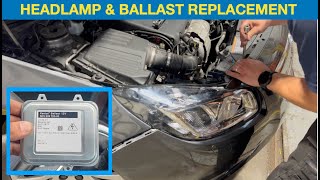
- Headlights Pointing Down or Inoperative — On vehicles with adaptive headlights, a U1522 code forces the headlamp control module into a fail-safe mode, pointing the lights straight down 🎬 Watch: Step-by-step guide to replacing a failed headlight ballast to avoid blinding oncoming traffic.
- Reduced Fuel Economy — A failed active grille shutter stuck in the open position disrupts vehicle aerodynamics, causing a permanent 1-2 MPG decrease at highway speeds.
Diagnostic Flowchart
Tap your situation to follow the diagnostic path that matches what you're seeing on this code.
Common Fixes & Costs
- Replace Intelligent Battery Sensor (IBS)
— Parts: $50-$150, Labor: $75-$150, ~0.7 hr book time
(DIY)
: OEM - Replace Active Grille Shutter Assembly
— Parts: $200-$450, Labor: $200-$400, ~1.5 hr book time
(Intermediate)
: OEM - Repair Damaged Wiring or Connector — Parts: $10-$50, Labor: $150-$500, ~2.0 hr book time (Intermediate)
- Replace Headlight Ballast/Control Module
— Parts: $300-$700, Labor: $100-$250, ~1.5 hr book time
(Intermediate)
: OEM - Repair BCM Ground Connection — Parts: $5, Labor: $75-$150, ~0.8 hr book time (DIY)
- Replace Alternator — Parts: $250-$800, Labor: $200-$450, ~2.0 hr book time (Professional)
DIY vs Professional
- Replace Intelligent Battery Sensor (IBS) 🟢 Beginner
Tools: Basic socket/wrench set, Bi-directional scan tool. - Repair BCM Ground Connection 🟢 Beginner
Tools: Socket set, wire brush, contact cleaner. - Replace Active Grille Shutter Assembly 🟢 Beginner
Tools: Socket/wrench set, trim removal tools, rivet gun. - Repair Damaged Wiring or Connector 🟢 Beginner
Tools: Multimeter, wire strippers, soldering iron, marine heat shrink. - Replace Headlight Ballast/Control Module 🟢 Beginner
Tools: Socket/wrench set, trim removal tools, Torx bit set. - Replace Alternator 🟢 Beginner
Tools: Serpentine belt tool, extensive socket/wrench set.
Used vs. New Parts: Buying Guide
When a used part is worth it: Purchase used for expensive electronic modules (like headlight ballasts or grille shutters) on vehicles over 10 years old, provided the seller offers a 30-day warranty.
Donor-vehicle mileage cap: roughly under 100000 miles for the part to have meaningful remaining life.
Donor quality checklist:
- Verify the exact part number matches; visually identical parts contain incompatible firmware.
- Inspect connector pins for green corrosion, indicating fatal moisture damage.
- Avoid parts pulled from flood-damaged vehicles.
Decision logic:
- If The part is an Intelligent Battery Sensor (IBS). → Buy new OEM. Used sensors are highly prone to failure and cost savings are minimal.
- If The part is a headlight ballast and the vehicle is over 10 years old. → Buy a warrantied used OEM part. Avoid cheap new aftermarket ballasts.
- If A quality aftermarket brand offers the part for 50% less than OEM. → Buy new aftermarket, but verify LIN bus compatibility in user reviews.
Warranty tradeoff: Used parts carry a 30-90 day part-only warranty. New OEM parts offer 1-2 years of coverage. If a used module fails, you pay the labor cost twice.
Worst-case if a used part fails: $400 in repeated labor costs if a used electronic module fails after installation.
What Happens If You Wait — Timeline
- 0-1 month: Code sets. Auto Start/Stop disables. The alternator defaults to a fixed 14.0V charge rate. (MPG impact: 0-1%% · Added cost: $0)
- 1-4 months: The fixed charge rate consistently undercharges or overcharges the AGM battery, permanently reducing its capacity. (MPG impact: 0-1%% · Added cost: $100 in wasted battery life.)
- 4-12 months: The battery degrades completely, causing slow cranking, no-start conditions, and random electrical glitches. (MPG impact: 0-1%% · Added cost: $250 for a mandatory new AGM battery.)
- 12+ months: The alternator burns out from running at maximum output to compensate for the dead battery and failed sensor. (MPG impact: 0-1%% · Added cost: $1000 for a new alternator and battery.)
Cost of Not Fixing It
- Immediate: Failed emissions inspection. An illuminated Check Engine Light is an automatic fail in OBD-II testing states. You also lose the function of the failed accessory. (Added cost: $50 for a failed inspection and re-test fee.)
- 1-6 months: If the Intelligent Battery Sensor (IBS) failed, the alternator overcharges or undercharges the battery, destroying a new AGM battery rapidly. A stuck grille shutter causes a permanent 1-2 MPG loss. (Added cost: $250 for a prematurely ruined AGM battery, plus increased fuel costs.)
- 6+ months: Continued improper charging from a bad IBS forces the alternator to run at maximum output constantly, burning out its internal voltage regulator. (Added cost: $800-$1200 for a replacement alternator and labor.)
Diagnosis Steps
- Verify Battery and Charging System Health
Low voltage is the most common hidden cause of communication faults. Use a multimeter to check battery voltage with the engine off (must be >12.4V). Start the engine; voltage must stabilize between 13.5V and 14.5V. Perform a load test to rule out internal battery degradation.
Tools: Multimeter, Battery Load Tester (Beginner) - Perform a Full System Scan
Connect a bi-directional scan tool to read codes from ALL modules. A basic $20 reader misses BCM codes. Identify which module is reporting the U1522 fault and look for accompanying B-prefix (Body) codes to pinpoint the exact non-communicating device.
Tools: Advanced OBD-II Scan Tool (Intermediate) - Check for Technical Service Bulletins (TSBs)
Search a repair database for TSBs related to U1522 for your specific VIN. Manufacturers frequently release bulletins for known software bugs, bad grounds (like GM's G218), or redesigned parts that save hours of diagnostic time.
Tools: Online Repair Database (Beginner) - Visual Inspection of the Suspect Circuit
Locate the non-communicating module identified in Step 2. Inspect its wiring harness for chafed insulation, broken wires, or green corrosion inside the connector. Pay special attention to areas exposed to water, like headlights or the lower front bumper.
Tools: Flashlight, Inspection Mirror (Beginner) - Check for Power and Ground at the Module
The slave module requires power and ground to communicate. Disconnect the module. Turn the key ON. Use a multimeter to verify battery voltage at the power pin and less than 0.1V drop at the ground pin. If power is missing, trace the circuit back to the fuse box.
Tools: Multimeter, Vehicle Wiring Diagram (Advanced) - Isolate the Faulty Module
If multiple devices share the same LIN bus, unplug them one at a time. Clear the codes after each disconnect. If communication with the remaining modules restores after unplugging a specific device, that device has an internal short pulling the entire network down.
Tools: Scan Tool, Basic Hand Tools (Advanced) - Test the LIN Bus Wire Integrity
Disconnect the battery. Unplug both the master module (BCM) and the slave module. Measure resistance on the LIN bus wire from end to end; it must be under 0.5 ohms. Next, check for shorts by measuring resistance between the LIN wire and ground, then the LIN wire and power. Both must read infinite (Open Line).
Tools: Multimeter (Advanced) - Scan Tool Live Data Analysis
If the suspect module is an Intelligent Battery Sensor (IBS), monitor its live data PIDs. Look for illogical readings, such as a battery temperature of -40°F, a current reading stuck at 0 amps, or a frozen state of charge. Irrational data confirms the sensor is powered but internally failed.
Tools: Advanced OBD-II Scan Tool (Advanced) - Pro Tip: LIN Bus Signal Analysis (Oscilloscope)
Connect an oscilloscope to the LIN bus wire with the system active. A healthy signal shows a clean square wave switching between battery voltage (recessive state) and near ground (dominant state, <1V). A flatline, distorted wave, or voltage stuck at 4V proves a hard module failure or wire short.
Tools: Oscilloscope, Wiring Diagram (Professional) - Pro Tip: Parasitic Draw Test Isolation
Internally shorted modules often cause parasitic battery drains. Perform a parasitic draw test. Pull the fuse for the suspect LIN bus circuit. If the amperage draw drops immediately, the fault lies within that specific circuit, confirming the need for module replacement or wire repair.
Tools: Multimeter with Amp Clamp (Professional)
When This Code Triggers (Freeze-Frame Conditions)
- System Voltage: 12.5-14.5V (Code sets instantly if voltage drops below 12.0V during engine crank or normal operation.)
- Engine State: On / Running (Fault is detected when the ignition is ON and the master module actively polls the slave device.)
- Vehicle Speed: 0-70 mph (Occurs at any speed, as the network continuously monitors device status.)
- Engine Coolant Temp: 40-215°F (Temperature independent; occurs from cold start to fully warmed up.)
Related Codes
- U1510-U155D — These are all LIN bus communication codes. The specific number identifies the bus and device. For example, U1510 on a Silverado is the active grille shutter, while U1522 on an Insignia is the right headlight ballast.
- P0562 — System Voltage Low. If P0562 is present alongside U1522, the low voltage is the root cause. The failing battery or alternator forces the LIN bus module to shut down. Fix P0562 first.
- B-prefix or C-prefix codes — Body (B) or Chassis (C) codes specify the exact fault location. Pairing U1522 with a code like B2590 (Left Cornering Lamp Circuit Open) confirms the failure is inside the headlight assembly.
- U0073 — Control Module Communication Bus A Off. This indicates a severe failure of the main CAN bus network. If paired with U1522, the master module (BCM) itself has likely failed or lost power.
Climate & Environmental Factors
- High Humidity & Road Salt: Saltwater accelerates corrosion inside electrical connectors and exposed modules (like headlight ballasts). This creates high resistance on the LIN bus wire, directly causing the U1522 communication loss.
- Extreme Cold: Cold temperatures drastically reduce battery voltage. A weak battery drops below the required communication threshold during a cold start, causing modules to temporarily drop offline and set the code.
- High Heat: Sustained engine bay heat degrades wire insulation, making it brittle and prone to cracking. This exposes the LIN bus wire to grounding out against the chassis.
How to Talk to a Mechanic About This Code
Say this: "My Check Engine Light is on with code U1522, indicating a LIN bus communication failure. I am also experiencing [insert symptom, e.g., a 'Service Charging System' warning]. I need a diagnostic appointment to trace the specific module or wiring causing the network drop."
This proves you understand it is a network issue, preventing the shop from blindly throwing parts at the car. It forces the technician to check wiring, grounds, and system voltage first.
Avoid saying:
- 'Just fix the check engine light.'
- 'I think the battery sensor is bad, replace it.'
- 'Do whatever it takes to pass emissions.'
Questions to ask before authorizing the repair:
- Did you verify the battery and charging system voltage first?
- Did you confirm power and ground at the failed module's connector?
- Are you installing a genuine OEM part to ensure network compatibility?
- Does this repair include the necessary scan tool relearn procedure?
Where to Take It: Dealer vs Independent vs Chain
- Dealer:
Best for: Vehicles under factory warranty., Issues covered by specific TSBs or extended warranties (like BMW grille shutters)., Complex European vehicles requiring proprietary software.
Downsides: Labor rates are 50% higher than independent shops., Dealers replace entire assemblies rather than repairing a single broken wire. (Typical cost: +50% vs. baseline) - Independent Shop:
The best choice, provided you select a shop specializing in electrical diagnostics rather than general mechanics.
Best for: Out-of-warranty vehicles., Finding an automotive electrical diagnostic specialist., Cost-effective wiring repairs.
Downsides: Requires vetting to ensure they possess advanced bi-directional scan tools and oscilloscope experience. (Typical cost: +0% vs. baseline) - Chain Shop:
AVOID. Chain shops cannot accurately diagnose LIN bus communication failures.
Best for: Oil changes and brake pads.
Downsides: Technicians lack training for complex network diagnostics., High risk of the 'parts cannon' approach, replacing random parts until the light turns off. (Typical cost: -10% vs. baseline)
When to Walk Away From the Repair
If the estimated repair cost exceeds 40% of the vehicle's Kelley Blue Book private-party value, reconsider the repair.
- Car worth $4000, fix is $2000: Borderline. Get a second opinion. The repair is 50% of the car's value.
- Car worth $12000, fix is $800: Fix it. The repair makes economic sense.
- Car worth $2500, fix is $1500: Walk away. The repair exceeds 50% of the vehicle's value.
What Scan Tool You Need for This Code
Minimum: A bi-directional scan tool capable of reading Body Control Module (BCM) codes and performing active tests.
A $20 code reader only checks the engine computer. U1522 is stored in the BCM. A basic reader shows 'No Codes Found' while the Check Engine Light remains on.
Budget: BlueDriver Pro (~$100) — Performs a full system scan to read the U1522 code from the BCM and provides live voltage data.
Mid-range: Innova 5610 / Foxwell NT510 Elite (~$350) — Adds bi-directional controls to command specific parts (like grille shutters) to operate, proving if the module is dead or the wiring is broken.
Professional: Autel MaxiCOM MK808S (~$500) — Provides advanced service functions, including the mandatory 'LIN module initialization' required after replacing certain sensors.
Rent vs buy: Buy. Auto parts store loaner tools are basic readers that cannot access the BCM to diagnose this specific code.
How to Clear the Code After You Fix It
- Repair the underlying wiring fault or replace the failed module.
- Perform any required module relearn procedures using a bi-directional scan tool.
- Erase the DTCs from the BCM and PCM using the scan tool.
- Complete a full drive cycle to reset emissions readiness monitors.
Drive cycle (~30 minutes): Cold start the vehicle and idle for 3 minutes. Drive in stop-and-go traffic for 15 minutes. Transition to steady highway speeds (55-65 mph) for 15 minutes. Coast to a stop without braking.
Readiness monitors affected: Catalyst Monitor, Evaporative System Monitor, Oxygen Sensor Monitor
Before emissions retest: drive at least 100 miles to fully set monitors.
Watch out for:
- Clearing the code without fixing the root cause guarantees the code returns immediately.
- Attempting an emissions test immediately after clearing the code results in an automatic 'Not Ready' failure.
- Disconnecting the battery does not permanently erase codes stored in the BCM's non-volatile memory.
Will This Fail Emissions / State Inspection?
Yes — this code typically fails an OBD-II emissions inspection.
- California: CARB regulations mandate an automatic failure for any active Check Engine Light. Monitors must be set to 'Ready' before re-testing.
- New York: NYS DMV inspections require a clean OBD-II scan. The U1522 code must be cleared and readiness monitors set to pass.
- Texas: In the 17 emissions-testing counties, an illuminated Check Engine Light results in an immediate inspection failure.
Most Commonly Affected Vehicles
- General Motors (Chevrolet, GMC, Cadillac) Silverado, Sierra, Tahoe, Suburban (2014-2021) — Most frequently caused by a failed active grille shutter actuator. The 2014-2018 models are particularly susceptible. Also check for poor BCM ground G218 per TSB 18-NA-161.
- Jeep/Dodge/Chrysler Compass, Cherokee, Pacifica, Grand Cherokee (2011-Present) — Overwhelmingly linked to a faulty Intelligent Battery Sensor (IBS) on the negative terminal. TSB 18-001-19 REV. B for the Pacifica involves a PCM software update to resolve communication DTCs.
- Ford F-150, Focus, Fiesta, Escape (2011-Present) — Often related to the Battery Monitoring Sensor (BMS). On 2015+ F-150s, it frequently points to the active grille shutter system. TSB 15B22 addresses TCM software updates for communication issues.
- Opel/Vauxhall Insignia A, Astra J (2009-2017) — Almost exclusively related to the Adaptive Forward Lighting (AFL) system. U1522 points to the right headlight ballast, while U1521 indicates the left. Water ingress is the primary cause.
- BMW F-chassis 2, 3, 4, 5-Series (2012-2019) — Frequently caused by a failed Intelligent Battery Sensor (IBS) cable, leading to 'Increased battery discharge' warnings. BMW also issued extended warranties on active grille flaps for several models.
- Nissan Altima, Rogue, Murano (2015-Present) — Associated with failures in driver assistance systems. Often accompanied by an 'Unavailable Front Radar Obstruction' message when the front radar sensor loses communication.
- Toyota RAV4, Highlander, Sienna (2016-Present) — Triggered by a 'Headlight System Malfunction' warning due to a failure in the headlight leveling ECU or its communication with a swivel motor.
- Subaru Outback, Forester, Crosstrek (2015-Present) — On models with EyeSight and Steering Responsive Headlights (SRH), this code appears due to a fault in a headlight leveling sensor or the SRH control module.
Manufacturer-Specific Notes
- General Motors: TSB 18-NA-161 addresses numerous electrical issues stemming from a poor BCM ground at location G218 on trucks and SUVs. Always clean this ground stud before replacing expensive modules.
- Chrysler/Jeep/Dodge: The Intelligent Battery Sensor (IBS) is a highly common failure point that communicates over the LIN bus. Replacing it requires a specific scan tool relearn procedure to restore proper alternator charging.
- Opel/Vauxhall: U1522 is strictly tied to the right-side headlight assembly and its control ballast for the adaptive lighting system. U1521 is the left side. Water ingress from failing seals destroys the ballast.
- Ford: Many communication issues are resolved via software updates rather than hard parts. TSBs 15B22 and 22N15 involve reprogramming the TCM or Gateway Module (GWM) to correct software anomalies.
- BMW: BMW issued extended warranties for 'Radiator Grille Active Air Flaps' on several models, extending coverage up to 15 years or 150,000 miles. Check dealer warranty status before paying out of pocket.
Real Owner Stories
2017 Chevy Silverado, 85K miles
Check Engine Light illuminated with code U1510 (a related LIN bus code). No drivability symptoms noticed.
What they tried:
- Verified wiring integrity to the active grille shutter module.
- Confirmed 12V power, ground, and data signal at the connector.
- Diagnosed a failed shutter assembly motor.
Outcome: Replaced the entire active grille shutter assembly for $350. The code cleared permanently.
Lesson: Always verify wiring first. On GM trucks, U1510/U1522 frequently points directly to a dead active grille shutter assembly.
2009 Vauxhall Insignia
Replaced a water-damaged headlight ballast with a cheap aftermarket unit. The light worked, but code U1522 and a dash warning appeared.
What they tried:
- Shop confirmed the aftermarket ballast powered the bulb but failed to communicate on the LIN bus.
- Swapped in a genuine OEM Hella ballast.
Outcome: The genuine Hella ballast instantly cleared the U1522 code and dash message.
Lesson: Cheap aftermarket electronics restore primary function but fail network communication. Use OEM parts for LIN bus modules.
2022 Jeep Renegade
Auto Start/Stop disabled and a constant 'battery is charging' message displayed.
What they tried:
- Dealer diagnosed a faulty Intelligent Battery Sensor (IBS).
- Replaced the IBS under warranty.
Outcome: Dealer performed a mandatory scan tool relearn procedure. The system normalized after a few drive cycles.
Lesson: Replacing an IBS requires a digital relearn procedure. Without it, the charging system remains in a fault state.
How to Prevent This Code From Triggering
- Apply dielectric grease to weather-exposed electrical connectors. (Whenever disconnecting a plug near the headlights or battery.) — Dielectric grease repels moisture, preventing the pin corrosion that severs LIN bus communication.
- Clean battery terminals and main chassis grounds. (Annually.) — Ensures stable system voltage. Voltage drops from poor grounds cause modules to shut down and trigger U1522.
- Use a battery maintainer during vehicle storage. (When parked for more than 2 weeks.) — Prevents deep discharge. Low voltage damages the battery and triggers communication glitches upon startup.
- Clear debris from the active grille shutters. (Seasonally.) — Sticks and ice jam the mechanism, burning out the actuator motor and causing a hard module failure.
Frequently Asked Questions
What is a LIN bus?
A LIN (Local Interconnect Network) bus is a simple, one-wire network used to connect less critical electronic parts, like window switches or headlight motors, to a main computer. It is slower and cheaper than the main CAN bus network.
I replaced the part but the U1522 code is still there. What now?
The replacement part likely requires a digital 'relearn' procedure using a professional scan tool to sync with the main computer. Alternatively, if you used a cheap aftermarket part, it may lack the correct firmware to communicate on the network. Finally, the root cause might be a broken wire, not the part itself.
Why can't my cheap OBD-II reader see the U1522 code?
Basic $20 code readers only access the engine computer to read generic 'P' codes. U1522 is a network code stored in the Body Control Module (BCM). You need an advanced, bi-directional scan tool to access BCM data.
Can a bad battery cause a U1522 code?
Yes. LIN bus communication is highly sensitive to voltage drops. A weak battery causes modules to temporarily lose communication during engine crank, triggering the code.
How much does it cost to diagnose a U1522 code?
Most repair shops charge a diagnostic fee of $125 to $250. This covers one hour of labor to scan the vehicle, analyze live data, and pinpoint the exact faulty circuit or component.
Will clearing the code make it go away?
No. If the underlying broken wire, faulty part, or low voltage condition is not repaired, the code returns immediately upon starting the vehicle.
Can I just unplug the faulty part to fix the code?
Unplugging a shorted module restores communication for other devices on the same bus, serving as a great diagnostic trick. However, the code for the unplugged device remains permanent until replaced.
Key Takeaways
- U1522 indicates a specific electronic accessory—like an Intelligent Battery Sensor or active grille shutter—has stopped communicating with the main computer over the single-wire LIN bus.
- Test your battery and charging system first; a voltage drop below 12.4V is the most common hidden cause of LIN bus communication failures.
- Diagnosing U1522 requires a bi-directional scan tool capable of reading Body Control Module (BCM) codes to pinpoint the exact failed component.
- Avoid cheap aftermarket electronic modules, especially headlight ballasts, as they frequently lack the correct firmware to communicate on the network.
Helpful Videos
Shop the Parts Behind U1522
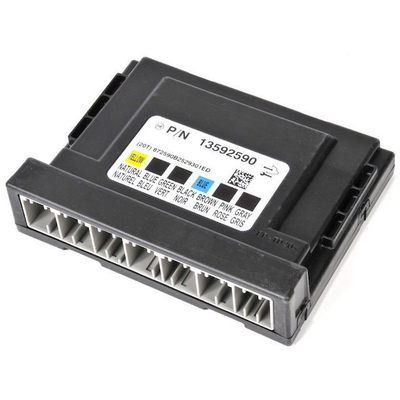
Below are the parts most often responsible for code U1522, ranked by how frequently each one is the actual culprit (per the diagnosis above). Tap any to see what we have for your vehicle.




The information in this article is provided for general reference and educational purposes only. Vehicle specifications, procedures, and part compatibility can vary by production date, trim level, and region. Always consult your vehicle's factory service manual and verify part numbers before purchasing or performing repairs. Safety-critical components such as airbags, seat belts, and braking systems should be installed by a qualified professional.
- 🧭 Diagnostic Flowchart
- 🎬 Helpful Videos
- 🛍️ Shop This Part
- What Does U1522 Mean?
- Can I Drive With U1522?
- Common Causes
- Symptoms
- Common Fixes & Costs
- DIY vs Professional
- Used vs. New Parts: Buying Guide
- What Happens If You Wait — Timeline
- Cost of Not Fixing It
- Diagnosis Steps
- When This Code Triggers (Freeze-Frame Conditions)
- Related Codes
- Climate & Environmental Factors
- How to Talk to a Mechanic About This Code
- Where to Take It: Dealer vs Independent vs Chain
- When to Walk Away From the Repair
- What Scan Tool You Need for This Code
- How to Clear the Code After You Fix It
- Will This Fail Emissions / State Inspection?
- Most Commonly Affected Vehicles
- Manufacturer-Specific Notes
- Real Owner Stories
- 2017 Chevy Silverado, 85K miles
- 2009 Vauxhall Insignia
- 2022 Jeep Renegade
- How to Prevent This Code From Triggering
- Frequently Asked Questions
- What is a LIN bus?
- I replaced the part but the U1522 code is still there. What now?
- Why can't my cheap OBD-II reader see the U1522 code?
- Can a bad battery cause a U1522 code?
- How much does it cost to diagnose a U1522 code?
- Will clearing the code make it go away?
- Can I just unplug the faulty part to fix the code?
- Key Takeaways
- 🎟️ Get 5% Off