

OBD-II Code U1530: Lost Communication with Body Control Module Device
What U1530 means, why it triggers, and how to fix it
- Code U1530 indicates a specific electronic component, such as a window motor or blind spot sensor, stopped communicating with the Body Control Module over the single-wire LIN bus.
- Over 70% of U1530 codes stem from damaged wiring, corroded connectors in door jambs, or blown fuses rather than failed computer modules.
- Expect immediate loss of specific body features, most commonly resulting in dead power windows, a radio that won't turn off, or disabled blind spot monitoring.
- Never replace a $500+ Body Control Module (BCM) without first verifying battery voltage exceeds 12.4V and testing the LIN bus wire for shorts to ground.
What Does U1530 Mean?
The U1530 code means your car's Body Control Module (BCM) lost communication with a specific electronic component. This happens over a single-wire network called the LIN (Local Interconnect Network) bus. When the BCM stops receiving signals from a slave module (like a window motor or blind spot sensor), it triggers this code and disables the affected feature.
Technical definition: Lost Communication with Device on LIN Bus. A master control module (typically the BCM) stopped receiving data from a slave module on the Local Interconnect Network (LIN) bus. The master module reports the fault, but the root cause usually lies in the wiring or the slave module.
Can I Drive With U1530?
Yes, But With Caution. Yes, but certain features like power windows, blind spot monitoring, or the radio will likely stop working. While safe for short distances, losing driver-assist features increases accident risk. An underlying electrical short can also drain the battery overnight, leaving you stranded. Address the issue promptly to restore functionality and prevent battery failure.
Common Causes
- Damaged or Corroded Wiring/Connectors (Very Common) — The single wire of the LIN bus or its connectors often suffer damage, water corrosion, or vibration loosening. This is the most common trigger, especially in moisture-prone areas like door harnesses, underbody shields, and tail lights.
- Faulty Peripheral (Slave) Module or Sensor (Common) — The specific part the BCM communicates with failed internally. Common culprits include power window motors, blind spot sensors, active grille shutter actuators, or steering column control modules.
- Blown Fuse for the Affected Module (Common) — If the fuse supplying power to the slave module blows, the module goes offline. The master module immediately flags a U1530 code due to the lack of response.
- Poor Ground Connection (Common) — Electronic modules require a solid chassis ground. A loose, corroded, or painted-over ground point causes intermittent communication drops.
- Low Battery Voltage or Charging System Issues (Less Common) — A weak battery (below 12.4V) or failing alternator disrupts module communication and triggers false codes.
- Failing Body Control Module (BCM) or Gateway Module (Less Common) — The main computer itself (BCM, TIPM, or Gateway) failed internally. Never assume this without ruling out wiring, fuses, and grounds first.
- Aftermarket Accessory Interference (Rare) — Improperly installed remote starters, alarms, or lighting tap into and corrupt the LIN bus network.
Symptoms
- Power windows not working — One or more power windows stop responding to the switch, most frequently on the driver's side.
- Radio stays on after opening the door — The Retained Accessory Power (RAP) feature fails. The radio and accessories remain powered on even after opening the driver's door.
- Blind Spot or Cross-Traffic Alert System Fault — A dashboard warning message appears, and the blind spot monitoring or cross-traffic alert systems disable completely.
- Active Grille Shutter malfunction — Vehicles with active grille shutters trigger a warning light and lock the shutters in a default position.
- Wipers or Headlights Default to 'On' — A LIN bus failure related to steering column controls forces wipers and headlights to turn on continuously as a fail-safe (common in Stellantis vehicles).
- Features on Steering Wheel Inoperative — Steering wheel buttons for cruise control, volume, or menu navigation stop working.
- Check Engine Light or other warning lights are on — The Check Engine Light or a specific Body Control Module (BCM) service message illuminates.
Diagnostic Flowchart
Tap your situation to follow the diagnostic path that matches what you're seeing on this code.
Common Fixes & Costs
- Repairing Damaged Wiring or Connectors — Parts: $10-$60, Labor: $150-$600+, ~1.5 hr book time (Intermediate)
- Replacing a Faulty Power Window Motor/Regulator Assembly — Parts: $100-$350, Labor: $150-$250, ~1.5 hr book time (Intermediate)
- Replacing a Blind Spot Monitoring Sensor — Parts: $200-$800, Labor: $200-$500, ~1.5 hr book time (Professional)
- Replacing Active Grille Shutter Assembly — Parts: $250-$700, Labor: $150-$300, ~2 hr book time (Intermediate)
- Replacing or Repairing a Faulty TIPM (Chrysler/Dodge/Jeep) — Parts: $350-$1500, Labor: $150-$250, ~1 hr book time (Professional)
- Replacing a Faulty BCM — Parts: $400-$800+, Labor: $150-$300, ~1.5 hr book time (Professional)
Used vs. New Parts: Buying Guide
When a used part is worth it: For simple, non-programmed 'slave' modules like power window motors or active grille shutters, a used part from a reputable salvage yard saves money. These parts are generally reliable and do not require special programming.
Donor-vehicle mileage cap: roughly under 100000 miles for the part to have meaningful remaining life.
Donor quality checklist:
- Match the part number exactly. For modules, even a single letter difference matters.
- For electrical parts, avoid donors from regions with heavy road salt use or flood damage.
- Verify the return policy and warranty period (typically 30-90 days for used parts).
Decision logic:
- If The part is a simple, non-programmable module like a window motor or sensor and cost is a primary concern. → Buy a used part from a vehicle with reasonable mileage.
- If The part is a complex 'master' module like a BCM or TIPM. → Favor a new OEM part or a professionally remanufactured unit with a lifetime warranty. A used module is often impossible to program to your vehicle.
- If The part is a safety component like a Blind Spot Sensor. → New or certified remanufactured is required. The risk of malfunction and the need for professional calibration make new a safer bet.
Warranty tradeoff: Used parts typically offer a 30-90 day warranty covering only the part. New aftermarket parts offer 1-year to limited lifetime warranties. New OEM parts offer a 1-2 year warranty. Remanufacturing services often provide the best value with limited lifetime warranties.
Worst-case if a used part fails: $200 - $500 for a replacement part and repeated labor if a used module fails outside its 30-day warranty.
What Happens If You Wait — Timeline
- 0-4 weeks: Code is set and a warning light appears. A single, non-critical function is lost (e.g., one power window, blind spot alert). The issue may be intermittent at first. (MPG impact: 0%% · Added cost: $0)
- 1-3 months: The faulty module begins to fail intermittently, sometimes not 'sleeping' when the car is off. This creates an intermittent parasitic draw, leading to an occasional dead battery, especially in cold weather. (MPG impact: 0%% · Added cost: $0 - $75 (for a jump start service))
- 3-6 months: The faulty module consistently stays 'awake', creating a reliable parasitic draw over 50mA. The battery dies overnight regularly. Repeated deep cycling permanently damages the battery. (MPG impact: 0%% · Added cost: $150 - $350 (for a new battery and installation))
- 6+ months: Worst-case scenario: the internal failure of the slave module creates a short circuit that feeds back through the LIN bus. This sustained electrical fault damages the driver transistor within the master Body Control Module (BCM) or TIPM. (MPG impact: 0%% · Added cost: $500 - $1500+ (for diagnosis and replacement of a BCM or TIPM))
Cost of Not Fixing It
- Immediate: Loss of function for the specific component (e.g., power window won't work, blind spot alert is inoperative). Increased safety risk if a driver-assist system fails. (Added cost: 0)
- 1-3 Months: A faulty module or shorted wire causes a parasitic battery drain, leading to a dead battery. This leaves you stranded and permanently damages the battery cells. (Added cost: $150 - $350 (for a new battery and/or roadside assistance))
- 3+ Months: Ignoring a failed safety system (like a blind spot monitor) leads to preventable accidents. The financial and personal cost of a collision far exceeds the repair cost. (Added cost: $500 - $10,000+ (deductible, insurance rate increase, or full out-of-pocket repair costs))
Diagnosis Steps
- Scan All Modules for Specific 'U' Codes
Use an advanced OBD-II scanner to read manufacturer-specific 'U' codes from the BCM. U1530 is a general code; look for accompanying codes (like U1534 for a driver's window motor) that pinpoint the exact failing module.
Tools: OBD-II Scanner (with BCM capability) (Beginner) - Verify Battery Voltage and Inspect Fuses
Ensure the battery reads above 12.4V at rest and 13.7V-14.7V while running. Locate the fuse box and test the fuses for both the BCM and the malfunctioning component. Inspect major ground straps for corrosion.
Tools: Multimeter, Fuse Puller, Wrench/Socket Set, Wire Brush (Beginner) - Inspect Wiring Harnesses and Connectors
Check the wiring harness in the door jambs for chafing or broken wires. Inspect the connectors at the affected module for water intrusion, green corrosion, or backed-out pins.
Tools: Flashlight, Trim Removal Tools (Intermediate) - Test for Parasitic Battery Drain
If the battery drains overnight, a faulty module is likely staying 'awake'. Connect a multimeter in series with the negative battery cable. After 60 minutes, the draw must drop below 50 milliamps (0.05A). Pull fuses one by one to isolate the draining circuit.
Tools: Multimeter (with 10A or 20A setting) (Advanced) - Isolate the Faulty Module
If multiple modules share the LIN bus, unplug them one by one. Clear the codes after each disconnect. The module that restores communication to the rest of the network when unplugged is the corrupted unit.
Tools: OBD-II Scanner, Basic Hand Tools (Intermediate) - Test LIN Bus Voltage
Back-probe the LIN bus wire at the suspect module with the ignition on. A healthy LIN bus toggles between 1V and 11-12V. A steady 12V indicates an open circuit; a steady 0V indicates a short to ground.
Tools: Multimeter (with Min/Max function) (Advanced) - Analyze the LIN Signal (Oscilloscope)
For definitive proof, view the LIN bus signal on an oscilloscope. A healthy signal shows a clean 0V to 12V square wave. A flat line confirms a hard fault on the network.
Tools: Oscilloscope (Professional) - Initialize the New Module
After replacing a module, use a professional scan tool to perform a 'LIN New Module Initialization'. This registers the new part with the BCM.
Tools: Professional Scan Tool (Professional)
When This Code Triggers (Freeze-Frame Conditions)
- Module Voltage: 12.5-14.5V (Normal operating voltage. Code sets when a module fails to respond on the network, which happens at any voltage or vehicle state.)
- Engine RPM: 0 - 3000 RPM (Occurs at any engine speed, from key-on engine-off, to idle, to highway cruise. The freeze frame captures the RPM at the instant of the communication failure.)
- Vehicle Speed: 0 - 75 mph (Fault triggers when stationary or at any driving speed. For example, a window motor fails its check at 0 mph, while an active grille shutter fails at 50 mph.)
- Engine Coolant Temp: 40-210°F (The fault is unrelated to engine temperature. The stored value simply reflects the engine temp at the moment communication was lost.)
Related Codes
- U1534 / U1538 / U153A — These are specific GM codes that make diagnosis easier. U1534 points to the Driver Window Motor, U1538 to the Driver Window/Mirror Switch, and U153A to the Passenger Window Switch. If you have one of these alongside U1530, investigate that specific circuit.
- U1510 — This is another LIN Bus communication error, highly specific to the Active Grille Shutter system. If you have a U1510, the fault is almost certainly with the shutter actuator, its wiring, or its power/ground.
- U0140 — This code for 'Lost Communication with BCM' is fundamentally different and more severe. U0140 indicates a problem on the main CAN bus, meaning the BCM itself is offline. U1530 means the BCM is online but lost contact with a secondary device.
- B127E — This GM-specific code for 'Rear Audio Controls Switch Circuit Malfunction' sometimes appears alongside U-codes. In some infotainment systems, a false B127E sets while a DVD is playing.
Climate & Environmental Factors
- High Humidity & Coastal Regions: Salt-laden air and high humidity dramatically accelerate corrosion on wiring, connectors, and module circuit boards. This is a leading cause of failure for components exposed to the elements, like blind spot sensors and wiring in door jambs.
- Winter Weather & Road Salt: Areas that use road salt see a much higher incidence of corrosion-related electrical failures. Saltwater spray works its way into connectors and harnesses, causing shorts and open circuits that trigger communication codes.
- Extreme Cold: Cold weather causes low battery voltage, leading to spurious communication codes. Plastic wiring insulation and connectors also become brittle and are more prone to cracking or damage during service in freezing temperatures.
How to Talk to a Mechanic About This Code
Say this: "I have a U1530 communication code and my [specific symptom, e.g., driver's window] stopped working. Please check the wiring harness, grounds, and connectors for that specific circuit before quoting a module replacement."
This shows you've done research and directs the technician toward the most common, low-cost failures first. It establishes that you expect a thorough diagnosis, not just replacing the most expensive part.
Avoid saying:
- My car's electronics are acting weird.
- My check engine light is on, can you just fix it?
- I think the BCM is bad, can you replace it?
Questions to ask before authorizing the repair:
- Did you physically verify the wiring, power, and ground to the module before condemning it?
- Does this quote include the 'LIN New Module Initialization' or calibration required after installation?
- What is the warranty on both parts and labor?
Where to Take It: Dealer vs Independent vs Chain
- Dealer:
A strong, safe option, especially if module replacement and programming are needed. However, it is the most expensive path.
Best for: Vehicles still under warranty., Repairs that require manufacturer-specific software for programming or calibration (e.g., new BCM, blind spot sensor)., Known issues covered by a Technical Service Bulletin (TSB).
Downsides: Typically the highest labor rates and part costs., Technicians often default to replacing expensive modules rather than tracing and repairing a $10 broken wire. (Typical cost: +50% vs. baseline) - Independent Shop:
Best overall fit. A good independent shop with strong electrical diagnostic skills resolves U1530 issues (especially wiring faults) more affordably than a dealer.
Best for: Out-of-warranty vehicles where cost is a factor., Diagnosing and repairing common wiring and connector issues., Shops with a known specialist in automotive electrical systems.
Downsides: Diagnostic capability varies. Vet the shop for ASE L1 (Advanced Engine Performance) or specific electrical diagnostic certifications., May not have the expensive, manufacturer-specific tools for programming certain modules. (Typical cost: +0% vs. baseline) - Chain Shop:
AVOID. This code requires specific diagnostic expertise beyond the scope of most chain shops. The potential for an incorrect and expensive repair is high.
Best for: Simple, unrelated maintenance like oil changes and tires.
Downsides: Technicians lack the specialized training for complex electrical and network diagnosis., High risk of misdiagnosis, leading to unnecessary replacement of parts. (Typical cost: -10% vs. baseline)
When to Walk Away From the Repair
If the estimated repair cost exceeds 40-50% of the car's private-party value, you should pause and carefully consider your options.
- Car worth $5000, fix is $450: Fix it. This is a small fraction of the car's value and restores important functionality.
- Car worth $8000, fix is $1800: Borderline. The repair is for a complex module (e.g., TIPM). Get a second opinion and ask about using a remanufactured part to lower the cost before proceeding.
- Car worth $3000, fix is $1200: Walk away. The repair cost is approaching half the car's value. Unless the car is otherwise in perfect condition, it's not a wise investment.
What Scan Tool You Need for This Code
Minimum: A scanner that reads manufacturer-specific 'U' codes from the Body Control Module (BCM) and other systems like ABS and SRS.
A basic $20 engine code reader will not see 'U' codes at all. To diagnose U1530, you need to access the BCM to see which specific module lost communication.
Budget: BlueDriver Pro (~$100) — Reads and clears enhanced codes (including 'U' codes) from systems like the BCM, ABS, and Airbag. It views live data to confirm repairs but cannot perform bidirectional controls or module initializations.
Mid-range: Foxwell NT510 Elite (~$180) — Provides full system diagnostics to read/clear codes from all modules. Crucially, it offers bidirectional controls (active tests) to command components like window motors, helping verify if the part or the wiring is the problem.
Professional: Autel MaxiCOM MK808S / MK808BT (~$450-600) — Offers full bidirectional control and a comprehensive menu of service functions. This level of tool is required for 'LIN New Module Initialization' after replacing a part, which registers the new component with the BCM.
Rent vs buy: For a one-time U1530 diagnosis, paying a shop's diagnostic fee ($100-$200) is more economical than buying a capable scanner. The free rental tools from auto parts stores are too basic for this code. If you plan to tackle future electronic issues, a mid-range bidirectional scanner is a worthwhile investment.
How to Clear the Code After You Fix It
- Reconnect battery if disconnected for repair.
- Use an OBD-II scan tool to erase the U1530 and any related codes.
- Perform a 'LIN New Module Initialization' with a professional scan tool if a module was replaced.
- Operate the function of the repaired component (e.g., roll the window up/down, activate blind spot system) to confirm the fix.
Drive cycle (~5 minutes): A specific drive cycle is not required. After the repair and clearing the code, it should not return upon the next key cycle and system self-test. If the code returns, the fault remains.
Readiness monitors affected: Not directly, but clearing 'U' codes sometimes resets emissions readiness monitors, requiring a full drive cycle before a smog test.
Before emissions retest: drive at least 50 miles to fully set monitors.
Watch out for:
- Clearing the code without fixing the underlying wiring or component issue results in the code returning immediately.
- Replacing a module without performing the necessary 'LIN New Module Initialization' causes the new part to remain unrecognized by the BCM.
- Disconnecting the battery will not fix the root cause.
Will This Fail Emissions / State Inspection?
Yes — this code typically fails an OBD-II emissions inspection.
- California: An active 'U' code with an illuminated Malfunction Indicator Lamp (MIL) or service message causes an automatic failure of the OBD-II portion of the smog check.
- New York: The NYS DMV emissions inspection includes an OBD-II scan. Any active diagnostic trouble code that commands the MIL on is grounds for failure.
- Texas: In the 17 counties requiring emissions testing, a vehicle fails the test if the MIL is commanded on for any reason, including a U1530 code.
Most Commonly Affected Vehicles
- Chevrolet Silverado (2014-2018) — Often related to faulty power window switches, corroded wiring in the door harness, or issues with the active grille shutter.
- Chevrolet Cruze (2016-2019) — Commonly caused by a faulty Body Control Module (BCM) or broken/corroded connectors at the BCM.
- Buick Cascada (2016-2017) — A known issue, documented in TSB PIC6050B, involves a faulty driver-side power window motor causing the radio to stay on and setting a U1530 or U1534 code.
- Dodge/Jeep/Chrysler Grand Caravan, Wrangler, Town & Country (2008-2018) — These vehicles use a Totally Integrated Power Module (TIPM) prone to internal failures, causing a wide range of electrical problems. A U1530 is an early symptom of TIPM failure.
- Ford F-150 (2015-2020) — Triggered by a faulty blind spot sensor (SODL/SODR module), often located in the tail light assembly. These are vulnerable to moisture and are a common point of failure.
- Nissan Rogue, Sentra, Altima (2015-Present) — U1530 specifically points to a checksum error from the column switch (turn signal and wiper stalks). Diagnosis involves checking the LIN bus wire to this specific component.
- Volkswagen Golf, Tiguan, Jetta (2018-Present) — Reported in modern VWs, often related to general LIN bus faults that require checking grounds and wiring before replacing modules.
- Peugeot 208, 308, 3008 (2012-Present) — This code often appears and requires thorough electrical diagnosis of the bus network, starting with wiring and connectors before suspecting a module failure.
Manufacturer-Specific Notes
- General Motors (Chevrolet, Buick, Cadillac, GMC): GM often uses this code for door module issues. A classic symptom is the radio staying on after the key is off and the driver's door is opened. TSB PIC6050B and TSB 18-NA-079 directly address this, pointing to a faulty driver's window motor or water intrusion in the door harness.
- Stellantis (Chrysler, Dodge, Jeep, Ram): A U1530 code is often a symptom of a failing Totally Integrated Power Module (TIPM). Internal faults cause random communication errors, with tell-tale signs like wipers or lights turning on by themselves.
- Nissan: U1530 specifically indicates a 'checksum error' from the column switch assembly (turn signals/wipers). This points diagnosis directly at the switch module itself or its dedicated LIN bus wire.
- Ford: On models with Blind Spot Information System (BLIS), the Side Object Detection modules in the tail lamps fail due to moisture and set a U1530. A 'LIN New Module Initialization' function is required after replacing a module on the network.
Real Owner Stories
2015 Ford F-150 Lariat at 177k miles - The 'Water in the Taillight' Fix
Owner experienced a cascade of errors on the dash: 'Blind Spot System Fault,' 'Cross Traffic System Fault,' and an airbag light. Simultaneously, the A/C and front power windows stopped working.
Outcome: The owner discovered a small crack in the passenger side taillight which allowed water to enter and corrode the blind spot module. After replacing the taillight assembly and the module, and performing a battery disconnect to reset the computers, the faults were resolved.
Lesson: On Ford F-150s, a sudden flurry of seemingly unrelated electrical faults traces back to water damage in a single component. Always inspect tail lights for cracks or bad seals after a car wash or heavy rain.
2016 Chevy Cruze - Misdiagnosed BCM, Actual Cause was Cheaper
A 2016 Chevy Cruze had multiple electrical issues, including flickering dash icons. The owner suspected a fuel pump issue, but the problems were inconsistent.
Outcome: The owner found the quote high and researched the issue. For 2011-2015 Cruze models, GM issued a special coverage bulletin (14311B) for a faulty negative battery cable that causes identical symptoms to a BCM failure. The owner opted to source a used BCM for around $200 and find another mechanic for installation and programming, saving significant money.
Lesson: Before agreeing to an expensive BCM replacement ($700+), always rule out simpler causes. On a Chevy Cruze, the negative battery cable is a known culprit. Insist that the shop verifies stable power and good grounds at the BCM before condemning the module.
2014 Chevy Silverado - The 'Radio Stays On' Easy Fix
The radio and other accessories would not turn off when the driver's door was opened after turning off the ignition. A U1530 code was present, sometimes accompanied by a U1534.
Outcome: The problem is well-documented in GM Technical Service Bulletin (TSB) PIC6050B. The failure of the Retained Accessory Power (RAP) feature is almost always caused by a fault within the driver's side power window motor/module. Replacing the driver's window motor assembly (a ~$150 part) resolved the communication error and made the radio turn off correctly.
Lesson: If you have a GM truck or SUV and the radio stays on, don't immediately blame the radio. The U1530 code points to the real cause. If a U1534 code is also present, the problem is confirmed to be the driver's window motor circuit.
How to Prevent This Code From Triggering
- Apply Dielectric Grease to Connectors (During any repair or inspection involving an electrical connector) — Dielectric grease is non-conductive and seals the air-tight space between connector pins and the housing, preventing moisture and oxygen from causing corrosion on the metal contacts.
- Perform Regular Battery and Charging System Checks (Annually or every 15,000 miles) — A weak battery or failing alternator causes system voltage to drop below the stable 12.4V+ required by modules. Low voltage during startup causes modules to fail their self-check and post false communication codes.
- Clean and Protect Battery Terminals and Chassis Grounds (Annually) — Corrosion on main battery terminals or chassis ground points adds resistance to the entire electrical system. This leads to unstable voltage and intermittent communication faults between modules.
- Inspect and Secure Wiring Harnesses (During oil changes or other routine service) — Periodically checking that wiring harnesses are secure and not rubbing against sharp metal edges prevents the chafing that leads to shorts or open circuits. Pay special attention to the flexible harness in door jambs.
- Use Professional Installation for Aftermarket Electronics (When adding accessories like alarms or remote starters) — Improperly installed accessories often tap into power or data lines incorrectly, which disrupts network communication, creates parasitic draws, or overloads circuits.
Frequently Asked Questions
Can I fix a U1530 code myself?
If the cause is a blown fuse, a loose connector, or a corroded ground wire, it is a DIY-friendly fix. However, diagnosing complex wiring problems or replacing and programming modules requires specialized tools and professional knowledge.
My mechanic wants to replace the BCM for $800+. What else should be checked first?
Before approving an expensive module replacement, insist on ruling out bad wiring (especially in door jambs), poor ground connections, and low battery voltage. Many owners pay for a new computer when the actual problem was a simple wiring or ground fault.
The scanner won't connect to the module. Does that mean the module is bad?
Not necessarily. A scanner cannot connect if the module's fuse is blown or if there is a break in the power, ground, or communication wire. Always verify power and ground to the module before condemning it.
What is a LIN Bus?
A LIN (Local Interconnect Network) bus is a simple, low-cost, single-wire communication network. It allows a main computer, like the Body Control Module, to control less critical components like window switches and sensors without complex wiring.
Will clearing the code make it go away?
You can clear the code with a scanner, but if the underlying electrical or hardware problem isn't fixed, the code returns immediately.
Why did my blind spot sensor fail?
Blind spot sensors are located in the rear bumper or tail light assemblies, making them vulnerable to moisture from rain or car washes. Corrosion on the sensor's connector is a very common cause of failure.
What is a TIPM and why does it fail?
The TIPM, or Totally Integrated Power Module, is used in Chrysler, Dodge, and Jeep vehicles and acts as a combination fuse box and computer. They have known design flaws that cause a host of electrical issues, including communication codes like U1530.
What's the difference between a U1530 and a U0140?
U0140 means the entire Body Control Module (BCM) lost communication with the main vehicle network (CAN bus). U1530 means the BCM is working, but it lost communication with a smaller, secondary part on its own sub-network (LIN bus).
Key Takeaways
- Code U1530 indicates a specific electronic component, such as a window motor or blind spot sensor, stopped communicating with the Body Control Module over the single-wire LIN bus.
- Over 70% of U1530 codes stem from damaged wiring, corroded connectors in door jambs, or blown fuses rather than failed computer modules.
- Expect immediate loss of specific body features, most commonly resulting in dead power windows, a radio that won't turn off, or disabled blind spot monitoring.
- Never replace a $500+ Body Control Module (BCM) without first verifying battery voltage exceeds 12.4V and testing the LIN bus wire for shorts to ground.
Helpful Videos
Shop the Parts Behind U1530
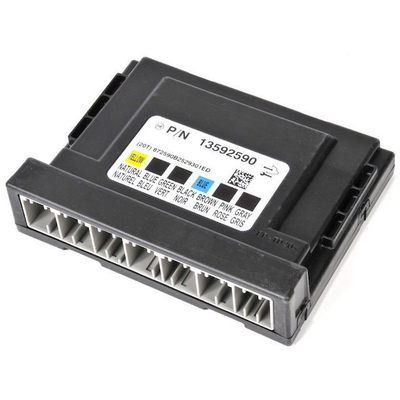
Below are the parts most often responsible for code U1530, ranked by how frequently each one is the actual culprit (per the diagnosis above). Tap any to see what we have for your vehicle.



The information in this article is provided for general reference and educational purposes only. Vehicle specifications, procedures, and part compatibility can vary by production date, trim level, and region. Always consult your vehicle's factory service manual and verify part numbers before purchasing or performing repairs. Safety-critical components such as airbags, seat belts, and braking systems should be installed by a qualified professional.
- 🧭 Diagnostic Flowchart
- 🎬 Helpful Videos
- 🛍️ Shop This Part
- What Does U1530 Mean?
- Can I Drive With U1530?
- Common Causes
- Symptoms
- Common Fixes & Costs
- Used vs. New Parts: Buying Guide
- What Happens If You Wait — Timeline
- Cost of Not Fixing It
- Diagnosis Steps
- When This Code Triggers (Freeze-Frame Conditions)
- Related Codes
- Climate & Environmental Factors
- How to Talk to a Mechanic About This Code
- Where to Take It: Dealer vs Independent vs Chain
- When to Walk Away From the Repair
- What Scan Tool You Need for This Code
- How to Clear the Code After You Fix It
- Will This Fail Emissions / State Inspection?
- Most Commonly Affected Vehicles
- Manufacturer-Specific Notes
- Real Owner Stories
- 2015 Ford F-150 Lariat at 177k miles - The 'Water in the Taillight' Fix
- 2016 Chevy Cruze - Misdiagnosed BCM, Actual Cause was Cheaper
- 2014 Chevy Silverado - The 'Radio Stays On' Easy Fix
- How to Prevent This Code From Triggering
- Frequently Asked Questions
- Can I fix a U1530 code myself?
- My mechanic wants to replace the BCM for $800+. What else should be checked first?
- The scanner won't connect to the module. Does that mean the module is bad?
- What is a LIN Bus?
- Will clearing the code make it go away?
- Why did my blind spot sensor fail?
- What is a TIPM and why does it fail?
- What's the difference between a U1530 and a U0140?
- Key Takeaways
- 🎟️ Get 5% Off