

Definitive Guide to OBD-II Code U1532: Lost Communication With Body Control Module Component
What U1532 means, why it triggers, and how to fix it like a pro
- Code U1532 indicates the Body Control Module (BCM) has lost LIN bus communication with a peripheral device, most commonly a door control module.
- Inspect the rubber door jamb boot first; broken power, ground, or data wires in this flex point cause over 80% of U1532 faults, especially on 2014-2019 GM trucks.
- Do not replace the $200-$500 door module assembly until you have verified a steady 12V power and solid ground at the module's electrical connector.
- A parasitic battery draw exceeding 50 milliamps alongside a U1532 code strongly points to a faulty door module failing to enter sleep mode.
- DIY wire splicing costs under $25 in parts and permanently fixes the issue, whereas a shop replacing the entire door harness will charge upwards of $1,500.
What Does U1532 Mean?
U1532 means your car's main body computer (Body Control Module or BCM) lost its connection to a specific electronic part, usually a component in one of the doors like the power window motor. The BCM sends commands over a single-wire network called a LIN (Local Interconnect Network) bus. When it stops getting a reply from that part, it sets this code, indicating a peripheral device has gone silent.
Technical definition: The formal SAE/ISO definition for U1532 is a generic communication error code indicating 'Lost Communication' with a specific device on a Local Interconnect Network (LIN) bus. The exact component is manufacturer-specific. Common definitions include 'K9 Body Control Module Lost Communication with M74D Window Motor - Driver' (GM) or 'Lost Communication With Door Control Module A' (Ford). The code specifies the BCM (the 'master') stopped receiving responses from the door/component module (the 'slave').
Can I Drive With U1532?
Yes, But With Caution. You can still drive the vehicle as the code does not affect its core mechanical operation. However, the risks are significant. The affected door fails to lock, creating a security risk. More critically, an inoperative power window creates a safety hazard in an emergency if the door jams and the window is the only exit. A non-functional mirror turn signal also reduces vehicle visibility. Address these issues promptly.
Common Causes
- Broken or Damaged Wires in Door Jamb (Very Common) — Wiring passing from the vehicle body into the door flexes every time the door opens. Over many cycles, these wires fatigue and break internally, causing a complete loss of power, ground, or communication to the door components.
- Faulty Window Motor / Door Module Assembly (Common) — Modern power window motors integrate a small computer module. This entire unit fails due to internal circuit board degradation, preventing communication with the BCM.
- Corroded or Loose Electrical Connector (Common) — Electrical connectors at the door module, door jamb pass-through, or BCM become loose or contaminated with water. This corrosion builds resistance and blocks the sensitive 12V LIN communication signal.
- Blown Fuse for Door Module (Uncommon) — A short circuit in the door harness blows the fuse powering the component. Without power, the module cannot communicate, triggering U1532.
- Poor Ground Connection (Less Common) — Electronic modules require a solid chassis ground. A loose or rusty ground point for the BCM or door module causes intermittent communication drops.
- Aftermarket Electronics Interference (Uncommon) — Improperly installed aftermarket remote starters, alarms, or audio equipment introduce electrical noise that disrupts the sensitive LIN bus signal.
- Faulty Body Control Module (BCM) (Less Common) — An internal fault in the BCM's LIN bus driver circuit prevents it from talking to the door module, even if the door components and wiring are intact.
- Incorrect Module Programming or Configuration (Rare) — A recently replaced BCM or door module lacking the correct software configuration cannot communicate on the network.
Symptoms
- Power Window Inoperative — The power window on one specific door refuses to go up or down.
- Power Door Lock Inoperative — The power lock on the affected door ignores the switch and the key fob.
- Power Mirror Inoperative — The mirror on the affected door fails to adjust, and the mirror-mounted turn signal remains dark.
- Inoperative Switch Backlighting — The illumination behind the window and lock switches on the affected door fails to turn on.
- Door Ajar Warning Light Stays On — The BCM fails to receive the door latch sensor signal, keeping the 'Door Ajar' light illuminated even when the door is shut.
- Check Engine Light or BCM Warning Light — A general service light or a specific BCM/Body fault indicator illuminates on the dashboard.
Common Fixes & Costs
- Repair Broken Wires in Door Jamb — Parts: $5-$25, Labor: $175-$400 (parts and labor), ~1.5 hr book time (Intermediate)
- Clean or Repair Connector Pins — Parts: $10-$30 (dielectric grease, terminal tools), Labor: $100-$250 (parts and labor), ~1 hr book time (DIY)
- Replace Power Window Motor/Door Module Assembly
— Parts: $70-$350, Labor: $200-$500 (parts and labor), ~2.1 hr book time
(DIY)
Chevrolet Silverado / GMC Sierra (2014-2019): OEM GM 22921493 (Motor Only), GM 84903328 (Regulator Assembly) (Alt: Dorman, ACI, Autopart Premium)
Ford F-150 (2015-2020): OEM Ford DG9Z14B291XC (Driver Door Module) (Alt: Dorman, Standard Motor Products) - Replace Door Wiring Harness
— Parts: $150-$800, Labor: $400-$1500+ (parts and labor), ~4.5 hr book time
(Professional)
Chevrolet Silverado / GMC Sierra (2014-2019): OEM GM 84290982, 23171547, 84290981 (Varies by cab/options) (Alt: Dorman 926-538, Dorman 645-506)
Ford F-150 (2015-2020): OEM Ford FL3Z-14631-A (Varies by cab/options) (Alt: Dorman) - Replace Body Control Module (BCM)
— Parts: $300-$800, Labor: $200-$500 (parts and labor, includes programming), ~2.5 hr book time
(Professional)
Chevrolet Silverado / GMC Sierra (2014-2019): OEM GM 13587700, 13508761, 13510531 (Alt: ACDelco (OEM Supplier), Dorman (Remanufactured))
Ford F-150 (2015-2020): OEM Ford JL3Z-15604-C (Varies by options) (Alt: N/A (Programming required, OEM recommended))
Used vs. New Parts: Buying Guide
When a used part is worth it: For Door Control Modules, a used OEM part from a reputable salvage yard is often a good value, especially for older vehicles. It is crucial to match the part number exactly. For a door wiring harness, a used part is only recommended if it comes from a low-mileage vehicle from a dry climate to minimize the risk of pre-existing wire fatigue or corrosion.
Donor-vehicle mileage cap: roughly under 80000 miles for the part to have meaningful remaining life.
Donor quality checklist:
- Verify the part number is an exact match, including any suffix letters.
- Inspect connector pins for any corrosion or damage.
- For wiring harnesses, check the boot area for any signs of prior repair, brittleness, or cracking.
Decision logic:
- If The part is a Door Control Module and an exact-match used OEM part is available for less than 50% of a new part → Used is a reasonable choice, assuming a short warranty or return period is offered.
- If The part is a complete door wiring harness for a vehicle known for harness failures (like a GM truck) → Buy new (OEM or high-quality aftermarket). A used harness is likely to have the same fatigue issues as the one being replaced.
- If The part is electronic (Door Module) and requires programming → Factor in the cost and hassle of programming. Sometimes new aftermarket parts are designed to be plug-and-play, while used OEM parts retain the donor vehicle's VIN.
Warranty tradeoff: Used parts from salvage yards typically offer a 30-90 day warranty. New aftermarket parts often come with a 1-year to limited lifetime warranty. New OEM parts carry a 1-2 year warranty.
Worst-case if a used part fails: $200-400 if a used module or harness fails after installation, requiring repeat labor costs for diagnosis and replacement.
What Happens If You Wait — Timeline
- 0-1 month: Code U1532 is set, and a warning light appears. The power window, lock, and mirror on one door stop working. The issue is often intermittent at first, especially if caused by a partially broken wire. (MPG impact: 0%% · Added cost: $0)
- 1-6 months: If the cause is a faulty module that fails to enter 'sleep mode', a parasitic battery drain begins. The owner notices the battery is weak or completely dead after sitting for a day or two. (MPG impact: 0%% · Added cost: $150-$300 (for a new battery and potential jump-start service calls))
- 6-12 months: Continued flexing of a damaged door harness causes more wires to break. A short circuit between a power wire and a data wire occurs. This voltage spike permanently damages the door module, even if the wiring is later repaired. (MPG impact: 0%% · Added cost: $200-$500 (cost of a new door module assembly that is now required in addition to the wire repair))
- 12+ months: In a worst-case scenario, a severe short circuit in the door harness (e.g., short to power) back-feeds voltage into the Body Control Module (BCM), damaging its internal circuits. This is a much more complex and expensive repair. (MPG impact: 0%% · Added cost: $500-$1200 (for BCM replacement and mandatory dealer programming, on top of fixing the original wiring issue))
Cost of Not Fixing It
- Immediate: Loss of function for window, lock, and/or mirror on the affected door. This poses a security risk (door won't lock) and a safety risk (can't open window in an emergency). (Added cost: Negligible)
- 1-6 months: A faulty door module that fails to go into 'sleep' mode causes a parasitic battery drain, leading to a dead battery overnight. This requires jump-starts or a new battery. (Added cost: $150-$300 (for new battery and potential towing/service call))
- 6+ months: Continued flexing of a damaged door harness causes other wires to short, potentially blowing fuses or damaging the Body Control Module (BCM) itself, which is a much more expensive repair. (Added cost: $500-$1200 (for BCM replacement and programming))
Diagnosis Steps
- Scan for All Trouble Codes
Use an OBD-II scanner capable of reading BCM codes to pull U1532 and any other stored codes. Related codes like B1325 (low voltage) pinpoint the exact location of the fault.
Tools: OBD-II Scanner (capable of reading BCM codes) (Beginner) - Visually Inspect the Door Jamb Harness
Pull back the rubber boot between the door and the car's body. Gently flex and pull each wire, looking for pinched, chafed, stretched, or completely broken wires. This is the single most common failure point.
Tools: Flashlight, Trim tool (Beginner) - Inspect Fuses
Locate the fuses for the Body Control Module and the specific door module (e.g., 'DDM' for Driver Door Module) using the service manual. Visually inspect and test the fuses with a multimeter to ensure they are intact.
Tools: Fuse puller, Multimeter or test light (Beginner) - Remove Door Panel and Inspect Connectors
Remove the interior door panel to access the window motor/door module. Unplug the electrical connector and inspect the pins for green or white corrosion, moisture, or physical damage. Check the pass-through connector at the A-pillar.
Tools: Trim removal tools, Screwdriver/Socket set (Intermediate) - Test for Power and Ground at the Module
Using a multimeter and wiring diagram, check for constant battery voltage (12V) and a solid ground at the module's connector. Missing voltage or ground confirms a broken wire in the harness.
Tools: Multimeter, Vehicle-specific wiring diagram (Intermediate) - Verify Power and Ground Integrity Under Load
Use a headlamp bulb connected to the power and ground pins at the module connector to load-test the circuit. A dim or unlit bulb confirms high resistance in the power or ground wire, typically from a nearly-broken wire in the door jamb.
Tools: Incandescent Test Light, Headlamp bulb with test leads, Wiring diagram (Advanced) - Test the LIN Bus Circuit Voltage
Probe the LIN wire at the module connector with a multimeter while the key is on. A healthy, inactive LIN bus reads close to battery voltage. A reading of 0V indicates a short to ground, while a constant 12V reading without fluctuation suggests an open circuit.
Tools: Multimeter, Vehicle-specific wiring diagram (Advanced) - [PRO TIP] Analyze the LIN Bus Signal with an Oscilloscope
Connect an oscilloscope to the LIN bus wire. A healthy LIN bus shows a series of square wave data packets switching cleanly from 0V to near 12V. A flat line at 0V indicates a short to ground, while a messy signal points to a failing module or high circuit resistance.
Tools: Oscilloscope, Wiring diagram (Professional) - [PRO TIP] Conduct a Parasitic Draw Test
If the vehicle has a dead battery complaint, perform a parasitic draw test. Connect a multimeter in series with the negative battery cable. After modules enter 'sleep mode', current draw must be below 50 milliamps. If pulling the affected door module fuse drops the amperage to normal, the module requires replacement.
Tools: Multimeter with 10A capability (Professional)
When This Code Triggers (Freeze-Frame Conditions)
- Module Voltage: 11.5-14.5V (Normal operating voltage; code sets if voltage drops below threshold.)
- Ignition Status: On/Run (The BCM actively polls modules when the ignition is on.)
- Engine State: Off or Running (This code sets with the engine on or off, as long as the ignition is in the 'Run' position.)
- Ambient Temperature: Any (Fault occurs at any temperature, but extreme cold makes wiring more brittle and prone to intermittent breaks.)
Related Codes
- U0199 — A generic SAE code for 'Lost Communication With Door Control Module A'. U1532 is often a more specific, manufacturer-level code indicating the failure is on the LIN bus portion of the circuit. They point to the same problem, but U1532 provides more detail.
- B1325 — Indicates a 'Device Power Circuit Voltage Below Threshold'. Seeing B1325 alongside U1532 is a strong clue that the root cause is a broken power or ground wire in the door harness, not just a data line fault. Your first diagnostic step must be testing the power and ground pins at the module connector.
- U1530 / U1531 — These codes are direct counterparts for other doors. For example, on a GM vehicle, U1532 often points to the driver's door, while a similar code is used for the passenger door. The last digit indicates the specific door.
- U0200 — A generic code for 'Lost Communication With Door Control Module B' (typically passenger side). Diagnostically, it is identical to U0199 but points to the opposite side of the vehicle.
Climate & Environmental Factors
- Cold Climates: Low temperatures cause plastic wire insulation to become brittle. When the door opens and closes, this brittle insulation cracks, exposing the copper wire to the elements and accelerating fatigue and breakage.
- High Humidity / Coastal Regions: Moisture in the air, especially salt-laden air in coastal areas, attacks electrical connectors and exposed wiring. This causes corrosion that increases resistance and eventually blocks the low-voltage LIN bus signal entirely.
- Road Salt (Salt Belt): Salty brine sprayed onto the undercarriage and into crevices like the door jamb acts as a powerful electrolyte. This dramatically accelerates the corrosion of wires and connector pins, making it a primary contributor to this failure in northern climates.
How to Clear the Code After You Fix It
- Reconnect any disconnected components (door module, battery).
- Use a BCM-capable OBD-II scan tool to clear the U1532 fault code.
- Cycle the ignition off and on, then operate the functions of the repaired door (window, lock, mirror) to confirm functionality and ensure the code does not immediately return.
Drive cycle (~15 minutes): A specific drive cycle is not required for a U-series communication code. After clearing the code, the BCM immediately tries to communicate with the module. If the repair was successful, the code will not return. A short test drive of 10-15 minutes involving operating the affected components is sufficient for verification.
Readiness monitors affected: None directly. U-series codes do not affect the primary emissions readiness monitors.
Watch out for:
- Simply disconnecting the battery will not clear the code from the BCM's history and it returns instantly if the physical fault isn't fixed.
- Using a basic OBD-II scanner that only reads powertrain (P-codes) fails to clear a body (B-code) or network (U-code) fault.
Will This Fail Emissions / State Inspection?
Yes — this code typically fails an OBD-II emissions inspection.
- California: While U1532 is not an emissions code, the presence of an active Check Engine Light or other malfunction indicator lamp causes an automatic failure of the smog inspection.
- New York: The NYS inspection includes an OBD-II scan. Any active diagnostic trouble code that illuminates a warning light results in an inspection failure.
- Texas: In the 17 counties requiring emissions testing, an active Check Engine Light is an automatic failure. The OBD-II scan checks for trouble codes as part of the inspection.
Most Commonly Affected Vehicles
- Chevrolet Silverado 1500 (2014-2019) — Extremely prone to broken wires in the driver's side door jamb harness. A recall was issued for some trucks in this generation for an overheating rear defroster circuit, indicating known wiring integrity issues.
- GMC Sierra 1500 (2014-2019) — Shares the same platform and wiring design as the Silverado, leading to identical failures in the door harness. The diagnosis is almost always a broken wire in the driver's door boot.
- Chevrolet Tahoe / Suburban (2015-2020) — The complex electronics in these SUVs, combined with frequent door use, leads to wire fatigue in the door jamb. The driver's door module is the most common point of failure.
- Cadillac Escalade (2015-2020) — High-feature models have more wires in the door harness for features like power-folding mirrors and courtesy lights, increasing the probability of a wire breaking and causing this code.
- Ford F-150 (2015-2020) — Experiences similar issues where the Driver Door Module (DDM) or Passenger Door Module (PDM) loses communication. This generation saw a major increase in electronic complexity, and aftermarket radio upgrades are a potential source of interference.
- Hyundai Elantra (2014-2017) — Owners report issues with door lock and window failures associated with communication codes. These models often trace the fault to the door module or its wiring.
- Kia Forte (2019-2021) — Experiences communication faults with door-mounted components. As a sibling brand to Hyundai, it shares similar electronic architecture and potential failure points in modules and wiring.
- Nissan Rogue (2014-2020) — The T32 platform exhibits various communication DTCs between modules. While less common than on GM trucks, issues arise from the BCM, door modules, or the associated wiring harnesses.
Manufacturer-Specific Notes
- General Motors (GM): On GM trucks and SUVs (2014+), this code almost always points to broken wires inside the black rubber boot of the driver's door jamb. The most commonly broken wires are the larger gauge power (Red/White) and ground (Black) wires. GM released bulletin PIT5329H acknowledging LIN bus communication issues.
- Ford: Ford uses a dedicated Driver Door Module (DDM) and Passenger Door Module (PDM). TSB 17-2057 (superseded by 17-2225) was issued for Fusion and MKZ models for unintended mirror movement due to moisture in the door harness connector, highlighting the sensitivity of Ford's door electronics to moisture intrusion.
- Stellantis (Chrysler/Dodge/Ram): Similar to GM, the fault is commonly traced to broken wires in the door jamb harness or a failure of the integrated window motor/module assembly. The diagnostic approach is identical: inspect harness, test power/ground, then suspect the module.
- Hyundai / Kia: In these vehicles, the issue is sometimes a software glitch within the BCM or door module that requires a dealer-level software update. Check for any available Technical Service Bulletins (TSBs) related to module software before performing extensive wiring repairs.
Real Owner Stories
2015 GMC Sierra 1500 at 110K miles
Driver's side window, power locks, and mirror controls suddenly stopped working. A U1532 code was present.
What they tried:
- Initially suspected a bad window motor/door module assembly.
- Before buying parts, inspected the wiring harness in the door jamb boot.
- Found two thick-gauge wires (power and ground) and one smaller wire completely broken in half.
Outcome: Spliced the three broken wires using butt connectors and heat shrink tubing for a total cost of about $15. All door functions were immediately restored, and the code was cleared.
Lesson: Always inspect the door jamb wiring harness before replacing any modules for this code, especially on GM trucks. This is the most common point of failure and the cheapest fix.
2013 Ford Fusion at 85K miles
Intermittent issues with the driver's side power mirror moving on its own, especially in wet weather, followed by a persistent U1532 code and total loss of mirror/window function.
What they tried:
- Replaced the driver door module (DDM), but the problem returned.
- Checked for broken wires in the door jamb but found none.
- Discovered Ford TSB 17-2225 which describes moisture intrusion into the main door harness connector causing these exact symptoms.
Outcome: The owner took the car to a dealer who performed the TSB repair, which involves replacing the single large connector with two smaller, better-sealed 8-pin connectors. The repair resolved the issue permanently.
Lesson: Check for Technical Service Bulletins (TSBs) related to your vehicle's symptoms. The manufacturer may have already documented a known issue and a specific repair procedure that differs from a standard diagnosis.
2007 VW Jetta with 125K miles
The car's battery would go dead if left sitting for more than two days. A parasitic draw test was performed, and the draw dropped significantly when the fuse for the passenger door module was pulled.
What they tried:
- The owner identified the faulty passenger door module as the source of the battery drain.
- A new module from the dealer required a software update for the entire vehicle.
- To avoid the complexity and cost of a software update, the owner sourced an identical, used door module from a salvage yard with the exact same part number.
Outcome: Installing the identical used module fixed the parasitic drain and restored door functions without needing any programming. The battery drain issue was resolved.
Lesson: A faulty module fails to 'go to sleep,' causing a parasitic battery drain. When replacing modules, sourcing a used part with an identical part number is sometimes a plug-and-play solution, avoiding costly dealer programming.
How to Prevent This Code From Triggering
- Periodically lubricate the door wiring harness boot. (Every 2-3 years) — Applying a silicone-based spray or grease to the rubber boot in the door jamb keeps it flexible. A pliable boot puts less stress on the wires inside as they flex, reducing the chance of insulation cracking and wire fatigue, especially in cold climates.
- Clean and apply dielectric grease to critical connectors. (Anytime a door panel is removed for other service.) — If you have the door panel off, unplug the main door module connector, inspect it for corrosion, and apply a thin layer of dielectric grease to the connector's seal. This non-conductive grease blocks moisture and oxygen, preventing the corrosion that leads to high resistance and communication failures.
- Install high-quality wire loom or sheathing. (During any wire repair.) — When repairing broken wires, encasing the repaired section in a quality split-loom conduit or using heat shrink tubing provides an extra layer of protection against abrasion and moisture, making the repair more durable than the original wiring.
- Ensure door water shields and seals are intact. (During any door-related repair.) — The plastic sheeting behind the interior door panel is a vapor barrier. If it's torn or missing, moisture reaches the door module and its connectors. Ensuring this shield is properly sealed prevents water damage that corrodes electronics and causes U-codes.
Frequently Asked Questions
Can I fix code U1532 myself?
Yes, if the cause is a broken wire or a bad connector, a DIY repair is very possible if you are comfortable splicing wires. Replacing the window motor assembly is also a manageable DIY job. However, if the BCM needs replacement, it requires professional programming.
What is the most common misdiagnosis for U1532?
The most common mistake is immediately replacing the expensive window motor/door module assembly without first thoroughly inspecting the wiring in the door jamb. Since broken wires are the number one cause, skipping this inspection leads to the new module failing to fix the problem.
I repaired the broken wires in the door, but the code is still there. What now?
First, ensure your repairs are solid with good continuity. Second, check if a fuse for the door module or BCM blew when the wires broke. Finally, the voltage spike from the shorting wires may have damaged the door module itself, requiring replacement.
Could a blown fuse cause code U1532?
Absolutely. The door module needs power to communicate. If the fuse powering the module blows due to a short circuit, the BCM loses communication with it and sets a U1532 code. Always check the fuses early in your diagnosis.
My battery died and now I have this code. Are they related?
Sometimes, a very low or dead battery causes random communication codes to be stored. If this is the case, the code will not return after you clear it with a fully charged battery. However, a failing door module also causes a parasitic battery drain, leading to a dead battery.
Will clearing the code make it go away?
No. U1532 is a 'hard fault' caused by a physical problem. Clearing the code only makes it disappear for a few seconds before the BCM immediately detects the communication loss again.
What's the difference between a LIN bus and a CAN bus?
Think of CAN bus as a high-speed highway for critical data between major computers like the Engine, Transmission, and ABS modules. LIN bus is a slower, single-lane service road used for less critical components like a window switch or mirror. U1532 is specific to a LIN bus failure.
Why does the problem sometimes go away and then come back?
This is a classic symptom of an intermittent connection. A wire in the door jamb might be broken internally but still making occasional contact as the door opens and closes.
Key Takeaways
- Code U1532 indicates the Body Control Module (BCM) has lost LIN bus communication with a peripheral device, most commonly a door control module.
- Inspect the rubber door jamb boot first; broken power, ground, or data wires in this flex point cause over 80% of U1532 faults, especially on 2014-2019 GM trucks.
- Do not replace the $200-$500 door module assembly until you have verified a steady 12V power and solid ground at the module's electrical connector.
- A parasitic battery draw exceeding 50 milliamps alongside a U1532 code strongly points to a faulty door module failing to enter sleep mode.
- DIY wire splicing costs under $25 in parts and permanently fixes the issue, whereas a shop replacing the entire door harness will charge upwards of $1,500.
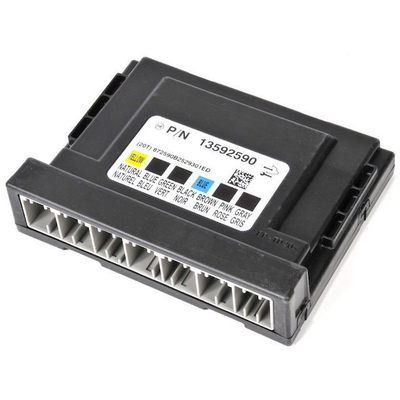
Shop the Parts Behind U1532
Below are the parts most often responsible for code U1532, ranked by how frequently each one is the actual culprit (per the diagnosis above). Tap any to see what we have for your vehicle.



The information in this article is provided for general reference and educational purposes only. Vehicle specifications, procedures, and part compatibility can vary by production date, trim level, and region. Always consult your vehicle's factory service manual and verify part numbers before purchasing or performing repairs. Safety-critical components such as airbags, seat belts, and braking systems should be installed by a qualified professional.
- 🛍️ Shop This Part
- What Does U1532 Mean?
- Can I Drive With U1532?
- Common Causes
- Symptoms
- Common Fixes & Costs
- Used vs. New Parts: Buying Guide
- What Happens If You Wait — Timeline
- Cost of Not Fixing It
- Diagnosis Steps
- When This Code Triggers (Freeze-Frame Conditions)
- Related Codes
- Climate & Environmental Factors
- How to Clear the Code After You Fix It
- Will This Fail Emissions / State Inspection?
- Most Commonly Affected Vehicles
- Manufacturer-Specific Notes
- Real Owner Stories
- 2015 GMC Sierra 1500 at 110K miles
- 2013 Ford Fusion at 85K miles
- 2007 VW Jetta with 125K miles
- How to Prevent This Code From Triggering
- Frequently Asked Questions
- Can I fix code U1532 myself?
- What is the most common misdiagnosis for U1532?
- I repaired the broken wires in the door, but the code is still there. What now?
- Could a blown fuse cause code U1532?
- My battery died and now I have this code. Are they related?
- Will clearing the code make it go away?
- What's the difference between a LIN bus and a CAN bus?
- Why does the problem sometimes go away and then come back?
- Key Takeaways
- 🎟️ Get 5% Off