

OBD-II Code U1534: Lost Communication on LIN Bus
What U1534 means, why it triggers, and how to fix it
- U1534 is an electrical communication fault, meaning a master computer lost contact with a slave device over the single-wire LIN bus.
- Inspect the driver's door harness boot first on 2014-2019 GM trucks and SUVs, as broken wires from water intrusion cause over 80% of U1534 codes on these vehicles.
- Use a full-system OBD-II scanner capable of reading Body Control Module (BCM) codes, as basic $20 engine-only readers cannot detect or clear U1534.
- Test the LIN bus wire with a multimeter set to min/max; a healthy circuit toggles between 1V and 12V, while a constant 0V or 12V confirms a hard wiring fault.
What Does U1534 Mean?
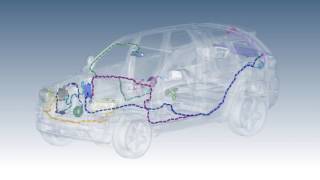
U1534 triggers when a master computer, typically the Body Control Module (BCM), loses connection with a specific electronic component. These parts communicate over a single-wire network called the LIN (Local Interconnect Network) bus. When a part stops responding, the master computer flags a fault, disables the affected feature, and stores the U1534 code.
Technical definition: Lost Communication With Device on LIN Bus. The specific offline device is identified by the vehicle's control module and pinpointed with an advanced scan tool. On GM vehicles, U1534 almost always points to the driver's window motor.
Can I Drive With U1534?
Yes. The vehicle is safe to drive. This code affects non-essential convenience features like power windows or radio functions, not core engine or braking systems. However, ignoring the code risks unpredictable electrical behavior, such as wipers activating independently or parasitic battery drains.
Common Causes
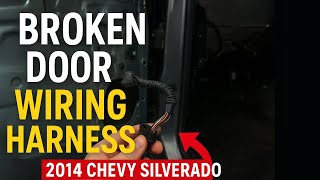
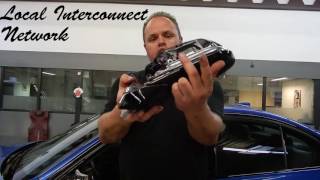
- Broken or Corroded Wiring (Very Common) — The single LIN bus wire frequently breaks, chafes, or corrodes. The primary failure point is inside the flexible rubber boot 🎬 Watch: How to troubleshoot and replace a damaged door wiring harness. of the driver's door jamb, where repeated opening and closing fatigues the wire. Water intrusion from damaged A-pillar seals accelerates this corrosion.
- Faulty Slave Component on the LIN Bus (Common) — The offline component itself—such as a power window motor, master switch, or Intelligent Battery Sensor (IBS)—often causes the fault. An internal short or failed transceiver chip brings down the network.
- Low or Unstable Battery Voltage (Common) — LIN networks require stable system voltage. A weak battery, failing alternator, or poor ground connection drops module voltage, causing immediate communication dropouts.
- Failing Master Control Module (e.g., BCM) (Less Common) — The master computer managing the LIN bus (usually the BCM) occasionally fails. Damaged internal circuits or a burnt-out LIN transceiver prevent communication with all devices on that specific network.
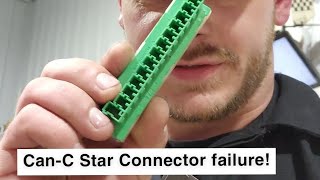
- Corroded or Failed LIN Bus Splice/Junction (Rare) — The LIN bus wire splits at junction blocks (like Chrysler's Star Connector) to link multiple components. Corroded junctions or loose pins cut off communication to all downstream devices.
- Incorrect or Incompatible Replacement Part (Rare) — Installing a non-OEM or incompatible replacement part triggers this code. A part must match the exact OEM configuration to communicate via the vehicle's specific LIN protocol.
- Aftermarket Component Interference (Rare) — Improperly installed aftermarket remote starters, alarms, or stereos introduce electrical noise or short the LIN bus data line, causing immediate communication dropouts.
- Software or Firmware Glitch (Rare) — A software anomaly within a module occasionally halts communication. A hard reset (disconnecting the battery for 30 minutes) or a dealer firmware update resolves this.
Symptoms
- Inoperative Power Windows, Mirrors, or Locks — The most frequent symptom is the complete failure of a LIN-controlled component, typically the driver's side power window and mirror controls.
- Driver Information Center Warning Message — The vehicle displays a specific service message on the dashboard, such as 'Service Power Windows'. This body code rarely illuminates the Check Engine Light.
- Radio Stays On After Opening Door — On vehicles like the Buick Cascada, the BCM uses a LIN signal from the door module to cancel Retained Accessory Power (RAP). Losing this signal keeps the radio on after opening the driver's door.
- Jerky or Erratic Component Operation — Before complete failure, a component operates intermittently or moves in a jerky motion. This indicates high resistance or a failing connection on the LIN bus wire.
- Inoperative Steering Wheel Controls — Steering wheel controls for the radio or cruise control communicate via the LIN bus. A bus failure renders all steering wheel buttons unresponsive.
- Charging System Warning Light or Battery Drain (also visible on scanner) — If the code stems from a faulty Intelligent Battery Sensor (IBS), a battery warning light appears. This also causes improper charging and parasitic battery drains.
Diagnostic Flowchart
Tap your situation to follow the diagnostic path that matches what you're seeing on this code.
Common Fixes & Costs
- Repairing Damaged Wiring in Door Harness — Parts: $10-$30, Labor: $150-$300, ~1.5 hr book time (Intermediate)
- Replacing a Faulty Component (e.g., Window Motor/Switch) — Parts: $75-$350, Labor: $100-$250, ~1.5 hr book time (DIY)
- Replacing Driver or Passenger Door Harness — Parts: $100-$250, Labor: $200-$400, ~2.5 hr book time (Intermediate)
- Replacing a Faulty Junction Block / Star Connector — Parts: $30-$70, Labor: $100-$200, ~1 hr book time (DIY)
- Replacing the Body Control Module (BCM) — Parts: $300-$800, Labor: $200-$500, ~2 hr book time (Professional)
Used vs. New Parts: Buying Guide
When a used part is worth it: Used parts are acceptable for mechanical items like window regulators on vehicles older than 10 years. Never buy used wiring harnesses.
Donor-vehicle mileage cap: roughly under 80000 miles for the part to have meaningful remaining life.
Donor quality checklist:
- Avoid wiring harnesses from 'Rust Belt' vehicles due to high corrosion risk.
- Match part numbers exactly, as door modules are highly specific to vehicle options.
- Inspect used parts for water damage or corroded pins.
Decision logic:
- If The failed part is a wiring harness, especially the GM door harness. → Buy new OEM. The original design was flawed, and a used part will fail again.
- If The part is a simple motor or switch on a high-mileage vehicle. → Buy used to save money, accepting the lack of a long-term guarantee.
- If The part is an electronic module like a BCM or DDM. → Buy new. Used modules often have programming lockouts and are not worth the risk.
Warranty tradeoff: Used parts offer 30-90 day warranties. New aftermarket parts carry 1-year warranties. New OEM parts provide 1-2 year warranties.
Worst-case if a used part fails: $200-$500 for repeat labor if a used part fails shortly after installation.
What Happens If You Wait — Timeline
- 0-1 month: A specific component (e.g., driver's window) stops working. A 'Service' message appears on the dash. The U1534 code is stored. (MPG impact: 0%% · Added cost: $0)
- 1-6 months: If the fault is a bad Intelligent Battery Sensor (IBS), a parasitic drain begins. If caused by a water leak, corrosion spreads to adjacent pins in the connector. (MPG impact: 0-2%% · Added cost: $50-$250)
- 6-12 months: A persistent parasitic drain shortens battery life. Unaddressed water intrusion causes severe corrosion, requiring a full harness replacement instead of a simple wire repair. (MPG impact: 2-5%% · Added cost: $400-$800)
- 12+ months: Catastrophic failure. Severe water intrusion migrates into the Body Control Module (BCM), destroying it. Repair costs escalate to major module replacement. (MPG impact: 5-10%% · Added cost: $800-$2000)
Cost of Not Fixing It
- 0-3 months: Loss of function for the specific component (e.g., power window won't work). This is primarily an inconvenience. (Added cost: $0)
- 3-12 months: Corrosion from an unaddressed water leak spreads from the door harness to the main A-pillar connector, requiring complex wiring repairs. (Added cost: $200-$600)
- 12+ months: Severe water intrusion migrates into the Body Control Module (BCM), destroying it. A faulty Intelligent Battery Sensor (IBS) overworks and damages the alternator. (Added cost: $800-$1500)
Diagnosis Steps
- Perform a Full System Scan
Use a professional-grade OBD-II scanner capable of reading codes from all vehicle modules (BCM, DDM, PDM). Related codes like U1538, U153A, or B3205 pinpoint the exact component or circuit at fault.
Tools: Bi-directional OBD-II Scan Tool (Beginner) - Check for Technical Service Bulletins (TSBs)
Search for TSBs related to your vehicle's make, model, and the U1534 code. Manufacturers release bulletins for known wiring issues, such as GM's TSB 18-NA-079 for door harness failures.
Tools: Internet access (Beginner) - Check Battery Voltage and Ground Connections
Ensure the battery is fully charged (12.4-12.6V) and passes a load test. LIN bus communication requires stable voltage. Inspect and clean the main body and engine ground straps.
Tools: Digital Multimeter, Battery Tester (Beginner) - Perform a Thorough Visual Inspection
Peel back the rubber boot between the driver's door and the body to check for broken, chafed, or corroded wires. Inspect connectors at the BCM and the non-communicating module for water intrusion or pin corrosion.
Tools: Flashlight, trim removal tools (Intermediate) - Isolate the Faulty Component (Network Isolation)
If multiple devices share the LIN bus, disconnect them one by one. Clear the codes after unplugging each; if U1534 disappears, the unplugged module or its pigtail is shorting the network.
Tools: OBD-II Scan Tool, trim removal tools (Advanced) - Test the LIN Bus Circuit with a Multimeter
Disconnect the battery. At the suspect component's connector, use a multimeter to check for continuity on the LIN wire back to the BCM (< 1.0 ohm). Verify there is no short to ground or power (OL).
Tools: Digital Multimeter, vehicle-specific wiring diagram (Advanced) - Advanced: Check LIN Bus Live Voltage
With the battery connected and ignition on, use a multimeter set to 'peak min/max' (1ms record). A healthy LIN bus shows a toggling voltage between 1V and 12V. A constant 0V or 12V indicates a hard short or open circuit.
Tools: Digital Multimeter with Min/Max function, back-probe pins (Advanced) - Pro Tip: Perform a Master & Slave Voltage Output Test
Disconnect all slaves and check for the toggling 1V-12V signal at a slave connector to test the master. To test a slave, power it directly and check for a steady ~12V reference voltage on its LIN pin; no voltage means a dead slave.
Tools: Digital Multimeter, wiring diagram, power probe (optional) (Professional) - Pro Tip: Analyze the LIN Bus with an Oscilloscope
Connect an oscilloscope to view the LIN bus waveform. A healthy signal shows a clear square wave toggling between 1V and 12V. A flat line confirms a short, while a missing slave response confirms a dead module.
Tools: Automotive Oscilloscope, back-probe pins (Professional)
When This Code Triggers (Freeze-Frame Conditions)
- Battery Voltage: 11.5V - 14.8V (Code sets if voltage drops below 11.5V during startup or fluctuates wildly while running.)
- Ignition Status: RUN / ON (Fault is detected during the module self-test sequence immediately after turning the ignition to RUN.)
- Module State: Active/Commanded (Logged when the master module (BCM) sends a request to a slave module (window motor) and receives no valid response.)
- Time Since Key-On: < 10 seconds (Master modules poll all LIN bus devices at startup; failure to respond within the first 5-10 seconds sets the code.)
Related Codes
- U1538 — Indicates lost communication with the driver's window switch. Seeing U1534 and U1538 together strongly indicates a shared wiring problem, such as a broken wire in the door harness boot.
- U153A — Specifies communication loss with the passenger window switch. If U1534, U1538, and U153A appear simultaneously, the fault is in a shared circuit like the BCM or a central LIN splice.
- U1510 — Indicates a LIN bus fault for the active grille shutters on GM vehicles. This operates on a separate LIN bus from the window controls and is not causally related to U1534.
- B3205 — A GM-specific code for 'Driver Window Motor Calibration Not Learned'. The BCM cannot learn window limits because it cannot communicate with the motor (U1534). Fix U1534 first.
Climate & Environmental Factors
- Road Salt (Winter Climates): Road salt creates a potent electrolyte solution that splashes into door jambs. This dramatically accelerates copper wiring and connector pin corrosion, causing high resistance or open circuits.
- High Humidity (Coastal & Damp Climates): Sustained high humidity keeps moisture on electrical components. In coastal areas, salt-laden air promotes galvanic corrosion on terminals even without direct water intrusion.
- Water Intrusion: Water intrusion from clogged sunroof drains or damaged body plugs directly wets electrical modules. On GM trucks, failed A-pillar seals funnel water directly into main door harness connectors.
How to Talk to a Mechanic About This Code
Say this: "I have a U1534 communication code and the driver's side window stopped working. Based on my vehicle's model, I suspect it might be the common wiring issue in the door harness. I'd like you to start by inspecting the wiring in the door jamb before quoting a new window motor."
This directs the technician to the most likely cause (a wiring fault) instead of the most obvious symptom (a dead motor). It prevents a quick, expensive, and incorrect diagnosis.
Avoid saying:
- 'My window is broken, please fix it.'
- 'My check engine light is on, can you look at it?'
- 'Just replace the window motor.'
Questions to ask before authorizing the repair:
- Did you find a broken wire or corrosion in the door harness, or did you test the LIN bus voltage at the component connector?
- Can you show me the broken wire or the voltage reading that confirms the diagnosis?
- If a module needs to be replaced, does the new one require programming and is that included in the quote?
- What is the warranty on this electrical repair?
Where to Take It: Dealer vs Independent vs Chain
- Dealer:
Recommended if the fault is a complex module failure or if the vehicle is under warranty.
Best for: Vehicles under warranty, Repairs requiring manufacturer-specific software (like BCM programming), Checking for unpublicized 'Special Coverage' programs.
Downsides: Highest labor rate, More likely to replace an entire harness rather than repair a single wire. (Typical cost: +50% vs. baseline) - Independent Shop:
Best fit for most U1534 scenarios, especially common wiring faults. Choose a shop with a strong reputation for electrical diagnosis.
Best for: Out-of-warranty vehicles with known issues (e.g., GM door harness)., Shops specializing in automotive electrical diagnostics., Getting a cost-effective wire repair versus a full harness replacement.
Downsides: Quality varies greatly; look for ASE certification in electrical systems., May lack dealer-level tools to program a new BCM. (Typical cost: +0% vs. baseline) - Chain Shop:
AVOID for U1534 diagnosis. This communication fault requires diagnostic skill beyond what is typical for a chain shop.
Best for: Simple maintenance like oil changes or tires.
Downsides: Technicians lack specialized training for complex network diagnostics., High pressure to sell parts leads to replacing motors when the problem is wiring., Lack advanced scan tools to read BCM codes. (Typical cost: -10% vs. baseline)
When to Walk Away From the Repair
If the estimated repair cost exceeds 40-50% of the car's private-party value, evaluate carefully. Since U1534 typically affects non-essential convenience features, many owners choose to live with the problem if the repair is expensive.
- Car worth $4000, fix is $300: Fix it. A $300 wiring repair to get a working window is a reasonable investment.
- Car worth $4000, fix is $1200: Walk away (or live with it). The repair requires an expensive BCM replacement. The cost is too high for a non-essential feature on an older car.
- Car worth $15000, fix is $1200: Borderline. A BCM replacement is expensive but is a small percentage of the car's value. Get a second opinion from an independent specialist.
What Scan Tool You Need for This Code
Minimum: A scanner that can read and clear codes from ALL vehicle modules, specifically the Body Control Module (BCM), not just the engine computer (ECM).
A cheap, engine-only code reader from an auto parts store will NOT see the U1534 code. The fault is stored in the BCM.
Budget: Ancel BD310, Foxwell NT301 (~$60) — These entry-level scanners read BCM codes on many common vehicles, confirming the code's presence, but offer limited live data.
Mid-range: BlueDriver Pro, Foxwell NT604 Elite, Autel MaxiCheck MX900 (~$100) — Provides full-system scanning and live data streaming. This allows you to see if the BCM is attempting to communicate.
Professional: Autel MaxiCOM MK808 / MK906BT, Launch X431 Series (~$500-1200) — Offers full bi-directional control, allowing you to command the window motor directly from the scanner to test functionality.
Rent vs buy: Auto parts stores loan basic OBD-II scanners for free, but these usually CANNOT read BCM codes. Buying a mid-range tool ($100-$150) is a necessary investment for diagnosing U1534.
How to Clear the Code After You Fix It
- Reconnect the battery if it was disconnected for the repair.
- Use an OBD-II scan tool to connect to the Body Control Module (BCM) and erase the fault codes.
- Perform any necessary re-learn procedures, such as window indexing (running the window fully up and down and holding the switch).
- Operate the repaired component multiple times to verify functionality.
Drive cycle (~10 minutes): A specific drive cycle is not required. After clearing the code, start the vehicle and test the affected function (e.g., power windows) to confirm the repair.
Readiness monitors affected: None directly, as this is a body network code., If the battery was disconnected, all emissions readiness monitors reset to incomplete.
Before emissions retest: drive at least 50 miles to fully set monitors.
Watch out for:
- Using a basic code reader that only clears Engine Control Module (ECM) codes, leaving the U1534 code stored in the BCM.
- Forgetting to perform a window indexing re-learn procedure after repair.
- Clearing the code without fixing the broken wire, causing it to return immediately.
Will This Fail Emissions / State Inspection?
No — by itself this code doesn't fail OBD inspection (but it can keep readiness monitors from setting, which causes a separate fail).
- California: U1534 is a body control code and does not illuminate the Check Engine Light. It will not cause an emissions failure unless the battery was recently disconnected, resetting readiness monitors.
- New York: The NYS DMV inspection checks for emissions-related codes. U1534 will not cause a failure unless accompanied by powertrain codes.
- Texas: Vehicles pass the OBD-II inspection with a U1534 code, provided the Check Engine Light is off and readiness monitors are set.
Most Commonly Affected Vehicles
- Chevrolet Silverado, Tahoe, Suburban (2014-2019) — Extremely common issue covered by GM TSB 18-NA-079. The LIN bus wire for the driver's window motor breaks inside the door boot due to water intrusion.
- GMC Sierra, Yukon, Terrain (2014-2019) — Shares the same platform and wiring vulnerability as Chevrolet trucks. The repair is identical and covered by TSB 18-NA-079.
- Cadillac Escalade (2014-2018) — Affected by the same door harness water intrusion issue described in GM TSB 18-NA-079, disabling driver's side controls.
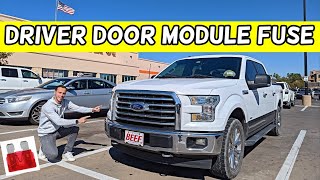
- Ford F-Series (2015-2020) — The Driver Door Module (DDM) frequently fails internally, disabling driver-side controls. Check the 30A DDM fuse in the passenger footwell before replacing the module.
- Ram 1500, 2500, 3500 (2011-2018) — Exhibits widespread 'no bus' symptoms. The root cause is often a communication failure in the Totally Integrated Power Module (TIPM) or a faulty Star Connector junction block.
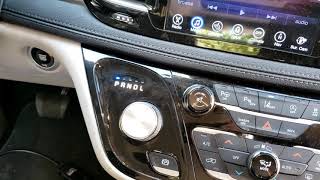
- Chrysler / Jeep Pacifica, Wrangler, Grand Cherokee (2017-2021) — The 'Star Connector' central hub develops poor pin connections, taking down the network. Wiggling the connector behind the glove box temporarily restores function.
- Buick Cascada (2016-2017) — A U1534 fault in the driver's window motor prevents the BCM from receiving the door-open signal, leaving the radio on after exiting. Requires replacing the window regulator assembly.
- Mitsubishi Outlander, Lancer (2008-2015) — U1534 points directly to an internal 'checksum error' in the main power window switch assembly. Diagnosis usually requires replacing the switch itself.
Manufacturer-Specific Notes
- General Motors (GM): On 2014-2019 trucks/SUVs, U1534 is overwhelmingly caused by broken wires inside the driver's door harness boot due to water intrusion (TSB 18-NA-079).
- Chrysler / Jeep / Ram: The 'Star Connector' behind the glove box is a common failure point. Poor pin tension takes down the entire network, generating numerous communication codes.
- Ford: On 2015-2020 F-150s, the Driver Door Module (DDM) frequently fails internally. Always check for a blown DDM fuse in the passenger kick panel before condemning the module.
- Mitsubishi: The code frequently indicates an internal 'checksum error' within the power window main switch assembly, usually requiring a direct switch replacement.
Real Owner Stories
2014 Chevy Silverado with 110K miles
Driver's window stopped working and the radio would not turn off after parking the truck.
What they tried:
- Replaced a blown fuse, which blew again immediately.
- Replaced the window motor/regulator assembly. The fix lasted one day before symptoms returned.
Outcome: The owner found a wire with a microscopic crack in the insulation inside the door harness boot. Repairing the broken wire within the harness permanently resolved the issue, matching GM TSB 18-NA-079.
Lesson: Do not assume a component is bad just because it blows a fuse. The true cause is often a shorted wire leading to the component. Thoroughly inspect the door harness wiring on these trucks.
2017 Chrysler Pacifica with 96K miles
Vehicle experienced random electrical issues daily, including 'Service Shifter' messages, non-starting, and numerous communication codes.
What they tried:
- A shop replaced the main 12V battery.
- The shop replaced the shifter assembly and the PCM, but issues persisted.
Outcome: The root cause was a faulty CAN bus Star Connector behind the glove box. Replacing this $60 part resolved all communication failures. Slamming the glove box door temporarily restored connection, confirming the culprit.
Lesson: A flood of unrelated communication codes points to a central network failure. On Chrysler vehicles, the Star Connector is a known weak point and should be the primary suspect before replacing expensive modules.
2016 Buick Cascada
The radio and infotainment screen stayed on after turning off the engine and opening the driver's door.
What they tried:
- A scan tool confirmed code U1534 was stored in the Body Control Module (BCM).
Outcome: The problem was a loss of communication with the driver's window motor. The BCM relies on a LIN signal from this module to cancel Retained Accessory Power (RAP). Replacing the driver's window regulator assembly fixed the issue.
Lesson: Seemingly unrelated symptoms are linked by network communication logic. A window motor fault prevented the radio from turning off, highlighting the importance of full-system scanning.
BMW with recurring battery drain
Car battery died overnight repeatedly. The owner experienced random electrical malfunctions and 'Increased Battery Discharge' warnings.
What they tried:
- Replaced the vehicle battery, but the new battery drained quickly.
Outcome: A diagnostic scan revealed a fault with the Intelligent Battery Sensor (IBS) on the LIN bus. The faulty IBS prevented the car from entering 'sleep mode', causing a parasitic drain. Replacing the sensor and registering the battery resolved it.
Lesson: Never assume a dead battery is just a bad battery. If a new battery doesn't solve the problem, suspect a fault in the power management system, such as the Intelligent Battery Sensor.
How to Prevent This Code From Triggering
- Periodically clean and lubricate door harness boots. (Once every 1-2 years) — Applying a silicone-based rubber protectant keeps the boot flexible, reducing strain on the wires inside and preventing water intrusion.
- Apply dielectric grease to critical connectors. (When performing any electrical repair) — Applying non-conductive dielectric grease to connector seals creates a barrier against moisture and road salt, preventing pin corrosion.
- Regularly inspect and clear sunroof and cowl drains. (Twice a year (spring and fall)) — Clogged drains cause water to overflow into the A-pillars, directly soaking major electrical junction blocks and causing catastrophic corrosion.
- Ensure stable battery health and clean terminals. (During every oil change) — LIN bus modules are sensitive to voltage fluctuations. Regularly testing the battery and cleaning terminals prevents voltage-related communication faults.
Frequently Asked Questions
What is a LIN bus and how is it different from a CAN bus?
A LIN bus is a simple, low-cost, single-wire network for non-critical components like window switches and sensors. A CAN bus is a robust, high-speed, two-wire network used for critical systems like the engine and ABS. LIN serves as a cost-effective supplement to CAN for less demanding tasks.
Can a bad battery cause a U1534 code?
Yes. All vehicle communication networks require stable voltage to operate. A weak battery or faulty alternator causes voltage fluctuations that drop modules offline, triggering communication codes like U1534.
What is the most common mistake when diagnosing U1534?
The biggest mistake is immediately replacing the non-working part without a full diagnosis. The actual cause is usually the wiring leading to the part, a bad ground, or a different module shorting the network. Always perform a full system scan and inspect wiring before buying parts.
How much does it cost to fix code U1534?
Costs range from $30 for a DIY wire repair to $1,200+ for a dealer-programmed Body Control Module (BCM). A typical shop repair for a broken door harness wire costs $150 to $300. Replacing a faulty door module or window motor usually runs $200 to $500 including parts and labor.
Will clearing the U1534 code fix the problem?
No. U1534 indicates a hard, active fault. Clearing the code only makes it disappear momentarily until the master module attempts to communicate with the offline device again. The underlying physical or electrical failure must be repaired.
What does 'checksum error' mean for a Mitsubishi with U1534?
A checksum error means the data sent by the power window switch module is corrupt and failing its integrity check. The receiving module recognizes the bad data and sets the code. On Mitsubishi models, this almost always points to an internal failure of the switch assembly itself.
Why did my power windows suddenly stop working?
This is the classic symptom of a U1534 fault. It is usually caused by a wire inside the driver's door harness snapping after years of flexing, instantly severing the LIN bus connection to the window controls.
What is a 'hard reset' and can it fix U1534?
A hard reset involves disconnecting both battery terminals and touching them together for 30 seconds to drain residual power from the modules. While this resolves temporary software glitches, it will not fix a physical problem like a broken wire or a failed component.
Key Takeaways
- U1534 is an electrical communication fault, meaning a master computer lost contact with a slave device over the single-wire LIN bus.
- Inspect the driver's door harness boot first on 2014-2019 GM trucks and SUVs, as broken wires from water intrusion cause over 80% of U1534 codes on these vehicles.
- Use a full-system OBD-II scanner capable of reading Body Control Module (BCM) codes, as basic $20 engine-only readers cannot detect or clear U1534.
- Test the LIN bus wire with a multimeter set to min/max; a healthy circuit toggles between 1V and 12V, while a constant 0V or 12V confirms a hard wiring fault.
Helpful Videos
Shop the Parts Behind U1534
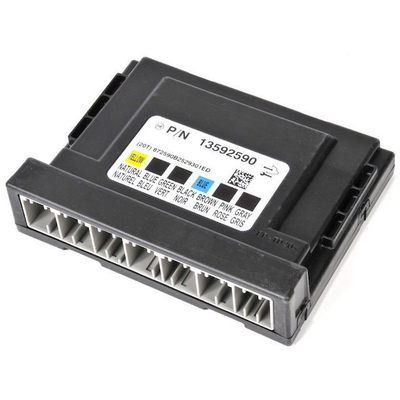
Below are the parts most often responsible for code U1534, ranked by how frequently each one is the actual culprit (per the diagnosis above). Tap any to see what we have for your vehicle.



The information in this article is provided for general reference and educational purposes only. Vehicle specifications, procedures, and part compatibility can vary by production date, trim level, and region. Always consult your vehicle's factory service manual and verify part numbers before purchasing or performing repairs. Safety-critical components such as airbags, seat belts, and braking systems should be installed by a qualified professional.
- 🧭 Diagnostic Flowchart
- 🎬 Helpful Videos
- 🛍️ Shop This Part
- What Does U1534 Mean?
- Can I Drive With U1534?
- Common Causes
- Symptoms
- Common Fixes & Costs
- Used vs. New Parts: Buying Guide
- What Happens If You Wait — Timeline
- Cost of Not Fixing It
- Diagnosis Steps
- When This Code Triggers (Freeze-Frame Conditions)
- Related Codes
- Climate & Environmental Factors
- How to Talk to a Mechanic About This Code
- Where to Take It: Dealer vs Independent vs Chain
- When to Walk Away From the Repair
- What Scan Tool You Need for This Code
- How to Clear the Code After You Fix It
- Will This Fail Emissions / State Inspection?
- Most Commonly Affected Vehicles
- Manufacturer-Specific Notes
- Real Owner Stories
- 2014 Chevy Silverado with 110K miles
- 2017 Chrysler Pacifica with 96K miles
- 2016 Buick Cascada
- BMW with recurring battery drain
- How to Prevent This Code From Triggering
- Frequently Asked Questions
- What is a LIN bus and how is it different from a CAN bus?
- Can a bad battery cause a U1534 code?
- What is the most common mistake when diagnosing U1534?
- How much does it cost to fix code U1534?
- Will clearing the U1534 code fix the problem?
- What does 'checksum error' mean for a Mitsubishi with U1534?
- Why did my power windows suddenly stop working?
- What is a 'hard reset' and can it fix U1534?
- Key Takeaways
- 🎟️ Get 5% Off