

OBD-II Code U1538: Lost Communication With Window/Mirror Switch
What U1538 means, why it triggers, and how to fix it
- Code U1538 indicates a communication failure between the Body Control Module and the driver's door switch panel on the LIN bus network, almost exclusively affecting General Motors vehicles.
- On 2014-2019 GM trucks and large SUVs, inspect the driver's door wiring harness and X500 connector first, as broken wires or water intrusion are the most frequent culprits.
- For 2017-2018 GM cars and small SUVs like the Equinox or Bolt, a known software glitch (TSB 16-NA-407) triggers this code at startup and requires a $150-$250 dealer software update.
- Always test the 12-volt battery before replacing parts; a weak battery dropping below 12.4 volts during startup frequently causes false LIN bus communication codes.
- Do not replace the window switch assembly without testing the LIN bus voltage first; a healthy circuit must toggle between 1V and 12V.
What Does U1538 Mean?

Code U1538 means the Body Control Module (BCM) lost communication with the driver's side window and mirror switch assembly. The BCM uses a single-wire network called a Local Interconnect Network (LIN) bus to control body electronics. When the BCM (the 'master') cannot get a response from the switch (the 'slave'), it triggers this code.
Technical definition: The official SAE/ISO definition is "Lost Communication With S79D Window Switch - Driver / S146 Window/Outside Rearview Mirror Switch - Driver on LIN Bus." This means the Body Control Module detects a communication loss with the driver's window and mirror switch assembly. LIN is a low-speed, single-wire network used for non-critical comfort features.
Can I Drive With U1538?
Yes. The vehicle is safe to drive. This code indicates a communication failure with the driver's window and mirror controls. It does not affect the engine, braking, or primary safety systems, though losing window control is inconvenient and poses a minor security risk if a window is stuck open.
Common Causes

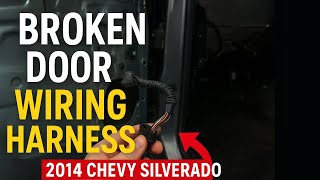
- Damaged or Corroded Driver Door Wiring Harness (Very Common) — The wiring harness passing between the driver's door and the vehicle body constantly flexes. Wires break internally, or water enters the main connector (X500), causing corrosion and communication loss. This is a heavily documented failure on 2014-2019 GM trucks and SUVs (TSB 18-NA-079). 🎬 Watch: How to troubleshoot and replace a damaged door wiring harness.
- Transient Software Glitch at Startup (Very Common) — On many 2017-2018 GM vehicles, a software glitch during startup causes this code to appear with no actual symptoms. High data traffic creates a timing conflict, leading to a false communication loss report. This is the primary cause for Chevrolet Bolt EVs, Equinoxes, and Buick LaCrosses (TSB 16-NA-407).
- Weak or Failing 12V Battery (Common) — A weak 12-volt battery frequently causes communication fault codes. Low voltage during engine cranking disrupts communication between electronic modules, triggering random codes like U1538 before any physical parts fail. LIN bus communication requires stable voltage to maintain its signaling range.
- Corroded Wire Splice in Floor Harness (Less Common) — On vehicles with cabin water leaks, the LIN bus wire often corrodes at a factory splice located under the driver's side floor trim or sill plate. This breaks the physical connection to the door switch.
- Faulty Driver Window/Mirror Switch Assembly (Less Common) — The switch assembly contains the electronics acting as a slave node on the LIN bus. An internal circuit board failure prevents it from communicating with the BCM, even with intact wiring.
- Faulty Body Control Module (BCM) or Connectors (Rare) — A failure within the BCM's LIN bus driver circuit, or loose/broken locking tabs on the BCM connectors, prevents communication with the network. This usually occurs only after severe water intrusion or botched previous repairs.
Symptoms

- Driver's Window and Mirror Controls Inoperative — The power window, mirror, and power lock switches on the driver's door do not function.
- Intermittent Functionality — The driver's door controls only work when the door is open at a specific angle, strongly indicating a broken wire in the flexible door harness.
- Check Engine Light or Service Message — A warning light or "Service Power Windows" message appears on the instrument cluster.
- No Noticeable Symptoms (scan-tool only — no driver-felt sign) — The code stores in the vehicle's memory as a "history" code with no effect on vehicle operation, typical of a startup software glitch.
Diagnostic Flowchart

Tap your situation to follow the diagnostic path that matches what you're seeing on this code.
Common Fixes & Costs
- Repair/Replace Driver Door Wiring Harness
— Parts: $120-$200, Labor: $150-$300, ~2.0 hr book time
(Intermediate)
2014-2018 Chevrolet Silverado / GMC Sierra: OEM 84290981 (Regular Cab), 84290990 (Double/Crew Cab) - Reprogram Body Control Module (BCM) — Parts: $0, Labor: $150-$250, ~1.0 hr book time (Professional)
- Replace 12V Battery — Parts: $150-$300, Labor: $0-$50, ~0.5 hr book time (DIY)
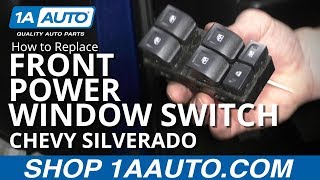
- Replace Driver Window Switch Assembly
— Parts: $50-$150, Labor: $50-$100, ~0.5 hr book time
(DIY)
2014-2018 Chevrolet Silverado / GMC Sierra: OEM 23427098, 84587886 (Alt: Dorman 901-085) - Repair Corroded Wiring Splice — Parts: <$10, Labor: $150-$250, ~1.5 hr book time (Intermediate)
- Replace Body Control Module (BCM)
— Parts: $300-$600, Labor: $200-$400, ~2.0 hr book time
(Professional)
2018 Chevrolet Silverado / GMC Sierra: OEM 84922494
DIY vs Professional
- Reprogram Body Control Module (BCM) 🟢 Beginner
Tools: GM MDI passthrough tool, laptop, GM Service Programming System (SPS) subscription. - Replace 12V Battery 🟢 Beginner
Tools: Socket set, terminal cleaning brush. - Repair/Replace Driver Door Wiring Harness 🟢 Beginner
Tools: Trim removal tools, socket set, wire cutters/strippers. - Replace Driver Window Switch Assembly 🟢 Beginner
Tools: Trim removal tool, screwdriver. - Replace Body Control Module (BCM) 🟢 Beginner
Tools: Socket set, trim removal tools, professional programming equipment.
Used vs. New Parts: Buying Guide
When a used part is worth it: A used OEM window switch is a good budget option. For wiring harnesses, buy new; used harnesses suffer from the same fatigue and brittleness as your broken one.
Donor-vehicle mileage cap: roughly under 100000 miles for the part to have meaningful remaining life.
Donor quality checklist:
- Match the switch part number exactly to your vehicle's options (e.g., power-folding mirrors).
- Avoid harnesses from vehicles in rust-belt regions.
- Verify the donor vehicle wasn't scrapped due to flood damage.
Decision logic:
- If The part is a wiring harness. → Buy new OEM. A used harness will likely fail the same way.
- If The part is a window switch and budget is tight. → A used OEM switch is acceptable; ensure there is a return policy.
- If You want the best reliability for a window switch. → Buy a new OEM or high-quality aftermarket part with a warranty.
Warranty tradeoff: Used parts typically have a 30-90 day warranty. New aftermarket parts offer one-year to lifetime warranties. New OEM parts carry a 1-2 year warranty.
Worst-case if a used part fails: $150-$300 if a faulty used part requires repeat labor for diagnosis and replacement.
What Happens If You Wait — Timeline
- 0-1 month: A 'History' code for U1538 stores during a low-voltage startup or software glitch. There are no symptoms. (MPG impact: 0%% · Added cost: $0)
- 1-3 months: The driver's window/mirror controls work intermittently, failing when the door moves. A wire in the door harness is breaking. (MPG impact: 0%% · Added cost: $0, but creates a security risk if the window gets stuck down.)
- 3-6 months: The broken or corroded wire creates a partial short, causing a parasitic battery drain. The controls are completely dead. (MPG impact: 0%% · Added cost: $150-$300 for a new battery if permanently damaged by deep discharging.)
- 6+ months: Corrosion wicks up the wiring harness and damages the pins on the Body Control Module (BCM). (MPG impact: 0%% · Added cost: $500-$1000 for BCM replacement and programming.)
Cost of Not Fixing It
- 0-1 month: Inconvenience due to inoperative controls. A window stuck in the down position creates a security risk. (Added cost: $0)
- 1-6 months: An underlying wiring short creates a parasitic battery drain, leading to a dead battery and no-start conditions. (Added cost: $150-$300 for a new battery.)
- 6+ months: Water intrusion causes severe corrosion to spread from the wiring harness to the pins on the BCM. (Added cost: $500-$1000 for BCM replacement.)
Diagnosis Steps
- Read All Trouble Codes
Use an OBD-II scanner capable of reading Body Control Module codes. Note if U1538 is a current or history code and if U1534 or U0422 are present. The combination of these codes points to specific known software or wiring faults.
Tools: OBD-II Scanner (BCM capable) (Beginner) - Test the 12V Battery
Have the 12V battery professionally tested. Use a digital battery tester to check its state of health and state of charge. A weak battery dropping below 12.4 volts during cranking is a primary cause of communication codes.
Tools: Digital Battery Tester (Beginner) - Inspect the Driver Door Harness Connector (X500)
If window controls are inoperative, disconnect the large wiring connector between the driver's door and the vehicle body. Look for water intrusion, green/white pin corrosion, or backed-out pins.
Tools: Trim removal tools, socket set (Intermediate) - Inspect Wiring Inside the Door Boot and Floor Sill
Pull back the rubber boot protecting the wires between the door and the body. Gently tug individual wires to check for internal breaks. Remove the driver's side floor sill plate and inspect the harness for corroded splices.
Tools: Trim removal tools, flashlight (Intermediate) - Check for Technical Service Bulletins (TSBs)
Search for TSBs related to code U1538 for your specific vehicle. GM bulletins 16-NA-407 and 18-NA-079 address this code directly, recommending either a software update or pointing to known water intrusion points.
Tools: Smartphone or computer (Beginner) - Perform a Hard System Reboot
Disconnect both battery terminals and hold them together for 1-2 minutes. This drains capacitors in the modules and clears temporary communication glitches. Reconnect the battery and test functionality.
Tools: Wrench or socket set (Beginner) - Test the LIN Bus Circuit Voltage
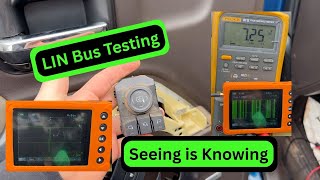
Using a multimeter set to DC volts and Peak MIN/MAX, back-probe the LIN bus wire at the window switch connector. A healthy LIN bus shows a toggling voltage between approximately 1V and 12V. A steady 12V indicates an open circuit; a steady 0V indicates a short to ground.
Tools: Multimeter with Peak MIN/MAX, wiring diagram (Advanced) - Check Ground Circuit Resistance
Using a multimeter set to Ohms, check the resistance between the ground pin on the window switch harness connector and a known good chassis ground. Resistance must be 2.0 ohms or less.
Tools: Multimeter, wiring diagram (Advanced) - Isolate the Slave Module
If the LIN bus voltage is stuck near 0V, a slave device may be internally shorted. Disconnect the slave modules on that circuit one by one. If the toggling 1V-12V signal returns after disconnecting a specific module, that module is faulty.
Tools: Multimeter, wiring diagram, trim removal tools (Advanced)
When This Code Triggers (Freeze-Frame Conditions)
- Module Voltage: 11.5-14.0V (Code sets if voltage drops significantly below 12V during startup.)
- Ignition Status: Run/Start (Fault occurs during the transition from off to run or during cranking.)
- Vehicle Speed: 0 mph (Faults are logged at vehicle startup before the vehicle moves.)
Related Codes
- U1534 — Lost Communication with Driver Window Motor. Frequently appears with U1538 because the switch and motor share the same LIN bus circuit and door wiring harness. A shared wiring problem is highly likely.
- U0422 — Invalid Data Received From Body Control Module. This is a symptom of the TSB 16-NA-407 software glitch. GM advises ignoring U0422 if present with U1538, as fixing the root cause resolves both.
- U153A — Lost Communication with Passenger Window Switch. A severe wiring fault in the driver's door harness can disrupt the entire local LIN bus, causing communication loss with the passenger switch.
Climate & Environmental Factors
- High Humidity and Rain: Moisture penetrates the main door-to-body connector (X500) or seeps past worn window seals, causing rapid corrosion on the LIN bus wire terminals.
- Cold Weather: Cold temperatures reduce battery voltage during startup, triggering false codes. Cold also makes wire insulation brittle, increasing the chance of wires breaking inside the door boot.
- Salt Belt Regions: Road salt accelerates corrosion. Saltwater entering the door harness connector quickly destroys the delicate pins used for the LIN bus.
How to Talk to a Mechanic About This Code
Say this: "I have a U1538 code and my driver's door controls are not working. Based on my research, common causes are a software glitch, a bad battery, or a wiring issue in the door harness. Can you please check for TSBs and inspect the door wiring before recommending any part replacements?"
This signals you are an informed consumer. It directs the technician to the most likely, and often cheapest, fixes first, discouraging them from immediately quoting an expensive part like a new switch or BCM.
Avoid saying:
- 'My window is broken, fix it.' (Too vague, invites a quick, expensive guess)
- 'The internet said to replace the switch.' (Don't diagnose for them, describe the symptoms)
- 'Just do whatever it takes to get it working.' (Invites replacing multiple parts without confirming the root cause)
Questions to ask before authorizing the repair:
- Did you find a Technical Service Bulletin for this issue on my vehicle?
- If the cause is wiring, can the wire be repaired, or does the whole harness need replacement? Can you show me the damage?
- If you are recommending a part, what specific tests did you perform to confirm the original part failed?
- Can you provide a written estimate that breaks down the cost of parts and labor?
Where to Take It: Dealer vs Independent vs Chain
- Dealer:
Recommended if you suspect the software glitch, as only dealers can easily perform the BCM update.
Best for: Vehicles under warranty., Fixes requiring a BCM software update (TSB 16-NA-407)., Complex diagnostics where an independent shop failed.
Downsides: Highest labor rates., May replace an entire harness when a simpler wire repair is possible. (Typical cost: +50% vs. baseline) - Independent Shop:
Excellent fit for the common wiring harness repair. Choose a shop specializing in electrical diagnostics.
Best for: Out-of-warranty vehicles with a known wiring issue., Battery replacement., General electrical diagnostics.
Downsides: Quality varies; ensure they have experience with modern communication networks., May lack access to manufacturer-specific software for BCM updates. (Typical cost: +0% vs. baseline) - Chain Shop:
AVOID for diagnosing a U1538 code. Acceptable only for a simple battery test or replacement.
Best for: Battery testing and replacement.
Downsides: Technicians lack specific training for network diagnostics., High pressure to upsell leads to misdiagnosis. (Typical cost: -10% vs. baseline)
When to Walk Away From the Repair
If the estimated repair cost exceeds 40-50% of the car's private-party value, reconsider the repair.
- Car worth $5000, fix is $450: Fix it. This repair cost is well below the threshold and restores important functionality.
- Car worth $8000, fix is $3500: Walk away. The repair cost approaches 44% of the vehicle's value. This likely involves BCM replacement and other issues.
- Car worth $3000, fix is $1800: Borderline. The repair is 60% of the car's value. If the fix is a guaranteed, long-term solution (like a new harness), it might be worth it. If not, sell.
What Scan Tool You Need for This Code
Minimum: A scanner that reads manufacturer-specific codes from the Body Control Module (BCM). A basic engine code reader will NOT see 'U' codes.
A $20 generic OBD-II reader only scans the engine computer for 'P' codes. U1538 is a 'U' code stored in the BCM. Without BCM capability, you cannot see this fault.
Budget: BlueDriver Pro (~$99) — Reads and clears BCM codes, provides freeze-frame data, and views live data from some body modules via a smartphone app.
Mid-range: Foxwell NT510 Elite with GM Software (~$180) — Offers OE-level diagnostics for GM vehicles. Reads/clears codes from all modules and performs bi-directional controls to test window motors directly.
Professional: Autel MaxiCOM MK808BT (~$550) — Provides full system diagnostics, advanced live data graphing, and extensive bi-directional controls to pinpoint if the fault is in the wiring, switch, or BCM.
Rent vs buy: Buy a capable scanner if you plan to DIY. Auto parts stores offer free code reading, but their tools often cannot read BCM codes.
How to Clear the Code After You Fix It
- Use an OBD-II scan tool to clear codes from the Body Control Module.
- Perform a hard reset by disconnecting battery terminals and holding them together for 1-2 minutes.
- Operate the driver's window and mirror switches to confirm functionality.
Drive cycle (~20 minutes): From a cold start, idle for 2-3 minutes with electrical loads on. Accelerate to 55 mph at half throttle and hold for 3 minutes. Coast down to 20 mph. Accelerate to 55-60 mph at 3/4 throttle and hold for 5 minutes. Coast to a stop.
Readiness monitors affected: Catalyst Monitor, EVAP System Monitor, Oxygen (O2) Sensor Monitor
Before emissions retest: drive at least 50 miles to fully set monitors.
Watch out for:
- Clearing codes resets emissions readiness monitors, causing a failed smog test if not followed by a drive cycle.
- The code returns immediately if the underlying broken wire or bad switch is not repaired.
Will This Fail Emissions / State Inspection?
Yes — this code typically fails an OBD-II emissions inspection.
- California: An active U-code that illuminates the Check Engine Light causes an automatic failure of the OBD-II test.
- New York: An inoperative power window causes a failure of the separate NYS safety inspection, regardless of the Check Engine Light.
- Texas: In counties requiring emissions testing, an illuminated Check Engine Light is an automatic failure.
Most Commonly Affected Vehicles
- Chevrolet Silverado (2014-2019) — Highly prone to water intrusion in the X500 door harness connector and broken wires in the door jamb (TSB 18-NA-079).
- GMC Sierra (2014-2019) — Shares the same platform and wiring design as the Silverado, making it susceptible to identical door harness failures.
- Chevrolet Bolt EV (2017-2018) — Known for setting U1538 due to a temporary software glitch at startup (TSB 16-NA-407). Often requires no repair if symptoms are absent.
- Buick LaCrosse (2017-2018) — Affected by the startup software glitch described in TSB 16-NA-407. A BCM software update is the typical fix.
- Chevrolet Equinox (2018) — Specifically mentioned in TSB 16-NA-407 as affected by the startup software glitch, often setting U1538, U1534, and U0422 simultaneously.
- GMC Terrain (2018-2019) — Affected by the startup software glitch and general LIN bus communication issues.
- Cadillac Escalade (2015-2020) — Experiences the same water intrusion and wiring harness issues in the driver's door as GM trucks.
Manufacturer-Specific Notes
- General Motors (Chevrolet, GMC, Buick, Cadillac): GM has two distinct causes for this code. On 2017-2018 cars/small SUVs, it is a software glitch at startup (TSB 16-NA-407). On 2014-2019 trucks/large SUVs, it is broken wires or water intrusion in the driver's door harness (TSB 18-NA-079).
- Ford: Ford does not use the U1538 code. It uses generic U01xx codes (Lost Communication) or specific 'B' codes for LIN device failures.
- Toyota: Toyota uses its own codes for LIN bus failures, such as B2325 for a general LIN bus malfunction.
Real Owner Stories
2015 GMC Sierra with intermittent window failure
The driver's window and mirror controls on a 2015 Sierra with 85,000 miles only worked when the driver's door was opened halfway. Closing the door caused them to stop working.
What they tried:
- Replaced the driver's window switch assembly, assuming it was faulty. The problem remained.
- Inspected the wiring harness inside the rubber boot between the door and the body.
Outcome: A visual inspection revealed a broken LIN bus wire inside the harness. The owner repaired the broken wire using a butt connector and heat shrink tubing, restoring all functions permanently.
Lesson: Intermittent operation that changes with door position is a classic sign of a broken wire in the door jamb. Always inspect the harness before replacing the switch.
2018 Chevy Equinox with startup codes
An owner reported an intermittent Check Engine Light on their 2018 Equinox. A scan revealed codes U1538, U1534, and U0422, but the windows and mirrors worked perfectly.
What they tried:
- Ignored the code initially as it cleared itself.
- Took the vehicle to the dealer when the light became persistent.
Outcome: The dealer identified TSB 16-NA-407. A BCM software update was performed, and the codes never returned.
Lesson: If you have a 2017-2018 GM vehicle and see U1538 with no symptoms, suspect the known software glitch before attempting hardware repairs.
2014 Chevy Silverado with dead controls after a rainstorm
A 2014 Silverado owner found their driver's door controls completely dead after a heavy rainstorm. Codes U1538 and U1534 were present.
What they tried:
- Checked all related fuses.
- Disconnected the main wiring harness connector (X500) between the door and the A-pillar.
Outcome: Significant green and white corrosion was visible on several pins inside the X500 connector. The owner replaced the entire driver's door wiring harness (GM P/N 84290990) to fix the issue.
Lesson: Sudden failure after rain or a car wash points directly to water intrusion. The X500 door connector is a known weak point on GM trucks.
How to Prevent This Code From Triggering
- Maintain Battery Health (Every 6 months) — A healthy battery with stable voltage prevents low-power glitches that trigger communication codes during engine cranking.
- Apply Dielectric Grease to Connectors (When accessible) — Applying dielectric grease to the seals of the X500 door connector creates a moisture-proof barrier, preventing pin corrosion.
- Clean Door and Sunroof Drains (Annually) — Clogged drains cause water to leak into the cabin, saturating and corroding wiring harnesses located under the carpet.
- Lubricate Door Harness Boot (Annually) — Applying silicone lubricant to the rubber boot keeps it flexible, reducing stress on the wires inside as they bend.
Frequently Asked Questions
Can I just clear the U1538 code and see if it comes back?
Yes. If caused by a temporary glitch or low voltage, clearing it resolves the issue. If it returns immediately, you have a hard wiring fault. If it only appears on startup with no symptoms, suspect the TSB 16-NA-407 software glitch.
Why do my window controls only work when the door is open?
This is a classic symptom of a broken wire inside the rubber boot between the door and the body. Opening the door changes the wire's position, temporarily completing the circuit. You must repair or replace the door wiring harness.
What is a LIN bus?
A Local Interconnect Network (LIN) is a simple, single-wire communication network used for non-critical vehicle functions. It features one 'master' module (like the BCM) that requests information and up to 15 'slave' modules (like a window switch) that respond. This setup drastically reduces wiring complexity in the doors and dashboard.
What are the most common misdiagnoses for U1538?
The most common mistake is replacing the driver's window switch assembly when the actual fault is a broken wire or corroded connector. Another frequent error is skipping a professional 12V battery test, as low voltage frequently causes false communication codes. Always verify wiring and voltage before buying parts.
My scanner shows P1538, not U1538. Is it the same thing?
No, they are completely different. 'U' codes indicate network communication issues, while 'P' codes relate to the powertrain (engine and transmission). Always pay attention to the first letter of the diagnostic code to avoid replacing the wrong parts.
A shop wants to replace the BCM. Is that the right fix?
Replacing the BCM is rarely the correct fix for a single U1538 code. The root cause is almost always a software glitch, a weak 12V battery, or damaged door wiring. Only consider BCM replacement after an experienced technician thoroughly rules out all wiring and voltage issues.
Can I replace the door wiring harness myself?
Yes, replacing the door harness is an intermediate-level DIY repair. It requires removing the door panel, disconnecting components, and routing the new harness through the door boot into the body. It takes patience but only requires basic hand tools and trim removal tools.
The dealer said I need a software update. How much does that cost?
A software update or module reprogramming at a dealership typically costs between $150 and $250. This covers one to two hours of shop labor time. It is the official fix for many 2017-2018 GM vehicles covered under TSB 16-NA-407.
Key Takeaways
- Code U1538 indicates a communication failure between the Body Control Module and the driver's door switch panel on the LIN bus network, almost exclusively affecting General Motors vehicles.
- On 2014-2019 GM trucks and large SUVs, inspect the driver's door wiring harness and X500 connector first, as broken wires or water intrusion are the most frequent culprits.
- For 2017-2018 GM cars and small SUVs like the Equinox or Bolt, a known software glitch (TSB 16-NA-407) triggers this code at startup and requires a $150-$250 dealer software update.
- Always test the 12-volt battery before replacing parts; a weak battery dropping below 12.4 volts during startup frequently causes false LIN bus communication codes.
- Do not replace the window switch assembly without testing the LIN bus voltage first; a healthy circuit must toggle between 1V and 12V.
Helpful Videos
Shop the Parts Behind U1538
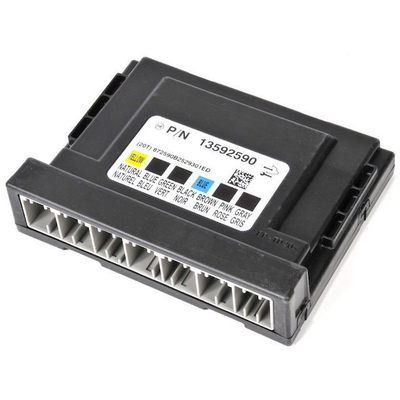
Below are the parts most often responsible for code U1538, ranked by how frequently each one is the actual culprit (per the diagnosis above). Tap any to see what we have for your vehicle.




The information in this article is provided for general reference and educational purposes only. Vehicle specifications, procedures, and part compatibility can vary by production date, trim level, and region. Always consult your vehicle's factory service manual and verify part numbers before purchasing or performing repairs. Safety-critical components such as airbags, seat belts, and braking systems should be installed by a qualified professional.
- 🧭 Diagnostic Flowchart
- 🎬 Helpful Videos
- 🛍️ Shop This Part
- What Does U1538 Mean?
- Can I Drive With U1538?
- Common Causes
- Symptoms
- Common Fixes & Costs
- DIY vs Professional
- Used vs. New Parts: Buying Guide
- What Happens If You Wait — Timeline
- Cost of Not Fixing It
- Diagnosis Steps
- When This Code Triggers (Freeze-Frame Conditions)
- Related Codes
- Climate & Environmental Factors
- How to Talk to a Mechanic About This Code
- Where to Take It: Dealer vs Independent vs Chain
- When to Walk Away From the Repair
- What Scan Tool You Need for This Code
- How to Clear the Code After You Fix It
- Will This Fail Emissions / State Inspection?
- Most Commonly Affected Vehicles
- Manufacturer-Specific Notes
- Real Owner Stories
- 2015 GMC Sierra with intermittent window failure
- 2018 Chevy Equinox with startup codes
- 2014 Chevy Silverado with dead controls after a rainstorm
- How to Prevent This Code From Triggering
- Frequently Asked Questions
- Can I just clear the U1538 code and see if it comes back?
- Why do my window controls only work when the door is open?
- What is a LIN bus?
- What are the most common misdiagnoses for U1538?
- My scanner shows P1538, not U1538. Is it the same thing?
- A shop wants to replace the BCM. Is that the right fix?
- Can I replace the door wiring harness myself?
- The dealer said I need a software update. How much does that cost?
- Key Takeaways
- 🎟️ Get 5% Off