

OBD-II Code U1556: Lost Communication With a Network Module
What U1556 means, why it triggers, and how to fix it
- Code U1556 indicates a specific module—usually the radio or trailer brake controller—has stopped communicating on the LIN bus network.
- On 2014-2019 GM trucks, inspect the Trailer Brake Control Module above the spare tire for corrosion before replacing parts (TSB 18-NA-144).
- A black infotainment screen on Ford or Chrysler vehicles directly points to a failed APIM or radio module triggering the U1556 code.
- Verify module power (>10V), ground (<5 ohms), and LIN bus signal (fluctuating between 1V and 12V) at the connector to rule out wiring faults.
- Never tow a trailer with an active U1556 code; the trailer's electric brakes will not function, increasing stopping distance and collision risk.
What Does U1556 Mean?
Code U1556 means a specific computer module has stopped communicating on the vehicle's network. It triggers when a primary control module, like the Body Control Module (BCM), loses contact with a secondary module, most commonly the radio or trailer brake controller.
Technical definition: The SAE definition is 'Lost Communication With Device on LIN Bus'. This indicates a supervisory control module stopped receiving messages from a specific node on the Local Interconnect Network (LIN)—a single-wire sub-network connected to the main CAN bus. When the master module sends a request and receives no response, it sets code U1556.
Can I Drive With U1556?
Yes, But With Caution. Yes, but critical features like trailer brakes or the infotainment system are inoperative. Do not tow a trailer if the trailer brake system is affected; towing without functional trailer brakes is illegal and drastically increases collision risk. If the code isolates to the radio, driving is safe but navigation and hands-free calling are disabled.
Common Causes
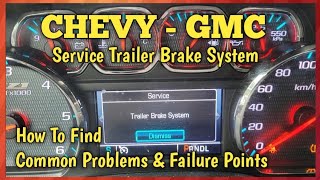
- Damaged or Corroded Wiring/Connector (Very Common) — This is the leading cause. Wires in the chassis harness rub through their insulation on the frame, or connectors fill with water and corrode. On GM trucks, the harness and connector for the trailer brake module are frequent culprits. TSB 18-NA-144 identifies 🎬 See common failure points on Chevy trailer brake systems. specific chafe points.
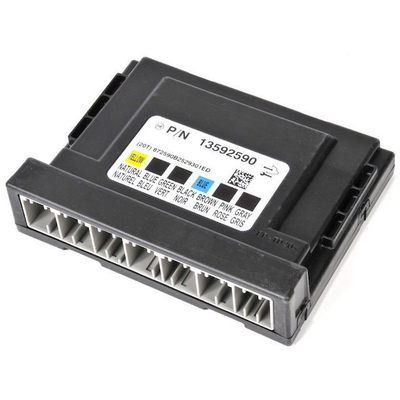
- Failed Trailer Brake Control Module (TBCM) (Very Common) — On GM trucks, the TBCM sits above the spare tire, where it absorbs water, causing internal corrosion and failure. Newer 2020-2024 GM HD trucks experience a similar failure due to voltage feedback from the trailer's battery system (Customer Satisfaction Program N232414840).
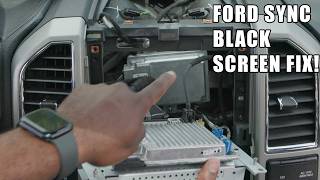
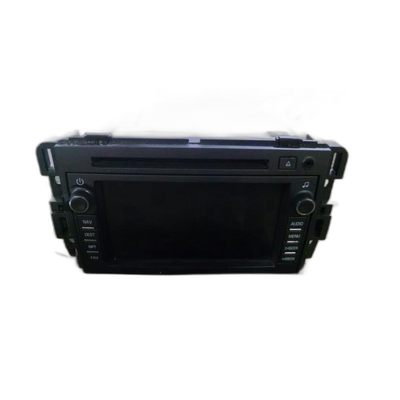
- Failed Radio or Infotainment (APIM) Module (Common) — On modern Chrysler, Ford, and GM vehicles, the radio acts as an active network node. When the radio or APIM fails internally, it stops communicating, triggering this code and a black screen. 🎬 Watch: How to replace a failed Ford APIM module.
- Blown Fuse (Common) — Every module relies on a fuse. If the fuse for the radio or trailer brake module blows due to a short circuit, the module loses power and drops off the network.
- Software Glitch (Common) — Software bugs cause network drops. Ford TSB 20-2255 notes many APIM modules are replaced when a simple software update resolves the issue. RAM recalls (NHTSA 24V-653) address ABS software causing similar network communication drops.
- Weak or Failing Car Battery (Less Common) — Low battery voltage causes unpredictable communication errors. Voltage below 9.5V triggers faults. GM TSB PIT5529A requires checking the battery's state of health first using a professional load tester.
- Poor Ground Connection (Less Common) — Modules require a solid chassis ground. A loose or corroded ground bolt causes intermittent or total communication loss. Ground circuit resistance over 1 ohm indicates a problem.
- Aftermarket Accessories Interference (Less Common) — Improperly installed remote starters, alarms, or trailer lighting adapters interfere with the communication network by introducing electrical noise or drawing excessive power.
- Damaged Wheel Speed Sensor Wire (Rare) — On some trucks, a broken wheel speed sensor wire triggers 'Service Trailer Brake System' and 'Service ESC' messages. The Chassis Control Module interprets the lost signal as a major fault.
Symptoms
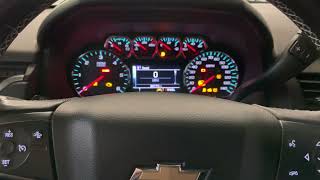
- Service Message on Dash — A message like 'Service Trailer Brake System' or 'Check Trailer Wiring' appears on the instrument cluster.
- Radio or Infotainment Screen is Black/Unresponsive — The entire infotainment system fails to turn on, freezes, or reboots constantly.
- Trailer Brake Functions Do Not Work — The manual trailer brake slider is unresponsive, and the gain cannot be adjusted.
- Check Engine Light or Warning Lamps are On — The main check engine light, ABS light, or stability control (ESC) light illuminates.
- Trailer Not Detected Message — The vehicle fails to acknowledge a connected trailer on the driver information center.
- GPS or Navigation Errors — A 'GPS Signal Lost' message appears or the vehicle's map position is incorrect.
Diagnostic Flowchart
Tap your situation to follow the diagnostic path that matches what you're seeing on this code.
Common Fixes & Costs
- Repairing Damaged Wiring or Connector — Parts: $10-$50, Labor: $300-$750, ~2.5-6.0 hr book time (Professional)
- Replacing the Trailer Brake Control Module (TBCM)
— Parts: $70-$300, Labor: $100-$210, ~0.8-1.5 hr book time
(Intermediate)
Chevrolet Silverado / GMC Sierra (2014-2018): OEM GM 85073617 (Alt: Dorman 601-237, SKP SK959A02)
Chevrolet Silverado HD / GMC Sierra HD (2020, 2024): OEM GM 85073615 (Alt: Dealer-only initially) - Replacing the Radio/APIM Head Unit
— Parts: $300-$900, Labor: $150-$300, ~1.0-2.0 hr book time
(Professional)
Ford F-150 (2018-2020): OEM LL3T-14G370-MLJ (Alt: Pre-programmed units available online)
RAM 1500 (2018+): OEM 68270661AE (Alt: Replacement screens (LA084X01) available) - Cleaning and Sealing Electrical Connector — Parts: $5-$20, Labor: $100-$200, ~0.8-1.2 hr book time (DIY)
- Replacing a Blown Fuse — Parts: $1-$10, Labor: $0-$120, ~0.2 hr book time (DIY)
Used vs. New Parts: Buying Guide
When a used part is worth it: For a GM Trailer Brake Control Module (TBCM), a used part from a dry, low-mileage donor vehicle is a reasonable, cost-effective option as they are typically plug-and-play. For a Ford APIM or Chrysler Uconnect radio, a used part only makes sense if it is purchased from a reputable seller who pre-programs it to your vehicle's VIN.
Donor-vehicle mileage cap: roughly under 100000 miles for the part to have meaningful remaining life.
Donor quality checklist:
- Match the part number exactly; superseded numbers do not always interchange.
- For TBCMs, avoid donors from the 'Salt Belt' to minimize the risk of pre-existing corrosion.
- For infotainment modules, verify the seller offers VIN programming and has good reviews.
Decision logic:
- If The part is a GM TBCM and budget is a primary concern → A used part is a viable option, but inspect it carefully for corrosion before installation.
- If The part is an infotainment module (Ford APIM, Uconnect) → Favor a new or professionally refurbished, pre-programmed unit to avoid functionality issues.
- If The vehicle is under warranty or part of a recall/customer satisfaction program → Always use a new OEM part from the dealer to ensure coverage.
Warranty tradeoff: Used parts from a salvage yard typically have a 30-90 day warranty. Refurbished/pre-programmed modules from online sellers often come with a 6-month to 1-year warranty. New OEM parts have a 1-2 year warranty.
Worst-case if a used part fails: $200-$500 if a used part fails after installation, accounting for repeat diagnostic and labor charges plus the cost of another part.
Cost of Not Fixing It
- Immediate: Inability to tow a trailer safely or legally. The trailer's electric brakes are inoperative, posing a severe collision risk. (Added cost: Potential fines, accident liability costs.)
- 0-3 months: If the radio module is the cause, it creates a parasitic battery drain, leading to a dead battery if the vehicle sits for several days. (Added cost: $150-$300 for a new battery and potential tow/service call.)
- 3+ months: Continued exposure to moisture causes a corroded connector to degrade further, potentially damaging the wiring harness and requiring a more extensive and expensive repair. (Added cost: $500-$1500+ for harness repair or replacement.)
Diagnosis Steps
- Identify the Non-Functioning System
Note what isn't working. A dead radio or a 'Service Trailer Brake' message identifies which module is offline and directs your diagnosis.
Tools: None (Beginner) - Scan for Module Communication Status
Use a professional scan tool to perform a full network test. The results list all modules and flag which ones are 'Not Communicating', confirming the offline module.
Tools: Professional OBD-II Scan Tool (e.g., Autel, Launch) (Intermediate) - Check the Fuses
Locate the fuse for the malfunctioning system (e.g., 'Radio,' 'TBC'). If the internal metal strip is broken, replace it with a fuse of the exact same amperage.
Tools: Fuse puller or needle-nose pliers (Beginner) - Perform a Professional Battery Test
Low voltage causes communication codes. Use a professional battery tester to perform a load test. System voltage dropping below 9.5V during operation forces modules offline.
Tools: Professional Battery Tester (e.g., Midtronics) (Beginner) - Inspect the Module and Connectors
Locate the module. For GM trailer brakes, lower the spare tire. Unplug the connector and inspect for green/white corrosion, moisture, or bent pins. Missing cavity plugs let water in (TSB PIT5529A).
Tools: Trim removal tools, socket set (Intermediate) - Check for Power and Ground at the Module
With the key on, use a multimeter and wiring diagram to check connector pins. Expect battery voltage (12V+) at the power pin and less than 1.0 ohm of resistance at the ground pin.
Tools: Multimeter, vehicle-specific wiring diagram (Advanced) - Load Test the Power and Ground Circuits
A multimeter shows 12V even on a corroded wire that cannot carry current. Connect a test light or headlight bulb to the power and ground pins. A dim bulb indicates high resistance.
Tools: Test light or headlight bulb with wires (Advanced) - Test the LIN Bus Voltage with a Multimeter
Set a multimeter to DC volts on the LIN bus wire. A healthy LIN bus shows rapidly fluctuating voltage. Using MIN/MAX, expect a MAX near battery voltage (~12V) and a MIN around 1V.
Tools: Multimeter with MIN/MAX function (Advanced) - Analyze the LIN-Bus Signal with an Oscilloscope
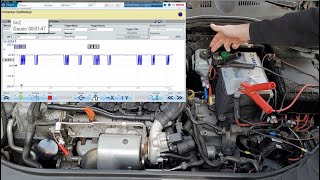
A healthy LIN bus signal is a clean square wave toggling between a high state (~12V) and a low state (~1V). A distorted waveform indicates a wiring problem. A clean signal with good power/ground confirms the module failed.
Tools: Oscilloscope (Professional)
When This Code Triggers (Freeze-Frame Conditions)
- System Voltage: 12.5-14.5V (Normal operating voltage. The fault triggers during engine cranking when voltage drops.)
- Ignition Status: On/Run (Communication self-tests perform at key-on. The fault sets immediately.)
- Vehicle Speed: 0 mph (The fault detects before the vehicle is in motion, during the initial module self-check.)
- Engine State: Off or Running (The communication check happens as soon as the ignition turns to the 'Run' position, often before the engine starts.)
Related Codes
- U0137 — This is a more specific CAN code for 'Lost Communication With Trailer Brake Control Module'. U1556 is often set by a master module (like the CCM) that lost contact with a slave on its LIN bus. Seeing both strongly confirms the TBCM is the source of the problem.
- C1112, C1113, C1114, C111B — These are chassis codes specific to the trailer brake system, indicating circuit or power supply faults within the TBCM itself. They often appear with U1556 when a bad connection or low voltage is the root cause, as noted in TSB PIT5529.
- U1000 — This is a general 'Class 2 Communication Malfunction' code. U1556 points to a single, specific module going silent on a sub-network. U1000 indicates a broader problem where multiple modules on the main network fail to communicate.
- U1505 — This code is listed alongside U1556 in GM TSB PIT5529. It relates to a loss of communication with a device on the LIN bus, and when seen with U1556, it further points to the trailer brake system on affected GM vehicles.
Climate & Environmental Factors
- High Humidity / Rain: Increases the likelihood of water intrusion into poorly sealed electrical connectors, especially the Trailer Brake Control Module connector on GM trucks located above the spare tire.
- Cold Climates / Road Salt: Dramatically accelerates corrosion in connectors and modules exposed to the elements. Road salt spray is a primary cause of the widespread TBCM failures on GM trucks in 'Salt Belt' regions.
How to Clear the Code After You Fix It
- Reconnect any disconnected components (battery, module).
- Use an OBD-II scan tool to clear the Diagnostic Trouble Codes (DTCs).
- Perform a complete drive cycle to allow the system to self-test.
Drive cycle (~20 minutes): Cold start (coolant temp below 122°F). Idle for 2-3 minutes with electrical loads (A/C, defroster) on. Accelerate to 55 mph and hold for 3-5 minutes. Coast down to 20 mph without using the brake. Accelerate again to 55-60 mph and hold for 5 minutes. Coast down again.
Readiness monitors affected: This is a network code and does not directly affect emissions readiness monitors like Catalyst or O2 sensors., However, clearing a U-code resets all readiness monitors, requiring a full drive cycle before an emissions test.
Before emissions retest: drive at least 50 miles to fully set monitors.
Watch out for:
- Simply disconnecting the battery does not clear the code from all modules and resets all readiness monitors.
- The code returns instantly if the physical fault (bad wire, failed module) has not been corrected.
Will This Fail Emissions / State Inspection?
Yes — this code typically fails an OBD-II emissions inspection.
- California: A U-code that illuminates the Check Engine Light is an automatic failure. After repair, a full drive cycle must be completed to set readiness monitors before re-testing.
- New York: Any active Diagnostic Trouble Code (DTC) that turns on the Malfunction Indicator Lamp (MIL) results in a failed OBD-II emissions inspection.
- Texas: In counties requiring emissions testing, an illuminated Check Engine Light is an automatic failure. The OBD-II scan checks for DTCs, and a code like U1556 fails the test.
Most Commonly Affected Vehicles
- Chevrolet Silverado 1500/2500/3500 (2014-2019) — Extremely common issue due to the Trailer Brake Control Module's location above the spare tire, leading to water damage and corrosion of the module or its wiring harness (Connector X411). Refer to TSBs 18-NA-144 and PIT5529A.
- GMC Sierra 1500/2500/3500 (2014-2019) — Identical to the Chevrolet Silverado, this truck suffers from frequent failures of the Trailer Brake Control Module or its wiring due to its exposed mounting location.
- Chevrolet Suburban / Tahoe (2015-2020) — Shares the same trailer brake control system architecture as the Silverado/Sierra, making it susceptible to the same module and wiring failures.
- Ford F-150 (2015-2020) — On these models, U-codes associate with failures in the SYNC infotainment system (APIM) or issues with the Trailer Brake Control module. A black screen is a common symptom. TSB 20-2255 addresses APIM software updates.
- Ford Explorer (2016-2019) — This code appears due to issues with the SYNC 3 system's Accessory Protocol Interface Module (APIM) or related wiring, often causing a black or frozen screen.
- RAM 1500/2500/3500 (2015-2021) — A U1556 code frequently traces back to a faulty Uconnect radio module that stopped communicating. Recent recalls on 2019-2024 models for ABS module software (NHTSA 24V-653) cause various network communication issues.
- Chrysler / Dodge Pacifica / Grand Caravan (2017-2021) — Like other FCA vehicles, a U1556 code frequently traces back to a faulty Uconnect radio module that stopped communicating on the CAN bus, causing a black or glitching screen.
- Chevrolet Trailblazer (2021-2024) — As modern vehicles increasingly rely on LIN bus networks for various subsystems like lighting and sensor modules, communication codes like U1556 appear due to wiring or module faults in these systems.
Manufacturer-Specific Notes
- General Motors (GM): On 2014+ trucks/SUVs, 'Service Trailer Brake System' with U1556 almost always points to the TBCM or its wiring above the spare tire. Check for corrosion in connector X411 due to missing cavity plugs (TSB PIT5529A) or a chafed harness on the frame (TSB 18-NA-144). For certain 2020 and 2024 HD trucks, Customer Satisfaction Program N232414840 provides a free TBCM replacement until August 31, 2026.
- Ford: This code associates with a failure of the SYNC infotainment system's main computer, the APIM. A black screen is a strong indicator. Before replacing the expensive APIM, always check for software updates per TSB 20-2255. Replacement APIMs require VIN-specific programming.
- Chrysler/Dodge/Jeep/RAM (FCA): A U1556 code is very commonly caused by an internal failure of the Uconnect radio head unit. If your screen is black or glitching, the radio is the prime suspect. Be aware of safety recall U61 (NHTSA 18V-332) for a PCM software issue affecting the CAN-C bus on 2014-2019 models, and recall 55B (NHTSA 24V-653) for an ABS module software update on 2019-2024 models.
- Kia / Hyundai: On these vehicles, the LIN bus connects components like the alternator, battery sensor, and rain sensors. A U1556-type code points to a failure in one of these systems, and diagnosis involves using an oscilloscope to see if the master module (PCM/BCM) is sending a request and if the slave device fails to respond.
Frequently Asked Questions
Can I fix a U1556 code myself?
Yes, if the cause is a blown fuse, minor connector corrosion, or a plug-and-play GM trailer brake module. Repairs requiring wire tracing, dashboard removal, or module programming require professional tools and experience.
Will clearing the code fix the problem?
No. U1556 is a hard fault indicating an active communication loss. The code returns immediately upon the next ignition cycle until the underlying electrical problem is repaired.
Why did my 'Service Trailer Brake' light come on if I never use a trailer?
The Trailer Brake Control Module remains active on the vehicle's network at all times. The system performs a self-test during every ignition cycle and triggers the warning if the module fails to respond.
What is the most common misdiagnosis for U1556?
Replacing the non-communicating module without performing electrical tests. The root cause is frequently a damaged wire, corroded connector, or blown fuse rather than a failed module.
Why does the Trailer Brake Control Module on GM trucks fail so often?
The module mounts in a vulnerable location above the spare tire, exposing it to water, salt, and road debris. Moisture bypasses connector seals, causing severe corrosion and electronic failure.
A shop quoted me $700 to fix a wire. Why is it so expensive?
You are paying for the diagnostic time required to pinpoint a microscopic break or short within a complex wiring harness. The repair also requires durable, weather-sealed splices to prevent future failures.
Do I need to program a new module?
It depends on the specific module replaced. GM Trailer Brake Control Modules are typically plug-and-play, while infotainment modules like Ford's APIM or Chrysler's Uconnect require VIN-specific programming to function.
Key Takeaways
- Code U1556 indicates a specific module—usually the radio or trailer brake controller—has stopped communicating on the LIN bus network.
- On 2014-2019 GM trucks, inspect the Trailer Brake Control Module above the spare tire for corrosion before replacing parts (TSB 18-NA-144).
- A black infotainment screen on Ford or Chrysler vehicles directly points to a failed APIM or radio module triggering the U1556 code.
- Verify module power (>10V), ground (<5 ohms), and LIN bus signal (fluctuating between 1V and 12V) at the connector to rule out wiring faults.
- Never tow a trailer with an active U1556 code; the trailer's electric brakes will not function, increasing stopping distance and collision risk.
Helpful Videos
Shop the Parts Behind U1556
Below are the parts most often responsible for code U1556, ranked by how frequently each one is the actual culprit (per the diagnosis above). Tap any to see what we have for your vehicle.





The information in this article is provided for general reference and educational purposes only. Vehicle specifications, procedures, and part compatibility can vary by production date, trim level, and region. Always consult your vehicle's factory service manual and verify part numbers before purchasing or performing repairs. Safety-critical components such as airbags, seat belts, and braking systems should be installed by a qualified professional.
- 🧭 Diagnostic Flowchart
- 🎬 Helpful Videos
- 🛍️ Shop This Part
- What Does U1556 Mean?
- Can I Drive With U1556?
- Common Causes
- Symptoms
- Common Fixes & Costs
- Used vs. New Parts: Buying Guide
- Cost of Not Fixing It
- Diagnosis Steps
- When This Code Triggers (Freeze-Frame Conditions)
- Related Codes
- Climate & Environmental Factors
- How to Clear the Code After You Fix It
- Will This Fail Emissions / State Inspection?
- Most Commonly Affected Vehicles
- Manufacturer-Specific Notes
- Frequently Asked Questions
- Can I fix a U1556 code myself?
- Will clearing the code fix the problem?
- Why did my 'Service Trailer Brake' light come on if I never use a trailer?
- What is the most common misdiagnosis for U1556?
- Why does the Trailer Brake Control Module on GM trucks fail so often?
- A shop quoted me $700 to fix a wire. Why is it so expensive?
- Do I need to program a new module?
- Key Takeaways
- 🎟️ Get 5% Off