

U1601 on 2019-2020 Ram 3500: ECM Software Corruption Causes and Fixes
Code U1601 on a 2019-2020 Ram 3500 means the Engine Control Module (ECM) software is corrupt, usually causing a no-start condition. The most common causes are a failed software update or an unauthorized aftermarket tune (e.g., EFILive, MM3). The fix is a software re-flash by a dealer or qualified shop, costing approximately $275-$450 in labor. In some cases, the ECM must be removed for a 'bench flash' recovery.
- U1601 is almost always a software problem, not a hardware failure.
- The vehicle will not start and should not be driven.
- The most common causes are an interrupted software update or the use of an unauthorized aftermarket engine tuner.
- This is not a DIY fix. The vehicle must be taken to a Ram dealer or a specialized repair shop with OEM programming capabilities and SGW bypass tools.
- Before authorizing a repair, inform the service advisor of any recent tuning or programming attempts on the vehicle, as this is the most likely cause.
- Repairs for this code caused by aftermarket tuning are not covered by the factory warranty.
What's Unique About the 2019-2020 Ram 3500
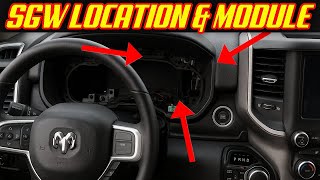
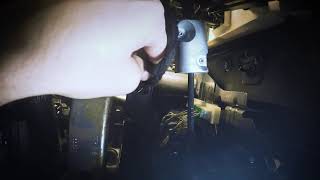
For modern Ram heavy-duty trucks, U1601 is almost exclusively a software issue tied to programming the ECM. Ram has a long history, documented in service bulletins since at least 2009, of this code appearing after either an interrupted official software update or the use of unauthorized aftermarket performance tuners. The ECM's secure bootloader is designed to detect and reject non-factory software, triggering this code as a protective measure. For 2019+ models, the presence of a Security Gateway Module (SGW) adds a layer of complexity, sometimes requiring special bypasses for a technician to communicate with and recover the ECM. These bypasses can be physical harnesses that plug in behind the OBD-II port or behind the instrument cluster to allow 🎬 Watch: How to locate and bypass the Security Gateway Module. diagnostic tools direct access to the powertrain CAN bus.
Diagnostic Flowchart
Tap your situation to follow the diagnostic path that matches what you're seeing on this vehicle.
Symptoms You May Notice
- Engine will not crank or start
- Check Engine Light is on
- Vehicle may stall while driving and will not restart
- Loss of communication with the ECM when using a standard scan tool
- Error messages like "Download not Accepted" or "Error: $0340" when using an aftermarket tuner
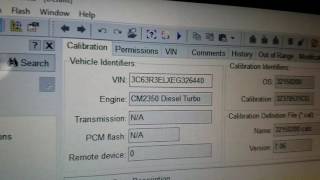
- VIN may be missing or show as zeros when read with a scan tool
- Tuning device (e.g., EZ Lynk) may get stuck at 1% during the flashing process
- Replacing the battery or starter motor in response to the no-start symptom.
- Suspecting a faulty key fob or anti-theft system.
- Searching for a failed mechanical part or sensor when the problem is purely software-based.
Most Likely Causes
- Interrupted or Failed ECM Software Flash 🔴 High Probability Official software updates can be interrupted by low battery voltage, tool disconnection, or electrical interference on the CAN bus network. This corruption bricks the ECM until it can be recovered.
How to confirm: The U1601 code appears immediately after a failed attempt to program the ECM. The vehicle, which ran before the attempt, now will not start.
Typical fix: The ECM must be reflashed with approved factory software using a compatible scan tool like wiTECH. This is a dealer or specialist repair.
Est. part cost: $0 - Use of Unauthorized Aftermarket Tuner/Software 🔴 High Probability The ECM's secure bootloader is designed to detect and reject unauthorized software (e.g., EFILive, MM3, EZ Lynk tunes), triggering U1601 and locking the module as a protective measure.
How to confirm: The code appears after attempting to install a non-factory performance tune. The tuning device may show an error like "Download not Accepted" or get stuck. The truck will subsequently fail to start.
Typical fix: The ECM must be recovered by flashing it back to the stock factory software. In many cases, this requires removing the ECM for a 'bench flash' by a specialist service. Repairs for this cause are not covered by warranty.
Est. part cost: $0 - CAN Bus Interference from Aftermarket Devices 🟡 Medium Probability Devices like GPS trackers, Electronic Logging Devices (ELDs), some aftermarket trailer brake controllers, or even aftermarket radios can disrupt communication on the data network during a flash, causing it to fail.
How to confirm: Diagnose by disconnecting all aftermarket devices plugged into the OBD-II port or wired into the vehicle's network. If a reflash is then successful, one of the devices was the cause.
Typical fix: Remove the interfering device(s) and have a qualified shop reflash the ECM with factory software.
Est. part cost: $0
Rare But Worth Checking
- Internal ECM Hardware Failure: While U1601 is overwhelmingly a software issue, a rare internal failure of the ECM's memory or processor could theoretically cause software corruption. This should only be considered after all attempts to reflash the module, including bench flashing, have failed.
Diagnosis Steps
- Verify the battery is fully charged and connected to a stable, high-amperage power supply. A weak battery is a common cause of flash failure.
- Attempt to communicate with the ECM using a professional scan tool. Note if communication is possible or if the module is unresponsive.
- Question the vehicle owner about any recent programming attempts, either at a shop or with an aftermarket tuner (EFILive, EZ Lynk, etc.). This is the most critical diagnostic question.
- Inspect the OBD-II port and vehicle wiring for any aftermarket devices (GPS, ELD, remote start, aftermarket radio, etc.). Disconnect them completely.
- Per TSB S2008000186 REV. A, consider pulling the radio fuse to eliminate it as a source of CAN bus interference before attempting a reflash.
- For 2019+ models, a technician must use a Security Gateway Module (SGW) bypass cable to establish direct communication with the ECM for flashing.
- Using an OEM-level tool like wiTECH, attempt to reflash the ECM with the latest approved factory software.
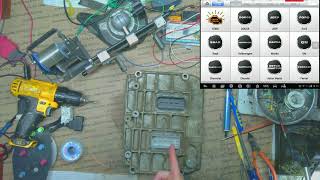
- If the flash fails in the vehicle, the ECM must be removed and 'bench flashed' by a specialist service. This involves connecting directly to the ECM's pins with a dedicated power supply and harness to attempt recovery.
- If bench flashing also fails, the ECM is likely internally damaged and requires replacement.
Parts You'll Likely Need
- Engine Control Module (ECM)
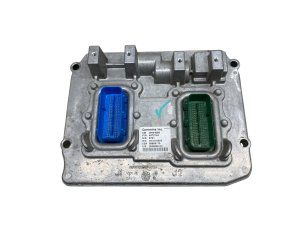
(OEM #68444422AA (Note: This is an example Mopar part number format; exact number is VIN-specific and may differ))— Only needed in the rare event that the original ECM is permanently damaged ('bricked') by a failed flash and cannot be recovered via bench flashing.
Trusted brands: Mopar
OEM price range: $1800-$2500
Technical Service Bulletins (TSBs) & Recalls
- S2008000186 REV.B / REV.A: Defines the code as 'Engine Control Module (ECM) Flash Failure, Diagnostic Trouble Code (DTC) U1601 – ECU Application Software Code 1 Missing Or Corrupted' and points to CAN bus interference as a primary cause of flash failure.
- 18-007-09 (older models): Confirms the code's meaning and cause on earlier generations, and states that repairs due to unauthorized software are not covered by warranty.
Platform-Specific Known Issues
- Ram has explicitly stated in TSB 18-007-09 (for older models, but the policy remains) that warranty will not cover repairs for U1601 when caused by the installation of unauthorized 'up-rate' software.
- TSB S2008000186 REV. A specifically identifies CAN bus interference from aftermarket devices like GPS trackers and ELDs as a cause for flash failures leading to U1601.
- Owner experiences confirm that dealers charge between $275 and $450 for a standard re-flash procedure to fix this code.
Mechanic-Grade Diagnostic Values
- CAN Bus Network Resistance — expected: Approximately 60 Ohms. Failure: A reading of 120 Ohms indicates an open circuit or a missing terminating resistor. A reading near 0 Ohms indicates a short circuit between the CAN High and CAN Low wires.
- CAN High Voltage — expected: Approximately 2.5V to 3.5V (averages ~2.6V on a multimeter). Failure: Significant deviation from this voltage range can indicate a short to power or ground on the network.
- CAN Low Voltage — expected: Approximately 1.5V to 2.5V (averages ~2.4V on a multimeter). Failure: Significant deviation from this voltage range can indicate a short to power or ground on the network.
Scan Tool Commands That Help
- wiTECH 2.0: ECU/PCM Reprogramming — This is the primary function used to fix U1601 by reloading the factory software onto the corrupted ECM.
- wiTECH 2.0: Restore Vehicle Configuration — This guided routine is used after reprogramming or replacing an ECM to ensure all vehicle options (transmission type, features, etc.) are correctly configured in the new module software.
- wiTECH 2.0: Misc Functions > Check PCM VIN — This is used to write the vehicle's VIN into a new, blank service ECM after installation.
- wiTECH 2.0: Quicklearn — This procedure for the 68RFE transmission is required after an ECM reflash to reset and re-establish adaptive shifting parameters between the engine and transmission controllers.
Wiring & Ground Locations
- Engine Control Module (ECM) — Bolted to the driver's side of the engine block, below the intake manifold.. This is the module that has the corrupted software and sets the code. Technicians may need to access its connectors for direct pin testing or remove it for bench flashing.
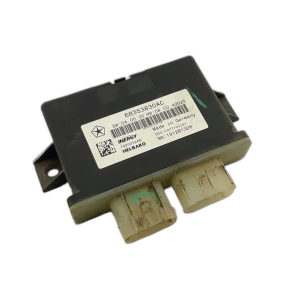
- Security Gateway Module (SGW) — Located directly behind the instrument cluster, on top of the steering column.. On 2019+ models, this module blocks unauthorized diagnostic commands. A bypass harness must be installed at this location to allow a scan tool to reflash the ECM.
- ECM Connector CAN C Pins — Pin 12 (SCI Receive / CAN-C Low) and Pin 14 (Diagnostic CAN-C High) on the ECM connector.. These are the specific pins for the powertrain data bus at the ECM. They can be used to test for network voltage and resistance directly at the module, helping to isolate a wiring problem between the OBD-II port and the ECM.
Real Owner Repair Stories
- YouTube channel 'Keyworks ECU Repair' (2012 Ram 6.7L Cummins (procedure is applicable to 2019-2020 models)) — No-start condition with code U1601 present. The ECU was 'bricked' after an aftermarket tuner failed during programming.
❌ Tried (didn't work) In-vehicle programming attempts failed because the module was unresponsive.
✅ What actually fixed it The ECM was removed from the truck and recovered via a 'bench flash'. This involved connecting directly to the ECM's pins with a dedicated power supply and using an Autel scan tool with programming capabilities to successfully reload the factory software. After the bench flash, the VIN was rewritten and the U1601 code was cleared. - YouTube channel 'AllBrosShow' (2014 Ram 6.7L Cummins) — No-start condition with code U1601 after a failed EFILive tune put the ECM into a 'state of emergency'.
❌ Tried (didn't work) Attempting to re-flash the custom tune failed.
✅ What actually fixed it The owner obtained a 'recovery file' from the tuning software provider. This file is a stock calibration with a blank VIN field. Flashing this special file first allowed the ECM to be recovered to a functional stock state. After the recovery flash, a full flash of the desired custom tune could be completed successfully.
OEM Part Supersession History
68363277AA (Mopar)→N/A, but a later part number for 2022+ models is 68569934AA.— Standard part evolution and updates. The 68569934AA part number is associated with a recall for internal defects on 2022 models.
Heads up: The Cummins cross-reference part number for 68363277AA is 4384696. While Mopar parts are direct replacements, some aftermarket sources note the Cummins-branded version is more receptive to custom tuning. Any replacement ECM, regardless of part number, must be programmed to the vehicle's VIN.
Helpful Videos

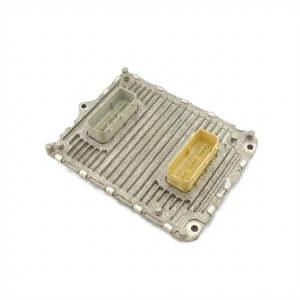
We Have This Part in Stock

The information in this article is provided for general reference and educational purposes only. Vehicle specifications, procedures, and part compatibility can vary by production date, trim level, and region. Always consult your vehicle's factory service manual and verify part numbers before purchasing or performing repairs. Safety-critical components such as airbags, seat belts, and braking systems should be installed by a qualified professional.
- Ram 3500:
- 🧭 Diagnostic Flowchart
- 🎬 Helpful Videos
- 🛍️ Shop This Part
- What's Unique About the 2019-2020 Ram 3500
- Symptoms You May Notice
- Most Likely Causes
- Rare But Worth Checking
- Diagnosis Steps
- Parts You'll Likely Need
- Technical Service Bulletins (TSBs) & Recalls
- Platform-Specific Known Issues
- Mechanic-Grade Diagnostic Values
- Scan Tool Commands That Help
- Wiring & Ground Locations
- Real Owner Repair Stories
- OEM Part Supersession History
- 🎟️ Get 5% Off