

OBD-II Code U1616: Lost Communication With an Advanced Driver Assist System Module
What U1616 means, why it triggers, and how to fix it
- Code U1616 indicates the front camera or Image Processing Module (IPMA) has dropped off the vehicle's communication network, disabling safety systems.
- Fix the most common cause—a software glitch—by disconnecting the 12V battery for 15 minutes to force a hard reset before paying for diagnostics.
- Driving with U1616 is mechanically safe but disables Automatic Emergency Braking (AEB), increasing your risk of a rear-end collision by up to 50%.
- Never authorize a $1,000+ module replacement without verifying the shop checked for manufacturer Technical Service Bulletins (TSBs), as a $150 software update often resolves the code.
- Check aftermarket accessories first; improperly installed light bars or remote starters frequently introduce electrical noise that triggers U1616.
What Does U1616 Mean?
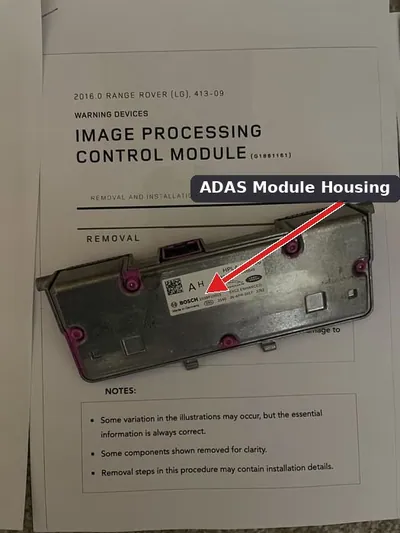
Code U1616 means a vehicle computer—typically the one controlling advanced safety features like cameras and radar—has stopped communicating on the Controller Area Network (CAN bus). When this module goes silent, the vehicle disables related driver-assist functions and triggers a dashboard warning message.
Technical definition: U1616 is a manufacturer-specific code commonly defined as 'Lost Communication with Image Processing Module 1 (IPMA)'. It indicates the IPMA has stopped sending and receiving signals on its assigned CAN bus channel. On some GM vehicles without Super Cruise, this code specifically points to the 'B174W Front View Camera - Windshield' module.
Can I Drive With U1616?
Yes, But With Caution. Yes, but with significant caution. The vehicle's core mechanical functions operate normally, but critical safety systems like Automatic Emergency Braking (AEB) and lane-keeping assist are completely disabled. Driving without AEB negates a 50% reduction in rear-end crash risk, leaving you financially liable for the full cost of an at-fault accident.
Common Causes

- Software Anomaly or Glitch (Very Common) — A temporary software glitch causes the Image Processing Module to freeze or enter a reset loop on startup. This is heavily documented in GM and Ford service bulletins and requires a software update, not a parts replacement. 🎬 Watch: Real-world diagnostic of a GM communication failure
- Low Battery Voltage (Common) — Control modules require stable voltage to initialize. A weak battery or poor terminal connection causes modules to power up incorrectly, dropping them from the network. This frequently occurs after a jump-start or battery replacement.
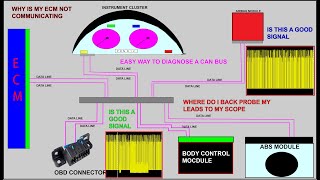
- Damaged Wiring or Connectors (Common) — The CAN bus relies on a twisted pair of wires. Chafing, corrosion, or a broken plastic locking tab on a connector creates an open or short circuit, instantly halting communication. 🎬 See how to simplify your CAN bus troubleshooting
- Blown Fuse or Power Supply Issue (Less Common) — A blown fuse or a severed power/ground wire prevents the module from turning on. Without power, the module cannot broadcast its presence on the network.
- Faulty Control Module (IPMA) (Less Common) — The module itself fails internally due to heat damage, voltage spikes, or a burnt-out CAN transceiver. This requires complete replacement and reprogramming.
- Aftermarket Accessory Interference (Uncommon) — Improperly installed remote starters, alarms, or LED light bars tapped directly into CAN bus wiring introduce electrical noise that crashes the network.
- Unrelated Module Failure (Uncommon) — A completely different module on the same CAN bus shorts internally and floods the network with noise, preventing the ADAS module from communicating.
Symptoms

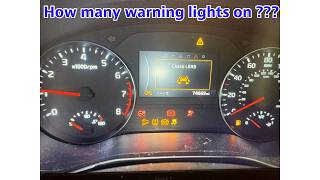
- Service Driver Assist System Message — A prominent warning message appears on the instrument cluster indicating advanced safety systems are offline.
- Disabled Safety Features — Forward collision alert, automatic emergency braking, lane-keeping assist, and adaptive cruise control cease to function.
- Blank or Distorted Camera Display — The rearview or 360-degree camera display shows a blank screen, blue screen, or heavy distortion.
- Check Engine Light — The primary Malfunction Indicator Lamp (MIL) illuminates alongside system-specific warnings.
- Intermittent Warning Lights — Warning lights flicker or trigger specifically when hitting bumps, indicating a loose physical connection.
Diagnostic Flowchart

Tap your situation to follow the diagnostic path that matches what you're seeing on this code.
Common Fixes & Costs
- Reprogramming or Calibrating the Control Module — Parts: $0, Labor: $150-$600, ~1.5 hr book time (Professional)
- Performing a Power Reset — Parts: $0, Labor: $0-$50, ~0.2 hr book time (DIY)
- Repairing Damaged Wiring or Connectors — Parts: $10-$150, Labor: $150-$450, ~2.0 hr book time (Intermediate)
- Replacing the Image Processing Module (IPMA)
— Parts: $400-$1300, Labor: $250-$500, ~2.5 hr book time
(Professional)
: OEM
: OEM
Used vs. New Parts: Buying Guide
When a used part is worth it: A used IPMA saves money on older, out-of-warranty vehicles, but only if installed by a shop with manufacturer-level programming tools. It is impossible to DIY.
Donor-vehicle mileage cap: roughly under 60000 miles for the part to have meaningful remaining life.
Donor quality checklist:
- Match the OEM part number exactly; a single digit difference guarantees incompatibility.
- Source the module from the exact same model, year, and option package.
- Reject modules from flood-damaged or heavy front-end collision vehicles.
Decision logic:
- If A Technical Service Bulletin (TSB) exists for a software update → Pay for the software flash; no parts are required.
- If The vehicle is under warranty → Demand new OEM parts installed by a dealer.
- If A used module costs more than 50% of a new one → Buy new. The risk of a used module failing to program outweighs the minor savings.
Warranty tradeoff: Used parts offer 30-90 day warranties and exclude labor. New OEM parts installed by a dealer carry a 1-2 year parts and labor warranty.
Worst-case if a used part fails: $400-$800 wasted on diagnostic and programming labor if the used module fails to program.
What Happens If You Wait — Timeline
- Immediate: Code sets. 'Service Driver Assist' message appears. AEB, Lane Keep Assist, and Adaptive Cruise Control are disabled. (MPG impact: 0%% · Added cost: $0)
- First Drive: Risk of a rear-end collision increases by up to 50% due to the loss of Automatic Emergency Braking. (MPG impact: 0%% · Added cost: Full liability for an at-fault accident ($500-$10,000+).)
- 1-3 Months: Driver complacency sets in. An at-fault accident triggers insurance premium surcharges lasting 3-5 years. (MPG impact: 0%% · Added cost: 20-50% insurance premium increase.)
- 6+ Months: No mechanical damage occurs, but unrepaired wiring faults (if the root cause) spread corrosion to other network modules. (MPG impact: 0%% · Added cost: $200-$600 for complex wiring harness repairs.)
Cost of Not Fixing It
- Immediate: Complete loss of advanced safety features including Automatic Emergency Braking (AEB), Forward Collision Warning, and Lane-Keeping Assist. (Added cost: $0)
- Ongoing: Significantly increased risk of an at-fault collision. The financial cost is the full liability of an accident, including insurance deductibles and premium increases. (Added cost: $500 - $10,000+)
- Long-term: Loss of insurance discounts for functional ADAS features. Unrepaired wiring faults can spread corrosion to other network modules. (Added cost: $100 - $500 (lost insurance discounts))
Diagnosis Steps
- Check for Technical Service Bulletins (TSBs)
Search online for TSBs matching your vehicle's year, make, model, and the U1616 code. Manufacturers frequently release software updates to fix this exact communication glitch, saving hours of physical diagnosis.
Tools: Internet access (Beginner) - Perform a Power Reset
Disconnect the negative terminal of the 12V battery for 15 minutes, or pull the specific fuse for the IPMA/ADAS module for one minute. This forces a hard reboot and clears temporary software freezes.
Tools: Wrench set or fuse puller (Beginner) - Inspect Battery and Connections
Verify battery voltage is above 12.4 volts with the engine off. Clean and tighten the battery terminals. Low voltage during engine cranking is a primary trigger for U-codes.
Tools: Multimeter, wrench set, terminal cleaning brush (Beginner) - Visually Inspect Wiring and Module
Locate the IPMA (usually behind the rearview mirror). Inspect the wiring harness for chafing or water intrusion. Wiggle the connector to check for broken locking tabs and ensure it is fully seated.
Tools: Flashlight, trim removal tools (Intermediate) - Check Power and Ground at the Module
Disconnect the module. Turn the ignition on. Use a multimeter to verify battery voltage (12V+) on the power pin and less than 0.1V on the ground pin. Missing power or ground means the module cannot turn on.
Tools: Multimeter, vehicle-specific wiring diagram (Advanced) - Test CAN Bus Network Resistance
Disconnect the battery. Measure resistance between CAN High (Pin 6) and CAN Low (Pin 14) at the OBD-II port. A healthy network reads 60 ohms. A 120-ohm reading indicates an open circuit or offline module. A 0-ohm reading indicates a short.
Tools: Multimeter, OBD-II breakout box (Advanced) - Perform CAN Bus Voltage Analysis
Reconnect the battery and turn the ignition on. Measure DC voltage at the OBD-II port. CAN High should average 2.6V-3.0V; CAN Low should average 2.0V-2.4V. Both lines at 0V indicates a short to ground; both at 12V indicates a short to power.
Tools: High-quality multimeter or oscilloscope (Professional) - Isolate the Faulty Module
If resistance or voltage tests indicate a short, disconnect modules on that specific CAN bus one by one. When the multimeter reading returns to normal (60 ohms or ~2.5V), the last module unplugged is the source of the network crash.
Tools: Multimeter, vehicle wiring diagram, hand tools (Professional)
When This Code Triggers (Freeze-Frame Conditions)
- Vehicle Speed: 0 mph (During startup (Key On, Engine Off))
- Battery Voltage: 11.5-12.5V (During startup, before the alternator engages)
- Module Status: Initialization (Occurs when the ADAS module attempts to power on and join the network.)
- Ignition Cycle Counter: 1 (Sets on the first ignition cycle after the fault occurs.)
Related Codes
- U1614 / U1615 — Often set alongside U1616 in GM vehicles, indicating the IPMA has lost communication on all three of its CAN bus connections. This strongly suggests a failed module or a total loss of power/ground, rather than a single wire break.
- U0415 — Means 'Invalid Data Received From ABS'. U1616 means the module is silent; U0415 means the module is talking, but sending corrupt data. Diagnose the communication link for U1616, but diagnose the sending module for U0415.
- U053B — On GM vehicles without Super Cruise, U1616 and U053B set together. GM TSB PIT6313 clarifies that technicians must treat any mention of the IPMA as referring directly to the front windshield camera.
- U3000:49 — Means 'Control Module: Internal Electronic Failure'. If stored in a Ford IPMA alongside U1616, it guarantees the module has failed internally and requires replacement.
Climate & Environmental Factors
- Humidity and Moisture: Water intrusion from a leaking windshield seal corrodes connector pins and circuit boards, causing high resistance and short circuits that crash the CAN bus.
- Extreme Cold: Low temperatures make wire insulation and plastic connector locking tabs brittle, causing them to snap under vibration and create loose connections.
- Extreme Heat: Sustained high temperatures degrade electronic components inside windshield-mounted modules, accelerating internal hardware failure.
How to Talk to a Mechanic About This Code
Say this: "I have a U1616 'Lost Communication with ADAS Module' code. Please check for relevant software update TSBs, like GM's 20-NA-178, and verify power and ground at the module before recommending a full replacement."
This directs the technician to start with the cheapest fixes (software updates, electrical checks) rather than immediately quoting a $1,400 module replacement.
Avoid saying:
- 'My Service Driver Assist light is on, fix it.' (Invites the shop to replace the most expensive part.)
- 'Just do whatever it takes.' (Gives the shop a blank check.)
- 'I think the camera is broken.' (Leads them to replace a part without proper testing.)
Questions to ask before authorizing the repair:
- Did you find a Technical Service Bulletin for this issue?
- Have you confirmed the module is receiving correct power and ground?
- Can you show me the test results proving the old module has failed internally?
- Does the quoted price include the mandatory ADAS calibration?
- What is the warranty on parts and labor?
Where to Take It: Dealer vs Independent vs Chain
- Dealer:
Highly recommended. They possess the proprietary software and calibration targets required to permanently fix and recalibrate ADAS modules.
Best for: Vehicles under warranty., Known software issues requiring manufacturer TSB updates., Complex electronic failures requiring module programming.
Downsides: Highest labor rates., May default to replacing modules rather than repairing wiring. (Typical cost: +50% vs. baseline) - Independent Shop:
Good fit, but only if you explicitly verify they have in-house ADAS calibration equipment before booking.
Best for: Out-of-warranty vehicles with suspected wiring issues., Shops specializing in advanced electrical diagnostics.
Downsides: Many lack the $5,000+ ADAS calibration equipment required to finish the job. (Typical cost: +0% vs. baseline) - Chain Shop:
AVOID. They cannot program or calibrate the modules required to fix this code.
Best for: Oil changes and tires.
Downsides: Technicians lack training and equipment for network diagnostics and ADAS calibration. (Typical cost: -10% vs. baseline)
When to Walk Away From the Repair
If the estimated repair cost exceeds 50% of the car's current private-party value, consider selling the vehicle.
- Car worth $5000, fix is $2500: Walk away. Sell as-is to a private party, fully disclosing the ADAS issue.
- Car worth $20000, fix is $1500: Fix it. The repair restores critical safety functions and preserves resale value.
- Car worth $3000, fix is $600: Fix it, but get a second opinion to ensure the cost won't balloon into a $1,500 module replacement.
What Scan Tool You Need for This Code
Minimum: A scanner capable of full-system diagnostics to access the ADAS/IPMA modules and read manufacturer-specific 'U' codes.
A $20 basic code reader only accesses the engine computer and will not detect a U1616 network communication code.
Budget: Topdon TopScan / Thinkcar Thinkdiag (~$70) — These Bluetooth dongles perform full system scans to confirm which specific module is offline, essential for initial diagnosis.
Mid-range: Foxwell NT809 / Autel MaxiCOM MK808 (~$350) — Provides live data graphing and bidirectional controls to test if a module is truly dead or just unresponsive.
Professional: Launch X431 CRP919XBT / Autel MaxiSys MS906Pro (~$500-1200) — Offers topology mapping to visually pinpoint communication breaks and initiates ADAS calibrations (requires separate target hardware).
Rent vs buy: For a one-time diagnosis, paying a shop's $150 diagnostic fee is more economical than buying a professional scanner. Auto parts store loaners cannot read this code.
How to Clear the Code After You Fix It
- Reconnect the battery if disconnected for repair.
- Use a professional-grade OBD-II scan tool to clear all DTCs from all modules.
- Perform the mandatory ADAS module calibration procedure if a component was replaced.
- Complete a full drive cycle to verify system functionality.
Drive cycle (~20 minutes): A dynamic ADAS calibration drive cycle requires driving for 10-20 minutes on well-marked roads at a steady speed above 40 mph, allowing the forward-facing camera to learn and confirm its alignment.
Readiness monitors affected: U-codes do not directly affect emissions monitors, but disconnecting the battery during repair resets them., Resets Catalyst, Evaporative System, and O2 Sensor monitors.
Before emissions retest: drive at least 50 miles to fully set monitors.
Watch out for:
- Using a basic code reader fails to clear the code from the specific ADAS module.
- Skipping the mandatory calibration after replacing a module causes the code to return immediately.
- Clearing the code without fixing the underlying voltage or wiring issue guarantees its return.
Will This Fail Emissions / State Inspection?
Yes — this code typically fails an OBD-II emissions inspection.
- California: An illuminated Check Engine Light results in an automatic smog check failure. If this U-code triggers the main MIL, the vehicle fails.
- New York: An active ADAS warning light or Check Engine Light causes an automatic failure of the NYS safety inspection.
- Texas: Any illuminated warning light, including ADAS system alerts, is grounds for failure during a Texas vehicle safety inspection.
Most Commonly Affected Vehicles
- Cadillac CT4, CT5, Escalade, Lyriq, XT4 (2020-2025) — Prone to software anomalies in the IPMA (GM TSB 20-NA-178). On 2025 models without Super Cruise, the fault lies with the Front View Camera.
- Chevrolet Suburban, Tahoe, Blazer EV, Equinox EV, Silverado EV (2021-2025) — Affected by the same software issues as Cadillac. TSB 20-NA-178 dictates a power reset and software update.
- GMC Yukon, Acadia, Sierra EV (2021-2025) — TSB 23-NA-206 notes that if U1616 is a history code with no active warning messages, it is a temporary glitch and should be ignored.
- Ford F-150, Super Duty, Mustang Mach-E, Expedition (2018-2024) — TSB 23-2040 addresses software issues in 2021-2022 models. TSB 23-2146 points to faulty coaxial cable connections on 2021-2023 F-150s.
- Kia / Hyundai Various Models (2018-2025) — Appears as C1616 but indicates the same CAN fault. Often traced to an unexpected module, like a brake vacuum pump, shorting out the network.
- Subaru Outback, Legacy, WRX (2015-2024) — A brittle electronic parking brake connector tab breaks, causing the connector to loosen and disrupt the network, disabling the EyeSight system.
- Chrysler/Dodge/Jeep/Ram (Stellantis) Various Models (2017-2025) — A failing telematics or Uconnect radio module frequently shorts internally, bringing down the CAN bus and triggering safety system U-codes.
Manufacturer-Specific Notes
- General Motors (Cadillac, Chevrolet, GMC, Buick): GM service bulletin 20-NA-178 specifies that a power reset followed by a software update is the required fix for IPMA reset loops. Do not replace the module without performing this update first.
- Ford: IPMA replacement modules are completely blank. They must be programmed to the vehicle's specific VIN and dynamically calibrated using Ford's FDRS software, making DIY replacement impossible.
- Subaru: EyeSight communication codes are frequently triggered by a faulty electrical connector on the rear electronic parking brake actuator. A $15 repair kit fixes the loose connection and restores the ADAS network.
- Chrysler/Dodge/Jeep/Ram (Stellantis): Network failures are frequently traced to the Uconnect radio module broadcasting noise. Disconnect the radio first to see if communication is restored to the ADAS modules.
Real Owner Stories
2021 Chevrolet Tahoe - Software Update Fix
A 'Service Driver Assist' message appeared at startup, disabling adaptive cruise control and lane-keeping assist. DTCs U1614, U1615, and U1616 were active.
What they tried:
- Restarting the vehicle failed to clear the message.
- Took the vehicle to the dealership for diagnosis.
Outcome: The dealer followed GM Service Bulletin 20-NA-178, performing a battery reset and reprogramming the IPMA with the latest software. The 1-hour repair was covered under warranty and permanently resolved the issue.
Lesson: On modern GM vehicles, this specific code combination points to a known software glitch. Always check for TSBs; the fix is usually a simple re-program, not a costly module replacement.
2018 Subaru Outback - Broken Connector Tab
The EyeSight system randomly disabled when hitting bumps, accompanied by a flashing electronic parking brake light.
What they tried:
- Suspected a failed windshield camera.
- Wiggled the connector on the rear electronic parking brake actuator while the car was running, which immediately triggered the dashboard fault.
Outcome: The plastic locking tab on the parking brake connector was broken (Subaru TSB 06-87-22R). The owner installed a $15 harness repair kit (Part # X9904AL110) in 10 minutes, permanently fixing the loose connection and restoring the CAN network.
Lesson: A communication fault in the ADAS system can be caused by a completely unrelated component on the same network. Intermittent issues over bumps strongly indicate a loose physical connector.
2022 Ford F-150 - Aftermarket Interference
After installing an aftermarket LED light bar, the truck threw a U1616 code and displayed 'Pre-Collision Assist Not Available'.
What they tried:
- The light bar installer found no obvious wiring mistakes.
- The Ford dealership initially suspected a faulty IPMA module.
Outcome: A technician discovered the installer tapped into a CAN bus circuit for power, introducing electrical noise that crashed the network. Disconnecting the light bar instantly resolved the code. The accessory was re-wired to an isolated power source.
Lesson: Improperly installed aftermarket accessories are a primary cause of U-series codes. If a fault appears shortly after an installation, disconnect the new accessory immediately.
How to Prevent This Code From Triggering
- Maintain Battery Health (Annually) — Modules crash during startup if voltage drops. Ensure your battery reads above 12.4 volts with the engine off and keep terminals clean.
- Protect from Moisture (During/After Heavy Rain) — Water intrusion from leaking windshields corrodes connectors. Address damp carpets or headliners immediately to protect electronics.
- Use Qualified Shops for Windshield Replacement (As needed) — Improper replacement damages the camera or skips mandatory ADAS recalibration. Only use shops that guarantee calibration.
- Isolate Aftermarket Accessories (During installation) — Never tap into random wires for power. Use dedicated, fused circuits to prevent electrical noise from crashing the CAN bus.
Frequently Asked Questions
What is an IPMA module?
The Image Processing Module A (IPMA) is the computer brain for camera-based safety systems. It analyzes video feeds in real-time to detect lane markings and vehicles, commanding systems like automatic emergency braking.
Can I fix a U1616 code myself?
You can attempt the most common fix: a hard power reset by disconnecting the 12V battery for 15 minutes. If that fails, the repair requires professional software updates or module programming.
Is it safe to drive with a U1616 code?
The vehicle drives normally, but advanced safety features like automatic braking are disabled. You must drive with extra caution, as your risk of a rear-end collision increases significantly.
Will clearing the code with a cheap scanner fix the problem?
No. Clearing the code only turns off the warning light temporarily. The code returns immediately the next time the module attempts to initialize on the network.
My windshield was just replaced and now I have a U1616 code. Did the shop break my camera?
It is highly likely the replacement caused the issue. The camera module mounts to the windshield and requires mandatory ADAS recalibration after replacement. Return the vehicle to the glass shop to verify the connector is seated and demand a proper calibration.
The code is in the history log but there are no symptoms. Should I be concerned?
No. Manufacturers like GM state that history codes are often set by temporary startup glitches. If the code is not 'Current' and no warning messages are displayed, ignore it.
Why is a professional diagnosis so expensive?
Diagnosing network codes requires $5,000+ factory-level scan tools to monitor live data and perform network tests. The $100-$250 fee covers the technician's time to pinpoint the exact electrical fault and avoid unnecessary parts replacement.
The repair shop wants to replace a module for over $1,400. Is this necessary?
It might be, but demand proof first. Ask the shop to verify they checked for manufacturer software update TSBs and confirmed the module has proper power and ground before authorizing the replacement.
Key Takeaways
- Code U1616 indicates the front camera or Image Processing Module (IPMA) has dropped off the vehicle's communication network, disabling safety systems.
- Fix the most common cause—a software glitch—by disconnecting the 12V battery for 15 minutes to force a hard reset before paying for diagnostics.
- Driving with U1616 is mechanically safe but disables Automatic Emergency Braking (AEB), increasing your risk of a rear-end collision by up to 50%.
- Never authorize a $1,000+ module replacement without verifying the shop checked for manufacturer Technical Service Bulletins (TSBs), as a $150 software update often resolves the code.
- Check aftermarket accessories first; improperly installed light bars or remote starters frequently introduce electrical noise that triggers U1616.
Helpful Videos
Shop the Parts Behind U1616
Below are the parts most often responsible for code U1616, ranked by how frequently each one is the actual culprit (per the diagnosis above). Tap any to see what we have for your vehicle.


The information in this article is provided for general reference and educational purposes only. Vehicle specifications, procedures, and part compatibility can vary by production date, trim level, and region. Always consult your vehicle's factory service manual and verify part numbers before purchasing or performing repairs. Safety-critical components such as airbags, seat belts, and braking systems should be installed by a qualified professional.
- 🧭 Diagnostic Flowchart
- 🎬 Helpful Videos
- 🛍️ Shop This Part
- What Does U1616 Mean?
- Can I Drive With U1616?
- Common Causes
- Symptoms
- Common Fixes & Costs
- Used vs. New Parts: Buying Guide
- What Happens If You Wait — Timeline
- Cost of Not Fixing It
- Diagnosis Steps
- When This Code Triggers (Freeze-Frame Conditions)
- Related Codes
- Climate & Environmental Factors
- How to Talk to a Mechanic About This Code
- Where to Take It: Dealer vs Independent vs Chain
- When to Walk Away From the Repair
- What Scan Tool You Need for This Code
- How to Clear the Code After You Fix It
- Will This Fail Emissions / State Inspection?
- Most Commonly Affected Vehicles
- Manufacturer-Specific Notes
- Real Owner Stories
- 2021 Chevrolet Tahoe - Software Update Fix
- 2018 Subaru Outback - Broken Connector Tab
- 2022 Ford F-150 - Aftermarket Interference
- How to Prevent This Code From Triggering
- Frequently Asked Questions
- What is an IPMA module?
- Can I fix a U1616 code myself?
- Is it safe to drive with a U1616 code?
- Will clearing the code with a cheap scanner fix the problem?
- My windshield was just replaced and now I have a U1616 code. Did the shop break my camera?
- The code is in the history log but there are no symptoms. Should I be concerned?
- Why is a professional diagnosis so expensive?
- The repair shop wants to replace a module for over $1,400. Is this necessary?
- Key Takeaways
- 🎟️ Get 5% Off