

OBD-II Code U1701: Control Module Communication Failure
What U1701 means, why it triggers, and how to fix it
- Code U1701 indicates a critical network failure where a primary computer, typically the Engine Control Module (ECM) or ABS module, stops communicating on the CAN bus.
- Always test the battery first; a voltage drop below 10.5V during engine cranking is the leading cause of U1701, not a failed computer.
- Driving with U1701 disables critical safety systems like ABS and traction control, increasing stopping distances and skidding risks.
- A healthy CAN bus network measures exactly 60 ohms of resistance at the OBD-II port; a reading of 120 ohms indicates a broken wire or missing terminating resistor.
What Does U1701 Mean?

U1701 means a primary vehicle computer, usually the Engine Control Module (ECM) or Anti-lock Brake (ABS) Module, has stopped communicating. Your car's modules constantly share information over a network called the CAN bus. This code sets when a module goes silent and stops broadcasting expected messages.
Technical definition: The official SAE/ISO definition for U1701 is a manufacturer-specific network communication code. It indicates a loss of communication or the receipt of invalid data from a specific control module on the Controller Area Network (CAN) bus, most commonly the ECM or ABS module.
Can I Drive With U1701?
Yes, But With Caution. Driving is possible but highly risky. Critical safety systems like ABS and traction control disable immediately, increasing stopping distances and skidding risks in emergencies. If the Engine Control Module (ECM) is offline, the engine will stall while driving, creating a severe safety hazard. Ignoring the code leads to a permanent no-start condition or cascading failures in other modules.
Common Causes

- Low Battery Voltage or Poor Ground Connection (Very Common) — A weak battery, failing alternator, internally corroded battery cables, or a loose ground wire causes unpredictable electrical drops. A voltage drop below 10.5V during startup is the most frequent trigger for network codes, starving modules of the stable power required to communicate.
- Damaged Wiring or Corroded Connectors (Very Common) — The twisted-pair wires forming the CAN bus network fray, cut, or short out. This damage occurs near module connectors, firewall pass-throughs, or moisture-exposed areas. Connector pins on the modules corrode from water intrusion, physically blocking data signals.
- Failed Engine Control Module (ECM/PCM) (Common) — The main engine computer fails internally and drops off the network. This is a known, documented issue on specific vehicles (like FCA/Stellantis models) and results directly in a crank-no-start condition or stalling.
- Failed Anti-lock Brake System (ABS) Module (Common) — The internal electronics of the ABS module fail, causing it to stop communicating on the CAN bus. This is a frequent failure point, especially when accompanied by a U0121 code in other modules.
- Faulty Aftermarket Electronics (Common) — Poorly installed aftermarket devices like remote starters, alarms, or stereos introduce electrical noise onto the CAN bus or cause a parasitic drain. This lowers battery voltage and disrupts communication between factory modules.
- Blown Fuse for a Control Module (Less Common) — Each control module relies on specific fuses. If the fuse for the ECM or ABS module blows due to a short circuit, the module loses power and goes offline, triggering the U1701 code from other modules.
- Faulty CAN Gateway Module (Less Common) — In architectures like VW/Audi, a central Gateway Module manages traffic between different CAN bus networks. A failure here prevents entire systems from communicating, causing a U1701 code across multiple modules.
- Software Glitch / Need for Module Update (Less Common) — The issue is sometimes a software bug within a module rather than hardware failure. Manufacturers release software updates to fix known communication glitches, requiring a dealer reflash.
Symptoms

- Engine Will Not Start — The engine cranks but refuses to start because the immobilizer fails to receive authorization signals from the offline module, particularly the ECM.
- ABS and Traction Control Lights On — The ABS and traction control (ESP/ESC) warning lights illuminate permanently on the dashboard.
- Gauges Drop to Zero or Freeze — The speedometer, tachometer, and other gauges intermittently drop to zero or freeze while driving as the instrument cluster loses its data feed.
- Engine Goes Into Limp Mode — The vehicle enters a 'limp home' mode with severely reduced engine power to protect the drivetrain when critical data cannot be verified.
- Multiple Dashboard Error Messages — The instrument cluster displays several seemingly unrelated error messages at once (e.g., 'Service Vehicle Soon', 'Hill Start Assist Unavailable').
- Check Engine Light On — The Malfunction Indicator Lamp (MIL) activates to alert the driver of the network fault.
- CAN Bus Off Status (scan-tool only — no driver-felt sign) — An advanced scan tool reports a 'CAN Bus Off' status, indicating the network shut down due to excessive errors from a flooding module.
Diagnostic Flowchart
Tap your situation to follow the diagnostic path that matches what you're seeing on this code.
Common Fixes & Costs
- Replacing the Battery — Parts: $150-$350, Labor: $50-$100, ~0.5 hr book time (DIY)
- Repairing Damaged Wiring or Cleaning Connectors — Parts: $5-$50, Labor: $150-$600, ~2.0 hr book time (Intermediate)
- Replacing the Engine Control Module (ECM/PCM)
— Parts: $500-$1500, Labor: $150-$300, ~1.5 hr book time
(Professional)
Jeep Renegade (2021-2022): OEM Mopar: 5150911AE, 68350434AD. (Alt: Module Mechanics Remanufactured (e.g., P50052831).)
Fiat Ducato (X250): OEM Fiat: 51865260, 51877451. (Alt: Bosch: 0281016816, 0281016888.)
Ford Ka (Gen 2): OEM Ford: 5S51-12A650-BD. (Alt: Siemens/Continental: S118685021E.) - Replacing the ABS Control Module
— Parts: $400-$1200, Labor: $150-$400, ~2.0 hr book time
(Professional)
Jeep Renegade: OEM Mopar: 68323438AA, 68346017AA. (Alt: Bosch, Cardone.)
Fiat Ducato: OEM Fiat: 71749037. (Alt: Bosch: 0265232113.) - Reprogramming or Updating Module Software — Parts: $0, Labor: $125-$250, ~1.0 hr book time (Professional)
Used vs. New Parts: Buying Guide
When a used part is worth it: For older vehicles where a new OEM module exceeds the car's value. A used module from a salvage yard is cost-effective if the budget is tight.
Donor-vehicle mileage cap: roughly under 100000 miles for the part to have meaningful remaining life.
Donor quality checklist:
- Verify the part number matches exactly; modules look identical but have different programming.
- Ensure the donor vehicle was not in a flood.
- Check for water damage or corrosion on the connectors.
Decision logic:
- If The part requires VIN programming (most ECMs and ABS modules) → Favor a 'repair and return' service or a pre-programmed reman unit. A used module is not plug-and-play and adds programming costs.
- If The vehicle is less than 10 years old and the part is under $800 → Favor a new or professionally remanufactured part for reliability and warranty.
- If The original part failed due to a known design flaw (water intrusion) → A used part suffers the same fate. Buy a remanufactured unit with design improvements.
Warranty tradeoff: Used parts have a 30-90 day warranty covering only the part. Remanufactured parts carry a 1-year to lifetime warranty.
Worst-case if a used part fails: $400-$1000 if a used module is dead on arrival, requiring repeat labor and programming.
What Happens If You Wait — Timeline
- 0-2 weeks: Warning lights are on. The vehicle drives normally or has intermittent gauge issues. ABS and traction control are disabled. (MPG impact: 0%% · Added cost: $0)
- 2 weeks - 3 months: The vehicle enters 'limp mode' with reduced power. Intermittent stalling or no-start conditions become frequent. (MPG impact: 10-30%% · Added cost: $50-$200)
- 3-6 months: A poor ground causes voltage spikes that damage other modules. A slow water leak causes irreversible corrosion in the wiring harness. (MPG impact: 10-30%% · Added cost: $800-$2500)
- 6+ months: Catastrophic failure. The vehicle is in a permanent no-start condition. The main wiring harness is destroyed, making repair economically unfeasible. (MPG impact: N/A% · Added cost: $2500-$5000)
Cost of Not Fixing It
- Immediate: Loss of ABS and traction control increases the risk of skidding in an emergency. Potential for unexpected stalling or a no-start condition. (Added cost: 0)
- 1-6 months: Continued driving with an unstable electrical system stresses other control modules. Intermittent voltage spikes damage sensitive electronics. (Added cost: $500-$2000)
- 6+ months: The vehicle becomes undrivable. Unresolved water leaks destroy the main wiring harness, turning an affordable repair into a catastrophic total loss. (Added cost: $2000-$5000)
Diagnosis Steps

- Perform a Full System Scan
Use an advanced OBD-II scanner to perform a network scan or 'roll call' of all modules. Note which modules are 'Online' and which are 'Offline'. The unresponsive module is the source of the problem. Note suffix codes like -86 (Invalid Data) or -87 (Missing Message) to pinpoint the fault type.
Tools: Advanced OBD-II Scan Tool (Beginner) - Check Battery, Grounds, and Fuses
Use a multimeter to ensure battery voltage is above 12.4V (engine off) and holds above 10.5V during cranking. A reading below 10.0V during cranking confirms a weak battery. Verify main battery terminals and chassis ground straps are clean and tight. Visually inspect all fuses for the offline module.
Tools: Multimeter, Vehicle Owner's Manual, Socket Set, Wire Brush (Beginner) - Check for Technical Service Bulletins (TSBs)
Search online for TSBs related to code U1701 for your specific vehicle. Manufacturers release bulletins for known issues, saving diagnostic time. For example, TSB 18-033-22 REV. A exists for the 2021-2022 Jeep Renegade pointing directly to PCM failure.
Tools: Internet Access (Intermediate) - Visual Inspection of Wiring and Connectors
Locate the offline module. Disconnect its electrical connector (battery disconnected) and inspect for green/white corrosion, bent pins, or water intrusion. Follow the wiring harness, looking for obvious chafing, melting, or damage.
Tools: Flashlight, Socket/Wrench Set, Inspection Mirror (Intermediate) - Test CAN Bus Resistance
With the battery disconnected, measure resistance between CAN High and CAN Low pins at the OBD-II port (pins 6 and 14). A healthy network reads exactly 60 ohms. A reading of 120 ohms indicates a broken wire or missing terminating resistor. A reading near 0 ohms indicates a short circuit.
Tools: Multimeter, OBD-II Pinout Diagram (Advanced) - Test CAN Bus Voltage with a Multimeter
With the battery connected and ignition ON, measure the DC voltage of the CAN lines relative to chassis ground. CAN High (Pin 6) should be 2.5-3.5V. CAN Low (Pin 14) should be 1.5-2.5V. If both lines are stuck at 2.5V, communication is dead. A line at 0V is shorted to ground.
Tools: Multimeter, OBD-II Pinout Diagram (Advanced) - Perform Voltage Drop Test on Module Power/Ground
With the module plugged in and ignition ON, set a multimeter to DC Volts. Place the positive lead on the battery positive and negative lead on the module's main power input pin. The reading must be less than 0.3V. Repeat for the ground circuit (module ground pin to battery negative), which must be less than 0.2V. Higher readings indicate high resistance requiring repair.
Tools: Multimeter, Wiring Diagram, Back-Probes (Advanced) - Isolate the Faulty Module or Wiring
If CAN bus resistance is 120 ohms or 0 ohms, unplug modules on the network one by one. The module that restores the correct 60-ohm resistance when unplugged contains the internal fault. If unplugging all modules fails to fix the resistance, the wiring harness itself is damaged.
Tools: Multimeter, Socket/Wrench Set (Advanced) - Analyze CAN Bus Waveform with an Oscilloscope
Use an oscilloscope to view the CAN signal. A healthy CAN bus shows CAN High pulsing 2.5V to 3.5V, and CAN Low mirroring it from 2.5V to 1.5V. A flat line, or a signal stuck at 0V/5V/12V, proves a hard wiring fault. This visual data is the fastest way to confirm network integrity.
Tools: 2-Channel Oscilloscope, OBD-II Breakout Box or Back-Probes (Professional)
When This Code Triggers (Freeze-Frame Conditions)
- Event Trigger: Key-On or Cranking (The code sets when modules attempt to communicate as the vehicle starts. A voltage drop during cranking is the primary trigger.)
- Vehicle Speed: 0 mph (Logged before the vehicle is in motion, during the initial network 'handshake'.)
- Battery Voltage: <10.5V (during event) (A momentary drop in system voltage during startup causes the fault, even if resting voltage is normal.)
- Module Status: Offline / No Communication (Logged by a working module complaining that it cannot hear from the offline module.)
Related Codes
- U0100 — The generic SAE code for 'Lost Communication With ECM/PCM'. U1701 is the manufacturer-specific version of this exact fault. The diagnostic process is identical, focusing on the ECM's power, ground, and network lines.
- U0121 — Means 'Lost Communication With Anti-Lock Brake System (ABS) Control Module'. If your scanner shows U1701 and U0121 together, the ABS module is offline and is the root cause of the network failure.
- U0001 — Means 'High Speed CAN Communication Bus' is down. U0001 indicates a general network problem (like a shorted wire affecting all modules), whereas U1701 means one specific module is silent.
- U0426 — Means 'Invalid Data Received From Vehicle Immobilizer Control Module'. Appears with U1701 on Ford and Fiat models when communication breakdown prevents the security key signal, causing a crank-no-start.
Climate & Environmental Factors
- High Humidity / Heavy Rain: Water ingress is a leading cause of module failure. On the Fiat Ducato, a design flaw allows water to drip directly onto the ECU, causing corrosion. Clogged cowl drains flood interior modules on many vehicles.
- Cold Weather: Cold temperatures reduce a battery's cranking amperage. A weak battery provides enough voltage to crank the engine but drops below the 10.5V threshold required by control modules, triggering U1701.
- Road Salt (Winter Climates): Road salt accelerates corrosion on underbody components. This destroys chassis ground connections and wiring harnesses exposed to spray, particularly ABS modules located in wheel wells.
How to Talk to a Mechanic About This Code
Say this: "I'm calling to schedule a diagnostic for a U1701 communication code. I need a technician experienced with automotive network diagnosis. I want a full network scan to identify the offline module before any parts are ordered."
This proves you understand U1701 is a complex network issue. It directs the shop to perform the correct initial diagnostic step and prevents unnecessary module replacement.
Avoid saying:
- 'Just fix whatever's wrong'
- 'My check engine light is on, can you look at it?'
- 'The internet said it's the ABS module, so just replace that.'
Questions to ask before authorizing the repair:
- Which specific module did your network scan identify as being offline?
- Before replacing the module, did you test its power and ground circuits? What were the voltage drop readings?
- Did you test the CAN bus wiring at the module's connector for resistance and voltage?
- Is a software update available for this module as a potential fix?
- Does the replacement module require programming to my vehicle's VIN?
Where to Take It: Dealer vs Independent vs Chain
- Dealer:
Best for: Vehicles under warranty, Known TSBs or software updates for the U1701 code, Complex diagnostics on newer or European vehicles
Downsides: Highest labor rates, often 1.5x to 2x independent shops., Often defaults to expensive module replacement without exhausting wiring diagnostics. (Typical cost: +50% vs. baseline) - Independent Shop:
Best choice, IF you find a well-vetted independent shop specializing in electrical work. Ask if they are comfortable diagnosing CAN bus failures.
Best for: Out-of-warranty vehicles where cost is a major factor., Shops that explicitly advertise specialization in 'automotive electrical repair'.
Downsides: Quality varies widely. A general mechanic lacks the specific tools for network issues. (Typical cost: +0% vs. baseline) - Chain Shop:
AVOID. This repair is outside their expertise and results in misdiagnosis.
Best for: Simple maintenance like oil changes or tires.
Downsides: Technicians are not trained for complex network diagnostics., Business model prioritizes speed, which is incompatible with electrical troubleshooting. (Typical cost: -10% vs. baseline)
When to Walk Away From the Repair
If the estimated repair cost exceeds 40-50% of the car's private-party value, seriously consider selling or trading in the vehicle.
- Car worth $4000, fix is $2200: Walk away. The repair cost is over 50% of the car's value.
- Car worth $12000, fix is $1800: Fix it. The repair cost is well below the threshold and is a reasonable investment.
- Car worth $3000, fix is $800: Borderline. Get a second opinion. If the car has other pending issues, walk away.
What Scan Tool You Need for This Code

Minimum: A scanner that performs a full system 'Network Scan' to identify which specific modules are online or offline.
A basic $20 code reader only shows that a U-code exists. It CANNOT tell you which module failed, leaving you blind and likely to replace the wrong parts.
Budget: BlueDriver Pro (~$99) — Reads and clears enhanced codes (ABS, Airbag) and confirms which systems report faults, narrowing down the problem module.
Mid-range: Foxwell NT510 Elite (~$180) — Performs a full system scan to show module status. Offers bi-directional controls to test components and verify if a module is dead.
Professional: Autel MaxiCOM MK808S/MK808BT (~$450-550) — Provides dealer-level diagnostics. Performs a fast scan, displays a network topology map, and offers service functions needed for post-repair programming.
Rent vs buy: Buy. Free 'loaner' scanners at auto parts stores are basic code readers lacking the network scan function required for this code.
How to Clear the Code After You Fix It
- Reconnect battery if disconnected for repair
- Use an OBD-II scan tool to clear all Diagnostic Trouble Codes (DTCs) from all modules
- Perform a complete drive cycle to allow readiness monitors to run
Drive cycle (~30 minutes): Cold start (sit for 8+ hours). Idle for 2-3 minutes with electrical loads on. Drive 10-15 minutes at steady highway speed (55-60 mph). Drive 15-20 minutes in stop-and-go city conditions. Allow vehicle to cool down.
Readiness monitors affected: Comprehensive Component Monitor (CCM), Misfire Monitor, Fuel System Monitor
Before emissions retest: drive at least 100 miles to fully set monitors.
Watch out for:
- Disconnecting the battery clears codes but resets all readiness monitors to 'Not Ready', guaranteeing an emissions failure.
- The code returns immediately if the root electrical fault is not repaired.
- Generic drive cycles fail to set monitors on some specific manufacturers.
Will This Fail Emissions / State Inspection?
Yes — this code typically fails an OBD-II emissions inspection.
- California: An illuminated Check Engine Light is an automatic failure. All required readiness monitors must be 'Ready', and a U-code prevents this.
- New York: A U1701 code with an illuminated MIL is an automatic failure during the OBD-II scan.
- Texas: An illuminated Check Engine Light is an automatic failure. Texas allows one 'Not Ready' monitor after repairs, but driving 50-100 miles is required.
Most Commonly Affected Vehicles
- Jeep Renegade (2015-2023) — TSB 18-033-22 REV. A (superseded by RSU 23-249) identifies a known PCM failure causing U1701-87 and a no-start condition on 2021-2022 models. Other years suffer no-start issues from battery or ground failures.
- Fiat Ducato (2007-2018) — A known design flaw on the X250 platform allows water from the windscreen scuttle panel to drip directly onto the ECU, causing severe corrosion, U1701 codes, and complete failure.
- Ford Ka (2009-2016) — Prone to U1701 pointing to a CAN communication failure with the engine module (NCM). A faulty main engine ground strap is the primary cause, resulting in a no-start.
- Chevrolet / GMC Cruze, Tahoe, Yukon, Silverado (2007-2018) — Presents as gauges dropping to zero. This is often a U1701 fault caused by cracked solder joints inside the Instrument Panel Cluster (IPC) itself.
- Volkswagen / Audi Golf, Jetta, Passat, A3 (2008-2017) — Experiences U1701 due to a failure in the central CAN Gateway Module (J533) located above the pedals, which is highly susceptible to water damage.
- Alfa Romeo Giulia, Stelvio (2017-2023) — Uses FCA/Stellantis network architecture and frequently logs U1701-86 (Signal Invalid) and U1701-87 (Missing Message) due to battery voltage sensitivity.
Manufacturer-Specific Notes
- Fiat Chrysler / Stellantis (Jeep, Dodge, Fiat, Alfa Romeo): FCA vehicles add a two-digit suffix, like U1701-87 (Missing Message) or U1701-86 (Signal Invalid). 'Missing Message' means the module is completely offline (dead). 'Signal Invalid' means it is powered on but sending corrupt data due to an internal fault.
- Ford: On Ford models, U1701 almost always points to a communication loss with the Engine Control Module (NCM) causing a crank-no-start. Always check the main engine ground strap for corrosion before condemning the ECU.
- General Motors (Chevrolet, GMC, Cadillac): A single failing module broadcasts junk data and disrupts the entire GM-LAN network. If gauges freeze or drop to zero, the Instrument Panel Cluster (IPC) has an internal fault and is crashing the network.
- Volkswagen / Audi: Diagnosis begins at the CAN Gateway module (J533). A fault here prevents diagnostic tools from communicating with the car. If the gateway is unresponsive, test it first.
Real Owner Stories
2013 Aprilia Dorsoduro 750 with 14K miles
Bike went into limp mode and refused to start, showing 'Urgent Service'.
Outcome: The issue was triggered by attempting to start the bike with a weak battery. The voltage drop caused the dashboard to disconnect from the CAN bus. A fully charged battery resolved the error.
Lesson: A momentary voltage drop during cranking causes communication codes. Always load-test the battery before disassembling the vehicle.
2008 Fiat Ducato, crank-no-start
Van showed an engine light and would crank but not start.
Outcome: The owner replaced the entire ECU kit (ECU, keys, BSI module, dash cluster) from a donor vehicle. The root cause was a failed ECU due to water damage.
Lesson: On vehicles with known design flaws, the common failure is usually correct. Be prepared for module failure and consider a matched used 'kit' as a DIY solution.
2017 Jeep Renegade with 107K miles
Vehicle died while driving and wouldn't restart. Dashboard lit up with warnings.
Outcome: Renegades are extremely sensitive to battery health. The battery passed a basic test but failed to provide stable voltage, causing communication failures. A new, high-quality battery resolved the problem.
Lesson: Do not trust a simple pass/fail battery test. Replacing the battery is the crucial first step for U1701 on FCA vehicles, even if the old battery seems 'good'.
How to Prevent This Code From Triggering
- Perform regular battery maintenance (Every 6 months) — Clean battery terminals and apply dielectric grease. Tight terminals prevent voltage drops that sever module communication during startup.
- Keep cowl and sunroof drains clear (Annually, especially in the fall) — Clogged drains cause water to overflow into the cabin or engine bay, dripping onto fuse boxes or the ECU and causing catastrophic corrosion.
- Apply dielectric grease to critical connectors (When performing other maintenance) — Applying dielectric grease to exposed module connectors prevents moisture intrusion and corrosion.
- Address fluid leaks promptly (Immediately) — Leaking oil or coolant degrades wire insulation, leading to shorts and intermittent CAN bus faults.
- Use a battery tender for long-term storage (If vehicle sits for more than 2-3 weeks) — A battery tender prevents parasitic drains from discharging the battery to a point where it causes voltage-related communication codes upon restart.
Frequently Asked Questions
Can a bad battery really cause code U1701?
Yes. Control modules require stable voltage to communicate. A weak battery causes voltage to drop below 10.5V during startup, interrupting communication and triggering U1701.
What does the -87 or -86 suffix on a U1701 code mean?
U1701-87 means 'Missing Message,' indicating a module is completely offline due to power loss or failure. U1701-86 means 'Signal Invalid,' meaning the module is powered but sending corrupt data.
Can a bad sensor cause a communication code like U1701?
It is rare but possible. A shorted sensor disrupts the 5-volt reference circuit, shutting down the connected module. However, U1701 is almost always a wiring, power, or module fault.
My car has a U1701 code after an accident or body work. What should I check first?
Inspect wiring and ground connections immediately. The fault is usually a pinched wiring harness, an unseated connector, or a damaged main ground cable, not a failed module.
My scanner only shows U1701. How do I know which module is bad?
Basic code readers only show the code from the complaining module. You must use an advanced scan tool to perform a 'network scan' to see which specific module fails to respond.
My car won't start and has a U1701 code. Is it the immobilizer?
Yes, they are related. If U1701 indicates a loss of communication with the ECM, the security handshake with the immobilizer fails. The system prevents the engine from starting as a theft-prevention measure.
What is the most common misdiagnosis for a U1701 code?
Replacing an expensive control module when the actual problem is a weak battery, corroded ground strap, or damaged wire. Always rule out basic electrical issues before condemning a computer.
Is it safe to clear the U1701 code?
You can clear it, but it returns immediately if the fault remains. Clearing the code hides serious safety concerns like a disabled ABS system.
Key Takeaways
- Code U1701 indicates a critical network failure where a primary computer, typically the Engine Control Module (ECM) or ABS module, stops communicating on the CAN bus.
- Always test the battery first; a voltage drop below 10.5V during engine cranking is the leading cause of U1701, not a failed computer.
- Driving with U1701 disables critical safety systems like ABS and traction control, increasing stopping distances and skidding risks.
- A healthy CAN bus network measures exactly 60 ohms of resistance at the OBD-II port; a reading of 120 ohms indicates a broken wire or missing terminating resistor.
Helpful Videos
Shop the Parts Behind U1701
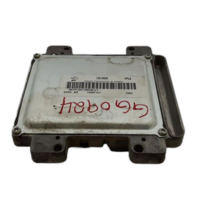
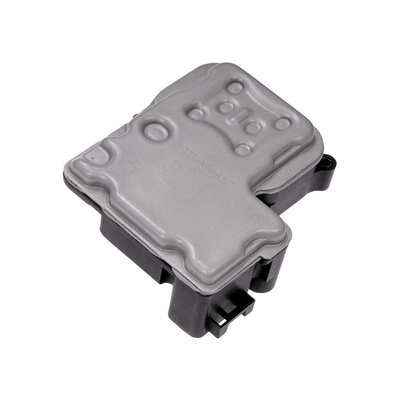
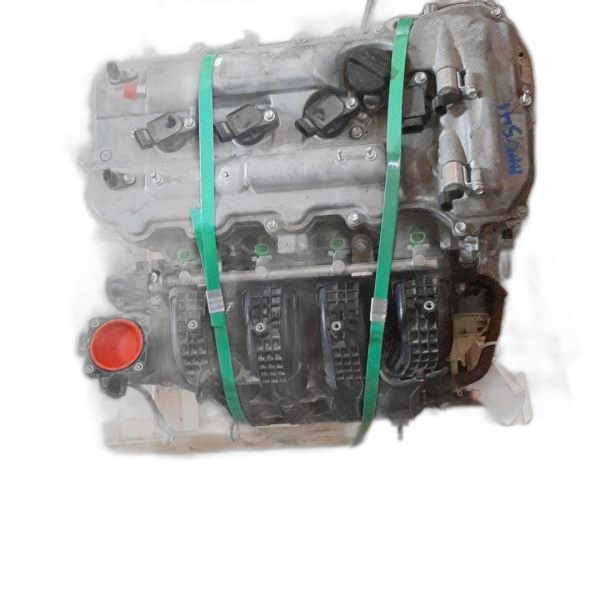
Below are the parts most often responsible for code U1701, ranked by how frequently each one is the actual culprit (per the diagnosis above). Tap any to see what we have for your vehicle.


The information in this article is provided for general reference and educational purposes only. Vehicle specifications, procedures, and part compatibility can vary by production date, trim level, and region. Always consult your vehicle's factory service manual and verify part numbers before purchasing or performing repairs. Safety-critical components such as airbags, seat belts, and braking systems should be installed by a qualified professional.
- 🧭 Diagnostic Flowchart
- 🎬 Helpful Videos
- 🛍️ Shop This Part
- What Does U1701 Mean?
- Can I Drive With U1701?
- Common Causes
- Symptoms
- Common Fixes & Costs
- Used vs. New Parts: Buying Guide
- What Happens If You Wait — Timeline
- Cost of Not Fixing It
- Diagnosis Steps
- When This Code Triggers (Freeze-Frame Conditions)
- Related Codes
- Climate & Environmental Factors
- How to Talk to a Mechanic About This Code
- Where to Take It: Dealer vs Independent vs Chain
- When to Walk Away From the Repair
- What Scan Tool You Need for This Code
- How to Clear the Code After You Fix It
- Will This Fail Emissions / State Inspection?
- Most Commonly Affected Vehicles
- Manufacturer-Specific Notes
- Real Owner Stories
- 2013 Aprilia Dorsoduro 750 with 14K miles
- 2008 Fiat Ducato, crank-no-start
- 2017 Jeep Renegade with 107K miles
- How to Prevent This Code From Triggering
- Frequently Asked Questions
- Can a bad battery really cause code U1701?
- What does the -87 or -86 suffix on a U1701 code mean?
- Can a bad sensor cause a communication code like U1701?
- My car has a U1701 code after an accident or body work. What should I check first?
- My scanner only shows U1701. How do I know which module is bad?
- My car won't start and has a U1701 code. Is it the immobilizer?
- What is the most common misdiagnosis for a U1701 code?
- Is it safe to clear the U1701 code?
- Key Takeaways
- 🎟️ Get 5% Off