

OBD-II Code U1706: Lost Communication With Anti-Lock Brake System (ABS) Module
The Ultimate 2026 Guide to What U1706 Means, Why It Triggers, and How to Fix It for Good
- Code U1706 means the engine computer lost communication with the ABS module, instantly disabling your anti-lock brakes and stability control.
- Always test the battery (target >12.4V) and inspect the ABS wiring harness before replacing the ABS module, as 80% of U1706 codes stem from voltage drops or corroded grounds.
- You can drive with a U1706 code, but emergency stopping distances increase by up to 30% due to disabled ABS, making wet or icy roads highly dangerous.
- A definitive diagnosis requires measuring CAN bus resistance at the OBD-II port; a healthy network reads exactly 60 ohms, while 120 ohms indicates an open circuit.
What Does U1706 Mean?
Code U1706 means the Engine Control Module (ECM) lost communication with the Anti-Lock Braking System (ABS) module. These computers constantly exchange data over the Controller Area Network (CAN bus). When this data stream breaks, the ECM logs U1706 and instantly disables your ABS and traction control.
Technical definition: A Controller Area Network (CAN) bus interruption between the ECM and the ABS control module. The ECM is no longer receiving expected data packets from the ABS module over the CAN-High and CAN-Low circuits.
Can I Drive With U1706?
Yes, But With Caution. Yes, but with extreme caution. Your Anti-Lock Braking System (ABS), traction control, and stability control are disabled. Your wheels will lock up during hard braking, dramatically increasing stopping distances and causing a high risk of skidding. Base hydraulic brakes still function, but limit driving strictly to reaching a repair facility.
Common Causes
- Low Battery Voltage or Poor Ground Connection (Very Common) — Modern modules require stable voltage. A weak battery, failing alternator, or corroded ground wire causes communication drops even if the engine starts.
- Blown ABS System Fuse (Common) — A blown fuse cuts power to the ABS module, taking it offline. This usually indicates an underlying short circuit in the wiring harness.
- Damaged or Corroded Wiring (Common) — The CAN bus uses a twisted pair of wires. Chafing, rodent damage, or moisture intrusion at the connectors disrupts the signal.
- Faulty ABS Control Module (Less Common) — The ABS module fails internally due to heat cycles and vibration fracturing solder joints on the circuit board.
- Interference from Aftermarket Devices (Rare) — Improperly installed alarms or stereos tapped into the CAN bus introduce electrical noise that corrupts network data.
- Faulty Related Sensor Wiring (Rare) — A short circuit in an unrelated component sharing the same harness (like a seat sensor) sometimes crashes the entire CAN network.
- Software Fault (Very Rare) — A software glitch or programming mismatch after a module replacement prevents proper network handshakes.
- Faulty Engine Control Module (ECM) (Very Rare) — The main engine computer suffers an internal fault, preventing it from sending or receiving CAN signals.
Symptoms
- ABS Warning Light is On — The dashboard light specifically for the ABS illuminates immediately.
- Traction/Stability Control Light is On — Because traction and stability control rely on ABS wheel speed data, these systems disable and trigger their respective warning lights.
- Brake System Warning Light is On — A red 'BRAKE' light illuminates, indicating a critical fault in the braking system's electronic management.
- Speedometer Reads Zero — The speedometer often relies on ABS wheel speed data via the CAN bus. When communication drops, the speedometer dies and triggers a secondary P0500 code.
- Wheels Lock Up During Braking — During hard braking, the ABS fails to modulate brake pressure, causing the tires to skid.
Diagnostic Flowchart
Tap your situation to follow the diagnostic path that matches what you're seeing on this code.
Common Fixes & Costs
- Replacing a Blown Fuse and Fixing the Short — Parts: $1-$10, Labor: $100-$400, ~1.5 hr book time (DIY)
- Cleaning or Repairing Ground Connections — Parts: $5-$20, Labor: $75-$200, ~1.0 hr book time (DIY)
- Repairing Damaged Wiring or Connectors — Parts: $10-$50, Labor: $150-$500, ~2.0 hr book time (Intermediate)
- Replacing the ABS Control Module — Parts: $300-$1000, Labor: $150-$400, ~2.5 hr book time (Professional)
- ABS Module Reprogramming — Parts: $0, Labor: $100-$250, ~1.0 hr book time (Professional)
DIY vs Professional
- Replacing a Blown Fuse and Fixing the Short — Beginner:
- Cleaning or Repairing Ground Connections — Beginner:
- Repairing Damaged Wiring or Connectors — Beginner:
- Replacing the ABS Control Module — Beginner:
- ABS Module Reprogramming — Beginner:
Used vs. New Parts: Buying Guide
When a used part is worth it: A used ABS module makes sense for vehicles over 10 years old where a new OEM part exceeds the car's value, provided you buy from a warrantied seller.
Donor-vehicle mileage cap: roughly under 100000 miles for the part to have meaningful remaining life.
Donor quality checklist:
- Verify the part number matches exactly.
- Purchase from a seller offering a 30-90 day warranty.
- Ensure the seller tested the part before removal.
- Factor in the $100-$250 cost to reprogram the used module to your VIN.
Decision logic:
- If Vehicle is under 8 years old OR the part is under $500 new → Buy new or professionally remanufactured for the warranty.
- If Vehicle is over 10 years old AND budget is tight → Buy a used part from a warrantied source.
- If The original module is available for a rebuild service → Rebuild it. This avoids VIN programming issues and offers the best value.
Warranty tradeoff: Used parts have 30-90 day warranties. Remanufactured parts offer 1-year to lifetime warranties. New OEM parts carry 1-2 year warranties.
Worst-case if a used part fails: $300-$600 to pay for diagnostic and installation labor twice if the used part fails.
What Happens If You Wait — Timeline
- Immediate: Code U1706 sets. ABS, Traction Control, and Stability Control disable. Base hydraulic braking functions. (MPG impact: 0%% · Added cost: $0. The immediate cost is a major reduction in vehicle safety.)
- 1-4 weeks: The vehicle fails state safety inspections. Intermittent wiring shorts cause other unrelated electrical issues. (MPG impact: 0%% · Added cost: $50-$150 for failed inspection fees.)
- 1-6 months: An internally failing ABS module stays awake, causing a parasitic drain that kills the battery overnight. (MPG impact: 0%% · Added cost: $150-$300 for a new battery and towing.)
- 6+ months: The probability of losing control during an emergency stop remains permanently elevated. Insurance liability implications arise. (MPG impact: 0%% · Added cost: Potentially unlimited costs from an accident caused by lack of ABS.)
Cost of Not Fixing It
- Immediate: Significantly increased risk of an accident. Stopping distances are longer, and wheel lock-up occurs during emergency braking. (Added cost: Cost of an accident, ranging from a $500 deductible to total vehicle loss.)
- 1-6 months: Failed state safety inspection. If the ABS module fails internally, it stays awake and drains the battery overnight. (Added cost: $150-$300 for a new battery, plus towing and inspection fees.)
- 6+ months: Permanent elevation of safety risks. Insurance companies deny claims if they prove the vehicle was knowingly operated with disabled safety systems. (Added cost: Potentially unlimited liability in the event of an accident.)
Diagnosis Steps
- Check the Battery and Charging System
Ensure the battery is fully charged and terminals are tight. Use a multimeter to verify at least 12.4 volts with the engine off. Start the engine and verify the alternator produces 13.5 to 14.5 volts. Low voltage is the primary cause of network codes.
Tools: Multimeter, battery terminal cleaner (Beginner) - Check All Related Fuses
Locate the fuse box and check all fuses related to the ABS and engine control systems. Use a multimeter to test for continuity on both sides of each fuse. A blown fuse points directly to a short circuit.
Tools: Fuse puller, multimeter (Beginner) - Perform a Visual Inspection
Inspect the wiring harness and connectors at the ABS module. Look for chafing, melting, or corrosion. Check the main ground wires for the ABS module and ECM to ensure they are clean and tight.
Tools: Flashlight, inspection mirror (Beginner) - Scan All Modules
Use a professional OBD-II scanner to read codes from all modules (ABS, BCM, ECM). U1706 is often accompanied by codes in other modules that pinpoint the scope of the network failure.
Tools: Advanced OBD-II Scanner (Intermediate) - Check for Aftermarket Interference
Inspect for non-factory devices wired near the OBD-II port, fuse box, or radio. Disconnect them completely and re-test. Improperly installed devices corrupt CAN bus data.
Tools: Flashlight, basic hand tools (Intermediate) - Test CAN Bus Resistance
With the battery disconnected, measure resistance between CAN High (Pin 6) and CAN Low (Pin 14) at the OBD-II port. A healthy network reads 60 ohms. 120 ohms indicates an open circuit; 0 ohms indicates a short.
Tools: Multimeter, wiring diagram (Advanced) - CAN Bus Voltage Check
Key on, engine off. Measure DC voltage at the OBD-II port. CAN High should be ~2.5-3.5V; CAN Low should be ~1.5-2.5V. Both must add up to ~5V. A line stuck at 0V is shorted to ground.
Tools: Multimeter, wiring diagram (Advanced) - Review Live Data PIDs
Access the live data stream for the ECM and ABS module. Look for 'ABS Communication Status'. If you see live wheel speed data from the ABS module, the link is intermittent, pointing to wiring rather than a dead module.
Tools: Advanced OBD-II Scanner (Advanced) - Isolate the Faulty Component
If CAN resistance or voltage is incorrect, disconnect modules one by one, starting with the ABS module. When the measurement returns to normal, you found the faulty module or wiring section.
Tools: Multimeter, wiring diagram, basic hand tools (Advanced) - Check Module CAN Port Resistance
Disconnect the ABS module. Measure resistance between the module's CAN_H and CAN_L pins (not the harness). It should be in the mega-ohm range. A low reading confirms an internal module short.
Tools: Multimeter, module pinout diagram (Advanced) - Oscilloscope Waveform Analysis
Connect an oscilloscope to the CAN High and Low lines. A healthy signal is a clean, mirror-image square wave. Distorted signals or flatlines definitively prove wiring damage or a corrupting module.
Tools: Dual-channel oscilloscope, wiring diagram (Professional)
When This Code Triggers (Freeze-Frame Conditions)
- System Voltage: 11.5-14.5V (Triggers when voltage drops below 12V (e.g., during a weak start) or fluctuates due to a bad alternator.)
- Vehicle Speed: 25-60 mph (Often sets during steady-state driving as modules perform continuous network checks.)
- Engine RPM: 1200-2500 RPM (Corresponds to normal cruising speeds.)
- Engine Coolant Temperature: 180-220°F (Heat-soaked modules often fail after the engine reaches full operating temperature.)
Related Codes
- U0121 — The generic SAE equivalent of U1706. Both mean 'Lost Communication With ABS Module' and share identical diagnostic steps.
- U0122 — Lost Communication With Vehicle Dynamics Control Module. Since VDC is integrated into the ABS module, these codes appear together during a total network failure.
- P0500 — Vehicle Speed Sensor Malfunction. The ECM sets P0500 because it cannot receive speed data from the offline ABS module. Fixing U1706 resolves P0500.
- C100A — A chassis code for a specific wheel speed sensor fault. A shorted sensor wire disrupts the ABS module, causing it to drop off the network.
Climate & Environmental Factors
- High Heat & Thermal Cycling: Engine bay heat degrades internal ABS electronics over time, fracturing microscopic solder joints and causing total module failure.
- High Humidity & Road Salt: Moisture penetrates chafed wiring or cracked connectors. Road salt accelerates copper corrosion, increasing resistance and crashing the CAN bus.
How to Talk to a Mechanic About This Code
Say this: "I have a U1706 code and the ABS light is on. Please start by checking the power, grounds, and CAN bus wiring to the ABS module before assuming the module itself has failed."
Directs the shop to perform a logical, cost-effective diagnosis instead of immediately quoting a $1,000 module replacement.
Avoid saying:
- 'My ABS light is on, how much to replace the module?'
- 'Just fix whatever's wrong with the brakes.'
- 'I think I need a new ABS computer.'
Questions to ask before authorizing the repair:
- What were the results of the CAN bus resistance and voltage tests?
- Did you find any evidence of corrosion or damage to the wiring harness?
- If the module needs replacement, is a remanufactured unit an option?
- Does the replacement module require programming, and is that included in the labor cost?
Where to Take It: Dealer vs Independent vs Chain
- Dealer:
A safe but expensive choice. Best if you suspect a new module and programming are required.
Best for: Vehicles under warranty, Complex repairs requiring manufacturer-specific software for programming
Downsides: Highest labor rates and parts costs., More inclined to replace entire modules rather than repair wiring. (Typical cost: +50% vs. baseline) - Independent Shop:
Best fit for most cases, provided you find a shop with strong electrical diagnostic skills.
Best for: Out-of-warranty vehicles., Shops specializing in electrical diagnostics.
Downsides: Diagnostic capabilities vary widely; ensure they have advanced network experience. (Typical cost: +0% vs. baseline) - Chain Shop:
AVOID for initial diagnosis. They lack expertise in complex electrical troubleshooting.
Best for: Simple work like battery or fuse replacement.
Downsides: Technicians lack specialized training for complex CAN bus diagnostics., High pressure to sell parts leads to misdiagnosis. (Typical cost: -10% vs. baseline)
When to Walk Away From the Repair
If the estimated repair cost exceeds 50% of the car's private-party value, consider selling or scrapping the vehicle.
- Car worth $4000, fix is $2000: Walk away. The repair cost is 50% of the car's value.
- Car worth $12000, fix is $1800: Fix it. The repair is 15% of the vehicle's value and restores a critical safety feature.
- Car worth $2500, fix is $750: Borderline. The repair is 30% of the car's value. Consider selling if other repairs are needed.
What Scan Tool You Need for This Code
Minimum: A scanner that reads codes from the ABS module, not just the engine computer (ECM).
A basic $20 code reader only communicates with the ECM. It cannot talk to the ABS module to see if it is powered on or receiving wheel speed data.
Budget: BlueDriver Pro or Foxwell NT301 (~$70) — Reads and clears codes from the ABS system and views live data from wheel speed sensors. The minimum for effective DIY diagnosis.
Mid-range: Foxwell NT604/NT809 or XTOOL D7 (~$350) — Offers bidirectional controls to command the ABS pump during an automated brake bleed procedure, required after replacing a module.
Professional: Autel MaxiCOM MK808S/MK906BT or Launch X431 series (~$500-1200) — Performs advanced functions like module programming and initialization required when installing a new ABS module.
Rent vs buy: Buy. Auto parts store loaner tools are usually basic code readers incapable of reading ABS modules.
How to Clear the Code After You Fix It
- Reconnect the battery if disconnected for repair.
- Use a compatible OBD-II scan tool to erase the U1706 fault code from the ECM and ABS modules.
- Perform the specific vehicle drive cycle to allow the system to verify the repair.
Drive cycle (~20 minutes): Cold start and warm up for 5 minutes. Drive at a steady speed between 40-60 mph for 8 minutes. Stop and idle for 3 minutes. Drive above 20 mph for 2 minutes. Turn the vehicle off for 10 minutes.
Readiness monitors affected: This fault does not directly affect emissions readiness monitors., Clearing a U-code resets all monitors, requiring a full drive cycle to make the vehicle ready for an emissions test.
Before emissions retest: drive at least 50 miles to fully set monitors.
Watch out for:
- Disconnecting the battery will not clear the code permanently and resets all readiness monitors to 'Not Ready'.
- If the root cause is not fixed, the code returns immediately upon the next drive cycle.
- Using a basic code reader only clears ECM codes, leaving fault codes in the ABS module and keeping the warning light on.
Will This Fail Emissions / State Inspection?
No — by itself this code doesn't fail OBD inspection (but it can keep readiness monitors from setting, which causes a separate fail).
- California: An illuminated ABS light does not fail the smog test, but indicates a safety defect.
- New York: An illuminated ABS warning light is an automatic failure for the annual safety inspection.
- Texas: The ABS light is checked during the safety inspection and results in a failure.
Most Commonly Affected Vehicles
- Fiat Ducato (2010-2018) — Commonly caused by a blown fuse F42 resulting from wiring chafing near the fusebox.
- Fiat Stilo (2001-2010) — The wiring loom routes too tightly beneath the ABS bracket, rubbing through and creating a short circuit.
- Fiat Panda (2012-2024) — Frequently linked to an intermittent CAN bus connection between the ABS ECU and Body Control Module.
- Jeep Grand Cherokee (2005-2010) — Often points to an internal ABS module failure requiring replacement and an 'ABS Initialization' procedure.
- Dodge Charger (2011-2014) — Occurs when a replacement ABS module is not programmed correctly, leading to a VIN mismatch error (C2202).
- Volkswagen Jetta, Golf (2005-2012) — Points to an internal electronic failure of the ATE Mk60 ABS module. Rebuilding the module is the standard fix.
- Ford Focus, Fusion (2012-2018) — Communication issues arise from corrosion in the main ABS harness connector due to road salt.
- Chevrolet Cruze, Malibu (2011-2016) — Related to poor grounds (G103/G105) or a faulty negative battery cable covered by GM Special Coverage 14311B.
Manufacturer-Specific Notes
- Fiat/Chrysler/Jeep/Dodge: U1706 is tied to a CAN-C bus breakdown. Recall 24V-838 addresses faulty HCU/ABS modules on 2018-2019 Grand Cherokees and Durangos that disable ABS/ESC.
- Maserati/Ferrari: Triggered as a 'ghost' code by diagnostic scanners. When the scanner polls modules, the ABS temporarily disconnects from the CAN bus, logging a false fault.
- Alfa Romeo/Fiat: Suffixes provide detail: '-86' (Signal Invalid) means corrupt data, while '-87' (Missing Message) means a total loss of signal.
- GM/Chevrolet: On 2011-2015 Cruzes, communication codes stem from an insufficient crimp on the negative battery cable (GM Special Coverage 14311B).
Real Owner Stories
2012 Fiat Ducato with ABS/ASR lights and no speedometer
The ABS, handbrake, and ASR warning lights illuminated, and the speedometer died. Codes were U1706 and P0500.
Outcome: Replaced blown Fuse F42, instantly resolving all symptoms. The root cause was a temporary short in the wiring harness due to chafing.
Lesson: Always check Fuse F42 first on a Fiat Ducato. A blown fuse points to an underlying wiring short that must be traced.
2014 Chevy Cruze with multiple intermittent warning lights
Random flickering of the radio display, ABS/Stabilitrak lights, and 'Battery Saver Active' messages.
Outcome: The dealership replaced the negative battery cable under warranty. The new cable's secure crimp permanently fixed the voltage fluctuations.
Lesson: On 2011-2015 Cruzes, check for coverage under TSB 14311B before paying for diagnostics. A bad battery cable causes these exact symptoms.
2002 Fiat Stilo with a parasitic battery drain
The battery died within two days. The owner performed a parasitic draw test.
Outcome: Replaced the ABS module with a used unit. The original module failed internally, staying awake and drawing power when the car was off.
Lesson: If you have a dead battery and a U1706 code, perform a parasitic draw test. The module itself is likely the culprit.
2010 Fiat Stilo 1.9 JTD with persistent U1706 code
ABS warning light was on permanently. The owner wanted to avoid replacing the ABS module.
Outcome: Traced the issue to a damaged maxifuse holder (F1) in the engine bay with bent pins. Bending the contacts back resolved the fault.
Lesson: Inspect the fuse holder terminals, not just the fuse. A poor connection at the block mimics a blown fuse or bad wire.
How to Prevent This Code From Triggering
- Perform periodic battery health checks (Every 6 months) — Identifies a weakening battery before it causes voltage drops that trigger communication faults.
- Clean and protect major electrical grounds (Every 2-3 years) — Removes corrosion that increases resistance and causes voltage drops. Dielectric grease seals out moisture.
- Visually inspect wiring harnesses (During any under-hood service) — Prevents physical damage to CAN bus wiring by securing loose harnesses away from brackets and heat sources.
- Wash the vehicle's undercarriage in winter (Monthly during road salt season) — Removes corrosive salt residue that degrades wiring connectors and the ABS module.
Frequently Asked Questions
Is it expensive to fix code U1706?
It varies widely. A simple fix like replacing a fuse or cleaning a ground wire costs under $250. Replacing the ABS module ranges from $700 to $1800 at a dealership, though remanufactured units save 30-50%.
Can a bad battery cause a U1706 code?
Yes. Electronic modules require stable voltage to communicate. A voltage drop during cranking or driving causes them to temporarily go offline and set a U1706 code.
What is a common misdiagnosis for U1706?
The most common mistake is replacing the expensive ABS module without testing the network. The actual cause is usually bad wiring, corroded connectors, or a poor ground supply. Always perform a full CAN bus diagnosis first.
Why did U1706 appear right after a repair was done?
A connector was likely left unplugged or a ground wire was not reattached. If a transmission or engine was replaced, the technician may have missed a harness that shares the CAN network. A battery drained during the repair also triggers this code.
Can a jump-start with reversed polarity cause a U1706 code?
Yes. Reversing polarity sends a massive voltage spike through the electrical system. This instantly damages sensitive electronic modules like the ABS or ECM, causing permanent communication failures.
My U1706 code appears intermittently in wet weather. What's the cause?
Weather-related faults almost always point to compromised wiring. Moisture enters a cracked connector or chafed harness, causing a temporary short circuit. A detailed visual inspection of exposed wiring is required.
What does the two-digit suffix (e.g., -86, -87) on my Fiat/Alfa Romeo U1706 code mean?
These suffixes provide specific diagnostic clues. A '-86' (Signal Invalid) means the ABS module is online but sending corrupt data. A '-87' (Missing Message) means the ECM receives absolutely no signal, indicating an open circuit or dead module.
Will clearing the code fix the problem?
No. Clearing the code only turns off the warning lights temporarily. If the underlying electrical short or module failure isn't fixed, the ECM detects the communication loss and triggers the code again within minutes.
What is the CAN bus?
The CAN bus (Controller Area Network) is the vehicle's internal communication system. It allows computers like the ECM and ABS module to share data instantly over a twisted pair of wires.
Will code U1706 cause my car to fail an inspection?
Yes. An active U1706 code illuminates the ABS warning light, which is an automatic failure for state safety inspections. It indicates a critical safety system is disabled.
Key Takeaways
- Code U1706 means the engine computer lost communication with the ABS module, instantly disabling your anti-lock brakes and stability control.
- Always test the battery (target >12.4V) and inspect the ABS wiring harness before replacing the ABS module, as 80% of U1706 codes stem from voltage drops or corroded grounds.
- You can drive with a U1706 code, but emergency stopping distances increase by up to 30% due to disabled ABS, making wet or icy roads highly dangerous.
- A definitive diagnosis requires measuring CAN bus resistance at the OBD-II port; a healthy network reads exactly 60 ohms, while 120 ohms indicates an open circuit.
Helpful Videos
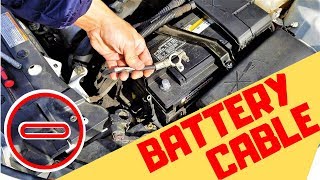
Shop the Parts Behind U1706
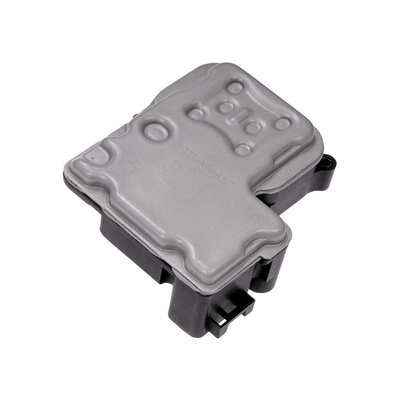
Below are the parts most often responsible for code U1706, ranked by how frequently each one is the actual culprit (per the diagnosis above). Tap any to see what we have for your vehicle.


The information in this article is provided for general reference and educational purposes only. Vehicle specifications, procedures, and part compatibility can vary by production date, trim level, and region. Always consult your vehicle's factory service manual and verify part numbers before purchasing or performing repairs. Safety-critical components such as airbags, seat belts, and braking systems should be installed by a qualified professional.
- 🧭 Diagnostic Flowchart
- 🎬 Helpful Videos
- 🛍️ Shop This Part
- What Does U1706 Mean?
- Can I Drive With U1706?
- Common Causes
- Symptoms
- Common Fixes & Costs
- DIY vs Professional
- Used vs. New Parts: Buying Guide
- What Happens If You Wait — Timeline
- Cost of Not Fixing It
- Diagnosis Steps
- When This Code Triggers (Freeze-Frame Conditions)
- Related Codes
- Climate & Environmental Factors
- How to Talk to a Mechanic About This Code
- Where to Take It: Dealer vs Independent vs Chain
- When to Walk Away From the Repair
- What Scan Tool You Need for This Code
- How to Clear the Code After You Fix It
- Will This Fail Emissions / State Inspection?
- Most Commonly Affected Vehicles
- Manufacturer-Specific Notes
- Real Owner Stories
- 2012 Fiat Ducato with ABS/ASR lights and no speedometer
- 2014 Chevy Cruze with multiple intermittent warning lights
- 2002 Fiat Stilo with a parasitic battery drain
- 2010 Fiat Stilo 1.9 JTD with persistent U1706 code
- How to Prevent This Code From Triggering
- Frequently Asked Questions
- Is it expensive to fix code U1706?
- Can a bad battery cause a U1706 code?
- What is a common misdiagnosis for U1706?
- Why did U1706 appear right after a repair was done?
- Can a jump-start with reversed polarity cause a U1706 code?
- My U1706 code appears intermittently in wet weather. What's the cause?
- What does the two-digit suffix (e.g., -86, -87) on my Fiat/Alfa Romeo U1706 code mean?
- Will clearing the code fix the problem?
- What is the CAN bus?
- Will code U1706 cause my car to fail an inspection?
- Key Takeaways
- 🎟️ Get 5% Off