

OBD-II Code U1710: HVAC Control Module Communication Failure
What U1710 means, why it triggers, and how to fix it
- Code U1710 indicates the HVAC module lost communication with the main computer, instantly disabling all climate controls and the defroster.
- On 2014-2019 Ram ProMaster vans, a known software glitch causes this code and requires a $150-$250 dealer reflash (TSB 24-005-19).
- Installing an aftermarket radio or remote start frequently triggers U1710 by disrupting the CAN bus network.
- Replacing an HVAC module on Fiat-Chrysler vehicles requires a mandatory PROXI alignment using a professional scan tool to stop the odometer from flashing.
- Always use a manufacturer-specific OBD-II scanner, as U1710 means 'HVAC failure' on a Ram but indicates an 'EVAP system leak' on a Jeep.
What Does U1710 Mean?
U1710 is a network code indicating your vehicle's main computer, the Body Control Module (BCM), lost communication with the Heating, Ventilation, and Air Conditioning (HVAC) module. The part of the car controlling your A/C and heat is no longer talking to the rest of the electronics. This causes the climate controls to go completely dead and illuminates the Check Engine Light.
Technical definition: For Fiat-Chrysler (FCA) vehicles, U1710 means 'Lost Communication With HVAC Control Module'. Sub-codes U1710-86 (Implausible Data) and U1710-87 (Missing Message) indicate the BCM receives corrupted data or no data at all. On other makes, the definition changes entirely; on Jeeps, it indicates an EVAP system leak, proving the need for a manufacturer-specific scan tool.
Can I Drive With U1710?
Yes, But With Caution. Driving will not damage the engine, but your climate controls will not work. This creates a severe safety hazard in weather that fogs or frosts the windows, severely impairing visibility. Driving without a functioning defroster is illegal in many jurisdictions.
Common Causes
- Outdated HVAC Module Software (Very Common) — On many affected vehicles, particularly the Ram ProMaster, the original HVAC module software contains a bug. Manufacturers issued Technical Service Bulletins (TSBs) prescribing a software update to permanently fix this communication loss.
- Failed HVAC Control Module (Common) — The physical HVAC control unit in the dashboard fails internally due to component wear or electrical surges. This is the primary hardware failure if a software update does not resolve the code.
- Aftermarket Electronics Interference (Common) — Installing an aftermarket head unit, remote starter, alarm, or even a cheap 12V USB charger disrupts the CAN bus network. The new hardware's wiring or interface module corrupts the data lines, breaking communication with the HVAC module.
- Low Battery Voltage or Poor Grounds (Less Common) — Weak batteries cause unpredictable electrical problems during startup, including module communication failures. Poor main battery or chassis ground connections cause floating voltages and data errors across the CAN network.
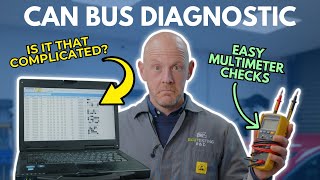
- Wiring or Connector Issues (Less Common) — The wiring harness or connectors between the BCM and the HVAC module suffer damage, chafing, or corrosion. This physically breaks the communication circuit. 🎬 Watch: A master technician explains how to troubleshoot CAN bus faults.
- Water Ingress (Rare) — Water leaking into the cabin from a clogged sunroof drain or bad windshield seal drips directly onto the HVAC module or CAN bus wiring, causing immediate short circuits.
- Faulty Body Control Module (BCM) (Rare) — The BCM itself fails, though this triggers dozens of other communication codes and widespread electrical failures alongside the HVAC issue.
Symptoms
- Inoperative HVAC Controls and Defroster — The climate control panel goes dead and does not light up. The A/C, heater, fans, and front/rear defrosters will not turn on.
- Check Engine Light is On — The Malfunction Indicator Lamp (MIL) illuminates on the dashboard.
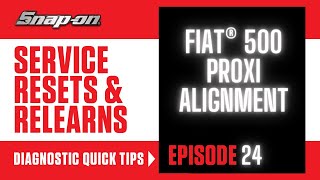
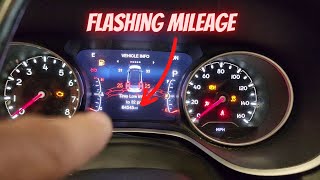
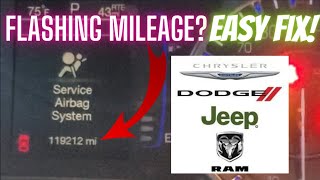
- Flashing Odometer — On Fiat-Chrysler vehicles, a network communication problem causes the odometer to flash continuously. 🎬 See why your mileage is flashing and how to fix it. This occurs frequently after a module is replaced but not configured via a PROXI alignment.
- A/C Compressor Clutch Cycling Randomly — Before complete failure, the BCM intermittently loses and regains communication, causing the A/C compressor to click on and off erratically.
Diagnostic Flowchart
Tap your situation to follow the diagnostic path that matches what you're seeing on this code.
Common Fixes & Costs
- Reprogram HVAC Control Module — Parts: $0, Labor: $150-$250, ~1.0 hr book time (Professional)
- Replace HVAC Control Module
— Parts: $180-$400, Labor: $150-$300, ~1.5 hr book time
(Intermediate)
Ram ProMaster (2014-2021): OEM Mopar #68516124AE, 735608096 (Alt: Dorman, SKP)
Dodge Journey (2011-2020): OEM Mopar #68263758AB, 68146008AE (Alt: Used/remanufactured units) - Correct Faulty Aftermarket Installation — Parts: $0-$100, Labor: $100-$300, ~1.5 hr book time (Intermediate)
- Repair Wiring or Connectors — Parts: $10-$50, Labor: $150-$400, ~2.0 hr book time (Intermediate)
- Replace and Program Body Control Module (BCM)
— Parts: $600-$1200, Labor: $200-$400, ~2.5 hr book time
(Professional)
Jeep Wrangler (2018-2019): OEM Mopar #68268178AE, 68268178AC (Alt: MAKS TIPM Rebuilders)
Used vs. New Parts: Buying Guide
When a used part is worth it: A used HVAC control module is a budget-friendly option for older, high-mileage vehicles. It makes sense only if you have access to the professional tools required for post-installation programming.
Donor-vehicle mileage cap: roughly under 100000 miles for the part to have meaningful remaining life.
Donor quality checklist:
- Match the part number exactly, including any suffix letters.
- Ensure the seller offers a functional warranty (at least 30-90 days).
- Parts from accident-damaged vehicles are preferable to those from cars with widespread electrical issues.
Decision logic:
- If The fix is a known software bug (e.g., Ram ProMaster TSB) → buy neither; pay for the software update at a dealer.
- If Vehicle is an FCA model requiring PROXI alignment → factor in the cost of professional programming ($100-$200) when comparing used vs. new prices.
- If The price of a used module plus programming is close to the price of a new aftermarket module with a warranty → buy the new aftermarket part for better peace of mind.
Warranty tradeoff: Used parts typically have a 30-90 day warranty covering only the part. New aftermarket parts carry a 1-year to limited lifetime warranty. New OEM parts have a 1-2 year warranty.
Worst-case if a used part fails: $300-$500 if the used part is faulty or incompatible, requiring you to pay for installation labor twice and purchase another part.
What Happens If You Wait — Timeline
- Immediate: Code U1710 is set, Check Engine Light illuminates, and the HVAC system becomes completely inoperative. There is no direct mechanical damage. (MPG impact: 0%% · Added cost: $0)
- 1-3 months: The vehicle automatically fails state OBD-II emissions or safety inspections. If the root cause is an intermittent wiring short, other unrelated electrical gremlins begin to appear. (MPG impact: 0%% · Added cost: $150-$300)
- 3-12 months: A module sending garbage data onto the network increases the processing load on other modules. An internal short to power stresses CAN transceivers in other modules, causing a cascading failure. (MPG impact: 0-2%% · Added cost: $500-$1500)
- 12+ months: Ignoring a persistent network fault damages multiple modules. A worst-case scenario involves a fault that corrupts the BCM, leading to widespread problems or a no-start condition. (MPG impact: Variable% · Added cost: $1500-$3000+)
Cost of Not Fixing It
- Immediate: No climate control (A/C, heat, fan). Inability to use the defroster creates a severe visibility and safety hazard in cold or humid weather. (Added cost: $0)
- 1-6 months: Continued safety risk. If the root cause is a wiring short or failing BCM, the electrical issue worsens, affecting other vehicle systems. (Added cost: $0 - $1500+)
- 6+ months: Guaranteed failure of state emissions/safety inspection. An underlying electrical problem damages other sensitive electronic modules on the CAN bus network. (Added cost: $500 - $2500+)
Diagnosis Steps
- Check for Technical Service Bulletins (TSBs)
Search for TSBs related to your specific year and model. For Ram ProMaster vans, TSB 24-005-19 identifies a software bug as the root cause and prescribes a dealer reflash as the only fix.
Tools: Google Search, professional diagnostic database (e.g., ALLDATA) (Beginner) - Scan for All Module Codes
Use a high-quality OBD-II scanner to read manufacturer-specific codes from all modules (BCM, HVAC), not just the engine. Look for sub-codes like U1710-86 or U1710-87 to narrow down the fault type.
Tools: Advanced OBD-II Scanner (e.g., Autel, Foxwell) (Intermediate) - Isolate Aftermarket Electronics
Unplug any aftermarket stereos, alarms, remote starts, or USB chargers completely. Clear the codes and check if communication with the HVAC module returns.
Tools: Trim removal tools, basic hand tools (Intermediate) - Verify Battery Health and Grounds
Measure battery voltage with the car off; it must be above 12.4V. Inspect and clean the main battery terminals and the primary chassis ground strap to bare metal to ensure a solid connection.
Tools: Multimeter, wire brush, socket set (Beginner) - Inspect HVAC Module Connectors and Wiring
Remove the dashboard trim and visually inspect the wiring harness at the back of the HVAC control module. Look for chafing, melted wires, or corrosion on the connector pins. Unplug and reseat the connector.
Tools: Trim removal tools, flashlight (Intermediate) - Advanced Test: Check CAN Bus Termination Resistance
With the battery disconnected, measure resistance between CAN High and CAN Low pins at the OBD-II port (pins 6 and 14). A healthy network reads 60 ohms. A reading of 120 ohms means a terminating resistor is offline or the network is broken.
Tools: Multimeter, OBD-II pinout diagram (Advanced) - Advanced Test: Check CAN Bus Voltages
With the key on and engine off, measure DC voltage. CAN High (Pin 6) to ground should be 2.5V to 3.5V. CAN Low (Pin 14) to ground should be 1.5V to 2.5V. A reading of 0V or 5V indicates a short to ground or power.
Tools: Multimeter, back-probe pins (Advanced) - Professional Test: Scope the CAN Bus Signal
Probe the CAN High and CAN Low lines at the HVAC module connector using an oscilloscope. A healthy signal shows a clean, switching square wave pattern. Distorted waveforms indicate a wiring fault or a corrupting module.
Tools: Automotive oscilloscope, back-probe pins (Professional) - Attempt HVAC Module Reprogramming
If a TSB exists, a dealer or well-equipped shop must flash the HVAC module with new software using a proprietary tool and a stable power supply maintaining 13.2-13.5V.
Tools: Manufacturer-specific scan tool (e.g., wiTECH), stable power supply (Professional) - Perform PROXI Alignment
If you replace the HVAC module on an FCA vehicle, you must perform a PROXI alignment. This introduces the new module to the network and stops the odometer from flashing.
Tools: Advanced OBD-II Scanner with PROXI alignment function (Professional)
When This Code Triggers (Freeze-Frame Conditions)
- System Voltage: 11.8V - 12.5V (During Key On, Engine Off (KOEO) network check)
- Ignition Status: On/Run (The fault is logged immediately upon vehicle startup when modules initialize.)
- Vehicle Speed: 0 mph (Code is set before the vehicle is in motion.)
- Time Since Start: 0-5 seconds (The communication failure is detected during the initial self-test sequence of the modules.)
Related Codes
- U1710-86 — Means 'Implausible Data Received From HVAC'. Indicates the BCM receives corrupted signals from the climate controls. Suggests the module is powered on but sending bad data, pointing towards a software bug or internal module fault.
- U1710-87 — Means 'ACM On B CAN - Missing Message'. Indicates the BCM receives no signal from the HVAC module. Points directly to a wiring issue, a blown fuse, or a completely dead module.
- B10AA-4A — Means 'Check Configuration Failed, Incorrect Component Installed'. Appears with U1710 if a module is replaced without performing the required PROXI alignment. Almost always accompanied by a flashing odometer.
- U0170 / U0171 — Indicates lost communication with a restraints system (airbag) sensor. Triggers an airbag warning light and requires inspection of the airbag control module, not the HVAC system.
Climate & Environmental Factors
- High Humidity: Prolonged exposure to high humidity forces moisture into connectors and modules, causing corrosion and short circuits on sensitive CAN bus electronics.
- Extreme Cold: Very cold temperatures significantly reduce a battery's effective cranking amps. Low system voltage during startup causes modules to fail their initialization sequence, logging communication codes.
- Water Ingress: Heavy rain combined with clogged body drains (sunroof, cowl) forces water directly onto electronic modules or wiring harnesses, causing immediate short circuits and communication loss.
How to Talk to a Mechanic About This Code
Say this: "I have a U1710 code on my [Vehicle Year/Make/Model]. My research indicates this is often a software issue on these vehicles. Before starting a full diagnostic, could you check if my VIN has any open Technical Service Bulletins, like TSB 24-005-19, and provide a quote for an HVAC module reflash?"
This signals you are an informed customer. It directs the shop to the most common and cheapest fix first (software update), preventing them from immediately quoting an expensive module replacement.
Avoid saying:
- 'My check engine light is on, can you fix it?'
- 'My A/C isn't working, just do whatever it takes.'
- 'I have a U-code, I probably need a new computer.'
Questions to ask before authorizing the repair:
- Did you confirm if a software update TSB applies to my vehicle?
- If you are recommending a new HVAC module, what specific tests did you run to condemn the old one?
- If the module needs replacement, does your estimate include the cost of a PROXI alignment procedure?
- If the odometer is flashing, can you confirm you have the capability to perform a PROXI alignment?
Where to Take It: Dealer vs Independent vs Chain
- Dealer:
Best first choice for FCA vehicles. The most common fix is a software update requiring the dealer's proprietary wiTECH tool. Going here first avoids paying for diagnostics elsewhere.
Best for: Ram ProMaster, Dodge Journey, and other FCA vehicles with known software TSBs., Any vehicle where a module replacement and subsequent PROXI alignment is required., Vehicles still under any factory or extended warranty.
Downsides: Typically highest labor rates., Unwilling to install customer-supplied or used parts. (Typical cost: +50% vs. baseline) - Independent Shop:
A strong second choice, IF you vet them first. Ask them directly: 'Do you have the tools to reflash an HVAC module and perform a PROXI alignment?' If they hesitate, go to the dealer.
Best for: Diagnosing wiring issues, grounding problems, or issues caused by aftermarket accessories., Vehicles outside of the FCA family where the cause is less likely to be software-related., Out-of-warranty vehicles where the owner has a trusted relationship with the shop.
Downsides: May not have manufacturer-specific tools for software flashing., Must verify they own a high-end scan tool capable of performing a PROXI alignment. (Typical cost: +0% vs. baseline) - Chain Shop:
AVOID. This is a complex network communication code, not a simple parts-swapping job. Chain shops are not equipped for this type of electrical diagnosis.
Best for: Checking battery health and replacing a battery if needed.
Downsides: Technicians lack the training or tools for network diagnostics., High risk of misdiagnosis, leading to unnecessary replacement of expensive parts. (Typical cost: -10% vs. baseline)
When to Walk Away From the Repair
If the total estimated repair cost exceeds 40-50% of the car's private-party value, it's time to seriously consider selling or trading it in. For older, high-mileage cars, this threshold is lower, around 30-40%.
- Car worth $15000, fix is $200: Fix it. A $200 software update on a $15,000 vehicle is a minor and necessary repair.
- Car worth $4000, fix is $850: Borderline. The $850 cost is 21% of the car's value. It's worth fixing if the rest of the car is in good shape, but get a firm quote first.
- Car worth $3000, fix is $1600: Walk away. The repair cost is over 50% of the vehicle's value. It is not economically sensible to proceed with the repair.
What Scan Tool You Need for This Code
Minimum: A scanner that reads manufacturer-specific codes from ALL vehicle modules (BCM, ABS, HVAC, etc.), not just generic engine codes.
A $20 reader only pulls generic 'P' codes from the engine computer. It cannot see 'U' codes from the Body Control Module, cannot read manufacturer-specific definitions, and cannot perform programming functions like a PROXI alignment.
Budget: BlueDriver Pro (~$99) — Reads enhanced codes from modules like the BCM on FCA vehicles, which is the minimum requirement to see the U1710 code and its specific definition. It cannot perform the PROXI alignment.
Mid-range: Foxwell NT510 Elite / AlfaOBD with OBDLink MX+ (~$150-250) — Offers bidirectional control and special functions. AlfaOBD paired with a compatible adapter performs a PROXI alignment on FCA vehicles, allowing a DIYer to complete a module replacement at home.
Professional: Autel MaxiCOM MK808 / Foxwell NT809 (~$450-550) — Provides OE-level diagnostics, reads codes from all modules, and includes the PROXI alignment function for FCA vehicles under their 'Service' menus. Faster with a better user interface.
Rent vs buy: Rental scanners from auto parts stores are basic code readers and are INSUFFICIENT for this job. For a one-time U1710 fix on an FCA vehicle, it is more cost-effective to pay a dealer for the software update than to buy a capable scanner.
How to Clear the Code After You Fix It
- Reconnect battery if disconnected for repair.
- Use a compatible OBD-II scan tool to clear the Diagnostic Trouble Codes (DTCs) from all modules.
- Perform a PROXI alignment if any module was replaced (FCA vehicles).
- Perform a full drive cycle to ensure the code does not return and to allow readiness monitors to set.
Drive cycle (~20 minutes): For FCA vehicles: Cold start, idle for 5 minutes. Drive at a steady speed between 40-60 mph for 8 minutes. Stop and idle for 3 minutes. Drive above 20 mph for 2 minutes. Turn the vehicle off for 10 minutes.
Readiness monitors affected: Catalyst monitor, EVAP system monitor, O2 sensor monitor
Before emissions retest: drive at least 50 miles to fully set monitors.
Watch out for:
- Disconnecting the battery will not clear permanent DTCs and resets all readiness monitors to 'Not Ready'.
- The code returns immediately if the root cause has not been corrected.
- Forgetting to perform a PROXI alignment after module replacement causes a flashing odometer and prevents the code from clearing.
Will This Fail Emissions / State Inspection?
Yes — this code typically fails an OBD-II emissions inspection.
- California: An illuminated Check Engine Light results in an automatic failure of the smog check. After repair, a drive cycle must be completed to set readiness monitors before a retest is possible.
- New York: The NYS DMV inspection includes an OBD-II scan. Any fault code that turns on the check engine light, including U1710, causes the vehicle to fail the emissions portion of the inspection.
- Texas: In counties requiring emissions testing, an active Check Engine Light is an automatic failure. After clearing the code, you must drive 50-100 miles to reset the readiness monitors before re-inspection.
Most Commonly Affected Vehicles
- Ram ProMaster (2014-2019) — Highly prone to U1710 due to a well-documented software glitch in the HVAC module. FCA released TSB 24-005-19 to address this via a software update.
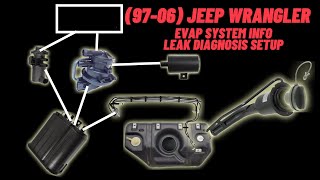
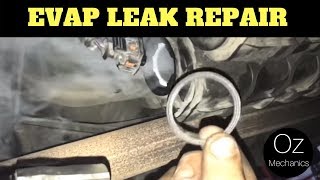
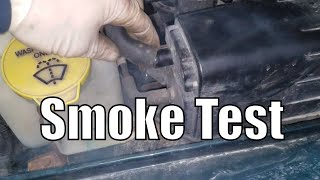
- Jeep Wrangler, Grand Cherokee (2010-Present) — On Jeeps, U1710 (often with a -87 suffix) indicates an EVAP system small leak, highlighting the manufacturer-specific nature of this code. A smoke test is required to find the leak.
- Dodge Journey (2011-2020) — TSB 24-005-17 addresses an issue where the HVAC controller loses its configuration after a battery disconnect or CAN bus communication loss.
- Chrysler 200, Town & Country (2011-2016) — Experiences 'U' series communication codes for module communication failures, following similar diagnostic paths as other FCA vehicles.
- Fiat Ducato, 500L, Argo (2014-Present) — The Ram ProMaster is based on the Fiat Ducato; these vehicles share the same electrical architecture and are susceptible to the same HVAC module software issues.
- Alfa Romeo Giulia, Stelvio (2016-Present) — U1710-87 is defined as 'Automatic Climate Module (ACM) - Missing Message,' directly pointing to a communication loss from the climate control system.
- Honda CR-V, Accord (2012-2022) — Network communication failures occur, often related to failures in the VSA (ABS) modulator or issues with aftermarket stereos, though usually presenting as U0029.
- Hyundai Elantra, Sonata (2010-2020) — Some diagnostic sources for Hyundai define U1710 as a primary or secondary circuit malfunction in an ignition coil pack, proving manufacturer-specific definitions are critical.
Manufacturer-Specific Notes
- Ram / FCA (Fiat-Chrysler Automobiles): For 2014-2019 Ram ProMaster vans, this code is almost always caused by a software bug. The official fix is to have a dealer reprogram the HVAC module per TSB 24-005-19, not to replace parts immediately.
- Jeep: The definition of U1710 on Jeeps is inconsistent. It frequently indicates an EVAP system leak code (specifically U1710-87). Common EVAP leak sources on Jeeps include the gas cap and the rollover valve on the fuel tank.
- General: Any 'U' code indicates a network communication problem between electronic modules. The root cause is the sending module, the receiving module, or the wiring in between.
- Dodge: On the Dodge Journey (2011-2020), a software update (TSB 24-005-17) prevents the HVAC module from losing its configuration after a battery disconnect or CAN bus communication loss.
Real Owner Stories
2017 Ram ProMaster 2500, 65K miles
Check Engine Light came on, and the entire HVAC control panel went dead randomly while driving.
What they tried:
- Checked all related fuses, which were fine.
- Took it to an independent mechanic who recommended replacing the HVAC control module for $550.
- Owner searched online and discovered TSB 24-005-19.
Outcome: Declined the repair at the independent shop. Took the van to an FCA dealership, referenced the TSB, and they performed the HVAC module software update for $180. All HVAC functions were restored immediately.
Lesson: For a Ram ProMaster with code U1710, do not replace parts until confirming with a dealer if your vehicle needs the software update specified in TSB 24-005-19.
2018 Dodge Journey, 40K miles
Immediately after installing an aftermarket Android touchscreen radio, the Check Engine Light came on with code U1710, and the odometer started flashing continuously.
What they tried:
- Tried disconnecting the battery to reset the system, which worked temporarily but the issue returned.
- Researched the flashing odometer and learned it indicated a PROXI alignment failure.
Outcome: The aftermarket radio's built-in CAN bus adapter was incompatible. The owner took the vehicle to a shop for a PROXI alignment, which cleared the flashing odometer, but the U1710 code intermittently returned. The final fix was reinstalling the factory radio.
Lesson: Replacing the factory radio on FCA vehicles disrupts the CAN bus network. A flashing odometer is a direct sign of this. Be prepared for programming costs and compatibility issues.
2014 Jeep Wrangler JK, 85K miles
Check Engine Light appeared with code U1710-87. The climate controls worked perfectly, confusing the owner.
What they tried:
- A basic code reader said 'Lost Communication with HVAC'.
- An advanced scanner revealed the Jeep-specific definition: 'EVAP System Small Leak'.
- Replaced the gas cap, but the code returned.
Outcome: A shop performed a smoke test, revealing a small crack in the plastic rollover valve nipple on top of the fuel tank. The shop repaired it with fuel-safe epoxy, saving a $1400 fuel tank replacement. The code did not return.
Lesson: The same code means completely different things on different vehicles. For Jeeps, U1710 points to an EVAP leak. A smoke test is the definitive way to find the source.
2015 Dodge Dart, 110K miles
Intermittent issue where the radio went blank, the odometer flashed, and code U1710 was stored.
What they tried:
- Disconnecting the battery temporarily fixed the issue.
- Dealership suggested a failing BCM, a very expensive repair.
- Owner found a forum thread describing identical symptoms.
Outcome: The owner located the main chassis ground connection near the fuse panel, sanded the paint off the body and terminal to ensure bare metal contact, and re-secured it. The problem was permanently resolved. The factory paint created a poor ground, causing intermittent voltage drops.
Lesson: Intermittent communication failures temporarily fixed by a battery reset trace back to poor power supply or ground connections. Always clean main battery and body ground points before replacing modules.
How to Prevent This Code From Triggering
- Maintain Battery and Ground Connections (Every 12 months or during oil change) — Low voltage and poor grounds cause module communication errors. Cleaning battery terminals and chassis ground points ensures stable voltage across the CAN network.
- Keep Cabin Drains Clear (Every 6-12 months, especially in leafy areas) — Clogged sunroof and cowl drains cause rainwater to overflow onto sensitive electronics like the BCM or HVAC module, causing short circuits.
- Use High-Quality Aftermarket Electronics (During any modification) — Cheap CAN bus adapters for stereos or alarms introduce network interference. Using reputable brands prevents improper wiring from disrupting communication.
- Avoid Using Cheap 12V USB Chargers (Daily habit) — Poorly designed USB chargers lack electrical filtering, introducing noise into the vehicle's power system that corrupts data on the CAN bus.
Frequently Asked Questions
Can I fix code U1710 myself?
You can check the battery and remove aftermarket accessories yourself. However, the most common fix is a software update requiring a dealer's diagnostic tool. Physically swapping a module requires post-installation programming with an advanced scanner.
Will clearing the code make it go away?
Clearing the code turns off the check engine light temporarily. Because it is a hard communication failure, the code returns immediately upon startup until you fix the underlying problem.
Why did my A/C and heat stop working when the code appeared?
Code U1710 means the HVAC control module lost communication with the car's main computer. The system disables itself as a fail-safe when this link breaks.
Is it safe to drive with a U1710 code?
Driving is mechanically safe because the code does not affect the engine or brakes. However, the lack of a functioning defroster creates a severe visibility hazard in cold or humid weather.
My mechanic replaced the HVAC module but the odometer is flashing. What's wrong?
A flashing odometer on an FCA vehicle means the new module requires a PROXI alignment. The mechanic must use a compatible scan tool to introduce the new part to the vehicle's network.
What is a common misdiagnosis for U1710?
Mechanics frequently replace the HVAC control module without checking for software updates first. On Ram ProMaster vans, a software bug causes the code, and a new module will not fix it. Always check for TSBs before replacing parts.
I just installed a new radio and now I have a U1710 code. Are they related?
Yes, aftermarket stereos using CAN bus adapters frequently interfere with the vehicle's network. Unplug the new radio completely to see if communication with the HVAC module returns.
What does the '-86' or '-87' at the end of the code mean?
U1710-86 means 'Implausible Data', indicating the module is powered but sending corrupt information due to a software bug. U1710-87 means 'Missing Message', indicating the module is completely offline due to a blown fuse, broken wire, or dead unit.
Key Takeaways
- Code U1710 indicates the HVAC module lost communication with the main computer, instantly disabling all climate controls and the defroster.
- On 2014-2019 Ram ProMaster vans, a known software glitch causes this code and requires a $150-$250 dealer reflash (TSB 24-005-19).
- Installing an aftermarket radio or remote start frequently triggers U1710 by disrupting the CAN bus network.
- Replacing an HVAC module on Fiat-Chrysler vehicles requires a mandatory PROXI alignment using a professional scan tool to stop the odometer from flashing.
- Always use a manufacturer-specific OBD-II scanner, as U1710 means 'HVAC failure' on a Ram but indicates an 'EVAP system leak' on a Jeep.
Helpful Videos
Shop the Parts Behind U1710
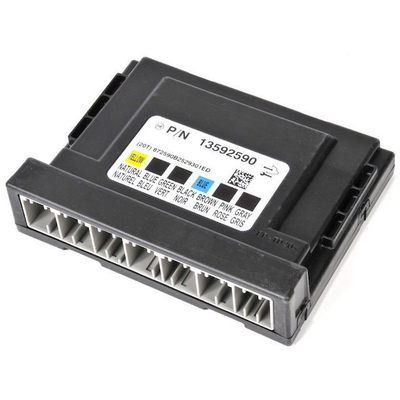
Below are the parts most often responsible for code U1710, ranked by how frequently each one is the actual culprit (per the diagnosis above). Tap any to see what we have for your vehicle.


The information in this article is provided for general reference and educational purposes only. Vehicle specifications, procedures, and part compatibility can vary by production date, trim level, and region. Always consult your vehicle's factory service manual and verify part numbers before purchasing or performing repairs. Safety-critical components such as airbags, seat belts, and braking systems should be installed by a qualified professional.
- 🧭 Diagnostic Flowchart
- 🎬 Helpful Videos
- 🛍️ Shop This Part
- What Does U1710 Mean?
- Can I Drive With U1710?
- Common Causes
- Symptoms
- Common Fixes & Costs
- Used vs. New Parts: Buying Guide
- What Happens If You Wait — Timeline
- Cost of Not Fixing It
- Diagnosis Steps
- When This Code Triggers (Freeze-Frame Conditions)
- Related Codes
- Climate & Environmental Factors
- How to Talk to a Mechanic About This Code
- Where to Take It: Dealer vs Independent vs Chain
- When to Walk Away From the Repair
- What Scan Tool You Need for This Code
- How to Clear the Code After You Fix It
- Will This Fail Emissions / State Inspection?
- Most Commonly Affected Vehicles
- Manufacturer-Specific Notes
- Real Owner Stories
- 2017 Ram ProMaster 2500, 65K miles
- 2018 Dodge Journey, 40K miles
- 2014 Jeep Wrangler JK, 85K miles
- 2015 Dodge Dart, 110K miles
- How to Prevent This Code From Triggering
- Frequently Asked Questions
- Can I fix code U1710 myself?
- Will clearing the code make it go away?
- Why did my A/C and heat stop working when the code appeared?
- Is it safe to drive with a U1710 code?
- My mechanic replaced the HVAC module but the odometer is flashing. What's wrong?
- What is a common misdiagnosis for U1710?
- I just installed a new radio and now I have a U1710 code. Are they related?
- What does the '-86' or '-87' at the end of the code mean?
- Key Takeaways
- 🎟️ Get 5% Off