

OBD-II Code U1736: Communication Network Error
What U1736 means, why it triggers, and how to fix it
- Code U1736 indicates a CAN bus network failure where at least one control module stops sending or receiving data.
- Always test the battery first; voltage drops below 12.4V cause a significant percentage of false communication codes.
- On Fiat-Chrysler vehicles, a flashing odometer alongside U1736 requires a $125-$250 Proxy Alignment to resynchronize the network.
- For VW and Audi DSG transmissions, U1736 points to a failed internal mechatronic pressure sensor, which specialists repair for $700-$1,200 instead of a $2,500 full replacement.
What Does U1736 Mean?
U1736 is a network communication code indicating a specific electronic control module is not sending or receiving signals. Your car's computers communicate over a Controller Area Network (CAN bus). This code triggers when a module—often the transmission, instrument panel, or infotainment system—goes silent or sends invalid data.
Technical definition: The SAE/ISO definition for U1736 varies by manufacturer. Common definitions include 'Lost Communication With Transmission Control Module', 'Entertainment Telematic Module - Missing Message', or 'Sticking Key on Wireless Remote Control'. It universally indicates a failure in the CAN bus or J1850 protocol, preventing modules from exchanging data.
Can I Drive With U1736?
Yes, But With Caution. Driving is possible, but causes transmission shifting problems, incorrect gauge readings, or non-functioning electronics. Address the issue immediately to prevent being stranded. If the transmission is stuck in 'limp mode' or shifting harshly, stop driving. Continued operation causes excessive wear on clutches and internal components from sustained high pressures, turning a $200 wiring repair into a $3,000 transmission rebuild.
Common Causes
- Low Battery Voltage or Poor Ground Connection (Very Common) — Electronic modules require stable voltage. A weak battery, failing alternator, or corroded ground wire causes unpredictable communication errors and triggers a flood of U-codes. Cold weather exposes underlying power supply issues.
- Faulty Control Module (Very Common) — The failure of an electronic module itself, such as the Transmission Control Module (TCM), Body Control Module (BCM), or Infotainment Module. Internal components fail from heat, vibration, or age.
- Wiring Harness and Connector Damage (Common) — CAN bus wires and connectors corrode, fray, short, or break, interrupting signals. Water intrusion from clogged sunroof drains, rodent damage, and road salt spray are primary culprits for compromised connections.
- Software or Firmware Glitch (Less Common) — Software bugs within a module disrupt network traffic. A manufacturer software update (flash) resolves these issues. Check for Technical Service Bulletins (TSBs) regarding parasitic drains or communication timeouts.
- Aftermarket Accessories (Less Common) — Poorly installed aftermarket electronics (remote starters, stereos, LED headlights) introduce electrical noise onto the CAN bus, interfering with module communication.
- Stuck Key Fob Button (Rare) — In specific vehicles (like Hyundai), the Body Control Module detects a continuous signal from a key fob with a stuck button due to debris or a leaking battery.
- Terminating Resistor Failure (Rare) — The CAN bus network relies on two 120-ohm resistors to prevent signal reflections. If one fails, total network resistance shifts from 60 ohms to 120 ohms, crashing communication.
Symptoms
- Check Engine Light and Warning Cascade — The Check Engine Light illuminates, often triggering a cascade of transmission, ABS, or stability control warnings.
- Harsh or Erratic Shifting — The transmission shifts hard, gets stuck in one gear (limp mode), or hesitates because it lost communication with the engine controller.
- Flashing Odometer — On Fiat-Chrysler (FCA) vehicles, a flashing odometer indicates the Body Control Module detected a network configuration mismatch requiring a proxy alignment.
- Infotainment System Malfunction — The radio, navigation, or touchscreen freezes, fails to power on, or causes a parasitic battery drain.
- Instrument Cluster Issues — Gauges drop to zero, or warning indicators light up incorrectly.
- Vehicle Will Not Start or Shift Out of Park — If the engine computer cannot communicate with the transmission or security module, the vehicle cranks but will not start, or gets stuck in Park.
Diagnostic Flowchart
Tap your situation to follow the diagnostic path that matches what you're seeing on this code.
Common Fixes & Costs
- Replace Battery and Clean Terminals — Parts: $150-$350, Labor: $50-$100, ~0.5 hr book time (DIY)
- Perform Software Update / Proxy Alignment — Parts: $0, Labor: $125-$250, ~1.0 hr book time (Professional)
- Repair Infotainment Module — Parts: $300-$500, Labor: $100-$200, ~1.5 hr book time (DIY)
- Repair VW/Audi Mechatronic Pressure Sensors — Parts: $100-$300, Labor: $600-$900, ~4.0 hr book time (Professional)
- Replace Transmission Control Module (TCM) / Mechatronic Unit — Parts: $600-$2000, Labor: $150-$1000, ~3.5 hr book time (Professional)
- Repair or Replace Wiring Harness — Parts: $20-$2500, Labor: $200-$4000, ~2.5 hr book time (Professional)
Used vs. New Parts: Buying Guide
When a used part is worth it: For infotainment modules, a used unit from a salvage yard is cost-effective if the part number matches exactly. For TCMs, a professionally remanufactured unit with a warranty is superior.
Donor-vehicle mileage cap: roughly under 60000 miles for the part to have meaningful remaining life.
Donor quality checklist:
- Verify the exact part number.
- Ask for the VIN and mileage of the donor vehicle.
- Prefer remanufactured modules from specialists who test components and offer warranties.
Decision logic:
- If The part is an infotainment module and a used one is <50% the cost of new → Used is a reasonable option; verify the return policy.
- If The part is a TCM or Mechatronic unit → Favor a new or professionally remanufactured unit with a warranty due to high labor and programming costs.
- If The vehicle is older (>10 years) and has high mileage (>150k) → A used or remanufactured part is the most economical choice.
Warranty tradeoff: Salvage yards offer 30-90 day warranties. Remanufactured modules offer 1-year to lifetime warranties. New OEM parts carry 1-2 year warranties.
Worst-case if a used part fails: $500-$1500 if a used module fails, requiring repeat labor and reprogramming.
What Happens If You Wait — Timeline
- 0-1 month: Code is stored. Symptoms are intermittent, like a radio glitch or a single hard shift. (MPG impact: 0-1%% · Added cost: $0)
- 1-3 months: Transmission enters 'limp mode' intermittently. A parasitic draw weakens the battery, causing slow cranking. (MPG impact: 3-8%% · Added cost: $100-$300 (towing))
- 3-6 months: Root failure becomes persistent. Driving in limp mode accelerates wear on transmission clutches. Battery fails to hold a charge. (MPG impact: 5-15%% · Added cost: $350-$2500)
- 6+ months: Catastrophic failure. Severe internal transmission damage occurs. Complete network failure leaves the vehicle undrivable. (MPG impact: 10-25%% · Added cost: $3500-$7000)
Cost of Not Fixing It
- 0-1 month: Intermittent drivability issues, harsh shifting, or non-functional electronics. Risk of being stranded. (Added cost: $100-$300 (towing bill))
- 1-6 months: Continued driving in 'limp mode' causes accelerated wear on transmission clutches and internal hard parts. (Added cost: $2000-$5000)
- 6+ months: Severe internal transmission damage. A parasitic draw permanently damages the battery. Complete communication failure renders the vehicle undrivable. (Added cost: $3500-$7000)
Diagnosis Steps
- Check the Battery and Grounds
Ensure the battery is fully charged (above 12.4 volts) and have it load-tested. Clean the battery terminals. Inspect and tighten the main chassis and engine ground connections.
Tools: Digital Multimeter, Battery Terminal Brush, Basic Hand Tools (Beginner) - Scan for All Codes in All Modules
Use an OBD-II scanner to read manufacturer-specific codes from all modules (TCM, BCM, ABS), not just the engine. Note which modules stored U1736 to map out the network failure.
Tools: Advanced OBD-II Scanner (Intermediate) - Perform a Visual Inspection
Check wiring harnesses for chafing, melting, or rodent damage. Look for water intrusion under the dash and in the trunk. Inspect connectors for green or white corrosion.
Tools: Flashlight (Beginner) - Check for Parasitic Draw
If the battery repeatedly dies, perform a parasitic draw test. With the vehicle off, measure amperage at the negative terminal. A draw over 50mA indicates a module isn't sleeping. Pull fuses to isolate the circuit.
Tools: Digital Multimeter with Amperage function (Advanced) - Test the CAN Bus Network Resistance
Disconnect the battery. Measure resistance between Pin 6 (CAN High) and Pin 14 (CAN Low) at the OBD-II port. A healthy bus reads 60 ohms. 120 ohms indicates an open circuit; 0 ohms indicates a short.
Tools: Digital Multimeter, Vehicle-Specific Wiring Diagram (Advanced) - Test CAN Bus Voltage Levels
With battery reconnected and ignition ON, measure DC voltage at the OBD-II port. CAN High (Pin 6) reads 2.5-3.75V. CAN Low (Pin 14) reads 1.25-2.5V. Deviations suggest a short to power or ground.
Tools: Digital Multimeter (Advanced) - Isolate the Faulty Module or Wiring
If network resistance is 120 ohms, unplug modules on the CAN bus one at a time. When resistance returns to 60 ohms, the unplugged module (or its wiring) is the fault source.
Tools: Digital Multimeter, Vehicle-Specific Wiring Diagram (Advanced) - Pro Tip (VW/Audi DSG): Check Clutch Pressure Sensors
For VW/Audi P1735/P1736 codes, view live data for clutch sensors 1 and 2 with the engine OFF. A healthy sensor reads 0.0 bar. A persistent higher reading confirms a faulty internal mechatronic sensor.
Tools: Advanced OBD-II Scanner (VCDS, ODIS) (Professional) - Pro Tip (FCA): Perform a Proxy Alignment
For Jeep/Fiat vehicles with a flashing odometer after a battery replacement, perform a 'Proxy Alignment'. This forces the BCM to relearn all network modules, resolving configuration mismatches.
Tools: Advanced Bidirectional Scanner (Professional) - Analyze the CAN Signal with an Oscilloscope
Connect an oscilloscope to CAN High and CAN Low. A healthy bus shows clean, mirror-image square waves. Distorted or missing waveforms indicate shorts, opens, or interference.
Tools: Dual-Channel Oscilloscope, OBD-II Breakout Box (Professional)
When This Code Triggers (Freeze-Frame Conditions)
- Battery Voltage: 11.5-12.5V (During crank or with high electrical load, indicating a potential power supply issue.)
- Engine RPM: 700-2500 RPM (The fault occurs at idle, during acceleration, or at cruise, making RPM a key contextual clue.)
- Vehicle Speed: 0-60 mph (Often occurs during a shift event or while cruising at a steady speed.)
- Module Status: No Communication (One module reports that another expected module is not responding on the network.)
Related Codes
- U0101 — The generic SAE code for 'Lost Communication with TCM'. If the ECM logs U0101 while other modules log U1736, it isolates the TCM or its wiring as the root cause.
- U0010 — Indicates 'Medium Speed CAN Communication Bus'. Helps isolate the problem to the medium-speed network branch rather than the high-speed engine/transmission network.
- P1736 — Crucial distinction for VW/Audi. A 'U' code implies a communication problem *to* the module. A 'P' code means the module has power but detected an *internal* electrical fault.
- P1500 — On FCA vehicles, this 'ECU Configuration Mismatch' code appears alongside U1736 after a battery dies, indicating a Proxy Alignment is required.
Climate & Environmental Factors
- Cold Weather: Low temperatures reduce battery efficiency, causing low voltage and communication errors. It makes wiring insulation brittle and weakens solder joints inside electronic modules.
- High Humidity and Road Salt: Salt spray creates a corrosive electrolyte that attacks copper wires, connector pins, and ground points. This corrosion increases resistance, causing intermittent signals and connection loss.
How to Talk to a Mechanic About This Code
Say this: "I have a U1736 communication network code. I authorize one hour of diagnostic time. Please begin by checking the battery, grounds, and testing the CAN bus network resistance. Do not authorize module replacement until we rule out wiring and power supply issues."
Sets a specific diagnostic path, puts a boundary on initial costs, and prevents a shop from jumping to an expensive module replacement without proper diagnosis.
Avoid saying:
- 'Just fix whatever's wrong'
- 'My check engine light is on, can you look at it?'
- 'The internet said I need a new TCM, can you give me a price?'
Questions to ask before authorizing the repair:
- What were the results of the battery load test and CAN bus resistance measurement?
- Did you find evidence of wiring damage, corrosion, or water intrusion?
- What specific tests condemned the old module and ruled out a wiring issue?
- Does the new module require programming?
- What is the warranty on parts and labor?
Where to Take It: Dealer vs Independent vs Chain
- Dealer:
A strong choice if cost is not the primary concern, especially for brand-specific programming.
Best for: Vehicles under warranty, Complex manufacturer-specific issues (FCA Proxy Alignment, VW/Audi mechatronic repairs)
Downsides: Highest labor rates and parts costs., Inclined to replace entire assemblies rather than perform targeted repairs. (Typical cost: +50% vs. baseline) - Independent Shop:
The best option if you find a shop with proven CAN bus diagnostic skills.
Best for: Out-of-warranty vehicles., Shops specializing in electrical diagnostics or specific car makes.
Downsides: General mechanics lack specific tools for complex network diagnosis., May lack access to the latest manufacturer TSBs. (Typical cost: +0% vs. baseline) - Chain Shop:
AVOID for diagnosing a U1736 code. High likelihood of incorrect diagnosis.
Best for: Simple repairs like battery replacement.
Downsides: Technicians lack experience with complex diagnostics., High pressure to sell parts leads to misdiagnosis. (Typical cost: -10% vs. baseline)
When to Walk Away From the Repair
If the estimated repair cost exceeds 50% of the car's private-party value, seriously consider selling or trading in the vehicle.
- Car worth $15000, fix is $1200: Fix it. The repair cost is 8% of the vehicle's value.
- Car worth $4000, fix is $2500: Walk away. The repair cost is over 60% of the car's value.
- Car worth $6000, fix is $3000: Borderline. Get a second opinion and consider the car's overall condition.
What Scan Tool You Need for This Code
Minimum: A scanner that performs an 'All-Module' or 'All-System' scan. Basic code readers only check the engine module.
U1736 is a network problem. You must see which modules are online and logging faults. Without an all-system scan, you are flying blind.
Budget: BlueDriver Bluetooth Pro / Autel AP200 (~$60) — Provides an all-system scan to see which modules report errors. Allows viewing live data from the TCM, BCM, and Radio.
Mid-range: Foxwell NT510 Elite / Innova 5610 (~$150) — Offers bidirectional controls. Critical for FCA vehicles to perform the 'Proxy Alignment' function.
Professional: Autel MaxiCOM MK808 / Launch X431 Series (~$450-900) — Full bidirectional tablet scanners. Provide OEM-level diagnostics, topology mapping, and module coding.
Rent vs buy: Renting is not a good option. Free loaner tools are basic code readers that cannot perform all-module scans or bidirectional functions.
How to Clear the Code After You Fix It
- Reconnect the battery if it was disconnected.
- Use a compatible OBD-II scan tool to clear DTCs from all modules.
- Perform a proxy alignment if a module was replaced on an FCA vehicle.
- Complete a full drive cycle to allow readiness monitors to run.
Drive cycle (~30 minutes): A comprehensive drive cycle includes a cold start, 5 minutes of idling, 15 minutes of mixed city driving with stops, and 5-10 minutes of steady highway-speed driving.
Readiness monitors affected: Comprehensive Component Monitor, Misfire Monitor, Fuel System Monitor
Before emissions retest: drive at least 50 miles to fully set monitors.
Watch out for:
- Disconnecting the battery clears codes but resets readiness monitors to 'Not Ready', causing an automatic emissions failure.
- If the root cause is not fixed, the code returns immediately.
- Basic code readers only clear the ECM, leaving the code stored in the BCM or TCM.
Will This Fail Emissions / State Inspection?
Yes — this code typically fails an OBD-II emissions inspection.
- California: An illuminated Check Engine Light is an automatic failure. The vehicle must complete a drive cycle to set readiness monitors before re-testing.
- New York: Any active DTC illuminating the Malfunction Indicator Lamp causes an automatic failure during the OBD-II scan.
- Texas: An illuminated Check Engine Light is an automatic failure. For 2001+ vehicles, only one readiness monitor is allowed to be 'Not Ready'.
Most Commonly Affected Vehicles
- Jeep Renegade (2015-2023) — Prone to U1736-87 ('Missing Message' from infotainment). Per TSB 08-023-15, this is often a harmless stored code from dealer prep that self-clears after 40 key cycles.
- Fiat 500X (2016-2023) — Shares a platform with the Renegade and experiences the same U1736-87 code. Also prone to flashing odometers requiring proxy alignment.
- Volkswagen / Audi Various with DSG (Golf, Jetta, Tiguan, A3) (2010-2020) — Extremely common to see P1735 and P1736, indicating internal electrical failure of clutch position sensors within the Mechatronic unit.
- Ford Focus, Fiesta (2011-2018) — DPS6 PowerShift transmissions suffer TCM failures manifesting as U1736 or U0101, causing erratic shifting.
- Hyundai Elantra, Sonata (2017-2020) — Logs U1736 for 'Sticking Key on Wireless Remote Control' or multimedia CAN timeouts.
- Dodge Durango (2014-2020) — Equipped with the ZF 8-speed transmission; communication codes point to internal TCM or transfer case controller issues.
- Jeep Grand Cherokee (2012-2024) — Experiences communication failures with the DTCM or TCM. Newer models have a TSB for parasitic drains from the Telematics Box Module.
- Chrysler 300 (2012-2023) — Uses the ZF 8-speed transmission, making it susceptible to TCM communication failures.
Manufacturer-Specific Notes
- Fiat / Chrysler / Jeep (Stellantis): On new Renegades and 500X vehicles, U1736-87 is stored when taken out of 'Logistics Mode'. Per TSB 08-023-15, it clears itself after 40 key cycles.
- Volkswagen / Audi: For DSG transmissions, faults P1735 and P1736 are extremely common. TSB 2048493/7 addresses this, and repair kits exist to avoid replacing the entire mechatronic unit.
- Ford: Customer Satisfaction Program 14M02 extended the warranty on the DPS6 TCM to 10 years or 150,000 miles for affected Focus and Fiesta vehicles.
- Alfa Romeo: U1736-86 indicates an 'Invalid Signal' from the Telematic Module (implausible data), while U1736-87 indicates a 'Missing Message' (complete signal loss).
Real Owner Stories
2018 Jeep Renegade with multiple errors after sitting
After sitting unused for two weeks, the vehicle started with multiple U-codes, a flashing odometer, a dead radio, and a stuck parking brake.
What they tried:
- Disconnected the negative battery terminal for 30 minutes to reset the computers, but faults returned.
- Checked battery voltage with a multimeter (read 12.9V, seeming normal).
- Taken to the dealer, where a load test revealed a low-charge battery despite the high surface voltage.
Outcome: Recharging the battery resolved all communication faults. The initial high voltage reading was misleading.
Lesson: A simple multimeter voltage check is insufficient. Always have the battery properly load-tested before assuming a complex module failure.
2019 VW Tiguan with DSG error P1736
The vehicle randomly entered limp mode, losing reverse and odd/even gears. Live data showed clutch pressure at 0.9 bar when it should be 0.0 bar.
What they tried:
- The DIY owner removed the mechatronic unit and replaced the internal pressure sensors.
- After reassembly, new fault codes appeared, and the transmission basic settings procedure failed.
Outcome: The DIY repair failed. A specialized garage installed a new mechatronic unit and performed online programming for €2100.
Lesson: Repairing DSG mechatronic sensors is complex. Incorrect installation or failing to perform precise adaptation procedures leads to failure. This requires a specialist.
2017 Hyundai Elantra with U1736 and key fob issues
Remote functions activated independently, and the key fob battery drained rapidly. Scan revealed U1736 for 'Sticking Key'.
What they tried:
- Replaced the key fob battery, but the new battery also drained rapidly.
- Used the spare key fob, and the problem disappeared, isolating the issue to the original fob.
Outcome: Disassembled the faulty fob and found sticky residue causing a button contact to remain closed. Cleaning the circuit board with isopropyl alcohol resolved the issue for $0.
Lesson: For the 'Sticking Key' definition of U1736, test the spare key first to isolate the problem to the fob itself.
How to Prevent This Code From Triggering
- Apply Dielectric Grease to Connectors (During any repair exposing a connector) — Seals electrical connectors from moisture and salt, preventing pin corrosion that causes communication failures.
- Regularly Clean Battery Terminals and Check Grounds (Every 6 months) — Corrosion creates high resistance, leading to low voltage conditions that cause modules to malfunction.
- Wash the Vehicle's Undercarriage in Winter (Every 1-2 weeks in areas with road salt) — Rinses off corrosive brine that destroys wiring harnesses and ground points.
- Use a Battery Maintainer for Stored Vehicles (When sitting for more than 2-3 weeks) — Prevents the battery from discharging below 12.4V, avoiding low-voltage communication faults on startup.
- Avoid Poorly Installed Aftermarket Electronics (During vehicle ownership) — Improperly wired accessories introduce electrical noise and parasitic draws that disrupt the CAN bus.
Frequently Asked Questions
My mechanic immediately said I need a new TCM. Could it be something else?
Yes. Communication codes are frequently caused by wiring, power, or ground issues rather than a failed module. Insist on a thorough diagnosis of the battery and wiring harness before approving an expensive module replacement.
What does a flashing odometer mean on my Jeep/Fiat?
A flashing odometer on an FCA vehicle indicates a CAN bus network configuration mismatch. The Body Control Module detects an unrecognized or missing module. This requires a 'Proxy Alignment' procedure with a professional scan tool to resynchronize the network.
My VW has a P1736 code. Do I need a new transmission?
Not necessarily. This is a common fault in DSG transmissions caused by an internal clutch pressure sensor failure. Independent specialists repair the mechatronic unit by replacing just the faulty sensors for a fraction of the cost of a new unit.
Can a dead battery cause a U1736 code?
Yes. Low system voltage is a primary cause of communication codes. When modules lack stable power, they cannot communicate reliably. Always test the battery and charging system first.
Can I fix U1736 myself?
You can perform simple fixes like charging the battery, cleaning grounds, and visually inspecting wiring. However, diagnosing network resistance or performing a proxy alignment requires advanced scanners and professional expertise.
Will clearing the code fix the problem?
If the code stems from a one-time low battery event, clearing it solves the issue. If there is a hardware failure like a broken wire or faulty module, the code returns immediately.
How much does it cost to diagnose a U1736 code?
Most repair shops charge a diagnostic fee ranging from $100 to $250. This covers the initial investigation, full system scan, and basic electrical checks to pinpoint the network failure.
Key Takeaways
- Code U1736 indicates a CAN bus network failure where at least one control module stops sending or receiving data.
- Always test the battery first; voltage drops below 12.4V cause a significant percentage of false communication codes.
- On Fiat-Chrysler vehicles, a flashing odometer alongside U1736 requires a $125-$250 Proxy Alignment to resynchronize the network.
- For VW and Audi DSG transmissions, U1736 points to a failed internal mechatronic pressure sensor, which specialists repair for $700-$1,200 instead of a $2,500 full replacement.
Shop the Parts Behind U1736
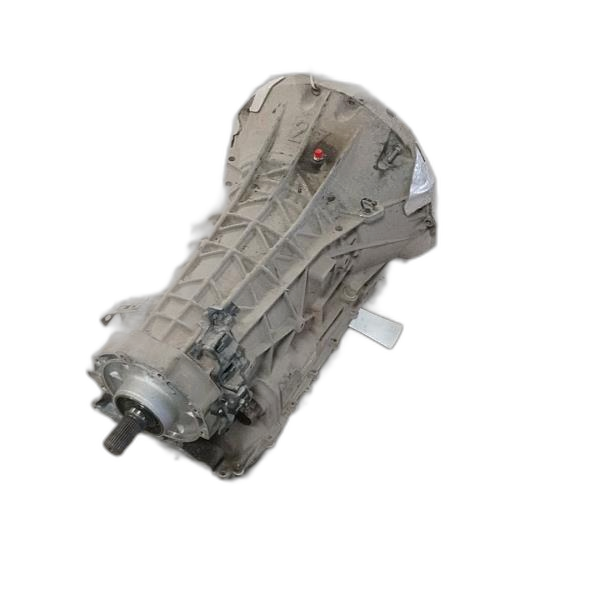
Below are the parts most often responsible for code U1736, ranked by how frequently each one is the actual culprit (per the diagnosis above). Tap any to see what we have for your vehicle.


The information in this article is provided for general reference and educational purposes only. Vehicle specifications, procedures, and part compatibility can vary by production date, trim level, and region. Always consult your vehicle's factory service manual and verify part numbers before purchasing or performing repairs. Safety-critical components such as airbags, seat belts, and braking systems should be installed by a qualified professional.
- 🧭 Diagnostic Flowchart
- 🛍️ Shop This Part
- What Does U1736 Mean?
- Can I Drive With U1736?
- Common Causes
- Symptoms
- Common Fixes & Costs
- Used vs. New Parts: Buying Guide
- What Happens If You Wait — Timeline
- Cost of Not Fixing It
- Diagnosis Steps
- When This Code Triggers (Freeze-Frame Conditions)
- Related Codes
- Climate & Environmental Factors
- How to Talk to a Mechanic About This Code
- Where to Take It: Dealer vs Independent vs Chain
- When to Walk Away From the Repair
- What Scan Tool You Need for This Code
- How to Clear the Code After You Fix It
- Will This Fail Emissions / State Inspection?
- Most Commonly Affected Vehicles
- Manufacturer-Specific Notes
- Real Owner Stories
- 2018 Jeep Renegade with multiple errors after sitting
- 2019 VW Tiguan with DSG error P1736
- 2017 Hyundai Elantra with U1736 and key fob issues
- How to Prevent This Code From Triggering
- Frequently Asked Questions
- My mechanic immediately said I need a new TCM. Could it be something else?
- What does a flashing odometer mean on my Jeep/Fiat?
- My VW has a P1736 code. Do I need a new transmission?
- Can a dead battery cause a U1736 code?
- Can I fix U1736 myself?
- Will clearing the code fix the problem?
- How much does it cost to diagnose a U1736 code?
- Key Takeaways
- 🎟️ Get 5% Off