

OBD-II Code U1746: Lost Communication With Amplifier
What U1746 means, why it triggers, and how to fix it
- Code U1746 indicates a lost communication error on the CAN bus network, most frequently pointing to a dead audio amplifier in Alfa Romeo vehicles or a torque signal malfunction in Jeeps.
- Check your battery voltage first; a drop below 12.4 volts during startup frequently triggers false U-series communication codes across multiple modules.
- For Alfa Romeo Giulia and Stelvio owners, a total loss of sound usually requires replacing the trunk-mounted Harman Kardon amplifier, costing between $950 and $1,400 for parts and programming.
- Jeep Cherokee owners experiencing limp mode or erratic shifting with U1746 must update their Powertrain Control Module (PCM) software before replacing any transmission hardware.
- Never replace an amplifier without first using a multimeter to verify it receives a steady 12 volts and has a CAN bus resistance of exactly 60 ohms.
What Does U1746 Mean?
U1746 is a manufacturer-specific code indicating a computer module stopped communicating on the vehicle's CAN bus network. On Alfa Romeo and Chrysler/Dodge vehicles, it points directly to a communication failure with the audio amplifier module, resulting in a total loss of sound. On specific Jeep models, it flags a torque signal malfunction between the engine and transmission computers.
Technical definition: There is no universal SAE definition for U1746. For Alfa Romeo, U1746-87 or U1746-86 means a control module expected a message from the audio amplifier but received nothing or invalid data. For Jeep, U1746-86 means the Powertrain Control Module (PCM) sent an invalid torque signal to another module on the network.
Can I Drive With U1746?
Yes, But With Caution. Yes, the vehicle is safe to drive, but you will likely have no audio. However, on Jeep models, this code indicates a 'Delivered Torque Signal Malfunction,' causing unpredictable power delivery or stalling. Address Jeep drivability issues immediately to prevent transmission damage.
Common Causes
- Faulty Audio Amplifier Module (Very Common) — The Harman Kardon amplifier in Alfa Romeo Giulia and Stelvio models is highly susceptible to trunk moisture. Water intrusion corrodes the internal electronics, permanently killing the module and severing its network connection.
- Low or Unstable Battery Voltage (Common) — A weak battery causes severe voltage drops during engine cranking. Modules require stable voltage; drops below 12.4V force them to temporarily shut down and trigger U1746 communication errors.
- Outdated Powertrain Control Module (PCM) Software (Common) — On Jeep Cherokee models, outdated PCM software generates a false torque signal error. A dealer software reflash permanently resolves this communication mismatch.
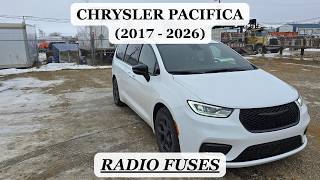
- Damaged Wiring or Loose Connectors (Common) — Corroded wires or loose connectors physically break the CAN bus communication path. A loose connection at the rear power distribution block frequently causes this in Chrysler Pacificas. 🎬 Watch: How to find radio and amplifier fuses in Chrysler vans.
- Faulty Speaker or Subwoofer (Less Common) — A shorted speaker forces the amplifier into a protective shutdown mode to prevent electrical fires. This shutdown stops network communication and logs the U1746 code.
- Blown Power Fuses (Less Common) — A blown power fuse instantly disables the amplifier. Without power, the module cannot broadcast its status on the CAN bus network.
Symptoms
- Complete Loss of Audio — Total lack of sound from all audio sources (radio, Bluetooth, navigation). The infotainment screen remains functional but completely silent.
- Reduced Engine Power (Limp Mode) — Jeep models experience reduced power, erratic shifting, or get stuck in one gear due to torque signal malfunctions.
- Popping or Crackling Sound — Failing amplifiers produce loud pops or static when the vehicle turns on or off, signaling imminent capacitor failure.
- Infotainment Error Messages — The central screen displays 'Sound System Unavailable', 'Audio Unavailable', or freezes entirely.
Diagnostic Flowchart
Tap your situation to follow the diagnostic path that matches what you're seeing on this code.
Common Fixes & Costs
- Replace the Audio Amplifier — Parts: $800-$1100, Labor: $150-$300, ~1.5 hr book time (Intermediate)
- Update/Reflash PCM Software — Parts: $0, Labor: $150-$250, ~1.0 hr book time (Professional)
- Replace the Vehicle Battery — Parts: $200-$300, Labor: $50-$100, ~0.5 hr book time (DIY)
- Repair Damaged Wiring or Connectors — Parts: $10-$50, Labor: $200-$600, ~3.0 hr book time (Professional)
- Replace a Blown Fuse — Parts: $1-$5, Labor: $0-$50, ~0.1 hr book time (DIY)
Used vs. New Parts: Buying Guide
When a used part is worth it: A used amplifier makes sense for a tight budget, but carries significant risk of repeat failure on Alfa Romeo models.
Donor-vehicle mileage cap: roughly under 80000 miles for the part to have meaningful remaining life.
Donor quality checklist:
- Visually inspect for signs of physical damage, water intrusion, or burnt smells.
- Match the part number exactly. Superseded numbers will not work without special programming.
- Buy from a reputable seller offering a 30-day return policy.
Decision logic:
- If The part is for an Alfa Romeo with the known moisture-related failure → Favor a new part. A used one will likely fail soon for the exact same reason.
- If The vehicle is a 2018+ Stellantis model → Factor in the $150 cost of a shop visit for a proxy alignment, even for a used part.
Warranty tradeoff: Used parts have no warranty. New OEM parts carry a 1-year warranty.
Worst-case if a used part fails: $300-$600 if a used amplifier fails after installation, representing repeat labor costs.
What Happens If You Wait — Timeline
- 0-1 month: Intermittent audio cut-outs, popping sounds, or a Check Engine Light with no drivability symptoms. (MPG impact: 0%% · Added cost: $0)
- 1-3 months: Permanent loss of audio. Jeep models begin experiencing limp mode or rough shifting during acceleration. (MPG impact: 0-5%% · Added cost: $0-$50)
- 3-6 months: An internally shorted amplifier creates a parasitic draw, draining the battery while the vehicle is parked. (MPG impact: 5-10%% · Added cost: $250-$400)
- 6+ months: Ignoring a persistent Jeep torque signal issue causes severe mechanical damage to the transmission. (MPG impact: 10-20%% · Added cost: $1500-$4000)
Cost of Not Fixing It
- Immediate: No audio from the vehicle's sound system. Infotainment screen shows errors. (Added cost: 0)
- 1-6 months: An internally shorted amplifier creates a parasitic draw, draining the battery while parked. (Added cost: $250-$400)
- Ongoing (Jeep-Specific): Ignoring a torque signal malfunction leads to severe drivability problems and mechanical transmission damage. (Added cost: $1500-$4000)
Diagnosis Steps
- Check Battery Voltage and Fuses
Test the battery for at least 12.4 volts with the engine off and 13.5-14.5 volts when running. Inspect the audio system fuses located in the owner's manual to rule out a simple power loss.
Tools: Multimeter, Fuse Puller (Beginner) - Perform a Hard Reset
Disconnect the negative battery terminal for 30 minutes to drain residual power and force all modules to reboot. Reconnect and test the audio system.
Tools: 10mm Wrench (Beginner) - Visually Inspect the Amplifier
Locate the amplifier in the trunk or rear cargo area. Check for water intrusion, corroded connector pins, or damaged wires. Unplug the connectors and inspect for bent pins.
Tools: Flashlight, Trim Removal Tools (Intermediate) - Check Power and Ground at the Amplifier
Use a multimeter to verify a steady 12-volt supply at the amplifier's main power wire with the ignition on. Test the ground wire for less than 1 ohm of resistance to the vehicle chassis.
Tools: Multimeter, Wiring Diagram (Intermediate) - Check CAN Bus Network Resistance
With the battery disconnected, measure resistance between the CAN High and CAN Low wires at the amplifier connector. A healthy network reads exactly 60 ohms. 120 ohms indicates a broken wire; 0 ohms indicates a short.
Tools: Multimeter, Wiring Diagram (Advanced) - Check CAN Bus Voltages
With the ignition on, measure the CAN bus wires. CAN High should read 2.6-2.7 volts and CAN Low should read 2.3-2.4 volts. Idle lines sit at 2.5V.
Tools: Multimeter (Advanced) - Scan All Vehicle Modules
Use a full-system OBD-II scanner. If multiple modules report U-codes, suspect a central network issue, faulty gateway module, or failing battery rather than a bad amplifier.
Tools: Advanced OBD-II Scan Tool (Advanced) - Bypass the Security Gateway Module
On 2018+ Stellantis vehicles, use a '12+8 adapter' cable to bypass the Security Gateway Module (SGW) for direct diagnostic access and module programming.
Tools: Advanced Scan Tool, 12+8 SGW Bypass Cable (Professional)
When This Code Triggers (Freeze-Frame Conditions)
- System Voltage: 11.5-12.5V (During engine crank)
- Module Status: No Communication (Sets immediately at startup when a module fails to wake up on the CAN bus.)
Related Codes
- U0184 — Lost Communication With Radio. If the radio display is dead, U0184 is the source. If the display works but there is no sound, U1746 (amplifier) is the culprit.
- U1424 — Implausible Engine Torque Signal Received. Closely related to the Jeep definition of U1746. Both require a PCM software update.
- B2204 — ECU Mismatch. Appears alongside U1746 when an amplifier is replaced but not proxy-aligned to the vehicle network.
Climate & Environmental Factors
- High Humidity / Water Intrusion: Primary trigger for Alfa Romeo models. Trunk water leaks pool on the amplifier's circuit board, causing rapid corrosion and permanent electronic failure.
- Cold Weather: Extreme cold weakens the battery, causing severe voltage drops during startup that trigger false module communication glitches.
How to Talk to a Mechanic About This Code
Say this: "I have a U1746 code and a total loss of audio. Please verify power, ground, and CAN bus communication at the amplifier module before recommending a replacement."
Prevents a shop from immediately selling you an expensive amplifier without performing basic electrical checks.
Avoid saying:
- 'My radio isn't working.'
- 'Just replace the amplifier.'
- 'Fix whatever is wrong with the sound system.'
Questions to ask before authorizing the repair:
- Did you find proper 12V power and a good ground at the amplifier connector?
- What were the CAN bus resistance readings at the module?
- Does the new amplifier require a proxy alignment?
Where to Take It: Dealer vs Independent vs Chain
- Dealer:
Recommended for Jeep software issues. For out-of-warranty Alfa Romeos, an independent specialist is better.
Best for: Vehicles under warranty., Jeep models requiring PCM software updates.
Downsides: Higher labor rates., Defaults to replacing entire modules rather than repairing wiring. (Typical cost: +50% vs. baseline) - Independent Shop:
Best fit for U1746 audio faults, especially shops specializing in European vehicles.
Best for: Out-of-warranty Alfa Romeo audio faults., Diagnosing and repairing wiring issues.
Downsides: May lack access to the latest Jeep PCM software updates. (Typical cost: +0% vs. baseline) - Chain Shop:
AVOID. U1746 requires electronic diagnostic expertise not found at chain shops.
Best for: Simple maintenance like oil changes.
Downsides: Lacks specialized tools (MultiECUScan) for CAN bus diagnosis or proxy alignments. (Typical cost: -10% vs. baseline)
When to Walk Away From the Repair
If the estimated repair cost exceeds 40-50% of the car's private-party value, consider your options.
- Car worth $18000, fix is $1200: Fix it. Well below the threshold and restores a key feature.
- Car worth $5000, fix is $1500: Borderline. For an audio fault, sell as-is. For a Jeep drivability issue, repair is necessary for safety.
- Car worth $3000, fix is $1800: Walk away. The repair cost is over 50% of the car's value.
What Scan Tool You Need for This Code
Minimum: A tool that reads manufacturer-specific codes from ALL vehicle modules, not just the engine.
A $20 scanner only checks the engine computer and won't see codes from the body control module where U1746 originates.
Budget: BlueDriver Pro (~$100) — Reads and clears enhanced codes from systems like the radio and amplifier.
Mid-range: Foxwell NT510 Elite (~$180) — Performs full system scans and reads live data from the CAN bus.
Professional: Autel MaxiCOM MK808BT (~$550) — Bypasses the Secure Gateway Module (SGW) and performs proxy alignments after replacing the amplifier.
Rent vs buy: Buy. Parts store loaner tools are basic engine readers. Alfa Romeo owners should purchase MultiECUScan software ($50) plus cables.
How to Clear the Code After You Fix It
- Reconnect the battery if disconnected.
- Use an OBD-II scan tool to erase U1746 and related fault codes.
- Perform a complete drive cycle to reset vehicle readiness monitors.
Drive cycle (~30 minutes): Cold start and idle for 5 minutes. Drive with steady throttle between 40-60 mph for 8 minutes. Stop and idle for 3 minutes. Drive above 20 mph for 2 minutes. Turn off and sit for 10 minutes.
Readiness monitors affected: Catalyst monitor, O2 sensor monitor, EVAP monitor
Before emissions retest: drive at least 50 miles to fully set monitors.
Watch out for:
- Clearing the code resets all emissions monitors to 'Not Ready,' causing an automatic emissions test failure until a drive cycle is completed.
- The code returns immediately if the root cause (bad amplifier, broken wire) is not fixed.
Will This Fail Emissions / State Inspection?
Yes — this code typically fails an OBD-II emissions inspection.
- California: An illuminated Check Engine Light results in an automatic smog check failure. Monitors must be set to 'Ready'.
- New York: An active Check Engine Light is an automatic failure. A complete drive cycle must be performed after clearing codes.
- Texas: In testing counties, an illuminated Check Engine Light or too many 'Not Ready' monitors causes an automatic failure.
Most Commonly Affected Vehicles
- Alfa Romeo Giulia (2017-2024) — The Harman Kardon amplifier in the trunk frequently fails from moisture damage, causing a total loss of sound.
- Alfa Romeo Stelvio (2017-2024) — Shares the same vulnerable audio system architecture and failure-prone amplifier as the Giulia.
- Jeep Cherokee (KL) (2014-2023) — U1746 means 'Delivered Torque Signal Malfunction.' Caused by outdated PCM software leading to severe drivability issues.
- Jeep Grand Cherokee (2011-2021) — Logs U1746 for amplifier communication loss, or U1424 for implausible torque signals requiring software updates.
- Chrysler Pacifica (2017-2024) — Uses this code for amplifier communication faults. Often traced back to loose power connections at the rear distribution block.
- Dodge Durango (2011-2024) — Logs U1746 for a loss of communication with the audio amplifier located in the rear cargo area.
Manufacturer-Specific Notes
- Alfa Romeo: Points exclusively to a water-damaged Harman Kardon amplifier. Replacement requires a 'proxy alignment' procedure with MultiECUScan to function.
- Jeep / Chrysler / Dodge: Inconsistent meaning. Refers to the audio amplifier on Pacificas and Durangos, but flags a critical PCM torque signal malfunction on Cherokees.
- Hyundai: An error code '46' on the climate control display means empty A/C refrigerant. Owners frequently confuse this with the OBD-II code U1746.
Real Owner Stories
2018 Alfa Romeo Stelvio - No Sound, Easy Fix
Owner experienced a complete loss of audio. The infotainment screen worked, but there was no sound from any source.
What they tried:
- Checked all related fuses.
- Performed a system reset by disconnecting the battery.
Outcome: A workshop diagnosed a shorted subwoofer. The amplifier shut down the entire system protectively. Replacing the subwoofer for $300 restored all audio functions.
Lesson: A total loss of sound doesn't always mean the expensive amplifier failed. A shorted speaker triggers the exact same symptom.
2017 Chrysler Pacifica - Misdiagnosis Story
The radio stopped producing sound. The head unit had power and changed channels, but output zero audio.
What they tried:
- Checked fuses and rear amplifier connections.
- Purchased and installed a brand new factory radio head unit.
Outcome: The new head unit didn't fix it. The owner later found wet padding near the rear amplifier, indicating a water leak shorted the amp. The original head unit was fine.
Lesson: Never replace expensive components without verifying power, ground, and water damage at the amplifier first.
2015 Jeep Cherokee - The 'Torque Signal' Gremlin
Vehicle intermittently entered limp mode, turned off traction control, and stalled at stoplights with a Check Engine Light.
What they tried:
- Took the vehicle to the dealership for a PCM recall.
- Problems worsened after the recall service.
Outcome: The issue traced back to a faulty PCM software flash performed during the recall. Reflashing the PCM correctly resolved all drivability and U1746/U1424 codes.
Lesson: On Jeeps, drivability issues with U1746 are software-based. Insist the shop verifies the PCM flash was successful before replacing transmission parts.
2019 Alfa Romeo Giulia - Replaced Amp, Still No Sound
The original amplifier suffered water damage. The owner installed a used amplifier with the exact same part number, but it didn't work.
What they tried:
- Verified identical part numbers.
- Inspected all wiring and connectors.
Outcome: The replacement amplifier required a 'proxy alignment' procedure to register with the vehicle's security network before it would output sound.
Lesson: Replacing a major electronic module on Stellantis vehicles is not plug-and-play. Budget for a proxy alignment using a tool like MultiECUScan.
How to Prevent This Code From Triggering
- Inspect and Clear Trunk Water Drains (Once per year) — Prevents water from pooling in the trunk and destroying the amplifier on Alfa Romeo Giulia and Stelvio models.
- Maintain a Healthy Battery (Ongoing) — Ensures stable voltage during startup, preventing false U-series communication codes across all vehicle modules.
- Apply Dielectric Grease to Connectors (During any service involving the amplifier) — Seals the connector pins against moisture intrusion, preventing the corrosion that commonly kills these modules.
Frequently Asked Questions
Can I fix the U1746 code myself?
Simple fixes like checking fuses or performing a hard reset are DIY-friendly. Replacing the amplifier requires intermediate skills and a professional 'proxy alignment' to program the new module.
What is a common misdiagnosis for U1746?
Replacing the amplifier without verifying power, ground, and network integrity first. If a new amplifier doesn't fix the problem, the root cause was a broken wire or blown fuse.
What does CAN bus mean?
CAN bus stands for Controller Area Network. It is the communication system allowing all vehicle computers to share data over a single pair of wires.
Can a weak battery really cause this code?
Yes. If battery voltage drops below 12.4 volts during startup, sensitive electronic modules temporarily shut down and store communication codes.
Is it safe to drive with a U1746 code?
For an audio fault, the vehicle is safe to drive. If the code appears on a Jeep and relates to a torque signal malfunction, address it immediately to prevent stalling.
My audio is completely dead. Does that mean the amplifier is bad for sure?
A total loss of sound is the most common symptom of a failed amplifier, but it is not definitive. A blown fuse, a bad ground wire, or a shorted subwoofer causes the exact same symptom.
What is a proxy alignment?
A diagnostic procedure required on Stellantis vehicles to register new electronic modules to the network. It prevents network conflicts and clears flashing odometer issues using tools like MultiECUScan.
Key Takeaways
- Code U1746 indicates a lost communication error on the CAN bus network, most frequently pointing to a dead audio amplifier in Alfa Romeo vehicles or a torque signal malfunction in Jeeps.
- Check your battery voltage first; a drop below 12.4 volts during startup frequently triggers false U-series communication codes across multiple modules.
- For Alfa Romeo Giulia and Stelvio owners, a total loss of sound usually requires replacing the trunk-mounted Harman Kardon amplifier, costing between $950 and $1,400 for parts and programming.
- Jeep Cherokee owners experiencing limp mode or erratic shifting with U1746 must update their Powertrain Control Module (PCM) software before replacing any transmission hardware.
- Never replace an amplifier without first using a multimeter to verify it receives a steady 12 volts and has a CAN bus resistance of exactly 60 ohms.
Helpful Videos
![How To Test CAN BUS With A Multimeter [CAN Bus Resistance Check] Mechanic Mindset](https://img.youtube.com/vi/JPE42HSJxAk/mqdefault.jpg)
Shop the Parts Behind U1746
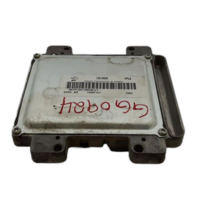
Below are the parts most often responsible for code U1746, ranked by how frequently each one is the actual culprit (per the diagnosis above). Tap any to see what we have for your vehicle.




The information in this article is provided for general reference and educational purposes only. Vehicle specifications, procedures, and part compatibility can vary by production date, trim level, and region. Always consult your vehicle's factory service manual and verify part numbers before purchasing or performing repairs. Safety-critical components such as airbags, seat belts, and braking systems should be installed by a qualified professional.
- 🧭 Diagnostic Flowchart
- 🎬 Helpful Videos
- 🛍️ Shop This Part
- What Does U1746 Mean?
- Can I Drive With U1746?
- Common Causes
- Symptoms
- Common Fixes & Costs
- Used vs. New Parts: Buying Guide
- What Happens If You Wait — Timeline
- Cost of Not Fixing It
- Diagnosis Steps
- When This Code Triggers (Freeze-Frame Conditions)
- Related Codes
- Climate & Environmental Factors
- How to Talk to a Mechanic About This Code
- Where to Take It: Dealer vs Independent vs Chain
- When to Walk Away From the Repair
- What Scan Tool You Need for This Code
- How to Clear the Code After You Fix It
- Will This Fail Emissions / State Inspection?
- Most Commonly Affected Vehicles
- Manufacturer-Specific Notes
- Real Owner Stories
- 2018 Alfa Romeo Stelvio - No Sound, Easy Fix
- 2017 Chrysler Pacifica - Misdiagnosis Story
- 2015 Jeep Cherokee - The 'Torque Signal' Gremlin
- 2019 Alfa Romeo Giulia - Replaced Amp, Still No Sound
- How to Prevent This Code From Triggering
- Frequently Asked Questions
- Can I fix the U1746 code myself?
- What is a common misdiagnosis for U1746?
- What does CAN bus mean?
- Can a weak battery really cause this code?
- Is it safe to drive with a U1746 code?
- My audio is completely dead. Does that mean the amplifier is bad for sure?
- What is a proxy alignment?
- Key Takeaways
- 🎟️ Get 5% Off