

OBD-II Code U1765: Lost Communication With a Control Module
The Ultimate Guide to What U1765 Means, Why It Triggers, and How to Fix It
- Code U1765 triggers when a specific control module fails to respond to a network roll-call within a predetermined timeframe.
- Test your battery first; a voltage drop below 12.4V frequently causes sensitive modules to drop offline and trigger U1765.
- On 2007-2015 Chrysler, Dodge, and Jeep vehicles, a U1765 code strongly indicates a failing Totally Integrated Power Module (TIPM) requiring a $400-$1200 replacement or repair.
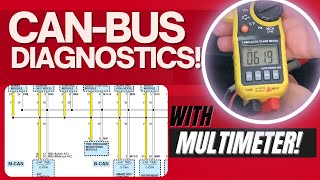
- Verify CAN bus health before replacing modules by measuring resistance at the OBD-II port; a healthy network must read exactly 60 ohms.
- Ignore stored U1765-87 codes on Jeep Renegades if no symptoms exist, as manufacturer TSB 10224931 confirms this is a normal ignition cycle occurrence.
What Does U1765 Mean?
U1765 is a manufacturer-specific network communication code indicating a critical control module has stopped communicating with the rest of the vehicle. Your car's modules link together via the Controller Area Network (CAN) bus. When the primary control module sends a roll-call and a specific module fails to answer within a set timeframe, the system logs code U1765, flagging that module as offline.
Technical definition: Lost Communication With [Specific Module Name] - This code sets when a control module on the CAN bus fails to receive an expected message from another specific module within a predetermined time. The specific module is manufacturer-dependent (e.g., Radio Frequency Hub Module, Steering Control Module, Body Control Module). The code often includes a secondary suffix (e.g., U1765-87 for 'Missing Message') specifying the fault type.
Can I Drive With U1765?
Yes, but with significant caution You can drive, but doing so risks sudden loss of critical safety systems. Depending on the offline module, you risk instant loss of power steering, ABS, or exterior lighting. Diagnose the issue immediately to avoid a dangerous driving situation.
Common Causes
- Weak or dying battery (Very Common) — Low system voltage is the primary cause of electronic module misbehavior. A battery voltage below 12.4 volts (engine off) causes modules to drop off the network randomly, setting communication codes before you even notice slow engine cranking.
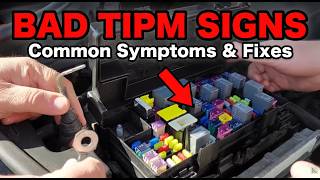
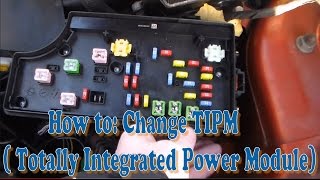
- Failing control module (BCM, TIPM, SCM) (Very Common) — Modules fail internally due to thermal stress, moisture intrusion, or component aging. On Chrysler, Dodge, and Jeep vehicles, a faulty Totally Integrated Power Module (TIPM) is a notoriously frequent cause of network communication codes. 🎬 Watch: How to identify and replace a faulty TIPM
- Wiring harness damage (Common) — The CAN High and CAN Low wires are susceptible to damage. Corrosion at connectors, chafing against the chassis, or rodent damage creates a short or open circuit, bringing down a module or the entire network.
- Blown module fuse (Less Common) — If a module's dedicated fuse blows, it loses power and cannot communicate. This is usually a symptom of a short circuit within the module or its wiring harness.
- Interference from aftermarket accessories (Less Common) — Improperly installed aftermarket alarms, remote starters, or audio equipment introduce electrical noise or create power drains that disrupt CAN bus signals.
- Faulty CAN Gateway Module (Less Common) — The CAN Gateway routes traffic between different network speeds. A gateway failure, common in Volkswagen and Audi models, isolates entire sections of the network.
- Software corruption (Rare) — A software glitch locks up a module. A hard reset (disconnecting the battery) or a dealership software reflash resolves this.
- Faulty ignition switch (Rare) — A failing ignition switch sends incorrect voltage signals or fails to 'wake up' all modules, causing communication errors as some modules stay powered off.
Symptoms
- Multiple warning lights on the dashboard — You will see a cascade of lights for the Check Engine, ABS, Traction Control, and other systems as they all report losing communication with the offline module.
- Loss of module-specific features — If the Steering Control Module goes offline, you lose power steering. If the Body Control Module (BCM) drops, you lose control of lights, wipers, or power windows.
- Engine won't start or won't shut off — If the code relates to the ignition or security module, it prevents the engine from cranking or prevents the engine from turning off even with the key removed.
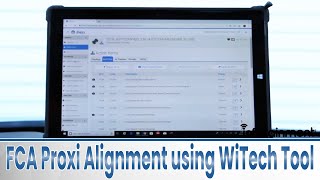
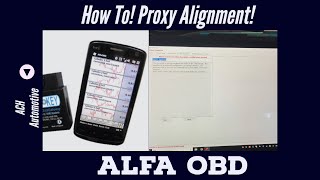
- Flashing Odometer — On Fiat-Chrysler (FCA) vehicles, a flashing odometer indicates a 'proxy alignment' issue, meaning a module on the network is missing, mismatched, or not communicating. 🎬 See how to perform a proxy alignment on FCA vehicles
- Erratic or dead instrument cluster gauges — If the Instrument Panel Cluster (IPC) loses communication, gauges drop to zero, freeze, or sweep erratically while driving.
Diagnostic Flowchart
Tap your situation to follow the diagnostic path that matches what you're seeing on this code.
Common Fixes & Costs
- Replace the vehicle's battery — Parts: $150-$300, Labor: $25-$75, ~0.5 hr book time (DIY)
- Replace or Repair the Totally Integrated Power Module (TIPM) — Parts: $400-$1200, Labor: $150-$250, ~1.5 hr book time (Intermediate)
- Replace the faulty control module (BCM, SCM, RFHM) — Parts: $200-$1000, Labor: $100-$400, ~1.5 hr book time (Professional)
- Repair damaged CAN bus wiring — Parts: $10-$50, Labor: $250-$1200, ~3.5 hr book time (Professional)
- Perform a Proxy Alignment — Parts: $0, Labor: $100-$200, ~1 hr book time (Professional)
Used vs. New Parts: Buying Guide
When a used part is worth it: For older vehicles where a new OEM module is cost-prohibitive. A used module from a reputable recycler is cost-effective for common parts like a BCM.
Donor-vehicle mileage cap: roughly under 100000 miles for the part to have meaningful remaining life.
Donor quality checklist:
- Match the part number EXACTLY. Superseded numbers have different software configurations.
- Ensure the donor vehicle had the exact same options as yours (e.g., fog lights, security system).
- Buy from a seller offering at least a 30-day warranty.
Decision logic:
- If The part requires security programming (e.g., ignition, immobilizer) → Buy new. Used parts are VIN-locked and impossible to reprogram.
- If The vehicle is less than 10 years old and the part is under $500 → Buy new or remanufactured for guaranteed compatibility.
- If The part is a known high-failure item (like a Chrysler TIPM) → Buy a professionally remanufactured unit, as they have original design flaws corrected.
Warranty tradeoff: Used parts offer a 30-90 day functional warranty with no labor coverage. Remanufactured parts offer 1-year to lifetime warranties. OEM parts have a 1-2 year warranty if dealer-installed.
Worst-case if a used part fails: $300-$600 if a used part is dead on arrival, covering repeat labor and diagnostic fees.
What Happens If You Wait — Timeline
- 0-1 month: Intermittent U1765 code, often stored and not active. May be accompanied by a momentary flicker of a warning light. (MPG impact: 0%% · Added cost: $0)
- 1-4 months: Code becomes persistent. A specific feature controlled by the offline module (e.g., power steering) is permanently inoperative. (MPG impact: 0-2%% · Added cost: $50-$150)
- 4-8 months: The faulty module causes a parasitic battery drain because it fails to sleep. The vehicle struggles to start, destroying the battery. (MPG impact: 0%% · Added cost: $200-$550)
- 8+ months: Cascading failure. Voltage issues corrupt other control modules. The vehicle fails to start or stalls while driving. (MPG impact: N/A% · Added cost: $1000-$2500+)
Cost of Not Fixing It
- Immediate: Loss of critical safety systems. If the ABS or power steering module goes offline, you face increased stopping distances or loss of steering assist. (Added cost: Varies (potential for accident))
- 0-3 months: A module failing to sleep creates a parasitic draw, draining the battery overnight and prematurely destroying it. (Added cost: $150-$300 for a new battery plus diagnostic costs.)
- 3+ months: Cascading electronic failures. An unstable network corrupts data and damages other modules, turning a single-module problem into a multi-module diagnostic nightmare. (Added cost: $1000+)
Diagnosis Steps
- Check the Battery and Fuses
Use a multimeter to test the battery; it must read at least 12.4V engine-off and 13.7V-14.7V engine-on. A low reading requires immediate battery or alternator replacement. Next, visually inspect all fuses related to the non-communicating module.
Tools: Multimeter, Owner's Manual (Beginner) - Scan for All Codes in All Modules
Use a bidirectional scanner to read codes from ALL modules (BCM, ABS, IPC). Look for a pattern: if multiple modules report lost communication with the exact same module, you have identified your target.
Tools: Bidirectional OBD-II Scanner (Beginner) - Perform a Hard Reset
Disconnect both battery terminals. Touch the positive and negative terminal leads together for 30 seconds to drain residual power from the modules' capacitors, forcing a complete system reboot.
Tools: Wrench (Beginner) - Visually Inspect Wiring and Connectors
Inspect the wiring harness connected to the suspect module. Look for green corrosion in connectors, rubbed-through wires, or rodent damage. Focus on harnesses under seats, through the firewall, or near the battery.
Tools: Flashlight, Inspection Mirror (Intermediate) - Test the CAN Bus Network Resistance
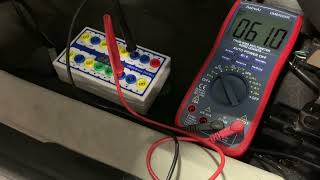
With the battery disconnected, set a multimeter to Ohms and measure resistance between Pin 6 and Pin 14 at the OBD-II port. A healthy network reads exactly 60 ohms. A reading of 120 ohms indicates an open circuit; 0 ohms indicates a short.
Tools: Multimeter, OBD-II Breakout Box (Advanced) - Test CAN Bus Voltage
With the battery reconnected and ignition ON (engine OFF), measure DC Volts between Pin 6 and ground (expect 2.6V-3.5V). Measure Pin 14 to ground (expect 1.5V-2.4V). Voltages of 0V or 5V indicate a hard short to ground or power.
Tools: Multimeter, OBD-II Breakout Box (Advanced) - Isolate the Faulty Module or Wire
If you have a 120-ohm reading or a short, disconnect modules one by one with the battery disconnected. Watch your multimeter. When the reading returns to 60 ohms, you have isolated the faulty module or harness section.
Tools: Multimeter, Vehicle-specific wiring diagram (Advanced) - Test the Module's Power and Ground
Identify the power and ground pins on the suspect module's connector. Back-probe these pins to confirm battery voltage and a solid ground. A voltage drop exceeding 0.2V on power or 0.1V on ground indicates excessive resistance.
Tools: Multimeter, Wiring diagram, Back-probe kit (Advanced) - Live Data Analysis
Access the live data stream for the Gateway Module using a bidirectional scanner. Observe the status of the missing module to see if it registers as 'Offline' or 'Not Responding'.
Tools: Bidirectional OBD-II Scanner (Advanced) - Check for Parasitic Draw
Disconnect the negative battery terminal and connect a multimeter in series (10A DC scale). Wait 45 minutes for modules to sleep. A draw above 50 milliamps indicates a module is staying active and disrupting the network.
Tools: Multimeter with Amps function (Advanced)
When This Code Triggers (Freeze-Frame Conditions)
- Vehicle Speed: 45-65 mph (Steady highway cruise)
- RPM: 1500-2500 (Constant engine speed)
- System Voltage: 13.5-14.5V (Normal charging system operation)
- Time Since Engine Start: > 5 minutes (Vehicle has been running long enough for all modules to initialize and communicate.)
Related Codes
- U0001 — Indicates a general High-Speed CAN Communication Bus failure. U0001 means the entire network is down, whereas U1765 means one specific module is missing.
- U0140 — The generic code for 'Lost Communication With Body Control Module'. If U1765 points to the BCM, U0140 is the standardized equivalent stored by other modules.
- U0121 — The generic code for 'Lost Communication With ABS Module'. Stored by other modules when the ABS module goes offline.
- U0155 — The generic code for 'Lost Communication With Instrument Panel Cluster'. The IPC often acts as a gateway; its failure causes widespread communication issues.
Climate & Environmental Factors
- High Humidity / Coastal Regions: Moisture and salt aggressively accelerate corrosion on wiring connectors and module pins, causing high resistance in the CAN bus wiring.
- Cold Climates / Road Salt: Salt spray corrodes wiring harnesses and ground points. The chemical reaction eats away at copper wires, causing intermittent, temperature-dependent connections.
- Extreme Cold: Cold temperatures severely reduce battery voltage during startup. This low voltage prevents sensitive control modules from booting up, triggering U1765 codes.
How to Talk to a Mechanic About This Code
Say this: "I have a U1765 communication code. I've checked the battery and fuses. I need you to scan all modules to identify which one is offline. Please do not replace any modules until the CAN bus wiring resistance and the module's power and ground have been tested."
This signals you understand network diagnostics. It directs the shop away from the 'parts cannon' and toward methodical testing, preventing the replacement of good parts.
Avoid saying:
- 'My check engine light is on, can you look at it?'
- 'I think my BCM is bad, can you replace it?'
- 'Just fix whatever's wrong.'
Questions to ask before authorizing the repair:
- Did you confirm the module's power and ground connections are good?
- What was the resistance reading on the CAN bus? Was it exactly 60 ohms?
- Can you show me the damaged wire or corroded connector?
- Does the new module require programming, and is that included in the labor quote?
- What is the warranty on this specific repair?
Where to Take It: Dealer vs Independent vs Chain
- Dealer:
Recommended. A dealership is a strong choice for U1765, especially on newer vehicles needing software configuration.
Best for: Vehicles under warranty., Repairs requiring manufacturer-specific software (Proxy Alignment, module flashing)., Complex electrical issues requiring access to factory service bulletins.
Downsides: Highest labor rates., Defaults to replacing large assemblies rather than performing component-level wiring repairs. (Typical cost: +50% vs. baseline) - Independent Shop:
Good fit, with caution. Vet the shop first: ask if they are comfortable with CAN bus diagnostics and module programming.
Best for: Out-of-warranty vehicles with known issues (e.g., TIPM failure)., Shops advertising as 'auto electric specialists' with ASE L1 certifications.
Downsides: General mechanics lack the tools for deep network diagnostics., May lack manufacturer software for programming new modules. (Typical cost: +0% vs. baseline) - Chain Shop:
AVOID. Chain shops are not equipped for network-level electrical troubleshooting. The risk of misdiagnosis is extremely high.
Best for: Simple repairs like a battery replacement after the U1765 code is diagnosed elsewhere.
Downsides: Technicians are not trained for complex electrical diagnostics., Business model encourages quick parts replacement over time-consuming diagnosis. (Typical cost: -10% vs. baseline)
When to Walk Away From the Repair
If estimated repair cost exceeds 40-50% of the car's KBB private-party value, consider trading it in or selling it as-is.
- Car worth $4000, fix is $2000: Borderline — get a 2nd opinion before authorizing
- Car worth $12000, fix is $1800: Fix it — well below threshold
- Car worth $2500, fix is $1500: Walk away — list for sale or scrap
What Scan Tool You Need for This Code
Minimum: A scanner that reads manufacturer-specific codes from ALL vehicle modules (ABS, BCM, SRS), not just the engine computer.
A basic $20 engine code reader cannot tell you which module is offline or see faults in other modules. You need an all-system scanner to view network health.
Budget: BlueDriver Pro, Topdon TopScan Lite (~$70-100) — These smartphone scanners perform all-system scans to identify the offline module and offer limited live data.
Mid-range: Autel MaxiCOM MK808 / MX900, Foxwell NT809 (~$250-400) — Offers full system diagnostics, live data, and bidirectional controls. Many offer the 'Proxy Alignment' function needed for FCA vehicles.
Professional: Autel MaxiSys MS906, Launch X431 series (~$500-1200+) — Adds advanced functions like ECU coding and programming, necessary for replacing and configuring control modules.
Rent vs buy: Free rental scanners at auto parts stores are basic engine readers and will NOT diagnose U1765. Pay for a professional diagnosis unless you plan to do regular complex repairs.
How to Clear the Code After You Fix It
- Reconnect battery if disconnected for repair.
- Use a bidirectional OBD-II scan tool to erase the U1765 code from all modules.
- Perform a complete drive cycle to allow readiness monitors to run.
Drive cycle (~30 minutes): Cold start (sit for 8+ hours). Idle for 3 minutes with electrical loads on. Drive for 15 minutes in mixed city conditions. Drive for 10 minutes at a steady 55-60 mph. Allow the vehicle to cool down completely.
Readiness monitors affected: Comprehensive Component Monitor, Misfire Monitor
Before emissions retest: drive at least 100 miles to fully set monitors.
Watch out for:
- Clearing the code without fixing the underlying issue results in the code returning immediately.
- Disconnecting the battery resets all readiness monitors to 'Not Ready', guaranteeing an emissions test failure until a full drive cycle is completed.
- Failing to perform a true cold start prevents certain monitors from running.
Will This Fail Emissions / State Inspection?
Yes — this code typically fails an OBD-II emissions inspection.
- California: An illuminated Check Engine Light is an automatic failure. A full drive cycle must be completed to set readiness monitors before a re-test.
- New York: An active U1765 code with the Check Engine Light on causes an automatic failure during the OBD-II check.
- Texas: An illuminated Check Engine Light results in an automatic failure. Clearing the code right before the test leads to failure due to 'Not Ready' monitors.
Most Commonly Affected Vehicles
- Jeep Renegade (2015-2018) — Prone to communication issues with the Radio Frequency Hub Module (RFHM). A stored U1765-87 code is often a normal occurrence requiring no repair per manufacturer TSBs.
- Jeep Grand Cherokee (2011-2017) — Notorious for widespread TIPM failures causing communication codes. Symptoms often begin with the fuel pump relay failing to start the engine.
- Dodge Grand Caravan / Durango (2008-2020) — Shares the problematic TIPM architecture with Jeep, leading to frequent network drops and U-codes.
- Alfa Romeo Giulietta / Stelvio (2016-2020) — Frequently logs U1765-86 or U1765-87 related to the RFHM. Often caused by a corroded main ground strap or weak battery.
- Ford Focus (2012-2018) — Suffers from CAN bus wiring chafing under the passenger seat, causing multiple communication codes.
- Chevrolet Cruze, Malibu, Equinox (2007-2017) — Prone to intermittent communication loss with the BCM on the high-speed CAN bus.
- Volkswagen Jetta, Golf, Passat (2007-2015) — Experiences CAN Gateway failures, especially when retrofitting aftermarket radios, leading to battery drain and communication faults.
Manufacturer-Specific Notes
- Chrysler / Jeep / Dodge (Stellantis): On the Jeep Renegade, a stored U1765-87 code appears after a normal ignition cycle. Per NHTSA ID 10224931, no repair is necessary if this code is stored without active symptoms.
- Chrysler / Jeep / Dodge (Stellantis): 2011-2013 models suffer from internal TIPM fuel pump relay failures. The most cost-effective fix is installing an external relay bypass kit rather than replacing the entire TIPM.
- Ford: A momentary short (like a blown headlight bulb) causes the BCM to shut down a circuit and log a communication code, requiring a scan tool reset even after replacing the bulb.
- Volkswagen / Audi: Installing aftermarket radios without coding them to the CAN Gateway keeps the network awake, draining the battery and triggering communication codes.
Real Owner Stories
2015 Jeep Renegade - No Start & Random Errors
Vehicle would not start and displayed a cluster of random error messages on the dashboard, seemingly related to wet weather.
What they tried:
- Dealer replaced the main computer, but the problem returned.
- Dealer replaced a power control module, which also failed to fix it.
- Traced the issue to a faulty battery providing only 10.2 volts.
Outcome: Replacing the weak battery resolved the no-start condition and cleared all communication error codes.
Lesson: A weak battery causes a cascade of seemingly unrelated electronic faults. Always test battery voltage before replacing expensive control modules.
2011 Dodge Durango - No Start, Clicking Relay
The vehicle cranked but would not start. The owner heard a relay clicking, but the fuel pump did not activate.
What they tried:
- Verified no fuel pressure using starting fluid.
- Jumped the fuel pump fuse directly, confirming the pump worked but lacked power from the TIPM.
Outcome: The internal fuel pump relay on the TIPM failed. The owner installed an external fuel pump relay bypass kit, a common and cheap repair.
Lesson: On 2007-2015 Chrysler/Dodge/Jeep vehicles, a crank-no-start is frequently a failed fuel pump relay inside the TIPM. An external relay kit avoids a full TIPM replacement.
2018 Alfa Romeo Stelvio - Limp Mode in Extreme Cold
In -16°F weather, the vehicle started but displayed warnings for the engine, transmission, and hill hold systems, entering limp mode.
What they tried:
- Letting the vehicle warm up did not resolve the issue.
- Researched owner forums pointing to battery failure in extreme cold.
Outcome: Replacing the OEM battery with a new AGM battery resolved the warning lights and restored normal operation.
Lesson: Modern vehicles are extremely sensitive to battery voltage. Extreme cold pushes a borderline battery over the edge, mimicking major component failure.
2018 Alfa Romeo Stelvio (Salvage) - Parasitic Drain
A salvage vehicle experienced random low-beam headlights turning on while locked, draining the battery. Communication faults kept returning.
What they tried:
- Checked all related fuses.
- Inspected the main ground strap, a known failure point on this model.
Outcome: The problem stemmed from a corroded main ground strap and a faulty BCM damaged in the prior accident.
Lesson: On salvage vehicles, recurring electrical faults are often due to harness damage or poor grounds. Always inspect main ground straps first.
How to Prevent This Code From Triggering
- Apply dielectric grease to major electrical connectors (Anytime a connector is unplugged for service) — Dielectric grease seals out moisture and oxygen, preventing corrosion on connector pins in humid or salt-prone climates.
- Clean and inspect battery terminals and main ground connections (Every oil change or annually) — Corrosion creates resistance, leading to low voltage conditions that cause modules to malfunction. Clean connections ensure a stable voltage supply.
- Ensure all drains (sunroof, cowl) are clear (Annually, especially before rainy seasons) — Clogged drains cause water to overflow onto sensitive interior electronics like the BCM, causing short circuits.
- Use a battery tender for stored vehicles (For any storage longer than 2 weeks) — A tender prevents the battery from dropping to a voltage low enough to cause electronic glitches or sulfation damage.
- Avoid cheap aftermarket electronics (Ongoing) — Poorly designed accessories introduce electrical noise onto the CAN bus, disrupting communication. Never splice into network wires.
Frequently Asked Questions
Can a bad battery really cause a U1765 code?
Yes. Control modules require stable voltage to operate. A weak battery causes them to drop offline, triggering U1765 before you even notice slow engine cranking. Always test the battery first.
Is U1765 expensive to fix?
Costs range from a $200 battery to a $1500 module replacement. Paying a professional $150-$300 for accurate diagnosis prevents wasting money on unnecessary parts.
My mechanic says the code is stored but there are no symptoms. What should I do?
Clear the code and monitor the vehicle. Jeep TSBs confirm a stored U1765-87 code often appears during normal ignition cycles. Do not replace parts for an asymptomatic, stored code.
What's the difference between a U1765 and P1765 code?
'U' codes indicate network communication failures between computers. 'P' codes indicate powertrain faults with the engine or transmission. They require completely different diagnostic approaches.
Can I just clear the code and keep driving?
You can clear it, but a hard fault will return immediately. If the code returns or accompanies symptoms like lost power steering, stop driving and diagnose the root cause.
What is a TIPM and why does it fail?
The Totally Integrated Power Module (TIPM) is the main fuse box and computer in many Chrysler, Dodge, and Jeep vehicles. Internal relay failures cause widespread electrical and communication issues.
My mechanic wants to replace the whole wiring harness. Is that necessary?
Almost never. Replacing an entire harness costs thousands in labor. A skilled technician pinpoints the exact short or break and performs a spot repair for a fraction of the cost.
What does a flashing odometer mean on my Jeep/Dodge?
A flashing odometer on FCA vehicles indicates a proxy configuration mismatch. It means the Body Control Module does not recognize a module on the network, requiring a software Proxy Alignment to fix.
Key Takeaways
- Code U1765 triggers when a specific control module fails to respond to a network roll-call within a predetermined timeframe.
- Test your battery first; a voltage drop below 12.4V frequently causes sensitive modules to drop offline and trigger U1765.
- On 2007-2015 Chrysler, Dodge, and Jeep vehicles, a U1765 code strongly indicates a failing Totally Integrated Power Module (TIPM) requiring a $400-$1200 replacement or repair.
- Verify CAN bus health before replacing modules by measuring resistance at the OBD-II port; a healthy network must read exactly 60 ohms.
- Ignore stored U1765-87 codes on Jeep Renegades if no symptoms exist, as manufacturer TSB 10224931 confirms this is a normal ignition cycle occurrence.
Helpful Videos
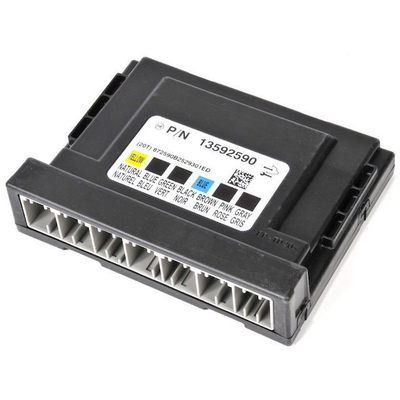
Shop the Parts Behind U1765
Below are the parts most often responsible for code U1765, ranked by how frequently each one is the actual culprit (per the diagnosis above). Tap any to see what we have for your vehicle.



The information in this article is provided for general reference and educational purposes only. Vehicle specifications, procedures, and part compatibility can vary by production date, trim level, and region. Always consult your vehicle's factory service manual and verify part numbers before purchasing or performing repairs. Safety-critical components such as airbags, seat belts, and braking systems should be installed by a qualified professional.
- 🧭 Diagnostic Flowchart
- 🎬 Helpful Videos
- 🛍️ Shop This Part
- What Does U1765 Mean?
- Can I Drive With U1765?
- Common Causes
- Symptoms
- Common Fixes & Costs
- Used vs. New Parts: Buying Guide
- What Happens If You Wait — Timeline
- Cost of Not Fixing It
- Diagnosis Steps
- When This Code Triggers (Freeze-Frame Conditions)
- Related Codes
- Climate & Environmental Factors
- How to Talk to a Mechanic About This Code
- Where to Take It: Dealer vs Independent vs Chain
- When to Walk Away From the Repair
- What Scan Tool You Need for This Code
- How to Clear the Code After You Fix It
- Will This Fail Emissions / State Inspection?
- Most Commonly Affected Vehicles
- Manufacturer-Specific Notes
- Real Owner Stories
- 2015 Jeep Renegade - No Start & Random Errors
- 2011 Dodge Durango - No Start, Clicking Relay
- 2018 Alfa Romeo Stelvio - Limp Mode in Extreme Cold
- 2018 Alfa Romeo Stelvio (Salvage) - Parasitic Drain
- How to Prevent This Code From Triggering
- Frequently Asked Questions
- Can a bad battery really cause a U1765 code?
- Is U1765 expensive to fix?
- My mechanic says the code is stored but there are no symptoms. What should I do?
- What's the difference between a U1765 and P1765 code?
- Can I just clear the code and keep driving?
- What is a TIPM and why does it fail?
- My mechanic wants to replace the whole wiring harness. Is that necessary?
- What does a flashing odometer mean on my Jeep/Dodge?
- Key Takeaways
- 🎟️ Get 5% Off