

U1814 on 2017-2022 Chevrolet Trax: Power Steering Failure Causes and Fixes
Code U1814 on a 2017-2022 Chevy Trax typically indicates a serious communication failure involving the power steering system. It's often caused by an internal failure of the Body Control Module (BCM) which then damages the Power Steering Control Module (PSCM), blowing a fuse and disabling power steering. This is a complex, high-cost repair requiring the replacement and programming of both modules, as documented in GM TSB 20-NA-206.
- U1814 on a Chevy Trax is a critical code that almost always comes with a loss of power steering, making the vehicle unsafe to drive.
- The most likely cause is a cascading failure starting with the Body Control Module (BCM) and damaging the Power Steering Control Module (PSCM), as documented in a GM TSB.
- Check for a blown fuse F6DA and inspect the engine wiring harness for chafing near the G100 ground stud before condemning expensive modules.
- This is not a DIY-friendly repair. Replacing the BCM and PSCM requires special tools for programming and calibration.
- The fix often involves replacing both the BCM and the entire steering column assembly.
What's Unique About the 2017-2022 Chevrolet TRAX

The Chevrolet Trax and its platform-mate, the Buick Encore, from this period have a known issue documented in General Motors Technical Service Bulletin (TSB) 20-NA-206. An internal failure in the Body Control Module (BCM) can short circuit 5985 to ground, which in turn "induces failure into Power Steering Control Module" (PSCM). This cascade failure blows the F6DA fuse, setting codes U1814 and the related U0100, which often cannot be cleared with a scan tool. This is different from a simple wiring problem, as it requires the mandatory replacement of both the BCM and the entire steering column assembly (which contains the PSCM) to achieve a permanent fix.
Diagnostic Flowchart

Tap your situation to follow the diagnostic path that matches what you're seeing on this vehicle.
Symptoms You May Notice

- "Service Power Steering" message on the instrument cluster.
- Complete loss of power steering assist, making the wheel very hard to turn.
- Check Engine Light is illuminated.
- Blown fuse, specifically F6DA in the under-hood fuse block.
- Inability to clear codes U1814 or U0100 with a scan tool, sometimes showing a 'Rejected by Control Module' error.
- Vehicle may not start.
- Erratic speedometer readings or other instrument panel gauge issues.
- Replacing only the Power Steering Control Module/Steering Column. If the root cause is the BCM, the new PSCM will be damaged as well, repeating the failure.
- Repeatedly replacing fuse F6DA without diagnosing the underlying short circuit. This will not solve the problem and simply wastes fuses.
- Replacing only the BCM. The TSB explicitly states that the internal short in the BCM induces a now-permanent, unrecoverable fault in the PSCM, requiring replacement of both.
Most Likely Causes

- Internal Failure of Body Control Module (BCM) 🔴 High Probability → Shop Body Control Module As documented in TSB 20-NA-206, the BCM can internally short to ground on the communication circuit (5985), which then causes catastrophic failure in the PSCM. This is the most common and well-documented cause for this specific set of symptoms.
How to confirm: Diagnosis is definitive. If fuse F6DA is blown and codes U1814/U0100 are present and won't clear (even showing a 'Rejected by Control Module' message), a BCM failure is the primary suspect per the TSB. A professional will confirm by testing the specific circuits at the BCM connector before proceeding with the costly repair.
Typical fix: Replace the Body Control Module AND the Power Steering Control Module/Steering Column simultaneously. Both parts must be programmed to the vehicle using GM-specific software.
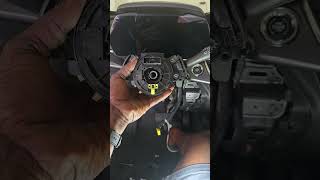
Est. part cost: $250-$450 - Internal Failure of Power Steering Control Module (PSCM) 🔴 High Probability → Shop Power Steering Control Module The PSCM is damaged as a direct result of the BCM failure; it is a secondary failure. The entire steering column, which includes the non-serviceable PSCM, is replaced as a single assembly. 🎬 Watch: How to replace a car steering column assembly.
How to confirm: This is diagnosed in conjunction with the BCM. If codes are latched in the PSCM and won't clear, and power steering is lost, the module has failed as a consequence of the BCM short. The TSB notes that once the U0100 code sets in the PSCM due to this condition, it is unrecoverable and will not clear.
Typical fix: Replace the steering column assembly (which contains the PSCM) along with the BCM. The new module requires programming and steering angle sensor calibration.
Est. part cost: $400-$700 - Chafed or Shorted Engine Wiring Harness 🟡 Medium Probability TSB 18-NA-114 notes that the engine harness can chafe against the G100 ground stud or near the X112 connector, causing a short to ground on various circuits, including the one that triggers U1814. This is a known weak point for harness routing on this platform.
How to confirm: Visually inspect the engine wiring harness, particularly near the G100 ground stud and the X112 connector (located on the left side of the engine, near the battery). Look for any signs of rubbing, exposed copper wires, or damage to the plastic conduit. A technician may manipulate the harness while monitoring scan tool data to see if the fault appears.
Typical fix: Repair the damaged section of the wiring harness using approved wire-to-wire repair techniques and seal the repair. Re-route or protect the harness with woven polyester electrical tape to prevent future contact. Replace any blown fuses associated with the short.
Est. part cost: $5-$50 - Blown Fuse F6DA 🟡 Medium Probability This fuse protects the communication circuit. It blows as a symptom of a short circuit, either in the wiring harness or, more commonly, from the failing BCM as described in TSB 20-NA-206.
How to confirm: Check fuse F6DA in the under-hood fuse block. If it is blown, it confirms a short to ground in the circuit. This is a symptom, not the root cause.
Typical fix: The fuse itself is not the fix. The underlying short circuit must be found and repaired first. Simply replacing the fuse will cause it to blow again immediately upon key cycle.
Est. part cost: $1-$5
Rare But Worth Checking
- Discharged or Faulty Battery:
Diagnosis Steps
- Scan all vehicle modules for Diagnostic Trouble Codes (DTCs). Note the presence of U1814, U0100, and/or U0131.
- Attempt to clear the codes. If they are 'hard set' and return immediately with a 'Rejected by Control Module' message, this points directly towards the BCM/PSCM failure described in TSB 20-NA-206.
- Check fuse F6DA in the under-hood fuse block. If it is blown, do not replace it yet. This confirms a short to ground.
- If the fuse is NOT blown, inspect the engine wiring harness for chafing, especially near the G100 ground stud and the X112 connector, as detailed in TSB 18-NA-114. Repair any found damage.
- If the wiring harness is intact AND fuse F6DA was blown, the issue is highly likely an internal failure of the BCM that has also damaged the PSCM.
- Confirm the diagnosis with a professional technician. The repair requires replacing both the BCM and the steering column assembly, followed by mandatory programming and calibration procedures.
- After replacement, the TSB specifies a 'Clear Code Procedure' which involves driving the vehicle for at least 10 minutes over 10 kph (6 mph) and then letting the vehicle sit for 5 minutes to allow for a full shutdown of the EPS system.
Parts You'll Likely Need

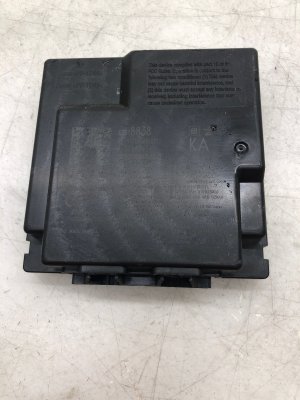
- Body Control Module (BCM)
(OEM #13594571)— This module is the root cause of the short circuit on circuit 5985 that triggers the U1814 code and damages the PSCM. It must be replaced and programmed. 🎬 Watch: A step-by-step guide on how to replace a BCM.
Trusted brands: ACDelco GM Genuine Parts
OEM price range: $250-$450
Aftermarket price range: $200-$350 - Steering Column Kit (with PSCM)
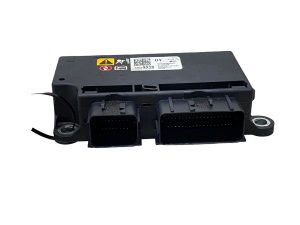
(OEM #42622461)— The Power Steering Control Module (PSCM) is integrated into the steering column and is non-serviceable. It is damaged by the failing BCM and must be replaced as a complete assembly. This part also requires programming and calibration.
Trusted brands: ACDelco GM Genuine Parts
OEM price range: $400-$700
Aftermarket price range: $350-$600
Related Codes That Often Appear With This One
- U0100 — This code means 'Lost Communication with ECM/PCM'. It often sets alongside U1814 because the same fault that disrupts the power steering communication also affects the main engine computer. TSB 20-NA-206 explicitly lists them together as a pair, noting the U0100 becomes latched and unrecoverable 🎬 See this breakdown of common causes for the U0100 code. in the PSCM.
- U0131 — This code means 'Lost Communication with Power Steering Control Module'. It is a more direct indicator of the PSCM being offline and is frequently seen with U1814, especially when the cause is wiring harness chafing as per TSB 18-NA-114.
Technical Service Bulletins (TSBs) & Recalls
- 20-NA-206: Service Power Steering Message Displayed, U0100 and/or U1814-02 Set will not Clear, Blown Fuse F6DA. This is the primary document outlining the BCM/PSCM failure.
- 18-NA-114: Documents engine harness chafing against a ground stud as a possible cause for various DTCs, including U1814.
Platform-Specific Known Issues
- TSB 20-NA-206: This is the primary document for this failure. It describes a specific pattern where an internal BCM short on circuit 5985 induces an unrecoverable failure in the PSCM, causing U1814/U0100, a blown F6DA fuse, and an inability to clear the codes. The only fix is replacing both modules.
- TSB 18-NA-114: This bulletin points to potential engine harness chafing against the G100 ground stud or near the X112 connector as another possible cause for U1814 and a host of other communication codes.
Mechanic-Grade Diagnostic Values
- Voltage of Powertrain High Speed Communication Enable Circuit (5985) at any connected module. — expected: Approximately 12 volts when the BCM is awake (e.g., ignition on, headlights on).. Failure: Low or no voltage indicates an open or short in the circuit.
- Load test of Circuit 5985. — expected: Connect a 194 incandescent bulb (~250 mA draw) between circuit 5985 and a good ground. The bulb should light and voltage measured across the bulb should be at least 11 volts.. Failure: If the bulb does not light, or if voltage drops below 11V, it indicates high resistance or a short in the circuit, or a weak driver in the BCM.
- Resistance test of Circuit 5985 to ground. — expected: Infinite resistance (OL).. Failure: Any reading less than infinite resistance indicates a short to ground in the harness or a connected module.
Hidden / Shadow Codes Worth Checking
- U1814-02: This is a specific symptom byte noted in TSB 20-NA-206, indicating a short to ground on the Powertrain High Speed Communication Enable Circuit. (see via A professional GM-compliant scan tool like a GDS2 (Global Diagnostic System 2) is required to view symptom bytes.)
Scan Tool Commands That Help
- GDS2 (GM Global Diagnostic System 2): Clear DTCs — Used as a primary diagnostic step. If the tool displays a 'Rejected by control module' error when attempting to clear U1814/U0100, it strongly indicates the permanent PSCM failure described in TSB 20-NA-206.
- GDS2 (GM Global Diagnostic System 2): Steering Angle Sensor Learn Procedure — This procedure is mandatory after replacing the steering column/PSCM. It calibrates the new sensor to the vehicle. TSB 20-NA-206 notes this may be required to clear codes even after the post-repair drive cycle.
- GDS2 (GM Global Diagnostic System 2): BCM/PSCM Programming and Setup — This is required when installing a new Body Control Module or Power Steering Control Module to load the correct vehicle-specific software and VIN.
Wiring & Ground Locations
- BCM (Body Control Module) — Under the driver's side dash, accessible by removing the lower knee bolster panel.. The BCM is the source of the wake-up signal (circuit 5985) and is the primary point of failure according to TSB 20-NA-206.
- BCM Connector X4, Pin 11 — On the Body Control Module. This specific pin is for Circuit 5985, the Powertrain High Speed Communication Enable Circuit.. This is the exact pin a technician must test for voltage and shorts to confirm the integrity of the wake-up signal from the BCM.
- G100 Ground Stud — On the engine block. TSB 18-NA-114 refers to GM Service Information document #4708510 for the exact location diagram.. This is a known chafing point where the engine wiring harness can rub through and short circuit 5985 to ground, causing code U1814.
- X112 Electrical Connector — In the engine compartment on the left side of the engine, near the battery.. TSB 18-NA-114 identifies the wiring harness approximately 76 mm (3 in) from this connector as another potential location for chafing and shorts that can set U1814.
Real Owner Repair Stories
- South Main Auto Repair YouTube Channel (2018 Buick Encore (platform-mate to the Trax)) — No crank, no communication with most modules, loss of power steering.
❌ Tried (didn't work) Initial diagnosis pointed towards a network-wide communication failure.
✅ What actually fixed it The rear differential control module was found to be internally corroded and shorted, taking down the entire high-speed data bus. Replacing and programming the rear differential module restored all communication and resolved the loss of power steering. The mechanic noted a service bulletin exists that links this specific module failure to power steering problems. - Carly community forum (2014 Buick Encore, 93,666 km) — Hard to steer, power steering warning light on, wheel vibration. A basic OBD-II scanner showed no error codes.
❌ Tried (didn't work) Reading codes with a basic scanner yielded no results.
✅ What actually fixed it A professional workshop diagnosed a defective steering angle sensor due to a coding issue. The fix was to replace the sensor and perform a recalibration, which cost 195€.
OEM Part Supersession History
13594571→13534185— Part revision or replacement by manufacturer.
Heads up: Programming by a GM dealer is required upon installation.
Model Year Variations Within This Range
- 2019-2022: TSB 20-NA-206, which details the BCM/PSCM cascade failure, was initially for 2019-2020 models and was later updated in May 2022 to include the 2021 and 2022 model years, confirming the issue persists across the later facelift models.
Helpful Videos

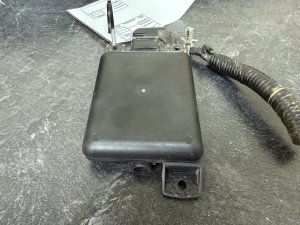
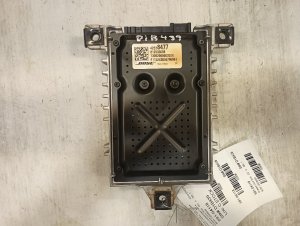
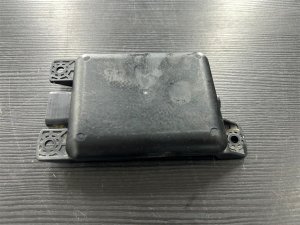
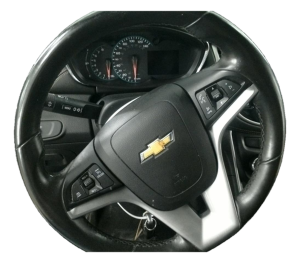
We Have This Part in Stock

The information in this article is provided for general reference and educational purposes only. Vehicle specifications, procedures, and part compatibility can vary by production date, trim level, and region. Always consult your vehicle's factory service manual and verify part numbers before purchasing or performing repairs. Safety-critical components such as airbags, seat belts, and braking systems should be installed by a qualified professional.
- Chevrolet TRAX:
- 🧭 Diagnostic Flowchart
- 🎬 Helpful Videos
- 🛍️ Shop This Part
- What's Unique About the 2017-2022 Chevrolet TRAX
- Symptoms You May Notice
- Most Likely Causes
- Rare But Worth Checking
- Diagnosis Steps
- Parts You'll Likely Need
- Related Codes That Often Appear With This One
- Technical Service Bulletins (TSBs) & Recalls
- Platform-Specific Known Issues
- Mechanic-Grade Diagnostic Values
- Hidden / Shadow Codes Worth Checking
- Scan Tool Commands That Help
- Wiring & Ground Locations
- Real Owner Repair Stories
- OEM Part Supersession History
- Model Year Variations Within This Range
- 🎟️ Get 5% Off