

OBD-II Code U1858: Network Communication Fault
What U1858 means, why it triggers, and how to fix it
- U1858 is a network communication error indicating a module—typically the Trailer Brake Control Module (TBCM) or an emissions ECU—has failed its internal software check or is sending invalid data.
- Do not tow a trailer with an active U1858 code; your trailer brakes are disabled, increasing stopping distance by over 50% and risking a jackknife.
- For 2021-2026 Ford F-Series trucks, check for recall 22S38/26C10 immediately, as a free dealership software update fixes this exact issue.
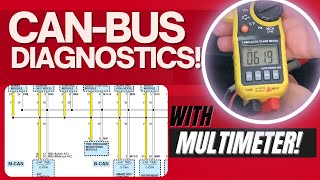
- Always test the CAN bus network resistance at the OBD-II port (pins 6 and 14) for a healthy 60-ohm reading before replacing any expensive control modules.
What Does U1858 Mean?
Code U1858 means a specific computer module has failed its internal software check or is sending invalid data to the network. The vehicle's other computers ignore this module to prevent wider system failures. This code primarily disables trailer brakes, anti-lock brakes, or emissions controls.
Technical definition: The SAE defines U1858 for PACCAR (Kenworth/Peterbilt) as 'Fault Exists with the DECECU 11 CVN Calculation'. This means the emissions control computer failed its Calibration Verification Number (CVN) self-check. On consumer trucks (Ford/GM), scanners interpret this as 'Invalid Data Received from Trailer Brake Control Module'.
Can I Drive With U1858?

No, if towing Driving is possible, but carries extreme risk if towing. This code signifies critical safety systems like trailer brakes or stability control are disabled. Towing without trailer brakes is illegal and increases stopping distance by 50% or more, creating a high risk of a jackknife. Driving without a trailer to a repair facility is safe, but ABS or traction control are often compromised.
Common Causes

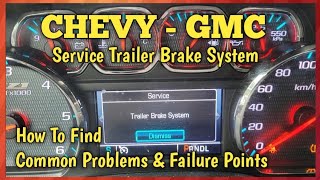
- Software Glitch or Outdated Firmware (Very Common) — The module's software contains a bug causing it to set a false code or lose communication. Manufacturers frequently release software updates (firmware flashes) to fix these issues, as seen in a major Ford recall. 🎬 Watch: See how this Ford trailer brake software issue is resolved.
- Damaged Wiring or Water Intrusion (Very Common) — The CAN bus network wires are highly susceptible to damage from moisture, road salt, or vibrations. Driving through high water forces moisture into connectors, causing corrosion that interrupts communication.
- Faulty Control Module (Common) — The computer module itself fails due to internal corrosion, vibration, or component degradation. For trucks, the primary culprits are the Trailer Brake Control Module (TBCM) or a central emissions ECU.
- Poor Ground Connection (Common) — Every electronic part requires a solid ground connection to the vehicle's frame. A loose, rusty, or broken ground wire causes unpredictable behavior and communication errors between modules.
- Aftermarket Device Interference (Less Common) — Improperly installed aftermarket accessories like remote starters, alarms, or telematics/ELD devices interfere with the CAN bus network. Tapping into the wrong wire introduces electrical noise or draws down voltage.
- Low Battery Voltage (Less Common) — Vehicle computer modules require a stable 12-volt power supply. A weak battery or failing alternator causes voltage drops that lead directly to data errors and communication faults.
Symptoms

- Trailer Brake Warning Light or "Trailer Disconnected" Message — The most common sign on a truck is a dashboard warning indicating a fault with the trailer braking system, even if no trailer is connected.
- Erratic or Non-Functioning Trailer Brakes and Lights — If the code appears while towing, the trailer brakes fail entirely or apply erratically. Trailer lights, including brake lights and turn signals, also fail.
- ABS or Traction Control Warning Light — Because the anti-lock brake system relies on network communication, a fault disables it and illuminates the ABS warning light.
- Check Engine Light is On — A communication failure between primary modules, like the engine and transmission computers, illuminates the Check Engine Light.
- Blind Spot System Fault Message — Modern truck blind spot monitoring systems rely on these shared modules. A communication fault disables this feature and displays a specific warning message.
Diagnostic Flowchart

Tap your situation to follow the diagnostic path that matches what you're seeing on this code.
Common Fixes & Costs
- Software Update/Re-flash — Parts: $0, Labor: $0-$250, ~1.5 hr book time (Professional)
- Repairing Damaged Wiring or Connectors — Parts: $10-$100, Labor: $180-$750, ~3.5 hr book time (Intermediate)
- Replacing the Trailer Brake Control Module (TBCM)
— Parts: $70-$400, Labor: $100-$250, ~1.5 hr book time
(DIY)
: OEM
: OEM - Replacing the Faulty Engine/Emissions Control Module (ECU/DECECU)
— Parts: $1500-$3500, Labor: $200-$500, ~3 hr book time
(Professional)
: OEM - Diagnosing and Fixing CAN Bus Network Fault — Parts: $20-$150, Labor: $250-$1000, ~4.5 hr book time (Professional)
- Replacing a Main Wiring Harness — Parts: $700-$2000, Labor: $800-$2000, ~12 hr book time (Professional)
DIY vs Professional
- Software Update/Re-flash 🟢 Beginner
Tools: OEM diagnostic software, J2534 Pass-Thru device - Repairing Damaged Wiring or Connectors 🟢 Beginner
Tools: Wire strippers, solder, heat shrink tubing, multimeter - Replacing the Trailer Brake Control Module (TBCM) 🟢 Beginner
Tools: Basic hand tools (socket set, trim removal tools) - Replacing a Major Control Module (ECU/DECECU) 🟢 Beginner
Tools: Advanced diagnostic tools, programming equipment
Used vs. New Parts: Buying Guide
When a used part is worth it: For a simple, non-programmable module on an older vehicle, a used part from a reputable recycler is a cost-effective option. It makes sense when the vehicle's value is low and the budget is tight.
Donor-vehicle mileage cap: roughly under 100000 miles for the part to have meaningful remaining life.
Donor quality checklist:
- Verify the part number is an exact match.
- Buy from a reputable seller offering at least a 90-day warranty.
- Avoid parts from vehicles with flood or fire damage.
- Confirm if the seller can 'virginize' the unit or if it requires professional programming.
Decision logic:
- If The part is a modern, programmable module (ECU, TBCM, BCM) on a vehicle newer than 2010 → Buy a new OEM or remanufactured part. A used module will not work without expensive professional programming to match your VIN.
- If The vehicle is over 10 years old and the part is under $200 new → Buy new. The small savings on a used part isn't worth the risk of paying for labor twice.
- If Budget is the absolute primary concern and you accept the risk → A used part is an option, but factor in the possibility of it being faulty.
Warranty tradeoff: Used parts typically come with a 30-90 day warranty. Aftermarket new parts offer a 1-year to lifetime warranty. OEM parts have a 1-2 year warranty. Labor warranties are rarely included with used parts.
Worst-case if a used part fails: $300-800 if a used module fails after installation, including repeat diagnostic labor and programming attempts.
What Happens If You Wait — Timeline
- 0-1 month: Intermittent 'Service Trailer Brake System' message appears during wet weather or on bumpy roads. No other symptoms are noticeable. (MPG impact: 0%% · Added cost: $0)
- 1-3 months: The warning becomes frequent, appearing on every startup. Other system warnings (ABS, Traction Control) flash. The underlying issue is worsening. (MPG impact: 0%% · Added cost: $50-$200 if the problem is a simple connector cleaning, but ignoring it allows corrosion to destroy the pins.)
- 3-6 months: The fault is constant. ABS and Stability Control are permanently disabled. The intermittent wiring issue causes voltage spikes, putting other modules at risk. (MPG impact: 0%% · Added cost: $500-$1200 as the TBCM itself becomes damaged from the unreliable connection.)
- 6+ months: Catastrophic failure. A persistent short circuit feeds voltage back into the network, destroying expensive modules like the BCM or ECU. The vehicle enters a permanent 'no-start' condition. (MPG impact: N/A (Vehicle disabled)% · Added cost: $1500 - $5000+ to replace cascaded failures of major modules.)
Cost of Not Fixing It
- Immediately: Loss of trailer brakes and lights creates an extreme safety hazard and legal liability. Disablement of ABS and traction control increases stopping distance. (Added cost: Potential for catastrophic accident, fines, and vehicle impoundment.)
- 1-6 months: Failure of state safety or emissions inspections prevents vehicle registration renewal. Continued driving masks other developing problems. (Added cost: $250+ in failed inspection fees, fines, and re-testing costs.)
- 6+ months: Intermittent network issues worsen, leading to a no-start condition if communication with the engine or immobilizer module is lost. A wiring chafe shorts out and damages other expensive control modules. (Added cost: $1500 - $5000+ if a secondary module like the ECU or BCM is damaged.)
Diagnosis Steps
- Check the Battery and Fuses
Ensure the vehicle's battery is fully charged (12.4V or higher with the engine off) and terminals are clean. Check all fuse boxes for blown fuses related to the Body Control Module, Trailer Brake Controller, ECU, or Aftertreatment system.
Tools: Multimeter, Fuse Puller (Beginner) - Disconnect Aftermarket Devices
Disconnect any aftermarket devices like ELD or fleet telematics units. These are often spliced into the CAN network and are a primary source of communication errors. Unplug the device and see if the code clears.
Tools: Basic hand tools (Beginner) - Inspect Wiring and Trailer Connector
Thoroughly inspect the 7-pin trailer connector. Use a small brush and electrical contact cleaner to remove green corrosion. Look for obvious damage to wiring harnesses under the dashboard near the brake controller, and in the engine bay (especially chafing against brackets).
Tools: Flashlight, Small wire brush, Electrical contact cleaner (Beginner) - Check for Power and Ground at the Module
Using a multimeter, verify 12V power and a solid ground connection at the connector of the suspected faulty module (like the TBCM or PACCAR DECECU). A lack of power or a bad ground is a frequent root cause.
Tools: Multimeter, Vehicle-specific wiring diagram (Intermediate) - Test the CAN Bus Network Resistance
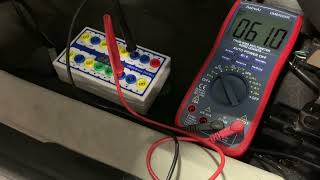
With the battery disconnected, measure the resistance between the CAN High and CAN Low pins at the OBD-II port (pins 6 and 14). A healthy network reads 60 ohms. A reading of 120 ohms indicates a missing termination resistor or broken wire. A reading near 0 ohms indicates a short circuit.
Tools: Multimeter, OBD-II pinout diagram (Advanced) - Test CAN Bus Voltage Levels
With the key on and engine off, measure the voltage of the CAN lines relative to a chassis ground. On a healthy network, CAN High reads between 2.5V and 3.5V, while CAN Low reads between 2.5V and 1.5V. Readings outside these ranges indicate a wiring fault or a module pulling the voltage down.
Tools: Multimeter, OBD-II breakout box or pin probes (Advanced) - Isolate the Faulty Module
If the CAN bus wiring checks out, the fault is an internal module failure. Unplug one module at a time and re-check the network resistance until the reading returns to normal (60 ohms). Stop DIY diagnosis here and take the vehicle to a professional if you lack wiring diagrams.
Tools: Scan tool, Multimeter, Wiring diagram (Advanced) - Use an Oscilloscope to Check Signal Integrity
Connect an oscilloscope to the CAN High and CAN Low lines. You must see a clean square wave pattern with clear dominant (~3.5V High, ~1.5V Low) and recessive (~2.5V) voltage plateaus. Noisy or distorted signals point to electrical interference or a failing module.
Tools: Oscilloscope, OBD-II breakout box (Professional)
When This Code Triggers (Freeze-Frame Conditions)
- Vehicle Speed: 0-75 mph (Any. The fault sets during module self-checks or communication attempts, which occur constantly while the vehicle is on.)
- RPM: 0-3000 RPM (The fault is not dependent on engine speed.)
- System Voltage: 11.5-14.8V (Normal operating voltage. The code triggers from low voltage, but frequently sets under normal voltage conditions due to wiring faults.)
- Module Status: Communication Error / No Response (The code logs when a module fails its internal software check (CVN) or when other modules report receiving invalid data from it.)
Related Codes
- U0438 — The generic equivalent for 'Invalid Data Received From Trailer Brake Control Module.' U1858 is a PACCAR-specific software integrity fault, while U0438 indicates illogical data caused by wiring faults or a failing TBCM.
- U0101 — Means 'Lost Communication With Transmission Control Module'. If it appears with U1858, it indicates a wider network problem like a CAN bus wiring failure or a bad gateway module.
- U0121 — Means 'Lost Communication With Anti-Lock Brake System'. When seen with other communication codes, it suggests a shared problem on the CAN bus affecting multiple modules.
- U0140 — Means 'Lost Communication With Body Control Module'. The BCM acts as the central gateway. If you have U0140 plus other codes, the BCM or its primary power/ground is the top suspect.
Climate & Environmental Factors
- Humidity and Road Salt: Moisture and corrosive road salt penetrate poorly sealed electrical connectors, especially the 7-pin trailer connector. This causes corrosion on the pins, leading to high resistance and communication faults.
- Vibration and Chafing: Constant vibration causes wiring harnesses to rub against sharp metal edges on the frame or brackets. This chafing wears through the insulation and causes a short to ground or a break in the CAN bus wires.
How to Talk to a Mechanic About This Code
Say this: "I have a truck with a U1858 code and a 'Service Trailer Brake System' message. Please start by checking the CAN bus network, specifically for wiring damage near the trailer connector and known chafe points, before quoting a module replacement."
This signals you understand U-codes are caused by wiring issues, not just bad modules. It directs the technician to perform a proper diagnosis instead of jumping to the most expensive conclusion.
Avoid saying:
- 'Just fix whatever's wrong'
- 'My check engine light is on, can you look at it?'
- 'Whatever you recommend'
Questions to ask before authorizing the repair:
- Did you check for power and ground at the trailer brake control module connector?
- What was the CAN bus resistance when you tested it at the OBD-II port? Was it 60 ohms?
- Did you find any corrosion in the trailer hitch connector or damage to the wiring harness?
- If a module needs to be replaced, does the new one require programming and is that included in the quote?
- What is the warranty on the proposed repair, including both parts and labor?
Where to Take It: Dealer vs Independent vs Chain
- Dealer:
Recommended, especially if a software update is a likely fix (e.g., 2021+ F-150) or if the vehicle is under warranty. They have direct access to OEM tools.
Best for: Vehicles under warranty, Newer vehicles requiring software updates or module programming, Diagnosing known manufacturer-specific issues covered by recalls
Downsides: Higher labor rates, often 1.5-2x more than independent shops., Defaults to replacing an entire module when a simpler wiring repair is possible. (Typical cost: +40% vs. baseline) - Independent Shop:
A good fit, but only if it's a reputable shop with a strong background in electrical diagnostics. Ask if they are comfortable diagnosing CAN bus systems.
Best for: Out-of-warranty vehicles where cost is a major factor., Diagnosing physical wiring faults, corrosion, or ground issues., Shops specializing in electrical diagnostics.
Downsides: Quality varies greatly; a general mechanic lacks the specific tools for complex network diagnosis., Cannot perform manufacturer-specific software flashing. (Typical cost: +0% vs. baseline) - Chain Shop:
AVOID. This fault is outside the scope of chain shops and results in an incorrect diagnosis and wasted money.
Best for: Simple, routine maintenance like oil changes, tires, and brakes.
Downsides: Technicians are not equipped or trained for complex electrical diagnostics., High potential for misdiagnosis, leading to unnecessary parts replacement. (Typical cost: -10% vs. baseline)
When to Walk Away From the Repair
If the total estimated repair cost for the U1858 fault exceeds 40-50% of your vehicle's current private-party value, seriously consider trading it in or selling it as-is.
- Car worth $8000, fix is $4000: Walk away. The repair cost is 50% of the vehicle's value. This is a poor investment on an older truck.
- Car worth $35000, fix is $2500: Fix it. The repair cost is only ~7% of the vehicle's value and is necessary for safety.
- Car worth $5000, fix is $2200: Borderline. At 44% of the vehicle's value, get a second opinion. If another major repair is looming, walk away.
What Scan Tool You Need for This Code
Minimum: A scanner that reads manufacturer-specific codes from ALL vehicle modules (ABS, BCM, TBCM). Bidirectional control is highly recommended to activate components and verify fixes.
A basic $20-$50 code reader only checks for generic engine codes (P-codes) and cannot communicate with the modules involved in a network fault. You will not see the U1858 code.
Budget: BlueDriver Pro Scan Tool (~$100) — Reads and clears enhanced codes from systems like ABS and Transmission. For Ford owners, a laptop with FORScan software and a compatible OBD adapter is a powerful alternative.
Mid-range: Foxwell NT809 / Autel MaxiCOM MK808S (~$300-450) — Provides full-system diagnostics and adds bidirectional controls. This allows you to command components directly from the scanner to test functionality.
Professional: Autel MaxiSys MS906 Pro / Launch X431 Series (~$1000-1500) — Offers full OEM-level diagnostics, bidirectional control, module programming, and network topology mapping. Topology mapping visually shows which modules are offline.
Rent vs buy: Free loaner tools from auto parts stores are basic code readers and will NOT be sufficient. You must buy a capable scanner or take the vehicle to a shop.
How to Clear the Code After You Fix It
- Ensure the underlying fault (e.g., wiring, faulty module) is corrected.
- Reconnect the battery if disconnected for the repair.
- Use an OBD-II scan tool to clear all Diagnostic Trouble Codes (DTCs) from all modules.
- Perform a complete drive cycle to allow the vehicle's readiness monitors to run and confirm the fix.
Drive cycle (~30 minutes): A generic drive cycle includes a cold start (engine off for 8+ hours), 2-3 minutes of idling, followed by 15-20 minutes of mixed city and highway driving, including steady speeds around 55 mph for several minutes, and coast-down deceleration without braking.
Readiness monitors affected: Comprehensive Component Monitor, Misfire Monitor
Before emissions retest: drive at least 100 miles to fully set monitors.
Watch out for:
- Clearing the code without fixing the root cause results in the code returning immediately.
- Disconnecting the battery erases codes but resets all readiness monitors to 'Not Ready', causing an immediate emissions test failure.
- Failing to drive under mixed conditions prevents monitors from setting, requiring 50-100 miles of driving.
Will This Fail Emissions / State Inspection?
Yes — this code typically fails an OBD-II emissions inspection.
- California: An illuminated Check Engine Light is an automatic failure. After repair, all readiness monitors must be 'Ready' before passing a retest.
- New York: An active U-code triggering the Malfunction Indicator Lamp causes an automatic failure during the OBD-II check.
- Texas: In emissions-testing counties, an illuminated Check Engine Light is an automatic fail. You can only have one or two 'Not Ready' monitors to pass.
Most Commonly Affected Vehicles
- Kenworth T680 (2013-2025) — Equipped with the PACCAR MX-13 engine, this is where U1858 is specifically defined. On 2014-2018 models, inspect wiring harnesses near the front of the hood for chafing.
- Peterbilt 579 (2013-2025) — Uses the PACCAR MX-13 engine. For 2025+ models, the factory-installed satellite communication unit (SmartLink) interferes with diagnostic tools; disconnect it to establish a connection.
- Ford F-Series (F-150, Super Duty) (2015-2026) — Logs similar 'Invalid Data from TBCM' codes. Recall 22S38/26C10 covers 2021-2026 models for a software fault causing loss of trailer brakes. The fix is a free software update.
- Ram 1500/2500/3500 (2013-2024) — Frequently experiences issues with aftermarket trailer brake controllers, leading to communication trouble codes.
- GMC/Chevrolet Sierra/Silverado (2014-2024) — Prone to TBCM communication faults. TSB 21-NA-149 details widespread engine harness chafing issues on 2019+ models causing various communication codes.
- Cadillac Escalade (2007-2020) — Experiences widespread communication failures triggered by water intrusion into connectors or Body Control Module (BCM) issues.
- Nissan Rogue / X-Trail (2014-2023) — Commonly logs CAN communication fault codes like U1000, functionally similar to U1858. TSB NTB13-027C provides diagnostic guidelines.
- Volkswagen Passat / Jetta (2010-2019) — Suffers from CAN bus communication errors caused by improperly installed aftermarket stereos interfering with the network.
Manufacturer-Specific Notes
- PACCAR (Kenworth, Peterbilt): U1858 is an OEM-specific code pointing directly to a failed software integrity check (CVN) on an emissions system computer (DECECU). The fix is replacing the module.
- Ford: Trailer-related communication issues are commonly caused by corrosion inside the 7-pin trailer connector or a software bug. For 2021-2026 models, recall 22S38/26C10 provides a free software update.
- Ram (Stellantis): Sensitive to aftermarket trailer brake controllers. Using a non-OEM module triggers invalid data codes. Installing a factory controller requires programming the BCM.
- GM (Chevrolet/GMC): TSB 21-NA-149 covers widespread engine wiring harness chafing on 2019+ models, which causes a flood of communication DTCs and must be investigated first.
- Nissan: Bulletin NTB13-027C advises technicians to diagnose communication codes first, check for low voltage, and verify power and grounds at the suspect module before replacement.
Real Owner Stories
2017 Chevy Silverado 2500 with intermittent 'Service Trailer Brake System' message
Truck at 103k miles began showing the 'Service Trailer Brake System' message intermittently. The issue escalated to the entire truck shutting off at highway speeds.
What they tried:
- Replaced the factory trailer plugin on the bumper.
- Hardwired the harness to the plugin, fixing it for two months before returning.
- Replaced the in-dash trailer brake controller.
- Took it to a mechanic who could not replicate the fault.
Outcome: The owner suspected the next logical step was replacing the Trailer Brake Control Module (TBCM) located above the spare tire.
Lesson: Intermittent electrical faults are notoriously difficult to diagnose. When a problem temporarily resolves after a wiring repair, it strongly points to a persistent issue in that circuit, such as a corroded ground, rather than a one-time glitch.
2018 Ford F-150 Raptor with persistent 'Trailer Brake Module Fault'
At every startup, the dash displayed 'Trailer Brake Module Fault,' even with no trailer connected.
What they tried:
- Replaced fuses and battery.
- Replaced the TBCM, which fixed the issue for 3 days.
- Replaced the in-dash gain controller and bumper plug assembly.
- Cleaned grounds and checked for power at all connectors.
Outcome: The fault continued. The owner noted an intermittent cruise control issue and discovered both systems share the same CAN bus. This led to suspecting the Gateway Module (GWM) was the true culprit.
Lesson: Don't get tunnel vision on the obvious part. If another system on the same CAN bus is acting up, the problem lies with a shared component like a Gateway Module or network wiring.
2015 Ford F-150 with multiple dash warnings (U0415)
The instrument cluster lit up with 'Hill Start Assist Not Available,' 'Service AdvanceTrac,' and an ABS light. The initial code was U0415.
What they tried:
- Scanning initially showed only the generic U0415 communication code.
- After the fault reoccurred, new codes pointed to the left front wheel speed sensor.
- The owner removed the tire for a visual inspection.
Outcome: A visual inspection revealed the tire had rubbed against the wheel speed sensor wiring harness, exposing copper wires. The fix was replacing the harness.
Lesson: A generic communication code is the symptom, not the cause. Before replacing expensive modules, perform a thorough visual inspection of related wiring harnesses around moving parts.
How to Prevent This Code From Triggering
- Apply Dielectric Grease to Trailer Connectors (Annually or before winter season) — Coats metal pins in the 7-pin connector, creating a barrier that prevents moisture and road salt from causing corrosion. Corrosion creates high resistance and causes communication faults.
- Secure and Protect Wiring Harnesses (During any under-vehicle service) — Visually inspect wiring harnesses for contact with sharp frame edges. Use zip ties to secure loose harnesses and add protective wire loom to prevent chafing.
- Perform a Regular 'Connector Service' (Every 2-3 years) — Disconnect major electrical connectors, inspect for corrosion, spray with electrical contact cleaner, and re-seat firmly. This ensures a solid connection and prevents intermittent faults.
- Maintain a Healthy Battery and Charging System (Ongoing) — Control modules require stable voltage. A weak battery causes voltage drops and spikes, leading to data errors and a storm of U-codes.
Frequently Asked Questions
What is a CAN bus?
The Controller Area Network (CAN) bus is your car's nervous system. It's a pair of twisted wires running throughout the vehicle, allowing all the different computers to talk to each other.
What is a CVN and why does it cause a fault?
A CVN (Calibration Verification Number) is a digital signature confirming the software on a computer module is correct. A CVN fault like U1858 means the module failed its integrity self-check, so the system ignores it.
What are common mistakes when diagnosing U1858?
A frequent error is immediately replacing the module that logged the code. The actual cause is almost always a wiring problem, a corroded connector, or a bad ground connection. Always analyze all active U-codes together to find the shared root cause.
My truck started showing codes after I installed an ELD. Is it related?
Absolutely. Improperly installed aftermarket electronics are a primary cause of network communication faults. If wired incorrectly, they create electrical interference that disrupts the CAN bus.
Can I fix a U1858 code myself?
Simple fixes like cleaning a connector or checking a fuse are DIY-friendly. Replacing a plug-and-play TBCM is possible, but requires programming afterward. Diagnosing network wiring problems requires professional tools and expertise.
How much does it cost to diagnose a 'U' code?
Most shops charge a diagnostic fee between $150 and $250, covering the first hour of troubleshooting. Complex electrical problems take several hours to trace, increasing the final cost.
Is it safe to tow a trailer with this code active?
No. This code indicates your trailer's brakes are unreliable or completely non-functional. Towing without trailer brakes is extremely dangerous and illegal in many jurisdictions.
What is the difference between an active and an inactive U-code?
An active code indicates a fault currently happening. An inactive code indicates a past fault. Inactive codes signal intermittent problems like a loose wire that fails under vibration.
Can a bad battery cause a U1858 code?
Yes. All control modules are highly sensitive to voltage. A weak battery provides inconsistent voltage during engine cranking, causing data corruption and triggering communication codes.
Key Takeaways
- U1858 is a network communication error indicating a module—typically the Trailer Brake Control Module (TBCM) or an emissions ECU—has failed its internal software check or is sending invalid data.
- Do not tow a trailer with an active U1858 code; your trailer brakes are disabled, increasing stopping distance by over 50% and risking a jackknife.
- For 2021-2026 Ford F-Series trucks, check for recall 22S38/26C10 immediately, as a free dealership software update fixes this exact issue.
- Always test the CAN bus network resistance at the OBD-II port (pins 6 and 14) for a healthy 60-ohm reading before replacing any expensive control modules.
Helpful Videos

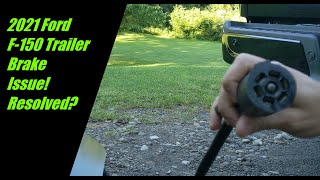
Shop the Parts Behind U1858
Below are the parts most often responsible for code U1858, ranked by how frequently each one is the actual culprit (per the diagnosis above). Tap any to see what we have for your vehicle.
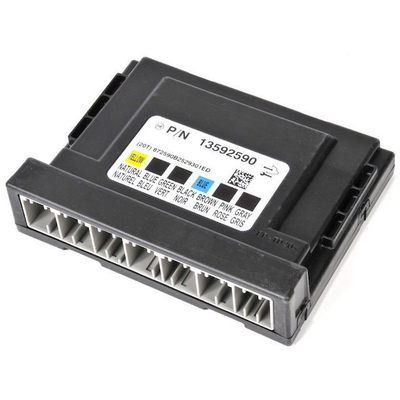



The information in this article is provided for general reference and educational purposes only. Vehicle specifications, procedures, and part compatibility can vary by production date, trim level, and region. Always consult your vehicle's factory service manual and verify part numbers before purchasing or performing repairs. Safety-critical components such as airbags, seat belts, and braking systems should be installed by a qualified professional.
- 🧭 Diagnostic Flowchart
- 🎬 Helpful Videos
- 🛍️ Shop This Part
- What Does U1858 Mean?
- Can I Drive With U1858?
- Common Causes
- Symptoms
- Common Fixes & Costs
- DIY vs Professional
- Used vs. New Parts: Buying Guide
- What Happens If You Wait — Timeline
- Cost of Not Fixing It
- Diagnosis Steps
- When This Code Triggers (Freeze-Frame Conditions)
- Related Codes
- Climate & Environmental Factors
- How to Talk to a Mechanic About This Code
- Where to Take It: Dealer vs Independent vs Chain
- When to Walk Away From the Repair
- What Scan Tool You Need for This Code
- How to Clear the Code After You Fix It
- Will This Fail Emissions / State Inspection?
- Most Commonly Affected Vehicles
- Manufacturer-Specific Notes
- Real Owner Stories
- 2017 Chevy Silverado 2500 with intermittent 'Service Trailer Brake System' message
- 2018 Ford F-150 Raptor with persistent 'Trailer Brake Module Fault'
- 2015 Ford F-150 with multiple dash warnings (U0415)
- How to Prevent This Code From Triggering
- Frequently Asked Questions
- What is a CAN bus?
- What is a CVN and why does it cause a fault?
- What are common mistakes when diagnosing U1858?
- My truck started showing codes after I installed an ELD. Is it related?
- Can I fix a U1858 code myself?
- How much does it cost to diagnose a 'U' code?
- Is it safe to tow a trailer with this code active?
- What is the difference between an active and an inactive U-code?
- Can a bad battery cause a U1858 code?
- Key Takeaways
- 🎟️ Get 5% Off