

OBD-II Code U1860: Vehicle Communication Network Error
What U1860 means, why it triggers, and how to fix it
- Code U1860 indicates a Controller Area Network (CAN) breakdown, meaning critical modules like the engine and transmission computers cannot exchange data.
- Do not drive the vehicle, as a sudden loss of communication causes the engine to stall unexpectedly at highway speeds.
- Start diagnosis by testing the battery and charging system; a voltage drop below 12.4V is the most common trigger for network dropouts.
- Check specific known failure points: the battery current sensor on 2019+ GM trucks, the instrument cluster on 2006-2011 Ford Focuses, and the TIPM on 2007-2014 Chryslers.
- Measure CAN bus resistance at OBD-II pins 6 and 14 with the battery disconnected; a healthy network reads exactly 60 ohms.
What Does U1860 Mean?
Code U1860 means your car's control modules are not communicating correctly. Your car uses a Controller Area Network (CAN) to share data between the engine, transmission, brakes, and other systems. This code indicates a breakdown in that network, causing severe drivability symptoms.
Technical definition: The SAE/ISO defines U1860 as a 'Lost Communication' fault on the vehicle's data bus network. It indicates a failure in the Controller Area Network (CAN) protocol, preventing modules from exchanging data. Causes include open circuits, short circuits, or electrical interference on the network lines.
Can I Drive With U1860?
No — Do Not Drive. Driving is not recommended. The primary risk is that the engine stalls unexpectedly while driving, creating a severe traffic hazard. Because critical modules like the engine, transmission, and brake systems rely on this network, communication breakdowns cause unpredictable safety failures. Do not drive the vehicle until repaired.
Common Causes
- Failing or Weak Battery (Very Common) — A low or unstable voltage from a dying battery is the leading cause of communication problems. Control modules require steady voltage; without it, they drop off the network.
- Faulty Battery Current Sensor (Common) — On General Motors vehicles, a faulty battery current sensor on the negative terminal disrupts the charging system and Body Control Module (BCM), causing U1860.
- Corroded or Damaged Wiring/Connectors (Common) — CAN bus network wires run throughout the vehicle. Corrosion at connectors, physical damage, or rodent chewing creates short or open circuits, breaking the communication link.
- Defective Instrument Panel Cluster (IPC) (Common On Specific Models) — On Ford Focus models, the instrument cluster acts as a network gateway. Bad solder joints inside the cluster fail, causing total communication loss and a no-start condition.
- Faulty Totally Integrated Power Module (TIPM) (Common On Specific Models) — On Chrysler, Dodge, and Jeep vehicles, the TIPM acts as a central hub. Internal TIPM failures cause widespread network issues and U-codes.
- Aftermarket Device Interference (Less Common) — Poorly installed aftermarket remote starters, alarms, or plug-in OBD-II trackers interfere with the CAN bus, causing data corruption.
- Failing Control Module (Rare) — A control module (ECM, TCM, or BCM) fails internally or suffers software corruption, disrupting the entire network and causing other modules to report communication loss.
Symptoms
- Engine Stalls or Will Not Start — If the engine computer loses communication with the ignition switch or fuel pump, it shuts down the engine as a safety measure.
- Erratic Dashboard Behavior — Warning lights flash randomly, gauges drop to zero, the odometer shows dashes, or the digital display goes blank.
- Poor Transmission Performance — The transmission shifts harshly, gets stuck in one gear ('limp mode'), or fails to engage due to lost communication with the engine module.
- Loss of Power Steering or ABS — Power steering, ABS, and stability control systems shut down, resulting in a loss of power assist and multiple warning lights.
- Check Engine Light On (also visible on scanner) — The primary indicator. In severe communication failures, the light flashes or fails to illuminate entirely.
Diagnostic Flowchart
Tap your situation to follow the diagnostic path that matches what you're seeing on this code.
Common Fixes & Costs
- Replace Vehicle Battery — Parts: $150-$350, Labor: $50-$100, ~0.5 hr book time (DIY)
- Replace Battery Current Sensor — Parts: $25-$175, Labor: $50-$125, ~0.5 hr book time (DIY)
- Replace Instrument Panel Cluster — Parts: $300-$800, Labor: $200-$400, ~2 hr book time (Professional)
- Replace/Reprogram Control Module (ECM/BCM/TIPM) — Parts: $800-$2000, Labor: $250-$500, ~2.5 hr book time (Professional)
- Repair Damaged Wiring or Connectors — Parts: $10-$100, Labor: $250-$1000, ~4 hr book time (Professional)
- Remove Faulty Aftermarket Electronics — Parts: $0-$20, Labor: $100-$300, ~2 hr book time (Intermediate)
Used vs. New Parts: Buying Guide
When a used part is worth it: Buy used electronic modules only if a specialist clones your original module's data onto the used unit. Otherwise, the part will not work. Sending your original module for repair is safer.
Donor-vehicle mileage cap: roughly under 80000 miles for the part to have meaningful remaining life.
Donor quality checklist:
- Match the part number exactly, including hardware and software revision numbers.
- Verify the donor vehicle's VIN is not from a flood or fire-damaged car.
- Ensure the seller guarantees the module is 'virginized' (reset to factory state).
Decision logic:
- If The part requires programming to the vehicle's VIN (e.g., IPC, BCM, TIPM, ECM) → Repair your original part or buy a new part programmed by a dealer.
- If The part is a simple sensor (like a battery current sensor) → A used part from a low-mileage vehicle is a low-risk way to save money.
- If The original part has a known design flaw (e.g., Ford Focus IPC solder joints) → Buy a professionally remanufactured part where the flaw is corrected.
Warranty tradeoff: Used salvage parts have a 30-90 day warranty. Remanufactured modules offer 1-year or lifetime warranties. New OEM parts carry a 1-2 year warranty.
Worst-case if a used part fails: $300-$800 if a used module is incompatible, requiring repeat labor and a new part.
What Happens If You Wait — Timeline
- Immediate: Code sets, Check Engine Light illuminates. Symptoms include a no-start condition or stalling while driving. (MPG impact: 0-5%% · Added cost: $75-$200)
- Days to Weeks: The fault triggers intermittently over bumps or temperature changes, causing unpredictable stalling and voltage spikes. (MPG impact: Up to 10%% · Added cost: $250-$500)
- Weeks to Months: The intermittent fault becomes permanent. Continued driving attempts cause harsh shifting and stress internal transmission components. (MPG impact: N/A% · Added cost: $500-$2500)
- 6+ Months: Ignored short circuits lead to thermal damage (melted wires). Faulty TIPMs fail completely, damaging controlled components. (MPG impact: N/A% · Added cost: $2000-$5000)
Cost of Not Fixing It
- Immediate: Vehicle stalls while driving or fails to start, posing a significant safety risk. (Added cost: Towing fees ($75-$200))
- Days to Weeks: Unstable electrical networks stress sensitive electronic modules (ECM, TCM, BCM), causing premature failure. (Added cost: $500 - $2000)
- Months: Incorrect shifting commands due to lost TCM communication causes severe internal transmission damage. (Added cost: $2000 - $5000)
Diagnosis Steps
- Test the Battery and Charging System
Ensure the battery is fully charged (above 12.4 volts) and the charging system outputs 13.7 to 14.7 volts with the engine running.
Tools: ['Multimeter'] - Perform a Full System Scan
Use an advanced OBD-II scanner to read codes from all vehicle modules (ECM, TCM, BCM, IPC). Identify which modules are offline.
Tools: ['Advanced OBD-II Scanner'] - Inspect the Battery Current Sensor (GM Vehicles)
Locate the small module on the negative battery terminal. Check its connector for corrosion and ensure it is plugged in securely.
Tools: ['Flashlight', 'Socket set'] - Test CAN Bus Resistance
With the battery disconnected, measure resistance between CAN High (Pin 6) and CAN Low (Pin 14) at the OBD-II port. A healthy network reads exactly 60 ohms.
Tools: ['Multimeter'] - Visually Inspect Wiring Harnesses
Look for chafed wires, corrosion in connectors, or rodent damage around the battery, under the dashboard, and near main computer modules.
Tools: ['Flashlight'] - Perform a 'Wiggle Test'
While measuring CAN resistance at the OBD-II port, gently wiggle wiring harnesses under the dash and near the fuse box. If resistance jumps, you found an intermittent short or open circuit.
Tools: ['Multimeter'] - Isolate Modules
Disconnect one module at a time from the CAN bus and re-check network resistance. If resistance normalizes after disconnecting a specific module, that module is the fault source.
Tools: ['Multimeter', 'Advanced OBD-II Scanner'] - Verify CAN Bus Signal
Connect an oscilloscope to CAN High and CAN Low pins. A healthy bus shows two clean, square-wave signals that are mirror images. Distortion indicates a circuit fault.
Tools: ['Oscilloscope'] (Advanced) - Test Module Terminating Resistors
Disconnect a suspect module and measure resistance between its CAN High and CAN Low pins. It must read 120 ohms. Infinity or zero indicates a faulty module.
Tools: ['Multimeter', 'Wiring diagram'] (Advanced) - Check for Shorts to Ground/Power
With the battery disconnected, measure resistance between CAN High (Pin 6) and Chassis Ground (Pin 4). A low reading indicates a short to ground.
Tools: ['Multimeter'] (Advanced)
When This Code Triggers (Freeze-Frame Conditions)
- Module Voltage: 12.5 - 14.8V (Normal operating voltage. The code sets if voltage drops during cranking or becomes unstable.)
- Ignition Status: RUN or START (The fault is detected during the initial module self-test at key-on or during active communication while driving.)
- Network Status: Offline (Freeze frame data indicates which specific module detected the loss of communication.)
- Vehicle Speed: Any (The fault occurs at any speed, from 0 mph (no-start) to highway speeds (stalling).)
Related Codes
- U1900 — A CAN Communication Bus Fault code seen alongside U1860 in Ford vehicles. Diagnosis is identical: check terminating resistance and inspect gateway modules.
- U0100 — 'Lost Communication With ECM/PCM.' Indicates the Engine Control Module is offline. Start by checking the ECM's power, ground, and network connections.
- U0155 — 'Lost Communication With Instrument Panel Cluster.' A strong indicator that the instrument cluster itself is the root cause of the network problem.
- P1860 — A GM-specific powertrain code for the TCC PWM Solenoid Circuit. Often confused with U1860 but requires testing the transmission solenoid, not the CAN bus.
Climate & Environmental Factors
- High Humidity / Road Salt: Moisture and salt accelerate corrosion on wiring and connector pins, creating unwanted resistance or short circuits on the CAN bus.
- Extreme Heat: High temperatures increase electrical resistance and cause pre-existing weak solder joints (like those in Ford instrument clusters) to fail.
- Vibration: Constant vibration chafes wires through their insulation, leading to shorts to ground, and loosens critical ground connections.
How to Talk to a Mechanic About This Code
Say this: "I have a U1860 network communication code. Please start by testing the battery and charging system, then perform a full system scan to see which modules are offline. Check for any related TSBs for my vehicle."
Directs the technician to follow a logical diagnostic path starting with the most common causes, preventing immediate suggestions for expensive module replacements.
Avoid saying:
- 'Just fix whatever's wrong'
- 'My check engine light is on, can you look at it?'
- 'My car is acting weird, I think it's the computer'
Questions to ask before authorizing the repair:
- What were the results of the battery and charging system test?
- Can you provide a printout of the full system scan showing all codes?
- What was the CAN bus resistance reading at the OBD-II port?
- Does the estimate include the cost of programming the new module?
- What is the warranty on the diagnostic labor and parts?
Where to Take It: Dealer vs Independent vs Chain
- Dealer:
A strong choice if a module replacement and programming is confirmed necessary.
Best for: Vehicles under warranty, Complex, brand-specific issues (VW gateway modules, Chrysler TIPM), Module replacements requiring proprietary programming software
Downsides: Highest labor rates., Defaults to replacing whole assemblies rather than repairing wires. (Typical cost: +50% vs. baseline) - Independent Shop:
The best choice if you find a shop specializing in electrical diagnostics equipped with an oscilloscope.
Best for: Out-of-warranty vehicles., Diagnosing common pattern failures (Ford Focus cluster)., Technicians with advanced electrical diagnostic skills (ASE L1).
Downsides: Diagnostic equipment varies widely., Lacks access to the latest manufacturer software updates. (Typical cost: +0% vs. baseline) - Chain Shop:
AVOID for diagnosing a U1860 code. Use only for a free battery test.
Best for: Free battery testing as a first step.
Downsides: Technicians lack training for complex network diagnostics., High risk of misdiagnosis and unnecessary parts replacement. (Typical cost: -10% vs. baseline)
When to Walk Away From the Repair
If the total estimated repair cost exceeds 50% of your car's private-party value, consider selling or trading it in.
- Car worth $4000, fix is $2200: Walk away. The repair cost is over half the car's value.
- Car worth $12000, fix is $1500: Fix it. The repair cost is within a reasonable threshold.
- Car worth $3000, fix is $800: Borderline. If the fix is definitive (remanufactured TIPM), it is worth it. Get a second opinion.
What Scan Tool You Need for This Code
Minimum: A scanner that performs a 'full system scan' to read codes from ALL vehicle modules (ECM, BCM, TCM, ABS, IPC).
A basic $20 code reader only checks the engine module. It cannot identify if the Body Control Module is offline.
Budget: TopDon TopScan / MUCAR BT200 Max (~$70) — Bluetooth dongles that offer full all-system scans to see which modules are offline.
Mid-range: Autel MaxiCOM MK808 / Foxwell NT809 (~$350) — Tablet scanners providing full system diagnostics, live data graphing, and bidirectional controls to command module self-tests.
Professional: Autel MaxiSys MS906 Pro / Launch X431 Series (~$1000-1500) — Provides network topology maps visually showing offline modules. Required for programming new modules.
Rent vs buy: Parts store rental tools are insufficient. Pay a professional shop for one hour of diagnostic time to get a full system scan printout.
How to Clear the Code After You Fix It
- Fix the underlying physical/electrical fault
- Reconnect battery if disconnected
- Use an OBD-II scan tool to clear codes from all modules
- Perform a complete drive cycle
Drive cycle (~20 minutes): Idle for 2-3 minutes. Drive in stop-and-go traffic for 10 minutes. Drive at a steady highway speed (50-60 mph) for 5-7 minutes. Let the vehicle cool down completely. Re-scan for pending codes.
Readiness monitors affected: Comprehensive Component Monitor, Misfire Monitor
Before emissions retest: drive at least 50 miles to fully set monitors.
Watch out for:
- Clearing the code without fixing the root cause results in the code returning immediately.
- Disconnecting the battery resets all readiness monitors to 'Not Ready', causing an automatic emissions test failure.
Will This Fail Emissions / State Inspection?
Yes — this code typically fails an OBD-II emissions inspection.
- California: An illuminated Check Engine Light from a 'U' code is an automatic failure. All required readiness monitors must be set to 'Ready'.
- New York: Any diagnostic trouble code that commands the Malfunction Indicator Lamp (MIL) on results in an inspection failure.
- Texas: An active U1860 code that turns on the Check Engine light causes the vehicle to fail the OBD-II test.
Most Commonly Affected Vehicles
- Ford Focus (2006-2011) — Highly prone to solder joint failure in the instrument panel cluster, causing U1860, U1900, and U0155 codes and a no-start condition.
- GMC Sierra (2019-2022) — Experiences this code due to a faulty battery current sensor on the negative battery terminal.
- Chevrolet Silverado (2019-2022) — Shares the battery current sensor design with the GMC Sierra. Part number 13545953 is a common replacement.
- Cadillac ATS (2013-2019) — Complex electronic systems trigger communication failures from minor battery and wiring voltage drops.
- Chevrolet Cruze (2011-2019) — Exhibits communication codes stemming from bad battery cables and loose grounds.
- Chrysler/Dodge/Jeep Various Models (2007-2014) — The Totally Integrated Power Module (TIPM) is a common source of network communication failures.
- Volkswagen All models (2005-2018) — Gateway module failures require VW-specific diagnostic tools (VCDS) to pinpoint the failing component.
- Subaru All models (2010-2020) — Complex network architecture means a break in a branch leaves main bus resistance at 60 ohms but still isolates a module.
Manufacturer-Specific Notes
- General Motors (GMC, Chevrolet, Cadillac): The battery current sensor is a very common failure point that disrupts the BCM. GM TSB 08-07-30-021H discusses diagnosing multiple 'U' codes.
- Ford: On the Focus and Fiesta, bad solder joints in the instrument cluster crash the CAN bus network, logging codes U1860 and U1900.
- Volkswagen / Audi: Utilizes a central gateway module (Data Bus Onboard Diagnostic Interface). Diagnosing these systems without a VCDS scan tool is nearly impossible.
- Chrysler / Dodge / Jeep / Ram: The Totally Integrated Power Module (TIPM) is a frequent cause of network communication faults, leading to bizarre electrical issues.
Real Owner Stories
2008 Ford Focus with ~130k miles
While driving, all gauges dropped to zero, warning lights illuminated, and the car entered 'limp mode'. Tapping the dashboard temporarily restored function.
What they tried:
- A Ford dealer diagnosed a faulty instrument cluster and quoted $1,600 for a replacement.
Outcome: The owner removed the cluster, resoldered the connector pins on the circuit board, and reinstalled it, completely fixing the problem.
Lesson: On 2006-2011 Ford Focus models, intermittent network failure is almost always the instrument cluster. DIY resoldering or a $100 repair service is far more cost-effective than a new part.
2014 Chevy Cruze 1.4L Turbo
The dashboard lit up with ECM, TCM, and BCM faults, and the remote start stopped working.
What they tried:
- The owner spent three years replacing the MAP sensor, MAF sensor, and EVAP purge valve without success.
Outcome: The final fix was repairing a shorted battery ground cable. Fixing the ground cleared all 36 fault codes and restored remote start.
Lesson: Multiple unrelated electronic faults trace back to a single electrical problem. Verify the battery, alternator, and main ground cables before replacing expensive modules.
2010 Dodge Grand Caravan
The vehicle experienced random electrical problems: power windows failed, door locks actuated randomly, and starting was intermittent.
What they tried:
- A diagnostic scan revealed multiple communication codes pointing to a network issue originating from the TIPM.
Outcome: The internal fuel pump relay within the TIPM failed. The owner installed an external fuel pump relay bypass kit, restoring function for a fraction of the cost of a new TIPM.
Lesson: On Chrysler vehicles, widespread electrical problems point to the TIPM. External bypass kits or repair services are cheaper alternatives to full replacement.
How to Prevent This Code From Triggering
- Perform regular battery terminal cleaning (Every 6 months) — Prevents corrosion buildup, ensuring stable power delivery to modules and preventing communication faults.
- Apply dielectric grease to critical connectors (When servicing connectors) — Seals electrical connectors from moisture and road salt, preventing pin corrosion that disrupts CAN bus signals.
- Ensure the battery is securely mounted (Every 6 months) — Prevents excessive vibration that damages internal battery plates and loosens nearby wiring harnesses.
- Avoid frequent short trips (Daily habit) — Allows the alternator time to fully recharge the battery, preventing a chronically undercharged state that stresses modules.
- Use a battery tender for long-term storage (If parked for more than 2 weeks) — Prevents battery discharge, ensuring modules receive stable voltage upon startup.
Frequently Asked Questions
Can I fix a U1860 code myself?
You can perform basic checks like testing the battery and visually inspecting wires. Diagnosing the specific failed wire or module requires specialized tools like an advanced scan tool and an oscilloscope. Take the vehicle to a shop if CAN bus resistance is not 60 ohms and you cannot locate the short.
Why did my car stall if this is just a communication code?
Your engine computer requires constant data from the transmission and anti-lock brakes to run safely. If it loses that communication, the safety protocol shuts the engine down to prevent damage or an accident.
Is a U1860 code expensive to fix?
Costs range from $200 for a simple battery replacement to over $2,000 for a major control module replacement and programming. Tracing a broken wire also incurs significant labor charges, often exceeding $500.
Will clearing the code make it go away?
Clearing the code temporarily turns off the warning light if the fault is intermittent. Because U1860 stems from a physical or electrical fault, the code returns immediately once the network drops out again.
What is a terminating resistor and why does it matter?
A CAN bus network requires a 120-ohm resistor at each physical end to prevent data-corrupting signal reflections. Measuring resistance on a healthy, disconnected bus reads the two resistors in parallel, resulting in exactly 60 ohms. This 60-ohm reading is the critical first diagnostic check for network integrity.
My scanner shows multiple 'U' codes. What does that mean?
Multiple 'U' codes confirm a widespread network failure rather than a single isolated issue. The most specific code, like U0155 (Lost Communication with Instrument Cluster), points directly to the source. The instrument cluster is likely failing and bringing down the entire network.
My mechanic is confused by this code. What should I tell them?
Advise them that U1860 is a network communication code requiring CAN bus resistance testing between OBD-II pins 6 and 14. Suggest checking the battery current sensor on GM vehicles, the instrument cluster on Fords, and the TIPM on Chryslers. If they lack an oscilloscope or advanced scanner, find an electrical specialist.
Key Takeaways
- Code U1860 indicates a Controller Area Network (CAN) breakdown, meaning critical modules like the engine and transmission computers cannot exchange data.
- Do not drive the vehicle, as a sudden loss of communication causes the engine to stall unexpectedly at highway speeds.
- Start diagnosis by testing the battery and charging system; a voltage drop below 12.4V is the most common trigger for network dropouts.
- Check specific known failure points: the battery current sensor on 2019+ GM trucks, the instrument cluster on 2006-2011 Ford Focuses, and the TIPM on 2007-2014 Chryslers.
- Measure CAN bus resistance at OBD-II pins 6 and 14 with the battery disconnected; a healthy network reads exactly 60 ohms.
Helpful Videos
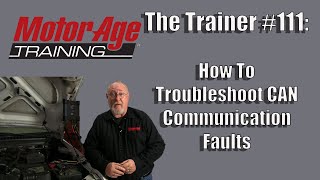
Shop the Parts Behind U1860
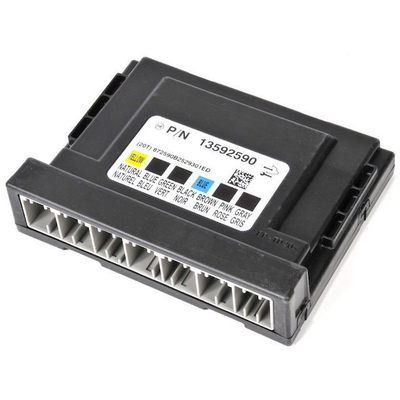
Below are the parts most often responsible for code U1860, ranked by how frequently each one is the actual culprit (per the diagnosis above). Tap any to see what we have for your vehicle.



The information in this article is provided for general reference and educational purposes only. Vehicle specifications, procedures, and part compatibility can vary by production date, trim level, and region. Always consult your vehicle's factory service manual and verify part numbers before purchasing or performing repairs. Safety-critical components such as airbags, seat belts, and braking systems should be installed by a qualified professional.
- 🧭 Diagnostic Flowchart
- 🎬 Helpful Videos
- 🛍️ Shop This Part
- What Does U1860 Mean?
- Can I Drive With U1860?
- Common Causes
- Symptoms
- Common Fixes & Costs
- Used vs. New Parts: Buying Guide
- What Happens If You Wait — Timeline
- Cost of Not Fixing It
- Diagnosis Steps
- When This Code Triggers (Freeze-Frame Conditions)
- Related Codes
- Climate & Environmental Factors
- How to Talk to a Mechanic About This Code
- Where to Take It: Dealer vs Independent vs Chain
- When to Walk Away From the Repair
- What Scan Tool You Need for This Code
- How to Clear the Code After You Fix It
- Will This Fail Emissions / State Inspection?
- Most Commonly Affected Vehicles
- Manufacturer-Specific Notes
- Real Owner Stories
- 2008 Ford Focus with ~130k miles
- 2014 Chevy Cruze 1.4L Turbo
- 2010 Dodge Grand Caravan
- How to Prevent This Code From Triggering
- Frequently Asked Questions
- Can I fix a U1860 code myself?
- Why did my car stall if this is just a communication code?
- Is a U1860 code expensive to fix?
- Will clearing the code make it go away?
- What is a terminating resistor and why does it matter?
- My scanner shows multiple 'U' codes. What does that mean?
- My mechanic is confused by this code. What should I tell them?
- Key Takeaways
- 🎟️ Get 5% Off