

OBD-II Code U1885: Hybrid Module Communication Failure
What U1885 means, why it triggers, and how to fix it
- Code U1885 indicates a critical communication failure between hybrid control modules that forces the vehicle into a sudden shutdown or a low-power limp mode, making it unsafe to drive.
- Dealership software updates resolve over 50% of U1885 codes on 2021-2023 Jeep 4xe and Chrysler PHEV models, making a TSB check your mandatory first diagnostic step.
- A weak 12-volt AGM battery dropping below 12.4 volts triggers false communication faults; always load-test and replace a failing 12V battery before condemning a $2,000 hybrid module.
- For Jeep Wrangler and Gladiator models, replacing the $100 CAN bus star connector (Part #68321746AA) behind the glovebox frequently fixes the issue without requiring a dealer visit.
- General Motors extends the warranty on the Battery Energy Control Module (BECM) for 2016-2019 Chevy Volts to 15 years or 150,000 miles, covering the $2,000+ replacement cost entirely.
What Does U1885 Mean?
Code U1885 indicates the main Hybrid Powertrain Control Module (HPCM) lost communication with the Battery Energy Control Module (BECM). These computers must constantly exchange data over the CAN bus network to manage high-voltage charging, driving, and battery health. When communication breaks, the vehicle triggers a fault to protect the high-voltage components, resulting in a no-start, no-charge, or sudden shutdown.
Technical definition: The formal definition is 'Battery Energy Control Module (BECM) Lost Communication with Hybrid Powertrain Control Module (HPCM)'. Module names vary by manufacturer—Jeep uses 'HCP' and Cadillac uses 'ESCM'—but the core meaning remains identical: a critical data link in the hybrid system is broken.
Can I Drive With U1885?
No — Do Not Drive. It is not safe to drive. This code frequently triggers a 'Controlled System Shutdown' (P167B), forcing the vehicle into a low-power limp mode or shutting it down completely at highway speeds. Owner forums document sudden loss of all propulsion power, creating a severe collision risk.
Common Causes
- Outdated Control Module Software (Very Common) — On modern hybrids, especially from Jeep and Chrysler, a software bug triggers this code. Manufacturers frequently release Technical Service Bulletins (TSBs) with software updates for the Battery Energy Control Module (BECM) or Hybrid Control Processor (HCP) to permanently fix this communication glitch.
- Weak or Failing 12-Volt Battery (Common) — A weak 12-volt battery or a parasitic drain drops system voltage below the threshold required for modules to communicate. Unstable voltage disrupts the CAN bus network, triggering a flood of 'U' codes including U1885. A stable 12V supply is mandatory for all modules to function.
- Faulty Battery Energy Control Module (BECM) (Common) — The control module managing the high-voltage battery fails internally. This is a well-documented pattern failure on the Chevrolet Volt (2016-2019) and Jeep 4xe models, prompting NHTSA investigations and special warranty extensions. This requires replacing the module or the entire battery pack.
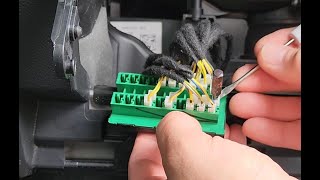
- Failed CAN Bus Star Connector / Junction Block (Less Common) — On Stellantis vehicles (Jeep Wrangler JL/JT), the CAN bus network wires meet at physical star connectors behind the glovebox. These connectors develop cracked internal solder joints, causing an intermittent or total loss of communication that perfectly mimics a failed module. 🎬 See how a faulty star connector causes communication failures.
- Faulty CAN Bus Wiring or Connectors (Less Common) — A damaged wire, corroded pin, or loose connection in the CAN bus communication network interrupts the signal between the modules. Vibrations, moisture, previous repairs, or rodent damage cause this physical break.
- Failed Hybrid Control Processor (HCP) (Rare) — The Hybrid Control Processor (HCP)—the other module in the failed communication link—also fails internally, though less frequently than the BECM. Diagnosis requires ruling out software, wiring, and the BECM first.
- Low Hybrid Battery Coolant Level (Rare) — On GM vehicles like the Chevy Volt and Cadillac ELR, the sensor for the high-voltage battery's cooling system triggers faults that interrupt charging and communication if the coolant level drops below the minimum threshold.
- Faulty High-Voltage Interlock Connector (Rare) — The high-voltage system uses a safety interlock loop. A loose, corroded, or recessed connector (e.g., the service disconnect) causes an immediate electrical disconnect, resulting in a loss of propulsion and triggering communication DTCs as modules lose power.
Symptoms
- Vehicle Shuts Down or Will Not Start — The communication failure prevents the car from starting or forces it to shut off while in motion, creating a significant safety risk.
- Dashboard Warning Messages & Check Engine Light — The Malfunction Indicator Lamp illuminates alongside messages like 'Service High Voltage Charging System', 'Propulsion Power is Reduced', or 'Vehicle is shutting down in 2 minutes'.
- Vehicle Enters 'Limp Mode' — The car drastically reduces power, limits top speed, and disables electric-only operation to prevent battery damage and ensure occupant safety.
- Unable to Charge High-Voltage Battery — The vehicle's safety systems prevent the main hybrid battery from charging to protect the system from potential thermal events or electrical damage.
Common Fixes & Costs
- Control Module Software Update — Parts: $0, Labor: $150-$250, ~1.0 hr book time (Professional)
- Replace 12-Volt AGM Battery
— Parts: $200-$350, Labor: $50-$100, ~0.8 hr book time
(DIY)
Chevrolet Volt: OEM
Jeep Wrangler 4xe: OEM - Replace Battery Energy Control Module (BECM)
— Parts: $800-$1,500, Labor: $800-$1,500, ~6.0 hr book time
(Professional)
Chevrolet Volt (2016-2019): OEM
Jeep Wrangler 4xe: OEM - Replace CAN Bus Star Connector/Junction Block
— Parts: $50-$100, Labor: $150-$300, ~1.5 hr book time
(Intermediate)
Jeep Wrangler (JL) / Gladiator (JT): OEM 🎬 Watch: How to remove and replace the green star connector. - Repair Damaged Wiring or Connectors — Parts: $10-$50, Labor: $250-$1,000, ~4.0 hr book time (Professional)
Used vs. New Parts: Buying Guide
When a used part is worth it: For a critical, VIN-programmed module like a BECM, buying used is never a good idea. The risk of receiving a part with the same inherent defect, or one that cannot be programmed to your vehicle, is extremely high. A used part is only a last-ditch effort on an old, out-of-warranty vehicle when a new part is unavailable.
Donor-vehicle mileage cap: roughly under 30000 miles for the part to have meaningful remaining life.
Donor quality checklist:
- Verify the donor vehicle was not scrapped due to a similar hybrid system failure.
- Part number must be an exact match, but software/hardware revisions create incompatibility.
- Avoid parts from flooded or collision-damaged vehicles, as unseen damage to electronics is guaranteed.
Decision logic:
- If The repair is covered under warranty or special coverage program → Always use a new OEM part installed by the dealer.
- If The vehicle is out of warranty → Buy a new OEM part. The cost is high, but it comes with a part warranty and a much higher chance of success.
- If A new part is on indefinite backorder and the vehicle is inoperable → A used part is a high-risk option to get the vehicle moving, but expect potential failure.
Warranty tradeoff: A new OEM module installed by a dealer includes a 1-2 year parts and labor warranty. A used part from a salvage yard has a 30-90 day warranty at best, which does not cover the extensive labor costs if the part fails.
Worst-case if a used part fails: $1000-$2500. This represents the cost of the used module plus the non-refundable labor for the failed installation, requiring you to start over with a new part and pay for labor a second time.
Cost of Not Fixing It
- Immediate: Vehicle fails to start, shuts down unexpectedly while driving, or enters a severe 'limp mode'. This is a significant safety risk. (Added cost: $200-$500 (Towing and diagnostic fees))
- Short-Term (Days to Weeks): Complete loss of vehicle use. The vehicle is unreliable and unsafe to operate. For PHEVs, charging is disabled, forcing reliance on the gas engine. (Added cost: $500+ (Cost of alternate transportation))
- Long-Term (Months): The vehicle is effectively disabled. Ignoring the problem does not cause cascading damage because the system shuts down to protect itself. The primary cost is the mandatory repair to make the vehicle operational. (Added cost: $1,500-$5,000+ (Eventual repair cost, plus significant inconvenience))
Diagnosis Steps
- Read All Stored Fault Codes from All Modules
Use an advanced OBD-II scanner capable of reading manufacturer-specific 'U' (network), 'P' (powertrain), and 'B' (body) codes from all vehicle modules. Note all codes. U1885 with P0AC4 is common, but seeing it with P0BBD points toward a battery cell issue. Do not clear the codes yet.
Tools: Advanced OBD-II Scanner (Beginner) - Check for Technical Service Bulletins (TSBs)
Search online for your vehicle's year, make, model, and 'U1885 TSB'. The most common cause is a known software bug that the dealer fixes with an update (e.g., Jeep TSB 08-048-23). This step saves significant time and money.
Tools: Computer with internet access (Beginner) - Test the 12-Volt Battery and Connections
A weak 12V battery is a frequent cause of communication codes. Use a multimeter to check the battery voltage with the car off; it must be above 12.4 volts. Have it professionally load-tested at an auto parts store. Ensure the battery terminals are clean and tight.
Tools: Multimeter or battery tester (Beginner) - Inspect CAN Bus Star Connectors (Jeep/Stellantis)
On Jeep Wrangler (JL) and Gladiator (JT) models, access the CAN bus star connectors located behind the glove box. Wiggling the connectors or nearby wiring with the vehicle on triggers the fault if there is a physical connection issue. The connectors require replacement if faulty.
Tools: Trim removal tools, flashlight (Intermediate) - Inspect Visible Wiring and Connectors
Perform a thorough visual inspection of wiring harnesses going to the main hybrid control modules (HPCM, BECM) and the 12V battery. Look for rodent damage, chafing, corrosion on connector pins, or loose connections.
Tools: Flashlight, inspection mirror (Intermediate) - Check Hybrid Coolant Level (GM Models)
For GM vehicles like the Chevy Volt or Cadillac ELR, locate the coolant reservoir for the hybrid battery system. A level below the minimum mark triggers charging system errors and related communication faults. Top off with the specified coolant.
Tools: Flashlight, specified coolant (Intermediate) - Perform CAN Bus Resistance Check
Using a multimeter, check the resistance between the CAN High and CAN Low pins at the OBD-II port (pins 6 and 14). With the 12V battery disconnected, a healthy network reads exactly 60 Ohms. A reading of 120 Ohms indicates a missing terminating resistor or a broken wire. A reading near 0 Ohms indicates a short circuit.
Tools: Multimeter (Advanced) - Perform CAN Bus Static Voltage Check
With the 12V battery connected and the ignition ON (engine OFF), measure the DC voltage of the CAN lines to a known good ground. CAN High (Pin 6) reads approximately 2.5V - 2.7V. CAN Low (Pin 14) reads approximately 2.3V - 2.5V. Significant deviation points to a short to ground or power.
Tools: Multimeter (Advanced) - Perform Professional CAN Bus Diagnostics with Oscilloscope
A technician uses an oscilloscope to analyze the CAN bus signals. A healthy signal shows clean, mirror-image square waves. A flat line, excessive noise, or incorrect voltage levels indicate a wiring problem or a module pulling the bus down. Stop DIY diagnosis here and take the vehicle to a hybrid specialist.
Tools: Oscilloscope, advanced diagnostic scanner (Advanced)
When This Code Triggers (Freeze-Frame Conditions)
- Vehicle Speed: 30-60 mph (The fault sets during steady-state driving when modules are actively communicating.)
- Engine/Motor RPM: 1200-2500 (Occurs under light to moderate load, not necessarily during heavy acceleration.)
- System Voltage: 11.8-12.5V (A low 12V system voltage reading in the freeze frame is a strong indicator that the 12V battery is the root cause.)
- Time Since Start: > 5 minutes (The code appears after the vehicle has been running long enough for all modules to initialize and begin network communication.)
Related Codes
- U0111 — This code for 'Lost Communication With Battery Energy Control Module' is nearly identical to U1885 and they often appear together. Diagnostically, they point to the exact same problem: the BECM is offline.
- P167B — Meaning 'Controlled System Shutdown', this code indicates the vehicle's computers intentionally initiated a shutdown or limp mode because of a serious fault. It is a direct consequence of the critical communication loss reported by U1885.
- P0AC4 — This generic code means 'Hybrid Powertrain Control Module Requested MIL Illumination'. It is an informational code telling you the hybrid system has a problem, but U1885 tells you exactly what that problem is.
- P0BBD — This code for 'Hybrid Battery Pack Voltage Variation Exceeded Limit' points to a problem with the battery cells themselves. If cell voltages are fine but U1885 is present, the communication loss is preventing the system from accurately reading the cells.
- P0EDD — This code indicates a problem with the battery's health. It is often listed in the same TSBs as U1885 for Jeep 4xe models, suggesting software updates fix the logic for both communication and battery health monitoring.
Climate & Environmental Factors
- Cold Weather: Low ambient temperatures significantly reduce the efficiency and available power of a 12-volt battery. A battery that functions adequately in warm weather fails to provide stable voltage on a cold start, triggering a flood of communication codes like U1885 as modules fail to initialize.
How to Clear the Code After You Fix It
- Reconnect the 12V battery if it was disconnected for the repair.
- Use an advanced OBD-II scan tool to clear the fault codes. For GM vehicles, this requires a special function called 'Clear Secured High Voltage DTCs'.
- Perform a complete drive cycle to allow the vehicle's readiness monitors to run their self-tests.
Drive cycle (~30 minutes): A generic drive cycle includes: a cold start, 5 minutes of idling, 15 minutes of mixed city/suburban driving with several stops, followed by 10 minutes of steady highway-speed driving (45-60 mph).
Readiness monitors affected: Catalyst Monitor, O2 Sensor Monitor, Evaporative System (EVAP) Monitor
Before emissions retest: drive at least 150 miles to fully set monitors.
Watch out for:
- Using a basic code reader that cannot clear secured or manufacturer-specific DTCs.
- Simply disconnecting the battery does not clear the code on modern vehicles and resets all readiness monitors.
- The code returns immediately if the root cause (e.g., bad wiring, faulty module) is not properly fixed.
Will This Fail Emissions / State Inspection?
Yes — this code typically fails an OBD-II emissions inspection.
- California: An active Check Engine Light results in an automatic smog check failure. After the repair, a full drive cycle must be completed to set the readiness monitors before a re-test.
- New York: The NYVIP3 inspection includes an OBD-II check. An illuminated Malfunction Indicator Lamp (MIL) for any fault code is an automatic failure.
- Texas: In the 17 counties requiring emissions testing, a vehicle with an active Check Engine Light and stored diagnostic trouble codes like U1885 fails the OBD-II portion of the inspection.
Most Commonly Affected Vehicles
- Jeep Wrangler 4xe (2021-2024) — Extremely common issue. For vehicles built on or before August 8, 2022, the primary cause is a software glitch addressed by TSB 08-048-23. Physical failure of CAN bus star connectors behind the glovebox is also a known issue.
- Jeep Grand Cherokee 4xe (2022-2024) — Shares a similar hybrid powertrain to the Wrangler 4xe and is prone to the exact same software and module communication faults.
- Chevrolet Volt (2016-2019) — Suffers from widespread Battery Energy Control Module (BECM) failures, prompting NHTSA investigation PE23022. GM issued Special Coverage Program N232432680, extending the BECM warranty to 15 years or 150,000 miles. 🎬 Watch: A step-by-step guide to replacing the Chevy Volt BECM.
- Chrysler Pacifica PHEV (2017-2024) — Prone to this code due to software issues. TSB 08-043-17 REV. B reprograms the BPCM, and TSB 08-218-24 updates the HCP/PIM modules.
- Cadillac ELR (2014-2016) — As the sister platform to the Gen 1 Chevy Volt, the ELR is susceptible to the same BECM failures, 12V battery issues, and hybrid coolant level sensor faults.
- Chevrolet Malibu Eco (Hybrid) (2013-2014) — Owners report this code appearing alongside rough running conditions and other hybrid system faults, frequently tied to 12V battery degradation.
- Buick LaCrosse (eAssist) (2012-2016) — Service manuals list U1885 as a primary diagnostic trouble code related to a communication loss between the battery and hybrid control modules.
- Ford Escape Hybrid / C-Max Hybrid (2013-2018) — While U1885 is a GM/Stellantis-specific code, these vehicles set the nearly identical code U0111 ('Lost Communication With Battery Energy Control Module'), requiring the exact same diagnostic steps.
Manufacturer-Specific Notes
- Jeep / Stellantis (Chrysler): Software is the primary suspect. A dealer must check for and apply TSBs (like 08-048-23 for Jeep or 08-043-17 for Chrysler) using the wiTECH scan tool before attempting any hardware repairs. These updates reprogram multiple modules in a specific sequence.
- General Motors (Chevrolet, Buick, Cadillac): For 2016-2019 Chevy Volts, BECM failure is a known pattern defect. GM issued Special Coverage Program N232432680, extending the warranty on the BECM to 15 years or 150,000 miles. These vehicles are also extremely sensitive to the health of the 12V battery.
- Jeep / Stellantis (Physical Failures): The physical CAN bus star connectors behind the glovebox on the JL/JT platform are a known failure point. An intermittent open in one of these connectors causes a flood of communication codes that perfectly mimics a module failure. The Mopar part number is 68321746AA.
- Ford: Ford vehicles use different code numbers (like U0111) for the same fault, but the diagnostic logic is identical. Ensure the high-voltage battery service disconnect is fully seated and locked; an improperly connected interlock causes a no-start and triggers communication codes.
Frequently Asked Questions
What is the most common misdiagnosis for U1885?
The biggest mistake is immediately replacing the expensive Battery Energy Control Module (BECM). Technicians must investigate software updates via TSBs first, followed by a thorough load test of the 12V battery. On Jeeps, overlooking the physical CAN bus star connectors behind the glovebox is another frequent error.
Can I use an aftermarket or used control module for the repair?
No. Hybrid control modules like the BECM are VIN-matched to the vehicle and require specific programming only possible with dealer-level tools. A used module carries a high risk of containing the same internal flaw or being impossible to program.
Can I just clear the code to fix it?
No. Clearing the code does not fix the underlying communication failure, and U1885 will return almost immediately. On GM vehicles, clearing secured high-voltage DTCs requires a dealer-specific tool (GDS2) even after completing the physical repair.
Is this repair covered by the hybrid warranty?
A failed BECM is typically covered under the 8-year/100,000-mile federal hybrid warranty. For 2016-2019 Chevy Volts, GM extends this coverage to 15 years/150,000 miles. Software updates are often covered, but 12V batteries and physical wiring damage are not.
What is a BECM and what does it do?
The BECM (Battery Energy Control Module) is the primary computer managing the high-voltage battery. It monitors individual cell temperatures and voltages, controls the charging process, and broadcasts this critical data to the rest of the vehicle.
How much does it cost to fix code U1885?
A dealership software update costs $150-$250, while a new 12V AGM battery runs $300-$450 installed. A BECM replacement is the most expensive fix at $1,600-$3,000+, though warranties frequently cover this cost.
Why is my Chevy Volt or Jeep 4xe BECM on backorder?
Widespread pattern failures of the BECM on these specific models created demand that outstripped the supply chain. Owners frequently report vehicles sitting at dealerships for weeks or months waiting for replacement modules to arrive.
Why did my car go into 'limp mode'?
Limp mode is a mandatory protective feature triggered when essential hybrid computers lose communication. Because the vehicle cannot verify the high-voltage battery's temperature or charge level, it severely limits speed and power to prevent catastrophic battery damage.
Key Takeaways
- Code U1885 indicates a critical communication failure between hybrid control modules that forces the vehicle into a sudden shutdown or a low-power limp mode, making it unsafe to drive.
- Dealership software updates resolve over 50% of U1885 codes on 2021-2023 Jeep 4xe and Chrysler PHEV models, making a TSB check your mandatory first diagnostic step.
- A weak 12-volt AGM battery dropping below 12.4 volts triggers false communication faults; always load-test and replace a failing 12V battery before condemning a $2,000 hybrid module.
- For Jeep Wrangler and Gladiator models, replacing the $100 CAN bus star connector (Part #68321746AA) behind the glovebox frequently fixes the issue without requiring a dealer visit.
- General Motors extends the warranty on the Battery Energy Control Module (BECM) for 2016-2019 Chevy Volts to 15 years or 150,000 miles, covering the $2,000+ replacement cost entirely.
Helpful Videos
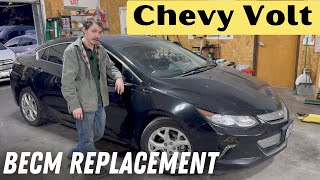
Shop the Parts Behind U1885
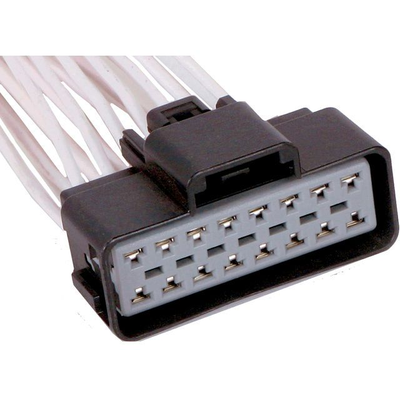
Below are the parts most often responsible for code U1885, ranked by how frequently each one is the actual culprit (per the diagnosis above). Tap any to see what we have for your vehicle.



The information in this article is provided for general reference and educational purposes only. Vehicle specifications, procedures, and part compatibility can vary by production date, trim level, and region. Always consult your vehicle's factory service manual and verify part numbers before purchasing or performing repairs. Safety-critical components such as airbags, seat belts, and braking systems should be installed by a qualified professional.
- 🎬 Helpful Videos
- 🛍️ Shop This Part
- What Does U1885 Mean?
- Can I Drive With U1885?
- Common Causes
- Symptoms
- Common Fixes & Costs
- Used vs. New Parts: Buying Guide
- Cost of Not Fixing It
- Diagnosis Steps
- When This Code Triggers (Freeze-Frame Conditions)
- Related Codes
- Climate & Environmental Factors
- How to Clear the Code After You Fix It
- Will This Fail Emissions / State Inspection?
- Most Commonly Affected Vehicles
- Manufacturer-Specific Notes
- Frequently Asked Questions
- What is the most common misdiagnosis for U1885?
- Can I use an aftermarket or used control module for the repair?
- Can I just clear the code to fix it?
- Is this repair covered by the hybrid warranty?
- What is a BECM and what does it do?
- How much does it cost to fix code U1885?
- Why is my Chevy Volt or Jeep 4xe BECM on backorder?
- Why did my car go into 'limp mode'?
- Key Takeaways
- 🎟️ Get 5% Off