

OBD-II Code U1886: Lost Communication Between Energy and Engine Controls
What U1886 means, why it triggers, and how to fix it
- Code U1886 triggers when the Powertrain Control Module (PCM) loses CAN bus communication with the Battery Energy Control Module (BPCM) for more than a few seconds.
- On 2018+ Jeep and Ram eTorque models, a dealer software update (TSB 08-166-23) costing $150-$250 fixes this code 80% of the time.
- Test the 12-volt battery before replacing any modules; a resting voltage below 12.4V frequently disrupts network communication and triggers U1886.
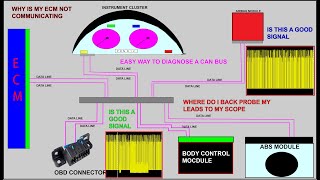
- Verify CAN bus integrity by disconnecting the battery and measuring resistance between OBD-II pins 6 and 14; a healthy network reads exactly 60 Ohms.
What Does U1886 Mean?
Code U1886 indicates the Powertrain Control Module (PCM) lost connection with the Battery Energy Control Module (BPCM) or Energy Storage Control Module (ESCM). These computers communicate constantly over the Controller Area Network (CAN bus). When this link breaks for more than a few seconds, the PCM stores U1886.
Technical definition: SAE/ISO defines U1886 as 'Battery Energy Control Module Lost Communication With ECM/PCM'. This network communication code (U-code) indicates a CAN bus fault preventing modules from exchanging data packets regarding battery status, state of charge, and hybrid system requests.
Can I Drive With U1886?
Yes, But With Caution. Yes, but immediate attention is highly recommended. The vehicle will run, but critical features like the auto start/stop system are disabled, and the check engine light remains on. The primary risk is unpredictability; the engine stalls in traffic or fails to restart, leaving you stranded. Continued driving strains the 12-volt battery because its charging status is unmanaged, leading to premature battery failure (a $250-$450 cost) and a tow.
Common Causes
- Outdated Control Module Software (Very Common) — A software glitch in the Battery Energy Control Module (BPCM) is the leading cause on Stellantis eTorque vehicles. Manufacturers resolve these communication bugs via Technical Service Bulletins (TSBs) requiring a software reflash. 🎬 Watch: See how eTorque modules are programmed and updated.
- Weak or Failing 12-Volt Battery (Common) — Control modules require stable voltage. A weak 12-volt battery causes voltage drops that trigger unpredictable module behavior and temporary communication dropouts. A resting voltage below 12.4V is the primary indicator. 🎬 Watch: How a failing battery causes electrical chaos and codes.
- Damaged CAN Bus Wiring or Connectors (Common) — Chafed wires, corroded pins, or loose connectors disrupt the CAN bus signal. Micro-vibrations also cause terminal fretting (tiny movements creating high-resistance corrosion), blocking network messages.
- Poor Ground Connection (Common) — A loose, corroded, or broken ground strap for the PCM, BPCM, or chassis causes intermittent communication faults. These trigger U1886 when the engine torques or the vehicle hits a bump.
- Aftermarket Device Interference (Less Common) — Aftermarket remote starters, alarms, or OBD-II insurance trackers tap into the CAN bus. Poor installations corrupt network traffic and trigger U-codes.
- Blown BPCM Fuse (Less Common) — If a BPCM fuse blows, the module loses power and drops off the network, immediately setting a 'Lost Communication' code.
- Failed Battery Energy Control Module (BPCM) (Rare) — An internal failure of the BPCM's transceiver or processor prevents communication. This is rare and usually accompanied by an internal performance code like P0A1F.
Symptoms
- Auto Start/Stop System Disabled — The auto start/stop feature relies on BPCM data. When communication drops, the system disables as a fail-safe. This is usually the first symptom noticed.
- Check Engine or Battery Warning Light On — An illuminated Malfunction Indicator Lamp (MIL) or battery warning light appears. A 'Service High Voltage System' message displays on hybrid models.
- Extremely Short Auto-Stops — On Jeep and Ram eTorque models, the auto-stop function engages for only a second before the engine restarts abruptly, especially in cold weather.
- Vehicle Stalls or Fails to Start — Severe communication loss disrupts powertrain coordination, causing intermittent stalling or a complete no-start condition.
- Reduced Hybrid System Performance — Hybrid vehicles exhibit a lack of electric assist, erratic shifting, or enter a reduced power 'limp mode' to protect components.
- No Communication with Scan Tool (scan-tool only — no driver-felt sign) — A professional scan tool reports it cannot establish communication with the BPCM, confirming the module is offline.
Diagnostic Flowchart
Tap your situation to follow the diagnostic path that matches what you're seeing on this code.
Common Fixes & Costs
- Reprogramming the Battery Pack Control Module (BPCM) — Parts: $0, Labor: $150-$250, ~1.0 hr book time (Professional)
- Replacing the 12-Volt Battery — Parts: $200-$300, Labor: $50-$100, ~0.5 hr book time (DIY)
- Repairing Damaged Wiring or Grounds — Parts: $10-$50, Labor: $200-$600, ~3.0 hr book time (Intermediate)
- Removing Aftermarket Devices — Parts: $0, Labor: $0, ~0.1 hr book time (DIY)
- Replacing the Battery Energy Control Module (BPCM/ESCM)
— Parts: $800-$16,000, Labor: $200-$600, ~2.5 hr book time
(Professional)
Jeep Wrangler (JL): OEM
Chevrolet Bolt EV: OEM
Used vs. New Parts: Buying Guide
When a used part is worth it: A used BPCM from a reputable salvage yard is viable for an older, out-of-warranty vehicle if a new OEM module is prohibitively expensive.
Donor-vehicle mileage cap: roughly under 100000 miles for the part to have meaningful remaining life.
Donor quality checklist:
- Verify the exact part number matches; superseded numbers fail to communicate.
- Obtain the donor VIN to check history for electrical problems.
- Purchase from a seller offering at least a 90-day warranty.
Decision logic:
- If The fix is a known software update (common on Stellantis vehicles) → Do not buy any part; pay for the dealer software flash.
- If Vehicle is still under warranty → Use new OEM parts installed by the dealer for free.
- If New OEM part is over $1,500 and the vehicle is over 8 years old → A used part saves money, but budget for professional programming.
Warranty tradeoff: Used parts carry a 30-90 day warranty. New aftermarket parts offer 1 year. New OEM parts installed by a dealer carry a 1-2 year warranty.
Worst-case if a used part fails: $300-$800 if a used module is dead on arrival, requiring you to pay for diagnostic and programming labor twice.
What Happens If You Wait — Timeline
- 0-1 month: Check Engine Light illuminates. Auto Start/Stop disables. Vehicle exhibits brief auto-stops or hesitation. No physical damage occurs yet. (MPG impact: 0-1%% · Added cost: $0)
- 1-3 months: The BPCM fails to manage the 12V battery's state of charge. The battery is consistently undercharged or overcharged, accelerating degradation. Stall risks increase. (MPG impact: 1-2%% · Added cost: $50 (in wasted fuel and initial battery wear))
- 3-9 months: The 12V AGM battery fails prematurely due to chronic improper charging. The vehicle fails to start, requiring a tow. (MPG impact: N/A (vehicle may not be driveable)% · Added cost: $250-$450 (Cost of a new AGM battery and a tow truck))
- 9+ months: Operating with a communication fault masks serious high-voltage battery or DC/DC converter issues, leading to catastrophic failure of the high-voltage system. (MPG impact: N/A% · Added cost: $2,000-$17,000+ (Risk of damage to high-voltage components))
Cost of Not Fixing It
- 0-1 month: Annoyance from warning lights and disabled auto start/stop. Unpredictable stalling poses a safety risk. Inefficient 12V battery charging begins. (Added cost: 0)
- 1-6 months: Increased strain on the 12V battery due to improper charging management causes premature battery failure, leaving you stranded. (Added cost: $250-$450 (New 12V AGM battery + potential tow))
- 6+ months: Continued operation masks serious underlying issues with the high-voltage battery or charging system, leading to catastrophic component failure. (Added cost: $2000-$17000+ (Risk of damage to DC/DC converter or high-voltage battery components))
Diagnosis Steps
- Check for Technical Service Bulletins (TSBs)
Search for TSBs related to U1886 for your specific vehicle. A software update is the most common fix for Stellantis vehicles (e.g., TSBs 08-166-23, 08-056-20).
Tools: ['Smartphone or Computer'] - Test the 12-Volt Battery
A weak battery causes random communication codes. With the engine off, verify the battery reads at least 12.4V. Perform a load test to ensure it delivers 90% or more of its rated Cold Cranking Amps (CCA).
Tools: ['Digital Multimeter', 'Battery Load Tester'] - Perform a Full Vehicle Code Scan
Read codes from ALL modules. If multiple modules lost communication with the BPCM, the BPCM or its circuit is faulty. If the BPCM lost communication with many modules, the network itself is compromised.
Tools: ['Professional OBD-II Scan Tool'] - Inspect Fuses and Ground Connections
Test all fuses related to the PCM and BPCM. Visually inspect and physically tug the main ground straps from the battery to the chassis and engine to chassis. Clean any corrosion.
Tools: ['Flashlight', 'Digital Multimeter'] - Inspect CAN Bus Wiring
Examine the wiring harness between the PCM and BPCM. Look for chafing against brackets, rodent damage, or green corrosion inside connectors.
Tools: ['Flashlight'] - [PRO TIP] Check CAN Bus Network Resistance
Disconnect the 12V battery. At the OBD-II port, measure resistance between Pin 6 (CAN High) and Pin 14 (CAN Low). A healthy network reads 60 Ohms. 120 Ohms indicates an open circuit; 0 Ohms indicates a short.
Tools: ['Digital Multimeter'] (Advanced) - [PRO TIP] Check CAN Bus Voltage Levels
Reconnect the battery and turn the ignition on. Back-probe the OBD-II port. CAN High (Pin 6) to ground reads 2.6V-3.5V. CAN Low (Pin 14) to ground reads 1.5V-2.4V. If both read 2.5V, they are shorted together.
Tools: ['Digital Multimeter', 'Back-probe kit'] (Advanced) - [PRO TIP] Analyze Scan Tool Live Data
Monitor BPCM PIDs. 'BPCM Voltage' must match the 12V system voltage (13.7-14.7V running). Wiggle the wiring harnesses; if the communication status drops to 'Unavailable', you found a physical wiring break.
Tools: ['Professional Bi-directional Scan Tool'] (Advanced) - Isolate the Faulty Module (Advanced)
If CAN bus resistance or voltage is incorrect, disconnect modules on the network one by one. When readings return to normal, the last module disconnected is crashing the network.
Tools: ['Digital Multimeter', 'Wiring Diagram']
When This Code Triggers (Freeze-Frame Conditions)
- Engine Coolant Temp: 160-210°F (Fully warmed up)
- RPM: 0 (at startup) or 1200-2500 (during cruise) (During initial key-on self-test or steady driving)
- Battery Voltage (12V): 9-18V (Sets during low voltage events, such as cranking with a weak battery.)
- Vehicle Speed: 0-55 mph (Occurs at startup or during city/highway driving)
Related Codes
- U0293 — Lost Communication With Hybrid Control Module. The BPCM logs U1886 about the PCM, while the PCM logs U0293 about the BPCM. They appear together and indicate the exact same network fault.
- P0A1F — Battery Energy Control Module A Internal Performance. If the BPCM fails its internal self-test (P0A1F), it stops communicating, forcing the PCM to log U1886. P0A1F is the root cause; U1886 is the symptom.
- U0100 — Lost Communication with ECM/PCM. If U1886 is the only code, the fault is isolated to the BPCM circuit. If U0100 appears in multiple modules, it indicates a severe network-wide crash or PCM failure.
- P0A94 — DC/DC Converter Performance. The BPCM manages the DC/DC converter to charge the 12V battery. A converter fault (P0A94) disrupts BPCM operation and triggers the U1886 communication loss.
Climate & Environmental Factors
- Cold Weather: Cold temperatures severely impact 12-volt and 48-volt eTorque battery performance. Borderline batteries fail completely in the cold, causing communication dropouts. eTorque owners report increased auto start/stop failures during winter.
- Humidity and Moisture: High humidity accelerates corrosion on wiring, connector pins, and ground points. This increases electrical resistance, disrupting sensitive CAN bus voltage signals and causing intermittent U1886 faults.
How to Talk to a Mechanic About This Code
Say this: "I have a [Year/Make/Model] with a U1886 code. I understand a common cause is a software issue, so please check for applicable Technical Service Bulletins, like TSB 08-166-23, before proceeding with deep diagnostics."
This signals you are informed. It directs them to the cheapest fix first (a software update), preventing them from immediately quoting expensive part replacements.
Avoid saying:
- 'My check engine light is on, can you look at it?'
- 'Just fix whatever is wrong.'
- 'My car is acting weird, I don't know what's wrong.'
Questions to ask before authorizing the repair:
- If a software update is not the fix, did you load test the 12-volt battery? What were the results?
- If recommending a module replacement, how did you rule out a wiring issue or a bad ground?
- If the diagnosis points to wiring, what is the estimated labor time to trace the fault?
- What is the warranty on this specific repair, covering both parts and labor?
Where to Take It: Dealer vs Independent vs Chain
- Dealer:
Highly Recommended as the first stop. They have exclusive access to the tools (wiTECH) and TSBs required for the most common fix.
Best for: Stellantis vehicles, as the most common fix is a dealer-only software update., Vehicles under powertrain or extended warranty., Complex electrical issues on hybrid and EV models.
Downsides: Higher labor rates, typically 1.5x to 2x more than independent shops., May prefer replacing entire harnesses rather than repairing wiring. (Typical cost: +75% vs. baseline) - Independent Shop:
Good option ONLY if they have J2534 pass-thru capabilities to perform module programming. Otherwise, they cannot perform the most common fix.
Best for: Out-of-warranty vehicles where the problem is confirmed to be a bad 12V battery, wiring, or ground., Second opinions after receiving a high quote from a dealer.
Downsides: Most lack the expensive, subscription-based OEM tools to perform software updates., Quality varies; look for shops specializing in electrical diagnostics. (Typical cost: +0% vs. baseline) - Chain Shop:
AVOID. They are not equipped to handle CAN bus diagnostics and will likely replace unnecessary parts.
Best for: Selling you a 12-volt battery.
Downsides: Technicians lack advanced diagnostic training for complex network communication codes., High pressure to sell parts quickly leads to misdiagnosis. (Typical cost: -10% vs. baseline)
When to Walk Away From the Repair
If the estimated repair cost exceeds 50% of your car's private-party value, consider alternatives. For U1886, this calculation depends entirely on the diagnosed cause.
- Car worth $25000, fix is $180: Fix It. A software update is a minor cost.
- Car worth $15000, fix is $1400: Fix It. A BPCM replacement is significant, but well below the 50% threshold.
- Car worth $10000, fix is $16000: Walk Away. The repair cost for a failed high-voltage battery pack on an out-of-warranty EV exceeds the vehicle's value.
What Scan Tool You Need for This Code
Minimum: A scanner that reads codes from ALL vehicle modules (BPCM, PCM, ABS) and displays live data PIDs.
A $20 code reader only pulls generic engine codes. It cannot see if the BPCM is online, read its stored codes, or display its voltage data.
Budget: BlueDriver Pro / XTOOL A30D (~$99) — Connects to a smartphone app to perform full system scans. Displays live data, allowing you to check the BPCM's reported voltage to rule out battery issues.
Mid-range: Foxwell NT510 Elite / Ancel BD310 (~$150) — Offers all-system scans and live data with a dedicated screen. Provides manufacturer-specific data for better insight.
Professional: Autel MaxiCOM MK808S (~$450) — Provides full bidirectional control. You can actively command modules to perform tests, helping isolate a faulty module from a wiring problem. It does NOT perform OEM software flashes.
Rent vs buy: Rent-a-tool scanners from auto parts stores are basic code readers and insufficient for this code. You must buy a scanner with all-system capabilities to diagnose U1886.
How to Clear the Code After You Fix It
- Reconnect battery if disconnected for repair
- Use an OBD-II scan tool to clear all Diagnostic Trouble Codes (DTCs) from all modules.
- Perform a complete drive cycle to allow the system's readiness monitors to run.
Drive cycle (~30 minutes): A general drive cycle includes a cold start (engine off for 8+ hours), 3 minutes of idling, 10 minutes of highway driving (55-60 mph), 15 minutes of mixed city driving, and coasting down without braking.
Readiness monitors affected: Comprehensive Component Monitor, Misfire Monitor, EVAP System Monitor
Before emissions retest: drive at least 100 miles to fully set monitors.
Watch out for:
- Disconnecting the battery clears the code but resets all emissions readiness monitors, causing an automatic smog test failure.
- The code returns immediately if the root cause (software bug, bad wire) is not corrected.
Will This Fail Emissions / State Inspection?
Yes — this code typically fails an OBD-II emissions inspection.
- California: An active Check Engine Light results in an automatic failure. After repair, all readiness monitors must be 'Ready' before passing.
- New York: The annual safety inspection includes an OBD-II emissions test. A U1886 code causes an immediate failure.
- Texas: In the 17 counties requiring emissions testing, an active U-code is an automatic failure. The vehicle must be driven to set readiness monitors before a re-test.
Most Commonly Affected Vehicles
- Jeep Wrangler (JL), Gladiator (JT) (2018-2024) — Extremely common on 2.0L and 3.6L eTorque engines. TSB 08-166-23 specifies a BPCM software update as the primary fix.
- Ram 1500 (DT) (2019-2024) — The Ram 1500 eTorque mild-hybrid system is highly susceptible. TSBs 08-056-20 and 08-091-22 call for a BPCM software reflash.
- Chevrolet Silverado, Tahoe, Malibu Hybrid, Bolt EV (2008-2023) — U1886 indicates a communication loss between the Energy Storage Control Module (ESCM) and the PCM. Diagnosis focuses on CAN bus wiring and module power/ground.
- GMC Sierra, Yukon Hybrid (2008-2023) — Points to a communication problem within the hybrid powertrain control system, identical to Chevrolet counterparts.
- Cadillac Escalade Hybrid, ELR, CT6 Plug-In (2009-2023) — Logs this code for ESCM to PCM communication loss, primarily affecting hybrid and electrified models.
- Chrysler Pacifica Hybrid (2017-2024) — Shares powertrain architecture with Stellantis vehicles where BPCM software updates fix communication codes. Subject to recalls for HV battery issues.
- Buick Enclave, LaCrosse Hybrid (2018-2023) — Triggered by issues with the battery voltage sensor or its connector harness. The 12V battery is located inside the cabin under the floor.
- Honda Insight, Accord Hybrid (2010-2023) — Honda hybrids set a similar code (P1586) for a current sensor mismatch between the motor power inverter and the battery module.
Manufacturer-Specific Notes
- Jeep/Chrysler/Dodge/Ram (Stellantis): This code is overwhelmingly caused by a software issue in the BPCM on eTorque vehicles. Do not replace the module before checking for software updates. An extended warranty (XU1) covers the High Voltage Battery Pack for certain 2021-2025 Wrangler and Grand Cherokee PHEVs.
- General Motors (GM, Chevrolet, Cadillac): Points directly to a communication break between the PCM and the Energy Storage Control Module (ESCM). Diagnosis is traditional, focusing on CAN bus wiring integrity between the modules.
- Buick: On the Enclave, the 12V battery is located inside the vehicle behind the passenger seat. The fault is often tied to the specific battery voltage sensor and its pigtail connector.
- Ford: Ford does not commonly use U1886. They use different U-codes (e.g., U0111 for lost communication with battery energy control module A) to report identical faults.
Real Owner Stories
2019 Ram 1500 eTorque at 55K miles
Check engine and battery lights illuminated, and auto start/stop quit working during the first cold snap.
What they tried:
- Replaced the original 12V AGM battery at an auto parts store for $400.
- The code returned within a day.
Outcome: The Ram dealer identified TSB 08-056-20 and reflashed the BPCM in under an hour. Total cost was $180. The code never returned.
Lesson: Always check for TSBs before replacing parts on Stellantis eTorque vehicles. A software update is the cheapest and most common fix.
2018 Jeep Wrangler JL (2.0L eTorque) at 70K miles
Multiple warning lights appeared. The vehicle intermittently stalled at low speeds and failed to restart after auto-stops.
What they tried:
- An independent shop quoted $1,400 to replace a 'faulty' BPCM.
- The owner sought a second opinion from an electrical diagnostic specialist.
Outcome: The specialist found a loose, corroded main ground strap from the engine block to the chassis. They cleaned and re-secured it for $150. All codes cleared permanently.
Lesson: Multiple unrelated warning lights alongside a communication code point to foundational issues like bad grounds or low voltage, not failed modules.
2020 Chevy Bolt EV at 45K miles
Received a 'Service High Voltage System' message and entered limp mode. Scan tool showed U1886.
What they tried:
- The owner recently installed an aftermarket OBD-II insurance tracker.
Outcome: The owner unplugged the insurance dongle and cleared the codes. The vehicle resumed normal operation. The device was broadcasting messages that crashed the CAN bus.
Lesson: If a communication fault appears after installing an aftermarket device, unplug it immediately. They frequently corrupt CAN bus traffic.
How to Prevent This Code From Triggering
- Periodically Test the 12V Battery (Every 6 months) — A weak 12V battery causes communication codes. Testing voltage (>12.4V) catches failing batteries before they trigger random electrical faults.
- Keep Battery Terminals and Grounds Clean (Annually) — Corrosion creates unwanted resistance, causing voltage drops that disrupt module communication. Cleaning points to bare metal ensures a solid electrical foundation.
- Use a Battery Tender for Long-Term Storage (If parked for more than 2 weeks) — Modern vehicles have constant parasitic draw. A maintainer keeps the 12V battery charged, preventing voltage drops that cause modules to set fault codes upon startup.
- Ask for Software Updates During Service (During routine dealer visits) — U1886 is often a software bug. Asking the service advisor to check for open TSBs or BPCM flashes prevents the issue from occurring.
- Apply Dielectric Grease to Connectors (When disconnecting for repair) — Applying dielectric grease to connector seals keeps moisture out, preventing future corrosion on sensitive CAN bus pins.
Frequently Asked Questions
Can I fix U1886 myself?
A DIYer can test the 12V battery, inspect fuses, and clean ground wires. However, because the most common fix is a dealer-only software update, this code usually requires professional help.
What is the most common misdiagnosis for U1886?
Replacing the expensive Battery Energy Control Module (BPCM) without first checking for software updates or thoroughly testing the 12V battery and ground connections.
Will clearing the code make it go away?
Clearing the code turns the light off temporarily if the fault is intermittent. If the root cause (software bug, weak battery, bad wire) remains, the code always returns.
Why did my auto start/stop quit working with this code?
The auto start/stop system depends on the BPCM to monitor battery health. When communication drops, the main computer disables start/stop to prevent stalling. This is usually the first symptom drivers notice.
Why are there so many other 'U' codes with U1886?
When a critical module like the BPCM stops communicating, it creates a domino effect. Other modules needing its data report a communication loss, triggering multiple U-codes. This helps technicians understand the scope of the network failure.
How much does it cost to diagnose the U1886 code?
Repair shops charge a diagnostic fee of one to two hours of labor ($150-$300) to identify the root cause. This fee is often applied toward the final repair cost.
Is the eTorque system that causes this code reliable?
The eTorque system is generally reliable but adds complexity. It relies on both a 48-volt lithium-ion pack and a traditional 12-volt battery, creating potential failure points in cold climates.
What's the difference between the high-voltage battery and the 12V battery?
The high-voltage battery powers the electric motors in hybrids and EVs. The 12V battery powers lights, computers, and accessories. A fault with the high-voltage control module (BPCM) prevents the 12V battery from charging correctly.
Key Takeaways
- Code U1886 triggers when the Powertrain Control Module (PCM) loses CAN bus communication with the Battery Energy Control Module (BPCM) for more than a few seconds.
- On 2018+ Jeep and Ram eTorque models, a dealer software update (TSB 08-166-23) costing $150-$250 fixes this code 80% of the time.
- Test the 12-volt battery before replacing any modules; a resting voltage below 12.4V frequently disrupts network communication and triggers U1886.
- Verify CAN bus integrity by disconnecting the battery and measuring resistance between OBD-II pins 6 and 14; a healthy network reads exactly 60 Ohms.
Helpful Videos


Shop the Parts Behind U1886
Below are the parts most often responsible for code U1886, ranked by how frequently each one is the actual culprit (per the diagnosis above). Tap any to see what we have for your vehicle.


The information in this article is provided for general reference and educational purposes only. Vehicle specifications, procedures, and part compatibility can vary by production date, trim level, and region. Always consult your vehicle's factory service manual and verify part numbers before purchasing or performing repairs. Safety-critical components such as airbags, seat belts, and braking systems should be installed by a qualified professional.
- 🧭 Diagnostic Flowchart
- 🎬 Helpful Videos
- 🛍️ Shop This Part
- What Does U1886 Mean?
- Can I Drive With U1886?
- Common Causes
- Symptoms
- Common Fixes & Costs
- Used vs. New Parts: Buying Guide
- What Happens If You Wait — Timeline
- Cost of Not Fixing It
- Diagnosis Steps
- When This Code Triggers (Freeze-Frame Conditions)
- Related Codes
- Climate & Environmental Factors
- How to Talk to a Mechanic About This Code
- Where to Take It: Dealer vs Independent vs Chain
- When to Walk Away From the Repair
- What Scan Tool You Need for This Code
- How to Clear the Code After You Fix It
- Will This Fail Emissions / State Inspection?
- Most Commonly Affected Vehicles
- Manufacturer-Specific Notes
- Real Owner Stories
- 2019 Ram 1500 eTorque at 55K miles
- 2018 Jeep Wrangler JL (2.0L eTorque) at 70K miles
- 2020 Chevy Bolt EV at 45K miles
- How to Prevent This Code From Triggering
- Frequently Asked Questions
- Can I fix U1886 myself?
- What is the most common misdiagnosis for U1886?
- Will clearing the code make it go away?
- Why did my auto start/stop quit working with this code?
- Why are there so many other 'U' codes with U1886?
- How much does it cost to diagnose the U1886 code?
- Is the eTorque system that causes this code reliable?
- What's the difference between the high-voltage battery and the 12V battery?
- Key Takeaways
- 🎟️ Get 5% Off