

OBD-II Code U1900: CAN Bus Communication Fault
What U1900 means, why it triggers, and how to fix it
- U1900 indicates a critical communication breakdown between your vehicle's computer modules on the CAN bus network.
- On 2004-2012 Ford models, cracked internal solder joints in the instrument cluster cause the vast majority of U1900 codes.
- Diagnose the network by measuring exactly 60 Ohms resistance across OBD-II pins 6 and 14 with the battery disconnected.
- Mail-in repair services for a faulty instrument cluster cost $100-$200, saving hundreds over a dealership replacement that requires anti-theft reprogramming.
What Does U1900 Mean?
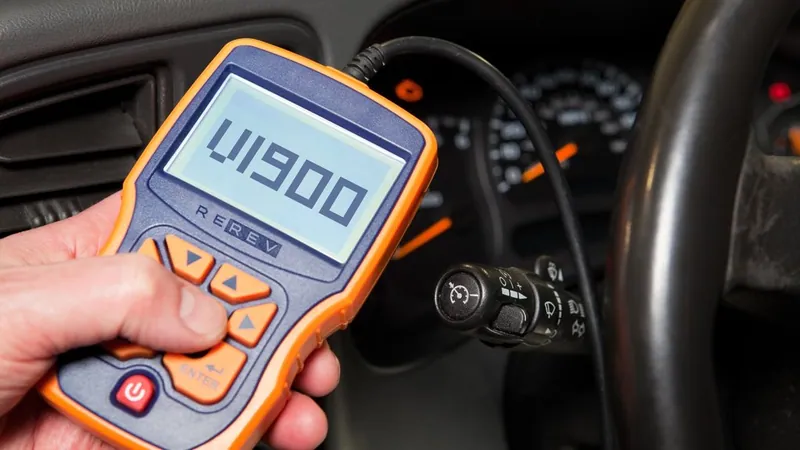
Code U1900 means your car's computers (modules) cannot communicate over the Controller Area Network (CAN) bus. This critical network outage prevents the engine computer (PCM), instrument cluster, and anti-lock brake system (ABS) from exchanging required data.
Technical definition: U1900 is a manufacturer-specific code, most commonly defined by Ford as 'CAN COMMUNICATION BUS FAULT – RECEIVE ERROR'. It indicates a module failed to receive an expected message. Multiple modules log this when a key component, like the Instrument Panel Cluster (IPC) or Anti-Lock Brake System (ABS), goes offline.
Can I Drive With U1900?
No — Do Not Drive. Do not drive with this code. The fault causes the engine to stall while driving, disables safety systems like ABS and power steering, and creates a sudden no-start condition that will leave you stranded.
Common Causes

- Faulty Instrument Cluster (Very Common) — Internally cracked solder joints on the cluster's main connector are the most frequent cause, especially on 2004-2012 Ford models. 🎬 Watch: How to identify common Ford instrument cluster solder faults. These microscopic cracks, caused by thermal stress and vibration, interrupt communication and trigger widespread network errors.
- Low Battery Voltage or Parasitic Drain (Common) — A weak battery, failing alternator, or a module that fails to 'sleep' causes unpredictable electrical drops. Modules cannot communicate without stable power, triggering U1900 during engine cranking when voltage drops significantly.
- Damaged or Corroded Wiring (Common) — The twisted pair of wires forming the CAN bus network fray, short together, or corrode due to moisture, vibrations, or rodent damage. This physically breaks the communication link 🎬 See how to test a CAN bus network with a multimeter. between modules.
- Poor Ground Connection (Common) — A loose or corroded ground wire for the instrument cluster or another network module introduces electrical noise and communication failures. The main dashboard ground point is highly prone to corrosion on older vehicles.
- Faulty Control Module (Less Common) — Other modules like the PCM, ABS control module, or Body Control Module (BCM) fail internally and stop communicating on the network, taking down the bus.
- Aftermarket Device Interference (Less Common) — Poorly installed remote starters, alarms, OBD-II trackers, or incompatible trailer brake controllers interfere with the CAN bus. These devices introduce electrical noise or draw unexpected power, disrupting module communication.
- Faulty Ignition Switch (Rare) — A failing ignition switch causes intermittent power drops to various modules during startup or while driving, leading to a sudden loss of communication.
Symptoms

- Intermittent No-Start Condition — You turn the key and nothing happens, but the vehicle starts fine hours later. A communication failure with the instrument cluster prevents the engine from receiving anti-theft authorization.
- Multiple Warning Lights — The dashboard illuminates simultaneously with warnings for the check engine, ABS, airbags, power steering, and security systems.
- Erratic or Dead Gauges — The speedometer, tachometer, and temperature gauges drop to zero or freeze while driving. The digital odometer display goes blank or shows a series of dashes ('-------').
- Transmission Shifting Problems — The transmission enters 'limp mode,' refuses to shift, or shifts harshly because it is not receiving engine speed data from the PCM over the CAN bus.
- Unexplained Battery Drain — The car battery dies overnight. A faulty module stays active, chattering on the CAN bus and preventing other modules from entering sleep mode.
Common Fixes & Costs

- Repair Instrument Cluster 🎬 Watch this step-by-step guide to repairing a Ford Focus cluster.
— Parts: $10-$20, Labor: $100-$200, ~1.5 hr book time
(Intermediate)
Ford Focus (2005-2011): OEM ['4S4Z-10849-HA', '4S4Z-10849-BA'] (Alt: {"brand": "Circuit Board Medics / UpFix", "part_number": "Repair Service", "price_comparison": "Mail-in repair is signif) - Replace Battery or Correct Charging System — Parts: $150-$250, Labor: $50-$100, ~0.8 hr book time (Beginner)
- Repair Damaged Wiring/Grounds — Parts: $10-$50, Labor: $200-$500, ~4.0 hr book time (Professional)
- Replace Instrument Cluster — Parts: $400-$900, Labor: $150-$300, ~2.0 hr book time (Professional)
- Replace ABS Module
— Parts: $300-$1000, Labor: $150-$300, ~2.5 hr book time
(Professional)
Mazda 3 (2007-2012): OEM ['BBY2-43-7AZD'] (Alt: {"brand": "XeMODeX", "part_number": "Repair Service", "price_comparison": "Repair service is ~$299, saving hundreds over)
Used vs. New Parts: Buying Guide
When a used part is worth it: A used instrument cluster is never a good idea for this repair. The high likelihood of the used part having the same internal defect, combined with the requirement for expensive reprogramming, makes it a risky and expensive choice.
Donor-vehicle mileage cap: roughly under 20000 miles for the part to have meaningful remaining life.
Donor quality checklist:
- Must match the part number exactly.
- Verify the donor vehicle was not scrapped for electrical issues.
- The mileage on the used cluster cannot be easily changed and will not match your vehicle's actual mileage.
Decision logic:
- If The fault is confirmed to be internal to the instrument cluster. → Choose a professional mail-in repair service. This is the most cost-effective solution as it fixes the known weak point on your original, programmed part.
- If A repair service is not possible and the vehicle is essential. → Buy a new OEM part from a dealer and have them program it. This is the most expensive but fastest option.
- If Budget is the absolute primary concern and you accept the risks. → A used part may be attempted, but you MUST budget for professional programming and accept the high probability of premature failure.
Warranty tradeoff: Used parts typically have a 30-90 day warranty covering only the part. A professional repair service usually offers a 1-year to lifetime warranty on the repair. New OEM parts carry a 1-2 year warranty.
Worst-case if a used part fails: $400-$800 if a used cluster is purchased and fails. This includes the used part, non-refundable programming fees, and repeat labor.
Cost of Not Fixing It
- Immediate: High risk of being stranded due to an intermittent no-start condition or the engine stalling while driving. Loss of critical driver information and safety systems. (Added cost: $150-$500 for towing and emergency diagnostic fees.)
- 1-3 months: Continued intermittent electrical problems cause premature battery failure due to repeated deep cycling from parasitic drains or charging system issues. (Added cost: $150-$300 for a new battery and installation.)
- 3+ months: Operating the vehicle in 'limp mode' causes undue stress on the transmission. A shorted module damages other modules on the same network. (Added cost: $1000-$3000 for potential transmission or additional electronic module repairs.)
Diagnosis Steps
- Read All System Codes
Use an advanced OBD-II scanner to read codes from all modules (ABS, BCM, IPC), not just the engine. This identifies exactly which modules are offline.
Tools: Advanced OBD-II Scanner (e.g., FORScan, Autel) (Beginner) - Check Battery and Charging System
Ensure the battery holds at least 12.4 volts with the engine off and the alternator charges at 13.7-14.7 volts with the engine running. Low voltage is a primary cause of communication codes.
Tools: Multimeter (Beginner) - Perform the 'Dash Tap Test'
On Ford vehicles, firmly tap the top of the dashboard above the instrument cluster with the key on. If the gauges flicker, warning lights change, or the car suddenly starts, the instrument cluster has broken internal solder joints.
Tools: Your hand (Beginner) - Verify Module Power and Grounds
A module cannot communicate without power. Using a wiring diagram, identify the power and ground pins on the suspect module's connector. Confirm it receives 12V+ on power pins and has near-zero resistance to the chassis on ground pins.
Tools: Multimeter, vehicle-specific wiring diagram (Intermediate) - Inspect Wiring and Grounds
Visually inspect the wiring harness going to the instrument cluster and other modules for damage, chafing, or corrosion. Remove and clean the main ground connection for the dashboard.
Tools: Basic hand tools, wire brush (Intermediate) - Test the CAN Bus Network Resistance
With the battery disconnected, check resistance between the CAN High and CAN Low pins at the OBD-II port (pins 6 and 14). A healthy network reads exactly 60 ohms. A reading of 120 ohms indicates an open circuit; near 0 ohms indicates a short.
Tools: Multimeter (Advanced) - Check CAN Bus Voltages
With the battery connected and key ON, check DC voltage on the CAN pins. CAN-High (Pin 6) should be ~2.7V and CAN-Low (Pin 14) should be ~2.3V. Readings of 0V, 5V, or 12V indicate a direct short to ground or power.
Tools: Multimeter (Advanced) - Isolate the Faulty Module
Disconnect one module at a time from the CAN network and re-test the network's resistance. When the resistance reading normalizes after disconnecting a module, that module or its connector is the source of the fault.
Tools: Multimeter, vehicle-specific wiring diagram, trim removal tools (Advanced) - Analyze CAN Bus Waveform
Connect a lab scope to CAN-High and CAN-Low. A healthy network shows two clean, mirror-image square waves. Distorted squares or flatlines pinpoint interference or a failing module. Take the vehicle to an automotive electrical specialist if you lack an oscilloscope.
Tools: Automotive Oscilloscope (Lab Scope) (Professional)
When This Code Triggers (Freeze-Frame Conditions)
- Fault Trigger: Key ON or Engine Running (The fault is detected immediately when the ignition is turned to the 'RUN' position as modules perform their initial network check-in. It also triggers intermittently while driving.)
- Control Module Voltage: 11.8V - 14.5V (The code sets if system voltage drops during startup or fluctuates while driving, indicating a battery or alternator issue.)
- Vehicle Speed: 0 mph or Various (The fault occurs at a standstill (causing a no-start) or at any driving speed, characteristic of an intermittent wiring or module fault.)
- Engine RPM: 0 RPM or Various (The fault is not tied to a specific engine RPM. It happens with the engine off (key on), during cranking, or while cruising.)
Related Codes
- U0155 — 'Lost Communication With Instrument Panel Cluster Control Module.' If you have both U0155 and U1900, the instrument cluster is definitively the root cause.
- P1260 — 'Theft Detected, Vehicle Immobilized.' A direct consequence of U1900. When the cluster stops communicating, the PCM doesn't receive the security handshake and prevents the engine from starting.
- U0001 — 'High Speed CAN Communication Bus.' A generic code indicating a main network problem. They appear together, where U0001 signals a general malfunction and U1900 is logged by the specific module that failed.
- U2510 — 'CAN - Invalid Data for Vehicle Security.' Logged when security data from the immobilizer system is missing. It frequently accompanies U1900 on Fords with cluster faults.
Climate & Environmental Factors
- Extreme Temperature Cycles: Cracked solder joints develop from repeated thermal stress as components expand and contract during heating and cooling cycles. Climates with large temperature swings accelerate this degradation.
- High Humidity / Moisture: Moisture seeps into wiring harness connectors or compromises ground points, leading to corrosion. This increases resistance and disrupts CAN bus communication.
How to Clear the Code After You Fix It
- Reconnect the battery if it was disconnected for the repair.
- Use an advanced OBD-II scan tool to perform a 'Clear All DTCs' command to erase the fault from all modules.
- If a module was replaced, perform the necessary 'Parameter Reset' or security relearn procedure using a compatible scan tool.
- Perform a complete drive cycle to allow all system readiness monitors to run.
Drive cycle (~30 minutes): A general drive cycle includes: 1. Cold start and idle for 2-3 minutes. 2. Drive in stop-and-go traffic for 5-10 minutes. 3. Drive at a steady speed (55 mph) on a highway for 10-15 minutes. 4. Safely decelerate to a stop and idle for one minute before shutting off the engine.
Readiness monitors affected: Comprehensive Component Monitor, Misfire Monitor
Before emissions retest: drive at least 100 miles to fully set monitors.
Watch out for:
- Disconnecting the battery will not clear the U1900 code from all modules and resets readiness monitors, guaranteeing an emissions test failure.
- The code returns instantly if the root cause (bad solder joint, broken wire) is not fully repaired.
- Failing to perform the PATS parameter reset after replacing a security-related module results in a permanent no-start condition.
Will This Fail Emissions / State Inspection?
Yes — this code typically fails an OBD-II emissions inspection.
- California: A U1900 code results in an automatic smog check failure. After repairs, a full drive cycle must be completed to set all readiness monitors before a re-test.
- New York: An active U1900 code with the MIL on is an automatic failure. The vehicle cannot be registered or renewed until the fault is repaired and the code is cleared.
- Texas: A U1900 code that prevents readiness monitors from setting causes a failure in the 17 counties that require emissions testing.
Most Commonly Affected Vehicles
- Ford Focus (2004-2012) — Extremely common due to faulty solder joints inside the instrument cluster. Affects both Mk2 and Mk2.5 facelift models.
- Ford Kuga (2008-2012) — Shares a similar instrument cluster design and CAN bus architecture with the Focus, leading to identical solder joint failures.
- Ford C-Max (2003-2011) — Highly prone to the instrument cluster communication failure that triggers the U1900 code.
- Ford Mondeo, S-Max, Galaxy (2007-2014) — Experiences CAN bus faults, but the instrument cluster is not part of the immobilizer system, so the car typically still starts.
- Ford Crown Victoria / Lincoln Town Car (2005-2011) — Experiences U1900 codes related to wiring faults, particularly in the harness near the parking brake mechanism.
- Mazda 3, CX-7 (2007-2012) — The code often points to a communication failure with the ABS or airbag control module rather than the instrument cluster.
- Jaguar X-Type (2002-2009) — TSB JTB000075 notes a U1900 code with the DSC light on requires replacement of the DSC (ABS) module.
- Land Rover Various Models (2005-2012) — Appears frequently related to wiring issues or module failures within the complex electronics systems.
- Chevrolet / GMC Silverado, Sierra (2007-2015) — Indicates general CAN bus issues, sometimes related to wiring harnesses or the Trailer Brake Controller.
- Nissan Altima, Sentra, Rogue (2009-2017) — Sets for general network communication errors, requiring a full network scan to isolate the non-communicating module.
Manufacturer-Specific Notes
- Ford: The instrument cluster is a network gateway. A failure here causes a cascade of communication codes. A 'tap test' on the dash temporarily restores function, confirming the cluster is the problem.
- Mazda: The U1900 code is more frequently associated with a failure in the ABS module or its wiring, rather than the instrument cluster.
- General Motors (Chevrolet/GMC): GM TSBs emphasize checking for aftermarket accessories and corrosion in major harness connectors (like the C100) before replacing modules.
- Jaguar: TSB JTB000075 states that if the DSC light is on and a U1900 code is stored, the electronic portion of the DSC module must be replaced.
- Hyundai: The definition for U1900 is completely different and indicates 'Deployment Commanded' (an airbag deployment event), highlighting the need for manufacturer-specific scanners.
Frequently Asked Questions
Why won't my car start with a U1900 code?
The instrument cluster is part of the anti-theft system (PATS). When it loses communication due to U1900, it cannot send the security handshake to the engine computer. The computer disables the engine to prevent theft.
Is it safe to drive with the U1900 code?
No. You risk the engine shutting off while driving, losing your speedometer, and having safety systems like ABS fail without warning. There is also a high risk the car will not restart.
Can I just replace the instrument cluster with one from a junkyard?
No. A used cluster contains the wrong mileage and will not start your car without expensive dealership reprogramming. Furthermore, used Ford clusters likely suffer from the exact same internal solder joint defect.
What is the 'dash tap test'?
Firmly tapping the dashboard above the instrument cluster temporarily reconnects broken internal solder joints. If the gauges suddenly work or the car starts after a tap, the instrument cluster is definitively faulty.
Can a bad battery or alternator cause a U1900 code?
Yes. Low system voltage from a weak battery or failing alternator starves modules of stable power, causing communication errors. Always verify battery health before performing complex network diagnostics.
My car has a U1900 code but seems to run fine. Should I be worried?
Yes. A U1900 code without symptoms is an intermittent fault in its early stages that will inevitably worsen. Diagnose it now before it escalates into a sudden no-start condition that leaves you stranded.
How do I clear the U1900 code?
You can clear it with an OBD-II scanner, but it returns immediately if the underlying hardware problem remains. U1900 is a hard fault actively detected by the modules. You must repair the communication failure first.
My scanner shows U1900, but also B2900 (VIN Mismatch). What's the real problem?
A B2900 code means a module was replaced with a used part and never reprogrammed to your car's VIN. This mismatch causes the communication errors and triggers the U1900 code. The primary fix is programming the incorrect module.
Will a U1900 code fail an emissions or state inspection?
Yes. If the Check Engine Light is illuminated, it is an automatic failure. Even without the light, the communication fault prevents OBD-II readiness monitors from completing, resulting in a failed inspection.
My scanner only shows U1900. How do I find the real problem?
Basic code readers only communicate with the engine computer. You need an advanced all-system scanner to query the ABS, BCM, and Instrument Cluster. This reveals exactly which module is offline and causing the network breakdown.
Key Takeaways
- U1900 indicates a critical communication breakdown between your vehicle's computer modules on the CAN bus network.
- On 2004-2012 Ford models, cracked internal solder joints in the instrument cluster cause the vast majority of U1900 codes.
- Diagnose the network by measuring exactly 60 Ohms resistance across OBD-II pins 6 and 14 with the battery disconnected.
- Mail-in repair services for a faulty instrument cluster cost $100-$200, saving hundreds over a dealership replacement that requires anti-theft reprogramming.
Helpful Videos

Shop the Parts Behind U1900
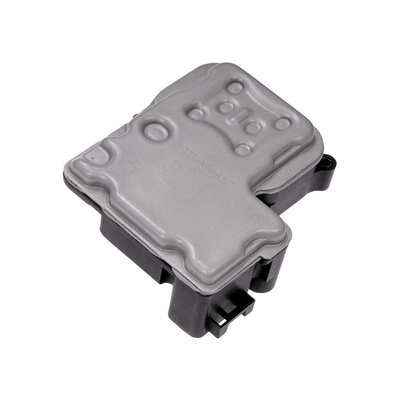
Below are the parts most often responsible for code U1900, ranked by how frequently each one is the actual culprit (per the diagnosis above). Tap any to see what we have for your vehicle.



The information in this article is provided for general reference and educational purposes only. Vehicle specifications, procedures, and part compatibility can vary by production date, trim level, and region. Always consult your vehicle's factory service manual and verify part numbers before purchasing or performing repairs. Safety-critical components such as airbags, seat belts, and braking systems should be installed by a qualified professional.
- 🎬 Helpful Videos
- 🛍️ Shop This Part
- What Does U1900 Mean?
- Can I Drive With U1900?
- Common Causes
- Symptoms
- Common Fixes & Costs
- Used vs. New Parts: Buying Guide
- Cost of Not Fixing It
- Diagnosis Steps
- When This Code Triggers (Freeze-Frame Conditions)
- Related Codes
- Climate & Environmental Factors
- How to Clear the Code After You Fix It
- Will This Fail Emissions / State Inspection?
- Most Commonly Affected Vehicles
- Manufacturer-Specific Notes
- Frequently Asked Questions
- Why won't my car start with a U1900 code?
- Is it safe to drive with the U1900 code?
- Can I just replace the instrument cluster with one from a junkyard?
- What is the 'dash tap test'?
- Can a bad battery or alternator cause a U1900 code?
- My car has a U1900 code but seems to run fine. Should I be worried?
- How do I clear the U1900 code?
- My scanner shows U1900, but also B2900 (VIN Mismatch). What's the real problem?
- Will a U1900 code fail an emissions or state inspection?
- My scanner only shows U1900. How do I find the real problem?
- Key Takeaways
- 🎟️ Get 5% Off