

OBD-II Code U1974: Invalid or Unrecognized Code
What to do when your scanner shows the non-standard code U1974
- U1974 is a 'ghost code' caused by a cheap scanner misreading a genuine network communication fault.
- Stop diagnosing U1974 and immediately rescan the vehicle with a professional-grade tool to reveal the true code, such as U0073 or U0100.
- Do not drive the vehicle, as the hidden network fault instantly disables critical safety systems like power steering and ABS at highway speeds.
- Never replace expensive control modules based on a U1974 reading; the fix is often as simple as a $200 battery replacement or a $50 Chrysler Star Connector.
What Does U1974 Mean?
U1974 is not a recognized OBD-II trouble code under SAE J2012 or ISO 15031-6 standards. You have encountered a 'ghost code' caused by an incompatible or malfunctioning cheap scanner. The underlying problem is a different, valid trouble code that your scanner cannot display.
Technical definition: No official SAE/ISO definition exists for U1974. While 'U' codes pertain to network communications, U1974 indicates a diagnostic tool anomaly rather than a specific vehicle fault.
Can I Drive With U1974?
No — Do Not Drive. Do not drive. While U1974 is a scanner error, it masks a severe network communication fault (like U0073 or U0100). A network failure happens without warning, causing the engine to stall or instantly disabling critical safety systems like power steering, ABS, and stability control. Continuing to drive risks a sudden loss of vehicle control. The cost of a potential accident far outweighs a $100-$250 diagnostic fee.
Common Causes
- Scan Tool Error or Incompatibility (Very Common) — The most frequent reason for seeing an undefined code like U1974 is an issue with the OBD-II scanner itself. It is outdated, has a software glitch, or is a low-quality tool incapable of interpreting manufacturer-specific protocols, causing it to display an incorrect or phantom code.
- Confusion with a Similar, Valid Code (Very Common) — The actual stored code is a valid one that the scanner misreads. The most common candidates are U0073 (Control Module Communication Bus 'A' Off) or U0100 (Lost Communication with ECM/PCM). 🎬 See this guide on diagnosing and fixing U0100 communication codes.
- Low Vehicle Battery Voltage (Common) — A weak, failing, or improperly connected battery causes unpredictable behavior in a vehicle's electronic modules. Low voltage is a primary cause of network communication glitches, leading to a cascade of 'U' codes and the generation of spurious, invalid codes like U1974.
- Aftermarket Device Interference (Less Common) — Poorly installed aftermarket accessories like remote starters, alarms, or telematics devices that tap into the CAN bus disrupt network communication, causing modules to report errors or go offline entirely.
- Corroded or Damaged Data Link Connector (DLC) (Less Common) — The OBD-II port where the scanner connects becomes corroded, or its pins get bent or pushed in. A poor physical connection leads to data corruption during the scan, causing the tool to display a nonsensical code.
- Vehicle Control Module Glitch (Rare) — A temporary, random glitch in one of the vehicle's control modules (e.g., ECM, BCM, TCM) generates an erroneous code. This resolves itself after a hard reset (disconnecting the battery).
Symptoms
- Multiple Warning Lights on Dashboard — If the underlying issue is a real network fault (like U0073/U0100), you see a cascade of warning lights, such as Check Engine, ABS, Traction Control, and Airbag lights, all illuminating at once.
- Erratic Vehicle Behavior — In a true network failure scenario, you experience symptoms like gauges dropping to zero, wipers turning on by themselves, the transmission failing to shift, or a loss of power steering. The vehicle enters a 'limp mode' or stalls completely.
- No Noticeable Symptoms — Often, an invalid code like U1974 appears with no other symptoms. This reinforces the high likelihood that it is simply a scanner error and no actual vehicle fault is present.
- Check Engine Light is On — The check engine light illuminates, triggered by the underlying, actual trouble code that the scanner misreads as U1974.
- Inability to Communicate with Certain Modules (scan-tool only — no driver-felt sign) — A professional scan tool communicates with some modules (like the BCM) but not others (like the ECM or ABS module), pointing directly to a network communication problem on a specific bus.
Diagnostic Flowchart
Tap your situation to follow the diagnostic path that matches what you're seeing on this code.
Common Fixes & Costs
- Using a better scan tool to find the real code (e.g., U0073, U0100) — Parts: $0, Labor: $100-$210 (for a professional diagnostic scan), ~1.5 hr book time (DIY)
- Replacing a weak or faulty vehicle battery — Parts: $150-$350, Labor: $50-$100, ~0.8 hr book time (DIY)
- Replacing a faulty Chrysler/Jeep/Dodge 'Star Connector' — Parts: $30-$50, Labor: $100-$200 (Typically located behind the glove box or in the trunk), ~1.2 hr book time (Intermediate)
- Removing a faulty aftermarket electronic device — Parts: $0, Labor: $50-$150, ~1 hr book time (DIY)
- Repairing CAN bus wiring harness (chafed, corroded, or shorted wires) — Parts: $10-$50, Labor: $250-$750+ (Labor-intensive; depends entirely on the location of the fault. A Ford F-150 harness repair costs over $2500 in complex cases)., ~4.5 hr book time (Professional)
- Replacing a faulty control module that is bringing down the network (e.g., ABS, BCM, or TIPM) — Parts: $200-$1200+, Labor: $150-$400 (Includes installation and required programming/calibration), ~2.5 hr book time (Professional)
Used vs. New Parts: Buying Guide
When a used part is worth it: For a common fix like an ABS module or Body Control Module (BCM), a used part from a reputable salvage yard makes sense for older, high-mileage vehicles (>100k miles) where the cost of a new OEM part is a significant portion of the vehicle's value.
Donor-vehicle mileage cap: roughly under 80000 miles for the part to have meaningful remaining life.
Donor quality checklist:
- Verify the donor vehicle's mileage and ensure it was not scrapped for electrical or flood-related issues.
- Match the part number exactly. Even a slight variation leads to incompatibility.
- Inquire about the seller's return policy and warranty period (typically 30-90 days).
- Check for any physical damage or corrosion on the module's housing and connectors.
Decision logic:
- If The part is a control module (ABS, BCM, etc.) that requires programming → Factor in the cost of programming by a dealer or qualified shop ($100-$300). A used module carries the VIN of its donor car and must be reprogrammed.
- If The vehicle is less than 5 years old or has low mileage → Favor a new OEM or high-quality remanufactured part. The longer warranty and guaranteed compatibility outweigh the modest savings of a used part.
- If The budget is extremely tight and the vehicle is old → A used module is a viable option, but accept the risk of a shorter lifespan and potential for it to be non-functional on arrival.
Warranty tradeoff: Used parts typically offer a 30-90 day warranty for exchange only. Remanufactured modules often come with a 1-year to lifetime warranty. New OEM parts carry the manufacturer's standard parts warranty (usually 12 months).
Worst-case if a used part fails: $400-$800 if a used module fails after installation. This includes repeat labor for removal/reinstallation, the cost of another part, and another programming fee.
What Happens If You Wait — Timeline
- 0-4 weeks: An intermittent glitch occurs. A single warning light (e.g., ABS, traction control) flickers on and off. A cheap scanner shows U1974; a better scanner shows a stored (not active) 'U' code. No noticeable drivability issues. (MPG impact: 0%% · Added cost: $0)
- 1-3 months: Glitches become frequent. The radio resets, gauges sweep unexpectedly, or multiple warning lights stay on for a full drive cycle. The vehicle occasionally enters 'limp mode' with reduced power, resetting after an engine restart. (MPG impact: 0-5%% · Added cost: $150-$300 (Cost of towing if the vehicle gets stranded, plus initial diagnostic fees).)
- 3-6 months: The network failure becomes persistent. The vehicle frequently fails to start or stalls while driving without warning. Critical systems like power steering or ABS are disabled consistently, making the vehicle unsafe to drive. The Check Engine Light and multiple warnings are permanently illuminated. (MPG impact: 5-10% (due to limp mode)% · Added cost: $500-$1500 (Cost of a complex wiring harness repair or replacement of a single failed module consistently bringing the network down).)
- 6+ months: Complete network failure. The vehicle is 'bricked' and will not start or communicate. Continued operation with a severely unstable network causes voltage spikes or data corruption that damages other, previously healthy electronic modules on the bus. The repair involves fixing the original fault and replacing secondarily damaged modules. (MPG impact: 100% (vehicle is undrivable)% · Added cost: $1500-$4000+ (Cost of original repair plus replacement and programming of an additional control module like the PCM or BCM).)
Cost of Not Fixing It
- Immediate: Sudden and unpredictable loss of critical systems while driving, including power steering, ABS, stability control, or engine stalling. This leads to a complete loss of vehicle control and a serious accident. (Added cost: $5,000 - $20,000+ (Cost of an accident, vehicle damage, and potential injury).)
- Short Term (Days to Weeks): Vehicle intermittently fails to start or becomes stranded without warning. Drivability issues like poor acceleration, reduced fuel economy, and erratic gauge behavior worsen. (Added cost: $150 - $300 (Cost of towing and diagnostic fees when the vehicle finally fails completely).)
- Long Term (Months): Continued operation with an unstable network puts stress on various electronic modules. Voltage spikes or data corruption on the bus shortens the lifespan of other expensive computers in the car. (Added cost: $800 - $2000+ (Potential cost of replacing an additional control module like the BCM or TCM if it is damaged).)
Diagnosis Steps
- Verify the Code with a Professional Scan Tool
Stop using the current scanner and rescan the vehicle with a high-quality, professional-grade scan tool. A professional tool displays the correct, standard trouble code (e.g., U0073) or confirms no code is present. This step solves the 'U1974' mystery in over 90% of cases.
Tools: A second, professional-grade OBD-II Scanner (Beginner) - Check Vehicle Battery Health and Connections
Use a multimeter to check the battery voltage with the engine off. A reading below 12.4 volts indicates a weak battery that needs charging and testing. Ensure battery terminals are clean, tight, and free of corrosion. Low system voltage is a common cause of network communication faults.
Tools: Multimeter, Battery Terminal Cleaner (Beginner) - Clear the Code and Rescan
Using a reliable scanner, clear the trouble codes. Drive the vehicle for 10-15 minutes, trying to recreate the conditions under which the light first appeared. If the Check Engine Light and the code do not return, it was a one-time, temporary glitch.
Tools: OBD-II Scanner (Beginner) - Inspect the Data Link Connector (DLC)
Visually inspect the vehicle's OBD-II port for signs of corrosion, moisture, bent or pushed-in pins, or foreign debris. A compromised physical connection causes faulty readings. Clean the port carefully with electrical contact cleaner if needed.
Tools: Flashlight, Electrical Contact Cleaner (Beginner) - Inspect for Aftermarket Device Interference
Carefully inspect wiring around the DLC, fuse box, and under the dashboard for signs of aftermarket devices (remote starters, GPS trackers, insurance monitors) spliced into the vehicle's wiring. These are a frequent source of network problems. Disconnect them to see if the fault clears.
Tools: Flashlight, Wire Cutters (Intermediate) - Perform a Hard Reset
Disconnect both terminals from the vehicle's 12V battery. Touch the positive and negative cable ends together for 60 seconds to drain residual power from all modules. This clears phantom codes and resets glitching electronics. Reconnect the battery and drive the vehicle to see if the code returns.
Tools: Wrenches for battery terminals (Intermediate) - Pro Tip: Perform a CAN Bus Resistance Test
Disconnect the vehicle's battery. Set a multimeter to measure resistance (Ohms). At the DLC, measure the resistance between Pin 6 (CAN High) and Pin 14 (CAN Low). A healthy CAN bus reads approximately 60 Ω. A reading of 120 Ω indicates an open circuit or a missing terminating resistor. A reading near 0 Ω indicates a short between the two wires. This is a fundamental professional check for network integrity.
Tools: Multimeter, DLC Breakout Box (optional but recommended) (Advanced) - Pro Tip: Perform a CAN Bus Voltage Check
With the battery reconnected and the ignition on (engine off), set a multimeter to DC Volts. Check the voltage between Pin 6 (CAN High) and a good chassis ground (Pin 4 or 5). It should be around 2.5V to 3.5V. Then check Pin 14 (CAN Low) to ground; it should be around 1.5V to 2.5V. Both lines should be biased around a 2.5V center point. Significant deviation points to a short to power or ground on one of the lines.
Tools: Multimeter, DLC Breakout Box (optional) (Advanced) - Pro Tip: Isolate the Faulty Module or Wiring
If the bus resistance or voltage is incorrect, isolate the fault. Using a wiring diagram, identify all modules on the affected CAN bus. Begin disconnecting modules one by one, re-checking the bus resistance after each one. When the resistance returns to normal (e.g., from 120Ω back to 60Ω), you have found the faulty module or the wiring branch causing the issue. On Chrysler products, this involves disconnecting modules from the 'star connector'.
Tools: Wrenches/Sockets, Trim Removal Tools, Multimeter, Vehicle-Specific Wiring Diagram (Professional) - Advanced: Perform a Module Power/Ground Voltage Drop Test
If a specific module is suspected of failing (e.g., the ABS module after a U0121 code is found), test its power and ground circuits under load. With the module connected and the ignition on, connect a multimeter's positive lead to the battery positive post and the negative lead to the power pin at the module's connector. The voltage drop should be less than 0.2 volts. Repeat for the ground side by connecting the multimeter's positive lead to the ground pin at the connector and the negative lead to the battery negative post. The ground-side voltage drop should be less than 0.1 volts. An excessive drop indicates high resistance in the wiring or connections.
Tools: Multimeter, Vehicle-Specific Wiring Diagram, T-pins (Advanced) - Consult a Professional with an Oscilloscope
Take the vehicle to a diagnostic specialty shop equipped with an automotive oscilloscope. If multimeter tests do not reveal the fault, an oscilloscope is required to visually inspect the CAN bus data signal. A proper waveform is a clear mirror image; any distortion, noise, or flat-lining instantly reveals the nature of the electrical fault (e.g., short to ground, open circuit), which is far more precise than a multimeter.
Tools: Automotive Oscilloscope (Professional)
When This Code Triggers (Freeze-Frame Conditions)
- Engine Coolant Temp: Varies (A network fault occurs at any temperature, from cold start to fully warm. A cold start with a weak battery is a common trigger.)
- RPM: Any (The fault logs at idle, during steady cruise, or under acceleration. It is intermittent and not tied to a specific RPM.)
- System Voltage: <12.0V or fluctuating (Low system voltage from a weak battery or failing alternator is a primary trigger for network communication codes like U0073.)
- Vehicle Speed: Any (The underlying network failure happens while the vehicle is parked or at highway speeds, making it particularly dangerous.)
Related Codes
- U0073 — This is a highly probable 'real' code behind a U1974 reading. It means 'Control Module Communication Bus 'A' Off.' This is a critical fault indicating the primary high-speed communication network has failed, causing severe drivability and safety issues. Diagnosis follows the same path of checking wiring, modules, and terminating resistors.
- U0100 — Another very likely candidate, U0100 means 'Lost Communication with ECM/PCM.' If other modules on the network cannot hear from the engine's main computer, the vehicle fails to start or enters a severe limp mode. This points to a problem with the ECM's power, ground, or its direct network connection.
- U0121 — This code means 'Lost Communication with ABS Control Module.' If the ABS module goes offline, it brings down part of the network and disables the anti-lock brakes, traction control, and stability control systems. A faulty ABS module itself is a common cause.
- B1974 — This is a valid body control code, often for a seat switch circuit fault. A user easily mistakes the 'B' for a 'U'. The symptoms are completely different, relating to a body electrical function (like a power seat not working) rather than a network-wide failure.
Climate & Environmental Factors
- High Humidity and Water Ingress: Moisture is a primary catalyst for corrosion on electrical connectors, pins, and wiring. Water leaking into the cabin or engine bay settles in connectors (like the BCM connector in a Ford F-150's wheel well or a Chrysler CAN-C connector under the seat), causing corrosion that increases resistance and disrupts network signals.
- Cold Climates and Road Salt: In regions where road salt or de-icing brines are used, the corrosive effect on vehicle undercarriages and electrical components is significantly accelerated. Salt spray infiltrates unprotected connectors and wiring harnesses, leading to severe corrosion and a higher incidence of network communication failures.
How to Talk to a Mechanic About This Code
Say this: "I have a check engine light and my scanner is showing an invalid code, U1974, along with multiple warning lights. I understand this isn't a real code and points to a network communication problem. I'd like to book a diagnostic appointment to find the actual underlying 'U' code, like a U0073 or U0100, and diagnose the CAN bus system."
This signals you've done your research, know the code is fake, and directs the technician to the true problem area (network diagnostics) instead of wasting time on the ghost code. It prevents them from simply recommending a new computer and shows you expect a logical diagnostic process.
Avoid saying:
- My scanner says U1974, can you fix it?
- My check engine light is on, can you just look at it?
- I think I need a new computer, my car is acting weird.
Questions to ask before authorizing the repair:
- What was the actual, valid 'U' code you found with your professional scanner?
- Did you perform a CAN bus resistance test, and what was the Ohm reading?
- Which specific module or section of wiring did you isolate as the cause of the fault?
- Does the recommended repair involve replacing a module that requires programming, and is that included in the quote?
Where to Take It: Dealer vs Independent vs Chain
- Dealer:
Excellent choice. Dealers have access to all TSBs, specific wiring diagrams, and the exact software needed for programming, which is often required for network-related module replacement.
Best for: Vehicles under warranty., Complex, manufacturer-specific electrical issues (like Chrysler's Star Connector)., When the repair requires proprietary software for module programming.
Downsides: Typically highest labor rates and part costs., May be more inclined to replace a whole assembly rather than repair a specific wire. (Typical cost: +50% vs. baseline) - Independent Shop:
Good, but requires vetting. Seek out an independent shop that highlights 'electrical diagnosis' as a specialty. Ask if they are comfortable diagnosing CAN bus communication failures before booking.
Best for: Out-of-warranty vehicles where cost is a major factor., Shops that explicitly specialize in automotive electrical diagnostics.
Downsides: Quality and expertise vary greatly; a general mechanic lacks the specific tools (oscilloscope) or experience for deep network diagnosis., May not have access to the latest manufacturer software for programming new modules. (Typical cost: +0% vs. baseline) - Chain Shop:
AVOID. This type of complex electrical fault is outside the scope of most chain shops and is highly likely to result in an incorrect and expensive repair attempt.
Best for: Simple, routine maintenance like oil changes, tires, and batteries.
Downsides: Technicians are generally not equipped or trained for complex network diagnostics., High risk of misdiagnosis, leading to unnecessary replacement of parts like the battery or alternator without proper testing. (Typical cost: -10% vs. baseline)
When to Walk Away From the Repair
If the estimated repair cost for the network fault exceeds 40-50% of the car's Kelley Blue Book (KBB) private-party value, you should seriously consider selling the car as-is or trading it in.
- Car worth $5000, fix is $2500: Walk away. The repair cost is 50% of the car's value. This is a classic 'mechanic's special' scenario.
- Car worth $15000, fix is $1200: Fix it. The repair cost is only 8% of the vehicle's value and will restore critical safety and drivability functions.
- Car worth $3000, fix is $750: Borderline. The cost is 25% of the car's value. Get a second opinion to confirm the diagnosis and quote before proceeding.
What Scan Tool You Need for This Code
Minimum: A scanner that reads manufacturer-specific trouble codes (including 'U' codes) and shows the communication status of all vehicle modules. Basic code readers are the cause of this problem, not the solution.
A $20 code reader only shows you the phantom U1974 code. It cannot see the real, underlying network communication fault (like U0073) or tell you which modules are offline. You will be completely blind to the actual problem.
Budget: BlueDriver Pro (~$119) — Connects to a smartphone and reads enhanced codes (ABS, Airbag, Network) for many manufacturers, which is essential to see past the fake U1974 code.
Mid-range: Foxwell NT510 Elite / NT710 (~$150) — Offers OE-level diagnosis for specific brands and performs some bidirectional controls (active tests) to help isolate faulty components without having to physically remove them.
Professional: Autel MaxiCOM MK808S / MK906BT (~$450-1200) — Provides full-system diagnostics with a 'Topology Map' that visually shows the entire CAN bus network, which modules are online (green) or offline (red), and any stored codes. This is the fastest way for a professional to visualize a network failure.
Rent vs buy: For a one-time check, many auto parts stores offer a free loaner tool service. Verify their scanner is an advanced model capable of reading network codes, not just a basic code reader. If you plan to do your own maintenance, buying a tool like the BlueDriver Pro is a worthwhile investment.
How to Clear the Code After You Fix It
- Ensure the underlying fault (e.g., wiring, faulty module) has been repaired.
- Reconnect the battery if it was disconnected for the repair.
- Use a quality OBD-II scan tool to clear all Diagnostic Trouble Codes (DTCs).
- Perform a complete drive cycle to allow the vehicle's readiness monitors to run and confirm the fix.
Drive cycle (~30 minutes): A generic drive cycle includes a cold start (after sitting 8+ hours), 2-3 minutes of idling, 15 minutes of mixed city/suburban driving with stop-and-go traffic, followed by 5-10 minutes of steady highway speed driving (around 55 mph).
Readiness monitors affected: Since a 'U' code indicates a network-level fault, it prevents nearly all other emissions-related readiness monitors from running until the communication issue is resolved.
Before emissions retest: drive at least 50 miles to fully set monitors.
Watch out for:
- Clearing the code without fixing the root cause (bad wire, faulty module) results in the code returning almost immediately.
- Disconnecting the battery clears the code but resets all readiness monitors to 'Not Ready', causing an automatic emissions test failure.
- Not driving long enough or under the right conditions to complete the drive cycle leaves monitors in a 'Not Ready' state.
Will This Fail Emissions / State Inspection?
Yes — this code typically fails an OBD-II emissions inspection.
- California: An illuminated Check Engine Light results in an automatic failure of the smog check. After the repair, a complete drive cycle must be performed to set all readiness monitors before the vehicle can be re-tested.
- Texas: In counties requiring emissions testing, an active Check Engine Light is an automatic failure. After clearing the code, you must drive 50-100 miles to reset the readiness monitors. Texas allows for one monitor to be 'Not Ready' on vehicles model year 2001 and newer.
- New York: The New York State vehicle safety/emissions inspection includes an OBD-II scan. An illuminated Check Engine Light due to a 'U' code causes the vehicle to fail the inspection. All required readiness monitors must be in the 'Ready' state to pass.
Most Commonly Affected Vehicles
- Chrysler / Dodge / Jeep / Ram ()
- Ford ()
- Chevrolet / GMC ()
- Toyota ()
- Any vehicle with aftermarket electronics ()
Manufacturer-Specific Notes
- : The 'Star Connector' (also called a CAN bus block or hub) is a known failure point. These small plastic hubs serve as a junction for multiple CAN bus wires. The internal circuit board is prone to cracked solder joints, causing intermittent open circuits that take down the entire network. Wiggling wires at the connector behind the glovebox often replicates the fault. Safety Recall U60/NHTSA 18V-332 was issued for some models where a CAN-C bus failure prevents the cruise control from disengaging, highlighting the sensitivity of the network.
- : GM has issued multiple Technical Service Bulletins (TSBs) for 'Loss of High Speed GMLAN Communications' (e.g., TSB 08-07-30-021H). Common causes cited are chafed wiring, backed-out terminals in the transmission harness connector, and corrosion in various module connectors, especially on trucks and SUVs. No specific extended warranty programs are broadly active for this, but goodwill repairs are possible depending on the dealer and vehicle history.
- : Ford has released TSBs for specific CAN communication issues. For example, TSB 21-2412 for the 2021 Ranger points to an internal fault in the All Terrain Control Module (ATCM) causing network DTCs. On F-150s, corrosion at major harness connectors, like the one for the BCM in the engine bay, is a known cause of network failure.
- : On many Toyota models, the main CAN bus accessible at the DLC (Pins 6 & 14) is not the only network. There are often separate sub-buses for different systems. If a fault exists on a sub-bus, a technician cannot diagnose it from the DLC alone and must consult a wiring diagram to find an access point on the correct network branch to perform tests.
- : No Technical Service Bulletins (TSBs) exist for the code U1974 itself. A search for TSBs related to this specific code across all major manufacturers yields no results, serving as definitive proof that it is not a recognized or supported diagnostic trouble code. However, recalls exist for underlying CAN bus faults, such as Chrysler recall 24V-413 (NHTSA) for a software issue in the ABS control module on 2022 Durango and Ram models causing loss of stability control.
Real Owner Stories
2016 Ram 1500 with 115K miles
Dashboard lit up with warnings for 'Service ABS Module', 'Service Electronic Throttle Module', and 'Service Shifter'. The traction control light was on, and the truck locked in Park. A cheap scanner showed U1974 alongside communication errors.
What they tried:
- A shop diagnosed a bad ABS module for $1100.
- Suspecting a network issue, the owner replaced the Chrysler 'Star Connector' for $80.
- The issue continued after replacing the hub.
Outcome: The owner found exposed wires and broken plastic clips leading into the new Star Connector. The root cause was damage to the individual wires preventing a secure network connection. Repairing the wire ends fixed the truck.
Lesson: Even when replacing a common failure part like a Star Connector, the problem often lies in the wiring leading to it. A single bad pin connection brings down the entire network.
2019 Ram with 33K miles
After driving exactly 33 miles, the instrument cluster lit up with warnings, the shifter locked, and the truck would not shut off. A cheap scanner showed dozens of 'lost communication' codes.
What they tried:
- The owner noted all failing modules were on the same CAN-C network.
- The owner suspected a faulty module or wiring issue on that specific network.
Outcome: The problem traced directly to a faulty Star Connector, the central hub for that CAN network. Replacing the hub restored all communication and cleared the codes.
Lesson: When an entire network of modules fails simultaneously in a Chrysler/Dodge/Jeep/Ram vehicle, the Star Connector is the primary suspect. Its failure takes everything offline.
2015 Ford F-150 with 51K miles
Truck went into limp mode. A shop diagnosed a corroded Body Control Module (BCM) connector in the driver's side wheel well. They replaced the connector for $500, but the problem returned three days later.
What they tried:
- The dealer suspected a bad Powertrain Control Module (PCM) and replaced it under warranty, which failed to fix the issue.
- The final diagnosis isolated a fault within the main wiring harness.
Outcome: The dealer quoted $2500 to replace the entire wiring harness. The underlying issue was a single corroded wire within the larger harness causing intermittent voltage drops between the PCM and other modules.
Lesson: Corrosion is a major cause of network faults. Fixing a connector is insufficient if corrosion has wicked up into the wiring itself, requiring extensive harness repair.
2017 Chrysler Pacifica, intermittent issues
The vehicle had random drivability issues where CAN bus waveforms looked perfect, then became erratic for 5-7 minutes before returning to normal.
What they tried:
- The technician suspected a bad module ground or a problem at the Star Connector.
- The diagnostic challenge was the intermittent nature of the fault.
Outcome: The problem was a loose connection at the Star Connector. Ensuring all plugs were securely seated in the hub permanently resolved the intermittent network failure.
Lesson: For intermittent electrical faults, always check the physical security of major connectors. A loose connection mimics the symptoms of a failing, expensive module.
How to Prevent This Code From Triggering
- Perform Annual Battery and Charging System Test (Annually, especially before winter) — A weak battery or failing alternator causes voltage drops that lead to module glitches and network communication errors. Ensuring stable voltage above 12.4V (engine off) is the most critical step in preventing random 'U' codes.
- Keep Battery Terminals and Ground Straps Clean and Tight (Every oil change or annually) — Corrosion on battery terminals or main ground connections adds resistance to the electrical system, causing voltage drops and intermittent power to modules, which corrupts network communication.
- Address Water Leaks Immediately (As needed) — Water leaking into the cabin (from a bad windshield seal or clogged sunroof drain) pools under carpets and corrodes critical modules like the Body Control Module (BCM) or network wiring harnesses, leading to shorts and open circuits on the CAN bus.
- Be Wary of Aftermarket Electronics (During installation) — Poorly installed remote starters, alarms, or GPS trackers improperly spliced into CAN bus wires are a leading cause of network interference, error frames, and communication failures. If electrical problems start after an install, the aftermarket device is the primary suspect.
- Periodically Clean the Undercarriage (Seasonally, especially in salt-belt regions) — Washing away road salt and grime prevents severe corrosion of wiring harnesses, connectors, and ground points located on the vehicle's frame and underbody, which are common failure points for network wiring.
Frequently Asked Questions
Is U1974 a real OBD-II code?
No, U1974 is not a standard or publicly documented OBD-II trouble code. Its appearance is almost always the result of a scan tool error, incompatibility, or a misreading of the actual code.
My cheap scanner says U1974. What is the very first thing I should do?
Stop and do not replace any parts. Your immediate next step is to have the vehicle scanned with a professional-grade diagnostic tool. This reveals the true, valid trouble code (like U0073 or U0100) causing the issue.
What is a CAN bus and why does it fail?
A Controller Area Network (CAN bus) is the internal communication network allowing all vehicle computers to talk to each other. It typically consists of a twisted pair of wires. It fails due to wiring damage, a faulty module, poor connections, or low system voltage.
What is a CAN bus terminating resistor?
A 120-ohm terminating resistor is placed at each end of the CAN bus to absorb signal reflections and maintain correct network voltage. These two resistors in parallel create a total circuit resistance of 60 ohms. A missing or failed resistor disrupts the entire network.
Can one bad module cause multiple warning lights and problems?
Yes. All modules share the same network. If one module develops an internal short or sends corrupt data, it crashes the entire network, triggering multiple warning lights.
What are the biggest misdiagnosis pitfalls with a code like U1974?
The biggest pitfall is believing U1974 is real and starting expensive, unnecessary repairs like replacing the PCM. The second mistake is not verifying the code with a quality scanner first. Always diagnose the real, underlying communication code before replacing any parts.
What is a Chrysler 'Star Connector' and can it cause this?
The Star Connector is a network hub used in 2013-2023 Chrysler, Dodge, Jeep, and Ram vehicles. Internal solder joints crack, causing intermittent but complete network failure and a dashboard full of warning lights. Replacing this $30-$50 connector often fixes these widespread electrical issues.
Key Takeaways
- U1974 is a 'ghost code' caused by a cheap scanner misreading a genuine network communication fault.
- Stop diagnosing U1974 and immediately rescan the vehicle with a professional-grade tool to reveal the true code, such as U0073 or U0100.
- Do not drive the vehicle, as the hidden network fault instantly disables critical safety systems like power steering and ABS at highway speeds.
- Never replace expensive control modules based on a U1974 reading; the fix is often as simple as a $200 battery replacement or a $50 Chrysler Star Connector.
Helpful Videos
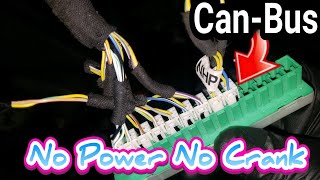
![How To Test CAN BUS With A Multimeter [CAN Bus Resistance Check] Mechanic Mindset](https://img.youtube.com/vi/JPE42HSJxAk/mqdefault.jpg)

Shop the Parts Behind U1974
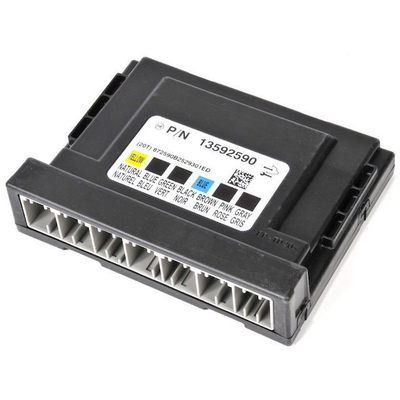
Below are the parts most often responsible for code U1974, ranked by how frequently each one is the actual culprit (per the diagnosis above). Tap any to see what we have for your vehicle.


The information in this article is provided for general reference and educational purposes only. Vehicle specifications, procedures, and part compatibility can vary by production date, trim level, and region. Always consult your vehicle's factory service manual and verify part numbers before purchasing or performing repairs. Safety-critical components such as airbags, seat belts, and braking systems should be installed by a qualified professional.
- 🧭 Diagnostic Flowchart
- 🎬 Helpful Videos
- 🛍️ Shop This Part
- What Does U1974 Mean?
- Can I Drive With U1974?
- Common Causes
- Symptoms
- Common Fixes & Costs
- Used vs. New Parts: Buying Guide
- What Happens If You Wait — Timeline
- Cost of Not Fixing It
- Diagnosis Steps
- When This Code Triggers (Freeze-Frame Conditions)
- Related Codes
- Climate & Environmental Factors
- How to Talk to a Mechanic About This Code
- Where to Take It: Dealer vs Independent vs Chain
- When to Walk Away From the Repair
- What Scan Tool You Need for This Code
- How to Clear the Code After You Fix It
- Will This Fail Emissions / State Inspection?
- Most Commonly Affected Vehicles
- Manufacturer-Specific Notes
- Real Owner Stories
- 2016 Ram 1500 with 115K miles
- 2019 Ram with 33K miles
- 2015 Ford F-150 with 51K miles
- 2017 Chrysler Pacifica, intermittent issues
- How to Prevent This Code From Triggering
- Frequently Asked Questions
- Is U1974 a real OBD-II code?
- My cheap scanner says U1974. What is the very first thing I should do?
- What is a CAN bus and why does it fail?
- What is a CAN bus terminating resistor?
- Can one bad module cause multiple warning lights and problems?
- What are the biggest misdiagnosis pitfalls with a code like U1974?
- What is a Chrysler 'Star Connector' and can it cause this?
- Key Takeaways
- 🎟️ Get 5% Off