

OBD-II Code U2000: Manufacturer Controlled Fault
What U2000 means, why it triggers, and how to fix it
- Test your battery voltage first, as a resting voltage below 12.4V is the leading cause of U2000 communication errors.
- Check for manufacturer Technical Service Bulletins (TSBs) before buying parts, as fixes often require a 1-hour software update rather than a $1,000 module.
- Scan all vehicle modules with an advanced OBD-II tool, because a basic $20 engine code reader cannot access the ABS or BCM modules where U2000 hides.
- Do not drive at highway speeds with an active U2000 code, because it disables critical safety systems like ABS and traction control without dashboard warnings.
What Does U2000 Mean?
Code U2000 means one of your car's control modules detected a manufacturer-specific fault. Most often, it indicates a communication breakdown on the vehicle's internal network (CAN bus), preventing computers from sharing data. This is a generic network fault, unlike specific codes (e.g., U0100) that point to an exact offline module.
Technical definition: The formal SAE/OBD-II definition is 'Manufacturer Controlled'. There is no single universal definition; each carmaker uses this code for a specific fault. For example, on older GM vehicles it means 'Invalid BFC Transmitted SPI Data', while on modern cars it indicates a generic CAN bus communication error. On Land Rover models, it specifically flags a 'system internal failure' within the Rear Differential Control Module.
Can I Drive With U2000?
Yes, But With Caution. Yes, but drive with extreme caution directly to a repair shop. This code indicates a communication problem that disables critical safety systems like ABS, traction control, or airbags without warning. In an emergency stop, your wheels will lock up, significantly increasing stopping distance. Avoid long journeys and high speeds.
Common Causes
- Low or Weak Battery Voltage (Very Common) — Modern cars are extremely sensitive to voltage. A weak battery causes unpredictable communication errors between modules, triggering U2000 before starting issues become obvious.
- Faulty Control Module or Outdated Software (Common) — A software glitch, incomplete update, or internal hardware failure in a module (like the BCM, Gateway, or Land Rover's RDCM) stops network communication. This includes modules failing to enter sleep mode and draining the battery.
- Damaged Wiring, Corroded Connectors, or Blown Fuses (Common) — The CAN bus relies on intact wiring and stable power. Chafed wires, blown fuses, or water-corroded connector pins interrupt signals between modules.
- Failing Alternator / Electrical Interference (Less Common) — A failing alternator produces excessive electrical noise (AC ripple) or voltage fluctuations that disrupt sensitive CAN bus signals.
- Faulty Aftermarket Electronics (Less Common) — Improperly installed remote starters, alarms, or stereos interfere with the CAN bus network, creating signal noise or drawing excessive power.
Symptoms
- Check Engine Light is On — This is often the first and sometimes only indicator of a problem.
- Multiple Warning Lights on Dash — ABS, traction control, or airbag lights illuminate because the main computer lost communication with them.
- Failure of Electronic Features — Power windows, radio, automatic headlights, A/C, or the speedometer stop working or behave erratically.
- Erratic Gauge Behavior or Display Messages — Instrument cluster gauges sweep randomly, go dead, or display 'Network Communication Error'.
- Starting Problems or Immobilizer Activation — The vehicle refuses to start or stalls if the security module cannot communicate with the engine computer.
Diagnostic Flowchart
Tap your situation to follow the diagnostic path that matches what you're seeing on this code.
Common Fixes & Costs
- Replace Weak or Faulty Battery — Parts: $150-$300, Labor: $50-$100, ~0.5 hr book time (DIY)
- Module Software Update/Re-flash — Parts: $0, Labor: $150-$250, ~1.0 hr book time (Professional)
- Repair Damaged Wiring or Clean Connectors — Parts: $10-$50, Labor: $150-$500, ~2.5 hr book time (Intermediate)
- Replace a Faulty Control Module (BCM, Gateway, RDCM, or Cluster) — Parts: $300-$1500, Labor: $150-$450, ~2.0 hr book time (Professional)
DIY vs Professional
- Replace Weak or Faulty Battery 🟢 Beginner
Tools: Basic hand tools, terminal cleaner brush, memory saver. - Module Software Update/Re-flash 🟢 Beginner
Tools: Manufacturer-specific scan tool, stable vehicle battery charger. - Repair Damaged Wiring or Clean Connectors 🟢 Beginner
Tools: Multimeter, wiring diagrams, depinning tools, soldering iron, heat shrink tubing. - Replace a Faulty Control Module 🟢 Beginner
Tools: Scan tool for programming, socket set.
Used vs. New Parts: Buying Guide
When a used part is worth it: For vehicles over 10 years old where a new module's cost exceeds the car's value, a used module from a reputable source is cost-effective. It is viable for modules not requiring complex security programming.
Donor-vehicle mileage cap: roughly under 100000 miles for the part to have meaningful remaining life.
Donor quality checklist:
- Verify the part number matches exactly, including hardware/software version numbers.
- Buy from a supplier providing a 30-90 day warranty.
- Avoid modules from flood-damaged or severely wrecked vehicles.
Decision logic:
- If The part requires VIN programming and immobilizer syncing (e.g., BCM, PCM, Instrument Cluster) → Buy a new part or use a specialized remanufacturer providing pre-programmed units. Standard used parts will not work without dealer tools.
- If The vehicle is less than 8 years old and the part is under $1000 → Buy new for the warranty and assurance of the latest software revisions.
- If The fix is a known software issue addressed by a TSB → Neither new nor used is needed; the existing module requires a software update.
Warranty tradeoff: Used parts have a 30-90 day warranty covering the part only. New OEM or remanufactured parts come with a 1-year or lifetime warranty.
Worst-case if a used part fails: 500-1000. If a used module is defective, you pay for diagnostic and installation labor twice.
What Happens If You Wait — Timeline
- 0-1 month: Code is set, Check Engine Light is on. No other symptoms are apparent, or a non-critical feature glitches once. The car drives normally. (MPG impact: 0%% · Added cost: $0)
- 1-4 months: Symptoms become frequent. You get a dead battery from a parasitic draw. Warning lights for ABS or Traction Control flash intermittently, indicating safety systems are unreliable. (MPG impact: 0-2%% · Added cost: $150-$400 (Cost of a new battery, tow, and initial diagnosis))
- 4-12 months: A corroding wire or water leak worsens. A key module is frequently offline. The vehicle fails to start, or major systems stop working. Diagnostic costs increase due to cascading codes. (MPG impact: 0-5%% · Added cost: $500-$1200 (Increased diagnostic labor and complex wiring harness repair))
- 12+ months: Catastrophic failure. A shorted wire permanently damages an expensive control module by sending incorrect voltage. The vehicle is immobilized. (MPG impact: N/A (Vehicle may not be drivable)% · Added cost: $1500-$3000+ (Cost of a new PCM/BCM/Gateway module, plus programming))
Cost of Not Fixing It
- Short-Term (0-3 months): Intermittent failure of non-critical systems (radio, power windows). Potential for a dead battery from parasitic draw. Unpredictable loss of ABS or traction control. (Added cost: 0-$250 (Cost of a new battery or tow))
- Medium-Term (3-12 months): Progressive electrical issues as corrosion worsens on damaged wires. Increased diagnostic complexity as multiple modules log secondary faults. Vehicle fails to start reliably. (Added cost: $300-$800 (Increased diagnostic time and complex wiring repairs))
- Long-Term (12+ months): Moisture travels up the harness, destroying an expensive control module. The vehicle becomes completely immobile, requiring replacement and programming. (Added cost: $800-$2500+ (Cost of replacing and programming a major control module))
Diagnosis Steps
- Check the Battery and Charging System
Test the battery's voltage and the alternator's output. A healthy, resting battery sits at 12.6 volts. With the engine running, expect 13.7 to 14.7 volts. A weak battery is the leading cause of communication faults.
Tools: Multimeter (Beginner) - Scan All Modules for Codes
Use a high-quality OBD-II scanner to read manufacturer-specific codes from all modules (BCM, ABS, TCM), not just the engine computer. Note which module stores the U2000 code and what other 'U' codes are present to pinpoint the communication loss.
Tools: Advanced OBD-II Scanner (Intermediate) - Perform a Visual Inspection
Check main fuse boxes for blown fuses. Inspect wiring harnesses around the battery, under the dashboard, and in areas prone to water intrusion (A-pillar kick panels, sunroof drains). Look for corrosion, rodent damage, or loose connectors.
Tools: Flashlight (Beginner) - Test CAN Bus Terminating Resistors
With the battery disconnected, measure resistance between CAN High (Pin 6) and CAN Low (Pin 14) at the OBD-II port. A healthy network reads 60 ohms. A 120-ohm reading indicates an open circuit; near 0 ohms indicates a short.
Tools: Multimeter (Advanced) - Check Module Power and Ground
Using a vehicle-specific wiring diagram, identify power and ground wires for the suspected offline module. Verify proper voltage and a clean ground connection (less than 1 ohm resistance to the chassis).
Tools: Multimeter, Vehicle-specific wiring diagram (Advanced) - Perform a Parasitic Draw Test
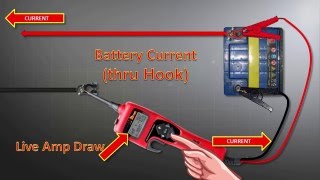
Connect a multimeter in series with the negative battery terminal to measure amperage draw after the vehicle sits off for 60 minutes. Normal draw is under 50 milliamps (0.05A). If higher, pull fuses one by one to identify the module failing to sleep.
Tools: Multimeter with 10A capability (Advanced) - Test for Alternator AC Ripple
Set a multimeter to AC volts and connect it to the alternator's main output post and a good ground. With the engine at 2000 RPM and electrical loads on, the reading must be less than 0.05V (50mV). Higher readings indicate failing diodes disrupting the CAN bus.
Tools: Multimeter with AC Volts setting (Advanced) - CAN Bus Signal Analysis
Connect an oscilloscope to CAN High (Pin 6) and CAN Low (Pin 14). A healthy CAN bus shows two clean, mirror-image square waves. Flat, shorted, or non-mirroring signals indicate specific wiring or module faults.
Tools: Automotive Oscilloscope, OBD-II breakout box (Professional) - Isolate the Faulty Module
If wiring is intact, a single malfunctioning module is 'shouting down' the bus. Disconnect modules one by one while monitoring network resistance or the oscilloscope pattern to see when communication restores.
Tools: Advanced OBD-II Scanner, Wiring diagram (Professional)
When This Code Triggers (Freeze-Frame Conditions)
- Voltage at Module: 9.5 - 11.5V (During engine crank / initial key-on)
- RPM: 0 or > 700 (Code sets at key-on before start, or during normal driving)
- Vehicle Speed: 0 mph (Triggered during the initial power-up sequence before the vehicle moves)
- Module Status: No Communication (Another module on the network reports the target module is not responding)
Related Codes
- U0073 — 'Control Module Communication Bus "A" Off'. This indicates the entire CAN bus is down. U2000 is a secondary code logged by a module noticing the offline bus.
- U0100 — 'Lost Communication with ECM/PCM'. U0100 specifically flags the Engine Control Module as offline. Seeing both confirms a network issue originating from the ECM.
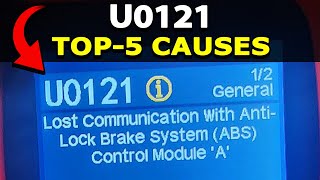
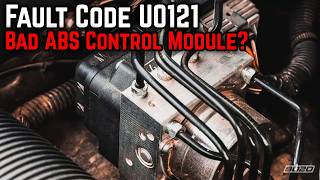
- U0121 — 'Lost Communication with ABS Control Module'. This points directly to the ABS module. If you have U0121 alongside U2000, focus diagnosis on the ABS module's power, ground, and network connections.
- B10A2 — 'Crash Input'. On Ford and JLR models, this indicates the Restraints Control Module detected a crash. U2000 sets as a secondary consequence of the electrical disruption.
Climate & Environmental Factors
- High Humidity / Water Intrusion: Water seeps into the cabin through clogged sunroof drains or bad window seals, collecting in footwells where control modules live. This corrodes connector pins, causing high resistance on the CAN bus.
- Cold Weather: Low temperatures reduce a battery's cranking power. A battery drops to a critically low voltage during a cold start, causing modules to fail initialization and post U2000 codes.
- Road Salt (Winter Climates): Corrosive slush splashes into the engine bay, accelerating corrosion of wiring harnesses and ground points exposed to the elements.
How to Talk to a Mechanic About This Code
Say this: "I have a U2000 network communication code. Please start by checking the battery, charging system, and for any related TSBs before moving to complex wiring or module diagnostics."
This directs the mechanic to follow a logical, cost-effective diagnostic path. It prevents them from jumping to expensive module replacements and encourages checking for simple fixes and software issues first.
Avoid saying:
- 'Just fix whatever's wrong'
- 'My check engine light is on, can you look at it?'
- 'Whatever you recommend'
Questions to ask before authorizing the repair:
- Which module stored the U2000 code, and what other 'U' codes were present?
- What were the results of the battery and charging system tests, including the alternator AC ripple test?
- Did you check for Technical Service Bulletins (TSBs) regarding a software update for this issue?
- If you suspect a wiring fault, what was the CAN bus resistance reading at the OBD-II port?
Where to Take It: Dealer vs Independent vs Chain
- Dealer:
Recommended. The dealer has guaranteed access to specific scan tools, software updates, and service bulletins needed to fix manufacturer-specific communication codes.
Best for: Vehicles under warranty, Complex manufacturer-specific issues (Land Rover, BMW, Mercedes-Benz), Repairs requiring software updates or module programming with proprietary tools.
Downsides: Higher labor rates (1.5-2x vs. independent), Favors module replacement over component-level repair. (Typical cost: +50% vs. baseline) - Independent Shop:
Viable, but with caution. Choose a shop specializing in electrical diagnostics with manufacturer-level tools. Ask if they perform module programming for your brand.
Best for: Out-of-warranty vehicles where cost is a major factor., Common repairs on well-known domestic or Japanese models.
Downsides: A general mechanic lacks the advanced scanners or training for network diagnostics. (Typical cost: +0% vs. baseline) - Chain Shop:
Not Recommended. Chain shops are ill-equipped for network communication diagnostics and will likely recommend unnecessary part replacements.
Best for: Simple, routine maintenance like oil changes, tires, and battery replacement.
Downsides: Technicians lack specialized training for complex electrical diagnostics., High pressure to sell parts leads to misdiagnosis. (Typical cost: -10% vs. baseline)
When to Walk Away From the Repair
If the estimated repair cost exceeds 50% of your car's current private-party value, consider selling or trading it in.
- Car worth $5000, fix is $2800: Walk away. The repair cost is over 50% of the car's value, and other age-related issues will appear soon.
- Car worth $15000, fix is $1800: Fix it. This repair is well below the 50% threshold and restores key vehicle functions and safety systems.
- Car worth $3000, fix is $800: Borderline. The repair is significant relative to the car's value. Get a second opinion to confirm the diagnosis before proceeding.
What Scan Tool You Need for This Code
Minimum: A scanner that reads manufacturer-specific codes from ALL vehicle modules (ABS, BCM, SRS, TCM).
A basic $20 code reader only checks generic engine codes ('P' codes). U2000 is a network code ('U' code) stored in modules like the BCM or ABS. A basic reader cannot see these codes.
Budget: BlueDriver Pro (~$100) — Connects to your smartphone via Bluetooth and reads codes from all vehicle systems, providing the necessary starting point for diagnosis.
Mid-range: Foxwell NT604 Elite / Innova 5610 (~$140) — Handheld units offering full-system diagnostics plus bidirectional controls to test components like ABS bleeding.
Professional: Autel MaxiCOM MK808 / XTOOL D7 (~$400) — Tablet-style scanners offering full bidirectional control, comprehensive system access, and advanced service functions to command modules and pinpoint faults.
Rent vs buy: Buy. Auto parts stores offer free scanners, but they are basic code readers insufficient for a U2000 code. Investing in a budget all-system scanner is necessary.
How to Clear the Code After You Fix It
- Reconnect battery if disconnected for repair.
- Use an OBD-II scan tool to clear all Diagnostic Trouble Codes (DTCs) from all modules.
- Perform a complete drive cycle to allow readiness monitors to run.
Drive cycle (~30 minutes): A generic drive cycle includes a cold start (sitting for 8+ hours), 2-3 minutes of idling, 10 minutes of steady highway driving (55-60 mph), and 15 minutes of mixed city (stop-and-go) driving.
Readiness monitors affected: A U-code does not have a readiness monitor, but clearing codes resets emissions-related monitors (Catalyst, O2 Sensor, EVAP).
Before emissions retest: drive at least 50 miles to fully set monitors.
Watch out for:
- Disconnecting the battery does not guarantee the code clears from all modules.
- The code returns immediately if the root electrical fault is not repaired.
- EVAP monitors require specific fuel levels (between 1/4 and 3/4 full) to set.
Will This Fail Emissions / State Inspection?
Yes — this code typically fails an OBD-II emissions inspection.
- California: An illuminated Check Engine Light is an automatic failure. After repair, a full drive cycle must be completed to set readiness monitors.
- Texas: An illuminated Check Engine Light due to a U-code causes an automatic failure. Clearing the code right before the test results in a 'Not Ready' status, which also fails.
- New York: Any fault illuminating the Check Engine Light, including a U2000 code, results in an emissions test failure.
Most Commonly Affected Vehicles
- Land Rover Range Rover, Range Rover Sport, Discovery, Velar (2013-2018) — Code U2000-4B points to a software issue in the Rear Differential Control Module (RDCM), fixed with a software update per TSB LTB01202NAS2.
- Ford Focus, Mondeo, Galaxy, S-Max (2007-2017) — Experiences U2000 due to CAN bus communication errors traced to wiring corrosion in the engine bay fuse box or instrument cluster faults.
- Volkswagen / Audi Golf, Passat, Tiguan / A4, A6, Q7 (2005-2016) — Prone to CAN bus errors related to a failing CAN Gateway module or water ingress in comfort control modules.
- Jaguar XF, F-Pace, XE (2015-2021) — Shares electronics with Land Rover. U2000 points to the same RDCM software issue, or instrument cluster and gateway module faults.
- Chevrolet / GM Cruze, Aveo, Captiva, Oldsmobile Alero (2002-2010) — U2000 defines 'Invalid BFC Transmitted SPI Data,' indicating a communication problem between the Body Control Module (BCM) and the Instrument Panel Cluster.
- BMW 3 Series, 5 Series, X3, X5 (2005-2015) — Prone to CAN bus errors related to complex electronics, aftermarket accessories, or failing Footwell Modules (FRM).
- Mercedes-Benz C-Class, E-Class, Sprinter (2004-2014) — U2000 appears due to network faults triggered by a bad battery, failing gateway module, or water damage in the Signal Acquisition Module (SAM).
- Peugeot/Citroën C5, 207, 308 (2006-2015) — U2000 relates to a fault in the 'main wake-up' signal, where a module fails to exit sleep mode correctly due to a weak battery or BSI module fault.
- Mazda 3, 6, CX-5 (2010-2018) — U2000 frequently points to a communication issue with the ABS/DSC module caused by internal failure or wiring connector corrosion.
Manufacturer-Specific Notes
- Land Rover / Jaguar: U2000-4B points to a software glitch in the Rear Differential Control Module (RDCM) causing a 'Traction Reduced' warning. The fix is a software update (TSB LTB01202NAS2), not hardware replacement.
- Peugeot / Citroën: The code indicates an 'anomaly in the main wake-up' signal. A control module failed to power on correctly, signaling a failing battery or Body Systems Interface (BSI) issue.
- General Motors: On older GM vehicles, U2000 means 'Invalid BFC Transmitted SPI Data,' indicating the Body Control Module sent incorrect data to the Instrument Panel Cluster.
- Mazda: U2000 is frequently accompanied by U0121 (Lost Communication With ABS Module). Diagnostic focus must start at the ABS module, its wiring harness connector, and its power supply.
Real Owner Stories
2017 Land Rover Discovery with 'Traction Reduced' Warning
Owner noticed a 'Traction Reduced' warning message on the dash during low-speed turns. The vehicle had 50,000 miles.
What they tried:
- The owner took the vehicle to the dealership. Forums suggested a failing rear differential, a very expensive repair.
Outcome: The dealership identified TSB LTB01202NAS2. The problem was a software glitch in the Rear Differential Control Module (RDCM) falsely reporting an over-temperature condition. The fix was a 1-hour software update using the JLR Pathfinder tool. The hardware was fine.
Lesson: Always check for TSBs with manufacturer-specific codes like U2000. A known software bug mimics catastrophic hardware failure, and a software update is the correct fix.
2012 Ford Focus with Multiple Warning Lights
A 2012 Ford Focus with 100,000 miles displayed ABS, Airbag, and Check Engine lights, and the speedometer died. The scanner showed U2000.
What they tried:
- The owner suspected a bad ABS or Body Control Module (BCM). They checked all related fuses and tested the battery, which were healthy.
Outcome: The owner learned the instrument cluster acts as a critical CAN bus gateway. Corrosion on the cluster's main connector pins is a common failure. The owner removed the cluster, cleaned the pins with contact cleaner, and reassembled. All lights went out, the speedometer worked, and the code cleared.
Lesson: A seemingly unrelated component like the instrument cluster acts as the central failure point for network communication. Researching common issues saves you from replacing expensive modules.
2010 Mazda 3 with Intermittent ABS/TCS Lights
The owner experienced intermittent ABS and Traction Control lights during wet weather. A scan revealed codes U2000 and U0121 (Lost Communication with ABS Control Module).
What they tried:
- The owner thought the ABS module failed and got a $1,000 replacement quote. Unwilling to spend that much, they investigated further.
Outcome: Following forum advice, the owner unplugged the main ABS module connector and found green corrosion on several pins from water intrusion. They cleaned the pins with a brush and contact cleaner, applied dielectric grease, and reconnected. The warning lights disappeared.
Lesson: When U2000 pairs with a specific module code (like U0121), start diagnosis at that specific module. The problem is often the wiring or connector, not the expensive module.
How to Prevent This Code From Triggering
- Keep Battery Terminals Clean and Tight (Every 6 months) — Corrosion creates resistance and voltage drops, starving modules of stable power and leading to communication errors.
- Clean Sunroof and Cowl Drains (Annually (especially in the fall)) — Clogged drains force water into the cabin, dripping onto fuse boxes and control modules in the footwells, causing corrosion and short circuits.
- Use a Battery Maintainer for Stored Vehicles (During any storage period longer than 2-3 weeks) — Prevents the battery from discharging. Modules fail to initialize properly if voltage is too low on startup, generating U-codes.
- Apply Dielectric Grease to Exposed Connectors (When servicing exterior connectors (e.g., ABS module)) — Dielectric grease blocks moisture and oxygen from metal pins, preventing corrosion from road salt and water spray.
- Schedule Professional Electrical System Inspection (Every 2 years or 30,000 miles) — A technician checks for failing alternator diodes (AC ripple) and degrading ground straps before they cause a network failure.
Frequently Asked Questions
What is the most common misdiagnosis for a U2000 code?
A common mistake is replacing expensive control modules without checking for a Technical Service Bulletin (TSB). On many Land Rovers, a U2000-4B code requires a 30-minute software re-flash, not a $1,200 module replacement.
Can a weak battery cause a U2000 code?
Yes. A weak battery is the most common cause of a U2000 code. Low voltage corrupts data between modules, triggering a network fault.
Can I fix a U2000 code myself?
Simple fixes like testing the battery or checking fuses are DIY-friendly. Stop DIY and go to a shop if you need to diagnose wiring, use an oscilloscope, or reprogram a module.
Will clearing the code make it go away?
Clearing the code with a scanner temporarily turns off the light, but it returns immediately if the underlying electrical fault remains. It does not fix the vehicle.
Why is it a 'U' code and not a 'P' code?
'P' codes relate to the Powertrain (engine and transmission). 'U' codes indicate Network Communication issues, meaning the computers cannot talk to each other.
What's the difference between U2000 and other 'U' codes like U0100?
U2000 is a generic fault meaning a module detected a network problem. U0100 specifically means communication is lost with the Engine Control Module, giving you an exact starting point for diagnosis.
My car seems to drive fine. Can I ignore the U2000 code?
Do not ignore this code. While the car drives fine now, critical safety features like ABS or stability control will fail without warning during an emergency.
Key Takeaways
- Test your battery voltage first, as a resting voltage below 12.4V is the leading cause of U2000 communication errors.
- Check for manufacturer Technical Service Bulletins (TSBs) before buying parts, as fixes often require a 1-hour software update rather than a $1,000 module.
- Scan all vehicle modules with an advanced OBD-II tool, because a basic $20 engine code reader cannot access the ABS or BCM modules where U2000 hides.
- Do not drive at highway speeds with an active U2000 code, because it disables critical safety systems like ABS and traction control without dashboard warnings.
Helpful Videos


Shop the Parts Behind U2000
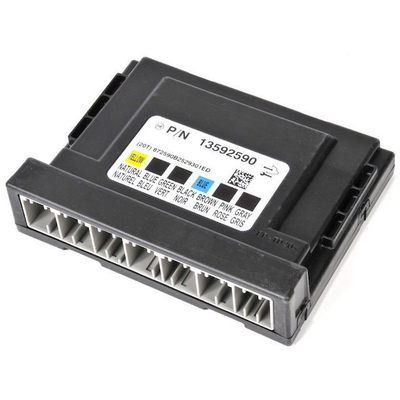
Below are the parts most often responsible for code U2000, ranked by how frequently each one is the actual culprit (per the diagnosis above). Tap any to see what we have for your vehicle.




The information in this article is provided for general reference and educational purposes only. Vehicle specifications, procedures, and part compatibility can vary by production date, trim level, and region. Always consult your vehicle's factory service manual and verify part numbers before purchasing or performing repairs. Safety-critical components such as airbags, seat belts, and braking systems should be installed by a qualified professional.
- 🧭 Diagnostic Flowchart
- 🎬 Helpful Videos
- 🛍️ Shop This Part
- What Does U2000 Mean?
- Can I Drive With U2000?
- Common Causes
- Symptoms
- Common Fixes & Costs
- DIY vs Professional
- Used vs. New Parts: Buying Guide
- What Happens If You Wait — Timeline
- Cost of Not Fixing It
- Diagnosis Steps
- When This Code Triggers (Freeze-Frame Conditions)
- Related Codes
- Climate & Environmental Factors
- How to Talk to a Mechanic About This Code
- Where to Take It: Dealer vs Independent vs Chain
- When to Walk Away From the Repair
- What Scan Tool You Need for This Code
- How to Clear the Code After You Fix It
- Will This Fail Emissions / State Inspection?
- Most Commonly Affected Vehicles
- Manufacturer-Specific Notes
- Real Owner Stories
- 2017 Land Rover Discovery with 'Traction Reduced' Warning
- 2012 Ford Focus with Multiple Warning Lights
- 2010 Mazda 3 with Intermittent ABS/TCS Lights
- How to Prevent This Code From Triggering
- Frequently Asked Questions
- What is the most common misdiagnosis for a U2000 code?
- Can a weak battery cause a U2000 code?
- Can I fix a U2000 code myself?
- Will clearing the code make it go away?
- Why is it a 'U' code and not a 'P' code?
- What's the difference between U2000 and other 'U' codes like U0100?
- My car seems to drive fine. Can I ignore the U2000 code?
- Key Takeaways
- 🎟️ Get 5% Off