

OBD-II Code U2001: Reduced System Function
What U2001 means, why it triggers, and how to fix it
- Code U2001 flags a network communication failure on the CAN or LIN bus, meaning a computer module stopped sending expected data.
- Always start diagnosis by testing the battery for a minimum of 12.4 volts, as low voltage is the leading cause of false communication codes.
- Inspect the ABS module on Ford and Mazda vehicles (2004-2010), as internal module failures account for a massive percentage of U2001 codes on these makes.
- Check manufacturer-specific definitions, as U2001 means 'LIN Lost Communication with Generator' on Suzuki models, pointing directly to a broken alternator wire.
What Does U2001 Mean?

Code U2001 means one of the computers (modules) in your car stopped sending required information. Modern vehicles use dozens of computers communicating over a network; this code flags missing data from one specific module, even if that module remains powered on.
Technical definition: The SAE/ISO definition for U2001 is 'Reduced System Function' or 'Invalid/Missing Data for Primary ID'. This indicates a control unit on the Controller Area Network (CAN) or Local Interconnect Network (LIN) failed to transmit expected data. Manufacturers often append a 2-digit suffix (e.g., U2001-87) to specify the exact failure type, such as a missing message.
Can I Drive With U2001?
Yes, But With Caution. You can drive, but with significant safety compromises. Critical systems like anti-lock brakes (ABS) and stability control disable automatically, increasing stopping distances and skidding risks. A non-functional ABS system causes safety inspection failures and complicates insurance claims after an accident.
Common Causes

- Low or Unstable Battery Voltage (Very Common) — A weak battery causes unpredictable electrical problems. Control modules require stable voltage to communicate; low voltage forces them to send corrupted data or drop offline entirely.
- Damaged or Corroded Wiring/Connectors (Very Common) — Wires connecting the network chafe, break, or corrode, especially near moisture or after unrelated mechanical repairs. A single damaged wire or unseated connector brings down an entire communication bus.
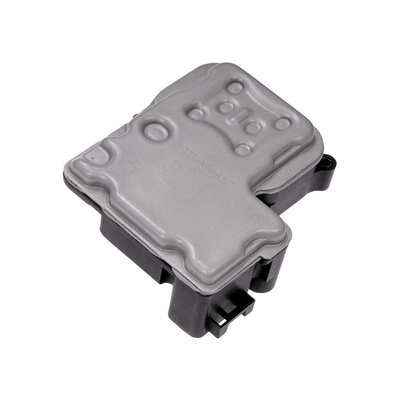
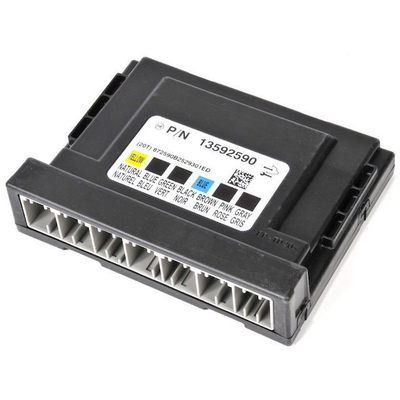
- Faulty Control Module (Common) — The module responsible for sending the data fails internally. This happens frequently with ABS modules, radios, instrument clusters, or body control modules (BCMs).
- Faulty Alternator (Less Common) — A failing alternator produces voltage spikes or excessive AC ripple voltage, disrupting communication and potentially damaging sensitive internal circuits like the ECU. On LIN bus systems, a bad internal regulator directly triggers U2001.
- Incompatible or Faulty Aftermarket Parts (Less Common) — Improperly installed alarms, stereos, or 'compatible' replacement parts (like alternators lacking the correct LIN bus protocol) interfere with the network and cause data errors.
Symptoms

- Warning Lights on Dash — The Check Engine Light, ABS light, traction control light, or battery light illuminates immediately.
- Features Not Working — The radio dies, power windows fail, cruise control disables, or the instrument gauges behave erratically.
- Intermittent Starting or No-Start — The vehicle cranks but does not start, or starts and immediately stalls if the anti-theft system data is missing.
- Rough or Unstable Idle — If the code relates to a communication loss with the alternator (common on Suzuki), the engine idles roughly or stalls because the ECM cannot manage the electrical load.
- Parasitic Battery Drain (also visible on scanner) — A faulty module fails to enter sleep mode when the car turns off, causing a slow drain that kills the battery overnight.
Diagnostic Flowchart
Tap your situation to follow the diagnostic path that matches what you're seeing on this code.
Common Fixes & Costs
- Replace Failing Battery
— Parts: $150-$350, Labor: $50-$100, ~0.5 hr book time
(DIY)
Ford F-150 (2011): OEM Motorcraft (Group Size 65) (Alt: DieHard, Duralast (Group Size 65))
Mazda 3 (2008): OEM Panasonic (Group Size 35 or 26R) (Alt: DieHard, Optima (Group Size 35 or 26R)) - Repair Damaged Wiring or Connector — Parts: $10-$50, Labor: $150-$500, ~2.5 hr book time (Intermediate)
- Replace Failed ABS Control Module
— Parts: $300-$1400, Labor: $150-$400, ~1.5 hr book time
(Professional)
Ford F-150 (2011): OEM BL3Z-2C405-J (Alt: Dorman 599-742 (Remanufactured))
Mazda 3 (2008): OEM BBY2-43-7AZD (Alt: Cardone 12-10212 (Remanufactured)) - Replace Failed Control Module (BCM, etc.)
— Parts: $300-$800, Labor: $250-$500, ~2.0 hr book time
(Professional)
Ford Explorer (2013): OEM DB5Z-15604-C (Alt: Dorman 502-013 (Remanufactured)) - Remove Faulty Aftermarket Part — Parts: $0, Labor: $100-$300, ~1.5 hr book time (DIY)
DIY vs Professional
- Replace Failing Battery — Beginner: True
Tools: Socket set or wrench (typically 8mm, 10mm, or 13mm), terminal cleaning brush. - Repair Damaged Wiring or Connector — Beginner: False
Tools: Multimeter, wire strippers, wire crimpers, heat gun, solder, quality butt connectors with heat shrink, TESA tape. - Replace Failed ABS Control Module — Beginner: False
Tools: Socket set, Torx or E-Torx socket set, flare nut wrenches, brake fluid, brake bleeding equipment, advanced diagnostic scanner with programming capabilities. - Replace Failed Control Module (BCM, etc.) — Beginner: False
Tools: Trim removal tools, socket set, diagnostic scanner with programming capabilities.
Used vs. New Parts: Buying Guide
When a used part is worth it: A used control module (like an ABS or BCM) makes sense for older, high-mileage vehicles where a new OEM part is prohibitively expensive or discontinued. It cuts the part cost by 50% or more.
Donor-vehicle mileage cap: roughly under 100000 miles for the part to have meaningful remaining life.
Donor quality checklist:
- Match the part number exactly; superseded numbers may not be compatible.
- Verify the donor vehicle's history to avoid parts from flood or fire-damaged cars.
- Purchase from a reputable seller that offers a warranty (typically 30-90 days).
Decision logic:
- If The original module can be repaired/rebuilt → Choose rebuilding; it is cost-effective and avoids programming issues.
- If Part requires programming (most modern modules) → Confirm you have a mechanic with the tools and willingness to program a used part before buying. Many dealerships refuse.
- If The part is for a critical safety system (e.g., ABS) → Favor new OEM or a quality rebuild over a used part of unknown history, as the risk of failure is higher.
Warranty tradeoff: Used parts typically have a 30-90 day functional warranty. New aftermarket parts offer 1-3 years. New OEM parts carry a 1-year warranty, but only if installed by a dealer.
Worst-case if a used part fails: $400-$800 if a used module is dead on arrival or fails after the warranty period, as you pay for diagnostic and programming labor again.
What Happens If You Wait — Timeline
- Immediate: Code sets and relevant warning lights illuminate. Associated safety systems disable, increasing risk in emergency maneuvers. (MPG impact: 0%% · Added cost: $0)
- 1-4 weeks: If caused by a faulty module with a parasitic drain, the battery repeatedly discharges. This causes sulfation, permanently reducing the battery's capacity and lifespan. (MPG impact: 0%% · Added cost: $150-$350)
- 1-6 months: If caused by a failing alternator, it introduces AC ripple voltage into the DC system. This 'dirty' power causes unrelated modules to malfunction intermittently, creating confusing symptoms. (MPG impact: 0-5%% · Added cost: $350-$1000)
- 6+ months: Sustained high voltage spikes or AC ripple from a completely failed alternator regulator causes permanent hardware damage to sensitive control modules like the ECU, BCM, or instrument cluster. (MPG impact: 5-10%% · Added cost: $800-$2500+)
Cost of Not Fixing It
- Immediate: Loss of safety features like Anti-lock Brakes (ABS) and Electronic Stability Control (ESC), increasing the risk of an accident, especially in poor conditions. (Added cost: N/A)
- 0-3 months: If caused by a parasitic drain, the battery repeatedly discharges, shortening its lifespan and requiring premature replacement. (Added cost: $150-$350)
- 3+ months: If caused by a faulty alternator with poor voltage regulation, it leads to chronic under/overcharging, damaging the battery. In rare cases, a large voltage spike damages other sensitive control modules. (Added cost: $500-$2500+)
Diagnosis Steps
- Check the Battery and Charging System
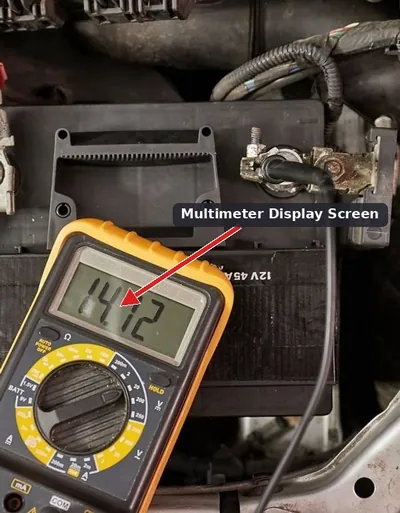
Ensure the battery is fully charged and healthy. Use a multimeter to verify at least 12.4 volts with the engine off and 13.7-14.7 volts with the engine running. Have the battery load-tested at an auto parts store to confirm it holds up under load.
Tools: Multimeter, Battery Load Tester (Beginner) - Perform a Full System Scan
Use an advanced OBD-II scanner to read manufacturer-specific codes from all modules (ABS, BCM, IPC, etc.). U2001 often sets alongside other 'U' codes (like U0101, U0121) that point toward the specific failing module. Note which modules are completely offline.
Tools: Advanced OBD-II Scanner (Beginner) - Visually Inspect Wiring Harnesses
Look for obvious damage near the battery, under the driver's seat, in door jambs, and around the ABS module. Check for chafed wires, green corrosion on connectors, or rodent damage. Pay close attention to areas where recent mechanical work occurred.
Tools: Flashlight (Intermediate) - Inspect for Aftermarket Devices
Locate any non-factory electronics, including aftermarket radios, remote starters, alarms, or plug-in insurance trackers. Disconnect them, clear the codes, and see if the communication problem resolves.
Tools: Basic Hand Tools (Beginner) - Check Power and Ground at the Suspect Module
Identify the failing module from your scan in Step 2. Use a wiring diagram to locate the power and ground pins on its connector. Verify it receives battery voltage (greater than 10V) and has a solid ground connection (less than 5 ohms of resistance to the chassis).
Tools: Multimeter, Vehicle-Specific Wiring Diagram (Advanced) - Test the CAN Bus Wires
With the battery disconnected, check for resistance between the two CAN bus wires at the OBD-II port (pins 6 and 14). You should see approximately 60 ohms. A reading of 120 ohms means a terminating resistor is offline or the circuit is open. Near 0 ohms means the CAN High and CAN Low wires are shorted together.
Tools: Multimeter (Advanced) - Quick LIN Bus Voltage Check
For LIN bus faults, turn the ignition on (engine off). Connect the red multimeter lead to the LIN wire at the component (e.g., alternator) and the black lead to a chassis ground. A healthy LIN bus shows a fluctuating voltage, or a steady voltage near battery level (11-12V) that pulls down to around 1V during communication. Constant 0V indicates a short to ground.
Tools: Multimeter (Intermediate) - Check for Alternator AC Ripple Voltage
A failing alternator diode introduces excessive AC voltage (ripple) onto the DC system, disrupting communication. With the engine running at 2000 RPM and electrical loads on, set your multimeter to AC Volts and test across the battery terminals. A healthy alternator shows ripple voltage well below 0.5V (500mV).
Tools: Multimeter with AC Voltage function (Advanced) - Test for Parasitic Battery Drain
If the battery dies overnight, test for a parasitic draw. After the vehicle enters 'sleep mode' (up to an hour), normal draw is below 50-85 milliamps. A reading significantly higher than 100mA confirms a module is not shutting down. Pull fuses one by one to isolate the faulty circuit.
Tools: Multimeter with 10A capability (Advanced) - Advanced LIN Bus Waveform Analysis
Connect an oscilloscope to the LIN signal wire. A healthy signal shows a series of square waves. If you see the master module's request but no response from the slave, the slave module or its wiring is at fault. Distorted waveforms point to high resistance in the wiring.
Tools: Oscilloscope, Piercing Probes (Professional)
When This Code Triggers (Freeze-Frame Conditions)
- Module Voltage: 11.5-12.5V (Key On, Engine Off (KOEO) during initial network check)
- Ignition Status: On/Run (Code often sets immediately upon vehicle startup)
- Network Status: Active (During a request for data from a specific module (e.g., ABS, BCM))
- Vehicle Speed: 0 mph (Many communication faults are detected before the vehicle is in motion)
Related Codes
- U0121 — Means 'Lost Communication With Anti-Lock Brake System (ABS) Control Module'. U0121 indicates the ABS module is completely offline. U2001 sets when the ABS module is online but sending invalid data.
- U0140 — Means 'Lost Communication With Body Control Module (BCM)'. U0140 implies the BCM is completely offline. U2001 sets if the BCM is online but fails to send specific required messages.
- U0155 — Means 'Lost Communication With Instrument Panel Cluster (IPC) Control Module'. U0155 sets when the entire instrument cluster is dead. U2001 sets if the cluster is partially working but failing as a network gateway.
- B1401 — On Subaru vehicles, this means 'Meter Collation Invalid' and indicates a synchronization failure between the Body Integrated Unit (BIU), instrument cluster, and ECU. It points to a network communication problem resulting in a no-start.
Climate & Environmental Factors
- High Humidity / Salt Belt Regions: Areas with high humidity or road salt experience significantly higher rates of corrosion on wiring, connectors, and module pins. Moisture bypasses compromised connector seals, leading to shorts and open circuits that cause communication codes.
- Extreme Cold Weather: Low temperatures cause electronic components to become temperature-sensitive. Solder joints on circuit boards contract and create intermittent open circuits. Cold also reduces battery efficiency and makes plastic connectors brittle.
How to Talk to a Mechanic About This Code
Say this: "I have a U2001 code and other communication-related DTCs. I've already checked the battery and it's healthy. I need a technician experienced with electrical and network diagnostics to trace the problem, not just replace parts. Can you start by performing a full network scan to see which modules are offline or reporting errors?"
This signals that you are an informed consumer, steering the shop away from simple, unnecessary fixes like a battery replacement. It directs them toward the skilled diagnostic work actually required for a network code, reducing the chance of them 'shotgunning' parts at your expense.
Avoid saying:
- 'My check engine light is on, can you fix it?' (This is too vague and invites upselling).
- 'Just do whatever it takes to fix it.' (This gives the shop a blank check).
- 'My friend said it's probably the alternator.' (This leads to tunnel vision and causes the tech to ignore other possibilities).
Questions to ask before authorizing the repair:
- What were the results of the network scan? Which specific module is failing to communicate?
- Did you check the power and ground connections at the suspect module before condemning it?
- Is the proposed fix a wiring repair or a module replacement? If it's a replacement, does the new module require programming and is that included in the quote?
- Can you show me the damaged wire or explain why the module failed?
- What is your warranty on this specific electrical repair?
Where to Take It: Dealer vs Independent vs Chain
- Dealer:
A strong, albeit expensive, choice. They have access to all factory wiring diagrams, TSBs, and programming tools, which is often necessary for a U2001.
Best for: Vehicles under warranty., Complex, manufacturer-specific electrical issues (e.g., VW/Audi CAN Gateway, Suzuki LIN bus)., When a new module requires proprietary software for programming.
Downsides: Highest labor rates., Quick to replace an entire module when a simpler wiring repair or rebuild is possible. (Typical cost: +50% vs. baseline) - Independent Shop:
Best choice if you find the right one. Look for a shop with ASE-certified technicians and positive reviews specifically mentioning electrical or diagnostic expertise. Ask if they are comfortable diagnosing network communication problems.
Best for: Out-of-warranty vehicles where cost is a major factor., Common, well-documented U2001 issues (e.g., Ford/Mazda ABS modules)., Shops that specialize in electrical or diagnostic work.
Downsides: Shop quality and diagnostic skill vary dramatically. Vet them carefully., May lack expensive, dealer-level programming tools for the newest vehicles. (Typical cost: +0% vs. baseline) - Chain Shop:
AVOID for diagnosis. A U2001 code is far outside the scope of what chain shops are set up to handle effectively. They may correctly identify a bad battery, but they are very likely to misdiagnose anything more complex.
Best for: Simple, unrelated jobs like battery replacement or oil changes.
Downsides: Technicians are often not trained or equipped for complex network diagnostics., High pressure to sell parts and services leads to misdiagnosis and unnecessary repairs. (Typical cost: -10% vs. baseline)
What Scan Tool You Need for This Code

Minimum: A scanner that reads codes from ALL vehicle modules (ABS, BCM, IPC, etc.), not just the engine computer. A basic engine code reader is not sufficient.
A cheap, engine-only code reader will not see the U2001 code or the related codes from other modules. You need to see the entire network to understand which module is causing the problem. Diagnosing a U2001 requires a full system scan.
Budget: BlueDriver Pro (~$99) — Reads codes from all modules (ABS, Airbag, BCM, etc.) on most modern cars, providing the full system view needed for initial diagnosis. It also provides freeze frame data and live data graphing.
Mid-range: Foxwell NT604 Elite / NT510 Elite (~$150) — In addition to full system scanning, these handheld units offer some bidirectional controls (active tests) to help verify component function without having to replace them. For example, you can command an ABS pump to cycle.
Professional: Autel MaxiCOM MK808BT / Launch X431 Series (~$450-900) — Provides extensive bidirectional controls, special functions like ABS brake bleeding, and module programming/coding capabilities. These are essential for completing a repair that involves replacing a control module.
Rent vs buy: For a one-time diagnosis, some auto parts stores rent scanners, but they are often basic models. Given the complexity of U2001, investing in a 'Budget Pick' scanner is highly recommended for any DIYer, as it provides the necessary full-system visibility that rental tools lack.
How to Clear the Code After You Fix It
- Ensure the underlying fault is repaired
- Use an OBD-II scan tool to clear all Diagnostic Trouble Codes (DTCs)
- Perform a complete drive cycle to allow readiness monitors to run
Drive cycle (~30 minutes): Start with a cold engine (sit for 8+ hours). Idle for 2-3 minutes with loads like A/C on. Drive for 10-15 minutes at a steady highway speed (55-60 mph). Then, drive for 15 minutes in stop-and-go city traffic. Allow the vehicle to cool down. This process helps the vehicle's computer run its self-diagnostic tests.
Readiness monitors affected: Comprehensive Component Monitor, Misfire Monitor
Before emissions retest: drive at least 50 miles to fully set monitors.
Watch out for:
- Simply disconnecting the battery will not fix the root cause and may not clear all codes or reset readiness monitors properly.
- If the underlying electrical issue is not fixed, the code returns almost immediately after being cleared.
- Taking the vehicle for an emissions test before the readiness monitors are 'Ready' results in a failure, even if the Check Engine Light is off.
Will This Fail Emissions / State Inspection?
Yes — this code typically fails an OBD-II emissions inspection.
- California: An illuminated Check Engine Light is an automatic failure. After repair, you must complete a drive cycle to set the readiness monitors before re-testing. Driving for a week or 100+ miles is often required.
- New York: A vehicle fails the OBD-II inspection if the 'Check Engine' light is on. For model year 2001 and newer vehicles, the test also fails if more than one readiness monitor is 'Not Ready'.
- Texas: In the 17 counties requiring emissions testing, an active Check Engine Light is an automatic fail. The OBD-II test also checks readiness monitors; 2001 and newer vehicles are allowed only one 'Not Ready' monitor to pass.
Most Commonly Affected Vehicles
- Ford F-150, Explorer, Ranger (2004-2021) — Often related to a failed ABS module or chafed wiring in the driver-side sill plate or undercarriage. On newer models, the All Terrain Control Module (ATCM) causes network-wide communication DTCs.
- Mazda 3, 6, MPV (2004-2010) — Frequently caused by an internal failure of the ABS/DSC control module. Replacement at a dealer is costly, but many specialists offer a more affordable rebuild service.
- Suzuki Swift, Wagon R, Celerio, Alto (2010-2020) — Commonly appears as 'LIN Lost Communication with Generator', pointing to a fault in the alternator's single LIN communication wire. A key symptom is a severe rough idle.
- Chevrolet/GM Malibu, Silverado, Sierra, Corvette (1999-2010) — Defined as 'Invalid IPC Transmitted SPI Data' and points to a problem with the instrument panel cluster (IPC) or Body Control Module (BCM). An erratic wheel speed sensor also causes a cascade of U-codes.
- Dodge/Chrysler/Jeep Various (2005-2015) — Related to failures in the ABS module or the Totally Integrated Power Module (TIPM), which is known for causing a wide range of electrical issues.
- Volkswagen/Audi Golf, Jetta, A3, A4 (2008-2016) — Network communication issues point to a faulty CAN Gateway module. This module fails due to water ingress from clogged cowl drains or becomes temperature-sensitive in cold weather.
- Subaru Outback, Forester, Impreza (2010-2019) — Communication U-codes are caused by an internal failure of the Body Integrated Unit (BIU), which acts as a gateway. Failure leads to a no-start and an 'ER IU' message on the odometer.
- BMW 3-Series (E90), 5-Series (E60) (2006-2013) — Similar symptoms (no-start, multiple warnings) are frequently caused by a failure of the Car Access System (CAS) module or its relay to communicate with the DME (engine computer).
Manufacturer-Specific Notes
- Ford: U2001 has misleading definitions like 'Audio Tape Deck Fault' even on cars without those devices, pointing to a general communication issue with the entertainment system module (ACM). Safety Recall 07S51 addressed missing seals on the ABS module connector causing communication faults.
- Mazda: This code is very commonly the result of a well-known internal failure of the ABS/DSC module on 2004-2010 models. Independent shops specialize in rebuilding these specific modules as a cost-effective alternative to a new part.
- Suzuki: U2001 is specifically defined as 'LIN Lost Communication With Generator'. This points directly to a problem with the smart charging system, frequently caused by a single broken communication wire between the ECM and alternator.
- General Motors: An erratic signal from a single wheel speed sensor causes the EBCM (Brake Module) to transmit malfunction messages, triggering a cascade of U-codes across the network and leading to misdiagnosis.
Real Owner Stories
2001 Ford F-150 with ABS light and parasitic drain
The owner found the ABS pump motor running continuously with the key out of the ignition, draining the battery rapidly. This started after repairing several wires chewed by rodents.
What they tried:
- Repaired chewed wires leading to a front ABS sensor.
- Pulled the 60-amp ABS fuse to stop the pump from running.
- Considered replacing the ABS control module.
Outcome: The root cause was the damaged wiring grounding out, which permanently damaged the internal circuitry of the ABS control module. The fix required replacing the ABS control module after ensuring all wiring was repaired correctly.
Lesson: Physical wire damage causes modules to behave erratically. Even after repairing visible wires, the initial short circuit often causes permanent damage to the control module itself.
Suzuki Swift with U2001 and severe rough idle
The car exhibited a severe vibration at idle and stalled frequently. The only code present was U2001, defined as 'LIN Lost Communication with Generator'. The battery warning light was illuminated.
What they tried:
- Verified the alternator was charging (14.4V).
- Checked the single-wire LIN connector at the alternator.
- Performed a thorough inspection of the wiring harness between the alternator and the Engine Control Module (ECM).
Outcome: A single broken LIN communication wire was found in the harness between the ECM and the alternator. Repairing this one wire resolved the communication code, extinguished the battery light, and fixed the rough idle.
Lesson: On Suzuki models, U2001 almost always points to the alternator's communication circuit. The cause is usually a simple broken wire, not a failed alternator. The severe rough idle occurs because the ECM cannot manage engine load without alternator communication.
2012 Mazda 3 with multiple ABS/DSC/Brake warning lights
ABS, DSC, and main brake warning lights came on intermittently. A scan revealed a cascade of codes, including U0140 (Lost Comm with BCM), U3003 (Battery Voltage Low), and multiple C-codes for brake valve failures.
What they tried:
- Checked fuses and battery connections.
- Noted headlights dimmed when using power windows.
- Researched online forums pointing to a common failure of the ABS/DSC module.
Outcome: The combination of a low voltage code (U3003) and communication loss codes (U0140) alongside specific ABS faults strongly points to an internal failure of the ABS control module. The fix was having the original module rebuilt.
Lesson: A flood of seemingly unrelated communication and sensor codes from one system often points to the module itself failing. Always investigate low voltage codes (like U3003) first, as they trigger false communication errors.
How to Prevent This Code From Triggering
- Clean Battery Terminals and Posts Annually (Once per year) — Corrosion on battery terminals increases resistance, causing voltage drops that lead to communication errors. Cleaning with a wire brush and applying anti-corrosion gel ensures a solid electrical foundation.
- Apply Dielectric Grease to Key Connectors (When servicing or as needed) — Applying a thin layer of dielectric grease to the seals of connectors for exposed modules prevents moisture and road salt from causing corrosion on the pins.
- Keep Cowl and Sunroof Drains Clear (Twice per year (spring/fall)) — Water drains in the windshield cowl or sunroof get clogged with leaves. This causes water to overflow into the cabin and drip directly onto critical network modules, causing failure.
- Drive the Vehicle Regularly (At least once per week) — Regularly driving for at least 20-30 minutes allows the alternator to fully charge the battery. Frequent short trips slowly deplete the battery, leading to low-voltage conditions.
Frequently Asked Questions
Can a bad battery cause a U2001 code?
Yes. Control modules are highly sensitive to voltage drops. A weak battery causes communication glitches between modules, triggering a U2001 code. Always check the battery and charging system first.
Is U2001 expensive to fix?
Repair costs range from $50 for a simple wiring fix to over $1,500 for a new programmed control module. The final price depends entirely on whether the root cause is a damaged wire, a dying battery, or a failed computer.
What do the numbers after U2001 (e.g., U2001-87) mean?
The two digits after the main code are a Failure Type Byte (FTB) providing specific fault details. For example, '-87' means 'Missing Message', while '-98' indicates 'Component Over Temperature'. This extra detail helps technicians pinpoint the exact communication error.
Can water damage cause a U2001 code?
Yes. Water intrusion corrodes module pins and shorts out communication networks. On many vehicles, clogged cowl or sunroof drains allow water to drip directly onto critical network gateways, causing immediate failure.
What is a LIN bus and how is it related to U2001?
LIN (Local Interconnect Network) is a single-wire communication system for lower-speed components like smart alternators and climate controls. On Suzuki vehicles, U2001 specifically means 'LIN Lost Communication With Generator'. This points directly to a fault in the alternator's communication circuit.
Can I fix U2001 myself?
Basic checks like testing the battery and inspecting visible wiring are highly DIY-friendly. However, diagnosing network resistance or replacing and programming control modules requires advanced bidirectional scanners. If basic checks fail, take the vehicle to a specialized diagnostic shop.
Will clearing the code fix the problem?
No. Clearing the code only turns the warning light off temporarily. The code returns as soon as the vehicle's computer runs its self-test and detects the missing network data again.
Key Takeaways
- Code U2001 flags a network communication failure on the CAN or LIN bus, meaning a computer module stopped sending expected data.
- Always start diagnosis by testing the battery for a minimum of 12.4 volts, as low voltage is the leading cause of false communication codes.
- Inspect the ABS module on Ford and Mazda vehicles (2004-2010), as internal module failures account for a massive percentage of U2001 codes on these makes.
- Check manufacturer-specific definitions, as U2001 means 'LIN Lost Communication with Generator' on Suzuki models, pointing directly to a broken alternator wire.
Shop the Parts Behind U2001
Below are the parts most often responsible for code U2001, ranked by how frequently each one is the actual culprit (per the diagnosis above). Tap any to see what we have for your vehicle.


The information in this article is provided for general reference and educational purposes only. Vehicle specifications, procedures, and part compatibility can vary by production date, trim level, and region. Always consult your vehicle's factory service manual and verify part numbers before purchasing or performing repairs. Safety-critical components such as airbags, seat belts, and braking systems should be installed by a qualified professional.
- 🧭 Diagnostic Flowchart
- 🛍️ Shop This Part
- What Does U2001 Mean?
- Can I Drive With U2001?
- Common Causes
- Symptoms
- Common Fixes & Costs
- DIY vs Professional
- Used vs. New Parts: Buying Guide
- What Happens If You Wait — Timeline
- Cost of Not Fixing It
- Diagnosis Steps
- When This Code Triggers (Freeze-Frame Conditions)
- Related Codes
- Climate & Environmental Factors
- How to Talk to a Mechanic About This Code
- Where to Take It: Dealer vs Independent vs Chain
- What Scan Tool You Need for This Code
- How to Clear the Code After You Fix It
- Will This Fail Emissions / State Inspection?
- Most Commonly Affected Vehicles
- Manufacturer-Specific Notes
- Real Owner Stories
- 2001 Ford F-150 with ABS light and parasitic drain
- Suzuki Swift with U2001 and severe rough idle
- 2012 Mazda 3 with multiple ABS/DSC/Brake warning lights
- How to Prevent This Code From Triggering
- Frequently Asked Questions
- Can a bad battery cause a U2001 code?
- Is U2001 expensive to fix?
- What do the numbers after U2001 (e.g., U2001-87) mean?
- Can water damage cause a U2001 code?
- What is a LIN bus and how is it related to U2001?
- Can I fix U2001 myself?
- Will clearing the code fix the problem?
- Key Takeaways
- 🎟️ Get 5% Off