

OBD-II Code U2002: Network Communication Fault
What U2002 means, why it triggers, and how to fix it
- U2002 is a CAN bus communication error that specifically disables the Electronic Parking Brake (EPB), locking the rear wheels or preventing the brake from engaging.
- Test your battery before buying parts; a resting voltage below 12.4V causes modules to drop offline and triggers false U2002 codes.
- On Ford and Jaguar models, replacing a sticky or failed $50 EPB console switch fixes the code 80% of the time and takes under an hour.
- Hyundai and Kia owners face a $1,500+ dealer repair for a failed EPB actuator motor, but using a $250 aftermarket unit cuts the total cost by 70%.
What Does U2002 Mean?
Code U2002 indicates a communication failure on the vehicle's Controller Area Network (CAN) bus. Specifically, the Anti-lock Brake System (ABS) module lost contact with the Electronic Parking Brake (EPB) switch or actuator. The ABS module expects a specific voltage return signal (Apply, Release, or Neutral); when this signal drops or corrupts, the code triggers and disables the parking brake.
Technical definition: SAE reserves 'U' codes for network issues. U2002 specifically flags an invalid or missing signal within the EPB system. The ABS module sends a 5V reference to the EPB switch. If the return signal is lost, routes to ground, or holds a state for over 60 seconds, the ABS module logs U2002 and disables the parking brake.
Can I Drive With U2002?
Yes, But With Caution. You can drive short distances, but immediate diagnosis is required. The primary risk is the electronic parking brake (EPB) failing to release, stranding the vehicle. A partially applied brake overheats the rear pads and rotors, causing brake fade and adding $300-$700 in repair costs.
Common Causes
- Low Battery Voltage (Very Common) — A weak battery dropping below 12V causes control modules to lose communication during startup, triggering false U2002 codes.
- Faulty or Contaminated EPB Switch (Very Common) — The center console switch fails internally or shorts out due to spilled liquids (coffee, soda) and debris, sending an invalid signal to the ABS module.
- Damaged Wiring or Loose Connectors (Common) — Wires leading to the EPB switch fray or corrode. The plastic connector housing on the back of the switch frequently breaks, causing a loose connection.
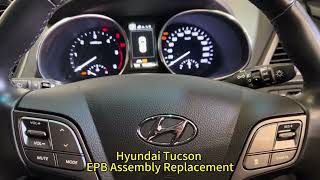
- Faulty EPB Actuator/Motor (Less Common) — The physical motor that applies the brake at the rear calipers burns out or seizes. This is highly prevalent on 2012-2020 Hyundai and Kia models. 🎬 See how to diagnose and fix a locked Hyundai EPB module.
- Software Glitch (Rare) — A bug in the Skid Control ECU software incorrectly flags a communication fault. This requires a dealership software update, common on 2020-2021 Toyotas.
Symptoms
- Flashing Parking Brake Warning Light — An amber or red parking brake warning light illuminates or flashes continuously on the dashboard.
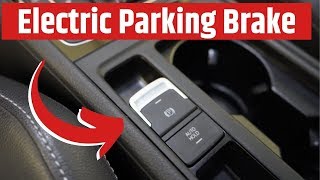
- EPB Stuck On or Off — The electronic parking brake refuses to engage when parked, or refuses to release, immobilizing the vehicle. 🎬 Watch: This simple trick can release a stuck electronic parking brake.
- Multiple Warning Lights — ABS, traction control, and general wrench lights illuminate simultaneously due to the network communication failure.
- No Obvious Symptoms (History Code) (scan-tool only — no driver-felt sign) — The code stores silently in the ABS module after a temporary voltage drop or if the switch was unplugged during maintenance.
Diagnostic Flowchart
Tap your situation to follow the diagnostic path that matches what you're seeing on this code.
Common Fixes & Costs
- Replace EPB Switch — Parts: $40 - $100, Labor: $50 - $150, ~0.7 hr book time (DIY)
- Replace Battery — Parts: $150 - $250, Labor: $0 - $50, ~0.4 hr book time (DIY)
- Repair Wiring Harness / Connector — Parts: $10 - $50, Labor: $150 - $400, ~2.5 hr book time (Professional)
- Replace EPB Actuator Module — Parts: $200 - $1500, Labor: $300 - $600, ~3.0 hr book time (Professional)
Used vs. New Parts: Buying Guide
When a used part is worth it: Buy a used OEM part for high-cost items like a Hyundai EPB actuator ($1,500+ new). For low-cost parts like an EPB switch ($50), buy new to avoid inheriting a worn-out component.
Donor-vehicle mileage cap: roughly under 60000 miles for the part to have meaningful remaining life.
Donor quality checklist:
- Verify the donor vehicle wasn't scrapped for a rear-end collision or electrical fire.
- Match the OEM part number exactly; superseded numbers require software flashes.
- Avoid electronic modules from flood-damaged or rust-belt vehicles due to internal corrosion.
Decision logic:
- If Part is the EPB switch → Buy new OEM. The $50 cost outweighs the risk of a used switch failing.
- If Part is the EPB actuator and budget is tight → Buy a quality aftermarket unit with a multi-year warranty. Used OEM is acceptable if sourced from a low-mileage donor.
Warranty tradeoff: Used parts carry a 30-day part-only warranty. New aftermarket parts offer 1-year warranties. New OEM parts carry a 12-month/12,000-mile warranty.
Worst-case if a used part fails: $800 if a used EPB actuator fails, requiring repeat labor and a second replacement part.
What Happens If You Wait — Timeline
- Immediate: Code sets, EPB warning light illuminates. The brake may stick, potentially stranding the vehicle. (MPG impact: 0%% · Added cost: $100 - $300 (tow truck))
- 1 week - 2 months: If drivable, a slightly dragging brake generates constant friction, accelerating pad wear and emitting a burning smell. (MPG impact: 1-5%% · Added cost: $50 - $150 (wasted fuel))
- 2-4 months: Sustained overheating destroys the rear brake pads and warps the rotors, causing severe vibration when braking. (MPG impact: 5-10%% · Added cost: $300 - $600 (pad and rotor replacement))
- 4+ months: Extreme heat boils the brake fluid and melts internal caliper seals, seizing the calipers entirely. (MPG impact: 10-15%% · Added cost: $700 - $1,500 (caliper, pad, and rotor replacement))
Cost of Not Fixing It
- Immediate: The electronic parking brake fails to release, leaving the vehicle immobile and requiring a tow. (Added cost: $100 - $300)
- 1-3 months: A dragging parking brake generates constant friction, rapidly wearing out the rear brake pads and rotors while decreasing fuel economy. (Added cost: $300 - $600)
- 3+ months: Prolonged driving with a dragging brake boils the brake fluid and destroys internal caliper seals, requiring complete rear brake system replacement. (Added cost: $700 - $1500)
Diagnosis Steps
- Check Battery Voltage
Measure battery voltage with a multimeter. A resting voltage below 12.4V (engine off) or a drop below 10V during cranking causes modules to drop offline. Replace the battery if it fails a load test.
Tools: Digital Multimeter (Beginner) - Inspect and Clean EPB Switch
Remove the center console trim. Inspect the EPB switch for sticky residue from spilled drinks. Clean the mechanism thoroughly with 99% isopropyl alcohol and a small brush. Let it dry completely.
Tools: Trim Removal Tools, 99% Isopropyl Alcohol, Small Brush (Beginner) - Inspect Switch Connector Pins
Unplug the EPB switch connector. Check for broken plastic locking tabs or pushed-back metal pins. On Ford Fusions, the connector housing frequently breaks internally while appearing plugged in.
Tools: Flashlight (Intermediate) - Test Switch via Live Data
Connect an advanced scan tool and view the ABS module live data. Monitor the EPB switch PID. It must change from 'Neutral' to 'Applied' or 'Released' when you pull the switch. If it reads 'Error' or doesn't change, replace the switch.
Tools: Advanced OBD-II Scanner with Live Data (Intermediate) - Test CAN Bus Resistance
Disconnect the battery. Measure resistance between Pin 6 and Pin 14 on the OBD-II port. Exactly 60 ohms is healthy. 120 ohms means a module is offline. 0 ohms indicates a short circuit.
Tools: Digital Multimeter (Advanced) - Monitor Actuator Current Draw
Using a bi-directional scanner, command the EPB actuator on. Monitor the motor current draw. A healthy motor draws 2.5-3.0 amps. A draw under 2.0 amps or an erratic spike confirms a failing actuator motor.
Tools: Professional Scan Tool with Bi-Directional Controls (Advanced)
When This Code Triggers (Freeze-Frame Conditions)
- Vehicle Speed: 0 mph (The code sets when the vehicle is stationary, as this is when the EPB operates. Activating the switch for over 60 seconds while parked triggers the fault on Ford models.)
- Battery Voltage: 10.0-11.8V (during crank) (The fault triggers during startup if battery voltage drops below 12V, causing modules to initialize improperly and drop offline.)
- EPB Switch Status: Error / Invalid (The ABS module registers the switch signal as 'Error' or stuck in one state, directly triggering the fault.)
Related Codes
- U0001 — U0001 indicates a massive, network-wide CAN bus failure where multiple modules are offline. U2002 is a localized fault where only the EPB system loses communication.
- C1799 — C1799 points to the sensor inside the EPB actuator motor at the wheel. U2002 points to the driver's switch in the cabin.
- U0121 — U0121 means the entire ABS module is offline and dead. U2002 is stored inside a working ABS module complaining that it cannot hear the EPB switch.
Climate & Environmental Factors
- High Humidity / Salt Belt Regions: Road salt acts as an electrolyte, accelerating corrosion on wiring connectors and module pins in exposed areas like wheel wells. This increases electrical resistance and severs CAN bus communication.
- Extreme Cold: Cold temperatures cause plastic wiring insulation to crack, letting moisture in. Battery efficiency also plummets in the cold, causing the low-voltage conditions that trigger U2002.
How to Talk to a Mechanic About This Code
Say this: "I have a U2002 fault code and a parking brake warning light. Please test the battery voltage and verify the EPB switch signal via live data before recommending a module replacement."
This directs the technician to start with the cheapest, most common fixes (battery and switch) rather than immediately quoting a $1,500 actuator replacement.
Avoid saying:
- 'My parking brake is broken, fix it.'
- 'Just do whatever you think is best.'
Questions to ask before authorizing the repair:
- Did the battery pass a load test?
- Did the EPB switch status change when you monitored it on the live data scanner?
- Is there a Technical Service Bulletin (TSB) for this issue on my vehicle?
Where to Take It: Dealer vs Independent vs Chain
- Dealer:
Recommended only for warranty work or software flashes.
Best for: Vehicles under warranty., Software updates (like the Toyota TSB).
Downsides: Highest labor rates., Will only install expensive OEM modules rather than repairing wiring or using aftermarket parts. (Typical cost: +40% vs. baseline) - Independent Shop:
Best fit for most U2002 scenarios. They can diagnose and replace a faulty switch for significantly less than a dealer.
Best for: Out-of-warranty vehicles., Switch replacements and wiring repairs.
Downsides: May lack the specific bi-directional scanner required to calibrate a new EPB actuator. (Typical cost: +0% vs. baseline) - Chain Shop:
Avoid for diagnosis. They are ill-equipped to accurately diagnose a U-series code.
Best for: Testing and replacing the battery.
Downsides: Lack the advanced diagnostic tools required for CAN bus network faults., High risk of misdiagnosis. (Typical cost: -10% vs. baseline)
When to Walk Away From the Repair
If the estimated repair cost exceeds 50% of the car's private-party market value, consider selling the vehicle.
- Car worth $8000, fix is $250: Fix it. A switch replacement is a minor cost relative to the car's value.
- Car worth $4000, fix is $2200: Walk away. A $2,200 quote for an EPB actuator and seized calipers is 55% of the car's value.
What Scan Tool You Need for This Code
Minimum: A tool that reads ABS codes and displays live data streams.
A $20 code reader only checks the engine. You must access the ABS module to see the U2002 code and view the live status of the EPB switch.
Budget: BlueDriver Pro (~$90) — Reads ABS codes and displays live data, allowing you to watch the EPB switch status change as you pull it.
Mid-range: Foxwell NT510 Elite (~$180) — Offers bi-directional control. Retracts brake calipers for service and performs the mandatory calibration procedure after replacing an EPB actuator.
Professional: Autel MaxiCOM MK808S (~$450) — Provides OE-level bidirectional control, module programming, and active tests to command components, essential for tracing complex CAN bus faults.
Rent vs buy: Auto parts store loaner tools cannot read ABS codes or perform EPB calibrations. You must buy a mid-range tool or visit a shop.
How to Clear the Code After You Fix It
- Reconnect the battery if disconnected during repair.
- Use an OBD-II scan tool to clear DTCs from the ABS and Body Control modules.
- For EPB actuator replacement, perform the manufacturer-specific calibration procedure using a bi-directional scan tool to teach the new module its travel limits.
- Perform a complete drive cycle to reset emissions readiness monitors.
Drive cycle (~20 minutes): 1) Cold start (sit for 8+ hours). 2) Idle for 3 minutes with A/C and rear defroster on. 3) Accelerate to 55 mph, holding steady for 10 minutes. 4) Coast down to 20 mph without braking. 5) Drive for 10 minutes in stop-and-go traffic.
Readiness monitors affected: Evaporative System (EVAP), Catalyst (CAT), Oxygen (O2) Sensor
Before emissions retest: drive at least 50 miles to fully set monitors.
Watch out for:
- Disconnecting the battery clears the code but resets all readiness monitors to 'Not Ready', causing an automatic emissions failure.
- Forgetting to perform the EPB calibration procedure after replacing an actuator causes the new part to fail immediately.
Will This Fail Emissions / State Inspection?
Yes — this code typically fails an OBD-II emissions inspection.
- California: Automatic failure. Any DTC that illuminates a dashboard warning light fails the OBD-II Smog Check.
- New York: Automatic failure. The NYVIP3 inspection rejects any vehicle with an active warning light. Vehicles must complete a drive cycle after repair.
- Texas: Automatic failure in the 17 emissions-testing counties due to the illuminated warning light.
Most Commonly Affected Vehicles
- Ford Fusion (2013-2020) — Extremely prone to EPB switch failure. The plastic connector housing breaks, causing a loose connection. Requires a manual reset procedure after replacement.
- Ford Edge (2015-2018) — Experiences identical switch and wiring failures to the Fusion. Often stores U2002 as a silent history code if the switch is unplugged during cleaning.
- Jaguar XF, XE, F-Pace (2015-2020) — The console switch fails frequently due to liquid spills. Diagnosis with live data is mandatory to differentiate between a bad switch and a bad actuator.
- Land Rover Discovery 3/4, Range Rover Sport (2005-2016) — The wiring harness in the rear wheel arch chafes and corrodes, severing communication to the EPB module.
- Hyundai / Kia Santa Fe, Sorento (2012-2020) — Known for catastrophic failure of the entire EPB actuator module, locking the rear wheels. OEM replacements exceed $1,200, making aftermarket units highly recommended.
- Toyota Corolla, RAV4 (2020-2021) — Displays a 'Parking Brake Malfunction' warning due to a software glitch in the Skid Control ECU. Fixed via TSB T-SB-0078-21 software update, not hardware replacement.
Manufacturer-Specific Notes
- Ford: Ford appends failure type codes. U2002:96 specifically means 'Parking Brake Switch: Component Internal Failure', confirming the switch is dead. Replacing it requires cycling the new switch up-neutral-down within 5 seconds to reset the module.
- Toyota: On 2020-2021 models, U2002 is almost always a software bug, not a broken part. Dealerships resolve this by reprogramming the Skid Control ECU under warranty.
- Hyundai / Kia: Unlike Ford where the $50 switch breaks, Hyundai models suffer from complete EPB actuator failure. The rear wheels lock up entirely, requiring a $500-$1500 repair.
Real Owner Stories
2014 Ford Fusion at 110K miles
EPB warning light illuminated, and the parking brake would not release. The switch felt normal to operate.
What they tried:
- Towed to an independent shop. Diagnosed with code U2002:96 (Internal switch failure).
- Shop replaced the EPB switch and connector pigtail.
Outcome: The plastic connector housing on the original switch had shattered, severing the connection. Replacing the switch and pigtail fixed the issue for $250.
Lesson: On Ford Fusions, the EPB switch connector breaks internally. Even if the switch feels fine, the broken plastic severs the electrical connection.
2014 Hyundai Santa Fe at 99K miles
EPB warning light illuminated and the rear wheels locked completely, immobilizing the vehicle.
What they tried:
- Towed to a dealership. Diagnosed with a burnt-out EPB actuator module.
- Dealer quoted $2,000 for an OEM replacement.
Outcome: Owner paid the dealer due to time constraints, but later found identical aftermarket actuators online for $250. A teardown of the old part revealed a seized internal motor.
Lesson: For Hyundai/Kia, locked rear wheels indicate a failed actuator, not a switch. Sourcing an aftermarket part saves over $1,000.
Jaguar XF after a beverage spill
A soda spilled in the center console. The EPB warning light illuminated and the switch became sticky.
What they tried:
- Owner disconnected the battery and cleaned the switch mechanism with 99% isopropyl alcohol and a Q-tip.
- Cleared the code with a scanner.
Outcome: The alcohol dissolved the sugary residue, restoring the electrical connection. The code never returned. Repair cost: $0.
Lesson: If the fault appears after a liquid spill, thoroughly clean the switch with isopropyl alcohol before replacing any parts.
How to Prevent This Code From Triggering
- Clean battery terminals and ensure tight connections (Every 6 months) — Corrosion increases electrical resistance, causing the voltage drops during startup that trigger U2002.
- Keep the center console clean and avoid open liquids (Daily) — Sugary drinks create sticky residues that foul the EPB switch's internal contacts and cause electrical shorts.
- Operate the electronic parking brake regularly (Weekly) — Regular use prevents the EPB motor and mechanical caliper components from seizing due to rust or inactivity.
Frequently Asked Questions
Can I just clear the U2002 code?
You can clear the code with an OBD-II scanner. If the fault was a temporary voltage drop, it stays off. If a hardware problem exists, the code returns immediately.
How much does it cost to fix code U2002?
Costs range from $0 for cleaning a sticky switch to $1,500+ for replacing a Hyundai EPB actuator at a dealership. A DIY switch replacement costs $45-$125 for parts. Wiring repairs average $200-$400 at an independent shop.
What are the most common misdiagnosis mistakes for U2002?
The biggest mistake is replacing the EPB switch when the actual problem is a broken electrical connector or a weak battery. Technicians must verify battery health and check for spilled liquids fouling the switch before ordering parts. Always use live data to confirm the switch is sending a signal.
Can U2002 cause my car not to start?
Yes. While U2002 usually isolates to the parking brake, a severe short circuit on the CAN bus network crashes communication to the engine control module. This prevents the vehicle from starting.
My parking brake works fine, so why do I have this code?
The ABS module logs a history code if it detects a momentary communication glitch, even if brake operation remains normal. This happens if you hold the switch for over 60 seconds or experience a brief electrical hiccup. Clear the code and ignore it unless it returns.
Can a bad battery really cause this code?
Yes. Modern vehicle networks require stable voltage to function. A weak battery dropping below 10 volts during engine crank causes modules to send corrupt data, triggering U2002.
Is it difficult to replace the electronic parking brake switch myself?
Yes, replacing the EPB switch is a beginner-friendly 30-minute DIY job on most vehicles like the Ford Fusion. It requires basic trim removal tools to pop off the center console and swap the switch. Some models require a simple 5-second manual reset procedure afterward.
Key Takeaways
- U2002 is a CAN bus communication error that specifically disables the Electronic Parking Brake (EPB), locking the rear wheels or preventing the brake from engaging.
- Test your battery before buying parts; a resting voltage below 12.4V causes modules to drop offline and triggers false U2002 codes.
- On Ford and Jaguar models, replacing a sticky or failed $50 EPB console switch fixes the code 80% of the time and takes under an hour.
- Hyundai and Kia owners face a $1,500+ dealer repair for a failed EPB actuator motor, but using a $250 aftermarket unit cuts the total cost by 70%.
Helpful Videos

Shop the Parts Behind U2002
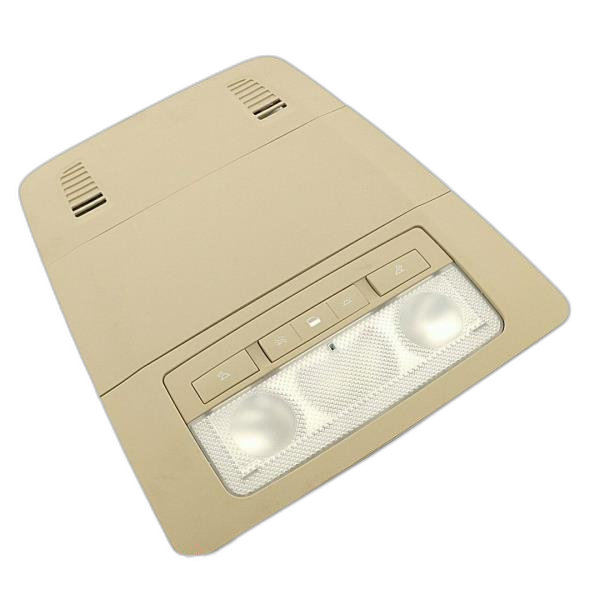
Below are the parts most often responsible for code U2002, ranked by how frequently each one is the actual culprit (per the diagnosis above). Tap any to see what we have for your vehicle.


The information in this article is provided for general reference and educational purposes only. Vehicle specifications, procedures, and part compatibility can vary by production date, trim level, and region. Always consult your vehicle's factory service manual and verify part numbers before purchasing or performing repairs. Safety-critical components such as airbags, seat belts, and braking systems should be installed by a qualified professional.
- 🧭 Diagnostic Flowchart
- 🎬 Helpful Videos
- 🛍️ Shop This Part
- What Does U2002 Mean?
- Can I Drive With U2002?
- Common Causes
- Symptoms
- Common Fixes & Costs
- Used vs. New Parts: Buying Guide
- What Happens If You Wait — Timeline
- Cost of Not Fixing It
- Diagnosis Steps
- When This Code Triggers (Freeze-Frame Conditions)
- Related Codes
- Climate & Environmental Factors
- How to Talk to a Mechanic About This Code
- Where to Take It: Dealer vs Independent vs Chain
- When to Walk Away From the Repair
- What Scan Tool You Need for This Code
- How to Clear the Code After You Fix It
- Will This Fail Emissions / State Inspection?
- Most Commonly Affected Vehicles
- Manufacturer-Specific Notes
- Real Owner Stories
- 2014 Ford Fusion at 110K miles
- 2014 Hyundai Santa Fe at 99K miles
- Jaguar XF after a beverage spill
- How to Prevent This Code From Triggering
- Frequently Asked Questions
- Can I just clear the U2002 code?
- How much does it cost to fix code U2002?
- What are the most common misdiagnosis mistakes for U2002?
- Can U2002 cause my car not to start?
- My parking brake works fine, so why do I have this code?
- Can a bad battery really cause this code?
- Is it difficult to replace the electronic parking brake switch myself?
- Key Takeaways
- 🎟️ Get 5% Off