

OBD-II Code U2005: Invalid or Missing Data for Primary Input
What U2005 means, why it triggers, and how to fix it
- U2005 is a manufacturer-specific network code, meaning it points to a failed radio on a Ford F-150 but a dead ABS module on a Mazda 3.
- Always test your battery and alternator first; a voltage drop below 12.4V frequently triggers false U2005 communication errors across multiple modules.
- Driving with a U2005 code often disables critical safety systems like Anti-lock Brakes (ABS), increasing your stopping distance significantly on wet roads.
- Do not buy a new $1,200 ABS module or instrument cluster without checking for repair services first; rebuilding your original unit for $250 avoids expensive dealer programming fees.
What Does U2005 Mean?
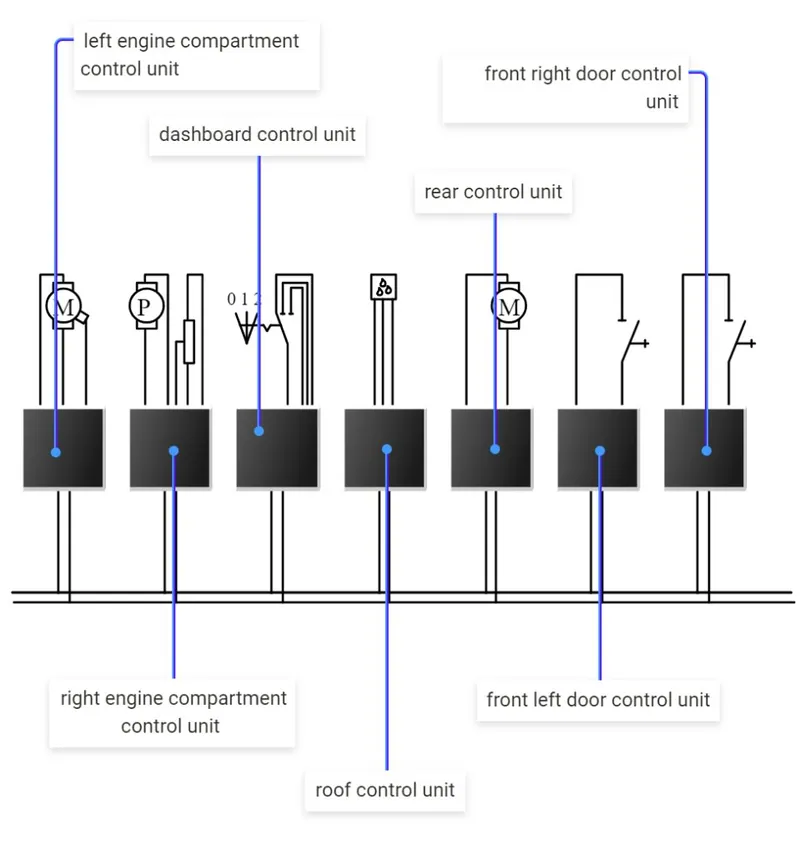
Code U2005 means a computer module in your car is not receiving a valid signal from a primary input component. Think of it as a miscommunication on the car's internal network (CAN bus); one part sends information, but the receiving part gets a garbled message or nothing at all. This is a network code, which is why it starts with a 'U'.
Technical definition: The official SAE/ISO definition for U2005 varies significantly by manufacturer, but generally indicates a control module received invalid data from a primary input. On Ford vehicles, it translates to 'Audio Rear Integrated Control Panel Unit is Not Responding.' On Mazdas, it means 'Vehicle Speed Signal Error.' On some Jeeps, it defines 'EMS Invalid Engine Speed,' where the power steering module lacks a valid engine speed signal from the engine computer.
Can I Drive With U2005?
Yes, But With Caution. You can drive, but do so with extreme caution. This code frequently disables critical safety systems like ABS and traction control. Without ABS, your wheels lock during a hard stop, increasing stopping distance and causing a loss of steering control on slick roads. In some vehicles, it triggers power steering failure or instrument cluster blackouts, making the vehicle unsafe to operate. Driving with disabled safety systems is illegal in many states and voids insurance coverage in an accident.
Common Causes

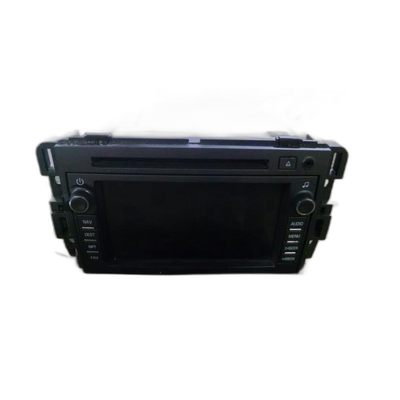
- Faulty Audio Control Module (ACM) or Head Unit (Very Common) — On many Ford, Lincoln, and Mercury vehicles, the factory radio (ACM) is the most common point of failure, causing communication errors with the rest of the car's network.
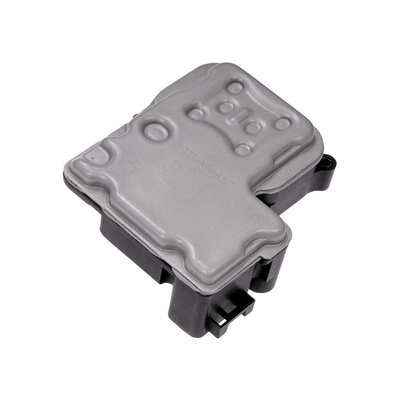
- Faulty ABS Module or Wheel Speed Sensor (Very Common) — On brands like Mazda, this code is frequently caused by a failing ABS module or a bad wheel speed sensor that no longer sends a correct vehicle speed signal to the network.
- Cracked Solder Joints on Instrument Cluster (Common) — On certain Ford Focus and Fiesta models, the instrument panel cluster develops microscopic cracks in its solder joints from thermal stress, leading to intermittent network communication failures and strange gauge behavior.
- Damaged Wiring, Loose Connectors, or Poor Ground (Common) — Wires get chafed, corroded, or chewed by rodents, leading to a short or open circuit. A loose connector at a control module or a corroded chassis ground wire easily triggers this code. 🎬 Watch: How to test your CAN bus network with a multimeter.
- Failing Alternator or Weak Battery (Less Common) — A weak battery or a failing alternator causes low or unstable voltage across the vehicle's electrical system. This leads to a flood of communication error codes, including U2005, as modules fail to operate correctly.
- Aftermarket Accessory Interference (Rare) — Improperly installed aftermarket accessories like remote starters, alarms, dashcams, or audio equipment introduce electrical noise onto the CAN bus network, disrupting communication.
- Software Glitch or Failed Peripheral (Rare) — The code is sometimes triggered by a software issue requiring a dealer update, or by a failed peripheral component 🎬 See this simple guide on diagnosing and fixing communication U-codes. like a factory CD changer or satellite radio module.
Symptoms

- Radio or Infotainment System Malfunction — The most obvious symptom on Ford vehicles is a problem with the audio system. This includes no sound, a flashing clock, the unit not turning on, or a loud popping noise from the speakers.
- Warning Lights on Dash — A Check Engine Light is common, but you will frequently see warning lights for the ABS, Traction Control (TCS/DSC), airbag, or EPS (Electric Power Steering) systems.
- Speedometer Not Working — If the code is related to a vehicle speed signal fault, the speedometer behaves erratically or stops working completely.
- Instrument Cluster Goes Blank or Acts Erratically — The entire instrument cluster intermittently loses power, causing all gauges to drop to zero and warning lights to flash.
- Power Steering Malfunction — On vehicles with electric power steering (EPS), a loss of communication causes the steering to become heavy or stiff, illuminating an EPS warning light.
- Steering Wheel Controls Inoperative — The buttons on your steering wheel for controlling the radio volume or changing tracks stop responding.
Common Fixes & Costs
- Replace the Radio Head Unit (ACM) — Parts: $150-$700, Labor: $100-$200, ~1.5 hr book time (DIY)
- Repair or Replace ABS Control Module — Parts: $250-$1200, Labor: $200-$300, ~2.5 hr book time (Professional)
- Replace a Faulty ABS Wheel Speed Sensor — Parts: $45-$85, Labor: $100-$150, ~1 hr book time (Intermediate)
- Repair or Replace Instrument Panel Cluster (IPC) — Parts: $200-$500, Labor: $150-$300, ~1.5 hr book time (Intermediate)
- Repair Damaged Wiring or Ground Connection — Parts: $5-$50, Labor: $150-$1600, ~4 hr book time (Professional)
Used vs. New Parts: Buying Guide
When a used part is worth it: For expensive electronic modules like an ABS controller or Instrument Cluster, a used part from a reputable salvage yard is a cost-effective option for older vehicles. Sending your original module for a rebuild is often an even better choice, as it avoids programming issues.
Donor-vehicle mileage cap: roughly under 100000 miles for the part to have meaningful remaining life.
Donor quality checklist:
- Match the OEM part number exactly. Electronic modules are often not interchangeable between different trims or years.
- Verify the donor vehicle was not involved in a flood or fire. Water damage is fatal for electronics.
- Purchase from a seller that offers a warranty (30-90 days is typical) and has a good return policy.
- For ABS modules, a 'rebuilt' or 'remanufactured' unit from a specialist is more reliable than a used one from a junkyard.
Decision logic:
- If The part is an Audio Control Module (radio) and you want modern features like Bluetooth → buy a new aftermarket unit; the cost is comparable to a used OEM radio.
- If The part is an ABS module or Instrument Cluster that requires VIN programming → sending your original part for repair is the best DIY option to avoid programming. If buying used, factor in the cost of professional programming.
- If The vehicle is over 10 years old and the new OEM part is over $1000 → a used or rebuilt part is a financially sensible choice.
Warranty tradeoff: Used parts typically have a 30-90 day warranty. Rebuilt modules often come with a 1-year or even lifetime warranty. New OEM parts carry the manufacturer's warranty, usually 1-2 years.
Worst-case if a used part fails: $300-$800 if a used electronic module is dead on arrival or fails after the warranty period, requiring repeat labor and another part.
Cost of Not Fixing It
- Immediate: Loss of critical safety systems, including Anti-lock Brakes (ABS) and Traction/Stability Control. This significantly increases the risk of losing control and having an accident, especially in emergency braking or poor weather conditions. (Added cost: 0 (but high safety risk))
- 0-3 months: In vehicles where the code causes power steering failure, continued driving is unsafe and leads to an accident. If the instrument cluster fails, you lose critical information like speed, fuel level, and warning indicators. (Added cost: Potential for accident-related costs.)
- 3+ months: Continued driving with a disabled ABS system leads to uneven tire wear if wheels lock up during braking. An unresolved electrical issue, like a bad ground or intermittent short, stresses and damages other modules on the same network over time. (Added cost: $200-$1000+ (for new tires or additional module replacement))
Diagnosis Steps

- Read All Trouble Codes from All Modules
Use a quality OBD-II scanner that reads manufacturer-specific codes ('U', 'B', 'C') from all modules, not just the engine computer. Note which module is logging the U2005 code and look for other communication codes like U0121 or U0155 to pinpoint the faulty system.
Tools: OBD-II Scanner (with manufacturer-specific capabilities) (Beginner) - Check Battery and Charging System
Ensure the battery is fully charged (12.4-12.6V with engine off) and healthy. With the engine running, use a multimeter to check the alternator output; it must be roughly 13.2-14.8 volts. Low or fluctuating voltage causes numerous communication faults.
Tools: Multimeter, Battery Tester (Beginner) - Perform a Hard Reset
Perform a hard reset by disconnecting the negative battery terminal for 10 minutes. This forces all modules to reboot and clears temporary communication glitches. Reconnect the battery, clear the codes, and see if the fault returns.
Tools: Basic Hand Tools (Beginner) - Check Fuses
Check all related fuses for the radio, instrument cluster, ABS module, and any other modules that flagged a code. A blown fuse is a simple but often overlooked cause.
Tools: Fuse Puller, Owner's Manual (Beginner) - Perform a Visual Inspection
Inspect the wiring behind the radio and near the ABS module. Look for chewed wires, chafing, corrosion on connectors, or loose ground straps. On vehicles that have been in an accident, check for damaged wiring harnesses.
Tools: Flashlight (Intermediate) - Check for Technical Service Bulletins (TSBs)
Search online for TSBs related to code U2005 for your specific vehicle year, make, and model. Manufacturers often release bulletins for known issues, such as a software update to resolve a communication glitch.
Tools: Internet Access (Beginner) - Isolate the Faulty Component
If the code is related to the audio system, disconnect peripheral devices one by one (e.g., satellite radio module, CD changer) and clear the code to see if it returns.
Tools: Basic Hand Tools, Multimeter (Intermediate) - Test Wheel Speed Sensors (If ABS Related)
For passive sensors, disconnect the sensor and measure resistance (typically 800-2,500 ohms). Next, set the multimeter to AC Volts, safely raise the wheel, and spin it by hand. You should see a small AC voltage reading (above 0.1V) that increases with speed. No voltage or an erratic signal points to a bad sensor.
Tools: Multimeter, Jack and Jack Stands, Service Manual (Advanced) - Test CAN Bus Integrity
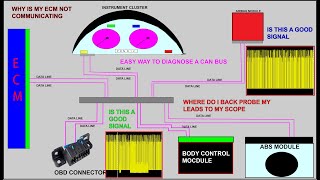
Disconnect the battery. Set a multimeter to Ohms. At the OBD-II port, measure resistance between Pin 6 (CAN High) and Pin 14 (CAN Low). A healthy network reads approximately 60 Ω. A reading of 120 Ω indicates an open circuit. Reconnect the battery, turn the ignition ON, and measure DC Volts on Pin 6 (should be ~2.6V) and Pin 14 (should be ~2.4V).
Tools: Multimeter, Vehicle Wiring Diagram (Advanced)
When This Code Triggers (Freeze-Frame Conditions)
- Vehicle Speed: 0 mph (at startup) or 35-65 mph (while driving) (The code triggers immediately at key-on as modules self-test, or during steady driving when a signal is expected but lost.)
- System Voltage: 11.8-12.5V (before start) or 13.2-14.8V (running) (Faults are more likely to be logged when system voltage is low or unstable, such as during engine cranking with a weak battery.)
- RPM: 0 (key-on) or 1500-2500 (driving) (Often logged during the initial network check at startup or when a module expecting an RPM signal doesn't receive it.)
- Ambient Temperature: Any (More common at temperature extremes (hot or cold) which exacerbate failing solder joints or sensitive electronics.)
Related Codes
- U0121 — 'Lost Communication With ABS Control Module.' It frequently appears with U2005 on Mazda and Ford vehicles. U0121 means the ABS module is completely offline. U2005 means another module is online but complaining that the speed data from the ABS module is missing. Getting both strongly points to a failed ABS module.
- U2100 — 'Controller Area Network (CAN) Bus Communication.' This is a general network error code. U2100 indicates a general network problem, while U2005 is a specific complaint from one module about missing data. Seeing U2100 alongside U2005 points to a widespread issue like a wiring short or bad ground.
- U0155 — 'Lost Communication With Instrument Panel Cluster (IPC) Control Module.' U0155 means other modules can't talk to the instrument cluster. Symptoms like a completely dead or flickering dashboard alongside a U2005 code point directly at the IPC being the root cause.
- C1288 — 'Pressure Transducer Main/Primary Circuit Failure.' This is a specific Mazda fault code indicating an internal fault within the ABS module. U2005 is the resulting code logged by other modules because they are no longer receiving the vehicle speed signal from the failed ABS module.
Climate & Environmental Factors
- Temperature Extremes (Hot and Cold): Extreme cold makes electronic components and solder joints brittle, increasing the chance of microscopic cracks forming. Cold also increases electrical resistance and slows down chemical reactions in the battery, causing low voltage and triggering communication faults. Repeated temperature cycling is a primary cause of solder joint fatigue in instrument clusters and ABS units.
- Humidity and Moisture: High humidity and moisture intrusion lead to corrosion on connector pins, circuit boards, and ground points. Corrosion increases resistance, which corrupts data signals or causes a complete loss of connection, triggering U-codes.
How to Clear the Code After You Fix It
- Reconnect any disconnected components (e.g., battery, module connectors).
- Use an OBD-II scan tool to clear the U2005 code and any other related fault codes from all modules.
- Perform the specific drive cycle recommended by the manufacturer, if available.
Drive cycle (~20 minutes): A general drive cycle to verify the fix involves: 1. Cold start the vehicle. 2. Idle for 2-3 minutes. 3. Drive in stop-and-go city traffic for 10-15 minutes, ensuring to use the brakes and turn. 4. Drive at a steady highway speed (55-65 mph) for 5-10 minutes. 5. Park and turn off the vehicle. Re-scan for codes.
Readiness monitors affected: U-codes do not directly affect emissions readiness monitors like the Catalyst or O2 sensor monitors. However, the underlying cause (like a bad ground or voltage issue) potentially impacts them.
Before emissions retest: drive at least 50 miles to fully set monitors.
Watch out for:
- Using a basic code reader that doesn't clear codes from non-powertrain modules (like ABS, IPC, or ACM).
- Not fixing the root cause, which results in the code returning almost immediately.
- Disconnecting the battery clears the code but also resets all readiness monitors, requiring a lengthy drive cycle before an emissions test.
Will This Fail Emissions / State Inspection?
Yes — this code typically fails an OBD-II emissions inspection.
- California: An illuminated ABS light is a cause for inspection failure. The vehicle's safety systems must be functional.
- New York: An illuminated ABS warning light is grounds for inspection failure. While previously an advisory, recent regulation changes enforce this.
- Texas: As of 2025, safety inspections are no longer required for non-commercial vehicles, but an emissions inspection is still needed in certain counties. While an ABS light may not cause a failure on its own, it is a significant safety issue.
Most Commonly Affected Vehicles
- Ford F-150 (2004-2014) — These trucks are widely known for Audio Control Module (ACM) failures that cause U2005 and various radio-related symptoms. The 2004-2008 models have specific fuses to check, including #22 (10A) and #31 (20A).
- Mazda 3 (2004-2013) — This generation is prone to ABS module failures, which stop sending the vehicle speed signal and trigger U2005 along with ABS/TCS lights. The failure is often an internal pressure sensor fault (Code C1288).
- Ford Fiesta (2011-2019) — Often experiences U2005 related to ABS faults, wheel speed sensors, or communication errors between the power steering and ABS modules. Instrument cluster solder joint failures are also a known issue.
- Chevrolet Cobalt (2005-2010) — Prone to intermittent CAN bus network faults that cause a U2005 code along with hard shifting, traction control lights, and power steering issues. This traces back to wiring or connector problems at the Power Steering Control Module (PSCM).
- Nissan Juke, Leaf, X-Trail (2011-2017) — These models experience various network communication faults, sometimes related to the audio or climate control systems, that log a U2005 code.
- Mazda 6 (2005-2008) — Like the Mazda 3, these models commonly suffer from ABS module failure, resulting in U-codes, warning lights, and a dead speedometer.
- Ford Transit Connect (2013-2016) — These vans develop electrical issues, including wiring problems from rodent damage, bad grounds, or instrument cluster failures that lead to dashboard malfunctions and the U2005 code.
- Toyota Corolla, Matrix (2005-2008) — While not always logging a U2005, these vehicles were subject to a major recall for defective Engine Control Units (ECUs) that caused stalling or no-start conditions, highlighting the potential for module failure.
Manufacturer-Specific Notes
- Ford: On most Fords, U2005 almost always points to the audio system. The fault is typically a failed head unit (ACM), a bad CD changer, or the wiring connected to them. On Focus/Fiesta models, suspect a faulty instrument cluster with cracked solder joints if multiple 'U' codes are present.
- Mazda: On Mazdas, U2005 is commonly related to an invalid vehicle speed signal. The problem is usually a failing ABS control module, a bad wheel speed sensor, or a poor ground connection on the front fender harness. A specific internal fault, C1288, is often the root cause in the ABS module.
- Jaguar / Land Rover: In some Jaguar and Land Rover models, U2005 relates to a 'Vehicle Speed Signal' error, similar to Mazda, originating from the ABS system.
- Jeep: On certain Jeep models, U2005 is defined as 'EMS Invalid Engine Speed' (U2005-64) or indicates a 'Missing Message' (U2005-87). This means the Electric Power Steering (EPS) module is not receiving a correct speed signal from the engine computer (ECM).
- Chevrolet: On models like the Cobalt, a U2005 code is part of a larger CAN bus problem, appearing with codes like U2100, U2105, and U2107. The issue frequently traces back to wiring or connector problems near the BCM or the electric power steering module.
Frequently Asked Questions
What are the most common mistakes when diagnosing U2005?
The biggest mistake is using a cheap, generic code reader that only shows 'P' codes. You need a scanner capable of reading manufacturer-specific 'U', 'B', and 'C' codes to identify the failing module. Another pitfall is replacing expensive parts before testing the battery and charging system for low voltage.
Could an aftermarket accessory cause code U2005?
Yes. Poorly installed aftermarket remote starters, alarms, or stereos introduce electrical interference onto the CAN bus network. This corrupts data signals and triggers communication codes like U2005.
What does code U2005 mean on a Ford F-150?
On an F-150, U2005 almost always indicates a failure within the Audio Control Module (ACM) or factory radio. Symptoms include no sound, a flashing clock, or a completely dead head unit.
What does code U2005 mean on a Mazda 3?
On a Mazda 3, U2005 typically indicates a 'Vehicle Speed Signal Error.' This is most often caused by a failing ABS control module that stops communicating with the rest of the vehicle's network.
Can I pass a state inspection with a U2005 code?
No. Because this code frequently illuminates the ABS or traction control warning lights, it triggers an automatic failure in jurisdictions that mandate functional safety systems.
My mechanic says they can't find the problem. What now?
Intermittent network faults are notoriously difficult to trace and often require a specialist with an oscilloscope. If the problem only occurs over bumps or during temperature extremes, the shop must monitor the CAN bus network live while driving to capture the exact moment of failure.
Can a bad battery cause a U2005 code?
Yes. A weak battery causes low system voltage, which disrupts communication between modules and triggers a flood of U-codes. Always load-test your battery and verify alternator output before replacing any computer modules.
Will clearing the code fix the problem?
No. Clearing the code only turns off the warning light temporarily until the module fails its next self-test. You must diagnose and repair the underlying hardware or wiring fault.
Key Takeaways
- U2005 is a manufacturer-specific network code, meaning it points to a failed radio on a Ford F-150 but a dead ABS module on a Mazda 3.
- Always test your battery and alternator first; a voltage drop below 12.4V frequently triggers false U2005 communication errors across multiple modules.
- Driving with a U2005 code often disables critical safety systems like Anti-lock Brakes (ABS), increasing your stopping distance significantly on wet roads.
- Do not buy a new $1,200 ABS module or instrument cluster without checking for repair services first; rebuilding your original unit for $250 avoids expensive dealer programming fees.
Helpful Videos

Shop the Parts Behind U2005
Below are the parts most often responsible for code U2005, ranked by how frequently each one is the actual culprit (per the diagnosis above). Tap any to see what we have for your vehicle.



The information in this article is provided for general reference and educational purposes only. Vehicle specifications, procedures, and part compatibility can vary by production date, trim level, and region. Always consult your vehicle's factory service manual and verify part numbers before purchasing or performing repairs. Safety-critical components such as airbags, seat belts, and braking systems should be installed by a qualified professional.
- 🎬 Helpful Videos
- 🛍️ Shop This Part
- What Does U2005 Mean?
- Can I Drive With U2005?
- Common Causes
- Symptoms
- Common Fixes & Costs
- Used vs. New Parts: Buying Guide
- Cost of Not Fixing It
- Diagnosis Steps
- When This Code Triggers (Freeze-Frame Conditions)
- Related Codes
- Climate & Environmental Factors
- How to Clear the Code After You Fix It
- Will This Fail Emissions / State Inspection?
- Most Commonly Affected Vehicles
- Manufacturer-Specific Notes
- Frequently Asked Questions
- What are the most common mistakes when diagnosing U2005?
- Could an aftermarket accessory cause code U2005?
- What does code U2005 mean on a Ford F-150?
- What does code U2005 mean on a Mazda 3?
- Can I pass a state inspection with a U2005 code?
- My mechanic says they can't find the problem. What now?
- Can a bad battery cause a U2005 code?
- Will clearing the code fix the problem?
- Key Takeaways
- 🎟️ Get 5% Off