

OBD-II Code U2016: Control Module Communication Error
What U2016 means, why it triggers, and how to fix it
- U2016 is a network code indicating a specific electronic control module is broadcasting corrupt or invalid data on the CAN bus.
- Test the battery first; a voltage drop below 10.0V during engine cranking is the most common trigger for this communication error.
- Never replace a module without verifying it receives over 12.4V of power and has less than 0.1 ohms of resistance to chassis ground.
- Replacing a failed module requires professional VIN-specific programming; a plug-and-play installation will not clear the code.
What Does U2016 Mean?
Code U2016 means one of your car's computers (modules) has stopped communicating correctly with the vehicle's network. This triggers when a specific module goes offline or sends invalid data to the rest of the system.
Technical definition: U2016 is a manufacturer-specific code translating to 'Signal/Message Failure' or 'Invalid Data Received' from a control module. The faulting module—often the Rear Differential Control Module (RDCM), All-Wheel Drive (AWD) Module, or Power Steering Control Module (PSCM)—is broadcasting implausible or corrupt data on the Controller Area Network (CAN) bus. Unlike a 'Lost Communication' code (U01xx), the module remains online but sends unusable data.
Can I Drive With U2016?
Yes, But With Caution. Yes, but important systems like All-Wheel Drive (AWD) or power steering are often disabled, posing a significant safety risk. Loss of power steering makes the vehicle extremely difficult to steer at low speeds. Driving with AWD disabled reduces traction on slippery surfaces. Get the vehicle diagnosed immediately to avoid unsafe driving conditions or secondary damage to the steering pump.
Common Causes
- Low Battery Voltage or Weak Battery (Very Common) — An aging or weak battery causes unpredictable electrical drops. Control modules require steady voltage; a dip below 10V during startup causes them to drop off the network or send corrupt data.
- Corroded or Damaged Wiring (Common) — Moisture, heat, and vibrations damage wires and connectors. Modules located under the car, like the Rear Differential Control Module, are highly susceptible to road salt and water intrusion.
- Poor Chassis or Body Ground (Common) — Main ground straps connecting the engine to the chassis or battery to the body corrode over time. 🎬 See how to find and fix every engine and frame ground This creates high electrical resistance, leading to widespread communication errors between modules.
- Faulty Control Module (Common) — The module itself fails internally due to manufacturing defects, age, water intrusion, or electrical shorts.
- Software Glitch (Less Common) — Software bugs within the module cause communication errors. Dealerships resolve this by reprogramming or updating the module with the latest manufacturer software.
- Blown Fuse (Less Common) — If the fuse protecting the affected module blows, it loses power and stops communicating entirely, triggering U2016 in other modules expecting its data.
- Aftermarket Electronics Interference (Rare) — Improperly installed accessories like remote starters or high-powered stereos introduce electrical noise or draw excessive power, disrupting CAN bus communication.
- Binding Steering Components (Rare) — A seized steering shaft U-joint forces the electronic power steering motor to draw excessive current, causing the PSCM to broadcast illogical data.
Symptoms
- Warning Lights on Dashboard — The Check Engine light illuminates alongside warnings for AWD, 4x4, traction control, ABS, or power steering systems.
- Loss of Power Steering Assist — If the Power Steering Control Module faults, steering becomes heavy and difficult to turn at low speeds. A 'Service Power Steering' warning appears. 🎬 Watch: Diagnosis and repair for Ford power steering failure
- All-Wheel Drive (AWD) System Disabled — AWD shuts down as a precaution if the code relates to the AWD or Rear Differential Module. Expect an 'AWD OFF' or 'Traction Reduced' message.
- Intermittent Electrical Gremlins (also visible on scanner) — Corrupt data affects other systems, causing erratic climate control behavior, radio glitches, or random warning messages.
- No Noticeable Symptoms (scan-tool only — no driver-felt sign) — Intermittent faults trigger the Check Engine light without noticeable drivability issues.
Diagnostic Flowchart
Tap your situation to follow the diagnostic path that matches what you're seeing on this code.
Common Fixes & Costs
- Replace Car Battery — Parts: $150-$400, Labor: $50-$150, ~0.5 hr book time (DIY)
- Repair Damaged Wiring or Connector — Parts: $20-$100, Labor: $150-$800, ~2.5 hr book time (Intermediate)
- Reprogram Control Module — Parts: $0, Labor: $125-$350, ~1.5 hr book time (Professional)
- Replace AWD/Rear Differential Control Module
— Parts: $200-$700, Labor: $150-$400, ~1.5 hr book time
(Professional)
Land Rover Discovery/Evoque: OEM LR073664, FK72-4C045-AF - Replace Transfer Case Control Module
— Parts: $175-$500, Labor: $100-$250, ~1.2 hr book time
(Intermediate)
Chevrolet Silverado (2015-2019): OEM 84427692, 84186661 (Alt: {"brand": "ACDelco", "part_number": "19326775 (Reman)", "notes": "GM Genuine part, may require programming."}, {"brand": "Dorman", "part_number": "600-909", "notes": "Often a direct replacement."}) - Replace Power Steering Control Module / Rack Assembly
— Parts: $800-$2200, Labor: $400-$800, ~4.5 hr book time
(Professional)
Ford Explorer (2016-2019): OEM FB5Z-3504-AK (Alt: {"brand": "Dorman", "part_number": "601-900", "notes": "Includes programmer to avoid dealer visit."}, {"brand": "BBB Industries", "part_number": "201-0154E", "notes": "Remanufactured unit."})
Used vs. New Parts: Buying Guide
When a used part is worth it: For expensive electronic modules like a PSCM or RDCM, a used part from a reputable salvage yard saves 50-80%. This is ideal for older vehicles where a new part exceeds the car's value.
Donor-vehicle mileage cap: roughly under 100000 miles for the part to have meaningful remaining life.
Donor quality checklist:
- Verify the part number matches exactly.
- Purchase from a supplier offering a 30-90 day warranty.
- Inspect the module for corrosion or water damage.
- Ensure the donor vehicle was not scrapped for a reason related to the part you are buying.
Decision logic:
- If The vehicle is under warranty or low-mileage → Buy a new OEM part to ensure reliability.
- If The vehicle is older (>10 years) and budget is tight → A used module is acceptable if it can be programmed.
- If The part requires complex, VIN-specific programming only available via a dealer with a new part → A used part is not viable.
Warranty tradeoff: Used parts have a 30-90 day replacement warranty. New aftermarket parts offer 1-3 years. New OEM parts installed by a dealer carry a 1-2 year parts and labor warranty.
Worst-case if a used part fails: $400-$1000 if a used module fails, including repeat diagnosis, labor, and programming fees.
What Happens If You Wait — Timeline
- 0-1 month: Code is set, MIL is on. AWD or Power Steering is disabled. No physical damage is occurring yet. (MPG impact: 0%% · Added cost: $0)
- 1-3 months: Parasitic draw repeatedly drains the battery, weakening it and straining the alternator. Increased steering effort causes minor linkage wear. (MPG impact: 0-1%% · Added cost: $200-$500)
- 3-6 months: Running a failing power steering system dry destroys the pump. The alternator fails from constantly recharging a drained battery. (MPG impact: 1-3%% · Added cost: $500-$1500)
- 6+ months: Catastrophic failure. A seized power steering pump shreds the serpentine belt, causing immediate loss of belt-driven accessories and engine overheating. (MPG impact: N/A% · Added cost: $1500-$4000+)
Cost of Not Fixing It
- 0-1 month: Continued loss of safety features like power steering or AWD. Increased steering effort causes premature wear on steering linkage components. (Added cost: $0)
- 1-6 months: Driving with a failing power steering system destroys pump or rack seals. A faulty AWD module leads to excessive wear on differentials and the transfer case. (Added cost: $500-$2500)
- 6+ months: Catastrophic failure. A seized power steering pump shreds the serpentine belt, causing immediate loss of belt-driven accessories and engine overheating. (Added cost: $2000-$5000+)
Diagnosis Steps
- Check Battery and Charging System
Use a multimeter to verify battery voltage is above 12.4V (engine off) and 13.5-14.5V (engine running). Low voltage is the leading cause of network codes.
Tools: Multimeter (Beginner) - Scan for Additional Codes
Use an advanced OBD-II scanner to read manufacturer-specific codes from all modules. A companion code like U0136 pinpoints the exact failing module.
Tools: Advanced OBD-II Scanner (Beginner) - Inspect Fuses
Locate the fuse box using the owner's manual. Pull and visually inspect the fuse for the system indicated by secondary trouble codes.
Tools: Owner's Manual, Fuse Puller or Pliers (Beginner) - Visually Inspect Wiring and Grounds
Inspect the wiring harness and connectors at the suspected module for green corrosion, chafed wires, or loose connections. Check main chassis ground straps.
Tools: Flashlight, Safety Glasses (Intermediate) - Test Module Power and Ground
Use a multimeter and wiring diagram to confirm the module receives battery voltage (>12V) and has a solid ground (<0.1 ohms resistance) at its connector.
Tools: Multimeter, Vehicle-Specific Wiring Diagram (Advanced) - Perform a Parasitic Draw Test
If the battery drains overnight, connect a multimeter in series with the negative battery cable. A draw over 50mA after 60 minutes indicates a module failing to sleep.
Tools: Multimeter with 10A Amp setting (Advanced) - Test CAN Bus Network Wires (Multimeter Method)
With the battery disconnected, check resistance between CAN High and CAN Low pins; it must be 60 ohms. 120 ohms indicates an open circuit; 0 ohms indicates a short.
Tools: Multimeter, Wiring Diagram (Advanced) - Test CAN Bus Network Wires (Oscilloscope Method)
Connect a two-channel oscilloscope to CAN High and CAN Low. A healthy high-speed CAN network shows clean, mirrored square waves swinging between 1.5V and 3.5V.
Tools: Oscilloscope, Wiring Diagram (Professional)
When This Code Triggers (Freeze-Frame Conditions)
- Engine Coolant Temp: 180-200°F (Fully warmed up)
- RPM: 0-3000 (During startup or while driving)
- Battery Voltage: <11.5V or fluctuating (During engine crank or when electrical loads are high)
- Vehicle Speed: Any (The fault can be logged at any speed, or even when parked)
Related Codes
- U0001 — Indicates a general High Speed CAN Communication Bus failure. If U0001 is present, suspect a network-wide issue like a wiring short rather than a single module.
- U0121 — Lost Communication With ABS Module. If the AWD module logs U2016 alongside U0121, the AWD module is faulting because it cannot receive wheel speed data from the offline ABS.
- U0136 — Lost Communication With Rear Differential Control Module. U0136 means the module is completely offline. U2016 alone means it is online but sending corrupt data.
- U3000 — Control Module Internal Failure. Seeing U3000 alongside U2016 strongly indicates the module has self-diagnosed a fatal hardware fault and requires replacement.
Climate & Environmental Factors
- High Humidity / Heavy Rain: Moisture penetrates weathered seals, causing corrosion and short circuits in exterior modules like the RDCM.
- Cold Weather: Low temperatures reduce cranking power. A weak battery struggling in the cold drops voltage significantly, triggering communication codes.
- Road Salt (Winter Climates): Salt spray creates an electrolyte solution that accelerates metal deterioration, causing high resistance in undercarriage wiring and grounds.
How to Talk to a Mechanic About This Code
Say this: "I have a U2016 communication code. Please check for technical service bulletins, test the battery and charging system, and verify power and ground at the suspect module before recommending a replacement part."
Directs the shop to check the cheapest causes (software, battery, wiring) before assuming the most expensive part has failed.
Avoid saying:
- 'Just fix whatever's wrong'
- 'My check engine light is on, can you look at it?'
- 'Whatever you recommend'
Questions to ask before authorizing the repair:
- Did you find any TSBs related to this code?
- What were the voltage and resistance readings at the module's power and ground pins?
- Does the new module require programming, and is that included in the quote?
- Can you show me the corroded wiring or connector pin?
Where to Take It: Dealer vs Independent vs Chain
- Dealer:
Recommended. They have direct access to proprietary software, TSBs, and programming tools essential for fixing a U2016 code.
Best for: Vehicles under warranty, Cases where a known software update is the fix, Complex programming of a new module is required
Downsides: Highest labor rates, often 1.5-2x more than independent shops., May default to replacing an entire assembly instead of a smaller component repair. (Typical cost: +50% vs. baseline) - Independent Shop:
Acceptable with caution. Choose a top-rated shop specializing in electrical diagnostics with manufacturer-specific scan tools and programming capabilities.
Best for: Out-of-warranty vehicles where the cause is likely a wiring or battery issue., Finding a shop that specializes in electrical diagnostics.
Downsides: Quality and equipment vary widely; a general mechanic lacks specific tools for network diagnosis., May not be able to program a new module. (Typical cost: +0% vs. baseline) - Chain Shop:
AVOID for diagnosis. Basic code readers cannot pinpoint the faulty module, and technicians lack in-depth electrical troubleshooting training.
Best for: Getting a free battery and charging system test as a first step.
Downsides: Not equipped for complex network or electrical diagnosis., High likelihood of misdiagnosis due to lack of specialized tools and training. (Typical cost: -10% vs. baseline)
When to Walk Away From the Repair
If the estimated repair cost exceeds 50% of your car's private-party value, seriously consider selling or trading in the vehicle.
- Car worth $9000, fix is $2500: Fix it. The repair for a Ford Explorer steering rack is well below the 50% threshold for a vehicle of this value.
- Car worth $4000, fix is $2500: Walk away. The repair cost is over 60% of the car's value. It's not a sound financial decision.
- Car worth $15000, fix is $750: Fix it. A module replacement or wiring repair is a small fraction of the vehicle's value.
What Scan Tool You Need for This Code
Minimum: A scanner that reads manufacturer-specific codes from ALL vehicle modules (ABS, SRS, BCM, AWD, etc.).
A basic $20 code reader only checks the engine computer. U2016 is stored in other modules; a basic reader won't see the code or identify the source.
Budget: BlueDriver Pro (~$100) — Connects to your phone, scans all modules to identify the U2016 source, and provides freeze-frame data.
Mid-range: Foxwell NT510 Elite / NT809 (~$180) — Offers full-system diagnostics and bi-directional controls to test components.
Professional: Autel MaxiCOM MK808S / XTOOL D7 (~$450-600) — Provides full bi-directional control and programming/coding functions essential for advanced electrical diagnosis.
Rent vs buy: Free 'loan-a-tool' scanners at parts stores are basic readers insufficient for this code. Pay for a professional diagnosis unless you plan to do regular diagnostics.
How to Clear the Code After You Fix It
- Fix the underlying cause (e.g., replace battery, repair wiring).
- Use an OBD-II scan tool to clear all diagnostic trouble codes.
- Perform a complete drive cycle to allow vehicle readiness monitors to run.
Drive cycle (~30 minutes): A generic drive cycle includes a cold start (sit for 8+ hours), 2-3 minutes of idling, 15 minutes of mixed city driving, and 10-15 minutes of steady highway speed at 55 mph.
Readiness monitors affected: Comprehensive Component Monitor, Misfire Monitor
Before emissions retest: drive at least 100 miles to fully set monitors.
Watch out for:
- Disconnecting the battery clears the code but resets all readiness monitors, causing an automatic emissions test failure.
- The code returns immediately if the root communication error remains.
Will This Fail Emissions / State Inspection?
Yes — this code typically fails an OBD-II emissions inspection.
- California: A 'U' code illuminating the Check Engine Light causes an automatic Smog Check failure. The vehicle cannot be tested until repaired and readiness monitors are set.
- New York: An active U2016 code with the Check Engine Light on is a guaranteed failure during the OBD-II inspection.
- Texas: Vehicles fail emissions testing in required counties if the Malfunction Indicator Lamp (MIL) is commanded on by a U2016 code.
Most Commonly Affected Vehicles
- Ford Explorer (2016-2022) — Prone to electronic power steering rack failures containing the PSCM. Repair requires replacing the entire steering rack assembly for over $2,000.
- Land Rover Discovery, Range Rover Evoque (2015-2023) — Experiences Rear Differential Control Module (RDCM) failures due to water intrusion, displaying a 'Traction Reduced' message.
- Chevrolet Silverado, Tahoe (2015-2019) — Exhibits U2016 due to Transfer Case Control Module (TCCM) issues. Corroded ground points on the driver's side frame rail are a primary cause.
- BMW 3-Series (F30), X-Series (2014-2018) — Sets U2016 related to the Electronic Power Steering (EPS) module, frequently triggered by an aging, unregistered battery.
- Ford Transit (2020-2021) — TSB SSM 49528 addresses a software problem in the Power Steering Control Module (PSCM) triggering U2016:47. The fix is a software update.
- Jaguar XF, F-Pace (2016-2020) — Susceptible to Rear Differential Control Module (RDCM) failures due to moisture and corrosion, sharing architecture with Land Rover.
- Ford F-150 (2015-2020) — Sets this code due to 4x4 control module issues, related wiring faults, or a defective mode select switch.
- Hyundai Tucson (2016-2018) — Requires module software updates to correct communication and drivability issues per manufacturer TSBs.
Manufacturer-Specific Notes
- Ford / Land Rover / Jaguar: U2016 frequently stems from a Rear Differential Control Module (RDCM) failure due to moisture. Replacements must be dealer-programmed.
- Ford: TSB SSM 49528 for 2020 Transits addresses U2016:47 in the Power Steering Control Module. The fix is a software update, not hardware replacement.
- BMW: An aging battery failing to provide stable voltage triggers U2016 in the power steering module. Always register a new battery to ensure proper charging.
- General Motors (Chevrolet/GMC): Always inspect the main ground block on the frame under the driver's side door. Corrosion here causes intermittent TCCM communication codes.
Real Owner Stories
2016 Ford Explorer with 55k miles - The Misleading 'Easy Fix'
While driving, the dashboard lit up with warnings: 'Steering Assist Fault Service Required' and 'Service Advance Trac'. Power steering was completely lost, making the wheel extremely difficult to turn.
What they tried:
- Turning the car off and on again temporarily fixed the problem, but it returned within minutes.
- A mechanic suspected a seized steering shaft U-joint and lubricated it.
Outcome: The lubrication did not solve the issue. The final diagnosis was an internal failure of the Power Steering Control Module (PSCM), integrated into the steering rack. The entire steering rack assembly was replaced for over $2,500.
Lesson: A sudden loss of power steering with a U2016 code is very often a failed steering rack, not a simpler component. Be prepared for a $2,500+ repair.
2017 Land Rover Discovery with 'Traction Reduced' message
The 'Traction Reduced' message appeared on the instrument cluster, and a scan revealed code U2016 and U0136 from the Rear Differential Control Module (RDCM). The AWD system was disabled.
What they tried:
- The owner suspected a wiring issue and visually inspected the wiring and connector, revealing no obvious corrosion.
Outcome: A dealer identified Land Rover Technical Service Bulletin LTB01093NAS2. The fault was caused by overly sensitive software. A 30-minute software update recalibrated the module. No parts were replaced.
Lesson: Always check for TSBs related to communication codes. A software update costing $150-$300 fixes the problem without needing a new $700+ module.
2016 Chevy Silverado with intermittent 4x4 and other electrical issues
The truck randomly displayed 'Service 4x4' messages, and the U2016 code was present in the Transfer Case Control Module (TCCM). Other unrelated electrical gremlins occurred.
What they tried:
- The owner replaced the battery, but the problem persisted.
- The 4x4 selector switch in the cab was replaced, which did not solve the issue.
Outcome: The owner inspected the main chassis ground point located on the frame rail under the driver's side door. The ground connection was heavily corroded. After cleaning all contact surfaces to bare metal, all communication codes disappeared.
Lesson: On GM trucks, a corroded frame ground is a notorious cause of multiple communication codes. Inspect the ground point under the driver's side door before replacing modules.
How to Prevent This Code From Triggering
- Clean and Protect Battery Terminals (Every 12 months) — Corrosion increases electrical resistance, leading to unstable voltage. Clean terminals and apply anti-corrosion gel.
- Apply Dielectric Grease to Exposed Connectors (When servicing components) — Prevents moisture and road salt from causing corrosion on pins in exterior modules.
- Perform Regular Battery Health Checks (Every 6 months) — A weak battery dropping voltage during cranking causes modules to drop off the network.
- Inspect and Secure Chassis Grounds (Every 24 months) — Main ground straps corrode over time. Ensuring they are tight and clean prevents unstable grounds.
- Use a Battery Maintainer for Stored Vehicles (If sitting >2 weeks) — Normal parasitic draw drains a battery, leading to sulfation. A maintainer prevents voltage drops that trigger U2016 on startup.
Frequently Asked Questions
Can a weak battery really cause this U2016 code?
Yes. Control modules are highly sensitive to voltage drops. A weak battery providing inconsistent power causes modules to temporarily shut down or send bad data. A voltage drop below 10V during engine cranking is a primary trigger.
What is the most common misdiagnosis for a U2016 code?
Immediately replacing the control module without performing electrical checks. The actual problem is often a corroded connector pin, broken wire, or bad chassis ground.
Why do I need an advanced scanner to diagnose this?
Basic OBD-II scanners only read engine codes. An advanced bi-directional scanner communicates with all vehicle modules (ABS, AWD, PSCM) to identify exactly which module is broadcasting the U2016 fault.
I replaced the module but the code is still there. What did I do wrong?
Modern control modules are not plug-and-play. They require professional VIN-specific programming to communicate with the vehicle network. Alternatively, the root cause remains in the wiring or connectors.
My U2016 code appeared right after I replaced the battery. Why?
Power interruption during the swap causes a temporary communication glitch; clearing the code resolves this. Alternatively, failing to register the new battery causes the power management system to charge incorrectly, leading to voltage instability.
Can a U2016 code prevent my car from starting?
Yes, if the communication failure affects the Powertrain Control Module (PCM) or immobilizer signals. However, a no-start is more commonly caused by the severely weak battery that triggered the U2016 code in the first place.
Is the All-Wheel Drive (AWD) module part of the powertrain warranty?
Usually not. Powertrain warranties cover internal mechanical parts of the engine and transmission. Electronic control modules are typically covered only by the initial bumper-to-bumper warranty.
Key Takeaways
- U2016 is a network code indicating a specific electronic control module is broadcasting corrupt or invalid data on the CAN bus.
- Test the battery first; a voltage drop below 10.0V during engine cranking is the most common trigger for this communication error.
- Never replace a module without verifying it receives over 12.4V of power and has less than 0.1 ohms of resistance to chassis ground.
- Replacing a failed module requires professional VIN-specific programming; a plug-and-play installation will not clear the code.
Helpful Videos
![How To Test CAN BUS With A Multimeter [CAN Bus Resistance Check] Mechanic Mindset](https://img.youtube.com/vi/JPE42HSJxAk/mqdefault.jpg)




Shop the Parts Behind U2016
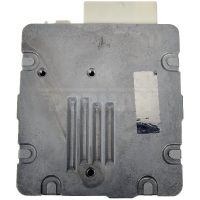
Below are the parts most often responsible for code U2016, ranked by how frequently each one is the actual culprit (per the diagnosis above). Tap any to see what we have for your vehicle.





The information in this article is provided for general reference and educational purposes only. Vehicle specifications, procedures, and part compatibility can vary by production date, trim level, and region. Always consult your vehicle's factory service manual and verify part numbers before purchasing or performing repairs. Safety-critical components such as airbags, seat belts, and braking systems should be installed by a qualified professional.
- 🧭 Diagnostic Flowchart
- 🎬 Helpful Videos
- 🛍️ Shop This Part
- What Does U2016 Mean?
- Can I Drive With U2016?
- Common Causes
- Symptoms
- Common Fixes & Costs
- Used vs. New Parts: Buying Guide
- What Happens If You Wait — Timeline
- Cost of Not Fixing It
- Diagnosis Steps
- When This Code Triggers (Freeze-Frame Conditions)
- Related Codes
- Climate & Environmental Factors
- How to Talk to a Mechanic About This Code
- Where to Take It: Dealer vs Independent vs Chain
- When to Walk Away From the Repair
- What Scan Tool You Need for This Code
- How to Clear the Code After You Fix It
- Will This Fail Emissions / State Inspection?
- Most Commonly Affected Vehicles
- Manufacturer-Specific Notes
- Real Owner Stories
- 2016 Ford Explorer with 55k miles - The Misleading 'Easy Fix'
- 2017 Land Rover Discovery with 'Traction Reduced' message
- 2016 Chevy Silverado with intermittent 4x4 and other electrical issues
- How to Prevent This Code From Triggering
- Frequently Asked Questions
- Can a weak battery really cause this U2016 code?
- What is the most common misdiagnosis for a U2016 code?
- Why do I need an advanced scanner to diagnose this?
- I replaced the module but the code is still there. What did I do wrong?
- My U2016 code appeared right after I replaced the battery. Why?
- Can a U2016 code prevent my car from starting?
- Is the All-Wheel Drive (AWD) module part of the powertrain warranty?
- Key Takeaways
- 🎟️ Get 5% Off