

OBD-II Code U2018: A Comprehensive Guide to Control Module Communication Faults
The Definitive Guide to U2018: What It Means, Why It Happens, and Exactly How to Fix It
- U2018 is a manufacturer-specific code that primarily indicates a software glitch disabling ADAS on 2021+ Ford/Lincoln vehicles, or a critical passenger airbag sensor fault on Mazda vehicles.
- On Ford and Lincoln models, a U2018:51 code requires a 0.4-hour dealer software reprogram of the Camera Module - Rear (CMR) per TSB 25-2104, not a hardware replacement.
- If U2018 triggers an SRS or Airbag warning light, the vehicle disables the passenger-side airbags, creating an immediate safety risk that requires professional diagnosis.
- Always load-test the 12V battery first; a resting voltage below 12.4V or a drop below 9.6V during cranking causes the communication failures that trigger this code.
What Does U2018 Mean?
U2018 is a manufacturer-specific network communication code indicating an electronic control module is failing to communicate. On modern Ford and Lincoln vehicles, it points to a software problem in a camera module that disables driver-assist features. On brands like Mazda, it signifies a critical communication fault with a passenger-side airbag sensor.
Technical definition: The official SAE/ISO definition for U2018 is not standardized. For Ford/Lincoln, it is 'Control Module Software: Not Programmed' (often with a ':51' suffix). For Mazda, it is 'Passenger-side side air bag sensor (communication error)'. Generic definitions include 'Passenger Side Crash Sensor Communication Fault'.
Can I Drive With U2018?
Yes, But With Caution. Yes, the vehicle is drivable, but with significant caveats. On Ford/Lincoln models, critical Advanced Driver-Assistance Systems (ADAS) like BlueCruise and Pre-Collision Assist are disabled, removing a key safety net. On Mazda and other makes where it indicates an airbag fault, the passenger-side airbags will not deploy in an accident, representing a severe safety risk requiring immediate repair.
Common Causes
- Failed OTA Update / Corrupt Module Software (Ford/Lincoln) (Very Common) — On 2021+ Ford and Lincoln vehicles, a buggy or failed Over-The-Air (OTA) software update causes the Camera Module - Rear (CMR) to lose its programming. This triggers the U2018:51 fault and disables ADAS features.
- Low Battery Voltage (Common) — A weak 12V battery causes unpredictable communication errors between modules during startup. Low voltage interrupts software updates and causes modules to report false errors, especially on sensitive networks in Jaguar/Land Rover and Ford vehicles.
- Damaged Wiring or Loose Connectors (Common) — A damaged wire or a loose, corroded connector at a sensor or main module disrupts the CAN bus signal. On Fords, a loose coaxial cable to the camera module (IPMA) causes this fault. On Mazdas, moisture in the B-pillar corrodes the airbag sensor connector.
- Failed Passenger-Side Airbag Sensor (Mazda/Others) (Less Common) — The side impact sensor fails internally due to moisture, age, or physical damage from side impacts. This severs communication with the main SRS module.
- Improper Previous Accident Repairs (Less Common) — If the vehicle was in a side impact, the side airbag sensor, connector, or wiring sustains damage. Incomplete repairs lead to persistent communication faults that trigger the U2018 code months after the accident.
- Faulty Gateway Control Module (VW/Audi) (Less Common) — The central Gateway module that routes all network traffic fails due to internal faults, water ingress under the seats, or improper battery replacement procedures, leading to widespread communication codes.
- Faulty Main Control Module (Rare) — The main control module attempting to communicate with the sensor or camera (like the Airbag Control Module or Image Processing Module) suffers an internal hardware failure. This requires complete module replacement.
Symptoms
- Advanced Driver-Assistance Systems (ADAS) Inoperative — Features like BlueCruise, Lane Centering, Adaptive Cruise Control, and Pre-Collision Assist will not turn on. A 'Driver Assist Camera Fault' message appears on the dash.
- Airbag Warning Light is On — A steady SRS/Airbag warning light illuminates on the dashboard, indicating a fault in the safety system and disabling the airbags.
- Passenger Airbag Disabled Light — The vehicle disables the passenger-side airbag as a safety precaution, illuminating the 'Passenger Airbag Off' indicator.
Diagnostic Flowchart
Tap your situation to follow the diagnostic path that matches what you're seeing on this code.
Common Fixes & Costs
- Reprogram Control Module Software — Parts: $0, Labor: $0 (under warranty) - $250 (dealer reprogram fee), ~1.0 hr book time (Professional)
- Replace 12V Battery
— Parts: $150-$300, Labor: $50-$100, ~0.8 hr book time
(DIY)
Ford F-150/Mustang Mach-E: OEM Motorcraft BAGM-48H6-760 (Alt: Bosch S6585B, AC Delco 48AGM) - Replace Side Airbag Sensor
— Parts: $150-$250, Labor: $150-$300, ~1.5 hr book time
(Intermediate)
Mazda3: OEM BCKA-57-K1X (Alt: N/A - Use OEM only for safety components.) - Repair Damaged Wiring or Connector — Parts: $10-$50, Labor: $150-$300, ~2.0 hr book time (Intermediate)
- Replace Gateway Control Module
— Parts: $200-$600, Labor: $150-$300, ~1.8 hr book time
(Advanced)
VW Passat/Tiguan/Atlas: OEM 7N0907530 series (Alt: Bosch)
DIY vs Professional
- Reprogram Control Module Software 🟢 Beginner
Tools: Manufacturer-specific diagnostic software (e.g., Ford FDRS) and a J2534 pass-thru device. - Replace 12V Battery 🟢 Beginner
Tools: Socket set, terminal cleaner, scan tool for BMS reset. - Replace Side Airbag Sensor 🟢 Beginner
Tools: Socket set, trim removal tools, torque wrench. - Repair Damaged Wiring or Connector 🟢 Beginner
Tools: Multimeter, wire strippers, crimpers, heat shrink.
Used vs. New Parts: Buying Guide
When a used part is worth it: For non-safety-critical modules like a VW Gateway, a used part from a reputable dismantler saves 40-70%. Ensure the part number matches exactly and factor in the cost of coding the used module to your vehicle.
Donor-vehicle mileage cap: roughly under 100000 miles for the part to have meaningful remaining life.
Donor quality checklist:
- Verify the part number and hardware/software version stamped on the module.
- Buy from a seller offering a 30-90 day warranty.
- Avoid parts from flood-damaged or heavily corroded vehicles.
Decision logic:
- If The part is an airbag sensor or other SRS component → Buy new OEM only. The risk of a used safety component failing is unacceptable.
- If The vehicle is under warranty or the fault is covered by a TSB → Use new OEM parts or follow the TSB procedure at the dealer to maintain warranty coverage.
Warranty tradeoff: Used parts carry a 30-90 day functional warranty. New OEM parts carry the manufacturer's 1-2 year parts warranty.
Worst-case if a used part fails: $300-800 if a used electronic module is dead on arrival, requiring repeat labor for diagnosis and replacement.
What Happens If You Wait — Timeline
- Immediate (ADAS Fault): Code U2018:51 sets. BlueCruise and Pre-Collision Assist are disabled. The vehicle is drivable but lacks key safety and convenience features. (MPG impact: 0%% · Added cost: $0, but increased risk of accident due to higher driver workload.)
- Immediate (Airbag Fault): Code U2018 sets and the SRS/Airbag warning light illuminates. The entire supplemental restraint system is disabled. (MPG impact: 0%% · Added cost: $0 in vehicle damage, but an immediate risk of severe injury in a collision.)
- 1-3 months: For an airbag fault caused by corrosion, the intermittent connection becomes a permanent open circuit as corrosion worsens. (MPG impact: 0%% · Added cost: $50 if corrosion spreads to adjacent pins, requiring a new connector pigtail.)
Cost of Not Fixing It
- Immediate: For Ford/Lincoln ADAS fault: Loss of BlueCruise, Lane Centering, and Pre-Collision Assist. This increases driver workload and removes a key safety net. (Added cost: $0 in immediate repair costs, but increased risk of an at-fault accident.)
- Immediate: For Mazda airbag fault: The supplemental restraint system is disabled. Airbags will not deploy in a crash, drastically increasing the risk of serious injury or death. (Added cost: Critical safety risk. Potential for catastrophic personal injury cost.)
- 1-6+ months: Continued operation with a disabled safety system leads to denial of insurance claims if an accident occurs and a known safety fault was ignored. (Added cost: Potentially thousands in denied claims or legal liability.)
Diagnosis Steps
- Read the Full Code with a Quality Scanner
Use a professional-grade scan tool to read manufacturer-specific codes and suffixes. The ':51' suffix on Ford products is critical, as it pinpoints a software configuration loss rather than a hardware failure.
Tools: Professional OBD-II Scan Tool (Beginner) - Check the 12V Battery Health
Test the battery to ensure it supplies at least 9.6V for 15 seconds under load. A resting voltage below 12.4V requires charging. Low voltage causes network communication drops and is the first diagnostic step for any U-code.
Tools: Multimeter, Electronic Battery Tester (Beginner) - Check for Technical Service Bulletins (TSBs)
Search your vehicle's VIN for active TSBs. Ford TSBs 24-2251 and 25-2104 outline the exact software reprogram procedure for U2018:51, saving hours of diagnostic time.
Tools: Internet Access (Beginner) - Check for Related Codes
Scan all modules. On a Ford, U2018:51 pairs with U0565:86. The absence of U3000:49 confirms it is a software issue, not hardware. On a Mazda, look for specific B-codes related to the airbag circuit.
Tools: Professional OBD-II Scan Tool (Intermediate) - Inspect the Relevant Sensor/Module and Wiring
Locate the component (e.g., passenger side airbag sensor in the B-pillar, or the IPMA camera module). Visually inspect the connector and wiring for damage, corrosion, moisture, or looseness.
Tools: Flashlight, Trim Removal Tools (Intermediate) - Pro Tip: Perform Pinpoint Electrical Tests (Airbag Fault)
Disconnect the sensor and SRS module (after disabling the SRS system). Use a multimeter to verify sensor supply voltage (battery voltage with key on) and check the communication line for continuity (<1 ohm) and shorts to ground.
Tools: Multimeter, Service Manual, Pin-out Diagrams (Advanced) - Pro Tip: Check Live Data for Occupancy Sensors (Mazda)
Use a bi-directional scan tool to monitor the passenger seat occupancy sensor PID. The weight value must change as you apply pressure to the seat. A value stuck at 0 indicates a faulty sensor or wiring.
Tools: Bi-directional Scan Tool (Advanced) - Perform Module Reprogramming (Dealer/Specialist)
If diagnosis points to a software issue, the module must be reprogrammed using manufacturer-specific software (e.g., Ford FDRS). This is the specific fix outlined in Ford TSB 25-2104.
Tools: Manufacturer Diagnostic System (e.g., FDRS), J2534 Pass-Thru Device (Professional)
When This Code Triggers (Freeze-Frame Conditions)
- Module Voltage: 9.5V - 11.5V (During engine crank)
- Vehicle Speed: 0 mph (Key-On or Engine Start)
- Ignition Status: RUN/START (Code sets during the initial power-up and self-check sequence of the modules.)
Related Codes
- U0565:86 — Invalid Data Received From Camera Module-Rear. This is a direct symptom of the U2018:51 fault in the camera module on Ford/Lincoln vehicles. They almost always appear together.
- U3000:49 — Internal Electronic Failure. If U3000:49 appears alongside U2018 in the same module, it confirms a non-recoverable hardware failure. A software reprogram will not fix it; the module must be replaced.
- B1998 — Passenger-Side Side Mount Air Bag Sensor Circuit. When U2018 relates to an airbag system on a Mazda, B1998 pinpoints the exact circuit experiencing the communication failure.
Climate & Environmental Factors
- High Humidity / Water Ingress: Water leaks from clogged sunroof drains or bad seals cause corrosion on airbag sensor connectors in the B-pillars or under seats. This corrosion severs communication, triggering the U2018 code.
- Extreme Cold Temperatures: Cold weather drastically reduces 12V battery efficiency. The resulting low voltage during engine cranking triggers a cascade of communication codes, including U2018.
How to Talk to a Mechanic About This Code
Say this: "For a Ford/Lincoln: 'My BlueCruise stopped working and I have a U2018:51 code. Please check if TSB 25-2104 applies for a CMR reprogram.' For a Mazda: 'My airbag light is on with a U2018 code. I need a diagnostic of the SRS system, specifically the passenger side impact sensor.'"
This directs the dealer to the specific software fix for Ford, preventing unnecessary hardware replacement. For Mazda, it focuses the technician on the most probable cause, saving diagnostic time.
Avoid saying:
- 'My driver-assist isn't working, can you check it?' (Invites a full, expensive diagnostic).
- 'My airbag light is on, just fix it.' (Lacks context).
- 'A forum said to replace the camera.' (Never lead with a hardware replacement).
Questions to ask before authorizing the repair:
- For Ford: Can you confirm that code U3000:49 is NOT present in the camera module?
- For Mazda: Did you find a specific B-series code stored alongside the U2018?
- Is this repair covered under any warranty, recall, or technical service bulletin?
Where to Take It: Dealer vs Independent vs Chain
- Dealer:
Required for the Ford/Lincoln software fix. The dealer is the only place with guaranteed access to the proprietary FDRS software needed for the TSB reprogram.
Best for: Ford/Lincoln vehicles with the U2018:51 software fault., Safety-critical SRS (airbag) system repairs.
Downsides: Higher labor rates ($150-$250/hr). (Typical cost: +50% vs. baseline) - Independent Shop:
A good option for the Mazda airbag sensor fault IF the shop is well-equipped. AVOID for the Ford software issue.
Best for: Out-of-warranty Mazda/VW vehicles with a suspected hardware fault (sensor, wiring).
Downsides: May lack manufacturer-specific scan tools to read suffixes or perform programming. (Typical cost: +0% vs. baseline) - Chain Shop:
AVOID. They are not equipped to handle the Ford software issue or Mazda SRS diagnostics.
Best for: Simple maintenance like oil changes and tires.
Downsides: Lack specialized diagnostic tools for network communication or SRS faults. (Typical cost: -10% vs. baseline)
When to Walk Away From the Repair
If the estimated repair cost exceeds 40-50% of the car's private-party value, evaluate your options. However, critical safety repairs like airbags must be fixed regardless of value if the vehicle is to be driven.
- Car worth $45000, fix is $250: Fix it. The repair for a Ford U2018 software issue is a tiny fraction of the vehicle's value and restores key safety features.
- Car worth $6000, fix is $450: Fix it. An airbag sensor replacement on an older Mazda is essential for safety and passing inspection.
What Scan Tool You Need for This Code
Minimum: A tool that reads manufacturer-specific codes (including suffixes like :51) and accesses non-engine modules like the SRS (Airbag) and IPMA (Image Processing) systems.
A basic $20 OBD-II reader only shows generic 'P' codes from the engine. It cannot see 'U' codes in the camera or airbag modules, nor read the critical ':51' suffix on Ford vehicles.
Budget: FORScan with OBDLink EX Adapter (Ford) / Autel AL629 (Mazda) (~$80) — FORScan reads all specific codes and modules for Ford, confirming the U2018:51 bug. The Autel AL629 reads and clears SRS/airbag codes on most makes.
Mid-range: Foxwell NT510 Elite (~$179) — Performs a deep, full-system scan, reads specific codes from SRS and camera modules, and views live data. Offers dealer-level diagnostics without the dealer price.
Professional: Autel MaxiCOM MK808BT (~$550) — Provides full-system, bi-directional diagnostics. Easily reads Ford-specific and Mazda SRS codes, graphs live data, and performs service functions like battery registration.
Rent vs buy: Buy. A budget or mid-range scanner is a worthwhile investment that saves you the $150+ diagnostic fee for future issues. Auto parts store rentals are insufficient for this code.
How to Clear the Code After You Fix It
- Perform the specified repair (e.g., module reprogram, sensor replacement).
- Reconnect the 12V battery and reset the Battery Management System (BMS).
- Use a professional OBD-II scan tool to clear the U2018 code from the specific module (e.g., CMR or SRS module).
- Perform a drive cycle to confirm the fix and verify ADAS or SRS systems are operational.
Drive cycle (~20 minutes): Cold start and idle for 2-3 minutes. Drive in mixed city/highway traffic for 15-20 minutes. For ADAS faults, test the specific feature (e.g., BlueCruise) in its operational environment. For airbag faults, verify the SRS light remains off.
Readiness monitors affected: Network (U) codes do not directly affect emissions readiness monitors., Disconnecting the battery for repair resets all emissions monitors to 'incomplete'.
Before emissions retest: drive at least 50 miles to fully set monitors.
Watch out for:
- Clearing the code without fixing the root cause results in the code returning immediately.
- Forgetting to reset the Battery Management System (BMS) leads to future voltage-related codes.
- Using a generic OBD-II scanner fails to clear codes stored in non-engine modules like the SRS or IPMA.
Will This Fail Emissions / State Inspection?
No — by itself this code doesn't fail OBD inspection (but it can keep readiness monitors from setting, which causes a separate fail).
- General Rule: U2018 does not illuminate the Check Engine Light, so it passes an OBD-II emissions scan. However, an illuminated Airbag/SRS warning light causes an automatic failure in states with safety inspections.
- California: Will NOT fail a smog check. The CA smog inspection only checks emissions-related faults that trigger the Check Engine Light.
- New York: An illuminated airbag warning light is an automatic failure of the annual safety inspection. The vehicle cannot be legally registered until repaired.
Most Commonly Affected Vehicles
- Ford F-150 (2021-2024) — Extremely prone to U2018:51 due to software glitches in the Camera Module - Rear (CMR) after OTA updates. Addressed by TSB 25-2104.
- Ford Mustang Mach-E (2021-2024) — Highly susceptible to U2018:51 from failed OTA updates, causing a loss of BlueCruise. Addressed by TSB 25-2104 and SSM 52350.
- Lincoln Navigator / Corsair (2022-2024) — Experiences the U2018:51 code due to software mismatches between ADAS modules following a Ford Power-Up update. Addressed by TSB 25-2104.
- Mazda Mazda3 / Mazda6 / CX-5 (2014-2021) — U2018 points to a communication error with the passenger-side airbag impact sensor. Part numbers are highly model and year specific and must be verified by VIN.
- Jaguar / Land Rover Various (2015-2024) — A weak battery causes a cascade of U-prefix communication codes upon startup. The first diagnostic step is always to verify battery health.
- Volkswagen Tiguan / Atlas / Passat (2018-2024) — Triggered by a central communication breakdown caused by a faulty Gateway Control Module, sometimes induced by incorrect battery replacement.
Manufacturer-Specific Notes
- Ford / Lincoln: The code is almost always U2018:51, pointing to a software glitch in the rear camera module that disables BlueCruise. The fix is a 0.4-hour dealer software update per TSB 25-2104, not a hardware replacement.
- Mazda: U2018 typically relates to a communication failure with the passenger-side airbag sensor, illuminating the SRS warning light. This is a critical safety fault caused by a faulty sensor or connector corrosion.
- Volkswagen: The code is part of a wider network collapse caused by a failing Gateway Control Module. Liquid spillage under the rear seat shorts the gateway module, requiring replacement and VCDS coding.
Real Owner Stories
2022 Ford F-150 Lariat at 25K miles
BlueCruise and Lane Centering stopped working, displaying a 'Driver Assist Camera Fault' message days after a Ford Power-Up OTA update.
What they tried:
- Restarted the truck multiple times.
- Checked for loose connections behind the rearview mirror.
- Took it to the Ford dealer.
Outcome: Dealer diagnosed codes U2018:51 in the CMR and U0565:86 in the IPMA. They performed the software reprogram outlined in TSB 24-2251. The 2-hour repair was covered under warranty, restoring BlueCruise.
Lesson: If ADAS features fail on a modern Ford right after an OTA update, it is the known software bug. Mention TSB 25-2104 to your service advisor to speed up the repair and avoid hardware replacement.
2019 Mazda3 Hatchback at 15K miles
Airbag warning light came on intermittently on cold mornings, eventually staying on permanently.
What they tried:
- Restarted the car to clear the light temporarily.
- Checked under the passenger seat for loose connectors.
- Took the car to a Mazda dealership.
Outcome: Dealer found code U2018 and a related B-code for the passenger side airbag sensor. They replaced the faulty sensor under warranty, resolving the issue.
Lesson: An intermittent airbag light that becomes permanent disables the entire airbag system. The problem is a faulty sensor requiring professional replacement, not just a loose wire.
How to Prevent This Code From Triggering
- Maintain 12V Battery Health (Annual check) — A weak 12V battery causes failed OTA updates and random communication codes. Load-test your battery annually and replace it proactively every 3-5 years.
- Manage Ford OTA Updates Carefully (During updates) — Ensure the 12V battery is healthy before scheduling a large update. Follow all on-screen prompts precisely to prevent update failures that trigger U2018.
- Keep Cabin and Connectors Dry (Seasonally) — Clear clogged sunroof drains and ensure door seals are intact. This prevents moisture from reaching airbag sensor connectors in the pillars, stopping corrosion.
Frequently Asked Questions
Can I fix code U2018 myself?
If the cause is a weak 12V battery, yes. However, the common Ford/Lincoln software issue requires dealer-specific FDRS software to reprogram the module. Airbag system repairs also require professional tools to ensure safety.
Will clearing the code make it go away?
No. U2018 indicates a 'hard fault,' meaning the communication error is currently active. The code returns immediately or upon the next drive cycle until the underlying software or hardware issue is repaired.
My Ford dealer wants to replace the camera for U2018. Is this correct?
In most cases, no. Ford's service bulletins state U2018:51 requires a software reprogram, not a hardware replacement. Only replace the camera if code U3000:49 ('Internal Electronic Failure') is also present.
Is a U2018 repair covered by warranty?
For 2021+ Ford and Lincoln vehicles experiencing the software glitch, the repair is covered under the New Vehicle Limited Warranty. For older vehicles, such as a Mazda with a failed airbag sensor, you must pay out of pocket unless covered by a specific extended warranty.
Why did this code appear after a software update?
On vehicles like the Ford Mustang Mach-E, a failed or incomplete Over-The-Air (OTA) update corrupts the module's programming. This leaves the module unable to communicate on the network, triggering the U2018 code.
Why is the ':51' suffix on my Ford U2018 code so important?
The ':51' suffix specifically means 'Not Programmed'. This tells the technician the module has lost its software configuration. It directs them to perform a software reprogram per TSB 25-2104 rather than wasting time diagnosing hardware.
What is a TSB and why is it important for code U2018?
A Technical Service Bulletin (TSB) is a manufacturer document detailing a known problem and its specific repair procedure. For Ford U2018 codes, TSB 25-2104 turns a complex diagnostic problem into a straightforward 0.4-hour software update.
Can a bad battery really cause this code?
Yes. Control modules require stable voltage to communicate properly. A weak battery causes voltage drops during startup that lead to temporary communication glitches and U-codes. Ensure your battery maintains at least 9.6V during a load test.
Key Takeaways
- U2018 is a manufacturer-specific code that primarily indicates a software glitch disabling ADAS on 2021+ Ford/Lincoln vehicles, or a critical passenger airbag sensor fault on Mazda vehicles.
- On Ford and Lincoln models, a U2018:51 code requires a 0.4-hour dealer software reprogram of the Camera Module - Rear (CMR) per TSB 25-2104, not a hardware replacement.
- If U2018 triggers an SRS or Airbag warning light, the vehicle disables the passenger-side airbags, creating an immediate safety risk that requires professional diagnosis.
- Always load-test the 12V battery first; a resting voltage below 12.4V or a drop below 9.6V during cranking causes the communication failures that trigger this code.
Helpful Videos
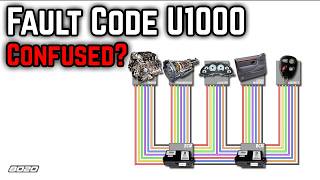
Shop the Parts Behind U2018
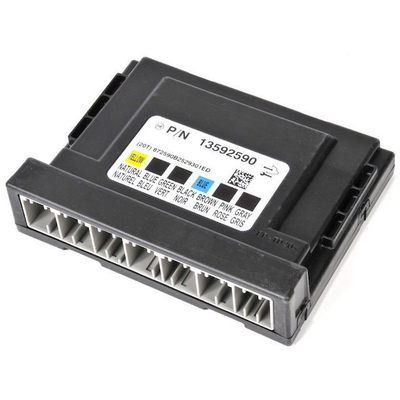
Below are the parts most often responsible for code U2018, ranked by how frequently each one is the actual culprit (per the diagnosis above). Tap any to see what we have for your vehicle.



The information in this article is provided for general reference and educational purposes only. Vehicle specifications, procedures, and part compatibility can vary by production date, trim level, and region. Always consult your vehicle's factory service manual and verify part numbers before purchasing or performing repairs. Safety-critical components such as airbags, seat belts, and braking systems should be installed by a qualified professional.
- 🧭 Diagnostic Flowchart
- 🎬 Helpful Videos
- 🛍️ Shop This Part
- What Does U2018 Mean?
- Can I Drive With U2018?
- Common Causes
- Symptoms
- Common Fixes & Costs
- DIY vs Professional
- Used vs. New Parts: Buying Guide
- What Happens If You Wait — Timeline
- Cost of Not Fixing It
- Diagnosis Steps
- When This Code Triggers (Freeze-Frame Conditions)
- Related Codes
- Climate & Environmental Factors
- How to Talk to a Mechanic About This Code
- Where to Take It: Dealer vs Independent vs Chain
- When to Walk Away From the Repair
- What Scan Tool You Need for This Code
- How to Clear the Code After You Fix It
- Will This Fail Emissions / State Inspection?
- Most Commonly Affected Vehicles
- Manufacturer-Specific Notes
- Real Owner Stories
- 2022 Ford F-150 Lariat at 25K miles
- 2019 Mazda3 Hatchback at 15K miles
- How to Prevent This Code From Triggering
- Frequently Asked Questions
- Can I fix code U2018 myself?
- Will clearing the code make it go away?
- My Ford dealer wants to replace the camera for U2018. Is this correct?
- Is a U2018 repair covered by warranty?
- Why did this code appear after a software update?
- Why is the ':51' suffix on my Ford U2018 code so important?
- What is a TSB and why is it important for code U2018?
- Can a bad battery really cause this code?
- Key Takeaways
- 🎟️ Get 5% Off