

OBD-II Code U2023: Fault Received From External Node
What U2023 means, why it triggers, and how to fix it
- Scan all vehicle modules with an advanced OBD-II tool to find the specific 'B' (Body) or 'C' (Chassis) code that triggered the U2023 communication error.
- Inspect the ABS wheel speed sensors and their wiring first, as physical damage from road debris is the number one cause of this fault.
- Test your battery to ensure it delivers at least 12.4 volts resting and 13.5 volts running, because low voltage corrupts CAN bus data.
- Never replace a $1,000+ Powertrain Control Module (PCM) or ABS module based solely on a U2023 code without testing the 120-ohm CAN bus terminating resistors.
What Does U2023 Mean?

U2023 means your car's Powertrain Control Module (PCM) received nonsensical data from another computer module. Think of it like a garbled text message; the main computer knows another system is failing, but cannot pinpoint the exact reason. This code almost always appears alongside other trouble codes (starting with 'B', 'C', or 'U') that identify the specific failing system.
Technical definition: The official SAE/OBD-II definition for U2023 is "Fault Received From External Node". This indicates a primary control module, typically the PCM, detected an input from another module on the Controller Area Network (CAN) bus that falls outside its expected range or state. The code reports that another module broadcasted invalid data across the network.
Can I Drive With U2023?
Yes, But With Caution. You can drive, but with extreme caution. Key safety systems like ABS and traction control are disabled, significantly increasing the risk of skidding during a panic stop or in adverse weather. The vehicle often enters a reduced-power 'limp mode' to prevent further damage. Driving in limp mode for extended periods causes secondary issues, like catalytic converter damage from an overly rich fuel mixture, adding $1,000-$2,500 to repair costs. Get the vehicle diagnosed immediately.
Common Causes

- Faulty ABS wheel speed sensor or cracked tone ring. (Very Common) — A failing wheel speed sensor or a cracked tone ring on the axle sends erratic signals to the ABS module. The ABS module relays this nonsensical data to the PCM, triggering the U2023 code. Road debris, pothole impacts, and corrosion are the primary culprits.
- Damaged, corroded, or loose CAN bus wiring. (Very Common) — The hundreds of wires connecting your car's computers degrade over time from vibration, moisture, or rodent damage. A single corroded pin or chafed wire disrupts communication and triggers this code.
- Low battery voltage or a failing alternator. (Common) — Control modules require a stable 12V+ supply to communicate properly. A weak battery, failing alternator, or corroded battery terminals cause voltage drops that lead to immediate communication errors between modules.
- Failing Anti-Lock Brake System (ABS) module. (Common) — Internal electronic failures or water intrusion in the ABS computer cause it to broadcast invalid data to the rest of the car, triggering the U2023 code.
- Blown control module fuses. (Less Common) — A blown fuse for a specific control module (like the ABS or BCM) cuts off its power, preventing it from communicating and causing other modules to report a fault.
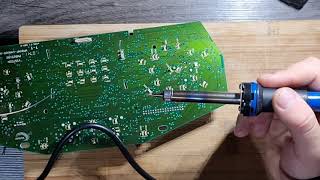
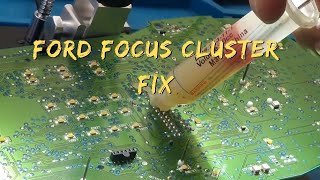
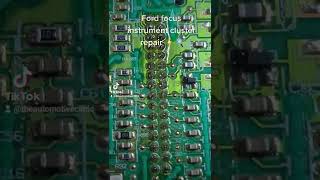
- Failure of the Instrument Cluster or Body Control Module (BCM). (Less Common) — Any computer on the network can fail. On Ford vehicles, a failing instrument cluster with cracked solder joints is a known cause. On GM vehicles, 🎬 Watch: How to resolder and repair a Ford instrument cluster. a faulty BCM due to water intrusion is a frequent source.
- Aftermarket accessories interfering with the CAN bus. (Rare) — Improperly installed aftermarket stereos, remote start systems, or alarms interfere with the CAN bus network. These devices create signal noise or draw improper voltage, triggering a U2023 code.
- Software glitches or corrupted module memory. (Rare) — A module's memory sometimes becomes corrupted due to severe low-voltage events. A dealer or qualified shop must 'reflash' or reprogram the module with updated software to restore functionality.
- Internally collapsing brake hoses (Ford Escape Hybrid). (Rare) — On 2005-2008 Ford Escape Hybrids, old brake hoses collapse internally. This traps hydraulic pressure and sends confusing signals to the ABS module, which sets the U2023 code as it broadcasts the faulty pressure data.
Symptoms

- Check Engine Light is on — The primary indicator that the PCM has logged a communication fault.
- Multiple, seemingly unrelated electrical issues — Flickering lights, malfunctioning wipers, or dead dashboard gauges occur when a core module like the BCM or Instrument Cluster fails.
- Inability to disable traction control — The traction control button becomes completely unresponsive.
- ABS, Traction Control, or Brake warning lights are on (also visible on scanner) — Because the ABS module is the most common source of bad data, these lights almost always illuminate alongside the U2023 code.
- Loss of power or 'Limp Mode' (also visible on scanner) — The vehicle feels sluggish and refuses to accelerate past 2,000-3,000 RPM as a safety measure to protect the powertrain.
- Transmission fault messages and erratic shifting (also visible on scanner) — The dashboard displays a 'Transmission Fault' message, and the transmission shifts harshly because it lacks accurate speed data from the ABS module.
Diagnostic Flowchart
Tap your situation to follow the diagnostic path that matches what you're seeing on this code.
Common Fixes & Costs
- Replacing a faulty ABS wheel speed sensor — Parts: $40-$150, Labor: $100-$200, ~1.2 hr book time (DIY)
- Repairing damaged wiring or cleaning corroded connectors — Parts: $5-$25, Labor: $150-$500, ~1.5 hr book time (Intermediate)
- Replacing the car battery — Parts: $150-$300, Labor: $0-$100, ~0.5 hr book time (DIY)
- Repairing/Replacing a faulty Instrument Cluster (Ford Focus) — Parts: $0-$300, Labor: $150-$400, ~1.5 hr book time (Intermediate)
- Replacing a faulty ABS module — Parts: $600-$1,500+, Labor: $150-$500, ~2.5 hr book time (Professional)
DIY vs Professional
- Replacing a faulty ABS wheel speed sensor — Beginner:
- Replacing the car battery — Beginner:
- Repairing Instrument Cluster (Re-soldering) — Beginner:
- Replacing a faulty ABS module — Beginner:
Used vs. New Parts: Buying Guide
When a used part is worth it: For expensive electronic modules like an ABS controller or instrument cluster, a used part from a reputable dismantler saves 50-70% off the new price. It makes the most sense for older, high-mileage vehicles.
Donor-vehicle mileage cap: roughly under 100000 miles for the part to have meaningful remaining life.
Donor quality checklist:
- Verify the part number matches your original module exactly.
- Buy from a seller offering a 30-90 day warranty and a return policy.
- Avoid parts from flood-damaged or rust-belt vehicles, as corrosion destroys electronics.
- Inquire about the donor vehicle's reason for being scrapped (accident damage is better than electrical failure).
Decision logic:
- If The part requires VIN programming to function (most modern ABS modules and instrument clusters) → Factor in $150-$500 for dealer/specialist programming unless you send your original unit for repair.
- If The original part failed due to a common, repairable issue (e.g., Ford Focus cluster solder joints) → Sending the original module for repair is the best option, as it requires no programming and is cheaper than replacement.
- If The part is a simple sensor with no programming required (e.g., wheel speed sensor) → A quality aftermarket new part is a better value than used, offering a longer warranty for a similar price.
Warranty tradeoff: Used parts from dismantlers typically have a 30-90 day warranty covering the part only, not labor. Remanufactured modules carry a 1-year to lifetime warranty. New OEM parts have a 1-2 year warranty if installed by a dealer.
Worst-case if a used part fails: 400-800. If a used module is dead on arrival, you pay for the diagnostic time, removal/installation labor again, plus the cost of another replacement part.
What Happens If You Wait — Timeline
- Immediate: Check Engine Light and/or ABS/Traction Control light illuminates. Key safety systems (ABS, Stability Control) are disabled. (MPG impact: 0%% · Added cost: $0)
- 0-2 months: Vehicle enters 'limp mode' with severely reduced power and RPM limited to 2,000-3,000. Driving becomes difficult. Fuel economy drops due to inefficient engine operation. (MPG impact: 10-20%% · Added cost: $50-$150 in wasted fuel)
- 2-6 months: If limp mode creates a rich fuel mixture, the catalytic converter overheats. The internal ceramic substrate melts or fractures, creating a permanent restriction. (MPG impact: 15-25%% · Added cost: $1,200-$2,800 (catalytic converter replacement required))
- Ongoing: If the root cause is an internal short in a module, it causes a constant parasitic drain that kills the battery. In a worst-case scenario, the short overheats and poses a fire risk. (MPG impact: N/A% · Added cost: $150-$300 (for a new battery) up to the total loss of the vehicle.)
Cost of Not Fixing It
- Immediate: Safety systems like ABS and traction control are disabled, increasing the risk of a skid or loss of control in a panic stop or bad weather. (Added cost: 0)
- 0-3 months: If the vehicle is in 'limp mode,' it runs rich, leading to a 10-20% drop in fuel economy and premature spark plug fouling. (Added cost: 50-200)
- 3-12 months: Continued driving in limp mode causes the catalytic converter to overheat from an overly rich fuel mixture, leading to internal melting and failure. (Added cost: 1200-2800)
- Ongoing: An intermittent electrical short in a faulty module drains the battery, leaving you stranded, or in rare cases, poses a fire risk. (Added cost: 150-300 (for new battery))
Diagnosis Steps

- Read All Trouble Codes from All Modules
U2023 never appears alone. Use an advanced OBD-II scanner to read manufacturer-specific codes from ALL modules (ABS, TCM, BCM). The other codes (starting with 'C' or 'B') pinpoint the exact source of the problem.
Tools: Advanced OBD-II Scanner (capable of reading ABS/SRS/BCM) (Beginner) - Check the Battery and Charging System
Verify the battery is fully charged (above 12.4 volts with the engine off) and the charging system works correctly (13.5-14.5 volts with the engine running). Clean any corrosion from the battery terminals.
Tools: Multimeter, wire brush (Beginner) - Inspect Fuses
Visually inspect all fuses related to the modules storing fault codes (e.g., ABS, Instrument Cluster, BCM). Check both the engine bay and cabin fuse boxes.
Tools: Fuse puller or needle-nose pliers (Beginner) - Perform a Visual Inspection of Wiring
Look for obvious damage to wiring harnesses around the ABS module and wheel speed sensors. Check for chewed wires, corroded connectors, or damage from a recent pothole strike.
Tools: Flashlight (Intermediate) - PRO TIP: Test Wheel Speed Sensors
If you have a 'C' code for a wheel speed sensor, test it directly. Disconnect a 2-wire passive sensor and measure resistance (typically 1000-2500 ohms). Set the multimeter to AC volts, spin the wheel by hand, and look for at least 0.25V AC. For active 3-wire sensors, verify the 5V/12V reference voltage with the key on.
Tools: Multimeter, Jack and Jack Stands (Advanced) - Check CAN Bus Resistance
Disconnect the battery. Use a multimeter to measure resistance between CAN High (Pin 6) and CAN Low (Pin 14) at the OBD-II port. A reading of 60 ohms means the network wiring is intact. A reading of 120 ohms means one terminating resistor is missing or there is a break in the circuit.
Tools: Multimeter (Advanced) - PRO TIP: Check CAN Bus Voltages
Reconnect the battery and turn the ignition ON. Check DC voltage at the OBD-II port. CAN High (Pin 6) should be 2.6-2.7V and CAN Low (Pin 14) should be 2.3-2.4V. If one line is shorted to ground (0V) or power (12V), you have found a major network failure.
Tools: Multimeter (Advanced) - PRO TIP: Use Ford Instrument Cluster Self-Test
On 2006-2011 Ford Focus models, press and hold the tripmeter reset button, then turn the ignition to 'ON'. Release when 'TEST' appears. Cycle through readouts to check for stored DTCs and perform a gauge sweep test to confirm cluster functionality.
Tools: None (Intermediate) - Isolate the Faulty Module
If wiring is intact, isolate the module broadcasting gibberish. Disconnect one suspect module at a time (based on other DTCs) and re-check for communication with the remaining modules. Stop DIYing and take the vehicle to a diagnostic specialist if you reach this step without success.
Tools: Advanced Scan Tool, wiring diagram, basic hand tools (Professional) - PRO TIP: Analyze the CAN Waveform with an Oscilloscope
Connect an oscilloscope to CAN High and CAN Low. A healthy waveform shows clean, sharp square waves. Rounded squares, voltage spikes, or 'ringing' indicate a missing terminating resistor, interference, or a short.
Tools: Dual-channel oscilloscope, back-pinning probes (Professional)
When This Code Triggers (Freeze-Frame Conditions)
- Engine Coolant Temp: 180-200°F (82-93°C) (The fault often occurs when the engine is fully warmed up and all systems are active.)
- RPM: 1500-2500 (The code is frequently set during steady-state cruise or light acceleration, not typically during hard acceleration or idle.)
- Vehicle Speed: 35-60 mph (56-97 kph) (Highway or city cruising speeds are common triggers, as modules consistently broadcast speed and stability data.)
- Battery Voltage: 13.5-14.5V (The code is often logged when system voltage is normal, ruling out the alternator as an immediate cause, though a prior low-voltage event could have corrupted a module.)
Related Codes
- U0121 — U0121 means 'Lost Communication With ABS Module'. U0121 indicates the ABS module is completely offline. U2023 means the ABS module is online, but the data it sends is invalid.
- U1900 — A general 'CAN Bus Communication Fault' code. U1900 indicates a network-wide problem where multiple modules fail to communicate. U2023 is specific to one module receiving bad data from another.
- C-Codes (e.g., C1230, C1165) — Chassis codes point to a specific component fault, like a wheel speed sensor. A C-code is the cause, while U2023 is the effect. Fixing the C-code resolves the U-code.
- P-Codes (e.g., P0087) — Powertrain codes indicate engine faults. A severe engine performance fault causes the PCM to behave erratically, leading other modules to log a U2023 because the PCM data falls outside expected parameters.
Climate & Environmental Factors
- High Humidity / Moisture: Moisture seeps into ABS module electronics and causes short circuits. It also accelerates corrosion on CAN bus wiring connectors, especially when combined with road salt.
- Cold Weather: Low temperatures cause failing solder joints in modules (like the Ford Focus instrument cluster) to contract and lose connection. Cold also reduces battery efficiency, triggering low-voltage communication errors.
- Road Salt (Rust Belt): Saltwater wicks into wiring harnesses and connectors, causing severe corrosion that increases resistance and disrupts CAN bus signals.
How to Talk to a Mechanic About This Code
Say this: "I have a U2023 communication code and need a diagnostic. I know this code points to a fault in another system, so I need a technician to perform a full system scan to find the original 'B' or 'C' code from the ABS, instrument cluster, or body control module. Please authorize one hour of diagnostic time to trace the root cause."
This signals you understand the nature of the fault and prevents a shop from recommending an expensive PCM or ABS module replacement without proper diagnosis. It focuses the technician on finding the source rather than just the symptom.
Avoid saying:
- 'My check engine light is on, can you look at it?'
- 'Just fix whatever is wrong.'
- 'I think the ABS computer is bad, how much to replace it?'
Questions to ask before authorizing the repair:
- What was the specific 'B' or 'C' code you found, and in which module was it stored?
- Did the diagnostic lead you to a wiring issue, a sensor, or an internal module fault?
- If a module needs to be replaced, does it require programming and is that cost included in your estimate?
- Can you show me the old part after the repair is completed?
Where to Take It: Dealer vs Independent vs Chain
- Dealer:
A reliable, but expensive, choice. Necessary if a new, programmed module is the confirmed fix.
Best for: Vehicles under warranty, Complex manufacturer-specific issues (e.g., Ford instrument cluster, Land Rover suspension warnings), Repairs that require module replacement and proprietary software programming
Downsides: Highest labor rates, May be quicker to replace an entire module than to trace a difficult wiring fault (Typical cost: +50% vs. baseline) - Independent Shop:
Best fit, provided you choose a shop that specializes in diagnostics and electrical systems. Ask if they are equipped to diagnose CAN bus communication faults.
Best for: Out-of-warranty vehicles, Diagnosing and repairing wiring or sensor faults, Vehicles with known, common issues (e.g., Ford Focus cluster)
Downsides: Diagnostic capabilities vary widely; a shop must have advanced scanners and electrical expertise, May not be able to program new modules for all brands (Typical cost: +0% vs. baseline) - Chain Shop:
AVOID. This type of diagnostic work is outside the scope of most chain repair shops. They are not equipped for CAN bus troubleshooting.
Best for: Simple, unrelated maintenance like oil changes or tires
Downsides: Technicians are often not trained or equipped for complex electrical diagnosis, High likelihood of misdiagnosis, leading to unnecessary replacement of parts like the battery or alternator (Typical cost: -10% vs. baseline)
When to Walk Away From the Repair
If the estimated repair cost exceeds 40-50% of the car's private-party value, sell the car as-is rather than repairing it.
- Car worth $3000, fix is $2000: Walk away. A $2,000 repair on a $3,000 car (a 67% ratio) is not a good investment. The repair cost is too close to the vehicle's total value.
- Car worth $12000, fix is $1800: Fix it. At 15% of the vehicle's value, this repair is well below the threshold and makes economic sense.
- Car worth $4000, fix is $400: Fix it. A $400 repair for a faulty wheel speed sensor is a small percentage of the car's value and is a smart repair.
What Scan Tool You Need for This Code
Minimum: A scanner that can read manufacturer-specific codes from ALL vehicle modules, including ABS, SRS (Airbag), BCM (Body Control Module), and Instrument Cluster.
A basic $20 code reader only shows the generic U2023 code from the engine computer (PCM). It cannot see the underlying 'B' (Body) or 'C' (Chassis) codes from other modules, leaving you completely blind to the actual problem.
Budget: BlueDriver Pro (~$119) — Connects to your smartphone via Bluetooth. It reads and clears enhanced codes (ABS, SRS, BCM) for major brands, which is the minimum required to find the source of the U2023 fault.
Mid-range: Foxwell NT510 Elite (~$180) — A powerful handheld scanner offering deep, dealer-level diagnostics for a specific car brand. It reads all modules, views live data streams, and performs bidirectional tests to isolate the faulty component.
Professional: Autel MaxiCOM MK808BT (~$450-600) — A professional-level tablet scanner providing full-system diagnostics, extensive live data, and bidirectional control to command components directly. Essential for advanced troubleshooting.
Rent vs buy: For a one-time diagnosis, auto parts stores offer free loaner tools. Ask for their most advanced scanner that reads ABS codes. If you do your own maintenance regularly, buying a capable scanner is a worthwhile investment.
How to Clear the Code After You Fix It
- Fix the underlying hardware or wiring fault.
- Use an OBD-II scan tool to clear all codes from all modules.
- Perform a complete drive cycle to allow readiness monitors to run.
Drive cycle (~30 minutes): Cold start (sit for 8+ hours). Idle for 2-3 minutes with electrical loads on (A/C, defroster). Drive 10-15 minutes at a steady highway speed (55-60 mph). Drive 10-15 minutes in stop-and-go city traffic.
Readiness monitors affected: Comprehensive Component Monitor, Misfire Monitor
Before emissions retest: drive at least 100 miles to fully set monitors.
Watch out for:
- Disconnecting the battery will not fix the underlying issue and the code returns immediately.
- Clearing the codes resets the emissions readiness monitors, requiring a full drive cycle before passing a smog test.
- If the root cause is not repaired, the code reappears instantly.
Will This Fail Emissions / State Inspection?
Yes — this code typically fails an OBD-II emissions inspection.
- California: An illuminated Check Engine Light results in an automatic failure. After repair, a complete drive cycle must be performed to set all readiness monitors before a retest.
- New York: The NYS DMV inspection includes an OBD-II scan. Any fault code illuminating the Check Engine Light, including U2023, causes an emissions failure.
- Texas: In counties requiring emissions testing, an active Check Engine Light is an automatic failure. After clearing the code, drive 50-100 miles to ensure readiness monitors are set.
Most Commonly Affected Vehicles
- Ford Focus (2006-2011) — Extremely common. Caused by either a failing ABS module or cracked solder joints on the instrument cluster's circuit board.
- Ford Escape Hybrid (2005-2008) — Caused by failing ABS Hydraulic Control Units (HCU) and internally collapsing front brake hoses that trap hydraulic pressure.
- Mazda CX-7 (2007-2012) — Frequently traced back to a failed wheel speed sensor or the ABS module itself, accompanied by traction control faults.
- Land Rover Discovery 3 (LR3) / Range Rover Sport (2005-2010) — Triggers a cascade of warnings ('Transmission Fault', 'HDC Fault') and drops the air suspension. The root cause is usually a wiring issue to the air suspension compressor or a bad battery.
- Ford F-150 (2004-2008) — Linked to faults in the 4x4 module or damaged/chafed wiring leading to the rear differential speed sensor harness.
- Volkswagen Jetta / Golf (Mk5, Mk6) (2006-2014) — Related to ABS module failures or CAN bus interference from improperly installed aftermarket stereos draining the battery.
- Chevrolet Cruze / Equinox (2011-2016) — Traced back to a faulty Body Control Module (BCM), blown BCM fuses, or water intrusion into the BCM connectors.
- Hyundai Elantra / Sonata (2007-2015) — Moisture enters the ABS module, causing an electrical short and potential fire risk. The remedy involves installing a new relay or replacing the ABS fuse.
Manufacturer-Specific Notes
- Ford: U2023 strongly indicates a failing ABS module or ABS wiring issue. On 2006-2011 Focus models, faulty solder joints in the instrument cluster mimic a major network failure.
- Land Rover: U2023 triggers a dramatic cascade of warnings, including 'Transmission Fault' and 'HDC Fault'. The root cause is frequently a simple electrical issue, such as a corroded wire or a weak battery, not a transmission failure.
- Mazda: This code is sometimes triggered by a faulty stop light switch or issues with the keyless entry module. Always check for body-related codes ('B' codes) if ABS issues are not apparent.
- Volkswagen: Improperly installed aftermarket stereos that are incompatible with the CAN Gateway module create signal interference and prevent the module from sleeping, draining the battery and triggering U-codes.
- Jaguar: U2023 points to a CAN bus communication failure between the PCM and the transmission or stability control module. Low battery voltage is the most common trigger for these electronic faults.
- Hyundai: Multiple recalls exist for 2007-2018 models due to moisture entering the ABS module and causing an electrical short. This triggers communication codes and poses a fire risk even when parked.
Real Owner Stories
2009 Ford Focus with 110K miles
The ESP/Traction Control light came on intermittently on cold mornings, causing the car to jolt. The dash gauges stopped working entirely. The code was U2023.
What they tried:
- Checked all ABS and engine related fuses.
- Used a basic OBD-II scanner which only showed U2023.
- Took it to a shop that suspected a faulty ABS module but couldn't confirm.
Outcome: The owner removed the instrument cluster and sent it to a specialist repair service for $150 to have the main connector pins re-soldered. After reinstalling the repaired cluster, all faults disappeared.
Lesson: On 2006-2011 Ford Focus models, intermittent communication faults and gauge failures point to cracked solder joints on the instrument cluster, a much cheaper fix than replacing the ABS module.
2006 Land Rover LR3 with 145K miles
The dashboard lit up with 'HDC Fault,' 'Transmission Fault,' and 'Suspension Lowered' warnings. The vehicle entered limp mode. Codes included U2023, U0102, and U0416.
What they tried:
- Replaced the battery, as low voltage is a known cause of LR3 electrical issues.
- Checked for water ingress in the passenger wiring channels from clogged sunroof drains.
- Initially suspected a catastrophic transmission failure.
Outcome: An advanced scanner revealed a fault for the 'engine oil temperature sensor circuit'. A visual inspection found a broken wire in the sensor's harness near the engine block. Repairing the single broken wire for $10 cleared all warnings.
Lesson: A cascade of severe warnings on a Land Rover is often caused by a single electrical fault. Do not trust dashboard messages literally; diagnose specific codes and check basic wiring before assuming a module failed.
2008 Ford Escape Hybrid with 160K miles
The car intermittently showed 'Service Brake System Soon' and the ABS light illuminated, logging code U2023. The problem worsened over several months.
What they tried:
- Replaced the ABS module (HCU) with a used unit, which introduced VIN mismatch codes and didn't solve the problem.
- Took it to two dealerships, both quoting over $2,000 for a new HCU.
- Cleaned grounds and replaced a section of the ABS wiring harness.
Outcome: A tire shop found the issue in 15 minutes: the front rubber brake hoses were collapsing internally. This trapped hydraulic pressure, sending confusing data to the ABS module and triggering U2023. Replacing the hoses for $300 fixed the issue.
Lesson: U2023 reports 'bad data', which isn't always an electronic failure. A mechanical failure (like a collapsing hose) feeds bad physical data to a good sensor, which sends bad electronic data to the module.
How to Prevent This Code From Triggering
- Keep Battery Terminals & Ground Straps Clean (Every 12 months) — Corrosion on battery terminals or chassis grounds creates resistance, causing voltage drops that lead to module communication errors. Clean with a wire brush and apply anti-corrosion spray.
- Apply Dielectric Grease to Key Connectors (When servicing a component) — When replacing a sensor in a vulnerable area, applying dielectric grease to the connector's weather seal blocks moisture ingress, a primary cause of pin corrosion and ABS module failure.
- Regularly Inspect Wiring Harnesses (During every oil change) — Look for wiring harnesses rubbing against sharp metal edges, resting on hot exhaust components, or showing rodent damage. Catching physical damage early prevents a wire from breaking and taking down the network.
- Use Caution with Aftermarket Electronics (During installation) — Improperly installed stereos or alarms that tap into CAN bus wires without a certified interface module introduce electrical noise or prevent modules from sleeping, draining the battery.
Frequently Asked Questions
Can I fix a U2023 code myself?
You can perform basic checks like testing the battery, inspecting fuses, and looking for obvious wiring damage. Diagnosing the specific faulty module or wiring short requires advanced scan tools and wiring diagrams. Stop DIYing and take the vehicle to a diagnostic specialist if basic visual and voltage checks pass.
Will clearing the code fix the problem?
No. Clearing the code only turns off the warning lights temporarily. The code returns the moment the modules attempt to communicate and detect the underlying fault.
What is the most common misdiagnosis with a U2023 code?
The biggest mistake is replacing an expensive module like the ABS controller or PCM based solely on the U2023 code. This code only indicates bad data was received, not where the problem originated. Always use a full-system scanner to pull the specific 'C' or 'B' codes that pinpoint the actual failure.
My car showed a U2023 code right after hitting a pothole. What should I check first?
A sudden impact easily damages a wheel speed sensor, its wiring, or cracks the ABS tone ring on the axle. This is a highly common trigger for a sudden U2023 code. Perform a close visual inspection of the wiring and components behind the wheel that took the impact.
Why did so many warning lights come on at once?
Modern cars share data between systems over the CAN bus network. When one critical module like the ABS stops communicating correctly, other modules that rely on its data also report errors. This triggers a cascade of warning lights across the dashboard.
The only code is U2023. What should I do?
If U2023 is the only code present, your scanner cannot read manufacturer-specific codes from other modules. You must use a professional-grade scan tool to pull the hidden codes that pinpoint the actual problem area.
Can a bad battery cause a U2023 code even after I've replaced it?
Yes. Operating the vehicle with low voltage corrupts a module's software or memory. Even after installing a new battery, the module requires a reset or 'reflash' by a dealer to recover. Verify the new battery delivers a stable 12.4+ volts.
What is a CAN bus terminating resistor?
A 120-ohm terminating resistor sits at each physical end of the CAN bus network to absorb electrical signals and prevent data-corrupting reflections. A healthy network has two resistors. Measuring between the CAN high and low wires at the OBD-II port must show a total resistance of 60 ohms.
Key Takeaways
- Scan all vehicle modules with an advanced OBD-II tool to find the specific 'B' (Body) or 'C' (Chassis) code that triggered the U2023 communication error.
- Inspect the ABS wheel speed sensors and their wiring first, as physical damage from road debris is the number one cause of this fault.
- Test your battery to ensure it delivers at least 12.4 volts resting and 13.5 volts running, because low voltage corrupts CAN bus data.
- Never replace a $1,000+ Powertrain Control Module (PCM) or ABS module based solely on a U2023 code without testing the 120-ohm CAN bus terminating resistors.
Helpful Videos
![How To Test CAN BUS With A Multimeter [CAN Bus Resistance Check] Mechanic Mindset](https://img.youtube.com/vi/JPE42HSJxAk/mqdefault.jpg)

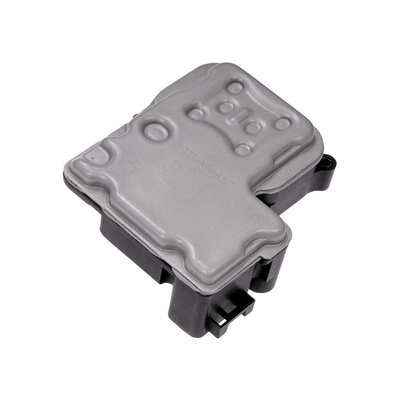
Shop the Parts Behind U2023
Below are the parts most often responsible for code U2023, ranked by how frequently each one is the actual culprit (per the diagnosis above). Tap any to see what we have for your vehicle.




The information in this article is provided for general reference and educational purposes only. Vehicle specifications, procedures, and part compatibility can vary by production date, trim level, and region. Always consult your vehicle's factory service manual and verify part numbers before purchasing or performing repairs. Safety-critical components such as airbags, seat belts, and braking systems should be installed by a qualified professional.
- 🧭 Diagnostic Flowchart
- 🎬 Helpful Videos
- 🛍️ Shop This Part
- What Does U2023 Mean?
- Can I Drive With U2023?
- Common Causes
- Symptoms
- Common Fixes & Costs
- DIY vs Professional
- Used vs. New Parts: Buying Guide
- What Happens If You Wait — Timeline
- Cost of Not Fixing It
- Diagnosis Steps
- When This Code Triggers (Freeze-Frame Conditions)
- Related Codes
- Climate & Environmental Factors
- How to Talk to a Mechanic About This Code
- Where to Take It: Dealer vs Independent vs Chain
- When to Walk Away From the Repair
- What Scan Tool You Need for This Code
- How to Clear the Code After You Fix It
- Will This Fail Emissions / State Inspection?
- Most Commonly Affected Vehicles
- Manufacturer-Specific Notes
- Real Owner Stories
- 2009 Ford Focus with 110K miles
- 2006 Land Rover LR3 with 145K miles
- 2008 Ford Escape Hybrid with 160K miles
- How to Prevent This Code From Triggering
- Frequently Asked Questions
- Can I fix a U2023 code myself?
- Will clearing the code fix the problem?
- What is the most common misdiagnosis with a U2023 code?
- My car showed a U2023 code right after hitting a pothole. What should I check first?
- Why did so many warning lights come on at once?
- The only code is U2023. What should I do?
- Can a bad battery cause a U2023 code even after I've replaced it?
- What is a CAN bus terminating resistor?
- Key Takeaways
- 🎟️ Get 5% Off