

OBD-II Code U2050: No Communication Present
What U2050 means, why it triggers, and how to fix it
- Code U2050 indicates a total communication failure with at least one of the vehicle's 15+ control modules, often disabling the vehicle entirely.
- Over 50% of U2050 codes stem from a weak 12V battery dropping below 12.4 volts or corroded CAN bus wiring, rather than a failed $800 computer module.
- A no-start condition paired with an odometer displaying dashes (-------) guarantees the Instrument Cluster is the offline module triggering the code.
- Replacing a module to fix U2050 requires professional programming costing $150 to $400; a plug-and-play DIY swap will not start the car.
What Does U2050 Mean?
The code U2050 means one of your car's computers (modules) is not communicating with the rest of the vehicle's network. It indicates a module is either physically offline or missing its operating software, rendering it unable to send or receive data on the CAN bus.
Technical definition: The official SAE/ISO definition for U2050 varies by manufacturer but generally falls under 'No Application Present' or a specific 'No Communication with [Module Name]' fault. This indicates that a control unit on the vehicle's Controller Area Network (CAN) has lost its programming, is unresponsive on the communication bus, or is incorrectly configured.
Can I Drive With U2050?
Yes, But With Caution. You can physically drive if the engine starts, but it is highly dangerous. Depending on which module is offline, critical safety systems like ABS, airbags, and power steering disable without warning. The vehicle is also prone to entering a permanent no-start condition at any time, leaving you stranded. A short, low-speed trip to a repair shop is the maximum recommended driving.
Common Causes
- Low or Unstable Battery Voltage (Very Common) — A weak, failing, or improperly connected battery causes voltage drops that force modules to reboot or fall off the communication network. Land Rovers and modern Fords are notoriously sensitive to battery voltage drops below 12.4V.
- Corroded, Damaged, or Poorly Grounded Wiring (Very Common) — Corrosion or damage to the CAN bus network wires or loose ground straps breaks the physical connection. This is highly common at major connection points near the floorboards, under the hood, or behind the dashboard.
- Software Corruption or Configuration Mismatch (Common) — A module's software is erased or corrupted due to an interrupted update, improper use of an aftermarket engine tuner, or failing to perform the final setup procedure after replacing a part like the Body Control Module (BCM).
- Faulty Control Module (Common) — An internal hardware failure inside a major computer, such as the Powertrain Control Module (PCM), Instrument Cluster (IC), or Body Control Module (BCM), permanently takes it offline. 🎬 See this Ford technician's guide to diagnosing a module failure.
- Water Intrusion in Fuse Box (BJB) (Less Common) — Damaged seals on under-hood fuse boxes, particularly on Ford Super Duty trucks, allow water intrusion. This corrodes internal circuits and causes widespread electrical and communication failures.
- Faulty Aftermarket Electronics (Rare) — Poorly installed remote starters, alarm systems, or stereos tap into and disrupt the vehicle's CAN bus network, blocking module communication.
Symptoms
- No-Start or No-Crank Condition — You turn the key, and nothing happens, or the engine turns over but refuses to start.
- Odometer Displays Dashes — Instead of showing the mileage, the odometer shows a series of dashes (-------), indicating the instrument cluster is offline.
- Multiple Warning Lights on Dash — The Check Engine light, anti-theft light, ABS, or traction control lights illuminate simultaneously. A specific message like 'In-Vehicle Network Malfunction' displays on newer vehicles.
- Rapidly Flashing Anti-Theft Light — The security light on the dashboard blinks quickly when the key is on, indicating the anti-theft system is active and actively preventing the car from starting.
- Erratic or Non-Functioning Gauges — The speedometer, tachometer, or temperature gauges behave erratically, drop to zero while driving, or fail to work entirely.
- Loss of Remote Features — Features like remote start or lock/unlock via a smartphone app stop working. This is the primary symptom for the Mazda-specific U2050:55 code.
Diagnostic Flowchart
Tap your situation to follow the diagnostic path that matches what you're seeing on this code.
Common Fixes & Costs
- Replace or Charge the 12V Battery — Parts: $150-$250, Labor: $0-$50, ~0.5 hr book time (DIY)
- Repair Corroded Wiring or Connectors — Parts: $5-$20, Labor: $150-$600, ~2.0 hr book time (Intermediate)
- Reprogram/Configure a Control Module — Parts: $0, Labor: $150-$400, ~1.5 hr book time (Professional)
- Replace Battery Junction Box (BJB) — Parts: $200-$500, Labor: $150-$300, ~2.0 hr book time (Intermediate)
- Replace the Instrument Cluster — Parts: $250-$700, Labor: $150-$250, ~1.5 hr book time (DIY)
- Replace the Body Control Module (BCM) — Parts: $300-$750, Labor: $150-$350, ~2.5 hr book time (Professional)
- Replace the Powertrain Control Module (PCM) — Parts: $400-$1000, Labor: $100-$200, ~1.2 hr book time (Professional)
DIY vs Professional
- Repair Corroded Wiring or Connectors — Beginner:
- Reprogram/Configure a Control Module — Beginner:
- Replace the Instrument Cluster — Beginner:
- Replace the Body Control Module (BCM) — Beginner:
- Replace the Powertrain Control Module (PCM) — Beginner:
- Replace Battery Junction Box (BJB) — Beginner:
Used vs. New Parts: Buying Guide
When a used part is worth it: For older, high-mileage vehicles (>120k miles) where the cost of a new OEM module is a significant percentage of the car's value. A used module from a reputable recycler is a budget-conscious choice if the significant risks are understood.
Donor-vehicle mileage cap: roughly under 100000 miles for the part to have meaningful remaining life.
Donor quality checklist:
- Verify the part number matches EXACTLY, including any suffix letters.
- Choose a donor vehicle from a dry climate to minimize the risk of hidden corrosion.
- Ask for the donor vehicle's VIN to check its history for flood damage or major electrical issues.
- Ensure the seller offers at least a 90-day parts warranty.
Decision logic:
- If The fix requires programming (e.g., BCM, PCM, Instrument Cluster) → Factor in $150-$400 for professional programming, which is non-negotiable for both new and used parts.
- If The vehicle is less than 10 years old or has under 100k miles → Strongly consider a new OEM or high-quality remanufactured part for better reliability and warranty.
- If You are buying a used module online → Use a service that guarantees the part is tested and functional. Avoid 'as-is' sales completely.
Warranty tradeoff: Used parts typically come with a 30-90 day warranty that covers only the part itself; labor is not included. New aftermarket parts offer a 1-year to limited lifetime warranty. New OEM parts installed by a dealer carry the manufacturer's parts and labor warranty.
Worst-case if a used part fails: $500-$1200 if a used module fails after the warranty period, requiring you to pay for the part and the installation labor a second time.
What Happens If You Wait — Timeline
- 0-1 month: Intermittent warning lights (Check Engine, ABS, etc.) appear on the dash, often clearing on the next startup. No noticeable driving symptoms. (MPG impact: 0%% · Added cost: $0)
- 1-3 months: Fault becomes more frequent. Gauges intermittently drop to zero or freeze. The vehicle occasionally cranks but fails to start. Remote features (key fob, app) stop working. (MPG impact: 0%% · Added cost: $100-$250 (Potential towing cost from a no-start event).)
- 3-6 months: The no-start condition becomes common. The odometer displays dashes. Critical systems like power steering or ABS disable when the fault is active. Diagnostic costs increase as the intermittent nature makes the fault hard to trace. (MPG impact: 0%% · Added cost: $200-$500 (Increased diagnostic labor at $100-$175/hr chasing an intermittent problem).)
- 6+ months: A hard failure occurs. The vehicle is permanently in a no-start condition. The faulty module fails completely. In some cases, voltage irregularities from the failing module potentially damage other sensitive modules on the network, compounding repair costs. (MPG impact: 0%% · Added cost: $800-$2500+ (Cost of replacing one or more major control modules like a BCM or PCM, plus programming fees).)
Cost of Not Fixing It
- Immediate: Intermittent failure of critical systems like ABS, power steering, or stability control, increasing the risk of an accident. The vehicle randomly fails to start. (Added cost: $100-$250 (Towing cost when the vehicle eventually doesn't start).)
- 1-3 months: The intermittent no-start condition becomes permanent. Continued communication glitches cause other modules on the network to log faults, complicating diagnosis and increasing labor costs. (Added cost: $200-$500 (Increased diagnostic time as technicians chase multiple ghost codes).)
- 3+ months: A complete, hard failure of a major module (PCM, BCM) occurs. In rare cases, voltage spikes from a failing module potentially damage other sensitive electronics on the same network. (Added cost: $800-$2000+ (Cost of replacing a major control module that might have been salvageable if addressed sooner, plus potential for multiple module failures).)
Diagnosis Steps
- Check Battery and Grounds
Ensure the battery is fully charged (above 12.4 volts) and that the main battery terminals and chassis ground connections are clean and tight. Low voltage is the most common cause of communication errors.
Tools: Digital Multimeter, Socket Set, Wire Brush (Beginner) - Perform a Full Network Scan
Use an advanced OBD-II scanner to perform a 'network test' or 'module scan'. This identifies exactly which modules are online and which are unresponsive, directing your diagnostic focus.
Tools: Advanced OBD-II Scanner (Beginner) - Inspect Major Wiring Connectors and Fuse Boxes
Inspect common failure points like the passenger-side A-pillar connectors (common on Ford) and the under-hood fuse box (BJB). Disconnect, inspect for green/white corrosion or pushed-out pins, and clean with electrical contact cleaner.
Tools: Flashlight, Socket Set, Electrical Contact Cleaner (Intermediate) - Inspect for Aftermarket Devices
Look under the dashboard and steering column for non-factory electronics like remote start modules or alarms. Temporarily disconnect them to see if network communication is restored.
Tools: Flashlight, Trim Removal Tools (Intermediate) - Check Power and Ground at the Faulty Module
Using a wiring diagram, identify the power and ground wires at the connector of the non-communicating module. Use a multimeter to confirm it receives a steady 12V+ and has a solid ground.
Tools: Digital Multimeter, Wiring Diagram, Back-Probe Kit (Advanced) - Test CAN Bus Wires (Resistance)
With the battery disconnected, check the resistance between the CAN High (Pin 6) and CAN Low (Pin 14) wires at the OBD-II port. A healthy network reads 60 ohms. A reading of 120 ohms indicates a missing terminating resistor or broken wire, while 0 ohms indicates a short circuit.
Tools: Digital Multimeter, Wiring Diagram (Advanced) - Pro Tip: Check CAN Bus Voltage
With the ignition ON, back-probe the CAN wires at the OBD-II port. CAN High (Pin 6) averages 2.5V, fluctuating up to 3.5V. CAN Low (Pin 14) averages 2.5V, fluctuating down to 1.5V. A 0V reading indicates a short to ground.
Tools: Digital Multimeter, Back-Probe Kit (Professional) - Pro Tip: Use an Oscilloscope to Analyze the CAN Signal
Connect a dual-channel oscilloscope to CAN High and CAN Low. A healthy network shows two clean, mirror-image square wave patterns. Distortion, noise, or missing signals pinpoint shorts, opens, or faulty modules.
Tools: Dual-Channel Oscilloscope, DLC Breakout Box (Professional) - Advanced: Test Module Internal Resistance
Unplug the suspected faulty module and measure the resistance between its internal CAN Hi and CAN Low pins. A healthy module reads between 28k and 50k ohms. A reading of 0 ohms indicates internal hardware destruction.
Tools: Digital Multimeter, Wiring Diagram (Advanced)
When This Code Triggers (Freeze-Frame Conditions)
- Event: Key On, Engine Off (The fault is often detected during the initial power-on self-test before the engine starts.)
- Battery Voltage: 11.5 - 12.2V (Code sets during engine cranking when battery voltage momentarily drops, especially with an older battery.)
- Vehicle Speed: 0 mph (Many communication faults log when the vehicle is stationary, either at startup or immediately after a failed programming attempt.)
- Module Status: No Communication (The primary data point is one or more modules failing to respond to a network self-test request from the gateway module (often the BCM or Instrument Cluster).)
Related Codes
- U0155 — 'Lost Communication With Instrument Panel Cluster (IPC) Control Module.' U0155 specifically identifies the instrument cluster as the offline module. If you have U2050 alongside U0155, the cluster is almost certainly the source of the problem.
- U0100 — 'Lost Communication With ECM/PCM 'A'.' This code is set by other modules when they cannot hear from the main engine computer. U2050 is often set in the PCM itself when its software is missing; U0100 tells you the PCM is offline, while U2050 tells you why.
- P1260 — 'Theft Detected - Vehicle Immobilized.' This code is a direct consequence, not a cause. When U2050 indicates the key, cluster, or PCM is offline, the security handshake fails, logging P1260 and preventing the engine from starting.
- U0001 — 'High Speed CAN Communication Bus.' This is a general code indicating a fault on the main communication network, but it doesn't specify which module is at fault. U2050 often accompanies U0001 to pinpoint the specific offline module.
Climate & Environmental Factors
- High Humidity / Water Intrusion: This is a primary factor. Moisture leads to corrosion in connectors, fuse boxes (like the Ford BJB), and splices in the CAN bus wiring, directly causing resistance changes and communication loss.
- Road Salt (Winter Climates): In regions where road salt is used, corrosion of underbody and engine bay wiring and ground connections accelerates. This significantly increases the likelihood of wiring-related U2050 codes.
- Extreme Cold: Cold temperatures weaken batteries, increasing the chance of low-voltage-induced communication faults. Extreme cold also makes wire insulation brittle and causes intermittent breaks or poor connections at connectors as materials contract.
How to Talk to a Mechanic About This Code
Say this: "I have a U2050 communication code and I'd like to schedule a diagnostic. Before replacing any modules, please perform a full network scan to identify which module is offline, check for TSBs related to this code, and inspect the common wiring failure points for this model."
This signals to the shop that you understand U2050 is often a wiring, software, or battery issue, not just a bad module. It directs them toward a logical, cost-effective diagnostic process and away from immediately quoting an expensive part.
Avoid saying:
- 'My car won't start and the dash is acting weird.'
- 'Just fix whatever's wrong with it.'
- 'My friend said it's probably the computer, can you replace it?'
Questions to ask before authorizing the repair:
- Which specific module failed to communicate during the network scan?
- Did you verify that the offline module has proper power and ground?
- Did you test the CAN bus resistance at the OBD-II port, and what was the reading?
- If a module needs to be replaced, does the quoted price include the necessary programming and configuration?
Where to Take It: Dealer vs Independent vs Chain
- Dealer:
Recommended. A U2050 code often requires dealer-level diagnostic software and access to TSBs that independent shops lack. This is especially true for programming new modules.
Best for: Vehicles under warranty, Newer vehicles (less than 5 years old) with complex electronics, Known manufacturer-specific issues that require proprietary software (e.g., Mazda U2050:55 configuration)
Downsides: Highest labor rates, Defaults to module replacement over component-level wiring repair (Typical cost: +40% vs. baseline) - Independent Shop:
Use with caution. A good independent diagnostic specialist is a great choice, but a general repair shop struggles. Ask them specifically if they have tools to perform network scans and module programming for your vehicle's brand before you commit.
Best for: Out-of-warranty vehicles where the cause is likely a common wiring or battery issue.
Downsides: Quality and diagnostic capabilities vary widely. Must find a shop that specializes in diagnostics and has advanced tools and information subscriptions (e.g., AllData)., Lacks the ability to program a new module if one is needed, requiring a second trip to a dealer. (Typical cost: +0% vs. baseline) - Chain Shop:
AVOID for diagnosis. While a weak battery is a common cause, a chain shop is unlikely to diagnose the problem if the battery is not the culprit. Go to them for a free battery test, but take the vehicle to a specialist for the actual U2050 diagnosis.
Best for: Checking and replacing the battery, which should always be the first step.
Downsides: Technicians are generally not equipped or trained for complex network diagnostics., High risk of misdiagnosis, leading to unnecessary replacement of parts like batteries or alternators without solving the root problem. (Typical cost: -10% vs. baseline)
When to Walk Away From the Repair
If the total estimated repair cost for the U2050 fault exceeds 50% of the car's private-party value (e.g., from Kelley Blue Book), it's time to seriously consider selling or trading in the vehicle.
- Car worth $5000, fix is $2200: Borderline. The repair cost is high relative to the car's value. Get a second opinion to confirm the diagnosis before proceeding. A wiring fix might be cheaper.
- Car worth $15000, fix is $1500: Fix it. The repair cost is well within a reasonable threshold to restore a valuable asset to full function.
- Car worth $3000, fix is $1800: Walk away. The repair cost is over 50% of the car's value. It is not economical to repair unless there is significant sentimental value.
What Scan Tool You Need for This Code
Minimum: A scanner that performs an 'All System Scan' or 'Network Topology' scan. This is required to see which specific module(s) are not communicating.
A basic $20 code reader only tells you the U2050 code exists. It cannot tell you which of the 15+ modules on your car is the one causing the problem. Diagnosing a U2050 code without a network scan is pure guesswork.
Budget: Autel MaxiAP AP200 (~$60) — This is a Bluetooth dongle that pairs with your smartphone. It performs an all-system scan to show you which modules have faults and which are offline. It's the most affordable way to get the minimum data needed.
Mid-range: Foxwell NT510 Elite (~$180) — A handheld device that offers all-system scans and some bidirectional controls (active tests). This allows you to not only see which module is offline but also command other modules to test their function, helping to isolate the problem.
Professional: Autel MaxiCOM MK808S / MK808BT (~$350-500) — A full tablet-based scanner with comprehensive all-system scans, network topology maps on some models, full bidirectional controls, and service functions. This level of tool is necessary if you need to perform programming or initialization after replacing a module.
Rent vs buy: Buy. The free 'loan-a-tool' scanners at auto parts stores are typically basic code readers that cannot perform the necessary all-system network scan for this code. For a U2050, you must own or borrow a more advanced scanner.
How to Clear the Code After You Fix It
- Ensure the underlying fault (e.g., bad wiring, faulty module) is corrected.
- Reconnect the battery if it was disconnected for the repair.
- Use a compatible OBD-II scan tool to navigate to the 'Clear/Reset DTCs' function and erase the code.
- Perform a complete drive cycle to allow the vehicle's readiness monitors to run their self-tests.
Drive cycle (~30 minutes): Start with a cold engine (sat for 8+ hours). Idle in Drive for 2-3 minutes. Drive for 15-20 minutes with mixed stop-and-go city traffic and at least four 30-second idle periods. Follow with 10 minutes of steady highway driving between 45-60 mph. Allow the vehicle to cool down.
Readiness monitors affected: Catalyst (CAT), Evaporative (EVAP) System, Oxygen (O2) Sensor, Oxygen Sensor Heater, EGR (Exhaust Gas Recirculation) System
Before emissions retest: drive at least 50 miles to fully set monitors.
Watch out for:
- Simply clearing the code without fixing the root cause results in the code returning almost immediately.
- Disconnecting the battery clears the code but also resets all readiness monitors to 'incomplete', causing an automatic emissions test failure.
- Some manufacturers require a specific 'parameter reset' or 'module initialization' procedure with an advanced scan tool after module replacement, which is different from simply clearing codes.
Will This Fail Emissions / State Inspection?
Yes — this code typically fails an OBD-II emissions inspection.
- California: An active U2050 code that illuminates the Malfunction Indicator Lamp (MIL) results in an automatic smog check failure. All required readiness monitors must also be 'complete'.
- New York: The NYS DMV emissions inspection includes an OBD-II scan. Any diagnostic trouble code that commands the MIL on, including U2050, is grounds for failure.
- Texas: In the 17 counties requiring emissions testing, a vehicle fails if the MIL is on due to a code like U2050. After repair, readiness monitors must be set to pass the re-test.
Most Commonly Affected Vehicles
- Mazda Mazda3 (2019-2021) — A known Technical Service Bulletin (TSB SA-038-21) exists for a software configuration issue after a BCM or TCU is replaced, causing a U2050:55 code. The fix is a software configuration, not a part replacement.
- Ford F-250 / F-350 Super Duty (2008-2010) — Prone to CAN bus wiring corrosion in connectors located in the passenger-side A-pillar and internal failure of the instrument cluster, leading to a loss of communication, no-start, and dashes on the odometer.
- Ford F-Super Duty (2020-2022) — Subject to water intrusion into the Battery Junction Box (BJB) if the cover is damaged or misaligned, causing widespread communication failures. See TSB 22-2443 and 23-2133.
- Ford Fusion (2010-2012) — Reports of BCM failure that disrupt network communication and require dealer programming for replacement. Check for corrosion at BCM connectors first.
- Chevrolet / GMC Silverado / Sierra (2014-2018) — These vehicles experience BCM failures that disrupt network communication and require programming upon replacement. Symptoms include intermittent power accessory failure.
- Honda CR-V (2017-2020) — Experiences communication failures with the Integrated Driver Support Unit or the image processing (camera) module, triggering various warnings on the dash.
- Subaru Outback / Legacy (2015-2022) — Communication faults related to EyeSight or the Electronic Parking Brake (EPB) are caused by broken connector clips on actuator harnesses (TSB 06-87-22R). Windshield replacement with non-OEM glass also causes EyeSight communication failures.
- Volkswagen Golf (Mk8) (2020-Present) — Prone to intermittent communication faults displaying multiple warnings (ACC, ABS, etc.), traced to faulty steering wheel modules or requiring software updates. Often related to a dirty Front Assist radar sensor.
- Jaguar / Land Rover Various Models (2010-Present) — Extremely sensitive to battery voltage. A weak or aging battery is the primary cause of multiple, seemingly unrelated 'U' codes, including U2050. Always load test the battery before beginning deeper diagnostics.
Manufacturer-Specific Notes
- Mazda: On newer models, code U2050:55 is a status message indicating a module needs to be configured at the dealership with special software (MDARS) after being replaced, not a hardware fault. See TSB SA-038-21.
- Ford: The definition 'No Application Present' is common, meaning a module's software is erased from a failed update or aftermarket tuner. Also, check for corroded CAN bus wires in the passenger footwell/A-pillar area and water intrusion in the under-hood fuse box on trucks.
- Subaru: Communication faults related to EyeSight or the parking brake are often caused by faulty connector clips on wheel-speed or parking brake actuator harnesses (TSB 06-87-22R). Using non-OEM glass for a windshield replacement also prevents EyeSight cameras from calibrating.
- Jaguar / Land Rover: These vehicles are highly sensitive to battery voltage. A battery that is even slightly weak causes a cascade of communication codes, including U2050. A full battery and charging system test is the absolute first diagnostic step.
Real Owner Stories
2019 Mazda3 with U2050:55
After having the Body Control Module (BCM) replaced at an independent shop, the 'In-Vehicle Network Malfunction' message appeared. The car drove fine, but remote features on the MyMazda app stopped working.
What they tried:
- The independent shop re-scanned the car, found the U2050:55 code, but couldn't clear it.
- Owner took the car to a Mazda dealership.
Outcome: The Mazda dealer technician recognized the code from TSB SA-038-21. They performed the 'Activation Remote Control by Smart Phone' procedure using the Mazda MDARS software. The code cleared, and remote functions were restored. The cost was one hour of labor ($180).
Lesson: For modern Mazda vehicles, a U2050:55 code after a module replacement is a software configuration issue, not a faulty part. The fix requires dealer-specific software and is detailed in a TSB.
2009 Ford F-250 Super Duty with No-Start
The truck intermittently failed to start. The odometer showed dashes ('-------'), and the anti-theft light flashed rapidly. Sometimes it started after a few tries, but the problem became more frequent.
What they tried:
- Replaced the battery, which did not solve the issue.
- A mechanic scanned the truck and found U2050 and U0155 (Lost Communication with Instrument Cluster).
- The mechanic initially suspected a faulty Instrument Cluster and quoted over $700 for a replacement.
Outcome: Based on a forum recommendation, the owner inspected a large wiring connector in the passenger-side A-pillar. They found several pins with green corrosion. After cleaning the connector pins with a contact cleaner and a small brush and applying dielectric grease, all symptoms disappeared. The code was cleared and did not return. Total cost was under $20.
Lesson: A no-start with dashes on the odometer on a Ford truck strongly points to an instrument cluster communication issue. However, always check for common wiring corrosion points before replacing the expensive cluster module.
2014 Ford F-150 with Intermittent Electrical Issues
The truck experienced random issues: gauges dropped to zero while driving, the radio shut off, and sometimes it died completely. The issues were intermittent and hard to reproduce.
What they tried:
- Owner took it to a shop that could not find the problem because it wasn't happening at the time.
- Eventually, the truck had a battery drain issue and was taken to a dealership.
Outcome: A dealership technician found a loose connector at the Body Control Module (BCM). Properly latching the connector resolved all the intermittent problems. In this case, the BCM itself was not faulty, saving the owner a potential $1200+ repair bill.
Lesson: Intermittent electrical gremlins are often caused by poor connections rather than outright module failure. A thorough physical inspection of major module connectors and grounds often uncovers a simple, inexpensive fix.
How to Prevent This Code From Triggering
- Clean Battery Terminals and Chassis Grounds Annually (Once per year) — Prevents corrosion and ensures stable voltage and amperage delivery. Unstable power is a leading cause of intermittent communication faults as modules unexpectedly reboot or fall off the network.
- Apply Dielectric Grease to Critical Connectors (Whenever a connector is disconnected for service) — Dielectric grease is a non-conductive, silicone-based sealant that blocks moisture and oxygen from reaching the metal pins of a connector. This prevents the corrosion that causes high resistance and communication failures.
- Avoid Short Trips and Keep Battery Charged (Daily habit) — Frequent short drives don't allow the alternator enough time to fully recharge the battery. A chronically undercharged battery has a shorter lifespan and is more likely to cause low-voltage communication codes. If the vehicle is stored, use a battery maintainer.
- Inspect for Water Leaks (Seasonally or after heavy rain) — Check for damp carpets, water stains on the headliner, or clogged sunroof drains. Water intrusion is a direct cause of corrosion in fuse boxes (BJB) and inline wiring connectors, leading to network failures.
- Use a Stable Power Supply During Programming (During any software update) — When flashing a module, a dedicated power supply that maintains 13.5V is critical. A voltage drop from relying on the battery alone interrupts the update, erasing the module's software and causing a 'No Application Present' U2050 fault.
Frequently Asked Questions
Can a low battery cause code U2050?
Yes. Control modules require a stable voltage above 12.4V to communicate. A weak battery causes modules to drop off the network, making it the leading cause of random U-codes. Always load-test the battery first.
Why did my car not start and show dashes on the odometer?
This is a classic symptom of the instrument cluster not communicating with the other modules. The cluster is a central gateway for the network and part of the anti-theft system. When it goes offline, the car refuses to start and odometer data is unavailable.
What does 'No Application Present' mean for a U2050 code?
This specific definition, common on Ford vehicles, means a control module (usually the PCM) has lost its programming or software. It acts like a computer without an operating system. This happens after a failed software update or from using an incompatible aftermarket engine tuner.
My mechanic wants to replace a module right away. What should I ask them?
Ask if they performed a full network scan to identify the specific offline module and checked for related Technical Service Bulletins (TSBs). Communication codes often stem from wiring faults or software glitches rather than hardware failure. Demand proof of a failed power, ground, or CAN bus test before authorizing a module replacement.
Can an aftermarket tuner or performance chip cause a U2050 code?
Yes, particularly on diesel trucks. If a programming event is interrupted or the tuner corrupts the software on the Powertrain Control Module (PCM), it triggers a U2050 'No Application Present' code and a no-start condition. Reverting to the stock tune or having the PCM professionally reflashed is required.
My mechanic wants to replace a module. Does it need to be programmed?
Almost always, yes. Modern modules like the PCM, BCM, and instrument cluster are programmed with your car's specific Vehicle Identification Number (VIN) and options. A new module must be programmed by a dealer or a well-equipped independent shop to function.
Is U2050 a serious problem?
Yes. While sometimes a simple software glitch, U2050 often indicates a major module failure or wiring break. This disables critical safety systems like ABS or power steering and leaves you stranded without warning.
Can I fix code U2050 myself?
Only if the root cause is a weak battery, blown fuse, or visibly corroded connector. If the fault lies in a failed module or corrupted software, you need professional-level diagnostic scanners and programming software. Stop DIY efforts and tow the vehicle to a specialist if basic power and ground checks pass.
Key Takeaways
- Code U2050 indicates a total communication failure with at least one of the vehicle's 15+ control modules, often disabling the vehicle entirely.
- Over 50% of U2050 codes stem from a weak 12V battery dropping below 12.4 volts or corroded CAN bus wiring, rather than a failed $800 computer module.
- A no-start condition paired with an odometer displaying dashes (-------) guarantees the Instrument Cluster is the offline module triggering the code.
- Replacing a module to fix U2050 requires professional programming costing $150 to $400; a plug-and-play DIY swap will not start the car.
Helpful Videos
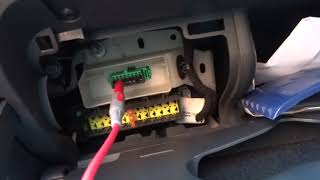
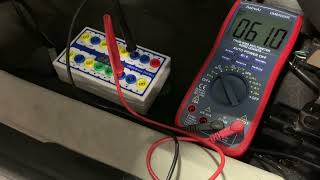
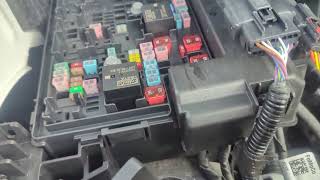
Shop the Parts Behind U2050
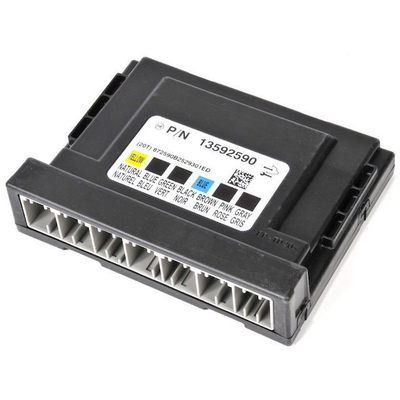
Below are the parts most often responsible for code U2050, ranked by how frequently each one is the actual culprit (per the diagnosis above). Tap any to see what we have for your vehicle.



The information in this article is provided for general reference and educational purposes only. Vehicle specifications, procedures, and part compatibility can vary by production date, trim level, and region. Always consult your vehicle's factory service manual and verify part numbers before purchasing or performing repairs. Safety-critical components such as airbags, seat belts, and braking systems should be installed by a qualified professional.
- 🧭 Diagnostic Flowchart
- 🎬 Helpful Videos
- 🛍️ Shop This Part
- What Does U2050 Mean?
- Can I Drive With U2050?
- Common Causes
- Symptoms
- Common Fixes & Costs
- DIY vs Professional
- Used vs. New Parts: Buying Guide
- What Happens If You Wait — Timeline
- Cost of Not Fixing It
- Diagnosis Steps
- When This Code Triggers (Freeze-Frame Conditions)
- Related Codes
- Climate & Environmental Factors
- How to Talk to a Mechanic About This Code
- Where to Take It: Dealer vs Independent vs Chain
- When to Walk Away From the Repair
- What Scan Tool You Need for This Code
- How to Clear the Code After You Fix It
- Will This Fail Emissions / State Inspection?
- Most Commonly Affected Vehicles
- Manufacturer-Specific Notes
- Real Owner Stories
- 2019 Mazda3 with U2050:55
- 2009 Ford F-250 Super Duty with No-Start
- 2014 Ford F-150 with Intermittent Electrical Issues
- How to Prevent This Code From Triggering
- Frequently Asked Questions
- Can a low battery cause code U2050?
- Why did my car not start and show dashes on the odometer?
- What does 'No Application Present' mean for a U2050 code?
- My mechanic wants to replace a module right away. What should I ask them?
- Can an aftermarket tuner or performance chip cause a U2050 code?
- My mechanic wants to replace a module. Does it need to be programmed?
- Is U2050 a serious problem?
- Can I fix code U2050 myself?
- Key Takeaways
- 🎟️ Get 5% Off