

U2101 on 2002-2006 Cadillac Escalade: Incompatible Module Programming Causes and Fixes
Code U2101 on a 2002-2006 Escalade means a control module has incorrect software, usually after being replaced without proper programming. The most common culprits are the Body Control Module (BCM) or ABS module (EBCM). The fix requires a GM-specific scan tool, like a Tech 2 or an affordable alternative like the VXDIAG VCX Nano, to program the module to your vehicle's VIN.
- U2101 means a module was replaced without being programmed to your Escalade's VIN.
- This is a software problem, not a hardware problem. Do not replace the module again; it needs to be programmed.
- The most common culprits on this truck are the Body Control Module (BCM) or the ABS module (EBCM).
- A professional-grade scan tool (like a GM Tech 2) is required to perform the programming. This is not a DIY-friendly fix without the proper tools.
- Always address U2101 before any other 'U' (communication) codes, as it is the root cause.
What's Unique About the 2002-2006 Cadillac Escalade
The 2002-2006 Escalade belongs to the GMT800 platform, which relies heavily on a Class 2 data network for communication between modules like the Body Control Module (BCM), ABS module (EBCM), and Instrument Panel Cluster (IPC). 🎬 Watch: Top 5 common problems for 2nd gen Escalades These specific modules are known failure points on this platform. Unlike a simple sensor, replacing one of these modules is not a plug-and-play job. The U2101 code is the vehicle's direct way of telling you that a module replacement was performed incorrectly without the mandatory, VIN-specific programming step, which is a hallmark issue for this entire family of trucks and SUVs.
Symptoms You May Notice
- Check Engine Light is on
- ABS and/or Traction Control warning lights are illuminated
- "Service Stability System" message on the Driver Information Center (DIC)
- Security light is on or flashing
- Vehicle will not crank or start (Passlock system activated)
- Erratic behavior of interior electronics (radio, power locks, interior lights, chimes).
- Speedometer and other gauges are inoperative or sweep erratically.
- Message center may display warnings like 'Service Brake System'
- Inability to communicate with a specific module using a scan tool
- Replacing a module a second time. The problem is almost never the new part itself, but the lack of programming.
- Chasing 'Lost Communication' codes (U0100, U0121, U0140, etc.) before addressing U2101. The incompatible module is the source of the other communication codes; fix the U2101 first, and the others will likely resolve.
Most Likely Causes
- Replaced Body Control Module (BCM) Not Programmed 🔴 High Probability → Shop Body Control Module The BCM is a very common failure item on GMT800 trucks, leading to many electrical gremlins. Owners often replace it to solve these issues but are unaware that programming is required. Improper removal (disconnecting a BCM ground while power is supplied) can also damage the module per GM TSB #07-08-47-004D.
How to confirm: Use a professional scan tool to check for communication with the BCM. Ask if the BCM has been replaced recently. If it has, and the U2101 code is present, it's the cause. Often, the radio will be locked and display 'CAL' or 'LOC'.
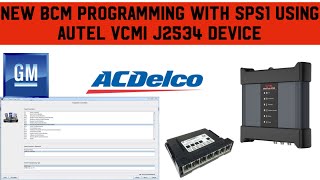
Typical fix: The BCM must be programmed with the vehicle's correct VIN and options using a GM Tech 2 or equivalent J2534 device with a subscription to GM's SPS2 software. This is often followed by a 30-minute security relearn procedure to sync it with the ignition key.
Est. part cost: $0 (Programming Labor Only) - Replaced Electronic Brake Control Module (EBCM / ABS Module) Not Programmed 🟡 Medium Probability → Shop ABS Control Module The Kelsey-Hayes 325 ABS module used on these trucks is another known failure point, often losing communication due to internal solder joint failures 🎬 See how to fix common ABS module internal faults on the main power relay, which can set a C0265 code before the module fails completely. When a used or new module is installed, it must be configured.
How to confirm: Scan the vehicle for codes. If U2101 is present along with ABS/Traction lights and other codes like U1040 (Lost Communication with EBCM), the ABS module is the likely source. Confirm if the module was recently replaced. A user on Tahoe Yukon Forum described this exact scenario, where a new module worked but threw lights until programmed.
Typical fix: Program the replacement ABS module using a GM-specific scan tool. In many cases, the original module can be sent to a specialist like Circuit Board Medics or XeMODeX for repair, which fixes the common internal faults and avoids the need for reprogramming.
Est. part cost: $0 (Programming Labor Only) - Damaged Wiring or Poor Connection ⚪ Low Probability While less common than module failure, wiring harnesses can chafe or connectors can become corroded, especially at the main transmission connector, under-dash splice packs, or at module ground points. TSB #PIT5405C on later models highlights the importance of clean grounds like G218 for network stability.
How to confirm: Visually inspect the wiring harness going to the suspect module (BCM, EBCM). Check for clean, tight power and ground connections. Test the Class 2 data line (typically a dark green wire at Pin 2 of the DLC) for correct voltage; it should fluctuate rapidly, averaging around 7V when active and dropping to 0V when inactive.
Typical fix: Repair the damaged section of wire or clean the corroded ground connection. Apply dielectric grease to connectors to prevent future moisture intrusion.
Est. part cost: $5-$25
Rare But Worth Checking
- Incorrect Part Number Installed: A module from a different year or model (e.g., a non-Stabilitrak EBCM into a Stabilitrak-equipped truck) may have been installed. Even if it physically fits, it may not be compatible with the vehicle's software, making programming impossible. Always match the service number on the module.
- Failed Instrument Panel Cluster (IPC): → Shop Instrument Cluster The instrument cluster is also a module on the data bus. Failures of the cluster's internal circuit board are common on GMT800s, causing erratic gauge behavior, and can disrupt network communication, though this is less likely to set a U2101 specifically.
- Aftermarket Radio Installation: If an aftermarket radio adapter was installed incorrectly, it can interfere with or short the Class 2 data line. The radio uses this line for speed-compensated volume and anti-theft features. If the code appeared after a stereo upgrade, inspect the radio wiring harness.
Diagnosis Steps
- Connect a professional, bidirectional scan tool capable of GM-specific programming (e.g., Tech 2, VXDIAG VCX Nano with Tech2Win/SPS2).
- Scan all modules for codes. Note which modules are reporting 'Lost Communication' and which module is storing the U2101 code. The module storing U2101 is the one with the configuration mismatch.
- Determine if any control modules (especially the BCM or ABS module) have been recently replaced. If yes, that module is the primary suspect and requires programming.
- If a module does not communicate at all, check its dedicated fuses in the underhood and interior fuse panels.
- If fuses are good, access the module and verify it is receiving battery voltage and has a clean, solid ground connection. Per TSB #07-08-47-004D, improper ground removal can damage the BCM.
- If power and ground are good, inspect the Class 2 Serial Data wire (usually dark green) for continuity and check for shorts to power or ground. You can check for activity on this wire at Pin 2 of the Data Link Connector (DLC).
- If programming a replacement BCM, perform the 30-Minute Passlock Relearn Procedure: 🎬 Watch: Step-by-step guide to the GM security relearn process 1. Turn key to ON, then attempt to START. Engine will stall, and Security light will be on. 2. Leave key in the ON position for 10 minutes until the Security light turns off. 3. Turn key OFF for 5 seconds. 4. Repeat steps 2-3 two more times for a total of 3 cycles / 30 minutes. 5. After the third cycle, the vehicle should start.
- If wiring, power, and ground are all confirmed good, and the module was not recently replaced, the module itself has likely failed internally and needs to be replaced and then programmed.
Parts You'll Likely Need
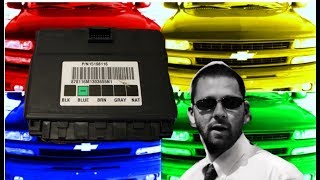
- Body Control Module (BCM) Programming Service — This is not a physical part, but the labor service required to configure a replacement BCM to the vehicle's VIN. This is the most common resolution for a U2101 code related to the BCM.
OEM price range: $150-$300 - Body Control Module (BCM)
(OEM #15116085, 15189241, 15795383 (Verify by VIN))— The original BCM fails frequently on these trucks. A replacement (new or used) is needed if the original is internally damaged. It will always require programming.
Trusted brands: ACDelco (OEM)
OEM price range: $250-$400
Aftermarket price range: $150-$250 (Used) - Electronic Brake Control Module (EBCM) Repair Service — If the EBCM has failed (often setting a C0265), sending the original unit for repair is often a better choice than replacing it. The repaired original module does not require reprogramming, saving time and money.
Trusted brands: Circuit Board Medics, XeMODeX, Cheap ABS Repair
Aftermarket price range: $100-$200
Related Codes That Often Appear With This One
- U0140 — Stands for 'Lost Communication With Body Control Module'. If the BCM is the incompatible module, other computers on the network will log this code because they can't talk to it.
- U0121 — Stands for 'Lost Communication With Anti-Lock Brake System (ABS) Control Module'. If the EBCM/ABS module is the incompatible part, this code will be set by other modules.
- U1000 — A general Class 2 Communication Malfunction code. It indicates a general network problem, which is caused by the specific module that set the U2101.
- C0265 — Stands for 'EBCM Motor Relay Circuit'. This code often precedes a total EBCM failure and indicates a fault with the internal relay, commonly due to bad solder joints on the Kelsey-Hayes 325 module.
Technical Service Bulletins (TSBs) & Recalls
- GM TSB #07-08-47-004D: Informs technicians that the Body Control Module (BCM) can be internally damaged if a BCM ground is removed while the module is still connected to battery power. It stresses the importance of disconnecting the negative battery cable first.
Platform-Specific Known Issues
- The GMT800 platform's heavy reliance on the Class 2 data bus for core functions makes it particularly vulnerable to network-down situations from a single faulty or unprogrammed module. The BCM and EBCM are the most common points of failure that lead to a U2101 code.
Mechanic-Grade Diagnostic Values
- Class 2 Serial Data Line Voltage (at DLC Pin 2) - Key On — expected: Rapidly fluctuating voltage, averaging 7V when active. A Digital Multimeter (DMM) may only show 2-3V due to the rapid pulsing.. Failure: A steady 0V indicates an open or short to ground. A steady 12V indicates a short to power. A steady voltage of ~1.7V can indicate corrosion at a splice pack.
- Class 2 Serial Data Line Resistance to Ground — expected: High resistance (kOhms or MOhms).. Failure: Low resistance or continuity (near 0 Ohms) indicates the data line is shorted to ground somewhere in the harness or within a module.
Scan Tool Commands That Help
- GM Tech 2: SPECIAL FUNCTIONS -> NEW BCM SETUP — When installing a new or used BCM. This function is used to configure the BCM with the correct RPO codes and vehicle options before performing the security relearn.
- Techline Connect (SPS2) with J2534 device: Service Programming System (SPS) -> Body Control Module Programming — This is the modern method for programming a new or used BCM. It downloads the latest correct calibration from GM's servers based on the VIN and writes it to the module.
- Techline Connect (SPS2) with J2534 device: Setup SDM Primary Key in BCM — This function is often required after BCM programming to synchronize the new BCM with the Sensing and Diagnostic Module (airbag computer), which resolves an airbag warning light.
Wiring & Ground Locations
- SP205 — Splice pack located in the driver's side kick panel area, above the driver's left knee. The lower hush panel may need to be removed for access.. This is a central junction for the Class 2 Serial Data line. Corrosion or moisture in SP205 is a well-known cause of network-wide communication failures, which can be misdiagnosed as a single failed module.
- BCM Location — Under the driver's side dashboard, near the steering column.. Physical access is required to check power, ground, and data line connections directly at the module, and to replace it if necessary.
- EBCM Location — On the driver's side inner frame rail, below the engine bay.. Physical access is needed to check connections or to remove the module for repair or replacement.
- G103 — Located at the left rear of the engine compartment on the cowl, above the brake booster.. This is a primary ground point for several critical modules, including the BCM and Instrument Panel Cluster (IPC). A poor connection here can cause widespread electrical issues that mimic module failure.
Real Owner Repair Stories
- GM-Trucks.com Forum User (GMT800 Truck (similar platform)) — Erratic electrical behavior where symptoms changed based on the gear shifter's position.
❌ Tried (didn't work) Extensive electrical testing, considering BCM replacement.
✅ What actually fixed it Found and repaired a broken ground wire for the transmission shift position switch, located on the rear of the passenger side cylinder head. The faulty ground was causing voltage to backfeed through other circuits, creating symptoms that mimicked a BCM failure. - GMTNation Forum User (2004 Tahoe AWD LT) — Inability to communicate with the vehicle via OBD-II port. Scan tool showed Pin 2 (Class 2 Data) was shorted to ground.
❌ Tried (didn't work) Checking fuses, inspecting underhood fuse box wiring.
✅ What actually fixed it The user isolated the problem by unplugging modules one by one. When the Driver Door Module (DDM) was unplugged, communication with the rest of the truck was restored. This indicated the fault (short to ground) was in the DDM or its wiring harness.
Documented NHTSA Reports
- While U2101 is often a programming code for GM, cross-manufacturer records like NHTSA ODI #11581420 describe a vehicle with a suite of communication codes including U0121, U0140, and U2101 accompanied by a strange beeping warning chime.
- NHTSA ODI #10694215 notes a case where U2101 was present alongside a steering-related code (C1B00), where the technician indicated the electronic steering rack required replacement.
"I Checked Everything" — The Actual Cause
- In one documented case, a vehicle exhibited all the signs of a BCM or network failure. After extensive diagnostics pointed towards module replacement, the actual cause was discovered to be a broken ground wire for the transmission range switch on the back of the cylinder head. This seemingly unrelated ground caused unpredictable electrical back-feeding that brought down the data network, a problem that would not be found by checking the BCM's direct power, ground, or data lines.
OEM Part Supersession History
Various→Various— Part revision/improvement
Heads up: BCMs for this platform are not universally interchangeable. A module from a Crew Cab or SUV (like the Escalade) has pins in the J6 connector for rear features and will not work correctly if sourced from a regular or extended cab truck, and vice-versa. For 2003-2007 Classic models, a BCM from a 2004 donor vehicle is considered the most reliable replacement.
Model Year Variations Within This Range
- 2002-2006: The BCM for an Escalade (an SUV) is physically different from one for a regular or extended cab pickup truck due to different pinouts for rear-body features. When sourcing a used part, it must come from another SUV or a Crew Cab truck.
- 2005-2006: For the 2005 model year, the Escalade received a restyled gauge cluster and new interior trim. While the U2101 code is not directly tied to the cluster, a failing Instrument Panel Cluster (IPC) can cause network communication issues, and diagnosing these may differ slightly on 2005-2006 models due to the updated hardware.
Diagnostic Flowchart
Used vs. New Parts: Buying Guide for This Vehicle
When a used part is the smart pick: A used Body Control Module (BCM) is a very smart choice. Both new and used BCMs require programming with a GM scan tool and software subscription, so there is no labor advantage to buying new. A used module from a salvage yard provides the necessary hardware at a much lower cost.
Donor-vehicle mileage cap: roughly under 175000 miles for the part to have meaningful remaining life.
What to inspect on the donor part:
- Ensure the donor vehicle is another GMT800 SUV (Tahoe, Yukon, Suburban) or Crew Cab pickup to ensure BCM compatibility.
- If possible, source the BCM from a 2004 model year donor, as they are reported to have the lowest failure rates for this platform.
- Inspect the module's connectors for any signs of corrosion, bent pins, or heat damage.
- Avoid parts from vehicles with signs of major water intrusion (flood cars).
Aftermarket brands forum-validated for this vehicle:
- For the EBCM (ABS module), sending your original unit to a specialist rebuilder like Circuit Board Medics, XeMODeX, or Atlanta Speedometer is highly recommended over buying a used part. They fix the common internal solder joint failures and typically offer a warranty, and it avoids the need for reprogramming.
- For the BCM, services like GMFlash.com or Spartan Autoworx can provide a pre-programmed BCM (if you send them your VIN and mileage), which can simplify the installation process.
Brands owners have reported issues with on this vehicle:
- Be cautious of the cheapest EBCM 'repair' services that may only reflow existing solder rather than replacing known-bad components like the internal power relay and transistors.
Real Owner Stories
Aggregated from forums and TSBs cited above. Mileages and costs reflect what owners reported in those sources.
2002-2006 Cadillac Escalade
Symptoms: After replacing a failed EBCM (ABS module) with a used one, communication with the module was restored, but the ABS and Traction warning lights remained on.
What fixed it: The U2101 code was resolved by having the replacement EBCM programmed with the vehicle's specific VIN using a proper scan tool.
Source hint: Tahoe Yukon Forum - 'The EBCM Nightmare, & how to get the module programmed.'
2002-2006 Cadillac Escalade
Symptoms: Vehicle exhibited multiple electrical issues, including erratic behavior of the radio and power locks, a flashing security light, and a no-crank, no-start condition due to the Passlock system being activated.
What fixed it: The root cause was a failed Body Control Module (BCM). The fix involved replacing the BCM, programming it to the vehicle, and then performing the 30-minute Passlock security relearn procedure to sync the new module with the ignition key.
Source hint: YouTube - 'GMT800 TRUCKS BODY CONTROL MODULE BCM REPLACEMENT AND PROGRAMMING' by Spartan Autoworx
Related OBD-II Codes
Frequently Asked Questions
I'm replacing the Body Control Module (BCM) on my Escalade. Is there a specific procedure I need to follow to avoid damaging the new one?
I just replaced the ABS module in my 2005 Escalade and now the ABS and Traction Control lights are on with code U2101. Is the new part defective?
After installing a new BCM, my Escalade won't crank and the 'Security' light is on. What's wrong?
My Escalade's gauges are sweeping erratically and the radio is acting up. Could this be related to a U2101 code?
Can I use a standard code reader to program a new BCM or ABS module for my Escalade?
Is this U2101 programming issue also a problem on a similar year Chevy Tahoe or GMC Sierra?
Helpful Videos

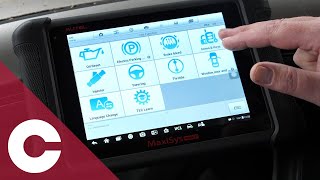
Used OEM Parts in Stock
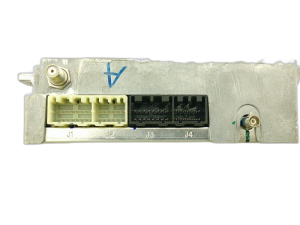
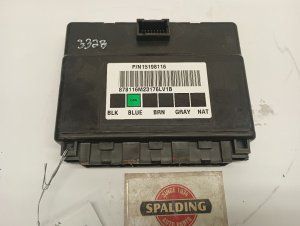
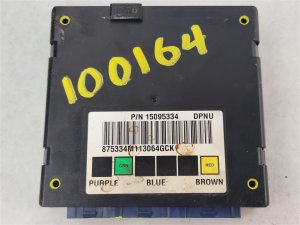
New Aftermarket Parts Available


The information in this article is provided for general reference and educational purposes only. Vehicle specifications, procedures, and part compatibility can vary by production date, trim level, and region. Always consult your vehicle's factory service manual and verify part numbers before purchasing or performing repairs. Safety-critical components such as airbags, seat belts, and braking systems should be installed by a qualified professional.
- Cadillac Escalade:
- 🧭 Diagnostic Flowchart
- 🎬 Helpful Videos
- 🛍️ Shop This Part
- What's Unique About the 2002-2006 Cadillac Escalade
- Symptoms You May Notice
- Most Likely Causes
- Rare But Worth Checking
- Diagnosis Steps
- Parts You'll Likely Need
- Related Codes That Often Appear With This One
- Technical Service Bulletins (TSBs) & Recalls
- Platform-Specific Known Issues
- Mechanic-Grade Diagnostic Values
- Scan Tool Commands That Help
- Wiring & Ground Locations
- Real Owner Repair Stories
- Documented NHTSA Reports
- "I Checked Everything" — The Actual Cause
- OEM Part Supersession History
- Model Year Variations Within This Range
- Used vs. New Parts: Buying Guide for This Vehicle
- Real Owner Stories
- 2002-2006 Cadillac Escalade
- 2002-2006 Cadillac Escalade
- Related OBD-II Codes
- Frequently Asked Questions
- 🎟️ Get 5% Off