

U2101 on 2012-2015 Chevrolet Captiva Sport: Incompatible Module Configuration Causes and Fixes
Code U2101 on a 2012-2015 Captiva Sport means a major electronic module, most often the Body Control Module (BCM), was replaced but not programmed to your vehicle's VIN. The fix requires professional programming with a GM-specific scan tool; this is not a parts failure but a software setup issue. Always check battery voltage and ground integrity on this platform before condemning any module.
- U2101 is a programming error, not a broken part. It means a module needs to be configured to the vehicle's VIN.
- This code almost always appears after a control module has been replaced.
- The fix requires GM-specific programming tools (GDS2/SPS); it is not a DIY-friendly repair without access to this equipment or a pre-programmed module.
- On the Captiva Sport, always check battery voltage and main ground connections before condemning any module, as poor electrical integrity is a known platform weakness that can cause similar symptoms.
What's Unique About the 2012-2015 Chevrolet Captiva Sport
The Captiva Sport, a rebadged Saturn Vue primarily sold to fleet and rental companies, is known for being highly sensitive to voltage fluctuations. While U2101 is strictly a programming code, owners frequently experience a wide range of electrical issues and communication fault codes (like U0101) due to underlying voltage problems caused by failing battery cables or poor grounds. Therefore, any network code on this vehicle demands a thorough inspection of the battery, alternator, and especially the main power and ground cables before assuming a module is faulty.
Generation note: The 2012-2015 Chevrolet Captiva Sport is a continuation of the second-generation Saturn Vue (2008-2010), moved to Chevrolet branding for fleet sales after the Saturn brand was discontinued. It shares the same GM Theta platform and many components, making issues and fixes largely applicable to both.
Symptoms You May Notice
- Check Engine Light is on
- Service StabiliTrak / Service Traction Control warning lights are on (if ABS module is the cause)
- Erratic behavior of interior/exterior lights, power locks, or radio (if BCM is the cause)
- Vehicle may not start (if BCM is the cause)
- Airbag light may be on (if BCM or SDM is involved and requires setup)
- Key stuck in ignition
- Instrument cluster gauges behaving erratically or not working
- Replacing the module a second time without attempting to program it.
- Replacing other modules that have lost communication with the unprogrammed module (e.g., replacing an ECM when the BCM is the actual problem).
- Assuming the module is faulty when the root cause is a poor ground connection or unstable battery voltage.
Most Likely Causes
- Replaced Control Module Not Programmed 🔴 High Probability Modern GM vehicles require VIN-specific programming for most major control modules to function. This is a required step after replacement that is often missed in DIY or non-specialist repairs.
How to confirm: Confirm if any modules (especially BCM, ABS, or radio) have been recently replaced. Use a professional scan tool (like a Tech 2 or GDS2) to check the VIN stored in the suspect module against the vehicle's actual VIN.
Typical fix: Program the module using the GM Service Programming System (SPS) or a compatible high-end scan tool. This must be done with a stable power supply to the vehicle.
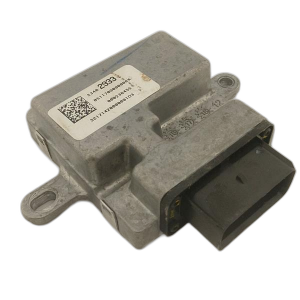
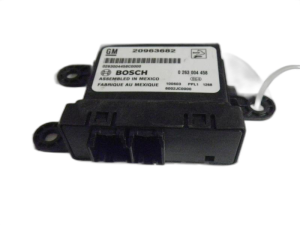
Est. part cost: $0 - Faulty Body Control Module (BCM) 🟡 Medium Probability → Shop Body Control Module The BCM on the Captiva Sport and its platform-mate, the Saturn Vue, is a common point of failure, leading to a wide array of electrical issues that necessitate its replacement, which then requires programming.
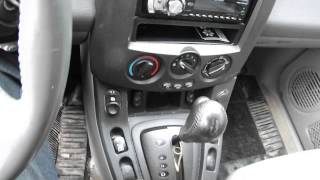
How to confirm: After ruling out programming, perform a full diagnostic on the BCM, checking for communication and testing power/ground circuits at the BCM connector. 🎬 See this video to help you locate the BCM on your vehicle. This is best done by a professional.
Typical fix: Replace the BCM and have the new unit professionally programmed to the vehicle's VIN. Some vendors sell pre-programmed BCMs that only require a security relearn procedure upon installation.
Est. part cost: $150-$300
Rare But Worth Checking
- Low or Unstable System Voltage: While low voltage typically sets communication loss codes (like U0101), the electrical instability on this platform is a known cause of widespread module issues. A module may act erratically due to poor power/ground, leading to a misdiagnosis of module failure. Always verify voltage stability and check main battery cables before replacing modules.
- Incorrect Part Installed: A module from a different model or trim level may have been installed. Even if it plugs in, its internal hardware may be incompatible, making correct programming impossible and setting a U2101 code. The BCM part number must match the vehicle's specific options.
- Faulty or Damaged Wiring/Connectors: Corrosion or damage to the wiring or connector pins for the affected module can prevent successful programming or communication, leading to a U2101 code. This is particularly relevant for modules exposed to the elements, like the TCM.
Diagnosis Steps
- Scan for All Codes: Use a professional-grade scanner to read codes from all modules, not just the engine computer. Note which module is reporting the U2101 and which modules are offline.
- Check Vehicle History: Determine if any control modules (BCM, ABS, radio, TCM, etc.) have been recently replaced.
- Verify System Voltage: With the vehicle running, monitor the charging system voltage. It should be stable, between 13.5 and 14.8 volts. Turn on heavy loads like the headlights, rear defrost, and A/C with the fan on high. Watch for significant voltage drops.
- Inspect Battery Cables and Grounds: Thoroughly inspect the positive and negative battery cables for corrosion, swelling, or damage. Follow the main ground cable from the battery to the chassis and engine block, ensuring connections are clean and tight. 🎬 Watch: How to properly clean and fix your car's ground connections. Poor grounds are a known issue on this platform.
- Attempt Reprogramming: If a module was replaced or if the history is unknown, the first step is to attempt to reprogram the suspect module with GM's Service Programming System (SPS). This will resolve the issue if it's purely a software mismatch.
- Diagnose the Module: If reprogramming fails or if the code returns, the module itself may be faulty or the incorrect part number for the vehicle. A technician will need to test the power, ground, and communication lines at the module's connector to confirm before condemning the part.
Parts You'll Likely Need
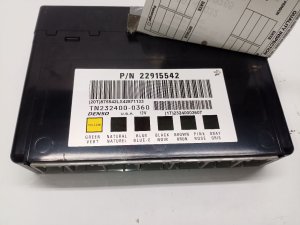
- Body Control Module (BCM)
(OEM #22860591 (Verify with VIN, many other numbers exist))— This module is a common failure point for electrical issues on the Captiva Sport. Its replacement is a frequent trigger for the U2101 code if not programmed. This part number is also used across many other GM vehicles from the same era, including the Equinox, Traverse, and Acadia.
Trusted brands: ACDelco (OEM)
OEM price range: $200-$300
Aftermarket price range: $150-$250 (Often sold refurbished and pre-programmed to your VIN by online vendors, which can be a viable DIY option if a security relearn is all that's needed post-installation).
Related Codes That Often Appear With This One
- U0100-U0500 — These codes indicate 'Lost Communication' with various modules. A U2101 configuration error in a primary module (like the BCM or TCM) can prevent it from communicating properly, causing other modules to report they can't hear it.
- C0551 — This is a GM-specific code for 'VIN Not Programmed' in a module, often seen in the ABS or BCM. It is a direct relative of the more general U2101 code.
- B1001 — This code often means 'Option Configuration Error' and can set in the SDM (Airbag Module) if the BCM is replaced and the 'Setup SDM Primary Key in BCM' procedure is not performed after programming. This will cause the airbag light to illuminate.
Technical Service Bulletins (TSBs) & Recalls
- SSM 47843: While a Ford TSB, it is relevant as it defines DTCs U2100 and U2101 as indicating a module has not been properly configured and requires a 'Programmable Module Installation' (PMI) procedure, which is the same root cause and fix on GM vehicles.
- 18-NA-037: A GM TSB for a different vehicle that sets a P2101 (a related throttle code, not U2101) due to a software anomaly. It highlights the critical importance of maintaining stable battery voltage during any reprogramming event, a key step in fixing U2101.
Platform-Specific Known Issues
- This platform is known to suffer from electrical problems caused by poor voltage regulation from failing battery cables or grounds, which can mimic module failure. Owners have reported fixing numerous random electrical faults by replacing the main battery cables or adding supplemental ground wires.
Documented NHTSA Reports
While U2101 is a common configuration code for GM vehicles, reports from other manufacturers highlight how this code often appears alongside steering and safety system failures. For instance, NHTSA ODI #10694215 describes a situation where U2101 was present alongside a steering code, leading to a recommendation to replace the electronic steering rack. In another instance, NHTSA ODI #11581420 notes that U2101 appeared with several other communication codes (U0121, U0140) and was accompanied by a strange beeping noise or warning chime without corresponding dashboard lights.
Mechanic-Grade Diagnostic Values
- High-Speed GMLAN Bus Resistance — expected: Approximately 60 Ω (measured between Pin 6 and Pin 14 of the DLC with battery disconnected).. Failure: A reading of 120 Ω indicates an open in one of the two 120 Ω termination resistors. A reading of 0 Ω indicates a short between the high and low speed CAN lines.
- High-Speed GMLAN Bus Voltage (Key On, Engine Off) — expected: CAN High (Pin 6 at DLC) should be ~2.6V, and CAN Low (Pin 14 at DLC) should be ~2.3V at rest. During communication, CAN High toggles to ~3.5V and CAN Low toggles to ~1.5V.. Failure: Voltages that are stuck high or low, or do not mirror each other during activity, indicate a bus problem (short to power/ground, open circuit).
- Low-Speed GMLAN Bus Voltage (Key On, Engine Off) — expected: This is a single-wire bus (Pin 1 at DLC). Voltage toggles between ~0.2V (recessive state) and ~4.0V+ (dominant state).. Failure: A stuck-high or stuck-low voltage indicates a fault on the low-speed bus.
- Programming System Voltage — expected: Must be stable and greater than 12.0V but less than 16.0V during the entire programming event.. Failure: Any fluctuation, spike, or drop below 12.0V can cause programming to fail, often resulting in SPS errors like E4399 or E4403.
Scan Tool Commands That Help
- GM GDS2/SPS (Service Programming System): Replace and Program ECU — This is the primary function used when a new, blank control module has been installed. It downloads the correct VIN-specific software and calibrations from GM's servers into the module.
- GM GDS2/SPS (Service Programming System): Reprogram ECU — Used to update the software on an existing, correctly configured module. This is generally not the correct procedure for a U2101 code caused by a swapped module, as SPS may refuse to overwrite a module with a different VIN.
- GM GDS2: Module Setup > Set SDM Primary Key in BCM — This is a mandatory step after replacing and programming the BCM. It synchronizes the new BCM with the existing Sensing and Diagnostic Module (airbag computer). Failure to perform this step will result in an airbag warning light and a B1001 code.
- GM GDS2/Tech2: Vehicle Anti-Theft Relearn — After BCM replacement and programming, a relearn procedure may be required to synchronize the immobilizer system with the new module before the vehicle will start.
Wiring & Ground Locations
- Body Control Module (BCM) — Located in the center console, forward of the gear shift lever, under the trim. Access requires removing the radio/HVAC control bezel and center console side panels.. This is the most common module to be replaced that will cause a U2101 if not programmed. It acts as a gateway between the high-speed and low-speed CAN buses.
- G302 — Under the driver's seat.. This is a major interior ground point for multiple modules and components. Poor connection here can cause a wide range of intermittent electrical issues that could be misdiagnosed as a faulty BCM.
- G105 / G110 — G105 is at the left rear of the engine; G110 is for the 3.0L engine.. These are primary engine and chassis grounds. A poor connection here can cause voltage instability and electrical noise, disrupting module communication and potentially causing programming failures.
- Data Link Connector (DLC) Pins — Under the driver's side dashboard.. Pin 1: Low-Speed GMLAN. Pin 6: High-Speed GMLAN (+). Pin 14: High-Speed GMLAN (-). These are the direct access points for testing bus voltage and resistance.
Real Owner Repair Stories
- SaturnFans.com Forum user 'Hendrickx' (2007 Saturn Vue (Direct platform-mate)) — BCM failed.
❌ Tried (didn't work) A GM dealer attempted to program two different replacement BCMs.
✅ What actually fixed it The story was unresolved, but highlights a critical edge case: The dealer's technician concluded the programming failure was due to a faulty software download from GM's corporate servers, not the BCMs themselves. The vehicle was stuck at the dealership for over a month while waiting for GM to provide a solution. - Reddit user r/MechanicAdvice (2012 Chevy Captiva LTZ Sport) — Vehicle "took a shit randomly out of no where".
❌ Tried (didn't work) Owner could not diagnose the issue.
✅ What actually fixed it The Chevrolet dealership diagnosed a failed BCM and possibly ECM. The user's query confirms the core problem: asking if used modules from eBay would need reprogramming. The answer from the community and established knowledge is yes, they absolutely require programming, which is why the dealer quoted $1400 for the repair.
OEM Part Supersession History
Multiple (e.g., 15921352, 20864767, etc.)→22860591— Standard part consolidation and updates by GM.
Heads up: Part number 22860591 is a widely used BCM across dozens of GM models from 2006-2015, including the Captiva Sport, Saturn Vue, Equinox, Acadia, Traverse, Impala, and more. While physically identical, it is a blank slate. Installing a used 22860591 from a GMC Acadia into a Captiva Sport without complete VIN and RPO reprogramming will absolutely cause a U2101 code and system malfunction.
Diagnostic Flowchart
Other Known Issues on This Vehicle
Issues unrelated to this code that are worth knowing about as an owner of this generation:
- Excessive Oil Consumption (2.4L Ecotec) 🔴 High — Very common. Piston rings are a known issue, leading to oil consumption of a quart or more between changes. Can lead to engine damage if oil level is not monitored closely. (Ref: While no specific recall for the Captiva Sport, GM has had class-action lawsuits and special coverage for this engine in other models.)
- Timing Chain Stretch/Failure (2.4L & 3.0L) 🔴 High — Common, especially on engines where oil levels have run low due to consumption. A rattling noise on startup is a key symptom. Failure can cause catastrophic engine damage.
- Transmission Failure (6T40/6T45) 🟠 Medium → Shop Transmission Assembly — Frequently reported, particularly in the 2012 model year. Symptoms include harsh shifting, slipping, and complete failure. Often related to internal component wear or TCM issues.
- General Electrical Problems 🟠 Medium — Widespread complaints of random electrical issues, including stalling, instrument cluster malfunctions, and warning lights. Often traced back to poor grounds or failing battery cables, separate from specific module failures.
Used vs. New Parts: Buying Guide for This Vehicle
When a used part is the smart pick: A used BCM is only a smart choice if purchased from a specialized vendor that explicitly offers VIN and RPO pre-programming before shipping. A raw, unprogrammed BCM from a junkyard is not a viable DIY part, as it will have the donor vehicle's VIN and cause the exact U2101 code you are trying to fix.
Donor-vehicle mileage cap: roughly under 150000 miles for the part to have meaningful remaining life.
What to inspect on the donor part:
- Verify the vendor guarantees VIN programming.
- Check for any signs of water intrusion or corrosion on the case and connector pins.
- Ensure the part number is listed as compatible, even if it will be reprogrammed (e.g., 22860591).
OEM-only on this vehicle (don't cheap out):
- The programming software (GM SPS) is OEM-only. While the physical module can be new, used, or remanufactured, the critical programming step requires dealer-level access.
Aftermarket brands forum-validated for this vehicle:
- ACDelco (New OEM)
- Online vendors like Garrett Tuning or FS1 who specialize in pre-programming used or remanufactured modules to a supplied VIN are a well-documented alternative to dealer replacement.
Brands owners have reported issues with on this vehicle:
- Any used BCM from a general salvage yard or eBay seller that does not offer pre-programming services. These parts cannot be installed in a 'plug-and-play' manner.
Real Owner Stories
Aggregated from forums and TSBs cited above. Mileages and costs reflect what owners reported in those sources.
2012 Chevrolet Captiva Sport
Symptoms: Widespread electrical issues including stalling, flickering lights, and multiple warning lights on the dashboard.
What fixed it: Improving the vehicle's ground connections by adding a supplemental ground wire to the alternator bracket or shock tower.
Source hint: ChevroletForum.com thread titled '2012 Captiva electrical issues'
2008-2010 Saturn Vue
Symptoms: Malfunctioning lights, security system issues, and a no-start condition after the BCM failed.
What fixed it: Replacement of the BCM followed by dealer programming using a Tech 2 tool.
Source hint: SaturnFans.com Forum threads regarding BCM failure and replacement
Related OBD-II Codes
Frequently Asked Questions
I just replaced the BCM on my 2012 Captiva Sport with a used one from a junkyard, and now I have code U2101. Why?
Can I use a standard OBD-II scanner to fix the U2101 code on my Captiva?
My Captiva Sport has erratic lights and won't start; could this be related to U2101?
Does GM TSB 18-NA-037 apply to my U2101 communication issue?
Is there a way to avoid the dealership for a BCM replacement on a 2013 Captiva Sport?
Could a bad battery cable cause U2101 symptoms on my Captiva?
Helpful Videos

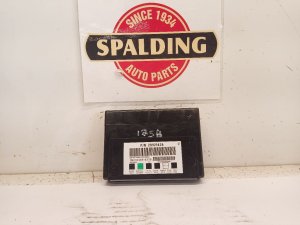
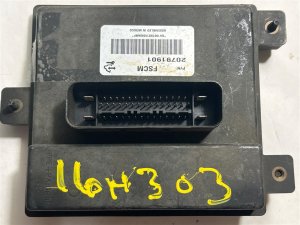
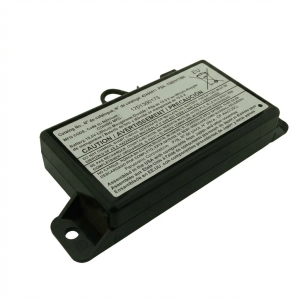
We Have This Part in Stock

The information in this article is provided for general reference and educational purposes only. Vehicle specifications, procedures, and part compatibility can vary by production date, trim level, and region. Always consult your vehicle's factory service manual and verify part numbers before purchasing or performing repairs. Safety-critical components such as airbags, seat belts, and braking systems should be installed by a qualified professional.
- Chevrolet Captiva Sport:
- 🧭 Diagnostic Flowchart
- 🎬 Helpful Videos
- 🛍️ Shop This Part
- What's Unique About the 2012-2015 Chevrolet Captiva Sport
- Symptoms You May Notice
- Most Likely Causes
- Rare But Worth Checking
- Diagnosis Steps
- Parts You'll Likely Need
- Related Codes That Often Appear With This One
- Technical Service Bulletins (TSBs) & Recalls
- Platform-Specific Known Issues
- Documented NHTSA Reports
- Mechanic-Grade Diagnostic Values
- Scan Tool Commands That Help
- Wiring & Ground Locations
- Real Owner Repair Stories
- OEM Part Supersession History
- Other Known Issues on This Vehicle
- Used vs. New Parts: Buying Guide for This Vehicle
- Real Owner Stories
- 2012 Chevrolet Captiva Sport
- 2008-2010 Saturn Vue
- Related OBD-II Codes
- Frequently Asked Questions
- 🎟️ Get 5% Off