

U2101 on 2005-2010 Chevrolet Cobalt: Incompatible Module Configuration Causes and Fixes
This code means a module isn't configured correctly, but on a Cobalt, it's often triggered by a failing Transmission Control Module (TCM) or a bad ground wire. Check for poor transmission shifting and a 'Power Steering' dash message; the most common fix is repairing a corroded ground wire near the transmission or adding a new ground to the TCM.
- Before suspecting an expensive module failure, ALWAYS inspect and clean the main ground wires, especially the bundle on the transmission case.
- Symptoms like a 'Power Steering' message, no speedometer, and hard shifting strongly point to a communication failure with the Transmission Control Module (TCM).
- Adding a new, clean ground wire directly to the TCM's metal case is a common, effective, and cheap DIY fix.
- If you replace a module like the TCM or BCM, it MUST be professionally programmed to your car's VIN, or the U2101 code will appear immediately.
What's Unique About the 2005-2010 Chevrolet Cobalt
While the code technically points to a software programming issue, the 2005-2010 Cobalt and its platform mates are well-known for electrical problems that cause this code to appear. The most common culprits are not incorrect software, but rather poor ground connections that corrode over time. Specifically, a bundle of ground wires designated as G105 and G107, bolted to the transmission case, is highly susceptible to corrosion. This starves modules like the TCM of a stable ground, causing them to stop communicating and leading other modules to report a network configuration error. Many owners fix these complex communication codes simply by cleaning these grounds or adding a new ground wire directly to the TCM.
Symptoms You May Notice
- "Power Steering" message appears on the driver information center
- Transmission shifts hard, erratically, or gets stuck in one gear
- Speedometer stops working or drops to zero intermittently
- Instrument cluster gauges behave erratically or go dead
- Check Engine Light, ABS, and/or Traction Control lights are on
- Engine may not crank or start
- Power door locks cycle on their own or stop working
- Security light is illuminated
- Replacing the TCM or BCM without first thoroughly checking all ground connections. Many expensive modules are replaced when the actual fault is a $1 repair of a corroded ground wire on the transmission case.
Most Likely Causes
- Corroded or Broken Ground Wires at Transmission 🔴 High Probability → Shop Transmission Assembly The main ground point for several modules, including the TCM, is a bundle of black wires (Grounds G105/G107) bolted to the transmission case, near the starter and below the fuse box. This area is exposed to moisture and road salt, causing severe corrosion that interrupts the ground path.
How to confirm: Locate the main ground stud on the top of the transmission housing, below the underhood fuse box. Inspect the bundle of black wires for green or white corrosion, or for wires that are physically broken or loose inside the single ring terminal. Wiggling these wires may cause the symptoms to appear or disappear.
Typical fix: Remove the 13mm or 15mm ground nut, disassemble the ring terminal, and thoroughly clean the wire ends, the stud, and the transmission case mating surface with a wire brush until shiny. It is often necessary to cut off the old terminal, strip the wires, and crimp on a new, high-quality ring terminal.
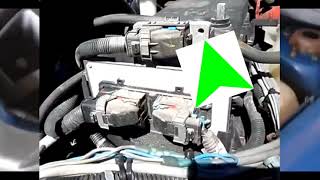
Est. part cost: $0-$10 - Failing or Poorly Grounded Transmission Control Module (TCM) 🟡 Medium Probability → Shop Transmission Assembly The TCM on these vehicles is known to suffer from internal failures and poor grounding through its case. It is located directly under the underhood fuse box. This causes it to lose communication with other modules, triggering network codes like U2101 and U0101.
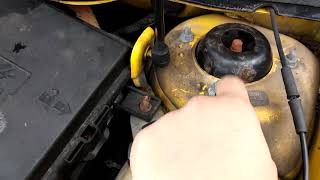
How to confirm: With the key on, check for communication with the TCM using a high-end scan tool. If the TCM is not responding, check for power and ground at its connector. A very common and effective DIY test is to add a supplementary ground wire from one of the TCM's metal case mounting bolts to a clean chassis ground point (like the xstrut tower bolt); if symptoms disappear, the TCM's ground path is faulty.
Typical fix: In many cases, adding a permanent ground wire from one of the TCM mounting bolts to the chassis resolves the issue. If the module is internally faulty, it must be replaced. A replacement TCM must be programmed to the vehicle's VIN.
Est. part cost: $50-$200 - Unprogrammed Replacement Module ⚪ Low Probability This occurs if a major control module (BCM, TCM, ECM, Radio) was recently replaced with a new or used part but was not programmed by a shop with GM-specific software.
How to confirm: Ask about the vehicle's recent repair history. If a module was just swapped, this is the likely cause. A scan tool capable of reading module VINs will show a mismatch.
Typical fix: The module must be programmed using a GM Tech 2, MDI, or equivalent J2534 passthrough tool with a subscription to GM's service programming system. This is typically a dealer or specialty shop service.
Est. part cost: $0 (labor only) - Failing Body Control Module (BCM) ⚪ Low Probability → Shop Body Control Module The BCM acts as a central hub for the communication network. Internal failures can cause widespread electrical chaos. GM Service Bulletin 07-08-47-004E warns that disconnecting BCM grounds without first disconnecting the battery can damage the module.
How to confirm: Diagnose by ruling out all other possibilities. Symptoms strongly pointing to the BCM include security system issues, no communication at the OBD-II port, and erratic function of interior lights, locks, and wipers.
Typical fix: Replace the BCM and have the new module programmed to the vehicle.
Est. part cost: $150-$300
Rare But Worth Checking
- Chafed or Broken CAN Bus Wiring: The communication wires (typically a twisted pair of tan and tan/black wires) can get chafed or corrode, especially in the harness under the fuse box or near the transmission. This requires a careful visual inspection of the harness and testing the network resistance with a multimeter (should be 60 ohms between pins 6 and 14 of the OBD-II port with the battery disconnected).
Diagnosis Steps
- Scan all modules for codes. Note which modules are reporting U2101 and which, if any, are not communicating at all (e.g., U0101 for the TCM).
- Visually inspect the main battery ground cable and the engine-to-chassis ground straps for tightness and corrosion.
- Locate the primary module ground bundle (G105/G107) on the transmission housing, just below and behind the underhood fuse box. Disassemble, inspect for broken strands, and thoroughly clean the terminals and mounting stud. Repair with a new ring terminal if necessary.
- Inspect the ground point G103, located under the driver-side headlamp assembly 🎬 Watch: A quick guide to finding all Cobalt ground locations., for corrosion.
- If symptoms point heavily to the TCM (hard shifting, no speedo), try adding a temporary ground wire from the metal case of the TCM to a clean chassis ground (like a strut tower bolt). If this resolves the issue, make it a permanent fix. 🎬 See how to properly repair the TCM ground connection.
- If grounds are good, inspect the wiring harness leading to the non-communicating module (often the TCM) for chafing, pinch points, or corrosion, particularly under the fuse box.
- With the battery disconnected, measure the resistance between Pin 6 (CAN High) and Pin 14 (CAN Low) at the OBD-II port. A healthy network will read approximately 60 Ohms. A reading of 120 Ohms indicates a break in the circuit or a missing terminating resistor (usually inside the ECM or BCM).
- If all wiring and grounds are confirmed good and a module is still offline, the module itself has likely failed and requires replacement and programming. 🎬 Watch: Step-by-step guide to replacing the Transmission Control Module.
Parts You'll Likely Need
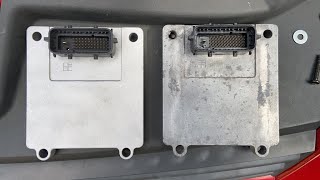
- Transmission Control Module (TCM)
(OEM #ACDelco 24252577 (Verify with VIN))— This module is a common failure point due to internal faults and poor grounding, causing network communication codes. Note: Part number varies by year and engine; always verify with VIN.
Trusted brands: ACDelco (OEM), Dorman
OEM price range: $200-$350
Aftermarket price range: $100-$250 - Ring Terminal and Wire — Needed to repair the corroded main ground on the transmission or to create a supplementary ground wire for the TCM.
Trusted brands: N/A
OEM price range: $1-$10
Aftermarket price range: $1-$10
Related Codes That Often Appear With This One
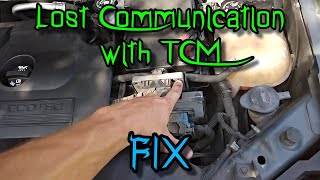
- U0101 — This code means 'Lost Communication with TCM'. It often appears with U2101 when a bad ground or faulty TCM is the root cause, as the module is physically dropping off the network.
- U2100 — This is a general 'Controller Area Network (CAN) Bus Communication' fault. It's a generic code indicating a network problem and is often set in multiple modules when a single module or wire fails.
- C0561 — This code relates to the ABS/Traction Control system being disabled. It's a consequence of the network failure, as the ABS module can't get the data it needs from the ECM or TCM.
Technical Service Bulletins (TSBs) & Recalls
- Addresses loss of high-speed GMLAN communications, which can cause symptoms like intermittent no-start, instrument cluster fluctuations, and setting of various 'U' codes.
Platform-Specific Known Issues
- A recall for the electric power steering motor can cause a 'Power Steering' message on the dash, which is also a symptom of the U2101 network fault. It's worth checking if the recall has been performed.
- A well-documented 'TCM ground mod' exists in owner forums, which involves adding a dedicated ground wire to the TCM case to bypass the failure-prone factory ground path.
Mechanic-Grade Diagnostic Values
- High-Speed GMLAN Bus Resistance — expected: Approximately 60 Ω when measured between Pin 6 and Pin 14 of the DLC with the battery disconnected.. Failure: A reading of 120 Ω indicates an open in the bus or that one of the two terminating modules (usually ECM and BCM) is offline. A reading near 0 Ω indicates a short between the CAN High and CAN Low wires.
- High-Speed GMLAN Bus Voltage (Key On, Engine Off) — expected: CAN High (Pin 6 to chassis ground): ~2.5V to 3.5V. CAN Low (Pin 14 to chassis ground): ~1.5V to 2.5V. The voltages should be mirror images of each other.. Failure: Voltages stuck high, low, or at 0V indicate a short to power or ground on the bus, or a faulty module pulling the network down.
- TCM Power and Ground at Connector C1 — expected: Pin 21 (RD/WH wire): Battery voltage (12V+). Pins 20 & 60 (BLK wires): Less than 0.5 Ω resistance to a clean chassis ground.. Failure: Low or no voltage at Pin 21 indicates a problem with the power feed from the underhood fuse block. High resistance on the ground pins confirms a bad ground connection, a common cause of this code.
Scan Tool Commands That Help
- GM Tech 2 / GDS2: View High Speed CAN Bus Module List — This is the first step to see which modules are actively communicating on the network and which are missing. If the TCM is absent from this list, it confirms it is offline and is the likely source of the U-codes.
- GM Tech 2 / GDS2 with TIS2000 or TIS2Web: Service Programming System (SPS) — This function is required after replacing the TCM, BCM, or ECM. It downloads the correct software and VIN configuration to the new module, allowing it to communicate with other modules on the vehicle.
Wiring & Ground Locations
- G105 / G107 — A bundle of black ground wires on a stud bolted to the top of the transmission case, typically below the underhood fuse block and near the starter.. This is the primary ground point for the TCM and ECM. Corrosion or looseness here is the single most common cause of network communication codes like U2101 and U0101 on this platform.
- G103 — Under the driver-side headlamp assembly, bolted to the frame rail. Requires removing the headlamp for access.. This is another critical engine bay ground point. While less likely to be the sole cause than G105/G107, it should be cleaned as part of a thorough ground system diagnosis.
- TCM Connector (C1) — The main electrical connector at the Transmission Control Module, which is located under the underhood fuse box.. This is the point to test for power, ground, and CAN signals directly at the module. Key pins are Pin 21 (Power), Pins 20/60 (Ground), Pin 54 (CAN High), and Pin 55 (CAN Low).
- ECM Connector (C1) — The main connector at the Engine Control Module.. The CAN bus wires from the TCM route through to the ECM. Pin 1 (TN/BK) and Pin 2 (TN) are the High Speed GMLAN wires.
Real Owner Repair Stories
- CobaltSS.net forum user (Chevrolet Cobalt (year not specified, but within platform range)) — Car displayed 'Power Steering' on the dash, speedometer was dead, and the transmission would not shift out of what felt like second gear. Code U0101 was present.
❌ Tried (didn't work) Initial diagnosis pointed to a bad TCM or wiring.
✅ What actually fixed it The user added a supplementary ground wire. They ran a new wire from one of the metal mounting bolt holes on the TCM case directly to a known-good ground bolt on the chassis (the headlight bracket bolt). This immediately resolved all symptoms. - Chevrolet Forum user (2006 Chevrolet Cobalt 2.2 LS) — Complete loss of communication with the TCM (U0101), hard shifting, and other network symptoms.
❌ Tried (didn't work) Adding a supplementary ground wire to the TCM case did not work., Cleaning all connectors at the BCM, TCM, and ECM did not work., A dealer quoted $400 to trace what they called a 'shorted' wire.
✅ What actually fixed it Using a wiring diagram, the owner tested for power at the TCM connector (Pin 32 in their case) and found it was dead. They traced the wire back to the underhood fuse block and found an open circuit (a broken wire) within the harness between the fuse block and the TCM. Repairing this single power wire restored communication and fixed the problem.
OEM Part Supersession History
24252577→24256960, 24256861, 19431596 (verify with VIN)— Part revision and consolidation by GM/ACDelco.
Heads up: Part number 24252577 is often associated with the 6T70/6T75 transmission found in other GM vehicles, but is also listed for some Cobalt applications. It is critical to verify the exact part number required for your specific year and VIN, as multiple TCMs were used.
Model Year Variations Within This Range
- 2005-2007 vs 2008-2010: The specific OEM part number for the Transmission Control Module (TCM) often differs between early and later models. For example, 2005-2007 models may use different TCMs (e.g., 24234503) than 2008-2010 models (e.g., 24242391). While the failure mode (loss of ground, internal fault) and diagnostic process are identical, the replacement part itself is not interchangeable. Always confirm the correct part number with the vehicle's VIN.
Diagnostic Flowchart
Other Known Issues on This Vehicle
Issues unrelated to this code that are worth knowing about as an owner of this generation:
- Ignition Switch Failure 🔴 High — Extremely widespread, leading to a massive recall (NHTSA Campaign 14V047000). The switch can move out of the 'Run' position from the weight of a keychain or a jarring event, shutting off the engine and disabling airbags. (Ref: NHTSA Campaign: 14V047000)
- Electric Power Steering (EPS) Motor Failure 🔴 High — Very common failure resulting in a sudden loss of power steering assist, making the vehicle difficult to steer at low speeds. Led to a major recall. (Ref: NHTSA Campaign: 10V073000)
- Fuel Line and Fuel Pump Module Corrosion/Cracking 🔴 High — Common in certain climates, especially where road salt is used. Fuel lines corrode near the rear wheel well, and the plastic ports on the fuel pump module can crack, causing dangerous fuel leaks. (Ref: NHTSA Campaigns: 09V-419, 12V459000; Special Coverage Bulletin 12191B)
Used vs. New Parts: Buying Guide for This Vehicle
When a used part is the smart pick: A used TCM from a junkyard is a viable option if you have access to a mechanic with a GM Tech 2 or other J2534 tool who can program it to your vehicle's VIN. The part itself is often not the failure point, but rather the vehicle's wiring, so a used module can be a cost-effective replacement.
Donor-vehicle mileage cap: roughly under 150000 miles for the part to have meaningful remaining life.
What to inspect on the donor part:
- Source from a vehicle that was not in a major front-end collision.
- Inspect the connector pins on the donor TCM for any signs of corrosion, moisture, or physical damage.
- If possible, get the VIN of the donor car to aid in potential programming needs.
OEM-only on this vehicle (don't cheap out):
- Body Control Module (BCM) - Aftermarket BCMs are rare and can have compatibility issues with security and other systems. OEM or a quality remanufactured OEM unit is strongly advised.
Aftermarket brands forum-validated for this vehicle:
- Dorman offers remanufactured TCMs that are a common aftermarket choice. Some vendors sell them pre-programmed to your VIN, which can save a trip to the dealer.
- ACDelco (OEM Remanufactured) is the most reliable choice.
Brands owners have reported issues with on this vehicle:
- Be cautious of no-name, unbranded modules from online marketplaces without a warranty or a clear return policy. Programming is critical, and a non-functional 'new' part can be a significant waste of time and money.
Real Owner Stories
Aggregated from forums and TSBs cited above. Mileages and costs reflect what owners reported in those sources.
2006-2008 Chevrolet Cobalt
Symptoms: Power steering warnings, no speedometer functionality, and transmission shifting issues.
What fixed it: Added a ground wire from a TCM mounting bolt to a chassis ground point.
Source hint: YouTube - 2006-08 Chevy Cobalt, Pontiac G5 TCM FIX! Easy!
Chevrolet Cobalt SS
Symptoms: Network communication issues and code U0101.
What fixed it: Running a new ground wire from the TCM body to a chassis ground point.
Source hint: Cobalt SS Network - Code U0101
Chevrolet Cobalt
Symptoms: Communication codes and electrical issues related to corroded factory grounds.
What fixed it: Repairing the corroded factory ground wires on the transmission stud (G105/G107) rather than adding a bypass wire.
Source hint: YouTube - how to fix tcm ground properly on chevy cobalt.
Documented NHTSA Reports
Cross-Manufacturer Reference: Steering and Network Codes
Symptoms: While not a Cobalt, an owner of a different vehicle reported the steering wheel returning to center position incorrectly with codes C1B00 and U2101 present. The dealer recommended replacing the electronic steering rack (NHTSA ODI #10694215).
Cross-Manufacturer Reference: Multiple Communication Faults
Symptoms: A report describes a vehicle making a strange beeping noise like a warning chime with no lights appearing. Diagnostic scans revealed multiple codes including P219A, U0121, U0140, U0256, U0452, and U2101 (NHTSA ODI #11581420).
Related OBD-II Codes
Frequently Asked Questions
My Cobalt is showing a 'Power Steering' message and shifting hard; does TSB 08-07-30-021B apply to this?
I heard there is a common 'TCM ground mod' for the Cobalt; what does that involve?
Where are the main ground points G105 and G107 located on a 2005-2010 Cobalt?
Can a faulty electric power steering motor cause the same symptoms as a U2101 code?
Is it true that disconnecting the BCM grounds can damage the module on my Cobalt?
Do I need special tools to fix a U2101 caused by an unprogrammed replacement module?
Helpful Videos

We Have This Part in Stock

The information in this article is provided for general reference and educational purposes only. Vehicle specifications, procedures, and part compatibility can vary by production date, trim level, and region. Always consult your vehicle's factory service manual and verify part numbers before purchasing or performing repairs. Safety-critical components such as airbags, seat belts, and braking systems should be installed by a qualified professional.
- Chevrolet Cobalt:
- 🧭 Diagnostic Flowchart
- 🎬 Helpful Videos
- 🛍️ Shop This Part
- What's Unique About the 2005-2010 Chevrolet Cobalt
- Symptoms You May Notice
- Most Likely Causes
- Rare But Worth Checking
- Diagnosis Steps
- Parts You'll Likely Need
- Related Codes That Often Appear With This One
- Technical Service Bulletins (TSBs) & Recalls
- Platform-Specific Known Issues
- Mechanic-Grade Diagnostic Values
- Scan Tool Commands That Help
- Wiring & Ground Locations
- Real Owner Repair Stories
- OEM Part Supersession History
- Model Year Variations Within This Range
- Other Known Issues on This Vehicle
- Used vs. New Parts: Buying Guide for This Vehicle
- Real Owner Stories
- 2006-2008 Chevrolet Cobalt
- Chevrolet Cobalt SS
- Chevrolet Cobalt
- Documented NHTSA Reports
- Cross-Manufacturer Reference: Steering and Network Codes
- Cross-Manufacturer Reference: Multiple Communication Faults
- Related OBD-II Codes
- Frequently Asked Questions
- 🎟️ Get 5% Off