

U2101 on 2008-2016 Chevrolet Cruze: Control Module Configuration Incompatible Causes and Fixes
Code U2101 on a Chevy Cruze means a control module, most often the Body Control Module (BCM), was replaced but not programmed to your car's VIN. The fix is not another part; it requires professional programming at a dealer or using a mail-in cloning service. This is due to GM's Global A security, which prevents simple swapping of used modules.
- U2101 means 'Configuration Incompatible'. It is a programming issue, not a broken part.
- This code almost always appears after a major electronic module, like the Body Control Module (BCM), has been replaced without being programmed to the car.
- Do NOT replace any more parts. The solution is to have the module programmed by a dealer or a specialized service with the correct tools.
- A DIY fix is not possible with standard tools. You either need a shop with GM programming capabilities or must use a mail-in cloning service.
- Driving is not recommended, as critical systems including the anti-theft immobilizer may be affected, potentially leaving you stranded.
What's Unique About the 2008-2016 Chevrolet Cruze
On the first-generation Cruze, which is based on GM's 'Global A' architecture, the Body Control Module (BCM) is the central hub for many electronic functions and is a common point of failure leading to a variety of electrical gremlins. Unlike simpler components, you cannot just swap a BCM from another vehicle, even if the part number is identical. GM's security protocol requires the BCM to be programmed with the vehicle's specific VIN and options. Attempting to install a used BCM without either cloning the original's data or obtaining a 'virgin' file for online programming will fail and immediately trigger the U2101 code, often resulting in a no-start condition, locked shifter, or other major electrical issues.
Generation note: The 2008-2016 range primarily covers the first-generation Cruze (2008-2016), including the 'Cruze Limited' model in 2016. The second-generation sedan was also introduced in 2016. While the specific BCM part numbers may differ, the principle that a replacement module must be programmed to the vehicle applies to both generations due to the shared Global A/D2XX platform architecture.
Symptoms You May Notice
- Check Engine Light is on
- Vehicle will not start (engine may crank but not fire)
- Security or anti-theft light is illuminated
- Shifter may be locked in Park
- Ignition key may be stuck in the ignition barrel
- Power windows, door locks, or interior lights work erratically or not at all
- Brake lights or turn signals are inoperative
- Multiple other warning lights (ABS, Traction Control) may be on
- Numerous other 'U' (communication) codes are stored along with U2101
- Radio or infotainment display is blank or shows an error
- Message on dash display like 'Code 91' may appear.
- Replacing the new module again. The problem is not a defective part, but a lack of programming. Replacing it again without programming will yield the same result.
- Assuming the original module was good. People may swap back to the original faulty module, which may temporarily clear the U2101 but will not fix the underlying reason the module was replaced in the first place.
- Confusing U2101 with P2101. P2101 is a common but completely unrelated code for 'Throttle Actuator Control Motor Circuit Range/Performance'. Always double-check the code you have.
- Replacing the battery. While a weak battery can cause programming to fail, a U2101 code that is consistently present points to a configuration mismatch, not just low voltage.
Most Likely Causes
- Replaced Control Module Not Programmed 🔴 High Probability GM's Global A security system ties modules like the BCM to the vehicle's VIN. Any replacement, especially with a used part, requires a specific programming procedure (SPS) or cloning of the original EEPROM data. A simple swap is guaranteed to fail.
How to confirm: Ask about the vehicle's recent repair history. If the BCM, ECM, TCM, radio, or another major electronic module was recently replaced, this is almost certainly the cause. A professional scan tool can identify which module is failing to communicate or has an improper configuration.
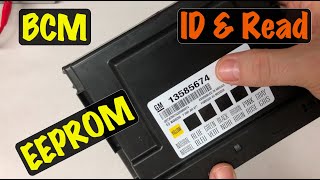
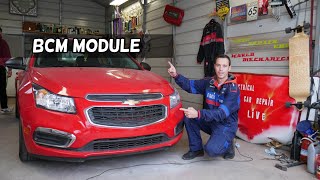
Typical fix: The module must be programmed using the GM Service Programming System (SPS2) or have its data 'cloned' from the original module by a specialized service with tools like CarProg or Autel IM608. 🎬 Watch: A professional walkthrough on cloning a Chevrolet BCM.
Est. part cost: $0 - Failed or Interrupted Programming Attempt 🟡 Medium Probability Programming can be interrupted by a weak battery, poor connection with the diagnostic tool (MDI), or a software glitch, leaving the module in a corrupted or incorrectly configured state.
How to confirm: This is often known from the recent repair history. If the code appeared immediately after a programming attempt, this is the likely cause.
Typical fix: Re-attempt the programming procedure, ensuring the vehicle has a stable power supply (battery charger connected) and all connections are secure.
Rare But Worth Checking
- Damaged Wiring or Connectors: While U2101 is almost always a programming issue, severe damage to the CAN bus wiring harness or a corroded connector at the module itself could theoretically corrupt communication in a way that triggers a configuration fault. This is more common with general communication loss codes like U0101.
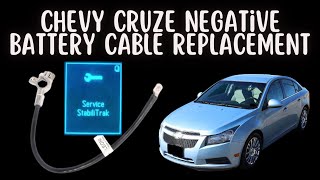
- Faulty Negative Battery Cable: → Shop Vehicle Battery A widespread issue covered by TSB 14311 involves a poor crimp 🎬 See how to replace a faulty negative battery cable. on the negative battery cable. This creates high resistance and unstable voltage, which can flood the network with communication errors and, in some cases, corrupt module memory or mimic a configuration fault. Symptoms include flickering lights and random warning messages.
Diagnosis Steps
- Verify the code with a quality OBD-II scanner. Confirm it is U2101 and not P2101.
- Question the owner/review vehicle history. Ask if any electronic modules have been replaced recently. This is the most critical step. If yes, the cause is almost certainly a lack of programming.
- Using a bidirectional scan tool, attempt to communicate with all modules on the network. Identify which module is not responding or is flagging the configuration error.
- Check for the faulty negative battery cable issue (TSB 14311). Inspect the negative terminal for a poor crimp. Unstable voltage can cause communication chaos.
- If a module was replaced, the diagnosis is complete. The module requires programming. Do not proceed with other part replacements.
- If no module was replaced, inspect the wiring and connectors to the module that is setting the code. Look for any signs of water intrusion, damage, corrosion, or loose pins. The BCM is located behind the glove box 🎬 Watch: How to access and replace the Body Control Module. and can be susceptible to water damage.
- Check for any Technical Service Bulletins (TSBs) related to software updates for the module in question. Sometimes, a reflash with updated software can resolve corruption issues.
- If all else fails, suspect an internal failure of the module that is preventing it from holding its configuration, but this is rare.
Parts You'll Likely Need
- No Parts Needed - Programming Service — The code indicates a software/configuration issue, not a hardware failure. The most common 'part' needed is a programming service from a dealer (SPS) or a mail-in cloning service.
OEM price range: $120-$250
Aftermarket price range: $100-$200 - Body Control Module (BCM)
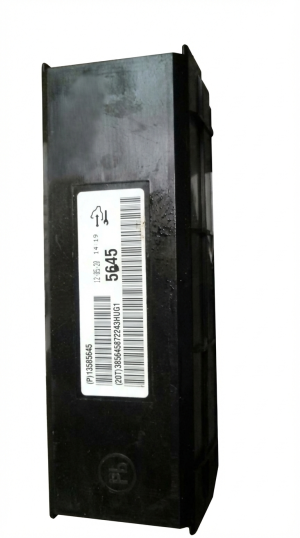
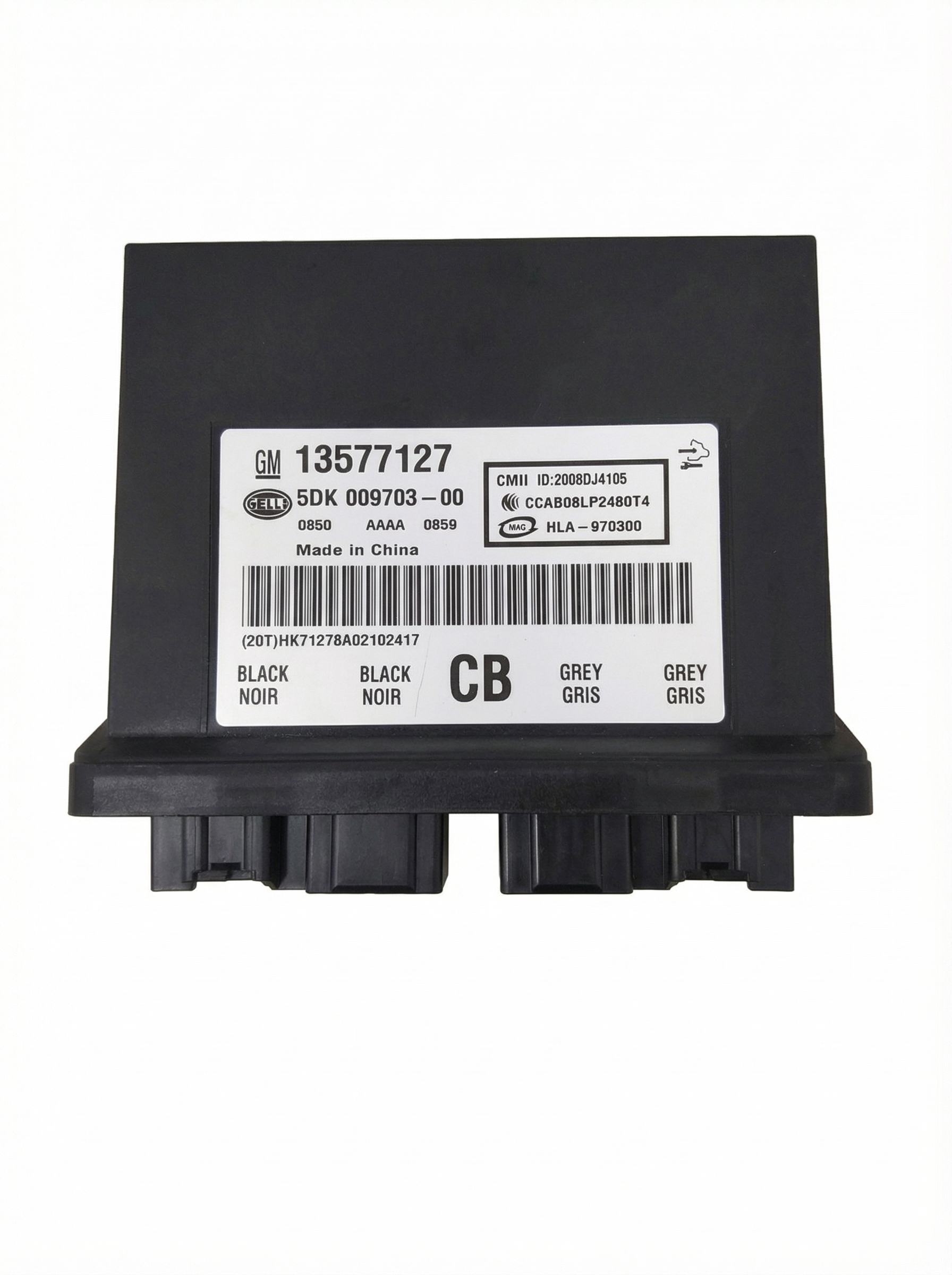
(OEM #13586581, 13580697, 13577850, 13583450)— This is the module most likely to have been replaced, triggering the U2101 code. You would only buy this if the original is confirmed faulty (e.g., water damage) and you need a replacement to program.
Trusted brands: ACDelco (Genuine GM)
OEM price range: $250-$400
Aftermarket price range: $150-$300
Related Codes That Often Appear With This One
- U0100 — Lost Communication With ECM/PCM. If the BCM is misconfigured, it can't talk to the engine computer, or other modules will report they can't hear the ECM.
- U0140 — Lost Communication With Body Control Module. Other modules will log this code when they cannot get a valid signal from the BCM because it's improperly configured.
- U0101 — Lost Communication with TCM. A misconfigured BCM or ECM can disrupt the entire network, including communication with the transmission module.
- B3902 — Incorrect Immobilizer Identifier Received. This code is often seen alongside U2101 when the BCM or ECM is replaced, as the immobilizer data no longer matches between modules.
Technical Service Bulletins (TSBs) & Recalls
- TSB 14311: Special Coverage for faulty Negative Battery Cable, which can cause numerous electrical faults.
- TSB PIC5588A: References programming procedures for replacement OnStar modules, related to general module configuration practices.
- TSB 18-NA-192: Special coverage for PCV valve diaphragm failure on 1.4L engines, a common unrelated issue.
- TSB 14371: Special coverage for leaking water pumps on 1.4L engines.
Mechanic-Grade Diagnostic Values
- High-Speed GMLAN Bus Resistance — expected: Approximately 60 Ohms when measured between Pin 6 and Pin 14 of the Data Link Connector (DLC).. Failure: A reading of 120 Ohms indicates one of the two termination resistors (typically in the ECM and BCM) is offline. A reading near 0 Ohms indicates a short between the CAN High and CAN Low wires.
- BCM Power Supply Voltage (Connector X1) — expected: Battery voltage (approx. 12.6V with key off) should be present at Pins 2 (Red/D-Green), 3 (Red/Yellow), and 4 (Red/Brown).. Failure: Low or no voltage at these pins indicates a problem with the power feed to the BCM, not the BCM itself.
- BCM Ground Connection (Connector X1) — expected: Near 0 Ohms resistance between Pin 1 (Black) and a known good chassis ground.. Failure: High resistance (more than a few ohms) indicates a poor ground connection, which can cause erratic module behavior.
- BCM EEPROM Chip Data — expected: Using an EEPROM programmer on the 24C16 chip, the vehicle's 17-digit VIN should be visible in ASCII text starting at memory offset 0x101. The 4-digit security PIN code is often visible in plain text at offset 0xA07.. Failure: Corrupted or mismatched data compared to the vehicle's actual VIN confirms a programming or module swap issue at the deepest level.
Hidden / Shadow Codes Worth Checking
- U2101 with Symptom Byte: GM's GDS2 software may display a two-digit symptom byte after the main DTC (e.g., U2101 00). For this specific code, '00' typically means 'No Additional Sub Type Information', reinforcing that the primary issue is an incompatible configuration as defined by the code itself. (see via GM GDS2 or a high-end professional scan tool with manufacturer-specific data capabilities.)
Scan Tool Commands That Help
- GDS2 / Techline Connect: SPS (Service Programming System) — This is the primary function used to program a new, virgin BCM (or other module). It downloads the correct software and vehicle configuration from GM's servers and writes it to the module.
- GDS2: Module Setup / Configuration — After SPS programming, some modules require a setup procedure. For a BCM, this may include 'Immobilizer Learn' to synchronize security information with the ECM and keys, and configuring vehicle-specific options that were not part of the base SPS flash.
- Specialized EEPROM Programmer (e.g., OBDSTAR, VVDI Prog, CarProg): Read/Write EEPROM (specifically 24C16) — This is used for 'cloning' a used BCM. The technician physically removes the BCM, reads the entire data from the 24C16 EEPROM chip on the original module, and writes that data to the chip on the donor module. This makes the donor an exact digital copy of the original.
Wiring & Ground Locations
- K9 Body Control Module (BCM) — Located under the center of the dash, typically accessed by removing the cover on the passenger side of the center console, near the floor.. This is the module most commonly replaced that causes U2101. All communication and power/ground wiring for it must be intact.
- BCM Connector X1 — The main 26-pin connector at the BCM.. Contains the primary power and ground feeds. Pin 1 is ground, Pins 2, 3, 4 are battery positive. Pins 24 and 25 are for the High-Speed GMLAN serial data bus.
- BCM Connector X2 — The second 27-pin connector at the BCM.. Contains additional power, ground, and I/O signals. Pin 2 is a ground, and Pins 1, 3, 4 are battery positive feeds.
- G201 — A chassis ground point located at the upper left end of the dash.. A poor ground here can affect multiple modules on the instrument panel harness, potentially causing communication issues that could be misdiagnosed.
- J314 (Splice Pack) — Located in the body harness, approximately 21 cm from the G301 ground breakout.. This is a splice point for the Low-Speed GMLAN serial data bus. Corrosion or a bad connection here can disrupt communication between various body-related modules.
Real Owner Repair Stories
- YouTube channel 'Key's Racing' (2010 Holden Cruze (equivalent to Chevrolet Cruze)) — Brake lights were not working, a common hardware failure within the BCM.
❌ Tried (didn't work) The owner did not attempt other fixes, knowing the BCM was the likely cause.
✅ What actually fixed it Instead of repairing the faulty driver chip in the original BCM, a donor (used) BCM was sourced. A technician extracted all data from the original BCM's EEPROM and flashed it onto the donor BCM. This 'cloning' process made the used module a plug-and-play replacement, resolving the issue without needing online SPS programming. - CarTechnoloGY Forum (Chevrolet Cruze (year not specified)) — Car would not start after the original BCM was damaged by water.
❌ Tried (didn't work) A user attempted to install a new BCM, write the VIN to the 24C16 EEPROM, and use a 'virginizer' tool, but the car still would not start.
✅ What actually fixed it The final confirmed solution was to use the official GM MDI interface with an online SPS subscription to properly program the new BCM to the vehicle. It was noted that a J2534 passthru device might not work and that the dealer MDI tool was required.
Documented NHTSA Reports
While U2101 is primarily a configuration code for GM vehicles, cross-manufacturer records provide insight into how this fault manifests. For instance, NHTSA ODI #10694215 describes a scenario where U2101 was present alongside a steering rack fault (C1B00), requiring a hardware replacement. Additionally, an owner report in NHTSA ODI #11581420 notes that U2101 appeared with multiple other communication codes (U0121, U0140) and was accompanied by a strange beeping noise or warning chime without corresponding dashboard lights.
OEM Part Supersession History
13574841→13578421— Part revision or update by manufacturer.
Heads up: These parts are generally interchangeable for the specified years, but programming is always required.Multiple (e.g., 13584695, 13586273, 13580697)→13588447— Consolidation of part numbers for mid-generation models.
Heads up: While these part numbers are listed as compatible, the replacement module must always be programmed or cloned. A part from a vehicle with different options (RPO codes) may not function correctly even after programming.13586278→13585674— Part revision or update by manufacturer.
Heads up: These modules use the same 24C16 EEPROM for storing critical data. Compatibility is maintained, but programming/cloning is mandatory.
Model Year Variations Within This Range
- 2011-2016: All first-generation Cruze models use a Delphi BCM with a 24C16 type EEPROM to store VIN, mileage, and security data. While the main processor and board layout may have minor revisions, the method for cloning (swapping/reprogramming the 24C16 chip) is consistent across these years for recovering a vehicle when the original BCM is readable.
Diagnostic Flowchart
Other Known Issues on This Vehicle
Issues unrelated to this code that are worth knowing about as an owner of this generation:
- PCV System Failure (1.4L Turbo) 🔴 High — Extremely common. A torn diaphragm in the valve cover or a failed check valve in the intake manifold causes a massive vacuum leak, leading to rough idle, oil consumption, and lean codes (P0171). (Ref: TSB 18-NA-192, PIP5197)
- Coolant Leaks (1.4L Turbo) 🔴 High — Very common. Leaks frequently occur from the plastic water outlet housing, the thermostat housing, and the water pump. Can lead to overheating and engine damage if not addressed. (Ref: TSB 14371 (Water Pump Special Coverage))
- Faulty Negative Battery Cable 🟠 Medium → Shop Vehicle Battery — Widespread issue where an insufficient crimp on the negative battery terminal causes high resistance. This leads to a host of bizarre electrical problems like flickering lights/radio, random warning messages (Service Stabilitrak), and no-start conditions. (Ref: TSB 14311 (Special Coverage))
- Automatic Transmission Problems 🟠 Medium → Shop Transmission Assembly — Common on early models (2011-2012). Symptoms include harsh shifting, slipping, and in some cases, complete failure. Often related to the Transmission Control Module (TCM) or internal components.
- Turbocharger Failure (1.4L Turbo) 🔴 High — Occurs at higher mileage. Can be caused by oiling issues or simply wear and tear. Results in loss of power, smoking from the exhaust, and often a P0299 (Turbo Underboost) code.
Used vs. New Parts: Buying Guide for This Vehicle
When a used part is the smart pick: A used BCM is a viable, cost-effective option ONLY if your original BCM is still electronically readable. The entire process relies on 'cloning' the data from your old module to the used one. If your original BCM is completely dead (e.g., from severe water or fire damage) and its data cannot be extracted, a used module is useless as it cannot be reprogrammed by a dealer.
Donor-vehicle mileage cap: roughly under 150000 miles for the part to have meaningful remaining life.
What to inspect on the donor part:
- Ensure the part number is on the compatibility list for your vehicle's year range.
- Inspect the module for any signs of water intrusion, corrosion on the pins, or physical damage to the case.
- Obtain the donor vehicle's VIN if possible to cross-reference its original options (RPO codes), though this is less critical if you are performing a full clone.
OEM-only on this vehicle (don't cheap out):
- Body Control Module (BCM) - New Purchase. If you cannot clone your original module and must start fresh, only a new, 'virgin' OEM ACDelco BCM can be programmed by the dealer's Service Programming System (SPS). Dealers will not and cannot program a used BCM from another VIN.
Aftermarket brands forum-validated for this vehicle:
- Not applicable for the module itself. The key service is 'cloning' or 'programming', offered by various mail-in services found on platforms like eBay or specialized repair shops.
Brands owners have reported issues with on this vehicle:
- Avoid any used BCM sold as 'plug-and-play' that does not involve you sending in your original module for data cloning. A used BCM from another car will not work without this critical step.
Real Owner Stories
Aggregated from forums and TSBs cited above. Mileages and costs reflect what owners reported in those sources.
2012 Chevrolet Cruze
Symptoms: Owner attempted to swap the BCM, ECM, and other modules from a used vehicle. This resulted in a VIN mismatch and immobilizer fault B3902, preventing the car from starting.
What fixed it: The BCM on this platform is a 'one time use' module for programming; the fix requires using a new/virgin BCM with online SPS programming or cloning the original EEPROM.
Source hint: MHH Auto Forum - '2012 Chevy Cruze BCM'
Chevrolet Cruze (Delta II Platform)
Symptoms: The BCM suffered water damage (located behind the glove box). The owner was looking to replace it with a used unit but faced configuration errors.
What fixed it: The EEPROM (24C16) from the original water-damaged module must be swapped to the replacement module. If the original EEPROM is corrupt, online programming of a new module is required.
Source hint: CarTechnoloGY Forum - 'Chevrolet Cruze Bcm Programming'
Chevrolet Cruze
Symptoms: Owner experienced VIN mismatch and immobilizer faults after swapping used modules. Discussion focused on whether a used ECM could be flashed.
What fixed it: A used ECM can sometimes be flashed by swapping it into the vehicle just before the SPS programming sequence begins.
Source hint: MHH Auto Forum - 'Chevrolet used module programming'
Related OBD-II Codes
Frequently Asked Questions
I just swapped a used BCM into my 2012 Chevrolet Cruze and now I have code U2101. Why won't it work?
Can TSB 14311 cause U2101 and other communication codes on my Cruze?
My dash is showing 'Code 91' and the car won't start. Is this related to U2101?
Is there a specific TSB for the water pump or PCV issues mentioned in my scan report?
Can I fix U2101 myself by just clearing the code with a basic scanner?
Helpful Videos
We Have This Part in Stock

The information in this article is provided for general reference and educational purposes only. Vehicle specifications, procedures, and part compatibility can vary by production date, trim level, and region. Always consult your vehicle's factory service manual and verify part numbers before purchasing or performing repairs. Safety-critical components such as airbags, seat belts, and braking systems should be installed by a qualified professional.
- Chevrolet Cruze:
- 🧭 Diagnostic Flowchart
- 🎬 Helpful Videos
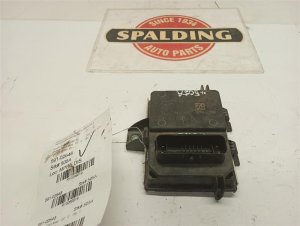
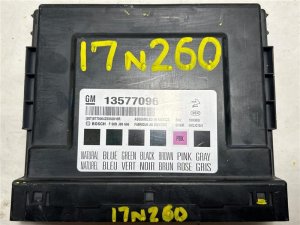
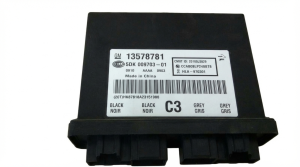
- 🛍️ Shop This Part
- What's Unique About the 2008-2016 Chevrolet Cruze
- Symptoms You May Notice
- Most Likely Causes
- Rare But Worth Checking
- Diagnosis Steps
- Parts You'll Likely Need
- Related Codes That Often Appear With This One
- Technical Service Bulletins (TSBs) & Recalls
- Mechanic-Grade Diagnostic Values
- Hidden / Shadow Codes Worth Checking
- Scan Tool Commands That Help
- Wiring & Ground Locations
- Real Owner Repair Stories
- Documented NHTSA Reports
- OEM Part Supersession History
- Model Year Variations Within This Range
- Other Known Issues on This Vehicle
- Used vs. New Parts: Buying Guide for This Vehicle
- Real Owner Stories
- 2012 Chevrolet Cruze
- Chevrolet Cruze (Delta II Platform)
- Chevrolet Cruze
- Related OBD-II Codes
- Frequently Asked Questions
- 🎟️ Get 5% Off