

U2101 on 2011-2022 Ford Ranger: Control Module Configuration Incompatible Explained
Code U2101 on a Ford Ranger means a control module (like for airbags, ABS, or the body) has the wrong software configuration for your truck's VIN. This is a programming issue, not a broken part. The fix requires a dealer or specialized shop to reprogram the module using Ford's diagnostic tools (IDS/FDRS) or an advanced DIY tool like FORScan.
- U2101 is a programming error, not a broken part. Do not replace the module again if it was just installed.
- The fix requires specialized tools like Ford's IDS or FORScan to perform a 'Programmable Module Installation' (PMI).
- This code is very common after replacing a major control module (ABS, BCM, RCM) or after making DIY coding changes with FORScan.
- Always address U2101 before troubleshooting any other 'Lost Communication' (U-prefix) codes, as it is the root of the network problem.
- If you use FORScan, always back up a module's original configuration before writing any changes.
What's Unique About the 2011-2022 Ford Ranger
On the modern T6 platform Ranger (2011-2022), this code is frequently seen by owners who use the popular FORScan software to customize vehicle features like lighting or chimes. An incorrect change in the 'As-Built' data can easily trigger this code. It's also very common after collision repairs where modules like the Restraint Control Module (airbags) or ABS module are replaced with new or used units that haven't been programmed to the truck yet. Because these modules are VIN-specific, a simple swap is guaranteed to cause this fault until a programming procedure is completed.
Generation note: The 2011-2022 range covers the international Ford Ranger (T6 platform, 2011+) and the North American Ford Ranger (an updated T6, 2019-2022). The meaning and causes of U2101 are consistent across these generations as they share a modern CAN bus architecture. A documented case on a 2016 international model confirms the cause is the same as on newer North American trucks. The T6 platform is also shared with the Ford Everest, Ford Bronco, and 2011-2020 Mazda BT-50, which can all exhibit this same code for the same reasons.
Symptoms You May Notice
- Airbag warning light is on
- ABS and/or Traction Control warning lights are on
- Advanced Driver Assistance Systems (ADAS) like lane-keeping or adaptive cruise are unavailable
- Inability to clear the trouble code with a standard OBD-II scanner
- Features controlled by the problematic module do not work (e.g., radio functions if the ACM is misconfigured)
- In rare cases, a no-start condition if the immobilizer system is affected
- Failed safety or emissions inspections due to the active DTC
- Replacing the module a second time. The code indicates a programming issue, not a faulty part. Replacing the module again without programming it will not fix the problem.
- Replacing sensors related to the warning light (e.g., wheel speed sensors for an ABS light). The U2101 code is the root cause and must be fixed first.
Most Likely Causes
- Replaced Control Module Not Programmed 🔴 High Probability Common after collision repairs or when a module fails. New or used modules must be programmed with the vehicle's unique As-Built data. This is especially true for the RCM (airbag module) and ABS module.
How to confirm: Scan the vehicle with a high-level tool like FORScan or Ford IDS. The tool will show a configuration error in a specific module (e.g., RCM, BCM, ABS). Check the vehicle's repair history for recent module replacements.
Typical fix: Perform a 'Programmable Module Installation' (PMI) using Ford's IDS/FDRS software to load the correct As-Built data into the module. Some Ford dealers may refuse to program a used module, requiring the purchase of a new one.
Est. part cost: $0 - Incorrect Configuration with FORScan 🟡 Medium Probability The Ranger is popular in the enthusiast community, and many owners use FORScan to customize features. 🎬 Watch: A quick tutorial on using FORScan with your Ranger. A mistake while editing the As-Built data is a frequent cause of U2101.
How to confirm: If the code appeared immediately after making changes with FORScan, this is the cause. Review the changes made in the software.
Typical fix: Using FORScan, revert the most recent change. If unsure which change caused it, load the original As-Built backup file for that module, 🎬 See how to load factory As-Built data using FORScan. which should have been saved before making any changes.
Est. part cost: $0 - Incorrect Part Number Installed ⚪ Low Probability Using a module from a different trim level or model year (e.g., an F-150 module in a Ranger) can cause this, even if the part physically fits. For example, a user on the Ranger5G forum asked if a 'JB3T' RCM would work in place of a 'KB3T' unit, highlighting the confusion around part numbers.
How to confirm: Physically inspect the part number on the installed module and cross-reference it with the correct OEM part number for the vehicle's VIN by calling a dealership parts department.
Typical fix: Replace the incorrect module with the correct OEM part for the specific vehicle, then perform the PMI programming procedure.
Est. part cost: $200-$1000
Rare But Worth Checking
- Corrupted Module Memory: In rare instances, a module's memory can become corrupted due to a software glitch or significant voltage spike. A re-flash (PMI) is the first step before replacing the module.
Diagnosis Steps
- Connect a high-level scan tool capable of reading manufacturer-specific codes from all modules (e.g., FORScan with a compatible adapter or Ford IDS/FDRS).
- Perform a full network scan to identify which specific module is reporting the U2101 code (e.g., ABS, RCM, BCM, PCM). The tool should specify the source.
- If changes were recently made with FORScan, connect the software and restore the module's original As-Built data from a backup. Clear codes and re-scan. If the code is gone, the problem is solved.
- If a module was recently replaced (especially after a collision), the vehicle must undergo a 'Programmable Module Installation' (PMI) procedure.
- This is best performed by a Ford dealer or a qualified independent shop with Ford diagnostic tools. They will connect to the vehicle, download the correct As-Built data from Ford's servers, and write it to the new or used module.
- A user on an F-150 forum shared their experience of trying to program a used ABS module, which failed. The dealer stated a new module was required for successful programming, which ultimately fixed the issue.
- Once the module is programmed, clear all DTCs from all modules and perform any necessary relearn or calibration procedures for that specific system (e.g., ABS sensor calibration).
Parts You'll Likely Need
- Module Programming Service — The most common 'part' is not a physical component, but the labor service to program the misconfigured module using specialized equipment like Ford IDS.
Trusted brands: Ford Dealer Service, Specialized Automotive Programmer
OEM price range: $150-$400
Aftermarket price range: $100-$300 - Body Control Module (BCM)
(OEM #JU5Z-15604-BA)— If the original BCM has failed and was replaced, the new unit requires programming, which is when the U2101 code appears. Part number is an example for a 2019+ Ranger.
Trusted brands: Motorcraft
OEM price range: $400-$700
Aftermarket price range: $250-$500 - Restraint Control Module (RCM)
(OEM #KB3Z-14B321-B)— Commonly replaced after an accident, the new airbag module must be programmed to the vehicle. This part number is for a 2019 Ranger; always verify with VIN.
Trusted brands: Motorcraft
OEM price range: $300-$600
Aftermarket price range: $200-$400
Related Codes That Often Appear With This One
- U2100 — U2100 stands for 'Initial Configuration Not Complete'. It often appears alongside U2101, especially when a brand new, unprogrammed module is installed from the factory.
- U01xx - U05xx (Lost Communication Codes) — Because the misconfigured module cannot communicate properly, other modules on the network may post 'Lost Communication With...' codes pointing to the faulty module (e.g., U0121 for ABS, U0155 for Instrument Cluster). Resolving U2101 will typically clear these other U-codes.
- U3000 — U3000 ('Control Module') can sometimes accompany U2101. While U2101 points to a configuration error, U3000 can indicate a more general internal module failure. If reprogramming for U2101 fails, U3000 might suggest the module itself is defective.
Technical Service Bulletins (TSBs) & Recalls
- SSM 47843: While not a formal TSB, this Ford Special Service Message applies to many 2010-2019 vehicles, including the Ranger. It explicitly states that DTCs U2100 and/or U2101 indicate a module has not been properly configured and requires the 'Programmable Module Installation' (PMI) procedure to be performed using a Ford diagnostic tool.
Platform-Specific Known Issues
- Post-Collision Repair Trigger: This code is extremely common on salvage or rebuilt title Rangers after collision repairs. When components like the airbag module (RCM), seat belt pre-tensioners, or ABS module are replaced, they must be reprogrammed. Failure to do so is a primary cause of U2101.
- FORScan Modification Error: An owner on Ranger-Mods.com reported triggering U2101 immediately after 'playing around' with FORScan settings. They were able to resolve it by methodically reverting the changes one by one until the offending configuration was found. This highlights the importance of backing up the original As-Built data before making any changes.
Mechanic-Grade Diagnostic Values
- CAN Bus Terminating Resistance — expected: Approximately 60 Ohms. Failure: A reading of 120 Ohms suggests one of the two terminating resistors has failed or is disconnected. A reading near 0 Ohms indicates a short circuit on the bus. An Open Line (OL) reading points to a major break in the wiring.
Hidden / Shadow Codes Worth Checking
- U2101:00: This is the generic code for 'Control Module Configuration Incompatible' with no additional subtype information. It's the most common version of the code. (see via Ford IDS/FDRS, FORScan, or other professional-grade scan tools.)
- U2101:55: This subtype explicitly means 'Not Configured'. It is often set when a brand new, blank service module is installed before its As-Built data has been written. (see via Ford IDS/FDRS, FORScan, or other professional-grade scan tools.)
- U2101:xx-8A / -2F: The characters after the main code (e.g., -8A, -2F) are status and occurrence counters used by the diagnostic system. For example, U2101:55-8A was seen in an F-150 ABS module. While not directly useful for the repair, they confirm the code is active and provide data for dealer-level analysis. (see via Ford IDS/FDRS, FORScan.)
Scan Tool Commands That Help
- Ford IDS/FDRS: Programmable Module Installation (PMI) — This is the preferred official procedure when the original (old) module is still functional. The tool reads the configuration data from the old module, prompts the tech to swap in the new one, and then writes the saved data to the new module. This avoids potential data corruption from network downloads.
- Ford IDS/FDRS: As-Built — This function is used when the original module is missing or completely dead. The tool connects to Ford's servers, downloads the factory As-Built data for the vehicle's VIN, and writes it to the replacement module.
- FORScan: Load Factory As-Built — This is the equivalent of the IDS 'As-Built' function for DIY users. With an internet connection, recent versions of FORScan can automatically download the vehicle's original As-Built data and write it to the selected module to correct a U2101 code.
- FORScan: Restore from Backup — If the U2101 code appeared after making custom changes, this function allows the user to load a previously saved backup file of the module's original configuration, reverting the changes and clearing the fault.
Wiring & Ground Locations
- Body Control Module (BCM) — On 2019-2022 North American Rangers, the BCM is located behind the driver's side knee bolster panel, to the left of the steering column.. The BCM is a central hub for multiple CAN bus networks. If it is replaced and not programmed, it is a primary source for code U2101. Its location is critical for replacement or inspection.
- Restraint Control Module (RCM) — Typically located under the center console, between the two front seats, bolted to the vehicle floor.. The RCM is the airbag module and is almost always replaced after a collision. It is a very common source of U2101 in rebuilt vehicles if it is not programmed correctly.
- Under-Dash Ground Point — A forum member noted a metal bar located under the BCM (driver's side dash) with several spare threaded bolts that can be used as a grounding point.. While U2101 is a software code, a poor ground to a critical module can cause data corruption or communication errors that could potentially be misdiagnosed as a configuration issue. Ensuring a clean ground is a fundamental step.
- Gateway Module Connector (at OBD-II Port) — The Data Gateway Module (GWM) is integrated with the OBD-II port assembly under the driver's side dash. A wiring guide for the 2019 Ranger specifies CAN bus wire locations at its 24-pin connector, not the 16-pin OBD-II port face.. This is the central point for all CAN networks. A technician needing to probe the HS-CAN or MS-CAN buses would do so at this connector. For example, MS-CAN High is Gray/Orange at pin 23, and MS-CAN Low is Violet/Orange at pin 22.
Real Owner Repair Stories
- Ranger-Mods.com forum user (2016 Ford Ranger 2.2 XL Supercab (T6 International Model)) — A U2101 fault code appeared after making various changes to vehicle settings using FORScan.
❌ Tried (didn't work) Loading a factory setting file, which then required re-applying other desired changes like LED lights and tow bar settings.
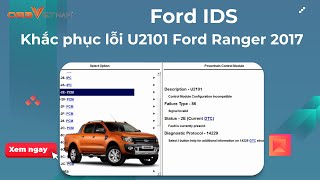
✅ What actually fixed it The user was advised to revert their FORScan changes one by one until the specific change causing the conflict was found and corrected. The user confirmed this process worked. - OBD Viet Nam YouTube Channel (2017 Ford Ranger) — U2101 fault code present after replacing the Powertrain Control Module (PCM).
❌ Tried (didn't work) Simply installing the new PCM without programming.
✅ What actually fixed it A technician used the official Ford Integrated Diagnostic System (IDS) software to perform a module programming procedure on the new PCM, which successfully configured it to the vehicle and cleared the U2101 code.
OEM Part Supersession History
Various→Various— Part revision or consolidation.
Heads up: When replacing a module (like a BCM or RCM), using a superseded part number is common. However, the new part may have different firmware that requires a different As-Built data configuration than the original. If the programming procedure is performed incorrectly or with outdated tools, this can cause a U2101 code even with a brand new OEM part. The configuration must match the hardware installed.
Model Year Variations Within This Range
- 2019-2022 (North American): The Body Control Module (BCM) is located on the driver's side, behind the knee bolster. This differs from the related F-150 of the same era, where the BCM is on the passenger side. A technician familiar with the F-150 may look in the wrong place.
- 2021-2022+: Forum reports suggest that on 2021 and newer models, Ford may have implemented enhanced security protocols ('Fire Diagnostic' security) that block aftermarket tools like FORScan from writing to critical safety modules like the ABS. If true, this would mean that fixing a U2101 code in the ABS module on these later models may exclusively require the official Ford FDRS diagnostic tool, making a dealer or highly specialized shop visit mandatory.
Diagnostic Flowchart
Other Known Issues on This Vehicle
Issues unrelated to this code that are worth knowing about as an owner of this generation:
- EGR Cooler Failure (Diesel Models) 🔴 High — More common on earlier 2011-2015 models. Failure can lead to coolant loss and white smoke, potentially causing severe engine damage if ignored.
- Automatic Transmission Problems 🟠 Medium → Shop Transmission Assembly — Some owners report harsh shifting, slipping gears, or delayed engagement, particularly in the 6-speed automatic. Solenoid body issues are a known potential cause.
- Turbocharger Failures (Diesel Models) 🟠 Medium — Can occur due to oil contamination, heat stress, or blocked oil lines. More frequent on vehicles with extended oil change intervals or aggressive driving habits.
- Carbon Buildup on Intake Valves (2.3L EcoBoost) 🟡 Low — Direct injection engines like the 2.3L EcoBoost are prone to carbon buildup over time, which can cause rough idle and reduced performance. Walnut shell blasting is a common cleaning procedure recommended around 100,000 miles.
- SYNC 3 System Glitches 🟡 Low — Owners report issues like frozen touchscreens, Bluetooth connectivity problems, and unresponsive presets. Ford has issued TSBs, like TSB 22-2058, with software updates for the APIM to address these concerns. (Ref: TSB 22-2058)
Used vs. New Parts: Buying Guide for This Vehicle
When a used part is the smart pick: For this repair, a used module (BCM, RCM, ABS, etc.) from a reputable salvage yard is often a smart, cost-effective choice. The U2101 code is a programming issue, not a hardware failure, so a functional used module is just as good as a new one once programmed.
What to inspect on the donor part:
- Verify the OEM part number on the used module is an exact match to the one being replaced.
- Inspect for any physical damage, especially to the connector pins and housing.
- Check for signs of water intrusion or corrosion, which is a common failure cause for BCMs.
OEM-only on this vehicle (don't cheap out):
- While the physical module can be sourced from salvage, the programming is the critical step. Many Ford dealers will refuse to program a customer-supplied used module, forcing the purchase of a new one from their parts department. This makes finding an independent shop with the right tools (IDS/FDRS or FORScan expertise) essential when using a salvaged part.
Aftermarket brands forum-validated for this vehicle:
- Not applicable. These modules are complex, vehicle-specific OEM parts. The 'brand' choice is between new OEM (Motorcraft) or used OEM.
Brands owners have reported issues with on this vehicle:
- No third-party 'new' aftermarket versions of these modules are widely available or recommended.
Real Owner Stories
Aggregated from forums and TSBs cited above. Mileages and costs reflect what owners reported in those sources.
2016 Ford Ranger T6
Symptoms: The owner triggered the U2101 code immediately after 'playing around' with FORScan settings.
What fixed it: The owner methodically reverted the changes one by one until the offending configuration was found and corrected.
Source hint: Ranger-Mods.com: (https://www.ranger-mods.com/viewtopic.php?t=130)
Ford F-150 (Platform Mate)
Symptoms: U2101-55-8A ABS code appeared on a rebuilt truck after attempting to install a used ABS module.
What fixed it: After a failed attempt to program a used module, a new module was required for the dealer to successfully complete the programming procedure.
Source hint: Ford F150 Forum: (https://www.f150forum.com/f118/u2101-55-8a-abs-code-441079/)
Ford Focus (Platform Mate)
Symptoms: No Bluetooth or Voice Command (VC) functions and a fault code U2101 after swapping a display screen (FCDIM).
What fixed it: The issue required correct As-Built data programming to resolve the module configuration incompatibility.
Source hint: Ford Owners Club: (https://www.fordownersclub.com/forums/topic/96387-no-bluetooth-or-vc-fault-code-u2101-control-module-configuration-incompatible/)
Related OBD-II Codes
Frequently Asked Questions
Does Ford SSM 47843 apply to my Ranger if I have a U2101 code?
I just replaced my airbag module (RCM) after a crash and now have U2101. Why?
Can I use FORScan to fix U2101 on my 2011-2022 Ranger?
Will a used ABS module from an F-150 work in my Ranger?
Why can't I clear the U2101 code with my standard OBD-II scanner?
Can a configuration error cause my Ranger not to start?
Helpful Videos
We Have This Part in Stock
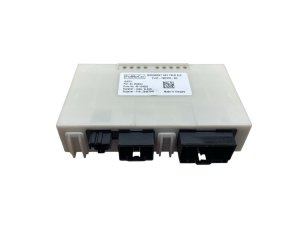
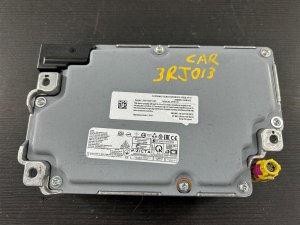
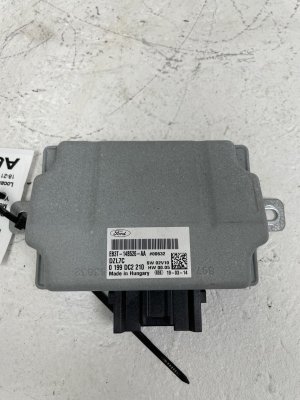
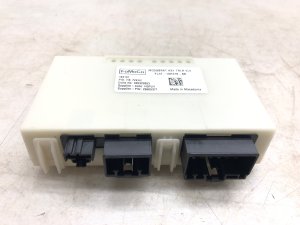
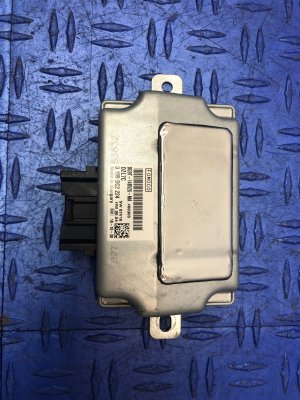
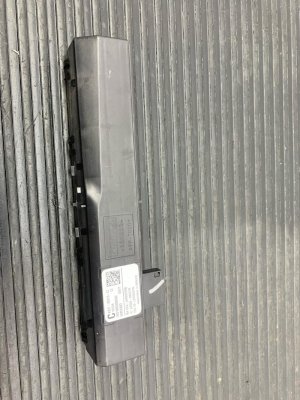

The information in this article is provided for general reference and educational purposes only. Vehicle specifications, procedures, and part compatibility can vary by production date, trim level, and region. Always consult your vehicle's factory service manual and verify part numbers before purchasing or performing repairs. Safety-critical components such as airbags, seat belts, and braking systems should be installed by a qualified professional.
- Ford Ranger:
- 🧭 Diagnostic Flowchart
- 🎬 Helpful Videos
- 🛍️ Shop This Part
- What's Unique About the 2011-2022 Ford Ranger
- Symptoms You May Notice
- Most Likely Causes
- Rare But Worth Checking
- Diagnosis Steps
- Parts You'll Likely Need
- Related Codes That Often Appear With This One
- Technical Service Bulletins (TSBs) & Recalls
- Platform-Specific Known Issues
- Mechanic-Grade Diagnostic Values
- Hidden / Shadow Codes Worth Checking
- Scan Tool Commands That Help
- Wiring & Ground Locations
- Real Owner Repair Stories
- OEM Part Supersession History
- Model Year Variations Within This Range
- Other Known Issues on This Vehicle
- Used vs. New Parts: Buying Guide for This Vehicle
- Real Owner Stories
- 2016 Ford Ranger T6
- Ford F-150 (Platform Mate)
- Ford Focus (Platform Mate)
- Related OBD-II Codes
- Frequently Asked Questions
- 🎟️ Get 5% Off