

U2101 on 2017-2024 Genesis G70: Control Module Configuration Incompatible Causes and Fixes
Code U2101 on a Genesis G70 means a major electronic module (like the ECM, BCM, or ABS unit) was replaced but not programmed to your car's VIN. This is not a DIY fix; the solution is to have a dealer or specialized shop perform 'Variant Coding' using a Genesis-specific scan tool.
- U2101 is a programming error, not a part failure. It means a new module was installed but not configured for the car.
- The official fix is called 'Variant Coding' and requires a dealer-level scan tool (Genesis GDS).
- This code is most often triggered by the replacement of a major module like the ABS unit, ECM, BCM, or steering rack.
- Do not replace the part again. The cost of the fix is purely labor for the programming procedure.
- Check for recent repairs first. This is the most critical diagnostic clue.
What's Unique About the 2017-2024 Genesis G70
On modern Genesis vehicles like the G70, nearly every major control module is electronically tied to the vehicle's specific VIN and options package. This is a security measure and ensures all systems work together. The process of programming a new module is called 'Variant Coding' in Hyundai/Genesis terminology. The appearance of U2101 is a direct result of this programming step being skipped, making it a procedural error rather than a random part failure. This process is required for modules like the Airbag Control Unit (ACU), ABS/ESP module, and even the instrument cluster.
Generation note: The Genesis G70's first generation (IK) runs from 2017-present, with a significant facelift for the 2022 model year. The requirement for module programming ('Variant Coding') is consistent across all years, so this issue and its resolution apply to both pre-facelift (2017-2021) and post-facelift (2022-2024) models.
Symptoms You May Notice
- Check Engine Light is on
- Multiple warning lights on the dashboard (ABS, ESC, Airbag, etc.)
- A specific system is completely inoperative (e.g., radio, climate control, power steering)
- Engine cranks but does not start
- Engine may stall or run in 'limp mode'
- Erratic electrical functions (lights, windows, locks)
- Replacing the module a second time. The problem is almost never a defective replacement part; it is the lack of programming.
- Diagnosing other 'Lost Communication' codes (e.g., U0100, U0121). These codes are symptoms caused by the U2101 error. Resolving the U2101 configuration issue will clear the other communication codes.
Most Likely Causes
- Replaced Control Module Not Programmed 🔴 High Probability As a security and integration feature, nearly all major control modules on the G70 are electronically locked to the vehicle's VIN and must be configured upon installation. This process is officially called 'Variant Coding'.
How to confirm: Ask if any electronic modules (ECM, BCM, ABS, Airbag, Steering Rack, etc.) have been recently replaced. Use an advanced scan tool to identify which module is reporting the configuration error.
Typical fix: Program the newly installed module using the Genesis GDS scan tool. This procedure is called 'Variant Coding' or 'Module Setup'.
Est. part cost: $0 - Incorrect Control Module Installed 🟡 Medium Probability Using a module from a donor vehicle with different features (e.g., 2.0T vs. 3.3T, RWD vs. AWD, different trim options) can create a hardware mismatch that programming cannot resolve. This is common with used parts from salvage yards or online sellers.
How to confirm: Physically inspect the part number on the installed module and verify with a Genesis dealer that it is the correct part for the vehicle's VIN. For example, the RWD steering rack has different part numbers for the 2.0T (57700-G9200) and 3.3T (57700-G9320) engines.
Typical fix: Replace the incorrect module with the correct OEM part number for the vehicle, followed by mandatory programming.
Est. part cost: $200-$1500
Rare But Worth Checking
- Corrupted Software from Failed Update: A failed software flash or update attempt by a technician can corrupt the module's configuration, leading to a U2101 code even if the module wasn't replaced. Interruption of power during an update can cause this.
- Poor Connection or Damaged Wiring at the Module: While U2101 specifically points to a software mismatch, a severely damaged connector or harness could theoretically cause a module to lose its configuration or fail to communicate its status properly. This is very unlikely compared to a programming issue.
- Failed Steering Rack Replacement: The G70 uses a rack-mounted electric power steering (R-MDPS) system. If the entire steering rack assembly is replaced (a very expensive repair), the integrated steering control module must be calibrated and coded to the vehicle, or it can trigger a U2101 code.
Diagnosis Steps
- Question the vehicle owner: 'Have any electronic modules been replaced recently?' This is the most important diagnostic step.
- Connect a professional-grade scan tool (ideally a Genesis GDS) to the vehicle.
- Scan all modules for codes. Identify which specific module is setting the U2101 code. This is the source of the problem.
- If a module was recently replaced, proceed directly to the 'Variant Coding' or 'Module Setup' procedure for that module.
- If no module was replaced, verify the part number on the suspect module is correct for the vehicle's VIN and options. For example, AWD and RWD models use different steering racks.
- If the part number is correct, inspect the module's connector and nearby wiring for any obvious damage or corrosion.
- Attempt to re-flash or program the existing module. If the procedure fails, the module itself may have an internal fault and require replacement, followed by programming.
Parts You'll Likely Need
- Engine Control Module (ECM) — Often replaced for performance issues or internal failure. It is critically linked to the immobilizer and will cause a no-start if not programmed.
Trusted brands: Genuine Genesis/Hyundai
OEM price range: $800-$1500
Aftermarket price range: Not Recommended - Body Control Module (BCM) / Smart Junction Block — Controls a wide range of body electronics and security functions. Replacement is common for fixing strange electrical issues.
Trusted brands: Genuine Genesis/Hyundai
OEM price range: $400-$700
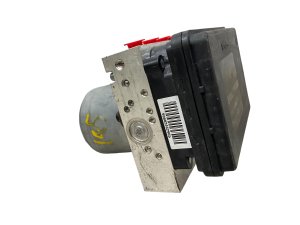
Aftermarket price range: Not Recommended - ABS Control Module — May be replaced due to internal failure or as part of a recall (e.g., NHTSA 21V-161 / Recall 007G for a short-circuit risk), requiring programming afterward.
Trusted brands: Genuine Genesis/Hyundai, Mando
OEM price range: $600-$1200
Aftermarket price range: Not Recommended - Steering Rack (R-MDPS Assembly)
(OEM #57700-G9200 (2.0T RWD), 57700-G9320 (3.3T RWD))— The entire electric steering rack contains an integrated control module. If the rack is replaced due to internal failure or damage, the new unit must be coded to the vehicle.
Trusted brands: Genuine Genesis/Hyundai
OEM price range: $4500-$5700
Aftermarket price range: Not Recommended
Related Codes That Often Appear With This One
- U0100-U0500 — These are 'Lost Communication' codes. The misconfigured module that sets U2101 cannot talk to other modules, causing them to log these related codes.
- U2100 — A very similar code meaning 'Control Module Not Programmed'. U2100 implies the module is 'blank', while U2101 means it has a configuration, but it's the wrong one. They can appear under similar circumstances.
- B1762 — This code for 'ACU Coding Error' will appear if the Airbag Control Unit (ACU) is replaced and not properly variant coded. 🎬 Watch: How to perform airbag module variant coding
- C1702 — This code indicates that variant coding is required for the ABS/ESP module. It will be present if the module is replaced and not programmed.
Technical Service Bulletins (TSBs) & Recalls
- 21-BE-013H: Describes the 'Variant Coding' procedure for a navigation unit on a Genesis sedan, illustrating the official terminology and process required.
- Kia Pitstop PS738: While for the Kia Stinger, this document details the exact process for 'Variant Coding' after replacing a steering (MDPS/EPS) unit, which is directly applicable to the G70. It clarifies that the on-screen menu may not match the written instructions, requiring the tech to select 'MDPS Tuning Data Setting' to access the coding screen.
Platform-Specific Known Issues
- Recall 007G (NHTSA 21V-161) was issued for 2019-2021 G70 models due to a risk of the ABS module short-circuiting, which could lead to an engine compartment fire. If the module is replaced under this recall or for a related failure, it must be programmed, or a U2101 code will result.
Documented NHTSA Reports
While U2101 is a common configuration code for Genesis, cross-manufacturer records provide insight into how this fault manifests. For instance, NHTSA ODI #10694215 describes a situation where a vehicle required an electronic steering rack replacement after codes C1B00 and U2101 were present, specifically noting issues when turning the steering wheel. Additionally, NHTSA ODI #11581420 reports a case where U2101 appeared alongside multiple communication codes (U0121, U0140, U0256, U0452) and engine codes, accompanied by a strange warning chime without dashboard lights.
Mechanic-Grade Diagnostic Values
- CAN Bus Network Resistance — expected: 60 Ohms between Pin 6 (CAN-H) and Pin 14 (CAN-L) on the OBD-II connector with the battery disconnected.. Failure: A reading of 120 Ohms indicates a missing termination resistor or a break in the wiring. A reading of ~40 Ohms indicates a third, unwanted termination resistor is present. A reading significantly less than 40 Ohms suggests a short between the CAN lines or a failed module.
- CAN Bus Voltage (Oscilloscope) — expected: Both CAN-H and CAN-L should idle at a common-mode voltage of ~2.5V (recessive state). During data transmission (dominant state), CAN-H should pulse to ~3.5V and CAN-L should pulse to ~1.5V.. Failure: Voltages stuck high or low, or a lack of the characteristic square wave pattern during communication, indicates a bus fault, short/open circuit, or a faulty module 'shouting' on the network.
- Module CAN Port Resistance to Ground — expected: Mega-ohms or an open circuit when measuring from either the CAN-H or CAN-L pin on a disconnected module to the module's ground pin.. Failure: A low resistance reading indicates the module's internal CAN transceiver is shorted to ground, often due to electrical damage (e.g., lightning, welding). The module is defective and must be replaced.
Scan Tool Commands That Help
- Genesis GDS (Global Diagnostic System): Variant Coding — This is the mandatory procedure after replacing almost any major control module (ECM, BCM, ABS, ACU, etc.). It writes the vehicle's specific configuration and VIN to the new module, allowing it to communicate with other systems. Failure to perform this is the direct cause of code U2101.
- Genesis GDS (Global Diagnostic System): S/W Management -> [Module Name] -> Variant Coding — This is the specific menu path to access the function. For example, after replacing a navigation unit, the tech selects 'Audio Video Navigation' and then 'Variant Coding'. The system may require manually selecting options if the automatic process fails.
- Genesis GDS (Global Diagnostic System): ICU -> Battery diagnosis — Before attempting a lengthy programming procedure like Variant Coding, it is critical to ensure the vehicle's battery has a stable state of charge. This function checks the battery's health and history. A weak battery can cause the programming to fail and potentially corrupt the module.
- Genesis GDS (Global Diagnostic System): Steering Angle Sensor (SAS) Calibration — This procedure is required after replacing the steering rack (R-MDPS) assembly or the steering column module. It resets the zero point for the steering angle, which is critical for the stability control (ESC) and ABS systems to function correctly.
Wiring & Ground Locations
- Body Control Module (BCM) — Inside the cabin, located under the dashboard, typically on the driver's side. Access requires removing lower dash panels.. The BCM is a central hub for the CAN bus network and often acts as a gateway between different bus speeds. A BCM replacement is a very common trigger for U2101 if it is not programmed.
- Battery — For 2020 and newer G70 models, the 12V battery is located in the trunk, on the right side under the floor cover.. Stable voltage is critical for successful module programming. A weak or failing battery can interrupt the 'Variant Coding' process, causing it to fail and potentially corrupting the new module. Always connect a battery maintainer during programming.
- OBD-II Data Link Connector (DLC) — Under the driver's side dashboard, to the left of the steering column.. This is the primary access point for network diagnostics. CAN-High is on Pin 6 and CAN-Low is on Pin 14. Basic network health checks (resistance, voltage) can be performed here.
- Shared Ground Points — Multiple modules often share a single chassis ground point. For example, a ground stud on the cowl behind the dashboard might ground the BCM, Instrument Cluster, and the DLC simultaneously.. While U2101 is a software code, a loose or corroded ground can cause intermittent power loss to a module, potentially corrupting its memory or causing communication errors that could be misdiagnosed. Checking major grounds for the affected module is a valid, though less likely, diagnostic step.
Real Owner Repair Stories
- Reddit user jcooper9099 in r/GenesisG70 (2019 Genesis G70 RWD) — ABS and traction control warning lights.
❌ Tried (didn't work) Initially considered replacing the 'sensor assembly,' which is just the wiring pigtail.
✅ What actually fixed it The problem was the wheel speed sensor itself. On the RWD G70, the front wheel speed sensor is integrated into the wheel hub and bearing assembly and cannot be purchased separately. The entire front wheel hub had to be replaced to fix the issue. The user noted that on the AWD version, the sensor is a separate, more easily replaceable part.
Model Year Variations Within This Range
- 2022-2024 (First Facelift): The 2022 model year introduced a significant facelift with revised styling and a new, larger 10.25-inch infotainment screen. This change in the head unit means that navigation, radio, and gateway modules from a 2017-2021 model are not compatible with 2022+ models.
- 2024+: For the 2024 model year, the base 2.0T four-cylinder engine was replaced by a more powerful 2.5T engine. This requires a different Engine Control Module (ECM) and potentially different software configurations for related modules like the BCM and ABS unit. Parts must be sourced specifically for the 2.5T engine.
- 2017-2024 (Drivetrain): Rear-Wheel Drive (RWD) and All-Wheel Drive (AWD) models use different ABS modules and have different front wheel speed sensor setups. On RWD models, the front sensor is integrated into the hub assembly, while on AWD models it is a separate component. Using the wrong part will cause immediate faults.
Diagnostic Flowchart
Other Known Issues on This Vehicle
Issues unrelated to this code that are worth knowing about as an owner of this generation:
- Premature Brake Rotor Warping / Pulsation 🟠 Medium — Very common, often appearing within 15,000 miles. Affects vehicles with Brembo brakes. Owners report shuddering or vibration when braking from highway speeds. (Ref: TSB 18-01-005-G addresses brake pulsation inspection and resurfacing for dealer stock, and TSB 21-BR-002HG provides general brake service best practices.)
- 3.3T Left Turbocharger Oil Feed Pipe Leak 🔴 High — Common enough to warrant a recall. The oil feed pipe can deteriorate and leak oil onto hot exhaust components, creating a fire risk. (Ref: NHTSA Recall 24V-191 (Genesis Recall 019G). This recall expands and replaces a previous one (19V-538).)
- Minor Electronic Glitches 🟡 Low — Sporadic reports across forums. Includes issues like infotainment screen bubbling/delamination, slow keyless entry response, Digital Key not working, and random warning lights that disappear after a restart. (Ref: TSB 21-BE-004H addresses wireless CarPlay disconnections, noting it's an issue with Apple's iOS software.)
- Sunroof Rattle 🟡 Low — Frequently mentioned in owner forums. A rattle or creaking noise develops from the sunroof assembly area. Some owners have had the entire assembly replaced under warranty to fix it.
- High-Pressure Fuel Pump (HPFP) Failure 🟠 Medium — Some owners, particularly on 2019 models, report issues leading to a P0088 code, limp mode, or sudden power loss. (Ref: A recall (NHTSA 24V-528) was issued for a failing fuel pump that can cause a loss of drive power.)
- Excessive Oil Consumption 🟠 Medium — Some owners have reported higher than normal oil consumption on both 2.0T and 3.3T engines, a known issue across many Hyundai/Genesis models. (Ref: TSB 23-EM-008H provides detailed guidelines for dealers to inspect and diagnose engine oil consumption complaints.)
Used vs. New Parts: Buying Guide for This Vehicle
When a used part is the smart pick: A used module is almost never a straightforward 'smart choice' due to VIN-locking. It only becomes viable if you use a mail-in 'cloning service' that can transfer the original module's data (VIN, key codes, configuration) directly to the donor module's EEPROM. This makes the used part plug-and-play and avoids expensive dealer programming. This is a good option if your original module is physically damaged but the data is still readable.
Donor-vehicle mileage cap: roughly under 80000 miles for the part to have meaningful remaining life.
What to inspect on the donor part:
- Verify the OEM part number EXACTLY.
- CRITICAL: Confirm the donor vehicle had the identical options package (e.g., RWD/AWD, engine size, Surround View Monitor, adaptive cruise). A part from a different trim will not code correctly.
- Inspect connectors for corrosion, bent pins, or heat damage.
- Ask the seller for the VIN of the donor car to cross-reference its original factory options.
OEM-only on this vehicle (don't cheap out):
- Engine Control Module (ECM)
- Body Control Module (BCM)
- Smart Key Module / Immobilizer components
- Airbag Control Unit (ACU/SRS Module)
Aftermarket brands forum-validated for this vehicle:
- For control modules, no aftermarket brands are recommended. The only non-dealer options are a remanufactured OEM unit or a used OEM unit combined with a cloning service.
Brands owners have reported issues with on this vehicle:
- Any 'new' non-OEM control modules sold on marketplaces should be avoided. They lack the proprietary software and hardware required to integrate with the Genesis network architecture.
Real Owner Stories
Aggregated from forums and TSBs cited above. Mileages and costs reflect what owners reported in those sources.
2019 Genesis G70 3.3T
Symptoms: Owner experienced a sudden loss of drive power and engine stalling.
What fixed it: Replacement of the high-pressure fuel pump under NHTSA Recall 24V-528.
Source hint: NHTSA Recall 24V-528 (Genesis Recall 019G)
2019-2021 Genesis G70
Symptoms: Risk of engine compartment fire due to ABS module short-circuiting.
What fixed it: Replacement of the ABS module followed by mandatory programming (Variant Coding) to prevent U2101.
Source hint: Recall 007G (NHTSA 21V-161)
2018-2023 Kia Stinger (Platform Mate)
Symptoms: U2101 code appearing after replacing the MDPS (steering) unit; the technician could not find the coding menu.
What fixed it: The technician had to select 'MDPS Tuning Data Setting' within the GDS scan tool to complete the Variant Coding.
Source hint: Kia Pitstop PS738
Related OBD-II Codes
Frequently Asked Questions
I just replaced the steering rack on my G70 and now I have a U2101 code. Is there a specific setting I need to look for?
Can I use a used steering rack from a 3.3T G70 in my 2.0T model to save money?
Does the ABS module recall for the 2019-2021 G70 relate to the U2101 code?
My G70 is showing U2101 after a navigation unit update. Is there an official procedure for this?
Can I fix a U2101 code by just clearing it with a basic code reader?
Is there a risk of U2101 if I buy a used module from an AWD G70 for my RWD car?
Helpful Videos

We Have This Part in Stock
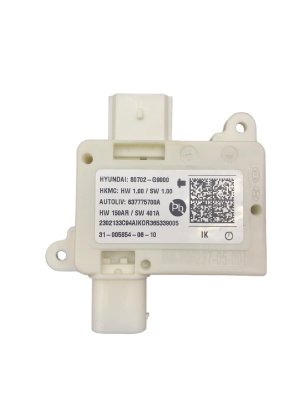

The information in this article is provided for general reference and educational purposes only. Vehicle specifications, procedures, and part compatibility can vary by production date, trim level, and region. Always consult your vehicle's factory service manual and verify part numbers before purchasing or performing repairs. Safety-critical components such as airbags, seat belts, and braking systems should be installed by a qualified professional.
- Genesis G70:
- 🧭 Diagnostic Flowchart
- 🎬 Helpful Videos
- 🛍️ Shop This Part
- What's Unique About the 2017-2024 Genesis G70
- Symptoms You May Notice
- Most Likely Causes
- Rare But Worth Checking
- Diagnosis Steps
- Parts You'll Likely Need
- Related Codes That Often Appear With This One
- Technical Service Bulletins (TSBs) & Recalls
- Platform-Specific Known Issues
- Documented NHTSA Reports
- Mechanic-Grade Diagnostic Values
- Scan Tool Commands That Help
- Wiring & Ground Locations
- Real Owner Repair Stories
- Model Year Variations Within This Range
- Other Known Issues on This Vehicle
- Used vs. New Parts: Buying Guide for This Vehicle
- Real Owner Stories
- 2019 Genesis G70 3.3T
- 2019-2021 Genesis G70
- 2018-2023 Kia Stinger (Platform Mate)
- Related OBD-II Codes
- Frequently Asked Questions
- 🎟️ Get 5% Off