

U2101 on 2011-2016 Hyundai Elantra: Control Module Not Programmed Fixes
Code U2101 on a 2011-2016 Elantra means a control module, most often the main engine computer (ECM), has lost its programming or was replaced without being configured. This is not a DIY fix and almost always requires a trip to a Hyundai dealer or a specialized shop with advanced programming tools.
- U2101 is a programming issue, not a mechanical part failure. Do not replace sensors or other components.
- This code almost always appears after a control module (especially the ECM) has been replaced without being programmed to the car's VIN.
- A fix requires a trip to a Hyundai dealer or a well-equipped independent shop with Hyundai-specific programming tools.
- The vehicle may not start or could stall, so it should not be driven until the issue is resolved.
- If you just had a module replaced and this code appeared, the problem is the lack of programming, not a defective new part.
What's Unique About the 2011-2016 Hyundai Elantra
On the fifth-generation (MD/UD) Elantra, major control modules like the ECM are tied to the vehicle's anti-theft immobilizer system. You cannot simply swap a module from another car, even an identical one, and expect it to work ('plug-and-play'). The U2101 code is the car's way of saying a module has been installed without the mandatory, VIN-specific programming required to pair it to the vehicle's systems and other modules. Many turn-key ignition models of this era lack a robust factory immobilizer, making correct ECM programming even more critical for vehicle operation.
Symptoms You May Notice
- Check Engine Light is on
- Vehicle will not start (cranks but no fire 🎬 Watch this walkthrough if your Elantra cranks but won't start)
- Engine stalls intermittently or runs very poorly
- Other warning lights (like ABS, Airbag, or the immobilizer key symbol) may be illuminated
- Loss of communication with the scan tool for the affected module
- Replacing sensors (like crankshaft or oxygen sensors) hoping to fix stalling or no-start issues. This code is strictly related to module programming, not sensor input.
- Assuming a used ECM from an identical Elantra will be 'plug-and-play'. All replacement ECMs for this platform require programming.
- Blaming the new/used ECM as faulty when the code appears after installation. The problem is almost always the lack of programming, not a defective part.
Most Likely Causes
- Replaced ECM/PCM Not Programmed 🔴 High Probability This is the most frequent cause. A new or used ECM/PCM was installed, but the mandatory VIN and immobilizer programming procedure was skipped.
How to confirm: Confirm if the ECM or any other major control module was recently replaced. A professional scan tool can check the VIN stored in the module; if it's blank or incorrect, this is the cause. The code will appear immediately after the swap.
Typical fix: The module must be programmed with the correct VIN and software using a Hyundai-specific diagnostic tool like the GDS. This procedure is often called 'VIN Writing' or 'ECU Coding'. 🎬 Watch: How to program a new ECU using Hyundai GDS
Est. part cost: $0 (if programming is the only need) - Failed ECM/PCM Software Update 🟡 Medium Probability A software update (reflash) at a dealership or repair shop may have been interrupted by voltage drops or tool failure, leaving the module in an unprogrammed or 'bricked' state.
How to confirm: This typically occurs immediately after a service visit where programming was attempted. The module will be unresponsive or show an invalid configuration status on a high-level scan tool.
Typical fix: Re-attempt the programming procedure from the beginning. If it fails repeatedly, the module may be damaged and require replacement.
Est. part cost: $0 - Internal ECM/PCM Failure ⚪ Low Probability The module's internal memory (EEPROM) can fail due to voltage spikes (e.g., improper jump-starting), water intrusion, or internal component degradation, causing it to lose its configuration data spontaneously.
How to confirm: A technician will attempt to reprogram the module. If the programming fails to write or retain the data, and all power/ground connections to the ECM are verified as good, the module itself is considered faulty.
Typical fix: The ECM/PCM must be replaced with a new or remanufactured unit, which must then be programmed to the vehicle.
Est. part cost: $400-$1200
Rare But Worth Checking
- Corrupted configuration from low battery voltage: A severely discharged battery can sometimes corrupt the configuration data in a module during startup, triggering a U2101 code.
- Incorrect module part number installed: Installing an ECM from a different model year or trim level (e.g., a manual transmission ECM in an automatic car) can prevent successful programming and set this code.
Diagnosis Steps
- Verify the battery is fully charged (12.4V+ resting) and the charging system is working correctly. Low voltage can cause communication errors and programming failures.
- Connect a professional-grade, bidirectional scan tool capable of communicating with all Hyundai modules (e.g., Hyundai GDS).
- Scan all modules for DTCs. Note which module is reporting the U2101 code. It is most often the ECM but could be another module like the ABS or Airbag controller.
- Attempt to read the VIN from the affected module. Compare it to the vehicle's actual VIN plate.
- If the VIN is missing or incorrect, this confirms a programming issue. Verify the part number on the module is correct for the vehicle's year, model, and options before proceeding.
- Perform the 'VIN WRITING' or 'Module Configuration' procedure following the scan tool's prompts. This requires a stable internet connection and possibly a subscription to Hyundai's service site.
- If programming is successful, clear all codes from all modules and cycle the ignition. Perform a test drive to ensure all systems are functioning.
- If programming fails repeatedly, inspect the module's connectors for damage or corrosion. If the wiring is good, the module itself is likely defective and requires replacement.
Parts You'll Likely Need
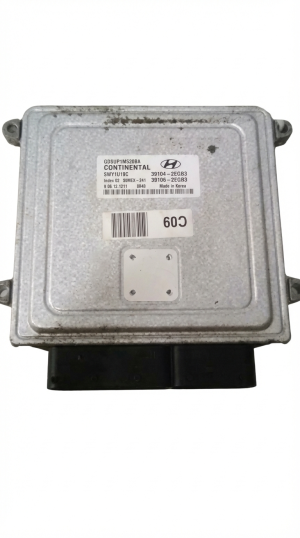
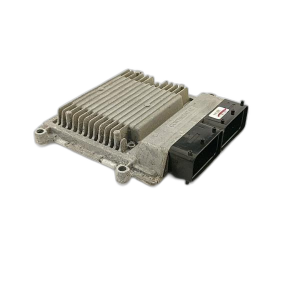
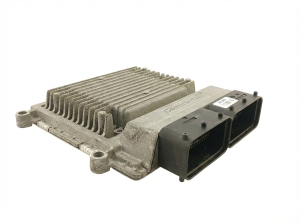
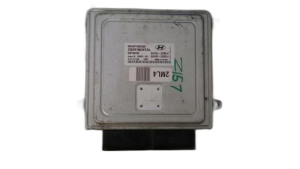
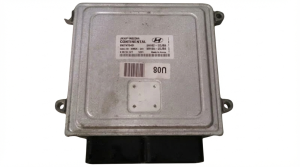
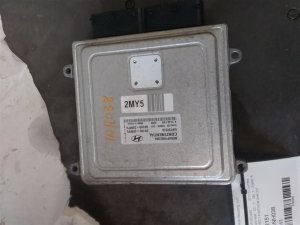
- Engine Control Module (ECM)
(OEM #39103-2EML4, 39103-2EML5, 39103-2EML6, 39131-2EMA3 (Part numbers are VIN-specific, always verify with a dealer))— This is the part that most commonly triggers U2101, either due to internal failure or improper replacement. A new or used ECM must be programmed to fix the code.
Trusted brands: Hyundai (OEM), Cardone (Remanufactured), BSE (Remanufactured)
OEM price range: $800-$1200
Aftermarket price range: $200-$500 (Remanufactured)
Related Codes That Often Appear With This One
- P0630 — This code for 'VIN Not Programmed or Mismatch - ECM/PCM' is often set alongside U2101, as it specifically points to the missing or incorrect Vehicle Identification Number in the engine computer.
- U0100 — This code means 'Lost Communication With ECM/PCM'. If the U2101 configuration error is severe enough to cause the module to stop broadcasting on the CAN network, other modules will log this code.
- Immobilizer Warning Light — A flashing or steadily illuminated key symbol on the dashboard indicates a problem with the anti-theft system, which is directly linked to the ECM's programming. 🎬 See how to reset the immobilizer light on your Elantra An unprogrammed ECM will not be recognized by the immobilizer module, preventing the engine from starting.
Platform-Specific Known Issues
- There is a safety recall (NHTSA 24V-139, Hyundai Recall 251) for some 2011-2015 Elantra models concerning an electrical short in the ABS module, which could increase the risk of an engine fire. While this does not directly cause a U2101 code, it highlights the sensitivity of the vehicle's electronic modules.
- Many 2011-2022 Hyundai models with turn-key ignitions were subject to widespread theft issues. Hyundai released a software update to create an 'ignition kill' feature, which modifies vehicle control modules. A failed or interrupted installation of this anti-theft software could potentially lead to module configuration issues.
Documented NHTSA Reports
While U2101 is a manufacturer-specific code for configuration errors, reports from other manufacturers illustrate how this code behaves across different platforms. For example, NHTSA ODI #11581420 describes a vehicle that makes a strange beeping noise like a warning chime with no lights appearing, while storing U2101 alongside several other communication codes. In another instance, NHTSA ODI #10694215 notes that U2101 was present alongside a steering-related code (C1B00), leading to a recommendation for a full electronic steering rack replacement.
Mechanic-Grade Diagnostic Values
- CAN Bus Resistance — expected: Approximately 60 Ohms when measured between Pin 6 (CAN-H) and Pin 14 (CAN-L) at the DLC with the battery disconnected. This reading confirms the two 120-Ohm terminating resistors (one often in the ECM, the other in the instrument cluster) are present and the circuit is intact.. Failure: A reading of 120 Ohms indicates one of the terminating resistors is not being seen by the network. A reading of 0 Ohms indicates a short between CAN-H and CAN-L. An open circuit (infinite resistance) indicates a break in the wiring.
- CAN Bus Voltage (Key On, Engine Off) — expected: CAN High (Pin 6 at DLC): ~2.7V. CAN Low (Pin 14 at DLC): ~2.3V.. Failure: Voltages that are stuck high (near 5V or 12V), low (near 0V), or are identical on both lines indicate a short to power, short to ground, or a short between the two CAN lines, respectively. This will bring down communication and can trigger U-codes.
- ECM Power and Ground Pins — expected: With the key on, specific pins on the ECM connector should show battery voltage (approx. 12.6V) and others should have near-zero resistance to chassis ground.. Failure: Missing voltage or poor ground connections can prevent the ECM from powering on correctly, leading to communication failures or corruption of its programming. For example, on a 2012 Elantra, pins 3 and 4 of connector CGG-K are power grounds.
Scan Tool Commands That Help
- Hyundai GDS (Global Diagnostic System): ECU Upgrade (Auto Mode / Manual Mode) — This is the primary function used to program a new or replacement ECM. 'Auto Mode' automatically identifies the vehicle and correct software version. 'Manual Mode' is used to force a specific software version, sometimes needed to recover from a failed update or to install a specific TSB-related patch.
- Hyundai GDS / High-End Aftermarket Scan Tool: VIN Writing / VIN Input — After installing a new or used ECM, this function must be used to write the car's unique 17-digit VIN into the module. Without the correct VIN, the immobilizer system will not recognize the ECM, resulting in a no-start condition and codes like U2101 and P0630.
- Hyundai GDS / High-End Aftermarket Scan Tool: EMS Neutral Mode / Smartra Neutral Mode — When installing a *used* ECM, the donor module must first be put into 'Neutral Mode' using the scan tool *before* it is removed from the donor vehicle. This unlinks it from the donor's immobilizer system. The same procedure is then done on the recipient vehicle's immobilizer (Smartra) module, allowing the two to be paired. Skipping this step makes pairing a used ECM extremely difficult.
- Hyundai GDS: Option Management / Variant Coding — After VIN writing, this function is used to configure the ECM for the specific options on the vehicle (e.g., automatic vs. manual transmission, cruise control, etc.). An incorrect configuration can cause features to not work and may set a U2101 code.
Wiring & Ground Locations
- ECM/PCM Location — In the engine compartment, typically on the driver's side, near the firewall or battery.. Physical access is required to check part numbers, inspect connectors for corrosion or damage, and to replace the module if necessary.
- ECM Power Grounds — On a 2012 Elantra (1.6L MPI), Pins 3 and 4 of the main ECM connector [CGG-K] are direct power grounds. These ground points are typically bolted to the chassis or engine block near the ECM.. A loose or corroded main ground for the ECM can cause intermittent power loss, leading to data corruption, communication failures, and potentially a U2101 code. Verifying a clean, tight ground connection is a critical step before condemning the ECM itself.
- Data Link Connector (DLC) — Under the driver's side dashboard, to the left of the steering column.. This is the primary access point for scan tools. Pins 6 (CAN-H) and 14 (CAN-L) are used for high-speed network communication. Testing voltage and resistance at these pins is the first step in diagnosing network-wide communication faults.
- E/R Fuse & Relay Box — In the left front corner of the engine compartment.. This box contains the main ECU fuses (e.g., 'ECU 4 fuse 15A') and the Engine Control Relay. A faulty relay or blown fuse will prevent the ECM from powering on, causing a total loss of communication that could be mistaken for an internal ECM failure.
Real Owner Repair Stories
- Car Talk Community Forum (2013 Hyundai Elantra) — Car would not start without being jump-started, even after installing a new battery and repairing a broken positive terminal end.
❌ Tried (didn't work) Replacing the battery, Repairing the battery terminal, Charging the battery overnight
✅ What actually fixed it The starter motor was faulty. After replacing the starter, the car started normally. This highlights that symptoms commonly associated with ECM/battery issues (crank-no-start or no-crank) can originate from a simple, but failed, mechanical component like the starter. - Hyundai Forums (2013 Hyundai Elantra GT, Manual Transmission, 100,000 miles) — Intermittent no-start with a loud clicking sound. Sometimes it would start with a jump, other times it would not. Check engine light came on after one of the jump starts.
❌ Tried (didn't work) Battery tested fine at multiple locations., Alternator tested fine.
✅ What actually fixed it The final diagnosis pointed towards a failing starter motor. A contributor noted that Hyundai vehicles are notorious for faulty grounds, and cleaning all battery, ground, and starter connections is a crucial first step. In this case, the extra voltage from a jump start was sometimes enough to overcome the high internal resistance of the worn starter brushes, explaining the intermittent nature of the fault.
OEM Part Supersession History
39103-2EMB2, 39103-2EMB3→39103-2EMP2, 39103-2EMP3— Standard part revision and update.
Heads up: These part numbers are for 2011-2013 Elantra sedans with 1.8L engine, automatic transmission, and conventional ignition (not push-to-start). They are not compatible with SULEV (California emissions) models or the later 2014+ facelift models.39103-2EML4→39103-2EML5, 39103-2EML6— Part revisions for later model years.
Heads up: These part numbers are for the facelifted 2014-2016 Elantra, which often used the 2.0L engine. They are not backwards compatible with the 2011-2013 models due to significant powertrain and electronic changes. Always verify the part number with the vehicle's VIN.
Model Year Variations Within This Range
- 2014-2016: The 2014 model year brought a significant facelift, including a new optional 2.0L GDI engine alongside the 1.8L MPI. This means different ECMs with different part numbers and software were used. The interior also saw updates to the audio and navigation systems, which are tied into the CAN network. An ECM from a 1.8L car will not work in a 2.0L car, and vice-versa, making part number verification even more critical for these later years.
- 2011-2013 vs 2014-2016: Pre-facelift (2011-2013) and post-facelift (2014-2016) models use different families of ECMs. For example, many 2011-2013 models use part numbers starting with 39103-2EMB_ or 39103-2EMP_, while 2014-2016 models often use 39103-2EML_ or 39131-2EMA_. They are not interchangeable.
Diagnostic Flowchart
Other Known Issues on This Vehicle
Issues unrelated to this code that are worth knowing about as an owner of this generation:
- Engine Ticking / Piston Slap (1.8L Nu Engine) 🔴 High — Widespread issue affecting 2011-2016 models with the 1.8L Nu engine. Can lead to oil consumption, internal damage, and eventual engine failure. (Ref: Subject of a class-action lawsuit which resulted in an extended warranty (10 years/120,000 miles) for the engine short block assembly for qualifying vehicles.)
- Worn Steering Coupler 🟠 Medium — Extremely common. The flexible rubber coupler in the electronic power steering column disintegrates over time, causing a clicking or clunking noise and excessive play in the steering wheel. (Ref: Hyundai TSB 17-ST-001 addresses this issue, outlining the replacement procedure. The part itself is inexpensive, but labor can be several hours.)
- Timing Chain Rattle / No-Start 🔴 High — Less common than piston slap, but serious. The plastic timing chain guides can crack and break, causing the chain to have slack. This leads to a chattering noise and can allow the chain to jump time, resulting in a no-start condition and potential engine damage. Often accompanied by codes P0340 or P0016.
- Premature Alternator Failure 🟡 Low — Some owners report alternator failure more frequently than expected, leading to a battery warning light on the dash and a no-charge condition.
- Airbag Light / Passenger Occupant Sensor 🟠 Medium — Reports of the passenger airbag 'OFF' light flashing or staying on incorrectly even when the seat is empty, sometimes without a corresponding fault code on the main instrument cluster. (Ref: Recall 13V115000 was issued for 2011-2013 models for a headliner support bracket that could interfere with side curtain airbag deployment, though this is separate from the occupant sensor issue.)
Used vs. New Parts: Buying Guide for This Vehicle
When a used part is the smart pick: A used ECM can be a cost-effective option if the original has a confirmed internal hardware failure. However, it is NOT a simple plug-and-play repair. The cost savings of a used part can be quickly erased by complex programming requirements.
Donor-vehicle mileage cap: roughly under 120000 miles for the part to have meaningful remaining life.
What to inspect on the donor part:
- Verify the part number EXACTLY matches the original or is a confirmed superseded part number from a Hyundai dealer.
- Obtain the VIN of the donor vehicle. This is sometimes needed for programming procedures.
- Ideally, purchase from a reputable recycler that offers a warranty and confirms the part is from a vehicle that was not involved in a flood or fire.
- Ask if the seller can perform the 'Neutral Mode' procedure on the ECM before it is shipped. This is a rare service but invaluable if available.
OEM-only on this vehicle (don't cheap out):
- Engine Control Module (ECM/PCM)
Aftermarket brands forum-validated for this vehicle:
- Flagship One (FS1) - Offers pre-programmed ECMs where you provide your VIN upon ordering.
- Cardone (Remanufactured) - A common source for remanufactured electronics, but programming will still be required locally after installation.
Brands owners have reported issues with on this vehicle:
- Unbranded, 'as-is' modules from online marketplaces without a clear return policy or warranty. The risk of receiving a dead, locked, or incompatible module is very high.
Real Owner Stories
Aggregated from forums and TSBs cited above. Mileages and costs reflect what owners reported in those sources.
2012 Hyundai Elantra
Symptoms: Vehicle experienced a no-start condition and a dead battery; an OBD2 reader showed a faulty ECU code.
What fixed it: The issue was related to low battery voltage causing module errors; ensuring a fully charged battery and clearing codes is the first step, though U2101 specifically requires re-writing the configuration if the data was corrupted.
Source hint: Reddit - r/autorepair - A user with a 2012 Elantra experienced a no-start and a dead battery
Related OBD-II Codes
Frequently Asked Questions
I just replaced the ECM in my 2012 Elantra with a used one and now I have code U2101. Why?
Can a low battery cause a U2101 code on my 2011-2016 Elantra?
Is there a recall for the 2011-2015 Elantra that might be related to electronic module issues?
I had the anti-theft software update performed on my turn-key Elantra and now it won't start. Could this be U2101?
How much does it cost to fix U2101 if the ECM itself has failed?
Does the 1.8L engine ticking issue cause the U2101 code?
Helpful Videos
We Have This Part in Stock

The information in this article is provided for general reference and educational purposes only. Vehicle specifications, procedures, and part compatibility can vary by production date, trim level, and region. Always consult your vehicle's factory service manual and verify part numbers before purchasing or performing repairs. Safety-critical components such as airbags, seat belts, and braking systems should be installed by a qualified professional.
- Hyundai Elantra:
- 🧭 Diagnostic Flowchart
- 🎬 Helpful Videos
- 🛍️ Shop This Part
- What's Unique About the 2011-2016 Hyundai Elantra
- Symptoms You May Notice
- Most Likely Causes
- Rare But Worth Checking
- Diagnosis Steps
- Parts You'll Likely Need
- Related Codes That Often Appear With This One
- Platform-Specific Known Issues
- Documented NHTSA Reports
- Mechanic-Grade Diagnostic Values
- Scan Tool Commands That Help
- Wiring & Ground Locations
- Real Owner Repair Stories
- OEM Part Supersession History
- Model Year Variations Within This Range
- Other Known Issues on This Vehicle
- Used vs. New Parts: Buying Guide for This Vehicle
- Real Owner Stories
- 2012 Hyundai Elantra
- Related OBD-II Codes
- Frequently Asked Questions
- 🎟️ Get 5% Off