

U2101 on 2004-2012 Volvo S40: Control Module Configuration Incompatible Causes and Fixes
U2101 on a 2004-2012 Volvo S40 means a control module has the wrong software, almost always because a used part (like an airbag or ABS module) was installed without being reprogrammed. The fix is not to buy another part, but to have the installed module professionally reprogrammed or 'cloned' to match your car's VIN.
- U2101 is a software problem, not a hardware problem. It means a module is not programmed for your car's VIN.
- The most common cause is replacing a module (especially for airbags/SRS) with a used one after an accident.
- Do NOT buy another replacement part. The currently installed part needs to be reprogrammed.
- A Volvo dealer or specialist with VIDA software is required for diagnosis. Standard code readers are not sufficient.
- For a used part, you must use an independent specialist service to 'clone' or 'virginize' the module, as dealers cannot program used components.
What's Unique About the 2004-2012 Volvo S40
The 2004-2012 Volvo S40 (P1 platform) has a highly integrated network of electronic modules that are electronically 'married' to the car's specific Vehicle Identification Number (VIN). Unlike many other vehicles where you can simply swap a used computer from a donor car, most Volvo modules require software programming to be accepted by the network. This security feature means that installing a used module, even with the exact same part number, will almost always trigger a U2101 code until it is reprogrammed by a specialist. Volvo's official diagnostic tool (VIDA) can only program new, blank modules and cannot overwrite the VIN on a used part.
Symptoms You May Notice
- Airbag warning light is on with an "SRS Service Urgent" message in the instrument cluster.
- ABS and/or Anti-Skid warning lights are on.
- Cruise control does not work.
- Loss of function for a specific component (e.g., power windows/locks on one door if a door module is the cause).
- The Check Engine Light may or may not be on.
- Replacing the module again. The problem is software, not a defective part. Buying another used module will result in the same U2101 code.
- Replacing the Central Electronic Module (CEM). The fault code U2101 is stored in the incompatible peripheral module (like SRS or ABS), not the CEM. A failing CEM typically causes widespread, intermittent electrical chaos (wipers, lights, starting issues) rather than a single, persistent incompatibility code.
Most Likely Causes
- Used Control Module Installed Without Reprogramming 🔴 High Probability This is the most common cause, often occurring after collision repairs where a module is replaced with a cheaper, used part to save money. The SRS (airbag) module is the most frequent culprit.
How to confirm: Use a Volvo-specific scan tool (like VIDA) to identify which module is logging the U2101 code. Check the vehicle's recent repair history. A user on volvoXC.com confirmed that even with matching part numbers, a used SRS module needed special handling to work.
Typical fix: The installed used module must be reprogrammed. This requires either 'cloning' the data from the original module (if available) or 'virginizing' the used module and programming it to the car. This is done by independent specialists or mail-in services like XeMODeX or Airbag Master Tech. - New OEM Control Module Installed Without Programming 🟡 Medium Probability A new, blank module from Volvo also lacks the vehicle-specific configuration and will not work until programmed.
How to confirm: The vehicle history will show a new OEM part was installed, but the U2101 code persists. A VIDA scan will show the module but may flag it as unconfigured, sometimes with code U2100.
Typical fix: The new module must be programmed to the vehicle using a Volvo VIDA subscription, which is typically done at a dealership or a qualified independent Volvo specialist. - Data Corruption in Original Module ⚪ Low Probability Though rare, a software glitch, significant voltage spike, or internal hardware failure can corrupt the configuration data within the original module, causing it to no longer be recognized by the CEM. A flat battery can sometimes cause modules to lose synchronization.
How to confirm: This is diagnosed by exclusion. If no modules have been replaced and all wiring is intact, data corruption is a possibility. A VIDA scan may show communication errors with the specific module or checksum errors like ECM-C301.
Typical fix: A specialist may be able to perform a 'software reload' using VIDA to try and fix the corruption. If that fails, the module will need to be replaced and the new one programmed.
Diagnosis Steps
- Connect a Volvo-specific diagnostic tool like VIDA.
- Perform a full vehicle scan to read codes from all modules.
- Identify which specific module is reporting the U2101 code (e.g., SRS, BCM, PDM).
- Review the vehicle's repair history. Ask the owner if the identified module has been replaced recently, especially after an accident.
- Physically inspect the module in question. Compare the part number on the module to the one specified for the vehicle's VIN. A user on volvoXC.com noted the importance of matching part numbers exactly when attempting a swap.
- If a used module was installed, the fix is to have it reprogrammed by a specialist. Do not replace it again.
- If a new OEM module was installed, it must be programmed by a facility with a VIDA subscription.
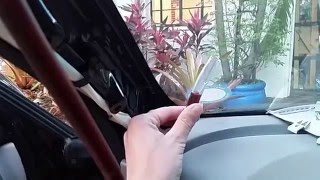
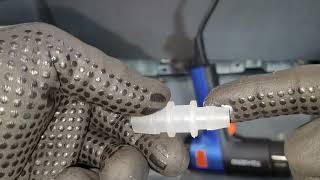
- If no modules were replaced, inspect the wiring and connectors for the affected module for any damage, corrosion, or loose pins before suspecting internal module failure. Water intrusion from clogged sunroof drains is a known cause 🎬 See this step-by-step sunroof drain repair guide of electrical issues on this platform, potentially corroding the CEM and its connectors.
Parts You'll Likely Need
- Module Programming Service — This is not a physical part, but a service. The existing module needs its software corrected to match the vehicle's VIN. This is the required fix instead of buying another hardware component.
Trusted brands: XeMODeX, Roach Reman, ECU Connection UK
OEM price range: $150-$400
Aftermarket price range: $100-$250 - Supplemental Restraint System (SRS) Module
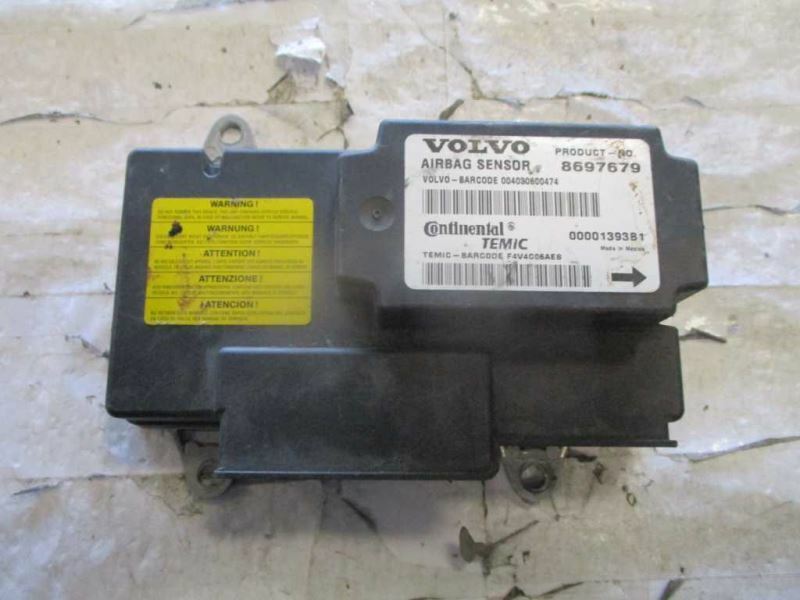
(OEM #30611293 (Bosch P/N: 0 285 001 146) is one example, but part numbers are highly specific to year and vehicle options.)— This is the most common module to be improperly replaced, triggering the U2101 code. You would only buy this if the original is physically damaged and unreadable, and the car has a used, incompatible one installed.
Trusted brands: Bosch (OEM), Volvo (OEM)
OEM price range: $500-$800
Aftermarket price range: $50-$200 (Used) - Brake Control Module (BCM/ABS)
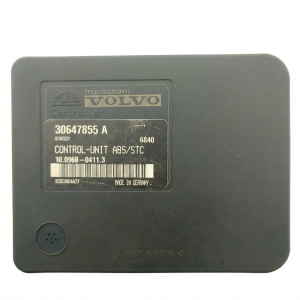
(OEM #Example for non-DSTC cars: 30714944 or 30793529. Part numbers vary significantly based on whether the car has DSTC.)— Another common module that, if replaced incorrectly with a used part, will cause the U2101 code and disable ABS/stability control.
Trusted brands: ATE (OEM), Bosch, Volvo (OEM)
OEM price range: $800-$1500
Aftermarket price range: $150-$400 (Used or Remanufactured)
Related Codes That Often Appear With This One
- U2100 — U2100 means 'Control Module Not Configured'. It appears when a brand-new, blank module is installed, whereas U2101 appears for a used module with the wrong configuration.
- U0151 — Means 'Lost Communication With Restraints Control Module'. This code is often logged by other computers in the car when the SRS (airbag) module is the one with the U2101 fault, causing it to go offline from the CAN network.
- CEM-3A00 — This code, meaning 'ECM software faulty signal', can be stored in the CEM when a module like the Engine Control Module (ECM) loses synchronization after a battery failure, which can sometimes be related to the conditions that trigger a U2101.
Platform-Specific Known Issues
- Real Repair Story: The 'Myth' of VIN-Locked SRS Modules: A user on volvoXC.com with a 2006 S40 T5 experienced the 'SRS Service Urgent' light after fixing water damage from clogged sunroof drains. After being told by two dealers that a used SRS module could not be reprogrammed, they purchased a used module with the exact same part number from a donor vehicle that had not been in a crash. After disconnecting the battery and swapping the module, the light went out and a VIDA scan showed no fault codes, confirming that in some cases, a direct swap of an identical, non-crashed module can work without reprogramming. However, this is considered a gamble, and professional reprogramming remains the guaranteed fix.
Mechanic-Grade Diagnostic Values
- CAN Bus Network Termination Resistance — expected: ~60 Ohms. Failure: A reading of ~120 Ohms indicates one of the two termination resistors is missing or the circuit to it is open. A reading significantly less than 60 Ohms suggests a short circuit or an extra termination resistor on the network.
- CAN High (CAN-H) to Ground Voltage (Key On) — expected: 2.6V - 3.0V DC (average). Failure: A voltage significantly outside this range, or equal to CAN-L voltage, indicates a fault on the CAN-H line or a faulty module transceiver.
- CAN Low (CAN-L) to Ground Voltage (Key On) — expected: 2.0V - 2.4V DC (average). Failure: A voltage significantly outside this range, or equal to CAN-H voltage, indicates a fault on the CAN-L line or a faulty module transceiver.
Hidden / Shadow Codes Worth Checking
- CEM-DC01: This is a Volvo-specific code stored in the Central Electronic Module (CEM) indicating 'Control module, communication fault'. While U2101 is in the peripheral module, a related communication fault may be logged in the CEM, pointing to a network-level problem. (see via Volvo VIDA/DiCE diagnostic tool.)
Scan Tool Commands That Help
- Volvo VIDA: Software Reload — This function is used to program a new, blank control module or to attempt to repair a corrupted original module by reloading its factory software. It requires an active VIDA subscription and cannot be used to reprogram a used module from another car.
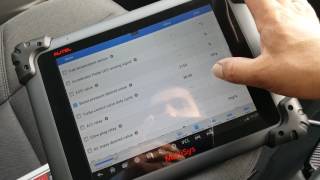
- Volvo VIDA: Read All / Erase All — The 'Read All' function performs a full network sweep to identify which modules are present and what codes they contain. This is the first step to pinpointing which module is logging U2101. 'Erase All' clears codes from all modules simultaneously after a repair.
- Specialized Bench Programming Tools (e.g., XPROG, VVDI Prog): Module Cloning (Read/Write EEPROM/Flash) — When replacing a module with a used one, these tools are used by specialists to read the configuration data (including VIN) from the original module's memory chips (like MC9S12 series) and write it to the donor module. This makes the used part an exact electronic copy of the original.
Wiring & Ground Locations
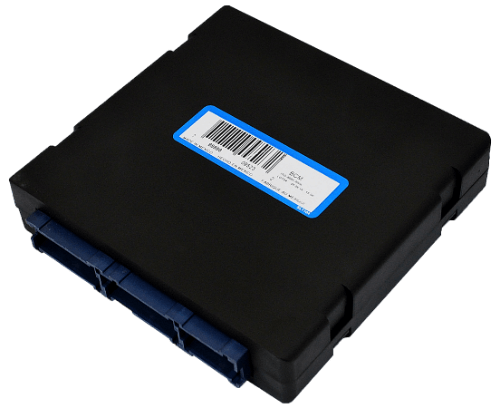
- Central Electronic Module (CEM) — Located in the passenger compartment, under the glove box. It is a large black box with multiple large connectors.. The CEM is the master computer that validates the configuration of all other modules. It is notoriously susceptible to water damage from clogged sunroof drains, which can cause corrosion on its connectors and internal board, leading to various network faults, including conditions that can trigger U2101 in other modules.
- Sunroof Drain Tubes — Run from the corners of the sunroof cassette, down the A-pillars, and are supposed to exit through a grommet in the firewall/cowl area.. These tubes frequently become clogged or the lower elbow disconnects, causing rainwater to leak directly onto the CEM and its wiring harnesses, leading to corrosion and unpredictable electrical faults.
- SRS Module — Typically located under the center console, between the front seats.. As the most common source of U2101, knowing its location is key for inspection and replacement. Access often requires removing the center console trim pieces.
- BCM / ABS Module — The electronic module is bolted to the ABS hydraulic block in the engine compartment, usually on the driver's side.. This is another common module to be replaced with an incompatible used part. Its location makes it subject to engine bay heat, which can contribute to eventual electronic failure.
Real Owner Repair Stories
- ECU Connection UK on YouTube (2007 Volvo S40 Diesel) — No crank, no start condition with an 'Immobilizer, try start again' message on the dash.
❌ Tried (didn't work) Repeatedly trying to start the car.
✅ What actually fixed it The issue was caused by a flat battery which de-synchronized the Engine Control Module (ECM) and the Central Electronic Module (CEM). The fix required removing both the ECM and CEM, reading the data from both, and using specialized software to re-synchronize them. The fault codes present were CEM-3A00 (ECM software faulty signal) and ECM-C301 (Control module faulty software checksum).
Documented NHTSA Reports
- NHTSA ODI #11581420: An owner of a different manufacturer's vehicle reported U2101 appearing alongside codes U0121, U0140, and U0256. The report noted a strange beeping noise sounding like a warning chime, though no lights initially appeared.
- NHTSA ODI #10694215: A report for another make describes U2101 appearing with code C1B00, where the vehicle required an electronic steering rack replacement after the steering wheel was turned.
OEM Part Supersession History
30714944→30714947 (example)— Revision for ABS/BCM module for cars WITHOUT DSTC (Dynamic Stability and Traction Control).
Heads up: It is critical to distinguish between modules for cars with and without DSTC. A button labeled 'DSTC' on the center console indicates the car has the feature. Installing a non-DSTC module in a DSTC car (or vice-versa) will cause a configuration error and is a common trigger for U2101 or related brake system faults.
Model Year Variations Within This Range
- 2008-2012 (Facelift): In 2008, Volvo updated the ECU software, which provided a slight power increase for the T5 engine and enabled the official Polestar factory tune. While core module programming principles remained the same, these software differences mean that a module from a 2005 model is even less likely to be compatible with a 2010 model, even with identical hardware part numbers.
Diagnostic Flowchart
Other Known Issues on This Vehicle
Issues unrelated to this code that are worth knowing about as an owner of this generation:
- Clogged PCV / Oil Filter Housing Diaphragm Failure (T5 Engine) 🔴 High — Common over 100,000 miles. A torn diaphragm in the oil filter housing (which contains the PCV system) creates a loud whistle or squeal at idle. If ignored, the excess crankcase pressure can blow out engine seals (cam seals, main seals), leading to major oil leaks.
- Clogged Sunroof Drains Causing Interior Water Leaks 🟠 Medium — Very common across all years. The front drain tubes can get clogged with debris or, more often, the connector elbow separates behind the A-pillar trim, dumping water into the front footwells. This can damage the CEM or other electronics. (Ref: A class-action lawsuit was filed in the US regarding this design.)
- Alternator Failure 🔴 High — Common failure item, often after 80,000 miles. Symptoms include a loud whining or grinding noise that increases with engine RPM, flickering lights, 'Charging System Failure' messages, and a dead battery.
- Worn Engine Mounts 🟠 Medium — The hydraulic engine mounts, particularly the upper torque mount and the right-side passenger mount, wear out causing excessive vibration at idle and clunking noises during acceleration or shifting.
- ABS Module Internal Failure 🔴 High → Shop ABS Control Module — Common on 2005-2007 models. An internal failure of the ATE ABS module, often related to the integrated brake pressure sensor, triggers the 'Anti-Skid Service Required' message and DTC BCM-0130. This disables ABS and stability control.
Used vs. New Parts: Buying Guide for This Vehicle
When a used part is the smart pick: A used electronic module (SRS, BCM, CEM) is a cost-effective choice ONLY if you have access to a specialist service that can 'clone' your original module's data onto the used part, or 'virginize' the used part for reprogramming. Simply buying a used module and swapping it in is a gamble that usually fails.
Donor-vehicle mileage cap: roughly under 150000 miles for the part to have meaningful remaining life.
What to inspect on the donor part:
- Verify the part number on the used module EXACTLY matches your original part.
- Source the part from a vehicle that was not involved in a collision, especially for SRS modules, to avoid 'crash data' issues.
- Inspect all connector pins for corrosion, moisture damage, or bent pins before purchase.
- Ask the seller if they can confirm the donor car's VIN, which can help a specialist determine software compatibility.
OEM-only on this vehicle (don't cheap out):
- Central Electronic Module (CEM)
- Supplemental Restraint System (SRS) Module
- Brake Control Module (BCM/ABS)
Aftermarket brands forum-validated for this vehicle:
- XeMODeX (Remanufactured/Repair Service)
- Roach Reman (Remanufactured/Repair Service)
Brands owners have reported issues with on this vehicle:
- Unbranded, no-name electronic modules from online marketplaces are extremely risky as they often cannot be programmed correctly.
Real Owner Stories
Aggregated from forums and TSBs cited above. Mileages and costs reflect what owners reported in those sources.
2006 Volvo S40 T5
Symptoms: SRS Service Urgent light appeared after fixing water damage caused by clogged sunroof drains.
What fixed it: The owner purchased a used SRS module with the exact same part number from a non-crashed donor vehicle and swapped it after disconnecting the battery.
Source hint: volvoXC.com - Thread: 'Advice for replacing main airbag module'
2009 Volvo S40
Symptoms: Battery drain issues leading to a diagnosis of a failing Central Electronic Module (CEM).
What fixed it: The owner was quoted for a CEM replacement which requires expensive software-loading fees at a dealer.
Cost: $1300-$1400
Source hint: Volvo Forums - Thread: 'Failing CEM'
2004 Volvo S40
Symptoms: Airbag module was determined to be unrepairable; owner purchased a used replacement with the same part number.
What fixed it: A technician explained that the replacement module must be programmed with the original coding to function correctly.
Source hint: JustAnswer - Thread: 'Airbag module unrepairable bought used replacement with same'
NHTSA Reported Incident
Symptoms: An owner reported a strange beeping noise similar to a warning chime, despite no warning lights being illuminated initially.
What fixed it: Diagnostic scanning revealed multiple communication and configuration codes, including U2101, U0121, U0140, and U0256.
Source hint: NHTSA ODI #11581420
NHTSA Reported Incident
Symptoms: A driver experienced issues when turning the steering wheel, leading to a dealership inspection.
What fixed it: The dealer identified codes C1B00 and U2101, determining that the vehicle required a replacement of the electronic steering rack.
Source hint: NHTSA ODI #10694215
Related OBD-II Codes
Frequently Asked Questions
Can I use a used SRS module from a donor 2006 S40 T5 to fix my 'SRS Service Urgent' light?
Why did my 2009 S40's Check Engine Light stay off even though I have an SRS warning and U2101?
Could the clogged sunroof drains on my S40 be related to the U2101 configuration code?
I just installed a brand new OEM module from a dealer; why am I still seeing U2101?
Is there a specific TSB or recall for the sunroof drain issue causing electrical faults?
Will a flat battery cause my S40 to throw a U2101 code?
Helpful Videos

We Have This Part in Stock

The information in this article is provided for general reference and educational purposes only. Vehicle specifications, procedures, and part compatibility can vary by production date, trim level, and region. Always consult your vehicle's factory service manual and verify part numbers before purchasing or performing repairs. Safety-critical components such as airbags, seat belts, and braking systems should be installed by a qualified professional.
- Volvo S40:
- 🧭 Diagnostic Flowchart
- 🎬 Helpful Videos
- 🛍️ Shop This Part
- What's Unique About the 2004-2012 Volvo S40
- Symptoms You May Notice
- Most Likely Causes
- Diagnosis Steps
- Parts You'll Likely Need
- Related Codes That Often Appear With This One
- Platform-Specific Known Issues
- Mechanic-Grade Diagnostic Values
- Hidden / Shadow Codes Worth Checking
- Scan Tool Commands That Help
- Wiring & Ground Locations
- Real Owner Repair Stories
- Documented NHTSA Reports
- OEM Part Supersession History
- Model Year Variations Within This Range
- Other Known Issues on This Vehicle
- Used vs. New Parts: Buying Guide for This Vehicle
- Real Owner Stories
- 2006 Volvo S40 T5
- 2009 Volvo S40
- 2004 Volvo S40
- NHTSA Reported Incident
- NHTSA Reported Incident
- Related OBD-II Codes
- Frequently Asked Questions
- 🎟️ Get 5% Off