

OBD-II Code U2106: Lost Communication With Transmission Control Module
What U2106 means, why it triggers, and how to fix it
- Code U2106 means the Engine Control Module (ECM) lost communication with the Transmission Control Module (TCM) for at least 0.25 seconds.
- Do not drive the vehicle, as sudden downshifts or a complete loss of power in traffic pose a severe safety hazard.
- Check the battery voltage (must be above 12.4V) and inspect the TCM fuses before assuming the module is dead.
- Replacing the TCM costs $400 to $1,700, but damaged CAN bus wiring or corroded connectors cause over 50% of U2106 codes.
What Does U2106 Mean?
Code U2106 means your car's Engine Control Module (ECM) lost its connection to the Transmission Control Module (TCM). These two computers communicate constantly to shift gears correctly. When that Controller Area Network (CAN) bus link breaks, the ECM triggers this error.
Technical definition: The official definition for General Motors (GM) and most other vehicles is 'Lost Communication with Transmission Control Module (TCM)'. This indicates the ECM failed to receive expected messages from the TCM over the CAN bus for a specific period, typically 0.25 seconds. Rare manufacturer variations exist, such as 'ABS Base Brake Open Solenoid Circuit Shorted' on specific Cadillac models.
Can I Drive With U2106?
No — Do Not Drive. Do not drive. The vehicle enters 'limp mode' to prevent catastrophic damage, creating significant safety hazards. The transmission shifts violently, disengages unexpectedly causing sudden power loss, or fails to move the vehicle entirely. Continuing to drive causes expensive secondary damage to drivetrain components like engine mounts and the catalytic converter. Tow the vehicle to a safe location or repair shop.
Common Causes
- Damaged CAN Bus Wiring or Connectors (Very Common) — Wires in the CAN bus harness fray, break, or short against metal components. Connectors to the TCM corrode or suffer from loose pins, interrupting the digital signal.
- Blown Fuse or Bad TCM Ground (Very Common) — The TCM requires stable power and a solid ground. A blown fuse (like the 'IGN 0' fuse in GM trucks), a corroded ground wire, or a loose battery terminal cuts power instantly.
- Low System Voltage (Below 12.4V) (Common) — A weak battery or failing alternator causes widespread electrical dropouts. A momentary voltage drop knocks the TCM offline, even if the vehicle still starts.
- Internal TCM Failure (Common) — The TCM circuit board fails internally due to heat, vibration, or age. This is a notorious failure point on Ford Focus/Fiesta models with the DPS6 transmission.
- Shared Circuit Short (Less Common) — The fuse powering the TCM often powers other components, like glow plugs on a diesel. A short in a shared system blows the fuse, cutting TCM power.
- Failed Internal Transmission Solenoids (Less Common) — Failing internal shift solenoids create electrical noise or short circuits that disrupt the TCM's ability to communicate on the network.
- Failed 120-Ohm Terminating Resistor (Rare) — The CAN bus requires a 120-ohm resistor at each end. If one fails or its host module unplugs, network resistance shifts to 120 ohms, causing communication failure.
- CAN Bus Interference (Rare) — A different module (like the ABS) fails and broadcasts electrical noise onto the shared CAN lines, blocking the TCM's messages.
Symptoms
- Illuminated Check Engine, ABS, and Traction Lights — The Check Engine Light illuminates immediately. Traction Control (TCS), ABS, and 'Service 4WD' warnings frequently accompany it.
- Harsh Shifting and Limp Mode — The transmission slams into gear violently or locks into 2nd or 3rd gear to prevent internal damage.
- Blank PRNDL Gear Indicator — The dashboard display showing the current gear (P, R, N, D, L) goes blank or displays dashes.
- Sudden Power Loss in Traffic — The vehicle loses forward momentum as the transmission disengages or shifts to neutral unexpectedly while driving.
- Engine Cranks But Won't Start — The vehicle refuses to crank because the ECM cannot verify the transmission is safely in Park or Neutral.
- Stored U-Codes (scan-tool only — no driver-felt sign) — Code U2106 stores in the ECM, often alongside generic communication codes like U0101.
Diagnostic Flowchart
Tap your situation to follow the diagnostic path that matches what you're seeing on this code.
Common Fixes & Costs
- Replacing a Blown Fuse — Parts: $1-$5, Labor: $0-$50, ~0.1 hr book time (DIY)
- Cleaning Corroded TCM Connectors — Parts: $5-$20, Labor: $75-$250, ~0.5-1.5 hr book time (DIY)
- Repairing Damaged CAN Bus Wiring — Parts: $10-$50, Labor: $150-$900+, ~1.0-6.0+ hr book time (Intermediate)
- Replacing the Transmission Control Module (TCM)
— Parts: $250-$1200, Labor: $150-$500, ~1.5-4.0 hr book time
(Professional)
Chevrolet/GMC Silverado/Sierra 2500/3500 HD (2006-2008): OEM GM: 19431597, 15117030, 25836825 (Alt: Dorman (remanufactured), Cardone (remanufactured))
Ford Focus/Fiesta with DPS6 (2012-2018): OEM Ford: AE8Z-7Z369-F (Alt: Dorman 609-029)
Saab 9-3 (2007-2011): OEM Saab: 55556515, 55559751 (Alt: Used or remanufactured OEM units only) - Reprogramming the TCM — Parts: $0, Labor: $125-$300, ~0.8-1.5 hr book time (Professional)
Used vs. New Parts: Buying Guide
When a used part is worth it: A used OEM TCM is cost-effective for vehicles over 10 years old where a new module exceeds $800, provided the part numbers match exactly.
Donor-vehicle mileage cap: roughly under 100000 miles for the part to have meaningful remaining life.
Donor quality checklist:
- Exact part number match to the original module.
- Seller provides the donor vehicle VIN for compatibility verification.
- Includes a minimum 90-day warranty.
- No signs of water damage or corrosion on the connector pins.
Decision logic:
- If The vehicle is covered by a manufacturer warranty extension (e.g., Ford 14M02). → Use a new OEM part installed by the dealer for free.
- If The specific TCM model has a 100% known failure rate (design flaw). → Buy a new or professionally remanufactured unit with an updated circuit board design.
- If The vehicle is older and the new part costs over $800. → Purchase a warrantied used module to keep repair costs below the vehicle's value.
Warranty tradeoff: Used parts offer 30-90 day warranties. Remanufactured aftermarket parts offer 1-year warranties. New OEM parts installed by a dealer carry 12-month/12,000-mile warranties.
Worst-case if a used part fails: $400-$800. If a used TCM fails, you pay for diagnostic and programming labor a second time.
What Happens If You Wait — Timeline
- 0-1 week: Transmission enters limp mode, locking into 2nd or 3rd gear. Shifting into Drive or Reverse is harsh. (MPG impact: 15-30%% · Added cost: $0)
- 1 week - 2 months: Violent 'garage shifts' tear the rubber in engine and transmission mounts from repeated shock loads. (MPG impact: 15-30%% · Added cost: $350 - $1,500)
- 2-4 months: Driveline shock destroys U-joints, CV axles, and carrier bearings. Exhaust flex pipes crack from excessive engine movement. (MPG impact: 15-30%% · Added cost: $800 - $2,500)
- 4+ months: Driving at highway speeds in 3rd gear overheats transmission fluid, destroying internal clutch packs and requiring a full rebuild. (MPG impact: 30%+% · Added cost: $2,500 - $7,000+)
Cost of Not Fixing It
- Immediate: The vehicle shifts into neutral unexpectedly in traffic or refuses to move from a stop, creating a severe collision risk. (Added cost: N/A)
- Short-Term (Days to Weeks): Violent 'garage shifts' (Park to Drive) tear engine and transmission mounts, and stress driveshaft U-joints. (Added cost: $300 - $1,500)
- Long-Term (Months): Driving stuck in 2nd or 3rd gear overheats the transmission fluid, destroys clutch packs, and requires a complete transmission rebuild. (Added cost: $2,500 - $7,000+)
Diagnosis Steps
- Check for Other Codes
Use an OBD-II scanner to pull all codes from all modules. Communication codes like U0101 often appear with U2106. Note the modules storing the codes to isolate the network fault.
Tools: OBD-II Scanner (Beginner) - Inspect Battery Voltage and Fuses
Verify the battery reads above 12.4 volts with the engine off. Locate the fuse boxes and test all fuses related to the TCM, PCM, and ignition using a multimeter. Replace any blown fuses.
Tools: Multimeter, Basic Hand Tools (Beginner) - Visually Inspect and 'Wiggle Test' the Harness
Inspect the wiring harness leading to the transmission and TCM for chafing, melting, or corrosion. With the engine running, perform a 'wiggle test' by gently moving sections of the harness to see if you trigger the fault.
Tools: Flashlight (Intermediate) - Test TCM Power and Ground Pins
Disconnect the TCM. Using a wiring diagram, identify the power and ground pins. Verify the power pins receive full battery voltage (12.6V). Check resistance between the ground pin and the chassis; it must be under 0.5 ohms.
Tools: Multimeter, Wiring Diagram (Intermediate) - Check CAN Bus Resistance (60 Ohms)
Disconnect the battery. Measure resistance between CAN High (Pin 6) and CAN Low (Pin 14) at the OBD-II port. A healthy network reads 60 ohms. A 120-ohm reading indicates an open circuit; 0 ohms indicates a short.
Tools: Multimeter, Wiring Diagram (Advanced) - Check CAN Bus Voltage (2.5V Baseline) [PRO TIP]
Turn the ignition on. Measure voltage at the OBD-II port. CAN High (Pin 6) should read 2.6V-2.7V. CAN Low (Pin 14) should read 2.3V-2.4V. Readings of 0V or 12V indicate a short to ground or power.
Tools: Multimeter (Advanced) - Isolate the Shorted Module
If CAN bus resistance is 0 ohms or 120 ohms, unplug modules one by one (ABS, BCM, etc.). When the resistance returns to 60 ohms, the last module disconnected is the source of the network failure.
Tools: OBD-II Scanner with advanced functions, Wiring Diagram (Advanced) - Verify CAN Signal with an Oscilloscope [PRO TIP]
Connect an oscilloscope to the CAN lines. A healthy bus displays clean, mirror-image square waves summing to 5V. Distortion, noise, or missing signals confirm a physical layer problem invisible to a multimeter.
Tools: Oscilloscope, Wiring Diagram (Professional)
When This Code Triggers (Freeze-Frame Conditions)
- Engine Coolant Temp: 180-210°F (The fault frequently occurs after the vehicle fully warms up, as heat expands metal and separates marginal electrical connections.)
- RPM: 1500-2500 (The code sets during steady-state cruising or light acceleration when the transmission actively communicates shift commands.)
- Vehicle Speed: 30-60 mph (Highway or city cruising speeds are common triggers due to continuous CAN bus traffic between the ECM and TCM.)
- System Voltage: 12.0-14.8V (The code triggers if system voltage drops momentarily (e.g., cooling fan engagement) or remains consistently low due to a failing alternator.)
Related Codes
- U0101 — The generic SAE equivalent of U2106. Both mean 'Lost Communication with TCM.' U2106 is primarily used by GM, while U0101 appears on all makes.
- P0700 — An informational code set by the ECM to illuminate the Check Engine Light. It simply means 'a transmission fault is stored in the TCM.' You must scan the TCM to find the actual code.
- U2108 — Means 'Lost Communication with ABS Control Module.' Seeing U2106 and U2108 together proves a network-wide CAN bus failure, not an isolated TCM issue.
- P0380 — On GM Duramax diesels, this 'Glow Plug Circuit Malfunction' code appears alongside U2106 when the shared 'IGN 0' fuse blows due to a short circuit.
Climate & Environmental Factors
- Road Salt and High Humidity: Saltwater acts as a powerful electrolyte, seeping into connectors and micro-cracks in wire insulation. This accelerates hidden corrosion, causing the high resistance and short circuits that trigger U2106.
- High Ambient Heat: Sustained engine bay heat degrades plastic wire loom and bakes the TCM circuit board. Heat combined with vibration cracks internal solder joints, causing intermittent communication loss.
How to Talk to a Mechanic About This Code
Say this: "I have a U2106 code and the transmission is in limp mode. Please verify power and ground to the TCM and check the CAN bus for opens or shorts before recommending a module replacement."
This proves you understand the problem is electrical communication, preventing the shop from jumping straight to a $1,000 module replacement without testing the $5 fuse first.
Avoid saying:
- 'My transmission is broken.'
- 'My check engine light is on, can you look at it?'
- 'Just replace the transmission computer.'
Questions to ask before authorizing the repair:
- Did you find the fault in the wiring, at a connector, or is the module itself bad?
- What were the voltage and resistance readings at the TCM connector?
- If the TCM needs replacement, does the quote include the required VIN programming?
- What is your warranty on diagnostic labor if the communication code returns?
Where to Take It: Dealer vs Independent vs Chain
- Dealer:
Recommended only if the vehicle is under warranty, has a known manufacturer extension, or requires module programming.
Best for: Vehicles under warranty or covered by a recall (like Ford's 14M02)., Complex electrical issues requiring manufacturer-specific topology maps., Programming a new TCM to the vehicle's VIN.
Downsides: Highest labor rates., Technicians may replace expensive modules rather than spend hours repairing a wire. (Typical cost: +50% vs. baseline) - Independent Shop:
Best choice for initial diagnosis. A skilled independent shop finds wiring shorts and blown fuses at a fraction of the dealer's cost.
Best for: Out-of-warranty vehicles., Diagnosing common electrical faults like chafed wiring, corroded grounds, or blown fuses., Shops specializing in automotive electrical diagnostics.
Downsides: May lack the J2534 pass-thru tools required to program a new TCM. (Typical cost: +0% vs. baseline) - Chain Shop:
Avoid. U2106 requires specialized electrical diagnostic skills and oscilloscopes that chain shops do not possess.
Best for: Oil changes, tires, and basic mechanical maintenance.
Downsides: Technicians lack training for complex CAN bus network diagnostics., High pressure to sell parts leads to unnecessary module replacements. (Typical cost: -10% vs. baseline)
When to Walk Away From the Repair
If the total estimated repair cost for the U2106 fault exceeds 50% of your car's private-party market value, sell or trade the vehicle.
- Car worth $5000, fix is $2800: Walk away. The repair cost exceeds 50% of the value, and driving in limp mode may have already damaged the transmission internals.
- Car worth $15000, fix is $1200: Fix it. The repair cost is well below the threshold and restores full functionality to a valuable vehicle.
- Car worth $3000, fix is $800: Borderline. Consider the car's overall condition. If it needs tires and brakes soon, put the $800 toward a replacement vehicle.
What Scan Tool You Need for This Code
Minimum: A scanner capable of reading manufacturer-specific 'U' codes and communicating with all network modules (ECM, TCM, ABS).
A $20 code reader only shows generic P-codes like P0700. It cannot access the TCM to read the U2106 code or test the CAN bus network.
Budget: BlueDriver Pro Scan Tool (~$100) — Reads manufacturer-specific U-codes from all modules, views live data, and provides freeze-frame data to confirm which modules are offline.
Mid-range: Autel MaxiCOM MK808 / Foxwell NT510 Elite (~$250-450) — Offers full-system diagnostics and limited bidirectional controls to test components and confirm module responsiveness.
Professional: Autel MaxiSys MS906 / Launch Pro 3S+ Elite (~$1000-2000) — Provides full bidirectional control, network topology mapping to visualize communication breaks, and J2534 pass-thru capabilities for TCM programming.
Rent vs buy: For a one-time diagnosis, borrow a capable scanner for free through AutoZone's Loan-A-Tool program. Buy a mid-range scanner only if you regularly perform complex DIY repairs.
How to Clear the Code After You Fix It
- Reconnect the battery if disconnected during repair.
- Use an OBD-II scan tool to clear all DTCs from the ECM and TCM.
- Perform a complete drive cycle to reset readiness monitors.
Drive cycle (~20 minutes): Cold start and idle for 3 minutes. Drive in stop-and-go traffic for 15 minutes with varied acceleration. Drive at a steady 60 mph for 10 minutes. Let the vehicle cool down completely.
Readiness monitors affected: Comprehensive Component Monitor, CAN Bus System Monitors
Before emissions retest: drive at least 50 miles to fully set monitors.
Watch out for:
- Disconnecting the battery does not clear Permanent DTCs (PDTCs) and resets all monitors to 'Not Ready'.
- The code returns instantly upon startup if the wiring short or blown fuse was not repaired.
- Failing to complete the highway portion of the drive cycle leaves the transmission monitors incomplete.
Will This Fail Emissions / State Inspection?
Yes — this code typically fails an OBD-II emissions inspection.
- California: An illuminated Check Engine Light is an automatic failure. All readiness monitors must read 'Ready' before a retest.
- New York: The NYVIP3 inspection fails any vehicle with an active Check Engine Light. Only one monitor can be 'Not Ready' for 2001+ vehicles.
- Texas: Counties requiring emissions testing automatically fail vehicles with active codes. You must complete a drive cycle after clearing codes.
Most Commonly Affected Vehicles
- Chevrolet/GMC Silverado/Sierra 2500/3500 HD (Allison Transmission) (2003-2009) — Extremely prone to blown 'IGN 0' fuses powering the TCM. The circuit shorts out between the interior fuse panel and the underhood fuse box.
- Ford Focus / Fiesta (DPS6 PowerShift) (2012-2018) — Notorious for internal TCM failures. Ford issued Customer Satisfaction Program 14M02 extending the warranty to 10 years/150,000 miles. Always check dealer coverage first.
- Saab 9-3 (2005-2009) — Factory wire loom sheathing degrades and crumbles, exposing wires to short circuits. The official diagnostic procedure requires wiggling the harness to find breaks.
- Chevrolet Corvette (C5/C6) (2005-2008) — The battery sits directly above the PCM and main wiring harness. Leaking lead-acid batteries drip corrosive acid onto these electronics, destroying communication lines.
- Volkswagen Jetta / Golf (2009-2017) — Highly susceptible to CAN bus wiring chafing and module communication failures due to damaged harnesses near the transmission.
- Ford Fusion (2013-2017) — Suffers from communication codes (U0101, U0073) due to TCM internal faults or wiring harness chafing, leading to intermittent shifting problems.
- Chevrolet Captiva / Equinox / Malibu (2010-2015) — Intermittent low voltage or poor pin tension at the large TCM connector on 6T series transmissions triggers the code. Cleaning the connector usually resolves it.
- Cadillac SRX (2007-2009) — GM TSB PIC4740F identifies loose or corroded terminals in the main 16-way transmission harness connector (X1) as the primary cause for U2106.
Manufacturer-Specific Notes
- General Motors (Chevy/GMC): On 2007-2011 Duramax trucks, aftermarket serpentine belts generate electrostatic discharge that knocks the TCM offline (TSB PI0310C). Fixes include cleaning ground G102 and installing an OEM belt.
- Ford: Focus and Fiesta DPS6 transmissions have a massive known TCM failure rate. Ford extended warranties via program 14M02. Never pay for this repair without verifying your VIN with a dealer first.
- Saab: The 9-3 model suffers from severe wiring harness degradation. The factory diagnostic manual explicitly instructs technicians to aggressively wiggle the engine harness to expose intermittent shorts.
- Chevrolet Corvette: C5 and C6 models place the PCM directly under the battery tray. Standard lead-acid batteries leak acid onto the harness, causing catastrophic communication failures. Upgrade to an AGM battery immediately.
Real Owner Stories
2003 GMC Sierra 2500HD with Allison Transmission
Truck refused to crank. Check Engine, ABS, and Brake lights illuminated, and the PRNDL display was blank. Scanner showed U2106 and P0380 (Glow Plug issue).
What they tried:
- Checked the TCM connection for corrosion.
- Inspected fuses and found the 'IGN 0' fuse in the dash blown.
- Replaced the fuse, which immediately melted a purple wire under the hood, revealing a severe short.
Outcome: The root cause was a chafed wire harness between the cab and under-hood fuse box. The short blew the IGN 0 fuse, cutting power to the TCM. Repairing the wire and replacing the fuse restored communication.
Lesson: On GM trucks, U2106 combined with a no-start condition points directly to the 'IGN 0' fuse. If it blows, you must locate the short circuit; replacing the fuse alone will cause further electrical damage.
2008 Saab 9-3 with Intermittent U2106
The TCS/ESP warning light flashed intermittently, accompanied by code U2106. The vehicle drove normally most of the time.
What they tried:
- Performed the factory 'wiggle test' by moving the engine wiring harness while the vehicle idled.
- Discovered the plastic wire loom had crumbled from engine heat, exposing bare wires.
Outcome: The owner cut out the heat-damaged sections of the CAN bus wiring, soldered in new wire, and sealed it with heat shrink tubing. This eliminated the intermittent short and permanently cleared the code.
Lesson: For intermittent U2106 codes on older vehicles, heat-degraded wiring is the primary suspect. A physical 'wiggle test' is the fastest way to locate hidden breaks in the harness.
2015 Chevrolet Captiva with U0101/U2106
Vehicle slammed into gear and displayed 'Service Stabilitrak' warnings. The issue occurred primarily when idling or when the radiator fan engaged.
What they tried:
- Monitored system voltage and noticed the fault triggered during momentary voltage drops.
- Disconnected the main transmission connector to inspect for damage.
- Cleaned the harness and transmission pins thoroughly with electrical contact cleaner.
Outcome: Cleaning the connector resolved the issue entirely. Microscopic contamination created enough resistance to disrupt the CAN signal during high-load voltage dips.
Lesson: If communication drops when electrical accessories turn on, suspect a marginal connection. Thoroughly cleaning the main TCM connector is a zero-cost diagnostic step that frequently solves the problem.
How to Prevent This Code From Triggering
- Apply Dielectric Grease to Connectors (Anytime a connector is disconnected) — Dielectric grease seals out moisture and oxygen, preventing the microscopic pin corrosion that disrupts digital CAN bus signals.
- Clean Battery Terminals (Every 12 months) — Corrosion creates resistance, causing voltage fluctuations. Modules require a stable 12.4V+ to communicate without dropping offline.
- Upgrade to an AGM Battery (When battery replacement is due) — AGM batteries are spill-proof. This prevents corrosive acid from destroying wiring harnesses located below the battery tray, a fatal flaw in Corvettes.
- Secure Wiring Harnesses (During under-hood maintenance) — Zip-tying harnesses away from hot exhaust pipes and sharp metal brackets prevents the chafing that causes CAN bus short circuits.
Frequently Asked Questions
Can I just replace the TCM to fix the U2106 code?
No, replacing the TCM should be your last resort. Blown fuses, corroded grounds, and damaged wiring cause this code far more often than a dead module. Always test power and ground circuits before buying a $500 computer.
I replaced the TCM and the U2106 code came back. What now?
This proves the original TCM was perfectly fine. The actual fault is a break or short in the CAN bus wiring, or a power supply issue. You must diagnose the wiring harness and fuse block to find the true cause.
Why is the U2106 code and limp mode intermittent?
Intermittent faults indicate a loose physical connection. A wire rubbing against a metal bracket shorts out only over bumps, or a loose connector pin loses contact as the engine vibrates. Wiggling the wiring harness while the engine runs helps locate these breaks.
What if the U2106 code only appears when the engine is hot?
Heat expands metal, causing marginal electrical connections to separate. This points to a failing solder joint inside the TCM, a bad internal transmission solenoid, or a loose harness connector that loses tension at high temperatures.
Does a new TCM need to be programmed?
Yes. A new TCM is a blank slate and must be programmed to your vehicle's specific VIN and software configuration. This requires a J2534 pass-thru tool and is typically performed by a dealership or advanced independent shop.
Why did the U2106 code appear after my battery died?
Low voltage from a dead battery causes communication errors between modules, storing a 'ghost' code. Clear the code after installing the new battery to see if it returns. If it does, check for loose terminals or a weak alternator.
Can a bad alternator cause a U2106 code?
Yes. A failing alternator causes system voltage to drop below the 12.4V threshold required for modules to communicate. When a high-draw accessory like the radiator fan kicks on, the momentary voltage dip knocks the TCM offline.
Key Takeaways
- Code U2106 means the Engine Control Module (ECM) lost communication with the Transmission Control Module (TCM) for at least 0.25 seconds.
- Do not drive the vehicle, as sudden downshifts or a complete loss of power in traffic pose a severe safety hazard.
- Check the battery voltage (must be above 12.4V) and inspect the TCM fuses before assuming the module is dead.
- Replacing the TCM costs $400 to $1,700, but damaged CAN bus wiring or corroded connectors cause over 50% of U2106 codes.
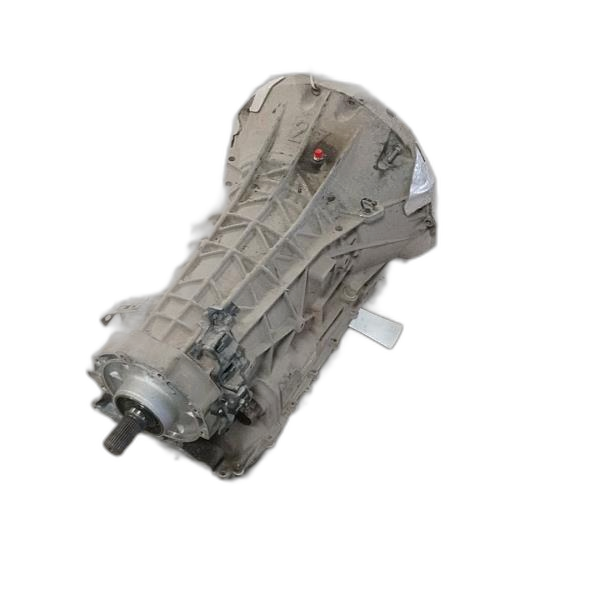
Shop the Parts Behind U2106
Below are the parts most often responsible for code U2106, ranked by how frequently each one is the actual culprit (per the diagnosis above). Tap any to see what we have for your vehicle.



The information in this article is provided for general reference and educational purposes only. Vehicle specifications, procedures, and part compatibility can vary by production date, trim level, and region. Always consult your vehicle's factory service manual and verify part numbers before purchasing or performing repairs. Safety-critical components such as airbags, seat belts, and braking systems should be installed by a qualified professional.
- 🧭 Diagnostic Flowchart
- 🛍️ Shop This Part
- What Does U2106 Mean?
- Can I Drive With U2106?
- Common Causes
- Symptoms
- Common Fixes & Costs
- Used vs. New Parts: Buying Guide
- What Happens If You Wait — Timeline
- Cost of Not Fixing It
- Diagnosis Steps
- When This Code Triggers (Freeze-Frame Conditions)
- Related Codes
- Climate & Environmental Factors
- How to Talk to a Mechanic About This Code
- Where to Take It: Dealer vs Independent vs Chain
- When to Walk Away From the Repair
- What Scan Tool You Need for This Code
- How to Clear the Code After You Fix It
- Will This Fail Emissions / State Inspection?
- Most Commonly Affected Vehicles
- Manufacturer-Specific Notes
- Real Owner Stories
- 2003 GMC Sierra 2500HD with Allison Transmission
- 2008 Saab 9-3 with Intermittent U2106
- 2015 Chevrolet Captiva with U0101/U2106
- How to Prevent This Code From Triggering
- Frequently Asked Questions
- Can I just replace the TCM to fix the U2106 code?
- I replaced the TCM and the U2106 code came back. What now?
- Why is the U2106 code and limp mode intermittent?
- What if the U2106 code only appears when the engine is hot?
- Does a new TCM need to be programmed?
- Why did the U2106 code appear after my battery died?
- Can a bad alternator cause a U2106 code?
- Key Takeaways
- 🎟️ Get 5% Off