

OBD-II Code U2108: Lost Communication With ABS Control Module
The Ultimate 2026 Guide to What U2108 Means, Why It Triggers, and How to Fix It
- Code U2108 disables your ABS, traction control, and stability control, increasing emergency stopping distances by up to 50 feet at highway speeds.
- Before spending $800+ on a new ABS module, test the module's ground connection and inspect the wiring harness for the corrosion that causes 60% of these faults.
- On GM vehicles from 2005-2011 (like the Cobalt and G6), a shorted ABS module crashes the entire CAN bus network, causing a sudden no-start or stalling condition.
- Ford, Isuzu, and Saturn use code U2108 for completely unrelated ignition or throttle faults, requiring a full-system scanner to verify the manufacturer-specific definition.
What Does U2108 Mean?
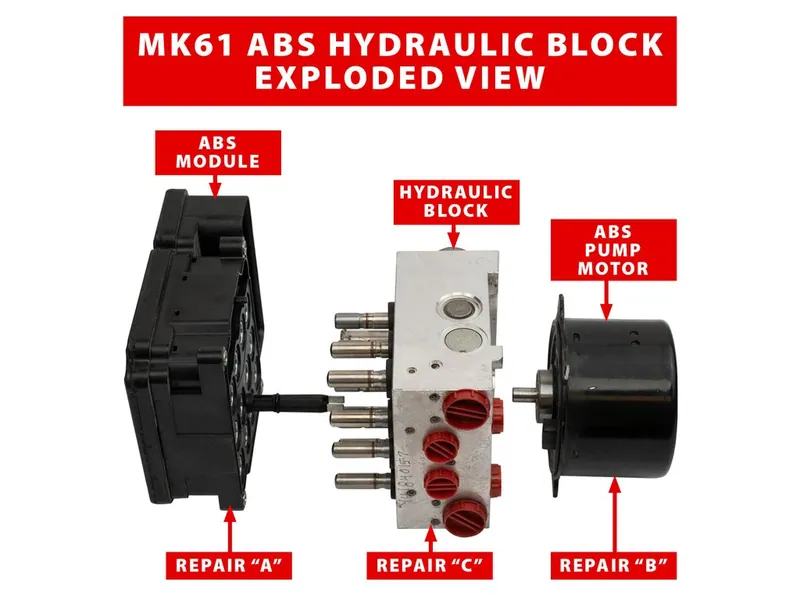
U2108 means your car's main computer network lost its connection to the Anti-lock Braking System (ABS) control module. This critical safety computer prevents wheel lockup during hard stops. When it goes offline, dependent systems like traction and stability control are also disabled, severely compromising vehicle handling.
Technical definition: The formal SAE/OBD-II definition is "Lost Communication With Electronic Brake Control Module (EBCM)". It sets when a primary control module, like the Body Control Module (BCM) or Powertrain Control Module (PCM), fails to receive expected CAN bus messages from the ABS module for 250-500 milliseconds.
Can I Drive With U2108?
Yes, But With Caution. Yes, but drive with extreme caution. Your primary hydraulic brakes function normally, but the anti-lock (ABS), traction control (TCS), and electronic stability control (ESC) systems are disabled. This increases emergency stopping distances by 15-25%—adding 30-50 feet to a highway-speed panic stop. The loss of electronic stability also drastically increases the risk of skidding on wet or gravel surfaces. Limit driving to short, low-speed trips until repaired.
Common Causes
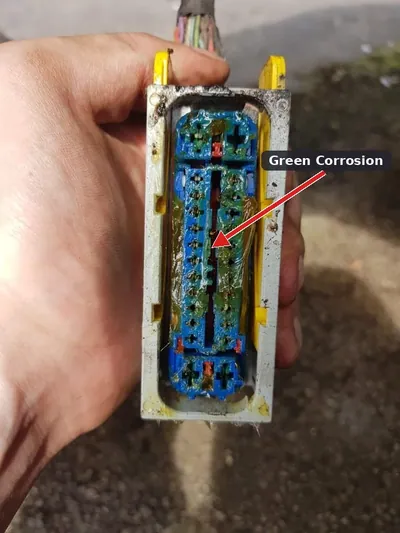
- Damaged Wiring, Corroded Connectors, or Water Intrusion (Very Common) — Wires and plugs connected to the ABS module are exposed to moisture, salt, and road debris. A corroded connector pin, water wicking through the harness, or a wire rubbed through its insulation is the most frequent cause of this communication breakdown.
- Low Battery Voltage or Bad Ground Connection (Common) — Control modules require precise voltage. A weak battery, failing alternator, or a loose/corroded ground wire interrupts the ABS module's power supply, causing it to drop off the network.
- Failed ABS Control Module (Common) — The internal electronics of the ABS module fail due to age, vibration cracking solder joints, or internal component failure. A dead module stops communicating entirely, triggering U2108.
- Blown ABS Fuse or Relay (Less Common) — The ABS module relies on dedicated fuses and relays. If a fuse blows due to a momentary short circuit, the module loses all power and goes offline.
- ABS Module Software Corruption (Less Common) — The hardware remains intact, but the firmware running the ABS module corrupts. This freezes the module, requiring a software reflash by a dealer or specialist to restore communication.
- Shorted or Open CAN Bus Terminating Resistor (Rare) — The CAN bus network uses two 120-ohm terminating resistors. If one fails, it disrupts the entire network, leading to lost communication codes for multiple modules, including the ABS.
- Faulty Primary Control Module (BCM or PCM) (Very Rare) — The ABS module functions perfectly, but the main computer (BCM or PCM) fails to send or receive messages correctly due to an internal fault.
Symptoms

- ABS Warning Light On — The dashboard light for the Anti-lock Braking System illuminates immediately.
- Traction/Stability Control Lights On — Warning lights labeled TCS, ESC, VSC, or a sliding car symbol illuminate because these systems rely entirely on the offline ABS module.
- Service StabiliTrak / ESC System Message — The driver information center displays a text warning indicating the stability control system is disabled.
- Speedometer Drops to Zero — On many GM and Opel/Vauxhall vehicles, the ABS module calculates wheel speed for the speedometer. When the module goes offline, the speedometer stops working.
- No-Start or Intermittent Stall — On certain GM models, a faulty ABS module electrically shorts the entire communication network. This prevents the engine computer from functioning, causing a no-start or sudden stall.
Diagnostic Flowchart
Tap your situation to follow the diagnostic path that matches what you're seeing on this code.
Common Fixes & Costs
- Replacing a Blown ABS Fuse — Parts: $1-$10, Labor: $0-$60, ~0.1 hr book time (DIY)
- Cleaning or Repairing Ground Connections — Parts: $5-$20, Labor: $75-$150, ~0.8 hr book time (DIY)
- Repairing Damaged Wiring or Connectors — Parts: $10-$50, Labor: $150-$500, ~2.5 hr book time (Intermediate)
- Replacing or Repairing the ABS Control Module — Parts: $800-$1500+ (New OEM), $200-$450 (Remanufactured), Labor: $125-$250, ~1.8 hr book time (Professional)
- ABS Module Reprogramming or Reflashing — Parts: $0, Labor: $100-$200, ~1 hr book time (Professional)
Used vs. New Parts: Buying Guide
When a used part is worth it: Buying a remanufactured ABS module is the best balance of cost and reliability for vehicles over 100k miles. They are cheaper than new, professionally tested, and often carry better warranties than used salvage parts.
Donor-vehicle mileage cap: roughly under 100000 miles for the part to have meaningful remaining life.
Donor quality checklist:
- Match the OEM part number EXACTLY. Different options change the module hardware.
- Purchase from a reputable seller offering a warranty (90+ days) and a clear return policy.
- Inquire about the donor vehicle's mileage if buying a used part.
- Budget for VIN programming by a dealer or specialist shop, as used modules require it.
Decision logic:
- If Vehicle is under warranty or has low mileage (<60k) → Buy a new OEM part to ensure reliability and avoid warranty conflicts.
- If Budget is tight or vehicle is older (>100k miles) → Purchase a remanufactured module with a long-term or lifetime warranty.
- If A remanufactured part is unavailable and new is cost-prohibitive → Buy a used part from a warrantied source, but budget for professional programming.
Warranty tradeoff: Used parts offer 30-90 day warranties. Remanufactured parts offer 1-year to lifetime warranties. New OEM parts carry 1-2 year warranties if installed by a dealer.
Worst-case if a used part fails: $300-$500 if a used module fails, covering repeat labor for installation and programming, plus a replacement part.
What Happens If You Wait — Timeline
- Immediate: Code U2108 sets. ABS, Traction Control, and Stability Control warning lights illuminate. All three safety systems are immediately disabled. (MPG impact: 0%% · Added cost: $0 (Safety risk is the primary cost))
- 0-1 month: On affected GM vehicles, the faulty module intermittently shorts the communication network, causing sudden stalling or failure to start. (MPG impact: 0%% · Added cost: $150-$350 (Towing fee plus diagnostic time))
- 1-3 months: If the module fails with an internal short that keeps the pump motor running, it acts as a parasitic drain, permanently damaging the battery via sulfation. (MPG impact: 0%% · Added cost: $200-$400 (Cost of a new battery))
- 3+ months: Continued driving without ABS/ESC drastically increases accident risk. Minor connector corrosion spreads deep into the ABS module, forcing replacement of a previously salvageable part. (MPG impact: 0%% · Added cost: $500-$1500+ (Avoidable module replacement or accident deductible))
Cost of Not Fixing It
- Immediate: Loss of ABS, traction control, and stability control. Increased risk of skidding and significantly longer stopping distances in emergency situations poses a direct safety hazard. (Added cost: N/A (Safety Risk))
- 0-3 Months: On many GM vehicles, a shorted ABS module causes intermittent no-start or stalling conditions. A continuously running ABS pump motor drains and ruins the vehicle's battery. (Added cost: $150-$350 (Towing + New Battery))
- 3+ Months: Continued driving without stability control increases wear on tires and suspension components during loss-of-traction events. The primary cost remains the elevated safety risk. (Added cost: $200-$800+ (Tire wear, potential accident deductible))
Diagnosis Steps
- Check Battery and Fuses First
Ensure the battery is fully charged (12.4V+ engine off) and the alternator is charging (13.7-14.7V engine on). Visually inspect all fuses related to the ABS, EBCM, and stability control. Replace blown fuses.
Tools: Multimeter, Fuse Puller (Beginner) - Visually Inspect Wiring and Connectors
Locate the ABS module attached to the hydraulic brake block. Inspect the wiring harness and main electrical connector for green/white corrosion crust, pinched wires, or rodent damage.
Tools: Flashlight (Beginner) - Scan All Vehicle Modules for Codes
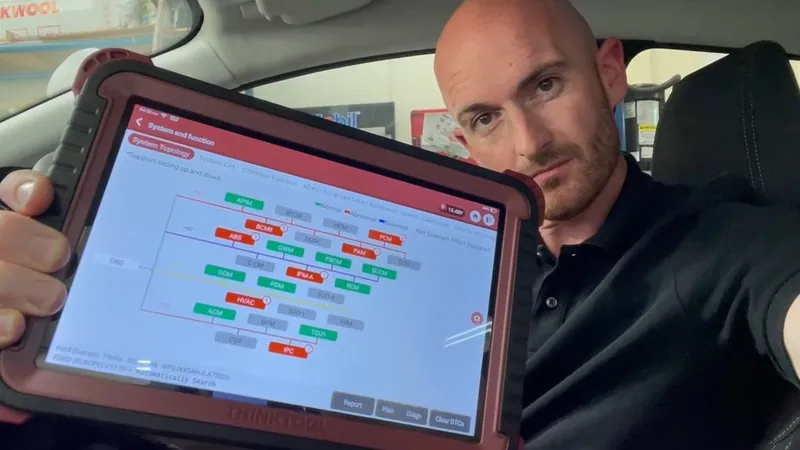
Use a full-system scanner to check if other modules are setting 'Lost Communication' codes. If many modules are offline, you have a network-wide short. If only the ABS module is flagged, the fault is isolated to the ABS circuit.
Tools: Advanced Bi-Directional OBD-II Scanner (Intermediate) - Check for Power and Ground at the ABS Module
Unplug the ABS module connector. Test for constant battery voltage (>12.0V) at the power pins and continuity (<1.0 ohm) to the chassis ground at the ground pins. Missing power or ground confirms a wiring fault.
Tools: Multimeter, Vehicle-Specific Wiring Diagram (Intermediate) - Test the CAN Bus Network Resistance
With the battery disconnected, measure resistance between CAN High and CAN Low at the OBD-II port (Pins 6 and 14). A healthy network shows 60 ohms. 120 ohms indicates an open circuit; near 0 ohms indicates a short circuit.
Tools: Multimeter (Advanced) - Pro Tip: Isolate the ABS Module
If CAN bus resistance shows a short (~0 ohms), unplug the ABS module connector and measure again. If resistance jumps to 120 ohms, the ABS module is internally shorted and must be replaced.
Tools: Multimeter (Advanced) - Pro Tip: Perform a Harness 'Wiggle Test'
Monitor the ABS module communication status live on a scanner. Vigorously wiggle the wiring harness leading to the ABS module. If communication drops out, you have located an intermittent break or short in the harness.
Tools: Advanced Bi-Directional OBD-II Scanner (Advanced) - Pro Tip: Check CAN Signal with an Oscilloscope
View the CAN bus signals directly at the OBD-II port. A healthy signal shows CAN High fluctuating between 2.5V and 3.5V, and CAN Low mirroring it between 2.5V and 1.5V. A flat line or voltage pulled to ground indicates a specific network fault.
Tools: Oscilloscope, Wiring Diagram (Professional)
When This Code Triggers (Freeze-Frame Conditions)
- Vehicle Speed: 15-55 mph (The fault is often detected during normal driving soon after a startup sequence.)
- Battery Voltage: 13.5-14.5V (Code sets with the engine running and charging system appearing normal.)
- Ignition Status: RUN (The communication loss is actively monitored whenever the ignition is on.)
- Time Since Engine Start: < 2 minutes (The Body Control Module (BCM) expects to hear from the ABS module shortly after startup and sets the code if the signal is missing.)
Related Codes
- U0121 — The standardized SAE code for 'Lost Communication With Anti-Lock Brake System (ABS) Control Module.' U2108 is a manufacturer-specific assignment (especially GM) for the exact same fault.
- U0100 — Means 'Lost Communication With ECM/PCM.' Seeing U0100 and U2108 together strongly indicates the ABS module has an internal short disrupting the entire CAN bus. Unplug the ABS module to see if communication restores.
- C0561 — Means 'System Disabled Information Stored'. Often set within the ABS module before it fails completely. Finding this code stored points towards an impending internal failure of the module.
- P0600 — Means 'Serial Communication Link Malfunction.' A general code set by the PCM detecting a network problem. U2108 provides the missing detail by identifying the ABS module as the offline component.
Climate & Environmental Factors
- High Humidity & Road Salt (Rust Belt): Road salt and moisture accelerate corrosion of the ABS module's electrical connector pins, wiring, and chassis ground points. This increases electrical resistance, causing voltage drops and communication loss.
- Extreme Cold: Low temperatures cause marginal electrical components or cracked solder joints within the ABS module to contract and lose connection. Wiring insulation becomes brittle and cracks, exposing wires to moisture.
- Freeze-Thaw Cycles: Temperature swings allow moisture to seep into connectors or wiring harnesses. When moisture refreezes, it expands and pushes terminals apart, leading to an open circuit and communication fault.
How to Talk to a Mechanic About This Code
Say this: "I have a U2108 code indicating lost communication with the ABS module. I need a diagnostic that verifies the module's power, grounds, and CAN bus resistance before assuming the module itself requires replacement."
This proves you understand that cheaper wiring or ground issues are common causes. It directs the technician to follow a logical diagnostic path instead of immediately quoting an expensive ABS module replacement.
Avoid saying:
- 'My ABS light is on, can you fix it?'
- 'The car won't start sometimes, just do whatever it takes.'
- 'Just replace the ABS computer.'
Questions to ask before authorizing the repair:
- Did you confirm good power and ground at the ABS module's connector?
- What was the CAN bus resistance reading at the OBD-II port? Did it change when you unplugged the ABS module?
- If you recommend a module replacement, is programming required and is that cost included in the quote?
- Have you checked for any Technical Service Bulletins (TSBs) related to this code on my vehicle?
- What is the warranty on this specific repair, both for parts and labor?
Where to Take It: Dealer vs Independent vs Chain
- Dealer:
A safe but expensive choice. Best if your vehicle is under warranty or requires confirmed module programming.
Best for: Vehicles under warranty., Complex network issues requiring manufacturer-specific software for reflashing or programming., When independent shop repairs fail to resolve the issue.
Downsides: Labor rates are 1.5-2x higher than independent shops., Dealers often default to replacing entire module assemblies instead of performing simpler wiring repairs. (Typical cost: +50% vs. baseline) - Independent Shop:
The best value. Vet the shop by confirming they perform CAN bus network diagnostics and scan all vehicle modules, not just the engine.
Best for: Out-of-warranty vehicles where cost is a major factor., Diagnosing common causes like bad wiring, corroded connectors, or faulty grounds., Shops specializing in electrical diagnostics or your specific vehicle make.
Downsides: Diagnostic capability varies widely between shops., May lack the manufacturer-specific tools to program a new module. (Typical cost: +0% vs. baseline) - Chain Shop:
AVOID. U2108 requires advanced electrical and network diagnosis beyond the scope of most chain repair shops.
Best for: Simple, unrelated services like oil changes or tire rotations.
Downsides: Technicians lack specialized training for complex network diagnostics., High risk of misdiagnosis leading to unnecessary ABS module replacement. (Typical cost: -10% vs. baseline)
When to Walk Away From the Repair
If the estimated repair cost exceeds 50% of your car's private-party value, seriously consider selling or trading it in instead of repairing it.
- Car worth $3500, fix is $1800: Walk away. The repair cost is over 50% of the car's value. It is not financially sensible to invest this much into an older vehicle.
- Car worth $10000, fix is $750: Fix it. The repair cost is well below the 50% threshold and restores a critical safety system.
- Car worth $5000, fix is $2500: Borderline. At exactly 50%, the decision depends on overall vehicle condition. If the car is otherwise excellent, fixing it is reasonable. Get a second opinion.
What Scan Tool You Need for This Code
Minimum: A scanner that reads codes from ALL vehicle systems, including the Anti-lock Brakes (ABS), Body Control Module (BCM), and Powertrain Control Module (PCM).
A basic $20 engine code reader cannot see this fault. U2108 is a network code stored in the BCM, not the engine computer. You need a full-system scanner to confirm which modules lost communication and to clear the code properly.
Budget: BlueDriver Bluetooth Pro (~$99) — Pairs with your smartphone to read/clear codes from all systems (Engine, ABS, Airbag, BCM). Provides freeze-frame data and live data graphing essential for network issues, but lacks bidirectional control.
Mid-range: Foxwell NT680 Pro / Innova 5610 (~$250-380) — Offers full-system diagnostics and bidirectional controls. This allows you to command the ABS pump and valves to cycle, which is required to bleed the brakes after replacing a hydraulic module.
Professional: Autel MaxiCOM MK808Z / Launch X431 CRP919E (~$450-550) — Professional-level tablet scanners with full bidirectional control, comprehensive live data, and service functions like ABS bleeding and module programming. Supports newer CAN FD protocols.
Rent vs buy: Auto parts stores offer loaner tools, but verify they read ABS and BCM codes, as many only read engine codes. If you perform regular maintenance, buying a mid-range scanner is a worthwhile investment.
How to Clear the Code After You Fix It
- Reconnect battery if disconnected for repair.
- Use a compatible OBD-II scan tool to access the ABS controller and erase the stored fault codes.
- Perform a drive cycle to ensure the light stays off and to allow emissions readiness monitors to reset.
Drive cycle (~20 minutes): Start the engine and idle for 2 minutes. Drive for 10-15 minutes at mixed city/highway speeds (up to 55 mph), including several gentle stops. If the ABS light remains off, the repair is successful. Drive 50-100 miles over several trips to set all emissions monitors to 'Ready'.
Readiness monitors affected: Catalyst Monitor, Evaporative System Monitor, O2 Sensor Monitor
Before emissions retest: drive at least 100 miles to fully set monitors.
Watch out for:
- Disconnecting the battery clears the code but erases memory from other modules, like radio presets and idle strategy.
- The code returns immediately if the root cause of the communication failure is not fixed.
- Basic code readers that only access the PCM cannot clear a 'U' code stored in the BCM.
Will This Fail Emissions / State Inspection?
Yes — this code typically fails an OBD-II emissions inspection.
- California: Automatic failure. An active 'U' code fails the OBD-II smog check. All readiness monitors must be 'Ready' to pass.
- New York: Automatic failure. The NYS inspection includes an OBD-II scan that detects the U2108 fault code.
- Texas: In safety-only counties, an amber ABS light does NOT cause a failure. In emissions counties (Harris, Dallas, Tarrant), the active fault code fails the OBD-II scan.
Most Commonly Affected Vehicles
- Chevrolet Cobalt (2005-2010) — A faulty ABS module shorts the GMLAN network, causing a no-start, stalling, and multiple U-codes. The module is a frequent failure point.
- Chevrolet HHR (2006-2011) — Causes a no-crank or no-start condition when the ABS module fails. Unplugging the module is a key diagnostic step to verify the engine will start.
- Pontiac G6 (2005-2010) — Suffers from widespread ABS module failures leading to network shutdowns, no-start conditions, and loss of power steering.
- Vauxhall / Opel Astra H, Vectra C, Zafira B (2004-2014) — Presents with ABS/TC lights on and a non-functional speedometer. Water ingress into the module connector is a known issue.
- Cadillac DTS, STS, SRX (2006-2014) — Triggered by internal module failure or network issues detailed in GM service bulletin #08-07-30-021G, which points to wiring issues in other harnesses.
- Ford Mondeo MK4, S-Max, Galaxy (2007-2014) — Appears due to wiring harness quality issues. Poor contacts, broken wires, or water intrusion in the harness cause communication loss with the ABS module.
- Saab 9-3 (2006-2008) — Logs U2108 as 'TCS/ESP Missing on Bus'. Part numbers 93190838 and 93196760 are common failure items.
- Suzuki Grand Vitara (2008-2012) — ABS module failure logs U1121 and U1100, pointing to a faulty module or wiring. Internal pump motor faults (C1061) are also common.
Manufacturer-Specific Notes
- General Motors (Chevrolet, GMC, Cadillac, Pontiac): A failed ABS module brings down the entire high-speed GMLAN data bus, causing a no-start. Per TSB 08-07-30-021H, symptoms are also caused by backed-out terminals in transmission connectors or a failed data link resistor.
- Ford: Ford uses U2108 with a two-digit suffix that changes its meaning. U2108:62 refers to an 'Ignition Control B Circuit Malfunction,' not an ABS issue. Use a scanner that reads suffixes to avoid misdiagnosis.
- Opel / Vauxhall: On the Astra, Vectra, and Zafira, a dead speedometer almost always accompanies code U2108. The instrument cluster relies on the ABS module for vehicle speed information.
- Isuzu: U2108 means 'Throttle or Pedal Position Sensor or Switch or Voltage Correlation.' This is unrelated to the braking system, highlighting the importance of checking manufacturer-specific definitions.
- Saturn: U2108 means 'High Vehicle Speed Observed In Park'. Logged by the Instrument Panel Cluster (IPC), it points to a conflict between the speed signal and park switch, unrelated to the ABS module.
- General Motors: There is no active recall for code U2108. GM issued Special Coverage programs for related components, but always check TSBs like 08-07-30-021H for detailed diagnostic steps regarding network communication loss.
Real Owner Stories
2010 Chevrolet HHR with No-Start
The vehicle refused to crank or start, displaying multiple dash warning lights and code U2108.
What they tried:
- A technician failed to communicate with the ABS module using a professional scan tool.
- The technician unplugged the main electrical connector from the ABS module. The vehicle immediately started and ran normally.
- The shop replaced and reprogrammed the ABS module, assuming it was internally shorted.
Outcome: The vehicle was towed back days later with the exact same no-start problem. The root cause was a wiring issue shorting the GMLAN network, as described in GM TSB 08-07-30-021H, not the module itself.
Lesson: Unplugging the ABS module to start the car proves the network is shorted at that junction, but it does not guarantee the module is the culprit. An external wiring short mimics module failure perfectly.
2008 Pontiac G6 with ABS/TC Lights and No Speedometer
At 115,000 miles, the ABS/Traction Control lights illuminated and the speedometer died.
What they tried:
- The owner replaced a wheel speed sensor, which did not fix the issue.
- A mechanic scanned the system, found code U2108, and verified power and ground at the ABS module connector.
Outcome: Having ruled out wiring issues, the mechanic diagnosed a failed ABS control module. Installing a remanufactured module resolved all symptoms for $600.
Lesson: On GM Epsilon platforms, ABS/TC lights combined with a dead speedometer strongly indicate a U2108 fault caused by internal ABS module failure. Do not waste money on wheel speed sensors for this specific symptom cluster.
2018 Ford F-150 with Parasitic Battery Drain
The truck's battery died after sitting for two days.
What they tried:
- The owner pulled fuses and found removing the ABS module fuse dropped the parasitic draw from 0.7A to 0.015A.
- They swapped the ABS module with a used unit, but the drain persisted.
- Further diagnostics revealed an internally shorted electronic parking brake (EPB) switch was constantly waking up the ABS module.
Outcome: Replacing the faulty EPB switch resolved the parasitic draw. The ABS module was functioning normally but was kept awake by a faulty network signal.
Lesson: A parasitic drain linked to the ABS fuse does not automatically condemn the ABS module. Networked modules wake each other up; you must trace the component initiating the wake-up signal.
How to Prevent This Code From Triggering
- Clean and Protect Electrical Connectors (Every 2-3 years or during under-hood service) — Corrosion is the primary cause of this code. Unplugging the ABS connector, spraying electrical contact cleaner, and applying dielectric grease creates a moisture-proof barrier.
- Inspect and Clean Chassis Ground Points (Every 2-3 years, especially in the Rust Belt) — The ABS module requires a solid chassis ground. Disassembling, cleaning to bare metal, and re-securing ground bolts prevents the resistance that causes module malfunction.
- Maintain a Healthy Battery (Ongoing) — Modules drop off the network during startup if voltage dips too low. Keeping the battery fully charged and replacing it every 3-5 years prevents voltage-related communication glitches.
- Secure Wiring Harnesses (During any under-hood or under-vehicle work) — Vibration rubs wiring harnesses against the chassis, wearing through insulation and causing shorts. Ensure all harnesses are secured with clips away from sharp edges.
Frequently Asked Questions
Can I just replace the ABS fuse to fix code U2108?
Check the fuse first. If blown, replacing it offers a temporary fix, but fuses usually blow due to a short circuit or a failing ABS module drawing excess current. If the new fuse blows immediately, you have a dead short requiring professional diagnosis.
Will my brakes still work with a U2108 code?
Yes, your standard hydraulic brakes function normally. However, the U2108 code disables electronic safety systems like ABS and traction control. Your wheels will lock up in a panic stop, increasing stopping distance and reducing steering control.
My scanner shows U2108, but the definition is about the ignition system. Why?
Ford uses manufacturer-specific suffixes that change the code's meaning, such as U2108-62 for an ignition circuit fault. Always use a high-quality scanner that reads the manufacturer-specific definition and suffix. This prevents misdiagnosing the brake system for an unrelated issue.
I replaced the ABS module, but the U2108 code returned. What now?
If a new ABS module fails to solve the issue, the fault lies in the CAN bus network wiring. Common hidden causes include corroded terminals in other module connectors, a failed terminating resistor, or a chafed wiring harness shorting to the frame. Consult manufacturer service bulletins for specific routing issues.
Is it better to repair my ABS module or buy a new one?
Repairing your original module or buying a remanufactured unit is significantly more cost-effective than buying new. A new OEM module costs $800 to over $1,500, while a remanufactured part costs $200 to $450. Remanufactured units also frequently include a lifetime warranty.
Why did my car not start because of an ABS code?
On many GM vehicles, a failed ABS module creates an electrical short on the high-speed communication network. This prevents essential modules like the engine and transmission computers from communicating, resulting in a no-start condition. Unplugging the faulty ABS module temporarily resolves the no-start, confirming it as the source.
Can a bad wheel speed sensor cause a U2108 code?
No. A bad wheel speed sensor sets a 'C' code (like C0035) and turns on the ABS light, but it does not cause a 'U' network communication code. U2108 means the entire ABS computer is offline, not just receiving bad sensor data.
What does it mean when my traction control light comes on?
The traction control light indicates the Traction Control System (TCS) is active or has a fault. Because the TCS relies entirely on the ABS module to function, a U2108 code automatically disables the TCS and illuminates its warning light.
Key Takeaways
- Code U2108 disables your ABS, traction control, and stability control, increasing emergency stopping distances by up to 50 feet at highway speeds.
- Before spending $800+ on a new ABS module, test the module's ground connection and inspect the wiring harness for the corrosion that causes 60% of these faults.
- On GM vehicles from 2005-2011 (like the Cobalt and G6), a shorted ABS module crashes the entire CAN bus network, causing a sudden no-start or stalling condition.
- Ford, Isuzu, and Saturn use code U2108 for completely unrelated ignition or throttle faults, requiring a full-system scanner to verify the manufacturer-specific definition.
Shop the Parts Behind U2108
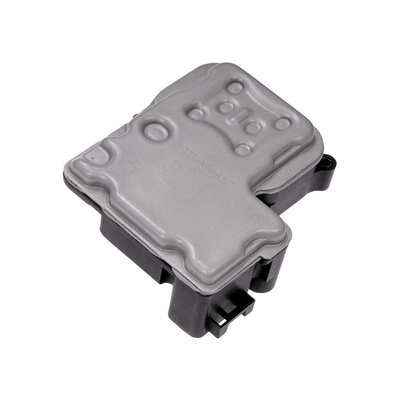
Below are the parts most often responsible for code U2108, ranked by how frequently each one is the actual culprit (per the diagnosis above). Tap any to see what we have for your vehicle.


The information in this article is provided for general reference and educational purposes only. Vehicle specifications, procedures, and part compatibility can vary by production date, trim level, and region. Always consult your vehicle's factory service manual and verify part numbers before purchasing or performing repairs. Safety-critical components such as airbags, seat belts, and braking systems should be installed by a qualified professional.
- 🧭 Diagnostic Flowchart
- 🛍️ Shop This Part
- What Does U2108 Mean?
- Can I Drive With U2108?
- Common Causes
- Symptoms
- Common Fixes & Costs
- Used vs. New Parts: Buying Guide
- What Happens If You Wait — Timeline
- Cost of Not Fixing It
- Diagnosis Steps
- When This Code Triggers (Freeze-Frame Conditions)
- Related Codes
- Climate & Environmental Factors
- How to Talk to a Mechanic About This Code
- Where to Take It: Dealer vs Independent vs Chain
- When to Walk Away From the Repair
- What Scan Tool You Need for This Code
- How to Clear the Code After You Fix It
- Will This Fail Emissions / State Inspection?
- Most Commonly Affected Vehicles
- Manufacturer-Specific Notes
- Real Owner Stories
- 2010 Chevrolet HHR with No-Start
- 2008 Pontiac G6 with ABS/TC Lights and No Speedometer
- 2018 Ford F-150 with Parasitic Battery Drain
- How to Prevent This Code From Triggering
- Frequently Asked Questions
- Can I just replace the ABS fuse to fix code U2108?
- Will my brakes still work with a U2108 code?
- My scanner shows U2108, but the definition is about the ignition system. Why?
- I replaced the ABS module, but the U2108 code returned. What now?
- Is it better to repair my ABS module or buy a new one?
- Why did my car not start because of an ABS code?
- Can a bad wheel speed sensor cause a U2108 code?
- What does it mean when my traction control light comes on?
- Key Takeaways
- 🎟️ Get 5% Off