

OBD-II Code U2109: Control Module Communication Bus A Off
What U2109 means, why it triggers, and how to fix it
- Test the main 12-volt battery first, ensuring it reads above 12.4V with the engine off, as low voltage is the most common trigger for U2109.
- On Jaguar, Land Rover, and BMW vehicles, sub-code U2109-09 specifically indicates a failed telematics backup battery requiring a $25-$120 replacement.
- A U2109 code disables critical safety systems like anti-lock brakes and traction control if the ABS module goes offline, significantly increasing collision risk.
- Unplug any aftermarket devices from the OBD-II port before starting complex diagnostics, as insurance trackers and cheap scanners frequently crash the CAN bus network.
What Does U2109 Mean?
U2109 means an essential computer, like the Anti-lock Brake System (ABS) module, suddenly stopped communicating on the vehicle's network. Your car's computers connect on a Controller Area Network (CAN bus), and this code indicates one went offline. This causes warning lights to illuminate and disables critical safety features.
Technical definition: The official SAE/ISO definition is "Control Module Communication Bus A Off". This indicates a specific control module ceased communicating on the Controller Area Network (CAN) bus, detected by another module. 'Bus A' typically refers to the high-speed CAN bus responsible for critical systems like the engine, transmission, and brakes.
Can I Drive With U2109?
Yes, But With Caution. You can drive, but do so with extreme caution for a limited time. If the ABS module is offline, anti-lock brakes and stability control are disabled. This significantly increases the risk of skidding and loss of steering control during emergency braking, especially on wet surfaces, and increases stopping distances. If the code relates to the telematics (SOS) system (common on Jaguar, Land Rover, and BMW), drivability is unaffected, but the emergency call feature is inoperative.
Common Causes
- Low or Failing Main Vehicle Battery (Very Common) — A weak 12-volt battery is the most frequent cause. When voltage drops during startup, control modules fail to power on correctly and drop off the network.
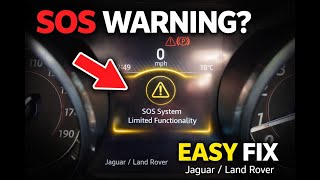
- Failed Telematics (TCU) Backup Battery (Very Common) — On Jaguar, Land Rover, and BMW models, this code points to the internal backup battery for the Telematics Control Unit (TCU). This battery degrades over 5-8 years, triggering a U2109-09 sub-code 🎬 Watch: How to replace the Jaguar/Land Rover telematics battery. and an 'SOS Limited Functionality' message.
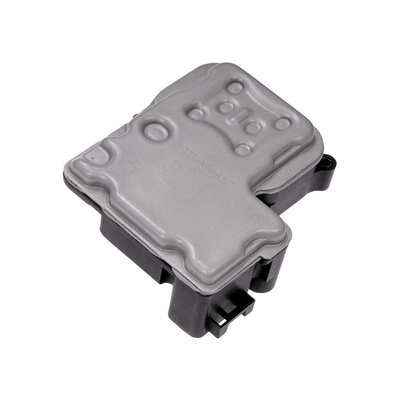
- Faulty ABS Control Module (Common) — The Anti-lock Brake System (ABS) module is a frequent failure point. Internal electronic problems, such as failed solder joints or a faulty internal relay, cause it to stop communicating with the vehicle.
- Corroded or Loose Battery Terminals/Grounds (Common) — Poor electrical connections at the battery or main chassis ground points create voltage drops similar to a weak battery. This interrupts power to the modules. On GM trucks, a corroded ground post (G203) under the driver's door is a known culprit. 🎬 See how to clean corroded ground points on GM trucks.
- Faulty Instrument Panel Cluster (IPC) (Common) — On 2004-2008 Ford models, the instrument cluster acts as a central gateway for the communication network. Failures within the cluster, like cracked solder joints on the main connector, disrupt the entire network.
- Aftermarket Devices Plugged into OBD-II Port (Less Common) — Insurance tracking dongles, fleet trackers, or cheap diagnostic readers interfere with the CAN bus network. These devices broadcast disruptive signals, leading to communication codes like U2109. GM issued a TSB about this specific issue.
- Damaged Wiring or Connectors (Less Common) — The CAN bus wiring harness, especially near the ABS module, is exposed to the elements. Corrosion, chafing, or breaks interrupt communication signals. Water intrusion from a bad seal, like the 'shark fin' antenna on BMWs, corrodes telematics module wiring.
- Faulty Body Control Module (BCM) (Uncommon) — The BCM manages vehicle functions and communicates with many modules. An internal failure in the BCM causes it to stop communicating, leading to various 'U' codes, including U2109.
Symptoms
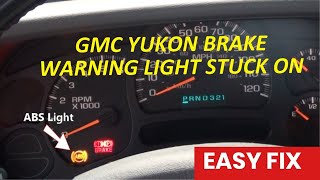
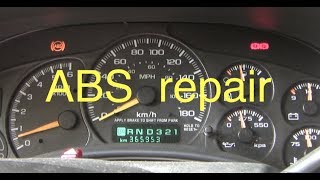
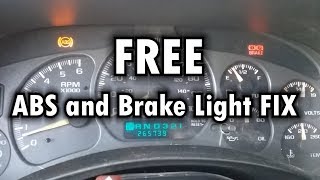
- ABS Light On — The ABS warning light on the dashboard illuminates when the ABS module is the cause.
- Traction/Stability Control Light On — The light for the traction control system (TCS) or electronic stability control (ESC) illuminates, as these systems rely on the ABS module.
- 'SOS Limited Functionality' or 'Emergency Call System Malfunction' Message — On Jaguar, Land Rover, and BMW, this specifically points to a failed backup battery in the telematics (SOS) module.
- Speedometer Inoperative or Erratic — The speedometer stops working, jumps around, or sticks at zero because the vehicle speed signal comes from the ABS module.
- Check Engine Light On — The main Malfunction Indicator Lamp (MIL) activates, often in conjunction with other communication codes.
- Instrument Cluster Goes Blank or Flickers — If the instrument panel cluster is the source of the fault (common on Fords), it intermittently loses power, causing all gauges and lights to turn off while driving.
- No Communication with Scan Tool (scan-tool only — no driver-felt sign) — A basic scan tool fails to communicate with any module if the network is down, or fails to communicate with the specific offline module.
Diagnostic Flowchart
Tap your situation to follow the diagnostic path that matches what you're seeing on this code.
Common Fixes & Costs
- Replace Vehicle Battery — Parts: $150-$300, Labor: $50-$150, ~0.5 hr book time (DIY)
- Replace Telematics (TCU) Backup Battery — Parts: $25-$120, Labor: $150-$400, ~1.5 hr book time (Intermediate)
- Repair or Replace ABS Control Module — Parts: $200-$800 (repair/reman) or $1000-$2000+ (new), Labor: $150-$400, ~1.5 hr book time (Professional)
- Repair Ford Instrument Cluster — Parts: $0 (DIY solder) or $150-$400 (mail-in repair service), Labor: $100-$300 (for removal/reinstallation), ~1.5 hr book time (Intermediate)
- Repair Damaged Wiring Harness — Parts: $20-$100, Labor: $250-$1000+, ~4.0 hr book time (Professional)
DIY vs Professional
- Replace Vehicle Battery — Beginner:
- Replace Telematics (TCU) Backup Battery — Beginner:
- Repair or Replace ABS Control Module — Beginner:
- Repair Ford Instrument Cluster — Beginner:
- Repair Damaged Wiring Harness — Beginner:
Used vs. New Parts: Buying Guide
When a used part is worth it: For expensive parts like an ABS module on older vehicles, a used salvage part is cost-effective. You must match the part number exactly.
Donor-vehicle mileage cap: roughly under 100000 miles for the part to have meaningful remaining life.
Donor quality checklist:
- Verify the donor vehicle's VIN to ensure compatibility.
- Ask for the mileage of the donor vehicle; lower is always better.
- Inspect the part for physical damage, corrosion, or cut wires.
- Ensure the seller offers at least a 30-90 day warranty.
Decision logic:
- If The original module can be repaired/rebuilt by a reputable service. → Choose rebuilding. This balances cost and reliability while avoiding VIN programming issues.
- If Vehicle is newer or has low mileage. → Buy a new OEM part. The cost is justified by the warranty and guaranteed compatibility.
- If A used part is selected. → Budget for the added cost of having a dealer or specialist shop program the module to your vehicle's VIN.
Warranty tradeoff: Used parts typically have a 30-90 day warranty. Remanufactured modules offer a 1-year to lifetime warranty. New OEM parts carry a 1-2 year warranty.
Worst-case if a used part fails: $300-$800 if a used part is dead on arrival, requiring repeat labor costs and another replacement part.
What Happens If You Wait — Timeline
- Immediate: Code sets and a warning light (ABS or SOS) appears. If ABS-related, anti-lock braking and stability control are immediately disabled. (MPG impact: 0%% · Added cost: $0, but safety risk is significantly increased. An accident due to loss of control could be catastrophic.)
- 1-3 months: The initial problem, if intermittent (e.g., a loose ground, corroding connector), becomes more frequent. A weak main battery continues to degrade, leading to slower engine cranking, especially in the cold. (MPG impact: 0%% · Added cost: $200-$550 if the main battery fails completely and requires replacement, potentially leaving you stranded.)
- 3-6 months: If the cause is a wiring short or corrosion, the problem worsens. An intermittent short becomes a permanent short, potentially damaging the internal transceiver of a connected control module. Other electrical gremlins appear as network stability degrades. (MPG impact: 0-2%% · Added cost: $500-$2000. What might have been a wiring repair now requires replacing an entire control module (e.g., ABS, BCM) damaged by the unstable electrical supply.)
- 6+ months: Continued driving with a disabled ABS system leads to a higher probability of an accident. A severe network issue eventually causes a no-start condition or cascading module failures, making diagnosis much more complex and expensive. (MPG impact: 0-5%% · Added cost: $2500+. A situation that started as one faulty module escalates to requiring multiple modules, extensive diagnostic time, and complex wiring harness repairs.)
Cost of Not Fixing It
- Immediate: If caused by a faulty ABS module, anti-lock braking and stability/traction control are disabled. This significantly increases the risk of skidding, loss of control, and collision in an emergency. (Added cost: Unpredictable accident costs, potentially totaling the vehicle.)
- 0-6 months: If caused by the telematics (SOS) module, the emergency call feature fails during an accident, delaying emergency services response. (Added cost: No direct financial cost, but a major safety compromise.)
- Ongoing: The vehicle fails mandatory state safety inspections in jurisdictions where an illuminated ABS light is an automatic failure. This prevents legal registration renewal. (Added cost: $50-$200 in fines or failed inspection fees.)
Diagnosis Steps
- Check Battery Health and Connections
Measure the main 12V battery voltage with the car off using a multimeter. It must read above 12.4 volts. Start the engine; voltage must rise to 13.7-14.7 volts. Lower readings indicate a weak battery or charging issue. Clean and tighten battery terminals.
Tools: Multimeter, Wire Brush, Wrench Set (Beginner) - Remove Aftermarket OBD-II Devices
Inspect the OBD-II port for plugged-in aftermarket devices like insurance trackers or performance monitors. Unplug these devices, clear the codes, and see if the problem resolves. These devices are a known cause of communication faults.
Tools: None (Beginner) - Perform a Full Module Scan
Use an advanced OBD-II scanner to communicate with all vehicle modules (ABS, BCM, IPC, TCU). Identify which module is not responding. A U2109-09 sub-code specifically points to the telematics backup battery.
Tools: Advanced OBD-II Scanner (Intermediate) - Pro Tip: Isolate the Faulty Module
If multiple modules are offline, one faulty module is pulling the network down. Using a wiring diagram, locate the primary suspect module (e.g., the ABS module). Disconnect its main electrical connector and rescan the vehicle. If the other modules come back online, the disconnected module is the source of the failure.
Tools: Advanced OBD-II Scanner, Trim Removal Tools, Vehicle-Specific Wiring Diagram (Advanced) - Visually Inspect Wiring and Grounds
Locate the non-communicating module. Inspect the wiring harness and connector for green corrosion, melted plastic, or rubbed wires. Trace and inspect main ground connections on the frame rail near the module.
Tools: Flashlight, Trim Removal Tools (Intermediate) - Check Power and Ground at the Module Connector
Unplug the connector from the suspect module. Use a multimeter to verify the module receives proper battery voltage (12.4V+) and has a solid ground connection. A good ground shows less than 0.1 ohms of resistance to the negative battery terminal.
Tools: Multimeter, Vehicle-Specific Wiring Diagram (Advanced) - Test CAN Bus Resistance
With the battery disconnected, measure the resistance between the two CAN bus wires (CAN High and CAN Low) at the OBD-II port (pins 6 and 14). A healthy network reads approximately 60 ohms. A reading of 120 ohms indicates a break in the circuit or an offline terminating module. A reading near 0 ohms indicates a short circuit.
Tools: Multimeter (Advanced) - Test CAN Bus Voltage with a Multimeter
With the key on and engine off, check the CAN bus lines at the OBD-II port (pins 6 and 14). A healthy bus shows approximately 2.6-2.7V on CAN High (pin 6) and 2.3-2.4V on CAN Low (pin 14). If one line is at 0V or 5V, it indicates a short to ground or power. If both lines show 0V, the network is inactive.
Tools: Multimeter, Back-Probe Pins (Advanced) - Pro Tip: Check CAN Bus Voltage with an Oscilloscope
For intermittent issues, connect an oscilloscope to the CAN High and CAN Low lines. A healthy high-speed CAN bus shows a 'mirror image' square wave pattern. CAN High toggles between 2.5V and 3.5V, while CAN Low toggles between 2.5V and 1.5V. Any distortion or a line stuck high/low points to a wiring or hardware problem.
Tools: Oscilloscope, Back-Probe Pins (Professional)
When This Code Triggers (Freeze-Frame Conditions)
- Battery Voltage: 9.5-11.5V (During engine cranking, especially on a cold start with a weak battery.)
- Vehicle Speed: 0-75 mph (Occurs at any time, from startup to highway driving, indicating an immediate communication loss.)
- RPM: 0-3000 (Logs with the key on and engine off, or during normal driving.)
- Modules Reporting: N-1 (Shows one fewer module communicating than expected, identifying the offline unit.)
Related Codes
- U0121 — This code means "Lost Communication With Anti-Lock Brake System (ABS) Control Module." If U0121 is present with U2109, the ABS module is confirmed to be the offline module. Diagnosis focuses on the ABS module's power, ground, and wiring.
- U0073 — This is a generic code for "Control Module Communication Bus 'A' Off." U0073 indicates a general network shutdown, whereas U2109 sets when one module detects that another specific module is offline. Multiple 'U' codes alongside U0073 point to a network-wide issue like a wiring short.
- U0140 — This code means "Lost Communication with Body Control Module." If present alongside U2109, the BCM is the offline module or a wider network issue is affecting multiple modules.
- C0035 - C0050 — These are wheel speed sensor codes. A fault in a wheel speed sensor circuit causes the ABS module to malfunction and stop communicating, triggering the U2109 code as a secondary fault. Always diagnose and fix the wheel speed sensor issue first.
Climate & Environmental Factors
- Cold Weather: Cold temperatures reduce the efficiency of the main 12V battery, lowering its resting voltage and cranking amps. A weak battery causes module communication errors during a cold start. The internal resistance of telematics backup batteries also increases in the cold, exposing a failing battery and triggering the fault message more frequently in winter.
- High Humidity / Salt: In regions with high humidity or where road salt is used, moisture and corrosive agents penetrate wiring connectors and compromise ground connections. This corrosion increases electrical resistance, leading to voltage drops and intermittent communication signals on the CAN bus.
How to Clear the Code After You Fix It
- Fix the underlying issue (e.g., replace the battery or repair wiring).
- Use an OBD-II scan tool to perform a 'Clear All DTCs' command.
- For JLR/BMW TCU battery faults, drive for 40-60 minutes to charge the new battery, then clear the code using a manufacturer-specific scan tool.
- Perform a full drive cycle to allow all system monitors to run.
Drive cycle (~20 minutes): A typical drive cycle involves a cold start, a few minutes of idling, a mix of city driving with stops, and a period of steady highway-speed driving before shutdown. This allows the vehicle's computers to verify the repair.
Readiness monitors affected: This communication code does not directly affect emissions readiness monitors., However, clearing all codes resets emissions monitors, requiring a full drive cycle before a smog test.
Before emissions retest: drive at least 50 miles to fully set monitors.
Watch out for:
- Disconnecting the main battery does not clear 'hard faults' stored in specific modules like the TCU.
- The code returns immediately if the root cause, such as a bad module or wiring short, remains unfixed.
- Clearing the code resets emissions readiness monitors, causing an automatic smog test failure if not followed by a proper drive cycle.
Will This Fail Emissions / State Inspection?
No — by itself this code doesn't fail OBD inspection (but it can keep readiness monitors from setting, which causes a separate fail).
- California: An illuminated ABS light does not fail a smog check, which only tests emissions. The Check Engine Light is an automatic failure, but the ABS light is ignored.
- New York: NYS vehicle inspection has two parts: safety and emissions. A Check Engine Light fails the emissions test. An ABS light fails the separate safety inspection.
- Texas: For the annual safety inspection, the ABS light must illuminate when the key is turned on and then go out. If the light stays on, the vehicle fails the safety inspection.
Most Commonly Affected Vehicles
- Jaguar/Land Rover XF, XJ, F-Pace, Discovery, Range Rover, Evoque (2010-2020) — Extremely common for U2109-09 to be triggered by a failed backup battery in the Telematics Control Unit (TCU), causing an 'SOS Limited functionality' message. TSBs SSM73298, SSM73299, and SSM74189 address this known issue.
- BMW X3, X5, 3-Series, 5-Series, 6-Series (2014-2021) — Frequently caused by a failed backup battery in the Telematics Communication Box (TCB), resulting in an 'Emergency Call System Malfunction' warning. The module is located in the headliner near the shark fin antenna or behind the rear seat.
- GM (Chevrolet/GMC/Cadillac) Silverado, Sierra, Tahoe, Yukon, Suburban, Escalade, Malibu (2003-2014) — Caused by internal failure of the Electronic Brake Control Module (EBCM). Also prone to poor ground connections, specifically ground G203 located on the frame under the driver's side door, which interrupts power to the EBCM.
- Ford F-150, Focus, Mondeo, Galaxy (2004-2008) — Commonly caused by cracked solder joints on the main connector of the Instrument Panel Cluster, which acts as a network gateway. Tapping on the dash causes the cluster to flicker or fail.
- Volkswagen Jetta, Passat, Golf, Tiguan (2006-2019) — These models suffer from internal failures of the ABS control module, often due to corrosion or vibration, leading to communication loss codes and an illuminated ABS light.
- Saab 9-3 (2003-2007) — Well-known for ABS module failures that cause a loss of communication and trigger this code, along with ABS and TCS warning lights.
- Cadillac CTS (2003-2007) — The ABS control module is a frequent failure point on these models, leading to U2109 and loss of ABS/Traction Control.
- Chrysler/Dodge/Jeep Various Models (2007-2014) — Failures in the Totally Integrated Power Module (TIPM), which is the main fuse and relay box, cut power to other modules like the ABS or BCM, causing communication loss codes like U2109.
Manufacturer-Specific Notes
- Jaguar / Land Rover: The code U2109-09 points to the small, internal backup battery in the Telematics Control Unit (TCU) failing. This triggers an "SOS Limited Functionality" message. TSBs SSM73298, SSM73299, and SSM74189 address this, recommending a recharge attempt (running the engine for 40-60 mins) before battery replacement.
- BMW: Presents with an 'Emergency Call System Malfunction' message caused by a failed telematics backup battery. The battery is a wear item and fails after 4-5 years. Water intrusion through the roof 'shark fin' antenna damages the module or its wiring.
- General Motors: A bad ground connection (G203) located on the frame under the driver's door is a common cause on trucks and SUVs. GM issued a TSB warning that aftermarket devices in the OBD-II port cause communication issues, setting U-codes like U2109.
- Ford: The Instrument Panel Cluster serves as a network gateway. A common failure on 2004-2008 models is cracked solder joints on the main connector pins. Tapping on the dashboard and seeing the gauges flicker is a classic sign of this issue.
- Chrysler / Dodge / Jeep: Failures in the Totally Integrated Power Module (TIPM), the main fuse and relay box, cut power to other modules and cause communication loss codes like U2109.
Real Owner Stories
2016 Land Rover Discovery Sport with 'SOS Limited Functionality' message
The 'SOS limited functionality' message appeared on the dash. A diagnostic scan revealed code U2109-09 (permanent). The owner noted the fault was intermittent at first and happened more often in warm weather.
What they tried:
- Hooking the main vehicle battery to a trickle charger.
- Driving the car for over 50 minutes with a charger attached to try and recharge the telematics battery.
Outcome: The attempts to recharge the small telematics battery failed. After 5-8 years, the battery loses its ability to hold a charge and must be replaced. The fix is to replace the TCU backup battery.
Lesson: On JLR and BMW vehicles, the 'SOS' warning with code U2109-09 almost always means the telematics backup battery failed. While a recharge attempt is a valid first step per JLR TSBs, on an older vehicle, it is rarely a permanent solution.
Jaguar F-Type with persistent 'SOS Limited' message after battery swap
The 'SOS Limited Functionality' message appeared after the owner disconnected the TCU to fix a rattle. The U2109 code was present.
What they tried:
- Replacing the TCU backup battery with a new OEM part (LR089861).
- Disconnecting and reconnecting the main car battery.
- Using a standard OBD-II scanner to clear codes, which found no codes.
Outcome: The message would not clear. The final solution was to use a Jaguar-specific scanner (iCarsoft) to directly access the 'Telematics Control Unit Module' and use its 'Erase' function multiple times. This cleared the hard-stored fault code that a generic scanner couldn't access.
Lesson: Simply replacing the part is not enough. Some modules store 'hard codes' that require a manufacturer-specific diagnostic tool to clear. A generic OBD-II scanner cannot see the fault in the specific module.
2006 Ford F-150 with intermittent instrument cluster failure
While driving, the entire instrument cluster (speedometer, gauges, lights) suddenly went dead, then came back on. Tapping the top of the dashboard made it flicker. This was accompanied by a U2109 code.
What they tried:
- Checked the battery and alternator, which were both good.
- Inspected fuses related to the instrument panel, none were blown.
Outcome: The owner found forum posts describing the exact same issue, caused by cracked solder joints on the main connector of the instrument panel circuit board. The owner removed the cluster, re-soldered all the pins on the connector, and reinstalled it. The problem was completely resolved.
Lesson: On 2004-2008 Ford trucks, the instrument cluster itself is a common failure point that acts as a network gateway. Intermittent power loss to the cluster that responds to tapping the dash is a classic sign of bad solder joints, which is an inexpensive DIY fix or a mail-in repair service for $150-$400.
How to Prevent This Code From Triggering
- Perform monthly battery voltage checks (Once per month) — A healthy battery rests above 12.4V. Catching a weakening battery before it causes voltage drops prevents modules from dropping off the network during startup, which is a primary trigger for U2109.
- Clean battery terminals and check main ground connections annually (Once per year) — Corrosion on battery terminals and chassis grounds creates resistance, leading to voltage drops under load. Cleaning these connections ensures all modules receive stable voltage.
- Avoid frequent short trips (Daily habit) — Short drives don't give the alternator enough time to fully recharge the battery after starting. This slowly degrades the battery's state of charge, making electrical faults more likely.
- Apply dielectric grease to exposed connectors (During any related service or pre-winter) — In wet or salty climates, applying dielectric grease to connectors for the ABS module creates a moisture barrier, preventing the corrosion that leads to poor connections and communication failures.
- Install a CAN bus blocker or shield (One-time installation) — Thieves access the CAN bus through exterior wiring (like headlights) to unlock and start the car. A physical shield or gateway blocker prevents unauthorized access and malicious signal injection that causes communication codes.
Frequently Asked Questions
Can a weak car battery really cause all these warning lights?
Yes, absolutely. It is the single most common cause of this code. Modern cars are very sensitive to voltage, and a weak battery (resting below 12.4V) causes modules to fail to initialize properly during startup, leading to communication errors.
What's the difference between the main car battery and the telematics backup battery?
The main 12V battery starts your car and powers all its electronics. The telematics (TCU/SOS) backup battery is a small, separate, rechargeable battery designed to power only the emergency call system during an accident. This small battery wears out over time, triggering the U2109 code in many JLR and BMW vehicles.
Could my aftermarket phone charger or dashcam cause a U2109 code?
Yes. While a standard USB charger is safe, any device plugged into the OBD-II diagnostic port (like an insurance tracker) interferes with the CAN bus network. GM issued service bulletins about this specific problem, which causes U2109 and other communication codes.
I replaced the TCU battery on my Jaguar/Land Rover, but the 'SOS Limited' message is still on. What's wrong?
There are two common reasons. First, the new battery requires a 40-60 minute drive to charge. Second, the fault is stored as a 'hard code' requiring a manufacturer-specific diagnostic tool to clear.
Is it safe to drive my car with the U2109 code?
You can drive, but do so with extra caution. If caused by a faulty ABS module, your Anti-lock Brakes and traction control are disabled, increasing stopping distance. If the code is for the telematics system, the car drives normally but the SOS emergency feature is inoperative.
Why did my speedometer stop working when the U2109 code appeared?
The speedometer gets its signal from the wheel speed sensors, which report to the ABS module. When the ABS module goes offline, it stops sending speed data to your instrument cluster, causing the speedometer to fail.
How much does it cost to fix code U2109?
Costs vary dramatically based on the root cause. Replacing a telematics backup battery costs $175-$520, while a new main battery runs $200-$550. However, replacing a failed ABS module at a dealership often exceeds $1,500, making proper diagnosis essential.
What is the 'CAN bus' and why does it go 'off'?
The Controller Area Network (CAN bus) is the nervous system of your car, a pair of wires that all electronic modules use to communicate. It goes 'off' if a wire shorts, a critical module fails, or an external device interferes with the signals.
Key Takeaways
- Test the main 12-volt battery first, ensuring it reads above 12.4V with the engine off, as low voltage is the most common trigger for U2109.
- On Jaguar, Land Rover, and BMW vehicles, sub-code U2109-09 specifically indicates a failed telematics backup battery requiring a $25-$120 replacement.
- A U2109 code disables critical safety systems like anti-lock brakes and traction control if the ABS module goes offline, significantly increasing collision risk.
- Unplug any aftermarket devices from the OBD-II port before starting complex diagnostics, as insurance trackers and cheap scanners frequently crash the CAN bus network.
Helpful Videos


Shop the Parts Behind U2109
Below are the parts most often responsible for code U2109, ranked by how frequently each one is the actual culprit (per the diagnosis above). Tap any to see what we have for your vehicle.



The information in this article is provided for general reference and educational purposes only. Vehicle specifications, procedures, and part compatibility can vary by production date, trim level, and region. Always consult your vehicle's factory service manual and verify part numbers before purchasing or performing repairs. Safety-critical components such as airbags, seat belts, and braking systems should be installed by a qualified professional.
- 🧭 Diagnostic Flowchart
- 🎬 Helpful Videos
- 🛍️ Shop This Part
- What Does U2109 Mean?
- Can I Drive With U2109?
- Common Causes
- Symptoms
- Common Fixes & Costs
- DIY vs Professional
- Used vs. New Parts: Buying Guide
- What Happens If You Wait — Timeline
- Cost of Not Fixing It
- Diagnosis Steps
- When This Code Triggers (Freeze-Frame Conditions)
- Related Codes
- Climate & Environmental Factors
- How to Clear the Code After You Fix It
- Will This Fail Emissions / State Inspection?
- Most Commonly Affected Vehicles
- Manufacturer-Specific Notes
- Real Owner Stories
- 2016 Land Rover Discovery Sport with 'SOS Limited Functionality' message
- Jaguar F-Type with persistent 'SOS Limited' message after battery swap
- 2006 Ford F-150 with intermittent instrument cluster failure
- How to Prevent This Code From Triggering
- Frequently Asked Questions
- Can a weak car battery really cause all these warning lights?
- What's the difference between the main car battery and the telematics backup battery?
- Could my aftermarket phone charger or dashcam cause a U2109 code?
- I replaced the TCU battery on my Jaguar/Land Rover, but the 'SOS Limited' message is still on. What's wrong?
- Is it safe to drive my car with the U2109 code?
- Why did my speedometer stop working when the U2109 code appeared?
- How much does it cost to fix code U2109?
- What is the 'CAN bus' and why does it go 'off'?
- Key Takeaways
- 🎟️ Get 5% Off