

OBD-II Code U2120: Lost Communication With a Vehicle Module
What U2120 means, why it triggers, and how to fix it
- U2120 indicates a communication failure on the CAN bus network, but requires an advanced scanner to read secondary codes (like U0140 or U0121) to identify the exact offline module.
- Always test the battery first; a voltage drop below 12.4V is the leading cause of intermittent module communication dropouts.
- Before replacing a $500+ control module, verify the CAN bus network health by measuring resistance between OBD-II pins 6 and 14, which must read exactly 60 ohms.
- Aftermarket electronics, such as remote starters or OBD-II trackers, frequently disrupt the CAN bus and should be completely disconnected during initial diagnosis.
What Does U2120 Mean?
Code U2120 means one of your car's computers (modules) stopped talking to the others. Your car uses an internal network called the Controller Area Network (CAN bus) to share information. This code triggers when a specific module on that network suddenly goes silent.
Technical definition: As a manufacturer-specific code, U2120 generally indicates a 'Lost Communication' or 'Invalid Data Received' error from a control module on the Controller Area Network (CAN) bus. The code does not identify the specific module; further diagnosis is required.
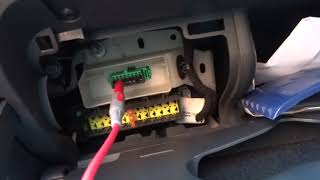
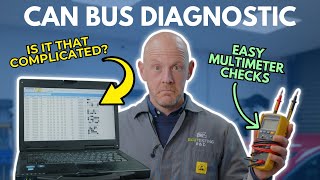
🎬 See this guide on how to troubleshoot CAN bus faults.Can I Drive With U2120?
Yes, But With Caution. You can drive, but proceed with extreme caution to a repair facility. Critical safety systems like ABS, traction control, or airbags are often disabled, increasing accident risk. The vehicle often enters a reduced-power 'limp mode,' limiting speed to 30-50 mph. Continuing to drive with a communication fault risks severe damage if the offline module controls engine or transmission operation.
Common Causes
- Low Battery Voltage or Charging System Issues (Common) — Control modules are highly sensitive to voltage. A weak battery, failing alternator, or corroded battery terminals causes unpredictable behavior and communication dropouts between modules, triggering a U-code.
- Damaged or Corroded Wiring/Connectors (Very Common) — This is the most frequent physical cause. Wires in the CAN bus network chafe, break, or short. Connectors become loose or corroded from moisture and vibrations, especially those exposed under the vehicle or in door jambs, interrupting the signal.
- Poor Ground Connection (Common) — Every electrical component needs a solid ground connection to the vehicle's chassis. A loose, rusty, or broken ground strap for a specific module or a shared ground point prevents it from communicating correctly.
- Improperly Installed Aftermarket Electronics (Common) — Poorly designed or improperly installed aftermarket components, like remote starters, alarms, stereos, or OBD-II port plug-in trackers, interfere with the CAN bus network, causing communication errors between factory modules.
- Faulty Control Module (Common) — The silent module has an internal failure, such as a cracked solder joint or failed processor. This happens due to age, electrical surges, or excessive heat. A single faulty module disrupts the entire network.
- Failed CAN Bus Terminating Resistor (Less Common) — The CAN network has a 120-ohm resistor at each end to prevent signal reflection. If a resistor or the module containing it fails, the total network resistance changes (from 60 ohms to 120 ohms), leading to communication breakdowns.
- Software Glitch or Corrupted Data (Less Common) — A module's software becomes corrupted, or a failed software update on another module causes communication conflicts on the network.
Symptoms
- Check Engine Light is On — This is the first and most obvious indicator, though other warning lights are also common.
- Multiple Warning Lights (ABS, Traction Control, Airbag, etc.) — If the offline module controls brakes or stability, you will see those specific warning lights. A U-code often creates a 'Christmas tree' effect on the instrument panel.
- Loss of Functionality — Features controlled by the failed module stop working. This includes anything from radio and climate controls to power windows, adaptive cruise control, or a blank instrument cluster.
- Vehicle Enters 'Limp Mode' — To prevent damage, the main computer defaults to a safe, low-power mode with limited speed (typically 30-50 mph), limited RPM, and rough or locked gear shifting.
- Car Fails to Start or Stalls — If the module responsible for security (immobilizer), engine control (ECM), or the body control module (BCM) loses communication, the vehicle fails to crank, start, or stalls unexpectedly.
Diagnostic Flowchart
Tap your situation to follow the diagnostic path that matches what you're seeing on this code.
Common Fixes & Costs
- Repairing Damaged Wiring or Connectors — Parts: $10-$100, Labor: $200-$800, ~2.5 hr book time (Intermediate)
- Cleaning or Repairing a Module Ground Connection — Parts: $1-$10, Labor: $75-$200, ~1 hr book time (DIY)
- Removing a Faulty Aftermarket Device — Parts: $0, Labor: $50-$150, ~0.8 hr book time (Intermediate)
- Replacing a Faulty Control Module (BCM, ABS, etc.) — Parts: $300-$1,200, Labor: $150-$400, ~2 hr book time (Professional)
- Repairing a Faulty Control Module — Parts: $250-$500, Labor: $100-$250, ~1.5 hr book time (Professional)
- Updating or Reprogramming Module Software — Parts: $0, Labor: $125-$300, ~1.5 hr book time (Professional)
Used vs. New Parts: Buying Guide
When a used part is worth it: For a high-mileage vehicle where the cost of a new module is prohibitive, a used module from a reputable salvage yard is a cost-effective option. It makes sense when you have access to a shop that can 'clone' your old module's data onto the used one.
Donor-vehicle mileage cap: roughly under 100000 miles for the part to have meaningful remaining life.
Donor quality checklist:
- Match the part number exactly. Even a single digit difference means incompatibility.
- Verify the donor vehicle's history; avoid parts from flood-damaged or severely wrecked cars.
- Ask about the warranty. Confirm it covers the part itself and not labor.
Decision logic:
- If The vehicle is less than 8 years old or has low mileage → Buy a new OEM module. The cost is justified by the reliability and guaranteed compatibility/programmability.
- If The part requires programming and you are using a dealership for repair → Buy a new OEM module, as many dealerships refuse to install or program used electronic parts.
- If The vehicle is older, budget is the primary concern, and you have an independent shop capable of programming or cloning → A used module is a reasonable choice, but accept the risk of it failing sooner or being non-programmable.
Warranty tradeoff: Used parts typically have a 30-90 day part-only warranty. New aftermarket parts often carry a 1-year to limited lifetime warranty. New OEM parts have a 1-2 year warranty, especially when installed by a dealer.
Worst-case if a used part fails: $500-$1000 if a used module is defective or can't be programmed. This includes the cost of repeat diagnostic and installation labor, plus sourcing another part.
What Happens If You Wait — Timeline
- 0-1 month: Code is set, Check Engine Light is on. May be accompanied by an intermittent glitch (e.g., radio flickers once, ABS light comes on briefly). No other consistent symptoms. (MPG impact: 0%% · Added cost: $0)
- 1-3 months: A faulty module or bad ground begins to cause a parasitic battery drain, making the engine crank slower in the morning. The battery's lifespan is reduced. Intermittent loss of a feature (e.g., power windows stop working for a day) becomes more frequent. (MPG impact: 0-2%% · Added cost: $200-$400 (for a new battery that dies prematurely).)
- 3-6 months: The communication fault becomes more persistent. The vehicle enters 'limp mode' randomly, limiting speed and performance. The constant strain from a parasitic draw and potential voltage spikes damages the alternator. Driving with disabled ABS or stability control increases accident risk. (MPG impact: 5-10% (if in limp mode)% · Added cost: $500-$1000 (for a new battery and alternator).)
- 6+ months: Prolonged operation with a major module offline (like the BCM or TCM) leads to severe damage. If the TCM is affected, it causes harsh shifting that damages internal transmission components. If the ECM is receiving bad data, it affects air/fuel mixture, damaging the catalytic converter over time. The vehicle eventually becomes a no-start, no-crank 'brick'. (MPG impact: 10-20%% · Added cost: $1500-$5000+ (for transmission or catalytic converter repairs).)
Cost of Not Fixing It
- Immediate: Loss of features controlled by the offline module (e.g., power windows, radio, ABS, stability control). The vehicle enters a reduced-power 'limp mode' or fails to start. (Added cost: Negligible, but major safety and convenience impact.)
- 1-6 Months: A faulty module causes a parasitic battery drain, leading to a dead battery and shortening the lifespan of the battery and alternator. Driving with disabled safety systems increases accident risk. (Added cost: $200-$700 (for a new battery and/or alternator).)
- 6+ Months: If the communication fault affects the Powertrain Control Module (PCM) or Transmission Control Module (TCM), prolonged operation with incorrect data leads to poor fuel economy, internal transmission damage, or catalytic converter failure. (Added cost: $1500-$5000+ (for transmission rebuild or catalytic converter replacement).)
Diagnosis Steps
- Read All Stored Codes from All Modules
Use a high-quality OBD-II scanner capable of reading codes from all vehicle modules (BCM, ABS, TCM, etc.). U2120 often appears with other 'U' codes that point to the specific offline module (e.g., U0121 for ABS). The module with the most 'lost communication' codes pointing to it is the culprit.
Tools: Advanced OBD-II Scanner (Beginner) - Inspect the Battery and Charging System
Ensure the battery is fully charged (above 12.4 volts with engine off) and terminals are clean and tight. With the engine running, check that the alternator charges correctly (13.5-14.5 volts). A weak power supply is the leading cause of random communication errors.
Tools: Multimeter (Beginner) - Check Fuses for All Modules
Locate the vehicle's fuse boxes and inspect all fuses related to the various control modules (BCM, ABS, Radio, Instrument Cluster). A single blown fuse takes a module offline and triggers this code.
Tools: Fuse puller, Test light or Multimeter (Beginner) - Perform a Thorough Visual Inspection
Visually inspect wiring harnesses and connectors for the suspect module. Look for chafed wires, rodent damage, corrosion on connector pins, or water intrusion. Pay close attention to aftermarket devices and their wiring splices. Check the BCM area (often in the passenger footwell) for kicked connectors.
Tools: Flashlight, Inspection mirror (Intermediate) - Test the CAN Bus Network Resistance
Disconnect the battery. At the OBD-II port, measure the resistance between Pin 6 (CAN High) and Pin 14 (CAN Low). A healthy network reads exactly 60 ohms. A reading of 120 ohms indicates a missing terminating resistor or an open circuit. A reading near 0 ohms indicates a short circuit between the CAN lines.
Tools: Multimeter, OBD-II pinout diagram (Advanced) - Check Module Power and Ground Integrity
Using a vehicle-specific wiring diagram, identify the power and ground pins on the non-communicating module's connector. Verify the module receives proper battery voltage and has a solid ground connection (less than 0.1 ohms of resistance to the chassis). A poor ground causes hard-to-trace communication faults.
Tools: Multimeter, Vehicle-specific wiring diagram (Advanced) - Advanced Voltage Checks with a Multimeter
With the key on, perform live voltage checks at the OBD-II port. CAN High (Pin 6) to ground should read between 2.5 and 3.0 volts. CAN Low (Pin 14) to ground should read between 2.0 and 2.5 volts. If both lines read a static 2.5V, a module is powered but not broadcasting.
Tools: Multimeter, OBD-II pinout diagram (Advanced) - Isolating the Faulty Module (The 'Unplug' Method)
If the 60-ohm test fails, start unplugging modules on the CAN bus one by one. After unplugging each module, re-check the resistance at the OBD-II port. When the resistance reading returns to normal (60 or 120 ohms), the last module you unplugged is causing the network disruption.
Tools: Multimeter, Trim removal tools (Professional) - Inspecting the CAN Bus Waveform with an Oscilloscope
Connect oscilloscope probes to CAN High (Pin 6) and CAN Low (Pin 14). A healthy bus shows two clean, mirror-image square waves. A flat line, distorted signal, or missing waveform indicates a short, open, or interference on the network.
Tools: Automotive Oscilloscope, OBD-II breakout box (Professional)
When This Code Triggers (Freeze-Frame Conditions)
- Engine Coolant Temp: 175-210°F (The fault is often logged when the engine is fully warmed up and systems are running routine self-checks.)
- RPM: 1200-2500 (The code sets during steady-state driving, such as cruising on the highway, when the network is stable and communication dropouts are easily detected.)
- Engine Load: 20-50% (Often occurs under light to moderate engine load, not typically during heavy acceleration or deceleration.)
- Vehicle Speed: 30-65 mph (Consistent speed allows the diagnostic monitors to run, making it a common condition for the code to trigger.)
Related Codes
- U0121 — Means 'Lost Communication With Anti-Lock Brake System (ABS) Control Module'. If you see U0121 alongside U2120, the problem is almost certainly related to the ABS module or its wiring/power supply.
- U0100 — Generic code for 'Lost Communication With ECM/PCM'. If U0100 is present, diagnose it first. The main computer being offline causes other modules to report communication loss codes like U2120 as a secondary symptom.
- U0073 — Stands for 'Control Module Communication Bus A Off'. Seeing both codes together strongly indicates a fault on the main high-speed CAN bus itself (wiring short/open) rather than a problem with a single module.
- U0140 — Means 'Lost Communication With Body Control Module (BCM)'. If you have U0140, the BCM is the primary suspect, and its failure causes the more generic U2120 code to be set by other modules.
Climate & Environmental Factors
- High Humidity / Moisture: Moisture from rain, snow, or humid air causes corrosion on connector pins, wiring, and module ground points, increasing resistance and disrupting communication. Water directly short-circuits modules if seals are compromised.
- Cold Weather: Low temperatures reduce a battery's chemical efficiency, leading to low voltage conditions during startup that cause modules to glitch. Wires and plastic connectors become brittle, making them more likely to break from engine vibration.
- Road Salt (Rust Belt Regions): De-icing salts dramatically accelerate corrosion. Under-vehicle wiring harnesses, ground straps bolted to the frame, and wheel-speed sensor connectors are especially vulnerable, leading to a higher incidence of communication faults.
How to Talk to a Mechanic About This Code
Say this: "I have a U2120 communication code and other warning lights are on. I've already checked the battery and fuses. I'd like to schedule a diagnostic to trace the network fault. Please start by identifying which module is offline and checking its power and ground connections before recommending a module replacement."
This shows you understand the code is for a network fault, not a specific part. It directs the technician to perform a logical diagnostic process (power, ground, wiring) rather than immediately replacing an expensive computer, which is a common misdiagnosis.
Avoid saying:
- 'My check engine light is on, can you look at it?'
- 'The car is acting weird, just fix it.'
- 'I think it needs a new computer.'
Questions to ask before authorizing the repair:
- What were the results of the CAN bus resistance test?
- Did you find the specific module that is offline? Did you test its power and ground circuits directly at the connector?
- Can you show me the damaged wire or corroded connector you found?
- If a module needs to be replaced, is programming required and is that included in the quote?
- What is the warranty on the diagnostic labor and the recommended parts?
Where to Take It: Dealer vs Independent vs Chain
- Dealer:
A strong option if the issue is a known software glitch or requires module programming, but will be the most expensive for diagnostic time.
Best for: Vehicles under warranty, Known manufacturer-specific issues covered by a TSB (Technical Service Bulletin), Complex repairs requiring proprietary software for programming new modules
Downsides: Highest labor rates, May be quicker to replace a module than to spend time tracing a difficult wiring fault (Typical cost: +50% vs. baseline) - Independent Shop:
Best fit, provided you choose a reputable shop with strong electrical diagnostic skills. An auto electrician is often a better choice than a general mechanic for this code.
Best for: Out-of-warranty vehicles, Shops that specialize in diagnostics or auto electrical work, Finding and repairing wiring or connector issues
Downsides: Quality and diagnostic capabilities vary greatly. Ensure they have advanced scan tools and experience with network issues. (Typical cost: +0% vs. baseline) - Chain Shop:
AVOID for diagnosis. They are not typically equipped for in-depth electrical and network troubleshooting. They may be able to read the code but are unlikely to find the root cause.
Best for: Simple, unrelated repairs like tires or oil changes.
Downsides: Technicians often lack the specialized training and tools (like oscilloscopes) for complex network diagnostics., High pressure to sell parts leads to incorrect recommendations to replace modules without proper diagnosis. (Typical cost: -10% vs. baseline)
When to Walk Away From the Repair
If the estimated repair cost for a complex electrical issue like this exceeds 50% of the car's private-party value, it's time to seriously consider selling or trading it in.
- Car worth $4000, fix is $2100: Walk away. The risk of further electrical issues is high, and the repair cost is a significant portion of the car's value.
- Car worth $15000, fix is $1800: Fix it. The repair cost is a reasonable percentage of the vehicle's value.
- Car worth $3000, fix is $800: Borderline. If the fix is a confirmed module replacement with programming, it might be worth it. If it's for diagnostic time with no guaranteed solution, it's risky.
What Scan Tool You Need for This Code
Minimum: A scanner that can perform an 'All Module Scan' or 'Full System Scan' to read codes from the BCM, ABS, TCM, etc., not just the engine computer (ECM).
A basic $20 code reader only checks the engine module. It cannot see the other computers on the network, making it impossible to know which module has lost communication or to see related codes that are essential for diagnosis.
Budget: Ancel BD310 (~$60) — While primarily a basic reader, its app accesses some additional module data on certain vehicles, which is a step above the most basic tools. It's a starting point but may not see all modules on all cars.
Mid-range: BlueDriver Pro / OBDLink MX+ (~$100-140) — These Bluetooth dongles pair with powerful smartphone apps that perform full system scans, reading codes from nearly all vehicle modules. They provide the minimum data needed to see which systems are reporting faults, which is critical for U2120.
Professional: Autel MaxiCOM MK808 / Foxwell NT1009 (~$500-800) — Provides full bidirectional control, allowing you to command modules to perform self-tests. This is crucial for confirming if a module is truly offline or just not responding. These tools offer OE-level diagnostics for deep network analysis.
How to Clear the Code After You Fix It
- Reconnect the battery if it was disconnected for the repair.
- Use a quality OBD-II scan tool to clear all Diagnostic Trouble Codes (DTCs) from all modules.
- Perform a complete drive cycle to allow the vehicle's readiness monitors to run their self-tests.
Drive cycle (~30 minutes): Start with a cold engine. Start the engine and idle for 2-3 minutes. Drive in mixed city traffic for 15-20 minutes, including several stops and starts. Drive at a steady highway speed (55-60 mph) for 5-10 minutes. Let the vehicle cool down completely.
Readiness monitors affected: Catalyst (CAT) Monitor, Evaporative (EVAP) System Monitor, Oxygen (O2) Sensor Monitor, EGR System Monitor
Before emissions retest: drive at least 100 miles to fully set monitors.
Watch out for:
- Simply clearing the code or disconnecting the battery resets all readiness monitors to 'Not Ready', causing an automatic emissions test failure.
- The code returns immediately if the underlying physical or software fault is not properly repaired.
- Not driving the vehicle through a complete and varied drive cycle leaves some monitors incomplete, preventing a successful smog check.
Will This Fail Emissions / State Inspection?
Yes — this code typically fails an OBD-II emissions inspection.
- California: An active Check Engine Light is an automatic failure of the Smog Check. After repairs, most readiness monitors must be set to 'Ready', which requires significant driving before a retest is possible.
- New York: The NYS vehicle inspection includes an OBD-II scan. Any active trouble code that illuminates the Check Engine Light results in an automatic failure. For 2001 and newer vehicles, having more than one readiness monitor 'Not Ready' also causes a failure.
- Texas: In the 17 counties requiring emissions testing, an illuminated Check Engine Light causes the vehicle to fail the OBD-II portion of the inspection. Simply clearing the code is not enough; readiness monitors must also be complete.
Most Commonly Affected Vehicles
- Mazda 3, CX-30 (2019-2021) — A known software malfunction in the Forward Sensing Camera (FSC) causes DTC U2120:00 to be stored, especially after another ECU is reprogrammed. A software update or specific reset procedure is the fix.
- Chevrolet / GMC Silverado, Sierra, Tahoe, Suburban (2007-2014) — These trucks are known for Body Control Module (BCM) failures that cause a host of communication codes, including U2120. Symptoms include erratic lights, HVAC issues, and no-start conditions.
- Ford F-150, Focus, Transit (2012-Present) — On F-150s, communication issues between the ABS module, instrument cluster, and BCM are common. On the Focus, water intrusion into the BCM causes network failure.
- Jaguar / Land Rover Range Rover Evoque, Discovery, various Jaguar models (2015-Present) — These vehicles use multiple complex networks. A failure of a single, seemingly unrelated module (like the telephone or climate control) brings down an entire network, causing a cascade of U-codes.
- Volkswagen / Audi Polo, Golf, A3, various (2010-Present) — On some VW/Audi models, a U2120 variant is triggered by a faulty clock spring (squib) in the steering column, which also causes airbag lights and loss of steering wheel controls.
- Peugeot / Citroen 208, 308, C3, C4, various (2012-Present) — On certain PSA vehicles, U2120 indicates that a specific ECU is not receiving a 'partial wakeup' signal, pointing to an internal network communication problem often related to the BCM.
- Renault Clio, Megane, Scenic (2005-Present) — These models are susceptible to various electrical and communication faults which manifest as U-series codes. Common causes include wiring issues and faulty throttle bodies causing network disruptions.
- Chevrolet Corvette (C6) (2005-2013) — Owners frequently report U-network codes caused by poor connections at the Body Control Module (BCM), located in the passenger footwell where it is easily disturbed or exposed to moisture.
Manufacturer-Specific Notes
- Mazda: A known software issue causes U2120 to appear after any other electronic module is reprogrammed. The fix is to perform a specific reset procedure or update the Forward Sensing Camera (FSC) software (TSB SA-043/20).
- General Motors (Chevrolet/GMC): Communication codes are frequently traced back to loose or corroded connectors at the Body Control Module (BCM), often located in the passenger footwell area where they get kicked or wet from a leaking windshield.
- Ford: On models like the Transit, the BCM protects circuits so aggressively that a simple blown tail light bulb causes a perceived short, disabling the entire circuit. The fault code cannot be cleared without a dealer-level diagnostic tool.
- Jaguar / Land Rover: Due to fiber optic (MOST) rings for infotainment systems, a single module failure breaks the entire communication ring. Technicians use a special fiber optic loop to bypass each module one-by-one until communication is restored.
Real Owner Stories
2013 Ford F-150 with intermittent no-start
Truck randomly failed to start, with no gauges or lights. Dealer quoted $1475 for a BCM replacement.
What they tried:
- Owner was skeptical of the high cost.
- A forum user suggested checking for a common issue with a loose connector at the Body Control Module (BCM).
Outcome: The owner found a connector on the BCM that had come partially unplugged. Simply latching it securely fixed the intermittent no-start and communication issues, saving over $1400.
Lesson: For intermittent electrical issues, always check for loose connectors at the relevant module (like the BCM in the passenger footwell) before agreeing to an expensive replacement.
2008 Chevy Silverado with multiple warning lights
ABS, traction control, and other warning lights appeared on the dash, along with code U2120. The radio and other accessories acted erratically.
What they tried:
- Initial thought was a failed ABS module due to the specific warning lights.
- A mechanic performed a visual inspection and found no obvious wiring damage.
- A voltage drop test was performed on the main ground straps.
Outcome: The main engine-to-chassis ground strap was heavily corroded and frayed. Replacing the ~$20 ground strap and cleaning the connection points resolved all communication errors and extinguished the warning lights.
Lesson: Multiple, seemingly unrelated electrical faults point to a single, simple cause like a bad ground or low battery voltage. Always test the power and ground system before condemning expensive modules.
2019 Mazda 3 with U2120 after a software update
Immediately after a dealership performed a recall-related software update on the powertrain module (PCM), a U2120 code appeared, and the pre-collision safety system warning light came on.
What they tried:
- The owner returned to the dealership, concerned the update had failed.
- The dealership initially suspected a faulty Forward Sensing Camera (FSC).
Outcome: The dealership consulted a Technical Service Bulletin (TSB SA-043/20) describing this exact issue. The fix was to perform a specific software reset procedure on the FSC, which lost communication after the other module was updated. The procedure resolved the code.
Lesson: If a U-code appears immediately after a repair or software update, the cause is related to the work just performed. Check for TSBs related to your specific model, as it is often a known software conflict with a procedural fix.
2012 Ford Focus with U2120 after heavy rain
Car exhibited bizarre electrical behavior after a storm: wipers wouldn't turn off, radio was dead, and multiple communication codes were present.
What they tried:
- Owner suspected water damage and checked for wet carpets.
- The passenger side footwell carpet was damp, which is where the Body Control Module (BCM) is located.
Outcome: The BCM was removed and its housing contained water, which corroded the circuit board. A used BCM was sourced for $150, but required dealership programming for another $250. The root cause was a clogged cowl drain that allowed water to overflow into the cabin.
Lesson: If electrical problems appear after rain or a car wash, immediately suspect water intrusion. Check common problem areas like the BCM in the passenger footwell. Fixing the leak is as important as replacing the damaged part.
How to Prevent This Code From Triggering
- Clean Battery Terminals and Check Connections Annually (Once per year) — Corrosion on battery terminals creates resistance, leading to low voltage conditions that cause modules to malfunction and log communication codes. Cleaning them with a wire brush and a baking soda solution prevents this.
- Apply Dielectric Grease to Exposed Connectors (When servicing or exposing a connector) — Dielectric grease is a non-conductive, waterproof sealant. Applying it to the seals of connectors, especially those under the vehicle (like ABS sensors) or in the engine bay, prevents moisture intrusion and corrosion, which is a primary cause of CAN bus wire failure.
- Inspect and Clean Key Chassis Ground Points (Every 2-3 years or when working in the area) — Modules require a solid ground to the vehicle's chassis to communicate. Ground straps corrode or break. Periodically locating the main engine-to-chassis and battery-to-chassis grounds, removing them, cleaning the contact points to bare metal, and re-securing them tightly prevents intermittent communication faults.
- Use a Battery Tender for Long-Term Storage (If the vehicle is parked for more than 2-3 weeks) — A car battery naturally self-discharges over time. If it drops below a critical voltage, modules lose their memory or fail to initialize correctly on startup, triggering U-codes. A battery tender provides a slow, steady charge that keeps the battery at an optimal voltage indefinitely.
- Ensure Cowl and Sunroof Drains Are Clear (Once per year, especially in the fall) — Leaves and debris clog drains designed to channel water away from the vehicle. When they back up, water overflows into the cabin, often dripping directly onto critical electronics like the BCM or fuse box, causing catastrophic short circuits and communication failures.
Frequently Asked Questions
What is the most common misdiagnosis for code U2120?
The most common mistake is immediately replacing an expensive control module without performing proper network diagnostics. In most cases, the root cause is a physical problem like a corroded wire, loose connector, bad ground, or weak battery.
Can aftermarket accessories cause a U2120 code?
Yes, aftermarket stereos, remote starters, or OBD-II trackers frequently disrupt the CAN bus network. If these devices flood the network with bad data or create electrical interference, factory modules lose communication.
Can a bad battery cause code U2120?
Absolutely. Control modules require a stable voltage to communicate properly. A weak battery failing to provide stable power, especially during engine cranking, triggers network communication codes.
Is it safe to drive with a U2120 code?
You can drive short distances to a repair shop, but proceed with extreme caution. Key safety systems like ABS and traction control are often disabled, and the car may enter a severely restricted 'limp mode'.
How much does it cost to fix a U2120 code?
Diagnostic fees range from $125 to $400. Simple wiring repairs cost $200-$500, while replacing and programming a critical control module ranges from $800 to over $2,000.
Can I fix a U2120 code myself?
DIYers can inspect the battery, check fuses, and remove problematic aftermarket devices. However, diagnosing the CAN bus with a multimeter or replacing and programming modules requires specialized tools and professional knowledge.
What's the difference between replacing a module and repairing it?
Replacing involves buying a new unit and programming it to your vehicle's VIN, which is expensive. Repairing involves sending your original module to a specialized service to fix internal components, which is cheaper and retains your original data without reprogramming.
Will clearing the code make it go away?
Clearing the code with a scanner temporarily turns off the light if the fault was an intermittent voltage drop. However, if a hardware or software problem exists, the code returns immediately.
Key Takeaways
- U2120 indicates a communication failure on the CAN bus network, but requires an advanced scanner to read secondary codes (like U0140 or U0121) to identify the exact offline module.
- Always test the battery first; a voltage drop below 12.4V is the leading cause of intermittent module communication dropouts.
- Before replacing a $500+ control module, verify the CAN bus network health by measuring resistance between OBD-II pins 6 and 14, which must read exactly 60 ohms.
- Aftermarket electronics, such as remote starters or OBD-II trackers, frequently disrupt the CAN bus and should be completely disconnected during initial diagnosis.
Helpful Videos
Shop the Parts Behind U2120
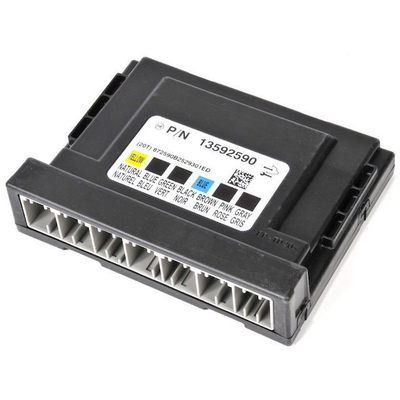
Below are the parts most often responsible for code U2120, ranked by how frequently each one is the actual culprit (per the diagnosis above). Tap any to see what we have for your vehicle.

The information in this article is provided for general reference and educational purposes only. Vehicle specifications, procedures, and part compatibility can vary by production date, trim level, and region. Always consult your vehicle's factory service manual and verify part numbers before purchasing or performing repairs. Safety-critical components such as airbags, seat belts, and braking systems should be installed by a qualified professional.
- 🧭 Diagnostic Flowchart
- 🎬 Helpful Videos
- 🛍️ Shop This Part
- What Does U2120 Mean?
- Can I Drive With U2120?
- Common Causes
- Symptoms
- Common Fixes & Costs
- Used vs. New Parts: Buying Guide
- What Happens If You Wait — Timeline
- Cost of Not Fixing It
- Diagnosis Steps
- When This Code Triggers (Freeze-Frame Conditions)
- Related Codes
- Climate & Environmental Factors
- How to Talk to a Mechanic About This Code
- Where to Take It: Dealer vs Independent vs Chain
- When to Walk Away From the Repair
- What Scan Tool You Need for This Code
- How to Clear the Code After You Fix It
- Will This Fail Emissions / State Inspection?
- Most Commonly Affected Vehicles
- Manufacturer-Specific Notes
- Real Owner Stories
- 2013 Ford F-150 with intermittent no-start
- 2008 Chevy Silverado with multiple warning lights
- 2019 Mazda 3 with U2120 after a software update
- 2012 Ford Focus with U2120 after heavy rain
- How to Prevent This Code From Triggering
- Frequently Asked Questions
- What is the most common misdiagnosis for code U2120?
- Can aftermarket accessories cause a U2120 code?
- Can a bad battery cause code U2120?
- Is it safe to drive with a U2120 code?
- How much does it cost to fix a U2120 code?
- Can I fix a U2120 code myself?
- What's the difference between replacing a module and repairing it?
- Will clearing the code make it go away?
- Key Takeaways
- 🎟️ Get 5% Off