

OBD-II Code U2154: Lost Communication With a Control Module
What U2154 means, why it triggers, and how to fix it
- Code U2154 indicates a specific control module has dropped off the CAN bus network, immediately disabling the features it governs.
- Test your battery voltage first; drops below 12.0V during engine cranking are the primary cause of module communication failures.
- Use a bi-directional scan tool to poll all vehicle systems, as a basic $20 code reader cannot identify which of the 20+ modules went silent.
- Verify the CAN bus network resistance reads exactly 60 ohms at the OBD-II port before spending $500+ replacing suspected faulty modules.
- Never splice aftermarket electronics directly into CAN bus wiring; always use a dedicated interface harness to prevent network-wide communication crashes.
What Does U2154 Mean?
U2154 means one of your car's computers (modules) has stopped communicating on the CAN bus network. When a module goes silent, the vehicle disables the specific feature it controls, ranging from the radio to the anti-lock brakes.
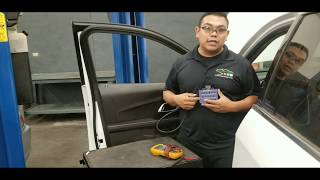
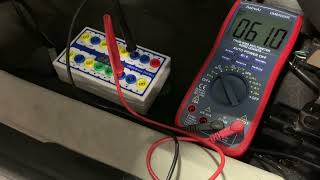
Technical definition: U2154 is a generic network communication code indicating a loss of communication with a specific control module. The code itself does not specify the module; a bi-directional scan tool is required 🎬 Watch: Practical CAN bus diagnostic tips and troubleshooting tools. to identify the silent component. The code sets when a module fails to send or receive messages on the Controller Area Network (CAN) bus for a specified period, typically a few seconds.
Can I Drive With U2154?
Yes, But With Caution. You can drive, but expect significant loss of function. Critical safety features like blind-spot monitoring, pre-collision assist, or ABS often disable. Do not drive if the instrument cluster is dead, the transmission enters limp mode, or the engine stalls. Driving with an intermittent fault causes unpredictable behavior, including sudden power loss, increasing accident risk.
Common Causes
- Low or Unstable Battery Voltage (Very Common) — A weak or dying battery is the primary cause of communication codes. Modules require stable voltage (>12.0V); drops during cranking force them to shut down unexpectedly and trigger a communication fault.
- Damaged Wiring or Corroded Connectors (Common) — The CAN bus network relies on physical twisted-pair wires. A frayed wire, short to ground, or corroded connector pin severs communication. This frequently occurs in weather-exposed areas like bumpers or undercarriage harnesses.
- Blown Module Fuse (Common) — Every module relies on a fused power circuit. A blown fuse instantly cuts power, taking the module offline. Always check the specific module's fuse before assuming hardware failure.
- Aftermarket Accessory Interference (Common) — Poorly installed remote starters, alarms, or cheap stereos disrupt the CAN bus. Splicing directly into network wires introduces electrical noise or improper resistance, crashing factory module communication.
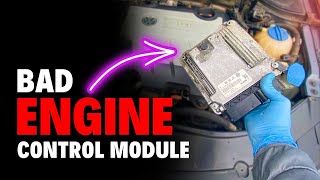
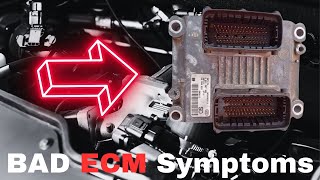
- Failed Control Module (Less Common) — The module itself suffers internal failure due to age, heat, water intrusion, or a burnt transceiver chip, permanently dropping it from the network. 🎬 See how to diagnose common signs of control module failure.
- Software Glitch or Corruption (Less Common) — Module software corrupts or enters a logic lockup. A hard battery reset sometimes clears temporary glitches, but permanent corruption requires a dealer reflash.
- Faulty Terminating Resistor (Rare) — The CAN bus requires two 120-ohm terminating resistors at opposite ends of the network. If one fails (often inside the PCM or Instrument Cluster), network resistance jumps to 120 ohms, causing signal reflections and data loss.
- Faulty Gateway Module (Rare) — The Gateway Module translates messages between high-speed and low-speed CAN networks. Gateway failure isolates entire segments of the vehicle's network simultaneously.
Symptoms
- Specific Features Stop Working — Driver aids like blind-spot monitoring, pre-collision assist, adaptive cruise control, or the backup camera become unavailable.
- Warning Lights on Dashboard — The check engine light illuminates alongside lights related to the failed system (e.g., ABS, airbag, or a general 'network error' message).
- Erratic Electrical Behavior — Power windows, door locks, the radio, or interior lights act strangely or fail completely, indicating a Body Control Module (BCM) issue.
- Instrument Cluster Goes Blank — The speedometer, tachometer, or entire instrument display stops working or shows dashes, indicating communication loss with the cluster.
- Vehicle Will Not Start — If the failed module controls security or engine function (like the Powertrain Control Module), the immobilizer prevents the car from starting.
Diagnostic Flowchart
Tap your situation to follow the diagnostic path that matches what you're seeing on this code.
Common Fixes & Costs
- Replace Vehicle Battery — Parts: $150-$350, Labor: $50-$100, ~0.5 hr book time (DIY)
- Repair Damaged Wiring/Connector — Parts: $10-$50, Labor: $150-$800+, ~3.5 hr book time (Professional)
- Replace a Failed Control Module
— Parts: $400-$1,500+, Labor: $200-$500, ~2.5 hr book time
(Professional)
Infiniti QX60 (2022-2023): OEM Source from dealer per TSB ITB23-018A (Alt: Not available)
Ford F-150 (2021-2023): OEM KL3Z-19H406-A (Alt: Not available) - Repair or Replace TIPM (Chrysler/Dodge/Jeep)
— Parts: $250-$1,500, Labor: $150-$250, ~1.0 hr book time
(Professional)
Jeep Grand Cherokee (2011-2013): OEM 68244852AA (Alt: Dorman 599-980 (Remanufactured)) - Replace or Reprogram Gateway Module
— Parts: $300-$800, Labor: $150-$300, ~1.5 hr book time
(Professional)
Ford Fusion (2013-2016): OEM DG9Z-14F642-A (Alt: Cardone Remanufactured)
Used vs. New Parts: Buying Guide
When a used part is worth it: For older vehicles (>10 years) where a new module is prohibitively expensive. Source from a reputable supplier with a warranty.
Donor-vehicle mileage cap: roughly under 100000 miles for the part to have meaningful remaining life.
Donor quality checklist:
- Verify the part number matches exactly.
- Inspect connectors for corrosion or heat damage.
- Choose suppliers offering a 30-90 day warranty.
Decision logic:
- If The part requires VIN programming, immobilizer syncing, or software flashing (e.g., BCM, PCM, TIPM) → Buy new or professionally remanufactured. Used modules often cannot be reprogrammed.
- If The part is a simple, non-programmed module (e.g., older door modules) → A used part is a cost-effective choice.
- If The vehicle is less than 8 years old and the part is critical for safety (e.g., ABS, Airbag) → Buy new OEM to ensure reliability and warranty coverage.
Warranty tradeoff: Used parts carry 30-90 day warranties covering only the part. New aftermarket parts offer 1-year warranties. New OEM parts carry 1-2 year warranties when dealer-installed.
Worst-case if a used part fails: $500-1000 if a used, programmed module fails, requiring repeat labor and a new part.
What Happens If You Wait — Timeline
- Immediate: A specific feature (e.g., blind-spot monitoring) stops working. A warning light appears. The fault is consistent and easily repeatable. (MPG impact: 0%% · Added cost: $0)
- Weeks to Months: If caused by an intermittent wiring short, symptoms become unpredictable. Unrelated electrical glitches appear as the unstable network sends corrupt data. (MPG impact: 0%% · Added cost: $200 - $500 (in wasted diagnostic time if the shop chases symptoms instead of the network))
- 2-6 Months: A failing module with a stuck relay (like a TIPM) burns out the component it controls, such as a fuel pump. Intermittent shorts cause other modules to log corrupted data. (MPG impact: 0-5%% · Added cost: $400 - $1,200 (cost of secondary damaged parts))
- 6+ Months: Catastrophic network failure. A persistent short-to-power on the CAN bus physically damages sensitive CAN transceiver chips in multiple control modules, requiring extensive replacement. (MPG impact: N/A (Vehicle may not be drivable)% · Added cost: $2,500+)
Cost of Not Fixing It
- Immediate: Loss of function for the offline module, ranging from an inconvenience (no radio) to a significant safety risk (no ABS or blind-spot monitoring). (Added cost: Negligible)
- Weeks to Months: Unstable networks cause unpredictable behavior, such as stalling or no-start conditions. A faulty TIPM can burn out the fuel pump. (Added cost: $400 - $1,200)
- Long-Term: Continued driving with an intermittent wiring short damages CAN transceiver chips in other modules, turning a single-point failure into a multi-module repair. (Added cost: $1,500+)
Diagnosis Steps
- Scan for Specific Codes
Use a bi-directional scanner to perform a full network scan. A basic OBD-II reader only shows the generic U2154 code. An advanced scan identifies the exact silent module (e.g., 'No Communication with SODL') and reveals related B-codes or C-codes.
Tools: Advanced Bi-Directional OBD-II Scanner (Intermediate) - Check the Battery and Fuses
Measure static battery voltage; it must exceed 12.4V. Have the battery professionally load-tested. Check all fuses related to the offline module identified in Step 1, plus any labeled 'BCM', 'ECU', or 'CAN'.
Tools: Multimeter, Professional Battery Load Tester (Beginner) - Perform a Visual Inspection
Inspect wiring harnesses around the offline module for cuts, melting, or rodent damage. Check connectors in weather-exposed areas (bumpers, spare tire) for green pin corrosion.
Tools: Flashlight (Beginner) - Check Power and Ground at the Module
Locate the offline module's power and ground pins using a wiring diagram. Confirm it receives 12V+ power. Perform a voltage drop test on the ground wire; readings above 0.2V indicate a bad ground, not a bad module.
Tools: Multimeter, vehicle-specific wiring diagram (Advanced) - Test the CAN Bus Network Resistance
Disconnect the battery. Measure resistance between OBD-II Pin 6 (CAN High) and Pin 14 (CAN Low). A healthy network reads exactly 60 ohms. 120 ohms indicates an open circuit or missing terminating resistor; 0 ohms indicates a short.
Tools: Multimeter (Advanced) - PRO TIP: Check CAN Voltages (Key On, Engine Off)
Back-probe CAN High (Pin 6) and CAN Low (Pin 14) with the system powered on. High-speed CAN High should read ~2.7V, and CAN Low ~2.3V. Voltages stuck at 0V, 5V, or 12V indicate a hard short to ground or power.
Tools: Multimeter (with back-probe pins) (Advanced) - PRO TIP: Isolate the Faulty Module or Wire
If resistance is 120 ohms, unplug modules one by one until resistance returns to 60 ohms to locate the break. For shorts, split the network at a central connector to isolate the faulty half of the vehicle.
Tools: Multimeter, wiring diagram (Advanced) - PRO TIP: Analyze the CAN Bus Signal with an Oscilloscope
Connect to CAN High and Low. A healthy signal shows a clean, square waveform switching between recessive (~2.5V) and dominant states. Distorted waveforms or noise pinpoint interference that a multimeter misses.
Tools: Automotive Oscilloscope (Professional)
When This Code Triggers (Freeze-Frame Conditions)
- Module Voltage: <11.5V or >15V (During engine crank or while driving)
- Time Since Ignition On: 0-5 seconds (Immediately after starting the vehicle)
- Network Status: Error Frame Detected (Active communication on the CAN bus)
- Vehicle Speed: Any (Can occur when stationary or at highway speeds)
Related Codes
- U0001 — Indicates a fault with the entire High-Speed CAN bus, not just one module. U0001 means the whole system is compromised, whereas U2154 isolates a single silent module.
- U0100 — Specifically means 'Lost Communication With ECM/PCM'. Unlike the generic U2154, U0100 identifies the engine computer as the offline module, representing a severe fault.
- U0010 — Indicates a fault on the Medium-Speed CAN bus, which typically handles body and comfort modules.
- B-prefix, C-prefix, or P-prefix codes — System-specific codes often accompany U2154. For example, a failing blind spot module triggers a 'B' code for a specific sensor fault, confirming the diagnosis.
Climate & Environmental Factors
- Road Salt & Humidity: Saltwater is highly conductive and accelerates corrosion on wiring, connector pins, and chassis grounds. This corrosion creates opens or shorts in the CAN bus wiring.
- Extreme Cold: Cold temperatures increase battery internal resistance, reducing its ability to provide stable voltage. It also makes plastic connectors and wire insulation brittle and prone to cracking.
How to Talk to a Mechanic About This Code
Say this: "I have a U2154 code and my blind spot monitor failed. I verified the battery is healthy. Please perform a full network scan to identify the offline module and test the CAN bus resistance."
This directs the technician to perform a systematic electrical diagnosis rather than guessing and replacing modules. It prevents them from wasting time checking the battery.
Avoid saying:
- My check engine light is on, can you just fix it?
- I think the blind spot sensor is broken, can you replace it?
- Just do whatever you think is necessary.
Questions to ask before authorizing the repair:
- Did the full network scan identify which specific module was offline?
- Did you test the CAN bus resistance at the OBD-II port, and what was the reading? (Should be ~60 ohms)
- Before replacing the module, did you confirm it has proper power and a good ground at its connector?
- If the module needs replacement, does the new one require programming, and is that included in the quote?
Where to Take It: Dealer vs Independent vs Chain
- Dealer:
A strong choice, especially if a software update is needed. They have direct access to brand-specific wiring diagrams and programming tools.
Best for: Vehicles under warranty., Complex, manufacturer-specific electrical issues., When a Technical Service Bulletin (TSB) requires a software update.
Downsides: Highest labor rates., May default to replacing an entire module assembly when a wiring repair suffices. (Typical cost: +50% vs. baseline) - Independent Shop:
Excellent fit, provided it is a reputable shop with strong electrical skills. They often provide more thorough wiring diagnosis than a dealer.
Best for: Out-of-warranty vehicles where cost is a factor., Shops specializing in electrical diagnostics.
Downsides: Quality varies; ensure they have advanced diagnostic tools and CAN bus experience., May lack access to the latest manufacturer programming software. (Typical cost: +0% vs. baseline) - Chain Shop:
AVOID. Diagnosing a U2154 code is beyond the scope of most chain shops.
Best for: Simple maintenance like oil changes or tires.
Downsides: Technicians lack specialized training and equipment for complex network diagnostics., High risk of misdiagnosis and unnecessary parts replacement. (Typical cost: -10% vs. baseline)
When to Walk Away From the Repair
If the estimated repair cost exceeds 50% of the car's current private-party value, consider replacing the vehicle.
- Car worth $5000, fix is $2800: Walk away. The repair cost is over half the car's value.
- Car worth $15000, fix is $1800: Fix it. The repair cost is well below the 50% threshold and preserves safety features.
- Car worth $3000, fix is $800: Borderline. While under the 50% rule, assess other potential upcoming maintenance needs before committing.
What Scan Tool You Need for This Code
Minimum: A scanner that performs a full system scan (All Module Scan) to identify manufacturer-specific 'U' codes and pinpoint the offline module.
A basic $20 code reader only shows the generic U2154 code. It cannot poll individual systems (ABS, BCM, IPMA) to identify which of the 20+ modules failed.
Budget: BlueDriver Pro (~$99) — Performs an 'all systems' scan on major brands to read enhanced codes from modules beyond the engine.
Mid-range: Innova 5610 / Autel MaxiCOM MK808S (~$300-400) — Provides bi-directional control, full system scans, and active module commanding. This is the minimum level for serious DIY diagnosis.
Professional: Launch X431 series / Autel MaxiSys MS906 (~$600-1500) — Provides dealership-level diagnostics, ECU coding for module replacement, and network topology maps to visually identify non-communicating modules.
Rent vs buy: Renting is not viable. Auto parts store tools are too basic. You must buy at least a budget-level tool with 'all module scan' capability.
How to Clear the Code After You Fix It
- Ensure the underlying fault (wiring, module, battery) is fixed.
- Reconnect the battery if disconnected.
- Use an OBD-II scan tool to clear all Diagnostic Trouble Codes (DTCs).
- Perform a full drive cycle to allow system readiness monitors to complete.
Drive cycle (~30 minutes): Start from a cold start. Idle for 3 minutes. Drive in mixed city/highway conditions, including steady-state cruising, for 20 minutes to allow modules to self-test.
Readiness monitors affected: Comprehensive Component Monitor, Misfire Monitor
Before emissions retest: drive at least 100 miles to fully set monitors.
Watch out for:
- Clearing the code without fixing the root cause results in immediate return.
- Disconnecting the battery resets readiness monitors to 'Not Ready', causing automatic emissions failure.
- Some vehicles require a 10-minute 'sleep' period (key off, doors locked) for modules to reset before clearing codes.
Will This Fail Emissions / State Inspection?
Yes — this code typically fails an OBD-II emissions inspection.
- California: An active Check Engine Light results in automatic failure. A full drive cycle must be completed to set readiness monitors before re-testing.
- New York: A U-code illuminating the Check Engine Light causes an automatic OBD-II inspection failure.
- Texas: In emissions-testing counties, an illuminated Check Engine Light or unset readiness monitors result in automatic failure.
Most Commonly Affected Vehicles
- Infiniti / Nissan QX60 / Pathfinder (2022-2023) — TSB ITB23-018A addresses Automatic Back Door Control Unit failure, causing code U2154-87 and preventing power liftgate operation.
- Mitsubishi Outlander (2022-2024) — TSB-23-54-001 and SC-24-001 address software updates for ADAS modules triggering 'BSW Service Required' and Lane Keep Assist failures.
- Ford F-150 (2021-2023) — TSB 23-2146 addresses poor connections at the Image Processing Module A (IPMA). TSB 22-2154 addresses Instrument Panel Cluster software issues causing communication faults.
- Chrysler/Dodge/Jeep/Ram Various (2007-2016) — The Totally Integrated Power Module (TIPM) is a common failure point causing widespread communication codes and erratic electrical behavior.
- Chevrolet / GMC Silverado / Sierra (2015-2020) — Corrosion in the large inline electrical connector (X315) on the frame rail near the spare tire disrupts the MS-CAN network.
- Hyundai / Kia Various (2018-2024) — Forward Collision-Avoidance Assist (FCA) system failures often stem from a faulty front radar sensor or require a dealer software update.
- Toyota Various (Sienna, RAV4, etc.) (2016-2024) — A widespread 'Check PCS System' warning is frequently caused by a communication failure with the millimeter wave radar sensor.
- Subaru Outback, Forester (2015-2020) — EyeSight Driver Assist Technology issues trigger communication codes, often induced by aftermarket windshield replacements requiring camera recalibration.
Manufacturer-Specific Notes
- Mitsubishi: Code U2154-87 triggers for a wide range of ADAS modules (front camera, side radar, cluster). Always check for TSBs regarding software updates before replacing hardware.
- Infiniti / Nissan: On the 2022-2023 QX60 and Pathfinder, code U2154-87 specifically links to a faulty power liftgate control unit per TSB ITB23-018A.
- Ford: A blank odometer showing dashes (------) is a classic sign of PCM or instrument cluster communication failure, often requiring a software update per TSB 22-2154.
- Chrysler/Dodge/Jeep/Ram: The TIPM acts as both fuse box and control module. Its failure causes bizarre electrical problems like the horn blaring or fuel pump running continuously.
- General Motors (Chevrolet/GMC): After a repair, communication codes may not clear unless the vehicle is shut off with the key fob removed for at least 10 minutes to allow modules to 'sleep'.
Real Owner Stories
2020 Ford Ranger - The Misleading Windshield Crack
A 'Pre-Collision Assist Not Available' warning appeared. The owner noticed a small windshield crack near the front camera and assumed it was the cause.
What they tried:
- Replaced the windshield, but the error persisted.
- A technician reconnected loose camera adhesive wires, which also failed to clear the code.
Outcome: A dealership diagnosed a failed Image Processing Module A (IPMA). The repair cost $1,450. Extreme heat likely caused the internal module failure.
Lesson: Do not assume a visible defect is the root cause. A professional scan is required to pinpoint the exact failed electronic component.
2012 Chrysler 200 - Aftermarket Radio Nightmare
After installing an aftermarket head unit, the check engine and traction control lights illuminated. The owner spliced the radio's power wire into the ignition and skipped using a CAN bus adapter.
What they tried:
- Ignored the lights for a week.
- Scanned the vehicle, revealing a massive list of 'loss of communication' codes for the ECM, ABS, and steering angle sensor.
Outcome: Improper radio installation flooded the network with errors. The fix required removing the radio, restoring factory wiring, and reinstalling using a proper CAN bus integration harness.
Lesson: Never splice directly into modern vehicle wiring for accessories. Always use a proper wiring harness adapter to isolate the accessory and prevent network crashes.
2015 Mitsubishi Outlander PHEV - The Intermittent Highway Shutdown
While driving at highway speeds, the car displayed an 'EV service required' message and lost all acceleration, requiring a restart to clear the fault.
What they tried:
- A dealer suggested a 'cell smoothing' procedure on the high-voltage battery at the owner's expense.
- The owner replaced the failing 12V battery instead.
Outcome: Replacing the 12V battery resolved the issue. Low voltage caused unpredictable communication errors across the network.
Lesson: For intermittent electrical faults, the 12V battery is the primary suspect. Have it load-tested before agreeing to expensive repairs on major components.
2009 Dodge Journey - The Dead Car Mystery
The vehicle intermittently failed to start or provide accessory power. When dead, an OBD-II scanner could not communicate with the vehicle.
What they tried:
- Tested the battery, which passed.
- Checked all main power and ground cables.
Outcome: The Totally Integrated Power Module (TIPM) failed. Internal circuit board failures caused it to cut power to the vehicle, leading to a no-start and no-communication condition.
Lesson: On Chrysler, Dodge, and Jeep vehicles, widespread intermittent electrical chaos points directly to a failing TIPM.
How to Prevent This Code From Triggering
- Test Battery Health (Every 6 months) — A stable battery prevents communication codes. Clean terminals and perform a load test, as unstable voltage is the primary cause of module glitches.
- Seal Exposed Connectors (During any related repair) — Applying dielectric grease inside connectors located in vulnerable areas (bumpers, undercarriage) seals out moisture, preventing pin corrosion that causes CAN bus shorts.
- Secure Loose Wiring (During oil changes or other service) — Inspect harnesses for chafing or proximity to hot exhaust. Zip-tie loose harnesses away from moving parts to prevent physical damage to CAN bus wires.
- Use CAN-Compatible Interface Harnesses (When installing any new electronic accessory) — Always use a vehicle-specific CAN bus interface adapter for aftermarket electronics. Splicing directly into CAN wires introduces electrical noise that crashes the network.
Frequently Asked Questions
Can I fix a U2154 code by just clearing it?
No. U2154 is a hard fault indicating an active problem. Clearing the code will not fix the issue, and it will return immediately.
My mechanic wants to replace an expensive module. Could it be something else?
Yes. Diagnose U2154 systematically before replacing costly modules. A damaged wire or corroded connector is a common, cheaper fix. Ensure the technician verifies CAN bus resistance (60 ohms) and module power/ground before condemning the part.
What does a CAN bus resistance of 120 ohms mean?
A 120-ohm reading means one of the two terminating resistors is missing from the network. This confirms an open circuit in the CAN wiring or an internal failure of the module housing the resistor.
Can aftermarket parts like a remote starter or new radio cause a U2154 code?
Yes. Poorly installed aftermarket electronics introduce electrical noise or draw improper power, disrupting module communication. If the code appeared after installing an accessory, disconnect it immediately.
Why did this code appear after I replaced my battery or jump-started my car?
Voltage spikes or drops during a battery change cause modules to glitch. Ensure the new battery is stable, perform a hard reset by disconnecting the battery for 15 minutes, and clear the codes.
The mechanic says they need to replace a module. Does it need to be programmed?
Yes. Almost all modern control modules are VIN-specific and require manufacturer software to program and configure them to the vehicle after installation.
How much does it cost just to diagnose a U2154 code?
Most shops charge an initial diagnostic fee of $150 to $225, covering the first hour of troubleshooting. Complex intermittent wiring issues require additional diagnostic time at an hourly rate.
Key Takeaways
- Code U2154 indicates a specific control module has dropped off the CAN bus network, immediately disabling the features it governs.
- Test your battery voltage first; drops below 12.0V during engine cranking are the primary cause of module communication failures.
- Use a bi-directional scan tool to poll all vehicle systems, as a basic $20 code reader cannot identify which of the 20+ modules went silent.
- Verify the CAN bus network resistance reads exactly 60 ohms at the OBD-II port before spending $500+ replacing suspected faulty modules.
- Never splice aftermarket electronics directly into CAN bus wiring; always use a dedicated interface harness to prevent network-wide communication crashes.
Helpful Videos

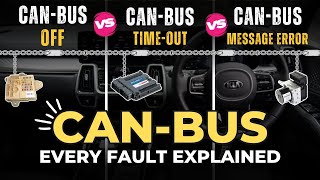

Shop the Parts Behind U2154
Below are the parts most often responsible for code U2154, ranked by how frequently each one is the actual culprit (per the diagnosis above). Tap any to see what we have for your vehicle.



The information in this article is provided for general reference and educational purposes only. Vehicle specifications, procedures, and part compatibility can vary by production date, trim level, and region. Always consult your vehicle's factory service manual and verify part numbers before purchasing or performing repairs. Safety-critical components such as airbags, seat belts, and braking systems should be installed by a qualified professional.
- 🧭 Diagnostic Flowchart
- 🎬 Helpful Videos
- 🛍️ Shop This Part
- What Does U2154 Mean?
- Can I Drive With U2154?
- Common Causes
- Symptoms
- Common Fixes & Costs
- Used vs. New Parts: Buying Guide
- What Happens If You Wait — Timeline
- Cost of Not Fixing It
- Diagnosis Steps
- When This Code Triggers (Freeze-Frame Conditions)
- Related Codes
- Climate & Environmental Factors
- How to Talk to a Mechanic About This Code
- Where to Take It: Dealer vs Independent vs Chain
- When to Walk Away From the Repair
- What Scan Tool You Need for This Code
- How to Clear the Code After You Fix It
- Will This Fail Emissions / State Inspection?
- Most Commonly Affected Vehicles
- Manufacturer-Specific Notes
- Real Owner Stories
- 2020 Ford Ranger - The Misleading Windshield Crack
- 2012 Chrysler 200 - Aftermarket Radio Nightmare
- 2015 Mitsubishi Outlander PHEV - The Intermittent Highway Shutdown
- 2009 Dodge Journey - The Dead Car Mystery
- How to Prevent This Code From Triggering
- Frequently Asked Questions
- Can I fix a U2154 code by just clearing it?
- My mechanic wants to replace an expensive module. Could it be something else?
- What does a CAN bus resistance of 120 ohms mean?
- Can aftermarket parts like a remote starter or new radio cause a U2154 code?
- Why did this code appear after I replaced my battery or jump-started my car?
- The mechanic says they need to replace a module. Does it need to be programmed?
- How much does it cost just to diagnose a U2154 code?
- Key Takeaways
- 🎟️ Get 5% Off