

OBD-II Code U2159: Invalid Data from Steering Control Module
What U2159 means, why it triggers, and how to fix it like a pro
- U2159 indicates a CAN bus communication failure with the steering control module, disabling power steering and ADAS features.
- Test your battery first; a resting voltage below 12.4V is the leading cause of false network communication codes.
- Never replace the $1,000+ steering module without first verifying the 60-ohm CAN bus resistance at the OBD-II port.
- Do not drive the vehicle, as sudden loss of power steering assist or unexpected engine stalling poses a severe safety risk.
- Check for manufacturer Technical Service Bulletins (TSBs), as vehicles like the 2023 Nissan Ariya have known software fixes for this exact code.
What Does U2159 Mean?
Trouble code U2159 signifies a critical communication breakdown on your vehicle's Controller Area Network (CAN bus). The main computer has lost contact with the steering control module. This code is manufacturer-specific, most commonly seen on Mitsubishi and Nissan vehicles. It points to a failure in the communication network itself, not a mechanical failure of the steering rack or linkage.
Technical definition: U2159 is a manufacturer-specific network code. For Mitsubishi (often U2159-87 or U2159-57) and Nissan, it is defined as a 'CAN communication error with the steering control unit.' The fault indicates the steering module is failing to send or receive required data packets according to the CAN protocol, effectively dropping offline.
Can I Drive With U2159?
Yes, but not recommended Driving is strongly discouraged except for a short trip to a repair shop. Critical safety systems like power steering, ABS, and stability control are disabled. Driving with an active CAN bus fault causes unpredictable behavior, including sudden engine stalling or immobilization, posing a severe safety risk. Continuing to drive also risks damaging other modules on the network.
Common Causes
- Low Battery Voltage or Poor Grounds (Very Common) — Control modules require stable voltage to communicate. A weak battery (below 12.4 volts at rest) or corroded chassis grounds introduce electrical noise and disrupt network communication, triggering a flood of 'U' codes.
- Wiring or Connector Issues (Very Common) — A fault in the CAN bus wiring harness is the most frequent physical culprit. Chafed, broken, or corroded wires near the steering column, or loose connector pins at the steering control module, sever the communication lines.
- Faulty Steering Control Module (Common) — The steering control module has an internal electronic failure, such as a burnt CAN transceiver. This prevents it from sending or receiving data packets, taking it completely offline.
- Software Glitches or Configuration Mismatch (Less Common) — A module requires a software update to fix a known bug, or it is incorrectly configured for the vehicle's specific options following a recent part replacement.
- Faulty Gateway or Interfering Module (Less Common) — A different module on the same network (like the ABS module) fails and broadcasts gibberish onto the bus, creating interference that blocks the steering module from communicating.
- Improperly Installed Aftermarket Accessories (Rare) — Aftermarket remote starters, alarms, or stereos incorrectly tapped into the vehicle's wiring create significant interference on the CAN bus.
- Failed Network Termination Resistor (Rare) — The CAN bus requires a 120-ohm resistor at each end. If a module containing one of these resistors fails, total network resistance changes from 60 ohms to 120 ohms, disrupting all communication.
Symptoms
- Loss of Power Steering Assist — Steering becomes exceptionally heavy and difficult to turn, especially at low speeds. Selectable steering assist modes are unavailable.
- Multiple Warning Lights — The Check Engine Light illuminates alongside warning lights for Power Steering (EPS), ABS, and Stability Control (ESC/VSC).
- Disabled Safety and Driver-Assist Systems — Features relying on steering data, including Cruise Control, Lane Keep Assist, and Automated Parking, are completely disabled.
- Vehicle Will Not Start or Stalls — A critical CAN bus failure prevents the engine from starting or causes sudden stalling while driving, as the engine control module loses necessary data.
- Incorrect Speedometer or Gear Indicator — The instrument cluster receives corrupted data, leading to an erratic speedometer or a blank gear shift indicator.
Diagnostic Flowchart
Tap your situation to follow the diagnostic path that matches what you're seeing on this code.
Common Fixes & Costs
- Replacing a Faulty Battery — Parts: $150-$350, Labor: $50-$100, ~0.5 hr book time (DIY)
- Repairing Damaged Wiring or Connectors — Parts: $20-$150, Labor: $200-$600, ~1.5 hr book time (Intermediate)
- Updating or Re-programming Module Software — Parts: $0, Labor: $150-$300, ~1.2 hr book time (Professional)
- Replacing the Steering Control Module — Parts: $800-$1600, Labor: $300-$500, ~2.5 hr book time (Professional)
- Using a Module Repair Service — Parts: $150-$300, Labor: $200-$400, ~2.0 hr book time (Intermediate)
Used vs. New Parts: Buying Guide
When a used part is worth it: A used steering control module is cost-effective for vehicles over 8 years old where a new OEM part represents a significant percentage of the vehicle's value. Source from a reputable salvage yard with a warranty.
Donor-vehicle mileage cap: roughly under 100000 miles for the part to have meaningful remaining life.
Donor quality checklist:
- Match the part number exactly to ensure compatibility.
- Ensure the donor vehicle was not involved in a flood or fire.
- Check the donor vehicle's VIN for compatibility and relevant recalls.
Decision logic:
- If The vehicle is less than 5 years old or under warranty. → Buy a new OEM part to ensure perfect compatibility and longevity.
- If The budget is tight and the vehicle is older. → A used or remanufactured module is a reasonable choice.
- If The part requires complex VIN programming guaranteed only on virgin modules. → Buy new to avoid paying labor on a part that cannot be programmed.
Warranty tradeoff: Used parts carry a 30-90 day warranty. Remanufactured parts offer 1-year warranties. New OEM parts carry 1-year or longer warranties, especially dealer-installed.
Worst-case if a used part fails: $400-$800. If a used module fails, you pay diagnostic and installation labor twice, plus the cost of another part.
What Happens If You Wait — Timeline
- 0-2 weeks: Code is set. Warning lights illuminate. Loss of power steering and driver assist systems is immediate and consistent. (MPG impact: 0-1%% · Added cost: $0)
- 2 weeks - 3 months: An unstable network causes unpredictable behavior. The vehicle occasionally fails to start or stalls unexpectedly as the engine computer loses data. (MPG impact: 1-3%% · Added cost: $200 - $800)
- 3-6 months: Cascading failure begins. Constant electrical noise and data collisions permanently damage sensitive CAN transceivers in previously healthy modules (ECM, BCM). (MPG impact: N/A% · Added cost: $1500 - $3000+)
- 6+ months: The vehicle is completely immobilized. Diagnosis is extremely complex, requiring replacement of a significant portion of the vehicle's electronic backbone. (MPG impact: N/A% · Added cost: $3000 - $5000+)
Cost of Not Fixing It
- Immediate: Loss of power steering assist, ABS, and stability control makes the vehicle difficult to control in an emergency. The vehicle may also stall unexpectedly. (Added cost: Potential for accident-related costs.)
- Weeks to Months: An unstable network causes data corruption. A faulty module broadcasts electrical noise, permanently damaging transceivers in the ECM or TCM. (Added cost: $500 - $2500+)
- Long Term: Intermittent faults become permanent, completely immobilizing the vehicle. A simple wiring issue cascades into multiple failed modules. (Added cost: Turns a $400 wiring repair into a $4,000+ multi-module replacement.)
Diagnosis Steps
- Scan for All Codes in All Modules
Use an advanced OBD-II scanner to read manufacturer-specific codes from all modules (ABS, BCM, TCM). 'U' codes rarely appear alone. Mapping which modules are not communicating isolates the failure point.
Tools: Advanced OBD-II Scanner (Beginner) - Research Technical Service Bulletins (TSBs)
Check for manufacturer TSBs related to U2159 before touching the vehicle. For example, Nissan TSB NTB23-077 for the Ariya dictates a specific power-down reset procedure that fixes the code without parts.
Tools: Internet access (Beginner) - Check Battery Health and Grounds
Verify the battery is fully charged (12.4V+ at rest, 13.2V+ running). A voltage drop below 9.6V during cranking sets random communication codes. Clean the main chassis and engine ground points to eliminate electrical noise.
Tools: Multimeter, wrench set, wire brush (Beginner) - Analyze Live Data PID Status
Access the module status list on your scanner. Look for 'Communicating' or 'Not Communicating'. If only the steering module is offline, the fault is isolated. If multiple modules are offline, the problem is network-wide.
Tools: Advanced OBD-II Scanner (Advanced) - Inspect the Wiring Harness
Perform a visual inspection of the wiring harness connected to the steering control module. Look for chafing, melting, or rodent damage. Gently wiggle connectors with the key ON to check for intermittent loose connections.
Tools: Flashlight, inspection mirror (Intermediate) - Test CAN Bus Resistance
Disconnect the battery. Measure resistance between CAN High (Pin 6) and CAN Low (Pin 14) at the OBD-II port. A healthy network reads ~60 ohms. 120 ohms indicates a broken wire or missing termination resistor. 0 ohms indicates a short circuit.
Tools: Multimeter, vehicle wiring diagram (Intermediate) - Test CAN Bus Voltages (Static)
Reconnect the battery. Turn ignition ON (engine off). Measure DC voltage: CAN High (Pin 6 to ground) should be ~2.6V-2.7V. CAN Low (Pin 14 to ground) should be ~2.3V-2.4V. Readings of 0V, 5V, or 12V indicate a short to ground or power.
Tools: Multimeter (Advanced) - Isolate the Faulty Module
If the network is shorted (0 ohms), disconnect modules one by one from the CAN bus. Re-check resistance after each. When resistance returns to 60 ohms, the last module disconnected contains the internal short.
Tools: Advanced diagnostic scanner, wiring diagrams, trim removal tools (Professional) - Analyze the CAN Waveform with an Oscilloscope
Connect a dual-channel oscilloscope to CAN High and CAN Low. A healthy bus shows a clean, mirrored square waveform. Distorted signals pinpoint interference, shorts, or a faulty module transceiver that a multimeter cannot detect.
Tools: Automotive Oscilloscope, back-probe pins (Professional)
When This Code Triggers (Freeze-Frame Conditions)
- Battery Voltage: 13.2-14.5V (Reviewing the freeze frame for low voltage (under 12V) proves a battery or charging system issue was the root cause of the communication drop.)
- System Status: N/A (Freeze frame data for a 'U' code shows what other modules were doing. Normal readings for the engine and transmission confirm the fault is isolated to the steering/network portion of the vehicle.)
- Vehicle Speed: 20-55 mph (The ECU registers the timeout when it expects a signal from the steering module during steady-state driving but receives nothing.)
Related Codes
- U0001 — Indicates a total High-Speed CAN failure. If U0001 appears alongside U2159, the problem is network-wide (shorted wire or gateway failure). If U2159 appears alone, the fault is isolated to the steering module.
- U0121 — Lost Communication With ABS Module. The ABS and steering modules work closely for stability control. A fault in one easily sets a code in the other.
- P2159 — Vehicle Speed Sensor 'B' Range/Performance. This is a powertrain code for a faulty sensor, not a network code. They are frequently confused due to the similar number.
- U0415 — Invalid Data Received From ABS Module. The module is communicating, but sending nonsensical data. This points to an internal module fault or software issue rather than broken wiring.
Climate & Environmental Factors
- Road Salt (Winter Climates): Salty water acts as a highly corrosive electrolyte, rapidly degrading wiring insulation, connector pins, and module housings in the undercarriage. This is the leading cause of intermittent network faults in rust belt areas.
- High Humidity: Moisture penetrates weather seals over time, causing condensation on circuit boards and pins. This corrosion creates high resistance and short circuits that disrupt CAN bus communication.
- Extreme Cold: Extreme cold makes wiring insulation and plastic connectors brittle. Engine vibrations then cause wires to break or connectors to crack, leading to an open circuit.
How to Talk to a Mechanic About This Code
Say this: "I have a U2159 code and network warnings. I need a diagnostic for a CAN bus communication failure. Please check for TSBs, verify battery health, and inspect the steering module wiring harness before condemning any parts."
This signals you understand U2159 is a network problem. It directs the mechanic to follow a logical diagnostic process, preventing them from immediately quoting an expensive module replacement.
Avoid saying:
- 'My check engine light is on, can you just fix it?'
- 'I think I need a new steering computer.'
- 'Just do whatever it takes.'
Questions to ask before authorizing the repair:
- What were the results of the CAN bus resistance and voltage tests at the OBD-II port?
- Did you find any Technical Service Bulletins (TSBs) for this code on my vehicle?
- Can you show me the damaged wiring or the corroded connector you found?
- If recommending a module replacement, what specific tests proved the module is bad and the wiring is good?
- Will you provide a written estimate including all parts, labor, taxes, and warranty details?
Where to Take It: Dealer vs Independent vs Chain
- Dealer:
Best for: Vehicles under warranty or with a relevant recall., Newer vehicles requiring manufacturer-specific software updates or programming., Known manufacturer-specific issues documented in TSBs.
Downsides: Highest labor rates, often 1.5x to 2x more than independent shops., May default to replacing an entire assembly rather than repairing a specific wire. (Typical cost: +50% vs. baseline) - Independent Shop:
A strong choice ONLY if it is a top-tier independent shop specializing in electrical diagnostics. Ask if they are comfortable with CAN bus diagnostics before booking.
Best for: Out-of-warranty vehicles where cost is a major factor., Finding a technician who specializes in electrical diagnostics and pattern failures.
Downsides: Diagnostic capabilities vary widely. General mechanics lack the oscilloscopes required for network diagnosis., Requires careful vetting for ASE certifications in electrical systems. (Typical cost: +0% vs. baseline) - Chain Shop:
AVOID. Chain shops lack the expertise and tools to diagnose complex network communication faults correctly.
Best for: Simple, high-volume jobs like oil changes, tires, and brake pads.
Downsides: Technician skill is highly variable and rarely specialized in complex electronics., Business model encourages upselling, which is risky with vague diagnostic codes. (Typical cost: -10% vs. baseline)
When to Walk Away From the Repair
If the estimated repair cost exceeds 50% of the car's current private-party value, seriously consider replacing the vehicle instead of repairing it.
- Car worth $5000, fix is $2500: Walk away. The repair cost is 50% of the car's value, and other age-related issues are likely to appear soon.
- Car worth $15000, fix is $2000: Fix it. The repair cost is well below the 50% threshold and restores critical safety functions.
- Car worth $3000, fix is $450: Fix it. A wiring repair at this price is a great value and extends the life of the car significantly.
What Scan Tool You Need for This Code
Minimum: A scanner that reads manufacturer-specific 'U' codes from ALL vehicle modules (ABS, SRS, BCM), not just the engine computer.
A cheap $20 reader only scans the engine for 'P' codes and shows 'No Codes Found' for a U2159 fault, leaving you blind to the network issue.
Budget: BlueDriver Pro Scan Tool (~$99) — Connects to your smartphone and reads enhanced codes from all modules, showing exactly which systems are reporting faults.
Mid-range: Innova 5610 (~$350) — Offers full-system diagnostics and basic bidirectional controls to view live data and confirm which module is not communicating.
Professional: Autel MaxiCOM MK808Z (~$450) — Provides full bidirectional control to command modules directly and performs advanced functions like steering angle sensor calibration.
Rent vs buy: Free rental scanners at auto parts stores rarely have all-module capability. Buying a tool like the BlueDriver is a mandatory investment for diagnosing 'U' codes.
How to Clear the Code After You Fix It
- Reconnect the battery if it was disconnected for the repair.
- Use an OBD-II scan tool to clear all Diagnostic Trouble Codes (DTCs) from all modules.
- Perform a complete drive cycle to allow the onboard diagnostics to run and confirm the fix.
Drive cycle (~30 minutes): Start with a cold engine (below 122°F). Idle for 3 minutes. Drive in mixed city/highway conditions for 20 minutes, including 5 minutes at a steady 55 mph. Allow the vehicle to cool completely and repeat if monitors are not set.
Readiness monitors affected: Comprehensive Component Monitor, Catalyst and O2 sensor monitors (if battery was disconnected)
Before emissions retest: drive at least 50 miles to fully set monitors.
Watch out for:
- Clearing the code without performing a drive cycle results in a failed emissions test because readiness monitors show as 'Incomplete'.
- The code returns immediately if the root cause (wiring short, faulty module) is not repaired.
- Manufacturers like Nissan require specific power-down procedures before clearing codes to prevent immediate recurrence.
Will This Fail Emissions / State Inspection?
Yes — this code typically fails an OBD-II emissions inspection.
- California: A 'U' code illuminating the Check Engine Light is an automatic failure. All required readiness monitors must be 'Ready'.
- New York: An illuminated Malfunction Indicator Lamp is an automatic failure. If recently cleared, the vehicle fails if readiness monitors are not set.
- Texas: In the 17 counties requiring emissions testing, an active U2159 code fails the OBD-II test. Registration is blocked until repaired.
Most Commonly Affected Vehicles
- Nissan Ariya, Rogue (2021-Present) — Code U2159-87 is explicitly addressed in TSB NTB23-077 for the Ariya, requiring a specific power-down reset procedure before parts replacement.
- Mitsubishi Outlander, Outlander Sport (2014-2018) — Highly documented code for Mitsubishi, often presenting as U2159-87 or U2159-57. Power steering control module replacements on these models exceed $1,500.
- Hyundai Elantra, Tucson (2012-2018) — Presents as a non-functional cruise control and blank gear shift indicator. Often resolved by checking termination resistors in the instrument cluster.
- Ford F-150, Explorer (2015-Present) — Water intrusion into tail light-mounted modules corrodes the unit, bringing down the entire MS-CAN network and triggering widespread 'U' codes.
- Chrysler/Dodge/Jeep Various Models (2010-Present) — Frequently experience 'U' code faults requiring technicians to verify CAN bus voltages (2.4-2.6V) directly at the non-communicating module.
- General Motors (Chevrolet, GMC) Silverado, Equinox (2007-Present) — A single faulty module (like the electronic brake control module) causes widespread communication issues and sets multiple 'U' codes.
- Volkswagen Golf, Jetta (2005-Present) — Indicates a general network communication problem, often traced back to the gateway module or ABS controller.
- Renault/Peugeot/Citroën Various Models (2000-Present) — Appears on French-manufactured vehicles indicating a general communication issue, usually traced to wiring or connector faults.
Manufacturer-Specific Notes
- Nissan: TSB NTB23-077 for the 2023 Ariya dictates a specific procedure for U2159-87: turn vehicle off, close doors, move key 30+ feet away, wait 10 minutes, then restart and re-check codes.
- Mitsubishi: Uses specific suffixes like U2159-87 and U2159-57. Diagnostic procedures require prioritizing other DTCs first; if U2159-57 is present with U1327, U1327 must be diagnosed first.
- Ford: Water leaking into a tail lamp assembly corrodes the Side Obstacle Detection Control Module, disrupting the entire MS-CAN network and causing a flood of 'U' codes.
- BMW: Water intrusion in the trunk or passenger footwell corrodes the K-CAN and PT-CAN network splices located there, taking down multiple modules simultaneously.
Real Owner Stories
2016 Mitsubishi Outlander at 110K miles
Check engine, ABS, and power steering lights illuminated simultaneously. Steering became very heavy. Code U2159 was present.
Outcome: The mechanic found a section of CAN bus wiring chafed against a metal bracket, causing an intermittent short. Repairing and protecting the wires resolved all warning lights and restored power steering. Total cost: $350.
Lesson: Never assume the expensive steering module has failed. A thorough visual inspection of the wiring harness is the most cost-effective first step for any 'U' code.
2018 Nissan Rogue at 75K miles
Following a front-end collision repair, the vehicle intermittently showed ABS/traction lights and code U2159, especially in wet weather.
Outcome: A diagnostic specialist traced the issue to a poorly seated ABS module connector damaged during the initial repair. Moisture entered the unlocked connector, corroding the pins. Replacing the connector pigtail fixed the problem permanently. Total cost: $500.
Lesson: If communication faults appear after collision repair, the repair itself is the culprit. Insist on checking all disturbed connectors before replacing modules.
2023 Nissan Ariya with low mileage
Multiple driver-assist system warnings and U2159-87 appeared on a nearly new vehicle.
Outcome: The technician performed the TSB's specific power-down procedure: turning the vehicle off, closing doors, moving the key away, and waiting 10 minutes. Upon restart, the code cleared permanently. Total cost: $0 (Warranty).
Lesson: Always check for Technical Service Bulletins (TSBs) on modern vehicles. A known software bug causes network codes, and the fix is often a simple reset procedure.
How to Prevent This Code From Triggering
- Apply Dielectric Grease to Connectors (When servicing or exposing connectors) — Dielectric grease creates a non-conductive barrier against moisture and oxygen, preventing the pin corrosion that causes high resistance and network faults.
- Perform Regular Underbody Washes (Monthly during winter) — Removes highly corrosive road salt brine from the undercarriage, significantly reducing the degradation of wiring insulation and connector housings.
- Implement Rodent Deterrents (As needed, especially if parking outdoors) — Rodents chew wire insulation, severing CAN bus lines. Peppermint oil or capsaicin-laced tape deters them from nesting in the engine bay.
- Use a Battery Tender for Stored Vehicles (For any vehicle stored longer than 2 weeks) — Maintains a stable charge, preventing the severe voltage drops that corrupt module memory and trigger spurious 'U' codes upon startup.
Frequently Asked Questions
What does the 'U' in U2159 stand for?
The 'U' stands for 'User Network', indicating a communication failure between the different computer modules on your vehicle's CAN bus.
What is the most common misdiagnosis for a U2159 code?
The most common mistake is immediately replacing the expensive steering control module. The actual problem is usually a simple wiring issue, a bad ground, or a weak battery.
Can I fix a U2159 code myself?
You can perform basic checks like testing the battery and visually inspecting wiring. However, diagnosing the network requires a multimeter and an oscilloscope. Isolating the faulty module is best left to a professional.
What is the difference between U2159 and P2159?
They are completely different. U2159 is a network code indicating a communication failure with the steering module. P2159 is a powertrain code indicating a faulty Vehicle Speed Sensor signal.
How much does it cost to fix a U2159 code?
Costs vary dramatically based on the root cause. Replacing a battery costs $250, and repairing a wire costs $200-$600. Replacing the steering control module exceeds $1,500.
Can a weak battery really cause this code?
Yes. A weak battery causes voltage drops during startup, leading to data corruption and communication timeouts between modules, which triggers 'U' codes.
Will clearing the code fix the problem?
No. Clearing the code is a diagnostic step, not a repair. If the underlying electrical fault remains, the code returns immediately upon the next drive cycle.
What is a CAN bus termination resistor?
A CAN bus requires a 120-ohm resistor at each end to prevent signal reflections, creating a total network resistance of 60 ohms. These resistors are built into end modules like the ECM. If one fails, it disrupts the entire network.
Key Takeaways
- U2159 indicates a CAN bus communication failure with the steering control module, disabling power steering and ADAS features.
- Test your battery first; a resting voltage below 12.4V is the leading cause of false network communication codes.
- Never replace the $1,000+ steering module without first verifying the 60-ohm CAN bus resistance at the OBD-II port.
- Do not drive the vehicle, as sudden loss of power steering assist or unexpected engine stalling poses a severe safety risk.
- Check for manufacturer Technical Service Bulletins (TSBs), as vehicles like the 2023 Nissan Ariya have known software fixes for this exact code.
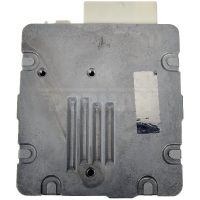
Shop the Parts Behind U2159
Below are the parts most often responsible for code U2159, ranked by how frequently each one is the actual culprit (per the diagnosis above). Tap any to see what we have for your vehicle.


The information in this article is provided for general reference and educational purposes only. Vehicle specifications, procedures, and part compatibility can vary by production date, trim level, and region. Always consult your vehicle's factory service manual and verify part numbers before purchasing or performing repairs. Safety-critical components such as airbags, seat belts, and braking systems should be installed by a qualified professional.
- 🧭 Diagnostic Flowchart
- 🛍️ Shop This Part
- What Does U2159 Mean?
- Can I Drive With U2159?
- Common Causes
- Symptoms
- Common Fixes & Costs
- Used vs. New Parts: Buying Guide
- What Happens If You Wait — Timeline
- Cost of Not Fixing It
- Diagnosis Steps
- When This Code Triggers (Freeze-Frame Conditions)
- Related Codes
- Climate & Environmental Factors
- How to Talk to a Mechanic About This Code
- Where to Take It: Dealer vs Independent vs Chain
- When to Walk Away From the Repair
- What Scan Tool You Need for This Code
- How to Clear the Code After You Fix It
- Will This Fail Emissions / State Inspection?
- Most Commonly Affected Vehicles
- Manufacturer-Specific Notes
- Real Owner Stories
- 2016 Mitsubishi Outlander at 110K miles
- 2018 Nissan Rogue at 75K miles
- 2023 Nissan Ariya with low mileage
- How to Prevent This Code From Triggering
- Frequently Asked Questions
- What does the 'U' in U2159 stand for?
- What is the most common misdiagnosis for a U2159 code?
- Can I fix a U2159 code myself?
- What is the difference between U2159 and P2159?
- How much does it cost to fix a U2159 code?
- Can a weak battery really cause this code?
- Will clearing the code fix the problem?
- What is a CAN bus termination resistor?
- Key Takeaways
- 🎟️ Get 5% Off