

OBD-II Code U2220: Module Configuration Failure
What U2220 means, why it triggers, and how to fix it
- Code U2220 flags a software configuration failure in a specific control module, meaning 0 mechanical parts need replacement in most cases.
- Always test the 12-volt battery first; a voltage drop below 10.0V during engine cranking corrupts module data and triggers this code.
- A basic $20 OBD-II reader cannot fix U2220; resolving it requires a professional J2534 pass-thru device and an OEM software subscription to reflash the module.
- If U2220 appears immediately after installing a new electronic module, the technician failed to complete the required Programmable Module Installation (PMI) process.
What Does U2220 Mean?
U2220 is a manufacturer-specific code indicating a critical electronic control module has a software problem. The module's internal instructions are missing, scrambled, or incorrectly configured for your specific vehicle, preventing proper operation. It is a digital configuration error, not a mechanical part failure.
Technical definition: While lacking a universal SAE/ISO definition, manufacturers like General Motors and Ford use U2220 to indicate a 'Module Configuration Failure' or software anomaly within a specific control module, such as the Battery Energy Control Module (BECM) or ABS module. It signifies the module's internal software configuration fails to match the vehicle's expected parameters.
Can I Drive With U2220?
Yes, But With Caution. Driving is usually possible, but critical safety and operational systems are disabled. For example, a U2220 code in the ABS module disables anti-lock brakes and stability control, increasing the risk of skidding. In an EV with this code in the battery module, the high-voltage system is compromised, causing reduced power or unexpected shutdowns. Stop driving and address the issue promptly to avoid safety risks and cascading electrical problems.
Common Causes
- Software Anomaly or Glitch (Very Common) — The module's internal software contains a bug or corrupted data, requiring an update or reprogramming via a Technical Service Bulletin (TSB).
- Low or Unstable Battery Voltage (Common) — A weak 12-volt battery corrupts data in sensitive electronic modules during startup. This is a primary, frequently overlooked cause.
- Improper Module Replacement (Common) — A newly installed control module lacks programming for the vehicle's specific VIN and configuration. This 'Initial Configuration Not Complete' status directly triggers U-codes.
- Failed Software Update (Common) — An over-the-air (OTA) or dealership software update failed to install correctly, leaving the module in a non-functional state.
- Water Intrusion and Corrosion (Less Common) — Water leaking into the cabin or engine bay damages connectors or the module itself. On Ford trucks, water intrusion into the Battery Junction Box (BJB) causes severe electrical failures.
- CAN Bus Network Interference (Less Common) — Poorly installed aftermarket accessories (e.g., remote starters, alarms) disrupt the Controller Area Network (CAN bus), causing communication errors misinterpreted as configuration failures.
- Damaged Wiring or Connectors (Rare) — A wiring harness leading to the module is chafed, broken, or has a corroded pin, interrupting communication.
- Internal Module Failure (Rare) — The control module suffers an internal hardware fault, such as a failed processor, preventing it from running software. This often triggers alongside code U3000.
Symptoms
- Check Engine Light or Warning Messages — The Malfunction Indicator Lamp (MIL) illuminates. EVs display a 'Service High Voltage System' message, while gas vehicles show ABS or stability control warnings.
- Loss of Specific System Functions — The system controlled by the failed module stops working. An affected ABS module disables anti-lock brakes, while a faulty Body Control Module disables power windows or interior lights.
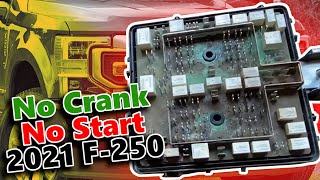
- Vehicle Won't Start or Shut Off — When the Battery Junction Box (BJB) or a related module fails, the vehicle exhibits a no-crank/no-start condition or refuses to turn off. 🎬 Watch: Troubleshooting a Ford Super Duty that won't crank or start.
- Erratic Gauge and Display Behavior — The instrument cluster behaves erratically, with gauges dropping to zero. The infotainment screen freezes, reboots, or goes blank.
- Failed Emissions Test — If the code relates to a powertrain or emissions component, the active MIL causes an automatic emissions inspection failure.
Diagnostic Flowchart
Tap your situation to follow the diagnostic path that matches what you're seeing on this code.
Common Fixes & Costs
- Reprogramming the Affected Module via TSB — Parts: $0, Labor: $150-$375, ~1.5 hr book time (Professional)
- Replacing the 12-Volt Battery — Parts: $150-$400, Labor: $50-$100, ~0.8 hr book time (DIY)
- Replacing and Programming a Faulty Control Module — Parts: $600-$1500, Labor: $250-$500, ~3.0 hr book time (Professional)
- Replacing a Corroded Battery Junction Box (Ford) — Parts: $300-$500, Labor: $150-$250, ~1.5 hr book time (Intermediate)
- Repairing Damaged Wiring or Connectors — Parts: $20-$100, Labor: $200-$600, ~2.5 hr book time (Intermediate)
Used vs. New Parts: Buying Guide
When a used part is worth it: A used module is rarely a good idea because most are VIN-locked and cannot be reprogrammed to a different vehicle. It only makes sense if you use a specialized service that can 'virginize' (reset) the module before installation, or for non-programmable hardware like a Ford Battery Junction Box housing.
Donor-vehicle mileage cap: roughly under 60000 miles for the part to have meaningful remaining life.
Donor quality checklist:
- Verify the exact part number matches; superseded numbers are often incompatible.
- Purchase from a reputable seller that offers a warranty and a return policy.
- Avoid parts with any signs of physical damage, corrosion, or tampering.
Decision logic:
- If The part is a complex, programmable electronic module (e.g., ABS, BCM, BECM). → Buy new or a professionally remanufactured unit. The risk of a used part being non-programmable or failing is too high.
- If The part is non-programmable hardware (e.g., Ford BJB housing). → A used part from a low-mileage, non-accident vehicle is a reasonable, cost-effective option.
- If The vehicle is older (>10 years) and the budget is extremely tight. → A used module is a high-risk gamble. Consider sending the original module for repair/rebuild instead, as it won't require VIN programming.
Warranty tradeoff: Used parts from junkyards typically have a 30-90 day warranty, if any. Remanufactured modules often come with a 1-year to lifetime warranty. New OEM parts carry a manufacturer warranty (typically 1-2 years).
Worst-case if a used part fails: $500-$1500 if a used module is non-functional or fails after installation, requiring repeat labor costs and the purchase of another part.
What Happens If You Wait — Timeline
- Immediate: Code is set, MIL is on. A specific system is disabled (e.g., ABS, Stability Control). For an EV, 'Service High Voltage System' appears. The car is likely still drivable but with reduced safety or functionality. (MPG impact: 0%% · Added cost: $0)
- 1-3 months (Software/Battery Cause): Continued operation with disabled safety systems increases accident risk. Unstable voltage causes intermittent glitches in other modules (e.g., infotainment rebooting). No physical damage is occurring yet. (MPG impact: 0%% · Added cost: $0-$50 in wasted fuel if a battery issue affects charging efficiency.)
- 1-3 months (Water Intrusion Cause): Intermittent water contact begins to cause corrosion on module pins and the circuit board. Symptoms become more frequent and include no-start conditions or the engine not shutting off. The vehicle becomes unreliable. (MPG impact: 0-5%% · Added cost: $500-$1200 (The cost of replacing the corroded module, like a Ford BJB, is now unavoidable).)
- 6+ months (Water Intrusion Cause): Severe corrosion destroys the module/junction box. The corrosion wicks up the wiring harness, damaging connectors and wires far from the initial entry point. The vehicle is permanently disabled. (MPG impact: N/A (Vehicle likely won't start)% · Added cost: $2,000-$4,000+ (Repair requires not just the module but also extensive wiring harness repair or replacement, which is extremely labor-intensive).)
Cost of Not Fixing It
- Immediate: Loss of critical safety systems like Anti-lock Brakes (ABS) and Stability Control, increasing the risk of an accident. In EVs, it causes high-voltage system shutdown. (Added cost: Negligible)
- 1-6 months: Continued driving leads to cascading electrical problems, unpredictable vehicle behavior (e.g., no-start, stalling), and damage to other modules on the CAN network due to communication instability. (Added cost: $500-$2000+)
- 6+ months: In cases caused by water intrusion (like the Ford BJB issue), prolonged neglect leads to severe corrosion of the main fuse box and wiring harnesses, requiring extensive electrical repairs. (Added cost: $2000-$4000+)
Diagnosis Steps
- Check for Technical Service Bulletins (TSBs)
Search online for Technical Service Bulletins (TSBs) related to code U2220 for your specific vehicle. Manufacturers frequently release software updates to fix known glitches causing this code.
Tools: ['Smartphone or Computer', 'Internet Access'] - Perform a Full Vehicle DTC Scan
Use a professional-grade scan tool to read codes from ALL modules. A basic OBD-II reader cannot access ABS or BCM modules. This scan identifies the specific module setting the U2220 code.
Tools: ['Professional-grade OBD-II Scan Tool'] - Pro Tip: Test the 12V Battery and Charging System
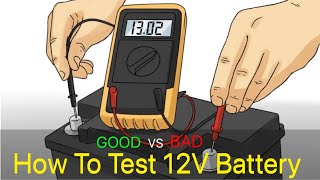
Test the 12-volt battery thoroughly. With the engine off, a healthy battery reads at least 12.6V. During engine cranking, voltage must stay above 10.0V. Unstable voltage is a primary cause of module data corruption.
Tools: ['Digital Multimeter', 'Battery Load Tester'] - Perform a Hard Reset (With Caution)
Disconnect the negative terminal of the 12-volt battery for 30 minutes to reset all modules. On modern EVs, follow the specific, multi-step reset procedure detailed in the manufacturer's TSB.
Tools: ['10mm Socket or Wrench'] - Inspect Module Wiring and Connectors
Visually inspect the wiring harness and connectors going to the identified module. Look for physical damage, corrosion, or loose pins. Pay special attention to junction boxes for water intrusion.
Tools: ['Flashlight'] - Pro Tip: Check CAN Bus Network Integrity
Access live data for the CAN network using a scan tool. If multiple modules are offline, it indicates a network problem rather than a single faulty module.
Tools: ['Professional Scan Tool'] - Advanced: Quantitative CAN Bus Analysis
Check CAN bus resistance at the DLC with the battery disconnected. A healthy network reads 60 Ohms. Readings of 120 Ohms indicate an offline terminating resistor; 0 Ohms indicates a short circuit.
Tools: ['Digital Multimeter', 'Oscilloscope'] (Advanced) - Advanced: Module Power and Ground Verification
Perform a voltage drop test on the suspect module. Back-probe the power pin; the reading must be within 0.1V of battery voltage. Check the ground pin; the voltage drop must be less than 0.1V (100mV).
Tools: ['Digital Multimeter', 'Vehicle-specific wiring diagram', 'Back-probe pins'] (Advanced) - Attempt Module Reprogramming
Use a manufacturer-specific diagnostic tool to reprogram the module with the latest software. This requires a stable power supply (battery maintainer) and a reliable internet connection.
Tools: ['J2534 Pass-Thru Device', 'OEM Software Subscription', 'Battery Maintainer'] - Module Replacement and Programming
If reprogramming fails or code U3000 is present, replace the module. The new module MUST be programmed and configured for the specific vehicle using manufacturer-approved software.
Tools: ['Socket Set', 'Trim Removal Tools', 'J2534 Pass-Thru Device']
When This Code Triggers (Freeze-Frame Conditions)
- Faulting Module: Varies (e.g., ABS, BECM, BCM) (Identifies the specific module that has the configuration error.)
- Vehicle Speed: 0 MPH (Code is set during the initial power-on self-test before the vehicle moves.)
- RPM: 0 (Fault is logged during 'Key On, Engine Off' (KOEO) module initialization.)
- Battery Voltage: 11.5V - 12.5V (A lower than normal voltage reading indicates an unstable power supply caused the module's data corruption.)
Related Codes
- U2100 — Indicates 'Initial Configuration Not Complete.' U2100 means a new module is detected but unprogrammed. U2220 appears after a failed programming attempt on that module.
- U3000 — Indicates a general 'Control Module' fault. Seeing U3000 alongside U2220 confirms the module has a fatal internal hardware failure, requiring replacement rather than just reprogramming.
- U2221-U2237 — A range of codes specific to a software anomaly in the Battery Energy Control Module (BECM) on GM EVs. The fix requires reprogramming the BECM according to the latest TSB.
- U2300 — A Ford-specific code for 'Central Configuration' fault, functionally identical to U2220. It commonly appears after replacing an ABS module without proper As-Built data programming.
Climate & Environmental Factors
- High Humidity: Increases the risk of water intrusion and corrosion. Moisture penetrates connectors and fuse boxes, causing short circuits that lead to module communication failures.
- Cold Weather: Significantly reduces the 12V battery's effective capacity. At 0°F (-18°C), a battery loses up to 60% of its strength. This voltage drop during startup corrupts module data, triggering configuration codes.
- Altitude: No direct correlation exists between high altitude and the U2220 code.
How to Talk to a Mechanic About This Code
Say this: "I have a U2220 code, which I understand is a 'Module Configuration Failure.' Before we assume a module needs replacement, I'd like the diagnostic to start by checking for any Technical Service Bulletins for a software update on the affected module. Please also perform a full load test on the 12-volt battery and check the charging system, as I've read that low voltage triggers this code."
This script signals you are an informed consumer. It directs the shop to investigate the most common and least expensive fixes first (software and battery), pushing back against an immediate and costly recommendation to replace a module.
Avoid saying:
- 'My check engine light is on, can you just fix it?'
- 'I think the computer is fried.'
- 'Just do whatever you think is best.'
Questions to ask before authorizing the repair:
- Did you find any open TSBs that recommend a software reflash for this code?
- What were the specific voltage readings from the battery load test, both at rest and during cranking?
- If you are recommending a module replacement, can you confirm it cannot be fixed with a re-program?
- Does the estimate for replacing the module include the cost of programming and configuration?
- Can you provide me with a written estimate that breaks down parts and labor?
Where to Take It: Dealer vs Independent vs Chain
- Dealer:
Best for: Vehicles under warranty, as software updates are often covered., Very new models (less than 2-3 years old) where independent shops may not yet have the latest software., Known manufacturer-specific issues detailed in TSBs (like the GM EV BECM problem).
Downsides: Typically the highest labor rates., Defaults to module replacement instead of more in-depth electrical diagnosis if not pushed by the customer. (Typical cost: +40% vs. baseline) - Independent Shop:
A strong choice if, and only if, the shop is well-equipped and reputable. A dealership is a safer, albeit more expensive, bet if you cannot verify the independent shop's programming capabilities.
Best for: Out-of-warranty vehicles where cost is a factor., Shops that specialize in your vehicle's brand (e.g., a VW/Audi specialist) or in-depth electrical diagnostics.
Downsides: You MUST verify they have OEM-level programming capabilities (e.g., J2534 pass-thru device and manufacturer software subscriptions). Not all independent shops are equipped for this., Quality and expertise vary widely; vetting is crucial. (Typical cost: +0% vs. baseline) - Chain Shop:
AVOID. This type of repair is far outside their standard service model.
Best for: Simple jobs like oil changes, tires, and battery replacement.
Downsides: Almost never equipped with the necessary tools or training for module programming and complex U-code diagnostics., High risk of misdiagnosis leading to unnecessary parts replacement. (Typical cost: -10% vs. baseline)
When to Walk Away From the Repair
If the estimated repair cost exceeds 50% of the car's current private-party value (e.g., from Kelley Blue Book), you should strongly consider selling the vehicle as-is or trading it in rather than repairing it.
- Car worth $9000, fix is $350: Fix it. This is a low-cost software reflash that is well below the threshold.
- Car worth $5000, fix is $1800: Borderline. The repair cost is 36% of the vehicle's value. Before authorizing, get a second opinion to ensure the module truly needs replacement and cannot be reprogrammed.
- Car worth $3000, fix is $1900: Walk away. The repair cost is over 60% of the car's value and is not a sound financial decision.
What Scan Tool You Need for This Code
Minimum: A diagnostic scanner that performs a 'full system scan' to read codes from ALL modules, including the ABS, BCM, and other computers, not just the engine (PCM).
A basic $20 OBD-II code reader only communicates with the engine computer. Code U2220 is almost always stored in a different module (like ABS or BECM). A basic reader will not see this code, leading you to believe nothing is wrong.
Budget: MUCAR BT200 Max or KINGBOLEN Ediag (~$80) — These are Bluetooth dongles that pair with your smartphone. They read and clear codes from all vehicle systems, allowing you to identify which module is setting the U2220 code. This is sufficient for initial diagnosis.
Mid-range: FORScan with OBDLink EX Adapter (for Ford) or XTOOL D7 (General) (~$250) — For Ford owners, FORScan software with a compatible adapter is exceptionally powerful for diagnosis and performs module configuration ('As-Built' editing) that dealer tools sometimes struggle with. For general use, a tool like the XTOOL D7 provides a rugged tablet with full system diagnostics and many service functions.
Professional: Autel MaxiCOM MK808 / MP900BT or Launch X431 Series (~$500-1200) — These professional-grade tools offer full bidirectional control to test components, advanced diagnostics, and the ability to perform module programming and coding. This is the level of tool a repair shop uses to actually fix the U2220 code.
Rent vs buy: Renting a tool is NOT recommended for this code, as the free loaner tools from auto parts stores are almost always basic readers that cannot perform a full system scan. To properly diagnose a U-code, you must buy a scanner with this capability. The actual repair (programming) should be left to a professional with their own high-end tools.
How to Clear the Code After You Fix It
- Perform module programming/reconfiguration as required by the repair.
- Use a professional-grade scan tool to clear the U-code from the specific module.
- Perform a hard reset by disconnecting the 12V battery for 30 minutes (if specified by TSB).
- Complete a full drive cycle to allow all system readiness monitors to run.
Drive cycle (~30 minutes): A generic drive cycle includes a cold start, 5 minutes of idling, 15 minutes of mixed city/highway driving (with steady speeds around 55 mph), and a cool-down period. This allows vehicle systems to self-test and confirm the repair.
Readiness monitors affected: Comprehensive Component Monitor, Misfire Monitor
Before emissions retest: drive at least 100 miles to fully set monitors.
Watch out for:
- Using a basic code reader that only clears codes from the PCM will not erase a U-code stored in a different module (like ABS or BCM).
- The code returns immediately if the root cause (e.g., software bug, faulty module) is not properly fixed before clearing.
- Not following a manufacturer-specific reset procedure (like for GM EVs) after reprogramming prevents the fix from working.
Will This Fail Emissions / State Inspection?
Yes — this code typically fails an OBD-II emissions inspection.
- California: An active Check Engine Light from any 'U' code results in an automatic smog check failure. All required readiness monitors must be set to 'Ready.' After a repair, a drive cycle of 100-200 miles is needed to complete all monitors.
- New York: A vehicle automatically fails the emissions portion of the inspection if the Check Engine Light is on. After clearing codes, a full drive cycle must be performed before the vehicle is ready for re-inspection.
- Texas: In the 17 counties requiring emissions testing, an illuminated Check Engine Light causes an automatic failure. As of 2025, while most safety inspections are eliminated, this emissions test requirement remains for non-commercial vehicles.
Most Commonly Affected Vehicles
- Cadillac Lyriq (2023-2024) — Highly susceptible to U2220-U2237 codes in the Battery Energy Control Module (BECM). The fix is a software update and specific reset procedure detailed in GM TSBs PIT6044J and 24-NA-056.
- GMC Hummer EV (2022-2024) — Shares the same BECM software issue as the Cadillac Lyriq. The diagnostic and repair procedure involves reprogramming and a manual reset process as outlined in GM TSB PIT6044J.
- Chevrolet Blazer EV / Silverado EV / Equinox EV (2024) — These vehicles are also included in GM TSB PIT6044J for a software anomaly in the BECM causing U2220 and related codes.
- Ford F-Super Duty (2020-2022) — Prone to a wide range of electrical issues (no-start, no-shut-off, multiple warning lights) and U-codes due to water intrusion in the Battery Junction Box (BJB). The cause is an improperly seated BJB cover, addressed in TSB 23-2133.
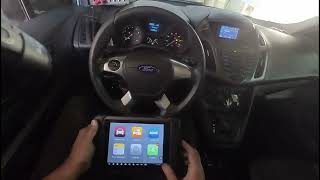
- Ford Transit Connect (2014-2019) — Sets configuration code U2300 in the ABS module after replacement. Technicians report the third-party tool FORScan is required to successfully program the module when the official Ford tool (FDRS) fails.
- Lincoln Nautilus (2024) — Subject to Customer Satisfaction Program 24B09, which involves an APIM software update to fix freezing, rebooting, and performance issues with the infotainment system.
- Hyundai i20 N (2021-2024) — Owners report various electronic glitches, including infotainment system freezes and battery drain issues. These are caused by faulty batteries in early-life vehicles or software bugs in the control units.
- BMW Various Models (F & G Chassis) (2014-2024) — BMWs frequently display 'Chassis Stabilization Malfunction' warnings, mirroring the U2220 issue. The cause is a faulty wheel speed sensor, steering angle sensor, or low battery voltage, requiring module-specific coding.
Manufacturer-Specific Notes
- General Motors (Cadillac, GMC, Chevrolet): On modern EVs, a software glitch in the BECM triggers codes U2220 to U2237. The official fix (TSB PIT6044J) requires a specific software update followed by a manual battery reset procedure performed twice.
- Ford: Configuration codes (U2300 or U2100) frequently appear in the ABS module after replacement. Technicians report the third-party FORScan software successfully programs the module's 'As-Built' data when the official dealer tool (FDRS) fails.
- Peugeot: U2220 indicates an anomaly detected during a partial system start, usually related to a CAN bus component failing to 'wake up' correctly.
- Hyundai: In models like the i20 N, faulty 12V batteries cause a cascade of electronic errors and configuration codes, resolved by replacing the battery under warranty.
- Ford: Ford issued multiple TSBs for water leaks causing module failures. F-Super Duty trucks have known issues with water entering the Battery Junction Box, requiring complete replacement.
Real Owner Stories
2020 Ford F-250 with 7.3L Gas Engine
Truck would not crank or start. When trying to start, all dash lights flashed and every possible error message appeared, from 'Blind Spot system fault' to 'Pre-collision assist not available'.
What they tried:
- Initially suspected a dead battery, but tests showed the battery was fine.
- Discovered the issue was water intrusion into the Battery Junction Box (BJB) under the hood, a known issue covered by Ford TSB 23-2133.
Outcome: The BJB had significant corrosion and burn marks on the internal circuit board. The entire BJB was replaced. The root cause was an improperly seated BJB cover from the factory.
Lesson: On modern Ford Super Duty trucks, a wide array of bizarre electrical faults and a no-start condition are classic symptoms of a water-damaged BJB. Always inspect the BJB for moisture or corrosion before suspecting other modules. Ensure the cover is fully seated to prevent recurrence.
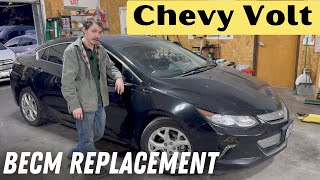
2018 Chevrolet Volt at 105k miles
Service light came on, vehicle would not charge and ran only on the gas engine. Code indicated a failure in the Battery Energy Control Module (BECM).
What they tried:
- Owner took the vehicle to a dealership experienced with EV repairs.
- The dealership confirmed the BECM failure and ordered a replacement part.
Outcome: The BECM was replaced and programmed. The total cost for the out-of-warranty repair was $1,963.71. The repair was completed in 5 days.
Lesson: BECM failure is a known issue on Chevrolet Volts and other GM EVs. While often covered under a special warranty, out-of-pocket costs run around $2,000. If you are near the warranty cutoff, be prepared for this possibility. Calling GM corporate directly sometimes results in partial goodwill coverage.
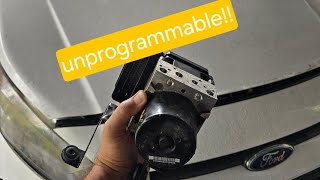
2015 Ford Transit Connect with used ABS module
A used ABS module was installed to fix a different fault, but after installation, a new code U2300 ('Central Configuration') appeared and would not clear, keeping the ABS light on.
What they tried:
- Technician attempted to configure the module using the official Ford diagnostic software (FDRS) via both the 'PMI' and 'As-Built' data functions. The software reported success, but the code remained.
- On advice from other technicians, used the third-party software FORScan to perform the module configuration.
Outcome: Using FORScan to load the vehicle's 'As-Built' data and configure the used ABS module successfully cleared the U2300 code and resolved the issue.
Lesson: When replacing Ford modules, especially with used parts, the official dealer tool sometimes fails to program them correctly. In the technician community, FORScan is widely recognized as a powerful and sometimes superior tool for module programming and configuration tasks.
How to Prevent This Code From Triggering
- Maintain 12V Battery Health (Every 6 months) — A weak or failing 12V battery is a primary cause of module data corruption during startup. Periodically clean terminals to prevent corrosion, ensure connections are tight, and have the battery load-tested, especially before winter. For vehicles stored for long periods, use a battery tender to maintain charge.
- Ensure Proper Sealing of Junction Boxes (After any under-hood service) — Moisture is a leading cause of module failure. On vehicles like the Ford Super Duty, ensure the Battery Junction Box (BJB) cover is fully seated and all clips are engaged after service. Water intrusion from an improperly sealed cover is the direct cause of widespread electrical failures.
- Use a Battery Maintainer During Software Updates (During any programming event) — Module programming takes a significant amount of time, during which the vehicle's systems are active. A drop in battery voltage during this process interrupts the update, corrupting the module's software and causing a U2220 code. A high-quality battery maintainer ensures stable voltage throughout the process.
- Properly Install Aftermarket Accessories (During installation) — Improperly installed aftermarket electronics interfere with the CAN bus network. Never splice directly into CAN bus wires. Use high-quality, vehicle-specific adapter harnesses that provide the necessary power and data signals without disrupting the factory network.
- Avoid Improper Jump-Starting (When jump-starting) — Incorrectly jump-starting a vehicle creates a voltage spike that damages sensitive electronic modules throughout the car. Always follow the manufacturer's specified procedure, connecting to the designated points in the correct order.
Frequently Asked Questions
Can I fix code U2220 myself?
Fixing U2220 is difficult for a DIYer. The most common solution is reprogramming a module, which requires expensive, professional-grade tools and manufacturer-specific software. Simple steps like checking the battery are possible at home, but the final repair requires a shop.
Will clearing the code make it go away?
No, clearing the code with a basic scanner will not fix the problem. U2220 is a 'hard fault' related to software configuration. The code returns immediately upon the next system self-check until the underlying software or module issue is resolved.
My mechanic replaced a part and now I have this code. What happened?
The new electronic module was not properly programmed to your car's VIN and specific options. The mechanic needs to complete the 'Programmable Module Installation' (PMI) or 'Module Configuration' procedure to sync the new part with your vehicle.
Is U2220 a serious problem?
The severity is moderate. While the car drives, the code indicates a key electronic system is disabled, such as ABS or high-voltage battery management, requiring prompt attention to ensure safety.
How much does it cost to fix code U2220?
A simple software re-flash at a dealership or qualified shop costs between $150 and $375. If the control module itself has failed and needs replacement, the total cost including parts and programming ranges from $800 to over $1,500.
What is the most common misdiagnosis for U2220?
The most common misdiagnosis is unnecessarily replacing the control module. Technicians assume the module is faulty, only to find the U2220 code returns because the actual problem was a software bug, a weak 12V battery, or a poor wiring connection.
Can a weak 12V battery really cause such a specific software code?
Yes. In modern vehicles, dozens of control modules boot up simultaneously. If the 12V battery voltage drops during this critical startup sequence, data becomes corrupted, directly causing a U2220 code. Always test the battery before replacing expensive hardware.
What is 'As-Built' data and why does it matter for U2220?
'As-Built' data is a VIN-specific code block that tells a module which features are enabled on your exact vehicle. When replacing a module, this data must be programmed into the new part to prevent U2300 or U2220 codes. This step is mandatory for the module to function.
Key Takeaways
- Code U2220 flags a software configuration failure in a specific control module, meaning 0 mechanical parts need replacement in most cases.
- Always test the 12-volt battery first; a voltage drop below 10.0V during engine cranking corrupts module data and triggers this code.
- A basic $20 OBD-II reader cannot fix U2220; resolving it requires a professional J2534 pass-thru device and an OEM software subscription to reflash the module.
- If U2220 appears immediately after installing a new electronic module, the technician failed to complete the required Programmable Module Installation (PMI) process.
Helpful Videos
Shop the Parts Behind U2220
Below are the parts most often responsible for code U2220, ranked by how frequently each one is the actual culprit (per the diagnosis above). Tap any to see what we have for your vehicle.


The information in this article is provided for general reference and educational purposes only. Vehicle specifications, procedures, and part compatibility can vary by production date, trim level, and region. Always consult your vehicle's factory service manual and verify part numbers before purchasing or performing repairs. Safety-critical components such as airbags, seat belts, and braking systems should be installed by a qualified professional.
- 🧭 Diagnostic Flowchart
- 🎬 Helpful Videos
- 🛍️ Shop This Part
- What Does U2220 Mean?
- Can I Drive With U2220?
- Common Causes
- Symptoms
- Common Fixes & Costs
- Used vs. New Parts: Buying Guide
- What Happens If You Wait — Timeline
- Cost of Not Fixing It
- Diagnosis Steps
- When This Code Triggers (Freeze-Frame Conditions)
- Related Codes
- Climate & Environmental Factors
- How to Talk to a Mechanic About This Code
- Where to Take It: Dealer vs Independent vs Chain
- When to Walk Away From the Repair
- What Scan Tool You Need for This Code
- How to Clear the Code After You Fix It
- Will This Fail Emissions / State Inspection?
- Most Commonly Affected Vehicles
- Manufacturer-Specific Notes
- Real Owner Stories
- 2020 Ford F-250 with 7.3L Gas Engine
- 2018 Chevrolet Volt at 105k miles
- 2015 Ford Transit Connect with used ABS module
- How to Prevent This Code From Triggering
- Frequently Asked Questions
- Can I fix code U2220 myself?
- Will clearing the code make it go away?
- My mechanic replaced a part and now I have this code. What happened?
- Is U2220 a serious problem?
- How much does it cost to fix code U2220?
- What is the most common misdiagnosis for U2220?
- Can a weak 12V battery really cause such a specific software code?
- What is 'As-Built' data and why does it matter for U2220?
- Key Takeaways
- 🎟️ Get 5% Off