

OBD-II Code U2221: The Ultimate Guide to Vehicle Network Communication Faults
What U2221 and other U-codes mean, why they trigger, and how to fix them to outrank all other guides.
- Code U2221 indicates a critical communication failure on the vehicle's Controller Area Network (CAN) bus, meaning one or more control modules are completely offline.
- Always test the battery and main ground straps first; a voltage drop below 12.4V or a ground resistance above 0.1 ohms causes widespread module communication failures.
- Measure the CAN bus resistance at OBD-II pins 6 and 14 with the battery disconnected; a healthy network reads exactly 60 ohms, while 0 ohms indicates a dead short.
- Do not drive the vehicle, as a U2221 network failure instantly disables critical safety systems like ABS, airbags, and power steering without warning.
What Does U2221 Mean?
Code U2221 indicates a critical communication failure on your vehicle's network. Modern cars use multiple computers (modules) to control everything from engine timing to power windows, communicating via a Controller Area Network (CAN) bus. This code triggers when one or more modules go offline, causing immediate electrical gremlins, system shutdowns, or a complete no-start condition.
Technical definition: U2221 is a manufacturer-specific diagnostic trouble code (DTC) indicating a loss of communication on the vehicle's data bus. While not a standardized SAE code, it follows the universal 'U-code' diagnostic framework. It signifies a physical break, short circuit, or module failure on the CAN bus, preventing data packets from reaching their intended control modules.
Can I Drive With U2221?
No — Do Not Drive. Driving is strictly prohibited. A network failure instantly disables critical safety systems like ABS, stability control, and airbags. You will also experience a sudden loss of power steering assist or the transmission will lock into 'limp mode' with severely limited speed. This creates an unpredictable and highly dangerous driving situation.
Common Causes
- Weak or Failing Battery / Bad Ground Connection (Very Common) — Control modules require stable voltage to communicate. A weak battery, failing alternator, or corroded main ground strap causes severe voltage drops, triggering random communication codes across the entire vehicle.
- Corroded or Damaged Wiring/Connectors (Very Common) — Connectors and wires in exposed areas (under the truck bed, behind tail lights, door jambs) suffer water intrusion and corrosion. This damage shorts or opens the communication bus, silencing modules.
- Faulty Totally Integrated Power Module (TIPM) (Very Common) — On Chrysler, Dodge, and Jeep vehicles, the TIPM acts as the central electrical hub. Internal relay or circuit board failures are extremely common, causing widespread communication issues and bizarre electrical behavior.
- Blown Fuse or Faulty Mega Fuse (Common) — A blown fuse cuts power to a critical module, taking it offline. Some vehicles use a main 'Mega Fuse' that develops hairline cracks, causing intermittent power loss to multiple systems.
- Faulty Aftermarket Accessories (Common) — Improperly installed remote starters, alarms, or stereos interfere with the CAN bus network. These devices introduce electrical noise or create shorts that disrupt factory module communication.
- Faulty Control Module (Less Common) — A single module (ABS, BCM, PCM) fails internally. It stops communicating entirely or floods the network with bad data (a 'babbling' module), crashing the entire system.
- Faulty Clockspring (Steering Wheel) (Less Common) — A failure in the steering column's rotary clockspring shorts the communication network serving the steering wheel controls and airbag, illuminating airbag and traction control lights.
- Software or Configuration Error (Rare) — Following a failed software update or improper module replacement, corrupted configuration files prevent a module from communicating correctly on the network.
Symptoms
- Multiple dashboard warning lights — The Check Engine, ABS, Airbag, and Traction Control lights illuminate simultaneously because their respective modules cannot communicate with the instrument cluster.
- Engine cranks but won't start or stalls — The fuel pump relay fails to activate, or the engine computer loses communication with security modules, preventing the engine from running.
- Random electrical issues — The horn honks randomly, wipers activate autonomously, power windows fail, or the infotainment screen goes black.
- Vehicle enters 'limp mode' — The engine severely reduces power and the transmission locks into a single gear to protect the drivetrain after losing communication with the ABS or TCM.
- Scan tool cannot communicate with vehicle (scan-tool only — no driver-felt sign) — A diagnostic scan tool fails to connect to any modules, confirming the central communication network is completely down.
Diagnostic Flowchart
Tap your situation to follow the diagnostic path that matches what you're seeing on this code.
Common Fixes & Costs
- Replace the Vehicle Battery — Parts: $150-$350, Labor: $50-$100, ~0.5 hr book time (DIY)
- Clean or Replace Main Ground Straps — Parts: $15-$50, Labor: $75-$150, ~0.8 hr book time (DIY)
- Repair Damaged Wiring Harness or Connectors — Parts: $20-$150, Labor: $250-$1000+, ~2.5 hr book time (Professional)
- Replace or Rebuild the TIPM — Parts: $250-$600, Labor: $150-$250, ~1.2 hr book time (Intermediate)
- Replace a Faulty Control Module (BCM, ABS, etc.) — Parts: $300-$900, Labor: $200-$500, ~2 hr book time (Professional)
Used vs. New Parts: Buying Guide
When a used part is worth it: For high-cost electronic modules (TIPM, BCM) on older vehicles, a remanufactured part saves 50-75% off the new price. It is the best option when vehicle life does not justify a brand new OEM part.
Donor-vehicle mileage cap: roughly under 100000 miles for the part to have meaningful remaining life.
Donor quality checklist:
- Match the part number exactly. A single letter difference indicates an incompatible version.
- Purchase from a reputable rebuilder offering at least a 90-day warranty.
- Visually inspect the part for corrosion, water damage, or burnt pins.
- Verify if the part requires VIN-matching or programming before purchase.
Decision logic:
- If The part is a known high-failure item (like a Chrysler TIPM) → Buy a remanufactured unit from a specialist, as they correct the original design flaws.
- If Vehicle is less than 8 years old and under 100K miles → Buy a new OEM part to ensure longevity and compatibility.
- If The failure is a simple wiring harness or connector → Always buy new. Used wiring carries a high risk of brittle insulation or hidden corrosion.
Warranty tradeoff: Used parts carry a 30-90 day warranty covering the part only. Remanufactured parts offer 1-year or limited lifetime warranties. New OEM parts carry a 1-2 year manufacturer warranty.
Worst-case if a used part fails: $300-$800. If a used module fails, you pay for diagnostic and labor time twice, plus the cost of another replacement part.
What Happens If You Wait — Timeline
- 0-4 weeks: Intermittent glitches appear. A warning light flashes and disappears. The radio resets or windows stop working temporarily. The code stores in memory but remains inactive. (MPG impact: 0%% · Added cost: $0. The fault is temporary, often triggered by moisture or vibration.)
- 1-3 months: Faults become frequent. Multiple warning lights stay on. The vehicle occasionally hesitates to start. A parasitic draw begins to slowly weaken the battery. (MPG impact: 0-2%% · Added cost: $100-$300 in diagnostic fees. Potential cost of a new battery ($200-$400) if the parasitic draw is severe.)
- 3-6 months: A hard fault develops. The vehicle regularly fails to start, stalls while driving, or permanently locks into 'limp mode'. Critical safety systems are consistently offline. (MPG impact: 5-20% (if in limp mode)% · Added cost: $500-$1500. Towing fees ($100-$300) are likely. The original faulty part must be replaced.)
- 6+ months: Cascading module failure. An unstable voltage or short permanently damages other expensive control modules on the same network. (MPG impact: N/A (vehicle likely inoperable)% · Added cost: $1500-$3000+. The repair now involves replacing multiple control modules and extensive diagnostic time.)
Cost of Not Fixing It
- Immediate: Critical safety systems (ABS, airbags) shut down. The vehicle stalls while driving or fails to start entirely. (Added cost: Towing fees and emergency diagnostics ($150-$300).)
- Weeks to Months: Continued electrical stress damages other network modules. A faulty TIPM causes a constant power draw that permanently kills the battery. (Added cost: $200-$400 for a replacement battery.)
- Long-Term: Catastrophic module failure. An intermittent wiring short permanently destroys expensive computers like the PCM or BCM, turning a $100 wiring repair into a $2,000 module replacement. (Added cost: $800-$2000+ for module replacement and programming.)
Diagnosis Steps
- Check the Battery and Grounds
Verify the battery holds 12.4-12.6V with the engine off. Inspect main battery-to-chassis and engine-to-chassis ground straps for corrosion. A voltage drop test on the ground side must show less than 0.1V to confirm a solid connection.
Tools: Multimeter, Socket set, Wire brush (Beginner) - Inspect Fuses and Power Modules
Test all fuses related to non-communicating modules. On GM trucks, check the 175-Amp Mega Fuse for hairline cracks by gently wiggling it while monitoring system power. On Chrysler products, inspect the TIPM for corrosion.
Tools: Fuse puller, Multimeter, Flashlight (Beginner) - Perform a Full Module Scan
Use an advanced OBD-II scanner to perform a full system scan. Document which modules respond and which do not to map the failure.
Tools: Advanced OBD-II Scanner (Beginner) - Inspect Common Wiring Failure Points
Visually inspect wiring harnesses in known problem areas. Check Ford truck connectors behind tail lights. Check GM truck grounds on the passenger A-pillar (G218). Inspect harnesses passing through door jambs.
Tools: Flashlight, Trim removal tools (Intermediate) - Test CAN Bus Network Resistance
With the battery disconnected, measure resistance between CAN High (Pin 6) and CAN Low (Pin 14) at the OBD-II port. A healthy network reads exactly 60 ohms. 120 ohms indicates a missing terminating resistor or broken wire. 0 ohms indicates a short.
Tools: Multimeter, OBD-II pinout diagram (Advanced) - Isolate the Faulty Module or Wire
If CAN bus resistance is 0 ohms, unplug modules one at a time and re-test. When resistance returns to 60 ohms, the last module unplugged is causing the short.
Tools: Multimeter, Socket set, Trim removal tools (Advanced) - Measure CAN Bus Voltages
With the key on and engine off, measure DC voltage at the OBD-II port. CAN High (Pin 6) should be 2.5V to 3.5V. CAN Low (Pin 14) should be 1.5V to 2.5V. If both lines show identical voltage, they are shorted together or to ground.
Tools: Multimeter, OBD-II pinout diagram (Advanced) - [PRO TIP] Perform a Network Split at a Star Connector
Locate the 'star connector' junction block. Disconnect one branch to split the network in half. If the scan tool communicates with the remaining half, the fault is isolated to the disconnected branch.
Tools: Advanced OBD-II Scanner, Trim removal tools, Vehicle-specific wiring diagram (Professional) - [PRO TIP] Use an Oscilloscope to Analyze the CAN Signal
Connect a lab scope to CAN High and CAN Low. A healthy signal is a clean, mirror-image square wave. Look for distorted signals, stuck voltages, or excessive noise indicating a failing module or external interference.
Tools: Automotive Oscilloscope, DLC Breakout Box (Professional)
When This Code Triggers (Freeze-Frame Conditions)
- Vehicle State: Key-On, Engine Off or Cranking (Logs before the engine starts if a critical module (PCM or BCM) fails its initial network check-in.)
- System Voltage: 9V - 11.5V (Drops below 9.6V during cranking cause modules to shut down and lose communication, instantly setting a U-code.)
- Time Since Start: 0 seconds to continuous (Triggers the instant the key turns or appears intermittently during driving.)
- Vehicle Speed: Any (Sets at any speed when a wiring harness chafes or a module fails from vibration.)
Related Codes
- U0073 — Control Module Communication Bus 'A' Off. This generic code confirms the network is down but provides no specific information about the cause.
- U0100 — Lost Communication With ECM/PCM. If present with other U-codes, it points to a widespread network failure. If it is the only code, the problem is isolated to the ECM's power, ground, or direct wiring.
- U0101 — Lost Communication With TCM. Often results in the transmission entering 'limp mode'. If other modules report U0101, the problem is network-wide.
- U0140 — Lost Communication With Body Control Module (BCM). If only BCM-controlled functions (interior lights, locks) fail alongside this code, the BCM is the prime suspect.
Climate & Environmental Factors
- High Humidity / Coastal Regions: Salt-laden air and high humidity dramatically accelerate corrosion on wiring, connectors, and ground points. Moisture wicks through compromised wire insulation and travels throughout a harness, causing widespread network shorts.
- Cold Climates / Road Salt: Regions using road salt see high incidences of corrosion-related electrical failures. Saltwater spray infiltrates connectors and undercarriage ground straps, causing open circuits.
- Extreme Cold: Extremely cold temperatures weaken battery performance, causing low voltage issues that trigger communication codes. It also makes wire insulation brittle and susceptible to cracking.
How to Talk to a Mechanic About This Code
Say this: "I have several U-series communication codes and intermittent electrical problems. Please perform a full network scan to identify offline modules and check the CAN bus resistance. I authorize one hour of diagnostic time; call me with the results before proceeding."
This signals you understand it's a complex electrical issue, not a simple part swap. It directs the technician to the correct starting procedures for network diagnosis and sets a clear budget limit, preventing runaway diagnostic charges.
Avoid saying:
- 'My check engine light is on, can you look at it?' (Too vague, invites expensive guesswork).
- 'Just fix whatever's wrong.' (Gives the shop a blank check).
- 'I think it's the BCM, can you replace it?' (Never suggest a specific repair; you pay for it whether it fixes the problem or not).
Questions to ask before authorizing the repair:
- What were the results of the network scan? Which modules were not communicating?
- What was the CAN bus resistance reading? Was it 60 ohms, 120 ohms, or near zero?
- How did you isolate the fault to this specific part or wire? Can you show me the damaged part or the wiring diagram location?
- Does the recommended repair require module programming, and is that included in the quote?
- What is your warranty on electrical diagnostic work and this specific repair?
Where to Take It: Dealer vs Independent vs Chain
- Dealer:
A strong option if the issue is a known TSB or requires brand-specific programming, but the most expensive route for out-of-warranty diagnosis.
Best for: Vehicles still under warranty., Known manufacturer-specific issues covered by recalls or technical service bulletins (TSBs)., Complex programming of new modules is required.
Downsides: Highest labor rates ($150-$250/hour)., Dealerships often replace entire modules or harnesses rather than performing cheaper, component-level wiring repairs. (Typical cost: +50% vs. baseline) - Independent Shop:
Best fit for most out-of-warranty vehicles, provided you find a reputable shop that specializes in diagnostics. They are more willing to perform component-level wiring repairs.
Best for: Out-of-warranty vehicles where cost is a factor., Shops that specialize in electrical diagnostics (look for ASE certifications)., Getting a second opinion on a costly dealer estimate.
Downsides: Quality and diagnostic equipment vary greatly. You must vet the shop's reputation for electrical work., May lack access to the latest manufacturer-specific tools or software for brand new models. (Typical cost: +0% vs. baseline) - Chain Shop:
AVOID. Network communication faults require specialized diagnostic expertise and equipment rarely found at chain repair shops.
Best for: Simple, unrelated repairs like tires, brakes, or oil changes.
Downsides: Generally not equipped for complex network diagnostics., High technician turnover and varying skill levels., Business model encourages upselling of unnecessary services. (Typical cost: -10% vs. baseline)
When to Walk Away From the Repair
If the estimated repair cost exceeds 50% of the car's private-party value, sell the car as-is. For vehicles over 10 years old or with 150,000+ miles, lower this threshold to 30-40%.
- Car worth $5000, fix is $3000: Walk away. The repair cost is 60% of the car's value. It's not a sound investment.
- Car worth $15000, fix is $1200: Fix it. The repair cost is only 8% of the vehicle's value and is well below the threshold.
- Car worth $3000, fix is $1200: Borderline. At 40% of the car's value, the decision depends on the car's overall health. If it's otherwise reliable, fixing it is reasonable. If it has other pending issues, sell it.
What Scan Tool You Need for This Code
Minimum: A scanner that performs a 'Network Test' or 'All Module Scan' to show which modules are communicating and which are not.
A $20 code reader only detects U-codes in the engine module. It cannot scan the rest of the network to identify offline modules, making it useless for diagnosing a U2221 fault.
Budget: BlueDriver Pro / Thinkcar Thinkdiag Mini (~$99) — These Bluetooth dongles pair with a smartphone app to perform a full system scan, showing a list of all modules and any codes they contain. This is the minimum required to see the scope of the network failure.
Mid-range: Autel MaxiCOM MK808Z / Innova 5610 (~$350) — These tablet-style scanners offer full system scans with live data graphing and bidirectional controls. Bidirectional control allows you to command modules to perform actions, confirming if a module is powered even if it's not communicating properly.
Professional: Autel MaxiSys MS906 / Launch X431 Series (~$800-1500) — Professional-grade tools offering advanced features like topology mapping (a visual diagram of the network showing offline modules), ECU coding, and module programming. Essential for replacing and configuring new control modules.
Rent vs buy: For a one-time diagnosis, a budget or midrange scanner is a worthwhile purchase, as it costs less than a single diagnostic fee at a shop. Professional-level tools are for serious enthusiasts or repair businesses.
How to Clear the Code After You Fix It
- Reconnect the battery if disconnected during repair.
- Use an advanced OBD-II scan tool to execute a 'Clear All DTCs' command.
- Perform a full network scan to confirm all modules are online and communicating.
- Start the vehicle and test all functions related to the repaired system.
Drive cycle (~30 minutes): Begin with a cold start (engine temp below 122°F). Idle for 3 minutes with electrical loads on (A/C, rear defrost). Accelerate to 55 mph and hold a steady speed for 5 minutes. Coast down to 20 mph without braking. Accelerate again to 60 mph and hold for 5 minutes. Cool down.
Readiness monitors affected: Comprehensive Component Monitor, Misfire Monitor, Fuel System Monitor
Before emissions retest: drive at least 50 miles to fully set monitors.
Watch out for:
- Disconnecting the battery clears the code but erases all readiness monitors, guaranteeing an emissions test failure.
- The code returns immediately if the root cause (shorted wire, bad module) remains unfixed.
- Failing to perform a full network scan after clearing codes masks other offline modules.
Will This Fail Emissions / State Inspection?
Yes — this code typically fails an OBD-II emissions inspection.
- California: An active U-code causes an automatic smog check failure. A drive cycle of 50-100 miles is required to set readiness monitors after repair.
- New York: Fails the NYVIP3 OBD-II inspection if the Check Engine light is on. For 2001+ vehicles, only one readiness monitor can be 'not ready'.
- Texas: In the 17 emissions-testing counties, an active U-code results in a failed test. Up to one readiness monitor can be incomplete for 2001+ vehicles.
Most Commonly Affected Vehicles
- Dodge / Ram Ram 1500/2500, Grand Caravan (2007-2015) — Shares the problematic TIPM design with Jeep and Chrysler, leading to identical electrical faults. Aftermarket radios in 2009-2012 models cause CAN bus issues if installed with an incorrect wiring interface.
- Jeep Grand Cherokee, Wrangler (2007-2014) — Widely known for premature failure of the Totally Integrated Power Module (TIPM). Recall P54 (NHTSA 14V-530) addresses the fuel pump relay inside the TIPM on 2011-2013 models.
- Chrysler Town & Country, 200 (2008-2016) — Equipped with the failure-prone TIPM causing network codes and erratic behavior. Recall V62 addresses fuel pump relay failure within the TIPM for 2011-2013 models.
- Ford F-150, F-250/350 Super Duty (2016-2022) — Prone to water intrusion in blind spot modules inside the tail lights (addressed in TSB SSM 47925) and chafed harnesses near the engine air filter box.
- Chevrolet / GMC Silverado, Sierra (2019-2024) — A corroded main body-to-frame ground strap is a primary failure point addressed in GM service program N252515590. Paint under the G218 ground lug on the passenger A-pillar also requires sanding to bare metal.
- Subaru Outback, Forester, Ascent (2015-2022) — Suffer from parasitic battery drain causing low-voltage network faults. A class-action lawsuit settlement provides extended warranties for 2015-2020 models.
- Hyundai / Kia Elantra, Sonata, Sportage, Tucson (2016-2021) — The Hydraulic Electronic Control Unit (HECU) short circuits, causing communication DTCs and fire risks. Addressed in NHTSA campaign 23V-651 and Kia recall SC227.
Manufacturer-Specific Notes
- Chrysler/Dodge/Jeep/Ram: A faulty Totally Integrated Power Module (TIPM) is the primary cause of network codes. Symptoms range from a no-start condition to wipers activating autonomously. Multiple recalls (NHTSA 14V-530) address the internal fuel pump relay.
- Ford: Network codes frequently trace to water damage in the Side Object Detection (blind spot) modules inside the tail light assemblies. Cracks in the housing allow water to short the network, addressed in TSB SSM 47925.
- General Motors (GM): On 2019+ trucks, a corroded body-to-frame ground strap and paint overspray under the G218 ground lug are the top causes of network failure. GM customer satisfaction program N252515590 addresses the ground strap.
- Subaru: A weak or failing battery is the primary cause of cascading electronic faults and communication codes on 2015-2022 models. Ensure the battery is in perfect health before diagnosing complex network issues.
- Hyundai / Kia: An internal short circuit in the Hydraulic Electronic Control Unit (HECU) causes communication codes and poses a fire risk. Recalls advise owners to park outside until the repair is performed.
Real Owner Stories
2008 Jeep Wrangler with 3,000 miles
After off-roading, the owner noticed a strong smoke smell. The dealer found the Totally Integrated Power Module (TIPM) melted, destroying several wiring harnesses.
What they tried:
- The vehicle was taken directly to the dealership for diagnosis due to the severity of the smoke smell.
Outcome: The dealership replaced the TIPM and the damaged wiring harnesses under warranty.
Lesson: A burning plastic smell is a critical warning sign. For Chrysler/Jeep/Dodge vehicles exhibiting random electrical issues, the TIPM is a primary suspect and must be inspected for signs of overheating.
2000 Subaru Forester with a 3-month-old battery
The car suddenly wouldn't start after a short trip. When jumped, the headlights were dim and the engine almost stalled.
What they tried:
- Replaced a badly corroded positive battery connector.
- Attempted to charge the battery overnight, but the charger behaved erratically.
- A jump box could only make the engine turn over very slowly.
Outcome: The symptoms pointed towards a failed alternator that was not recharging the battery, leading to a complete lack of power even with a new battery.
Lesson: Don't assume a new battery is good. A dead battery is often a symptom of a failing alternator. If a jump-start results in dim lights and poor performance, the alternator is the culprit.
2019+ Chevrolet/GMC Truck with multiple U-codes
Vehicle displayed multiple communication codes (U0100, U0140) and various warning lights after driving in a wet environment.
What they tried:
- Initial diagnosis pointed to a faulty BCM.
- A shop familiar with GM trucks checked the main ground points first.
Outcome: The problem was traced to a corroded body-to-frame ground strap near the passenger-side wheel well. Cleaning the connection point to bare metal and replacing the ground strap for under $150 resolved all codes.
Lesson: On late-model GM trucks, always inspect ground connections before replacing modules. GM service program N252515590 addresses this common failure point, saving thousands in misdiagnosis costs.
How to Prevent This Code From Triggering
- Apply Dielectric Grease to Exposed Connectors (Every 1-2 years or during any related service) — Dielectric grease repels moisture and prevents corrosion on electrical pins, sockets, and gaskets exposed to road salt and water spray.
- Perform Regular Battery and Ground Maintenance (Every 6-12 months) — Clean battery terminals with a baking soda solution and a wire brush. Inspect and tighten main chassis and engine ground straps to prevent low-voltage communication faults.
- Wash the Vehicle's Undercarriage Regularly (Seasonally, especially in winter ('Salt Belt' regions)) — Road salt and de-icing brines accumulate on underbody wiring harnesses and ground points. Regular washing neutralizes and removes these corrosive agents.
- Ensure Regular and Sufficient Drive Times (Weekly) — Frequent short trips prevent the alternator from fully recharging the battery. A consistently undercharged battery causes low-voltage issues that trigger U-codes. Aim for one 30-minute drive per week.
- Use Weatherproof Connectors for Exterior Repairs (During any wiring repair) — When repairing wires exposed to the elements, use heat-shrink butt connectors. The adhesive lining melts when heated, creating a waterproof seal that prevents future corrosion.
Frequently Asked Questions
Can I just reset the U2221 code?
You can clear the code, but if the underlying hardware or wiring fault is not fixed, it returns almost immediately. Resetting is not a repair.
Why are there so many warning lights on my dash?
When the communication network goes down, modules responsible for ABS, airbags, and the engine cannot talk to the instrument cluster. As a safety default, the cluster illuminates the warning light for any system it cannot confirm is working properly.
What is a common misdiagnosis for U-codes?
A common mistake is immediately replacing an expensive control module just because it stopped communicating. Often, the module is fine but lost power or ground due to a corroded wire, blown fuse, or weak battery. Always perform a thorough diagnosis of the module's power and ground circuits first.
Do I need to program a new module?
Yes, in most cases. Modern control modules are VIN-specific and must be programmed or configured to the vehicle after installation. This procedure requires specialized scan tools and software, making it a job for a professional repair shop.
Is a U-code expensive to fix?
Repair costs range from $15 for a DIY ground wire cleaning to over $1,200 for a dealer-programmed Body Control Module. The final price depends entirely on whether the root cause is a simple wiring fault or a catastrophic module failure.
What is a CAN bus?
The Controller Area Network (CAN) bus is the primary communication network used in modern cars. It allows dozens of different electronic modules to exchange data over a pair of twisted wires, typically designated CAN High and CAN Low.
My mechanic says they can't communicate with the car. Is that related?
Yes, that is a key symptom. The mechanic's scan tool uses the same communication network to talk to the modules. If the network is down, their tool cannot connect, confirming a major communication fault.
Can a bad ground cause communication codes?
Absolutely. A bad ground is one of the most common causes of network communication codes. Control modules are highly sensitive to voltage, and a poor ground connection creates an unstable voltage supply, leading to a flood of U-codes.
Key Takeaways
- Code U2221 indicates a critical communication failure on the vehicle's Controller Area Network (CAN) bus, meaning one or more control modules are completely offline.
- Always test the battery and main ground straps first; a voltage drop below 12.4V or a ground resistance above 0.1 ohms causes widespread module communication failures.
- Measure the CAN bus resistance at OBD-II pins 6 and 14 with the battery disconnected; a healthy network reads exactly 60 ohms, while 0 ohms indicates a dead short.
- Do not drive the vehicle, as a U2221 network failure instantly disables critical safety systems like ABS, airbags, and power steering without warning.
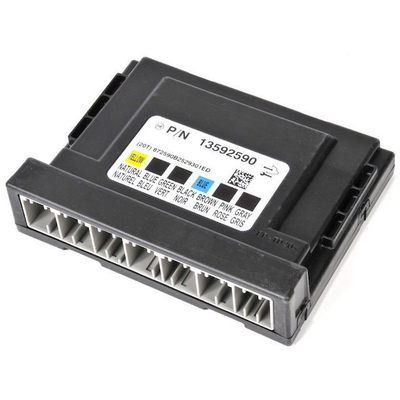
Shop the Parts Behind U2221
Below are the parts most often responsible for code U2221, ranked by how frequently each one is the actual culprit (per the diagnosis above). Tap any to see what we have for your vehicle.


The information in this article is provided for general reference and educational purposes only. Vehicle specifications, procedures, and part compatibility can vary by production date, trim level, and region. Always consult your vehicle's factory service manual and verify part numbers before purchasing or performing repairs. Safety-critical components such as airbags, seat belts, and braking systems should be installed by a qualified professional.
- 🧭 Diagnostic Flowchart
- 🛍️ Shop This Part
- What Does U2221 Mean?
- Can I Drive With U2221?
- Common Causes
- Symptoms
- Common Fixes & Costs
- Used vs. New Parts: Buying Guide
- What Happens If You Wait — Timeline
- Cost of Not Fixing It
- Diagnosis Steps
- When This Code Triggers (Freeze-Frame Conditions)
- Related Codes
- Climate & Environmental Factors
- How to Talk to a Mechanic About This Code
- Where to Take It: Dealer vs Independent vs Chain
- When to Walk Away From the Repair
- What Scan Tool You Need for This Code
- How to Clear the Code After You Fix It
- Will This Fail Emissions / State Inspection?
- Most Commonly Affected Vehicles
- Manufacturer-Specific Notes
- Real Owner Stories
- 2008 Jeep Wrangler with 3,000 miles
- 2000 Subaru Forester with a 3-month-old battery
- 2019+ Chevrolet/GMC Truck with multiple U-codes
- How to Prevent This Code From Triggering
- Frequently Asked Questions
- Can I just reset the U2221 code?
- Why are there so many warning lights on my dash?
- What is a common misdiagnosis for U-codes?
- Do I need to program a new module?
- Is a U-code expensive to fix?
- What is a CAN bus?
- My mechanic says they can't communicate with the car. Is that related?
- Can a bad ground cause communication codes?
- Key Takeaways
- 🎟️ Get 5% Off