

OBD-II Code U2222: Invalid Data from Battery Control Module
What U2222 means, why it triggers, and how to fix it in modern electric vehicles
- OBD-II code U2222 points to an invalid data fault from the Battery Energy Control Module (BECM), most frequently affecting 2022-2025 General Motors electric vehicles.
- On GM Ultium EVs, a software glitch causes this code and requires a dealer-installed software update under TSB PIT6044N, typically costing $0 under warranty.
- For 2016-2019 Chevy Volts, U2222 indicates a known hardware failure in the BECM, which GM covers under a 15-year/150,000-mile extended warranty (Special Coverage N232432680).
- Before authorizing a $150+ diagnostic fee, always test the 12V battery and unplug any aftermarket OBD-II devices, as both commonly trigger false communication codes.
What Does U2222 Mean?
Code U2222 means the Battery Energy Control Module (BECM) received invalid or corrupt data over the vehicle's communication network. In most cases, a software glitch in specific General Motors (GM) electric vehicles causes this error. Because this computer manages the high-voltage battery, the system triggers an immediate warning.
Technical definition: U2222 is a manufacturer-controlled network code. General Motors uses it within a specific block (U2220-U2237) to indicate a loss of communication or invalid data related to the K16 Battery Energy Control Module (BECM) due to a software anomaly.
Can I Drive With U2222?
No — Do Not Drive. Driving is not recommended. This code indicates a critical fault in the high-voltage battery management system. Sudden loss of motive power at highway speeds occurs with this fault. The $150-$250 cost of a tow significantly outweighs the risk of a highway accident.
Common Causes
- Battery Energy Control Module (BECM) Software Anomaly (Very Common) — On specific GM electric vehicles, a known software bug within the BECM causes this code. The module sets communication faults when no physical defect exists, requiring a dealer software update.
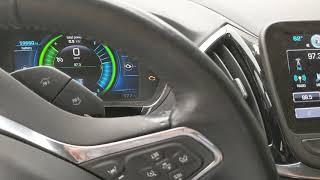
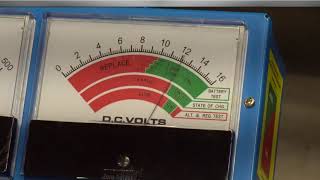
- Weak or Failing 12-Volt Battery (Common) — Vehicle computers rely on stable voltage from the 12V battery to boot up. A weak 12V battery causes random communication codes, including U2222, especially during extreme hot or cold weather. 🎬 See how a weak 12V battery triggers hybrid system faults.
- Aftermarket OBD-II Device Interference (Common) — Insurance trackers or diagnostic dongles plugged into the OBD-II port interfere with the CAN bus network. These devices disrupt normal communication and cause a flood of 'U' codes.
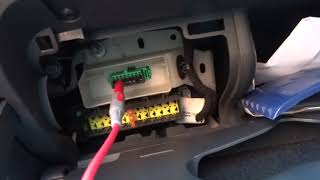
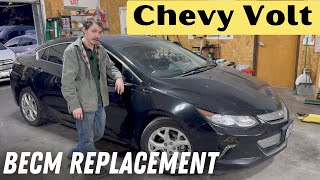
- Defective Module Hardware (Less Common) — Certain modules have known hardware vulnerabilities. The 2016-2019 Chevy Volt BECM fails prematurely, requiring a full hardware replacement. 🎬 Watch: A complete walkthrough of the Gen 2 Volt BECM replacement. Similarly, Hyundai/Kia EVs experience widespread failures of the Integrated Charging Control Unit (ICCU).
- Damaged CAN Bus Wiring or Poor Grounds (Less Common) — A chafed wire, corroded connector, or loose chassis ground interrupts network signals. This introduces electrical noise and communication errors, leading to 'invalid data' faults.
- Missing or Failed Terminating Resistor (Rare) — The CAN bus network requires a 120-ohm resistor at each end. If a resistor fails or a module containing one disconnects, network communication becomes unstable.
Symptoms
- "Service High Voltage System" Message — The instrument panel displays a specific warning related to the high-voltage battery system, as the BECM is responsible for its oversight.
- Vehicle Will Not Start or Enter 'Ready' Mode — Severe communication failures immobilize the vehicle. Owners frequently report a 'Shift to Park' message when trying to select a gear.
- Sudden Loss of Propulsion or 'Limp Home' Mode — The vehicle experiences a sudden loss of power while driving, often preceded by a 'Reduced Propulsion' warning.
- Check Engine Light or Malfunction Indicator Lamp (MIL) is On — The primary indicator that a trouble code has been stored in the vehicle's computer.
- Erratic or Unresponsive Infotainment Screen (also visible on scanner) — Network communication failures cause the central display screen to go blank, freeze, or show a 'Network Communication Error' message.
Diagnostic Flowchart
Tap your situation to follow the diagnostic path that matches what you're seeing on this code.
Common Fixes & Costs
- Reprogram Battery Energy Control Module (BECM) — Parts: $0, Labor: $150-$300, ~1.5 hr book time (Professional)
- Replace 12-Volt Battery — Parts: $150-$350, Labor: $30-$100, ~0.5 hr book time (DIY)
- Remove Aftermarket OBD-II Device — Parts: $0, Labor: $0, ~0.1 hr book time (DIY)
- Replace Failed Battery Energy Control Module (BECM) — Parts: $800-$1500, Labor: $400-$1000, ~6 hr book time (Professional)
- Repair Damaged CAN Bus Wiring — Parts: $5-$20, Labor: $150-$600, ~4 hr book time (Professional)
Used vs. New Parts: Buying Guide
When a used part is worth it: Buying a used BECM is not recommended for DIYers. It only makes sense if working with a specialized independent shop equipped to reprogram a used module with your vehicle's VIN.
Donor-vehicle mileage cap: roughly under 50000 miles for the part to have meaningful remaining life.
Donor quality checklist:
- Must be the exact same part number as the original.
- Verify the donor vehicle was not scrapped for a high-voltage battery or electrical issue.
- Confirm the module has been 'unlocked' or 'divorced' from the original vehicle.
Decision logic:
- If The fix is a known software update (GM Ultium TSB). → A used part is irrelevant. The dealer must reprogram your existing module.
- If The vehicle is a Chevy Volt with a failed BECM. → Buy a new, redesigned OEM part (#24296900). Subsequent failures of the redesigned part are rare.
- If You have access to professional programming tools and accept the risk. → A used module can be reprogrammed, but the savings rarely outweigh the risk of it failing again.
Warranty tradeoff: Used parts from salvage yards carry a 30-90 day warranty. A new OEM part installed by a dealer includes a 12-month/12,000-mile warranty on parts and labor.
Worst-case if a used part fails: 1500. If the used module is faulty or cannot be programmed, you waste the cost of the part and labor, and must redo the job with a new part.
What Happens If You Wait — Timeline
- 0-1 month: Intermittent 'Service High Voltage System' light. Code appears and disappears. Vehicle operates normally. (MPG impact: 0%% · Added cost: $0)
- 1-3 months: Fault becomes persistent. The vehicle occasionally refuses to start or enter 'Ready' mode, requiring a power cycle. (MPG impact: 0%% · Added cost: $100-$250 (Potential tow if it fails to restart).)
- 3-6 months: Drivability is affected. The vehicle enters 'Reduced Propulsion Power' mode intermittently. No-start events become frequent. (MPG impact: N/A% · Added cost: $250-$500 (Increased risk of towing from an unsafe location).)
- 6+ months: Critical failure. The vehicle experiences a sudden, complete loss of motive power while driving or becomes permanently inoperable. (MPG impact: N/A% · Added cost: $2,500-$3,500 (Full cost of BECM replacement plus towing).)
Cost of Not Fixing It
- Immediate: Intermittent no-start conditions or 'Shift to Park' errors, causing inconvenience and potential for being stranded. (Added cost: $100-$250 for a tow.)
- 1-3 Months: Sudden loss of motive power while driving. This is a major safety risk requiring a high-stress tow from a potentially dangerous location. (Added cost: $150-$500 for towing and potential accident-related costs.)
- 3+ Months: Continued operation with a failing hardware module stresses other high-voltage components. The vehicle becomes completely unreliable. (Added cost: $2,000-$3,500 for the eventual repair plus significant reliability issues.)
Diagnosis Steps
- Check for Technical Service Bulletins (TSBs)
Check for TSBs related to code U2222 for your specific vehicle. For GM EVs, TSB PIT6044N points directly to a required software update, saving hours of diagnostic time.
Tools: Internet access, Professional scan tool (Beginner) - Remove Aftermarket Devices and Test the 12V Battery
Unplug any device from the OBD-II port. Use a digital battery tester to check the 12V battery's health. A resting voltage below 12.4V indicates a weak battery, which is a primary cause of network faults.
Tools: Digital battery tester (Beginner) - Perform a Full Vehicle DTC Scan
Use an advanced OBD-II scanner to read codes from all modules. The GM software issue presents with a large group of codes ranging from U2220 to U2237.
Tools: Advanced OBD-II scan tool (Intermediate) - Test CAN Bus Resistance
With the 12V battery disconnected, measure the resistance between Pin 6 (CAN High) and Pin 14 (CAN Low) on the OBD-II port. A healthy network reads 60 ohms. A reading of 120 ohms indicates a missing terminating resistor; 0 ohms indicates a short circuit.
Tools: Multimeter (Intermediate) - Visually Inspect Wiring and Grounds
Inspect the wiring harness going to the BECM for rodent damage, chafing, or corrosion. Ensure the main module ground connections to the chassis are clean and tight.
Tools: Flashlight, Inspection mirror (Intermediate) - Verify Terminating Resistor Integrity
If step 4 showed 120 ohms, one terminating resistor is offline. Identify the two modules containing the resistors (often the ECM and Instrument Cluster) using a wiring diagram. Disconnect them and measure resistance directly at the module pins to confirm 120 ohms.
Tools: Multimeter, Vehicle-specific wiring diagrams (Advanced) - Perform CAN Bus DC Voltage Check
With the key on and engine off, measure DC voltage. A healthy, idle bus shows 2.5V on both CAN High (Pin 6) and CAN Low (Pin 14). If one line is stuck at 0V, 5V, or 12V, it indicates a short to ground or power.
Tools: Multimeter, Back-probe pins (Advanced) - Perform CAN Bus Waveform Analysis
Probe CAN High and CAN Low with an oscilloscope. A healthy CAN bus shows two clean, mirror-image square wave signals toggling between 2.5V and 3.5V (High) and 2.5V and 1.5V (Low). Flat or noisy lines indicate a wiring or module fault.
Tools: Automotive oscilloscope, BNC test leads, Back-probe pins (Professional) - Isolate the Faulty Module or Wiring
If resistance or waveforms are incorrect, disconnect modules one by one from the CAN bus until the reading returns to normal. This pinpoints whether a specific module is shorting the network internally.
Tools: Multimeter, Wiring diagrams (Professional)
When This Code Triggers (Freeze-Frame Conditions)
- Vehicle State: Ready or Driving (The fault occurs when the vehicle is operational, not during charging.)
- 12V Battery Voltage: 11.8V - 12.5V (Code sets during startup if the 12V battery voltage sags, causing modules to initialize improperly.)
- High Voltage Battery SOC: Any (The state of charge of the high voltage battery is not a primary trigger for this communication fault.)
- Ambient Temperature: < 32°F or > 90°F (Extreme temperatures stress the 12V battery, making the fault more likely to occur on cold startup.)
Related Codes
- U2220-U2237 — This entire range of codes is listed together in GM service bulletin PIT6044N. Seeing a large group of these codes simultaneously confirms the software update is required.
- U2C11 — Explicitly listed alongside the U222x range in GM bulletin PIT6044N. Treat this as another symptom of the same BECM software issue.
- U0111 — U0111 means 'Lost Communication With BECM,' while U2222 means 'Invalid Data From' it. U0111 suggests the module is completely offline; U2222 means it is powered up but sending corrupt data.
- U26xx Codes (e.g., U2602, U2621) — Commonly seen on second-generation Chevy Volts with failing BECMs. These indicate a loss of communication from high-voltage battery control modules and accompany a complete BECM failure.
Climate & Environmental Factors
- Extreme Cold: Cold temperatures reduce a 12V battery's power output. A weak battery fails during a cold start, causing insufficient voltage for control modules to initialize and triggering U2222.
- Extreme Heat: High ambient temperatures accelerate the degradation of a 12V battery's internal components. This damage remains hidden until the battery is stressed by cold weather.
- High Humidity / Road Salt: Moisture and road salt accelerate corrosion on wiring, connectors, and module ground points. Corrosion increases resistance and interrupts CAN bus communication signals.
How to Talk to a Mechanic About This Code
Say this: "I have a [Your Vehicle Year/Model] with a 'Service High Voltage System' light and a cluster of U-codes, including U2222. Please check the 12V battery first, and be aware of GM's TSB PIT6044N for a software update if it's an Ultium EV, or Special Coverage N232432680 if it's a 2016-2018 Volt."
This signals you are an informed customer. It directs the technician to the most common, manufacturer-documented fixes first, saving hours of diagnostic labor.
Avoid saying:
- 'My check engine light is on, can you look at it?'
- 'The car is acting weird, just fix it.'
- 'I think the big battery is failing.'
Questions to ask before authorizing the repair:
- Did you test the 12V battery and what were its voltage and load test results?
- For a GM Ultium EV: Does my VIN fall under TSB PIT6044N, and is the fix a software reprogram?
- For a 2016-2018 Chevy Volt: Is this repair covered under Special Coverage N232432680?
- If a module replacement is recommended, what is the 'all-in' cost including the part, labor, and programming?
- What is the warranty on the proposed repair, for both the parts and labor?
Where to Take It: Dealer vs Independent vs Chain
- Dealer:
Best for: Vehicles under warranty or covered by a Special Coverage program., Fixes requiring proprietary software updates, like the GM BECM reprogram (TSB PIT6044N)., Any repair involving the high-voltage battery system due to specialized training.
Downsides: Labor rates are often 20-50% higher than independent shops., May have long wait times for appointments with EV-certified technicians. (Typical cost: +40% vs. baseline) - Independent Shop:
Go to the Dealer. The most common fixes for U2222 on GM vehicles are a dealer-only software update or a hardware replacement covered by a special warranty program.
Best for: Out-of-warranty vehicles where the cause is suspected to be simple (e.g., 12V battery)., Basic diagnostics to confirm fault codes before going to a dealer.
Downsides: Most cannot perform manufacturer-specific software updates for modules like the BECM., Quality and EV-specific training vary widely. (Typical cost: +0% vs. baseline) - Chain Shop:
AVOID. They are not equipped to diagnose or repair faults related to a high-voltage Battery Energy Control Module.
Best for: Simple, non-electrical jobs like tires and oil changes.
Downsides: Lack the high-voltage training and proprietary diagnostic software required for this code., High risk of misdiagnosis, leading to unnecessary and expensive part replacements. (Typical cost: -10% vs. baseline)
When to Walk Away From the Repair
If an out-of-warranty repair cost exceeds 50% of the vehicle's current private-party market value, sell the car as-is or trade it in.
- Car worth $8000, fix is $3000: Borderline. A $3,000 repair for a failed BECM on a 2017 Volt worth $8,000 is significant. Get a second opinion, but strongly consider selling if other maintenance is due.
- Car worth $30000, fix is $450: Fix it. The repair is covered by warranty, so the cost is $0. Even if out-of-warranty, $450 is well below the threshold.
- Car worth $4000, fix is $2800: Walk away. The repair cost is 70% of the car's value. It is not economical to proceed.
What Scan Tool You Need for This Code
Minimum: A scanner that performs a 'full system scan' to read manufacturer-specific 'U' codes from controllers like the BCM and BECM.
A basic $20 code reader only checks for generic engine codes ('P' codes) and completely misses the U2222 fault stored in the battery control module.
Budget: Autel AP200 or BlueDriver Pro (~$60-120) — These Bluetooth dongles perform an all-module scan, allowing you to see specific U-codes and confirm if you have the cluster of faults related to the GM TSB.
Mid-range: Foxwell NT510 Elite / NT530 (with GM software) (~$180-250) — Provides a dedicated handheld unit that performs a full GM system scan and reads live data from various modules. It is more robust than a dongle.
Professional: Autel MaxiCOM MK808 / MK906BT (~$500-1200) — Offers professional-level diagnostics, including full bidirectional control. It provides the most in-depth data for diagnosing complex network issues before going to the dealer.
How to Clear the Code After You Fix It
- Reconnect 12V battery if disconnected.
- Use a professional scan tool to perform the 'Clear All DTCs' or 'Clear Secured High Voltage DTCs' function.
- Perform a complete GM drive cycle to ensure all readiness monitors run.
Drive cycle (~20 minutes): From a cold start, idle for 2 minutes with A/C and rear defroster on. Turn accessories off. Accelerate to 55 mph and hold steady for 3-5 minutes. Coast down to 20 mph without using the brakes. Accelerate back to 55-60 mph and hold for 5 minutes. Coast down again.
Readiness monitors affected: Not directly applicable like gasoline emissions monitors., Clearing codes resets all module communication and internal self-checks.
Before emissions retest: drive at least 50 miles to fully set monitors.
Watch out for:
- Using a basic code reader fails to clear the code from high-voltage system controllers.
- Clearing the code without performing the software update results in the code returning immediately.
- Failing to complete a full drive cycle results in a failed emissions test due to 'Not Ready' monitors.
Will This Fail Emissions / State Inspection?
Yes — this code typically fails an OBD-II emissions inspection.
- California: An illuminated Check Engine Light is an automatic failure. After repairs, a complete drive cycle must be performed to set readiness monitors.
- New York: A vehicle automatically fails the emissions inspection if the Malfunction Indicator Lamp is on.
- Texas: An active Check Engine Light causes an OBD-II test failure. After clearing codes, you fail if too many readiness monitors show 'Not Ready'.
Most Commonly Affected Vehicles
- Cadillac Lyriq (2023-2025) — Specifically mentioned in GM service bulletin PIT6044N for a software anomaly in the Battery Energy Control Module (BECM).
- Chevrolet Blazer EV (2024-2025) — Included in GM service bulletin PIT6044N. Early production 2024 models are particularly affected.
- Chevrolet Silverado EV (2024-2025) — Affected by the BECM software anomaly according to official GM preliminary information documents.
- GMC Hummer EV (2022-2025) — One of the primary vehicles listed in GM bulletin PIT6044N for this specific network communication fault code.
- Chevrolet Volt (2016-2019) — Notorious for BECM hardware failures. GM issued Special Coverage N232432680 to extend the warranty on this part to 15 years/150,000 miles.
- Ford F-150, Bronco Sport, Maverick (2021-2027) — Subject to recalls where a software error causes a loss of communication or stalling due to misinterpretation of the 12V battery state.
- Hyundai / Genesis IONIQ 5, IONIQ 6, GV60 (2022-2025) — Known to suffer from failures of the Integrated Charging Control Unit (ICCU), causing a loss of power and communication codes.
- Subaru Outback, Ascent, Legacy (2019-2022) — Subject to recall WRK-21 for software errors in the Transmission Control Unit (TCU) that cause a loss of motive power.
- Nissan Rogue (2024-2025) — Subject to a recall where a diagnostic software routine causes physical damage to the electronic throttle body, leading to a no-start.
Manufacturer-Specific Notes
- General Motors: GM bulletin PIT6044N covers Ultium platform EVs for codes U2220-U2237. A software anomaly causes these codes when no hardware fault exists. The fix is reprogramming the K16 BECM. For the 2016-2018 Chevy Volt, GM Special Coverage N232432680 extends the BECM hardware warranty to 15 years/150,000 miles.
- Ford: Ford Safety Recall 24S24 covers vehicles where software fails to detect a degrading 12V battery, leading to a stall or no-start. This is an analogous communication failure fixed by a software update.
- Hyundai / Kia / Genesis: The E-GMP platform has a documented hardware failure pattern with the Integrated Charging Control Unit (ICCU). The ICCU fails, preventing the 12V battery from charging and leading to a loss of motive power.
- Subaru: Subaru recall WRK-21 addresses a software error in the Transmission Control Unit (TCU) that causes the CVT drive chain to slip and break. This illustrates that critical software-driven failures are not exclusive to EVs.
Real Owner Stories
2017 Chevy Volt at 90K miles
Car displayed 'Shift to Park' message and would not start. After several tries, it started with the Check Engine Light on and a 'Reduced Propulsion Power' message.
What they tried:
- Owner cleared codes with a scan tool. The car seemed normal temporarily, but codes and symptoms returned after the next restart.
Outcome: Diagnosed as a failed BECM. The part was replaced under GM's Special Coverage N232432680. Total cost to owner was $0.
Lesson: For a 2016-2019 Volt with these symptoms, immediately check if your VIN is covered by the special warranty. Clearing codes is only a temporary workaround.
2023 Cadillac Lyriq with 10K miles
Vehicle displayed 'Service High Voltage System' message and a cluster of U-codes (U2220-U2237). Vehicle remained drivable but with persistent warnings.
What they tried:
- Owner attempted Over-The-Air (OTA) software updates which repeatedly failed. Disconnecting the 12V battery did not resolve the issue.
Outcome: The dealer performed a software update on the K16 BECM as directed by GM TSB PIT6044N. The repair was covered under the factory warranty.
Lesson: On a GM Ultium platform vehicle, a group of U222x codes strongly indicates a known software bug. Insist the dealer consults TSB PIT6044N for the software update.
EV with random communication codes after a cold night
Vehicle intermittently failed to start and showed multiple random communication 'U' codes after a freeze. No other symptoms present.
What they tried:
- Owner tested the 12V battery at home and found its resting voltage was below 12.4V. It subsequently failed a load test.
Outcome: The owner replaced the 12V battery for $200. All communication codes disappeared permanently. The issue was the weak 12V battery, not a module failure.
Lesson: A weak 12V battery is a common cause of multiple communication codes. Always test the 12V battery before authorizing expensive network diagnostics.
How to Prevent This Code From Triggering
- Keep the 12V Battery Healthy (Every 3-5 years) — A weak 12V battery is a leading cause of random electronic faults. Replacing it proactively prevents communication codes.
- Keep Vehicle Software Updated (Annually or when notified) — Critical bugs that cause communication failures are fixed via software updates. Check for Over-the-Air (OTA) updates regularly.
- Remove Unused OBD-II Devices (Daily habit) — Aftermarket dongles interfere with normal CAN bus traffic, generating false codes.
- Protect Against Corrosion (As needed) — Applying dielectric grease to major electrical connectors prevents corrosion that leads to high resistance and data errors on the CAN bus.
Frequently Asked Questions
Is code U2222 serious?
Yes. It indicates a fault with the high-voltage battery management computer. Ignoring it leads to a no-start condition or a sudden, dangerous loss of power while driving.
What happens if the BECM fails while driving?
You experience a 'Reduced Propulsion' warning and the car enters a limited-power 'limp home' mode. In severe cases, a complete and sudden loss of all motive power occurs without warning. This is extremely dangerous at highway speeds.
Can I fix U2222 myself?
You can fix it if the cause is a weak 12V battery or an aftermarket OBD-II dongle. However, the common GM software issue requires proprietary dealer-level reprogramming. Hardware replacement requires high-voltage safety training and is strictly for professionals.
Will clearing the code make it go away?
Clearing the code temporarily turns off the warning light. However, the code returns quickly if the underlying software bug or hardware fault remains. For the Chevy Volt, a specific 'Clear Secured High Voltage DTCs' scanner function is required.
The dealer wants to reprogram a module. Is that a real fix?
Yes. For U2222 on a modern GM EV, reprogramming is the exact fix mandated by manufacturer service bulletins. It patches a known software bug causing false communication errors.
What are common misdiagnosis mistakes for code U2222?
The biggest mistake is replacing the $1,500+ Battery Energy Control Module (BECM) before checking for software updates. Other errors include skipping the 12V battery test and leaving aftermarket OBD-II devices plugged in during diagnosis.
Can my insurance dongle cause this code?
Yes. GM and Ford explicitly warn that devices plugged into the OBD-II port interfere with network communications and generate false trouble codes. Always unplug these devices and clear codes before starting expensive diagnostics.
How do I know if my GM vehicle is covered by a warranty for this?
For 2016-2019 Chevy Volts, GM Special Coverage N232432680 extends the BECM warranty to 15 years/150,000 miles. For newer Ultium EVs, TSB PIT6044N covers the software update under the standard factory or emissions warranty.
Key Takeaways
- OBD-II code U2222 points to an invalid data fault from the Battery Energy Control Module (BECM), most frequently affecting 2022-2025 General Motors electric vehicles.
- On GM Ultium EVs, a software glitch causes this code and requires a dealer-installed software update under TSB PIT6044N, typically costing $0 under warranty.
- For 2016-2019 Chevy Volts, U2222 indicates a known hardware failure in the BECM, which GM covers under a 15-year/150,000-mile extended warranty (Special Coverage N232432680).
- Before authorizing a $150+ diagnostic fee, always test the 12V battery and unplug any aftermarket OBD-II devices, as both commonly trigger false communication codes.
Helpful Videos

Shop the Parts Behind U2222
Below are the parts most often responsible for code U2222, ranked by how frequently each one is the actual culprit (per the diagnosis above). Tap any to see what we have for your vehicle.


The information in this article is provided for general reference and educational purposes only. Vehicle specifications, procedures, and part compatibility can vary by production date, trim level, and region. Always consult your vehicle's factory service manual and verify part numbers before purchasing or performing repairs. Safety-critical components such as airbags, seat belts, and braking systems should be installed by a qualified professional.
- 🧭 Diagnostic Flowchart
- 🎬 Helpful Videos
- 🛍️ Shop This Part
- What Does U2222 Mean?
- Can I Drive With U2222?
- Common Causes
- Symptoms
- Common Fixes & Costs
- Used vs. New Parts: Buying Guide
- What Happens If You Wait — Timeline
- Cost of Not Fixing It
- Diagnosis Steps
- When This Code Triggers (Freeze-Frame Conditions)
- Related Codes
- Climate & Environmental Factors
- How to Talk to a Mechanic About This Code
- Where to Take It: Dealer vs Independent vs Chain
- When to Walk Away From the Repair
- What Scan Tool You Need for This Code
- How to Clear the Code After You Fix It
- Will This Fail Emissions / State Inspection?
- Most Commonly Affected Vehicles
- Manufacturer-Specific Notes
- Real Owner Stories
- 2017 Chevy Volt at 90K miles
- 2023 Cadillac Lyriq with 10K miles
- EV with random communication codes after a cold night
- How to Prevent This Code From Triggering
- Frequently Asked Questions
- Is code U2222 serious?
- What happens if the BECM fails while driving?
- Can I fix U2222 myself?
- Will clearing the code make it go away?
- The dealer wants to reprogram a module. Is that a real fix?
- What are common misdiagnosis mistakes for code U2222?
- Can my insurance dongle cause this code?
- How do I know if my GM vehicle is covered by a warranty for this?
- Key Takeaways
- 🎟️ Get 5% Off